

A Guide to Suet Cakes for Wild Birds
If you've ever watched a tiny bird shivering on a frosty branch, you know they live life on a knife's edge. That's where suet cakes come in. Think of them less as a simple snack and more like a high-octane energy bar packed specifically for your feathered backyard visitors.
These solid blocks are made from rendered fat, usually mixed with goodies like seeds, nuts, or insects. They deliver a concentrated punch of calories that is absolutely vital for birds to survive, especially when the weather turns harsh or during demanding times like nesting season.
What Exactly Is a Suet Cake?
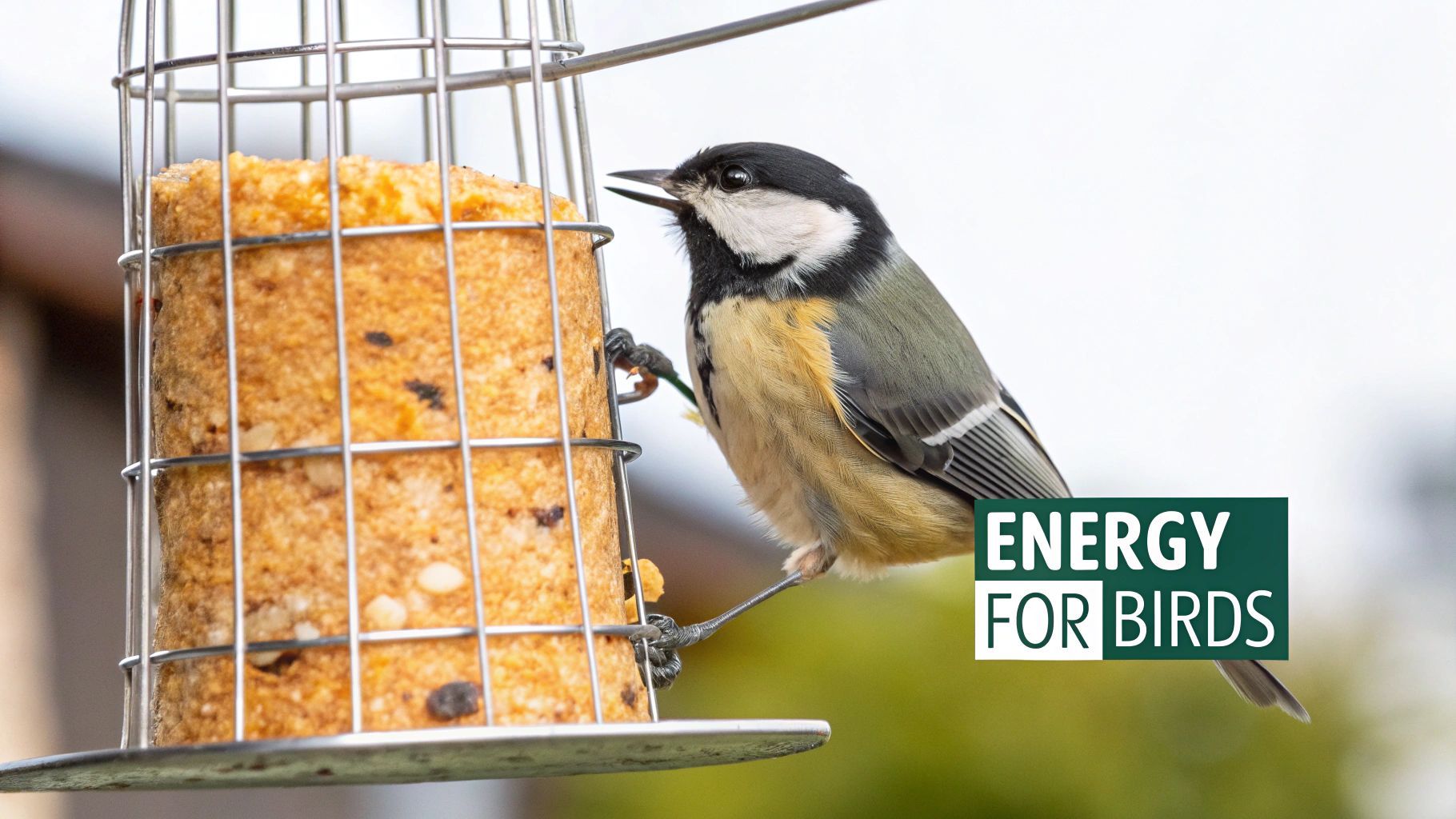
At its heart, suet is simply rendered animal fat—traditionally from beef kidney fat. The rendering process purifies it, making it harder and much more resistant to melting. Once it's pressed into a convenient cake or block, it becomes a durable, long-lasting food source that holds up well in a feeder.
But why is fat so important for birds? Their bodies work on a completely different level than ours. A bird's metabolism is always running in overdrive, fueling a rapid heartbeat and maintaining a high body temperature. All that activity requires a dense, efficient fuel, and nothing provides that better than fat.
Fueling the Avian Engine: A bird's metabolism is a biological furnace. On a freezing winter day, a small bird like a chickadee might need to eat its entire body weight in food just to generate enough heat to survive the night. Suet provides the concentrated calories needed to keep that furnace stoked and burning bright.
While many people think of suet as just a winter food, the truth is, birds benefit from this energy boost all year long.
Why Wild Birds Flock to Suet Cakes Year-Round
The energy demands placed on a wild bird change with the seasons, but they never truly go away. Suet cakes offer a reliable source of fuel to help them navigate these challenges.
This table breaks down why suet is such a critical resource throughout the year.
| Benefit | Why It Is Important | Key Seasons |
|---|---|---|
| Thermoregulation | Provides the immense energy needed to maintain body heat during cold weather when natural food sources are frozen or scarce. | Winter, early Spring, late Fall |
| Breeding & Nesting | Fuels the exhausting activities of courtship, nest building, egg-laying, and incubating. | Spring |
| Raising Young | Gives parent birds the energy to tirelessly forage for their hungry, rapidly growing chicks. | Spring, Summer |
| Fledgling Support | Offers young, newly independent birds a high-fat food that supports their critical growth and development. | Summer |
| Migration Fuel | Helps migratory birds build up essential fat reserves to power their incredibly long and strenuous journeys. | Fall, early Spring |
As you can see, from surviving a blizzard to raising the next generation, suet provides the critical energy birds need to thrive.
Supporting Your Local Bird Population
Putting out high-quality food like suet is more than just an enjoyable hobby—it's a direct way to support the wildlife in your area. This passion for backyard birding is growing, too. The global market for wild bird products was valued at USD 5,699.4 million in 2025 and is expected to climb to USD 7,962.3 million by 2035, showing just how much people want to connect with nature.
However, being a responsible bird-lover means understanding their complete nutritional needs. While suet is an amazing source of fat and calories, it's just one piece of the puzzle. To really help your local birds flourish, it’s worth learning more about their full diet. You can get a great overview in our guide on what do wild birds eat. This knowledge will help you create a truly beneficial feeding station that keeps them healthy and coming back for more.
How to Choose the Right Suet Cake
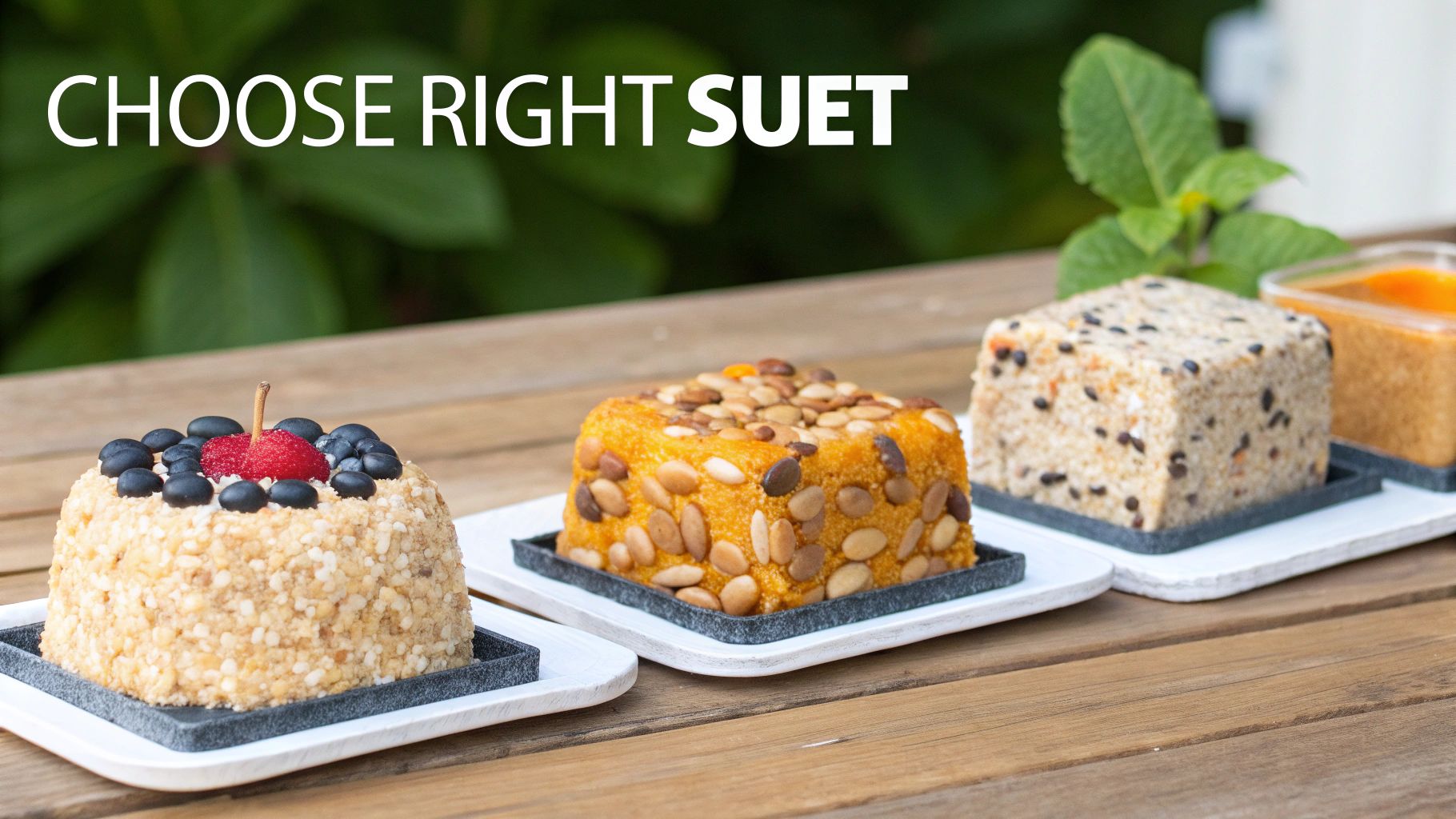
Walking down the bird food aisle can be overwhelming. With so many suet cakes to choose from—from plain blocks to colorful, chunky blends—how do you know which one is right? It’s not about just grabbing any block; it's about making a strategic choice to attract the birds you love to see.
Think of a basic suet cake as a great starting point. It’s mostly just rendered fat, a pure, high-calorie punch that almost any suet-loving bird will appreciate. These are fantastic, especially in the dead of winter when birds desperately need that extra energy to stay warm.
But the real magic happens when you get into the blended cakes. These are the specialty recipes, crafted to send a specific invitation to the birds you want visiting your feeder.
Decode the Ingredients to Attract Specific Birds
The secret to attracting your favorite birds is all in the mix-ins. Reading the ingredient list is the single best thing you can do to curate your backyard bird population. Once you learn what different species prefer, you're no longer guessing—you're birdscaping. For more ideas on what to offer, take a look at our guide to the best bird feeder food.
Here are some of the most common additions and who they're for:
- Peanuts & Nuts: If you want to see woodpeckers, nuthatches, chickadees, and titmice, this is your ticket. These clinging birds go absolutely crazy for the protein and fat found in nuts.
- Insects & Mealworms: This is the non-negotiable ingredient for attracting bluebirds. Wrens and even some migrating warblers will also flock to a suet cake packed with tasty dried insects.
- Fruits & Berries: Want to see birds that don't normally eat suet? Try a blend with dried cherries or cranberries. You might just tempt robins, mockingbirds, or a stunning flock of Cedar Waxwings.
- Seeds: Additions like black oil sunflower seeds or cracked corn make the cake more appealing to a wider audience, including jays and finches who will gladly stop by for a peck.
Birders are definitely catching on to this tailored approach. The market for peanut suet cakes alone is expected to jump from USD 2.01 billion in 2024 to USD 2.9 billion by 2032. It’s a clear sign that people are moving beyond basic suet to attract specific species.
Choosing Quality and Avoiding Fillers
Here’s the thing: not all suet is created equal. While it’s tempting to grab the cheapest option, prioritizing quality is better for the birds’ health. Many low-cost cakes are loaded with cheap fillers that offer little to no nutritional value.
A good suet cake should feel solid and dense, not greasy or crumbly to the touch. You should be able to see fresh, identifiable ingredients mixed in. If it looks like it’s mostly cheap millet or other mystery seeds, you’re better off leaving it on the shelf.
Keep an eye out for cakes packed with filler seeds that birds will just flick to the ground. A quality cake focuses on high-energy, high-value ingredients that provide real fuel.
Special Formulas for Every Season
Finally, you have to think about your climate. Traditional suet can get soft and sticky in the summer heat. In really high temperatures, it can even melt, creating a mess and, worse, becoming rancid, which is incredibly dangerous for birds.
The solution? Look for no-melt suet cakes. These formulas go through a different rendering process that gives them a much higher melting point. This makes them perfectly stable for hot summer days, allowing you to provide a safe, consistent energy source all year long.
Selecting and Placing Your Suet Feeder
So you've picked out the perfect suet cake. That's a great start, but how you serve it is just as important. The right feeder and its placement can be the difference between a bustling bird buffet and an untouched block of fat. It’s all about creating a spot where birds feel safe enough to settle in for a high-energy meal.
Think of your suet feeder as the dinner plate for your feathered guests. The design of this "plate" really matters, as it determines who can easily pull up a seat and eat.
Choosing the Best Feeder for Your Birds
By far, the most common and effective option is the simple wire cage feeder. Its design is genius in its simplicity: just a coated wire cage perfectly sized to hold a standard suet cake. This basic setup is a magnet for small, clinging birds like woodpeckers, nuthatches, and chickadees, who can easily grip the wire grid while they peck away.
But that's not your only choice. A few other excellent designs can help you cater to specific birds or solve common problems:
- Log Feeders: These are just what they sound like—small logs with holes drilled into them, ready to be stuffed with suet. They do a fantastic job of mimicking a natural feeding experience, which is why they're such a hit with woodpeckers used to foraging on tree bark.
- Upside-Down Feeders: This clever design features a solid roof with the suet cage accessible only from the bottom. Woodpeckers and nuthatches have no problem hanging upside down to eat, but larger, less nimble birds like starlings and grackles are often completely stumped.
- Cage-within-a-Cage Feeders: If squirrels are the bane of your existence, these feeders are a lifesaver. They put the main suet cage inside a much larger outer cage. The gaps in the outer cage are just big enough for songbirds to slip through, but way too small for squirrels and big bully birds.
The goal isn't just to put out food; it's to make sure the right birds get to eat it. An upside-down feeder is a perfect example of strategic design, using natural bird behavior to filter out unwanted guests.
Where to Hang Your Suet Feeder for Maximum Impact
Once you have your feeder, finding the perfect spot to hang it is the final piece of the puzzle. A poorly placed feeder can leave birds feeling exposed and vulnerable, or worse, lead to dangerous window strikes.
The ideal spot is a careful balancing act. You want birds to feel secure, which means hanging the feeder near some natural cover, like a shrub or tree. This gives them a quick escape route if a hawk suddenly appears. A good rule of thumb is to place it about 10-15 feet from any dense cover.
It’s also incredibly important to prevent window collisions. Hang your suet feeder either very close to a window (within 3 feet) or much farther away (more than 30 feet). That middle distance is the most dangerous zone, where a bird can build up enough speed for a fatal impact.
Finally, don't forget about predators on the ground, like neighborhood cats. Hang your feeder at least 5-6 feet off the ground to keep the birds safely out of reach. If squirrels are a constant problem, make sure you place the feeder away from any obvious launch points like fences or overhanging branches. For more tips on that front, check out our complete guide on how to keep squirrels away.
Feeding Suet Safely Throughout the Year
One of the biggest myths I hear in backyard birding is that suet is just a winter food. While it’s absolutely a lifeline for birds during a cold snap, they benefit from that high-energy fuel all year round. Think about it: spring and summer are incredibly demanding for birds, and a good suet cake provides the immense energy they need to raise their young.
But offering suet in warmer weather comes with a critical responsibility. The very same fat that keeps a bird warm in January can become a hazard in July if you aren't careful. Being a good bird steward means adapting your feeding strategy as the seasons change.
How to Offer Suet Safely in Summer
The main thing you have to worry about with suet in warm weather is spoilage. Traditional suet can soften, melt, and go rancid in the heat, creating a breeding ground for nasty bacteria. A melted, greasy mess can also mat down a bird's feathers, which messes with their ability to fly and regulate their body temperature.
Luckily, you can easily sidestep these risks with a few simple tweaks to your setup:
- Choose "No-Melt" Formulas: These suet cakes have been rendered multiple times, which gives them a much higher melting point. They’re specifically designed to stay solid and safe even on hot summer days.
- Seek Out Constant Shade: Never, ever place a suet feeder in direct sunlight during the warmer months. Find a spot that stays shaded all day, like under a dense tree canopy or on the north side of your house.
- Offer Smaller Portions: Instead of putting out a whole cake that might sit there for a week, try cutting it in half. This encourages the birds to finish it off quickly, long before it has a chance to spoil.
This proactive approach means you can keep supporting nesting birds and their new fledglings with a crucial energy source during the most exhausting time of their lives.
Why Summer Suet Matters: A single pair of chickadees might need to hunt down over 9,000 caterpillars just to raise one clutch of babies. A suet cake is like a nearby refueling station for the exhausted parents, giving them the energy to keep up that tireless search for insects to feed their young.
Backyard bird feeding has become a huge part of modern conservation and a beloved hobby. With an estimated 96 million Americans participating, offering suet cakes can bring in over 20 different species to a single feeder, directly supporting your local biodiversity. This widespread practice, often encouraged by conservation groups, is a powerful and simple way to make a positive impact. You can discover more insights about the bird food market on metatechinsights.com.
Recognizing and Removing Rancid Suet
Even when you take all the right precautions, you need to know how to spot spoiled suet. Rancid suet isn't just gross—it can be toxic to birds, causing illness or even death. Just get in the habit of using your senses for a quick safety check every time you visit your feeder.
You'll know suet has gone bad if you notice:
- A Foul Odor: Fresh suet has a mild, waxy, almost nutty smell. Rancid suet will have a strong, unpleasant, or chemical-like odor, a lot like old cooking oil that's gone bad.
- A Soft or Greasy Texture: If the cake feels mushy, overly soft, or looks like it's melting or leaking oil, it's no longer safe.
- Signs of Mold: Be on the lookout for any fuzzy spots of green, black, or white mold on the cake’s surface.
If you see, smell, or feel any of these signs, throw the suet away immediately. It’s much better to waste a little food than to risk the health of your backyard birds.
Keeping Your Suet Feeders Clean
Good hygiene is absolutely non-negotiable for safe bird feeding. A dirty feeder can become a hotbed for bacteria and mold, which can spread disease through your local bird population. Cleaning your suet cage is a simple, but vital, chore.
Try to clean your suet feeder every one to two weeks—and even more often if you live somewhere hot and humid.
- Disassemble: Take the feeder apart as much as you can.
- Scrub: Use a stiff brush and hot, soapy water to scrub away every last bit of old suet residue and grime.
- Disinfect: Soak the feeder for 10-15 minutes in a solution of one part bleach to nine parts water.
- Rinse Thoroughly: This is key. Rinse every part with clean water until you can't smell any bleach at all.
- Dry Completely: Let the feeder air dry all the way before you refill it. Any trapped moisture will just encourage more mold to grow.
Exploring Safer, High-Calcium Alternatives to Suet
Don't get me wrong, traditional suet cakes are a fantastic high-energy snack for wild birds, especially when the weather turns cold. But they do have their downsides. The rendered fat that packs such an energetic punch can go rancid pretty quickly in the heat, which is a serious health risk. On top of that, suet is almost pure fat, meaning it's missing some key minerals birds desperately need—especially during nesting season.
This is where some modern, nutritionally-packed alternatives come into play. They offer all the energy of suet but with some game-changing advantages. One of the best and safest substitutes out there is dried Black Soldier Fly Larvae (BSFL). These little powerhouses are a clean, stable source of energy and protein that won’t spoil or melt away on a warm day.
The Critical Role of Calcium
If there’s one reason to make the switch to BSFL, it’s their naturally high calcium content. This is a massive advantage over traditional suet. Calcium is an absolutely essential mineral for wild birds, but it's surprisingly hard to come by in many common bird foods, including most suet cakes and even some seed mixes.
Think of it this way: calcium is the fundamental building block for strong, viable eggshells. If a female bird is calcium-deficient, she might lay eggs with shells that are too thin or brittle to survive incubation. But it doesn't stop there. Calcium is also crucial for healthy bone growth in nestlings and supports vital muscle and nerve function in adult birds.
By offering a calcium-rich food source, you're not just feeding adult birds—you're directly investing in the health and survival of the next generation. It's a simple change that can have a profound impact on local nesting success.
A Cleaner, More Reliable Choice
When you're choosing an alternative, the source really matters. A product like Pure Grubs gives you a reliable and safe option, made from premium, USA-grown Black Soldier Fly Larvae. This means you can be confident you’re giving your backyard visitors a clean, high-quality food source.
Unlike some imported insect feeds with murky origins, these grubs are raised in FDA-compliant facilities and tested to ensure they’re free of nasty contaminants. That kind of peace of mind is priceless when you’re committed to helping your local wildlife thrive.
This simple flowchart breaks down the safety concerns with feeding suet as the seasons change.
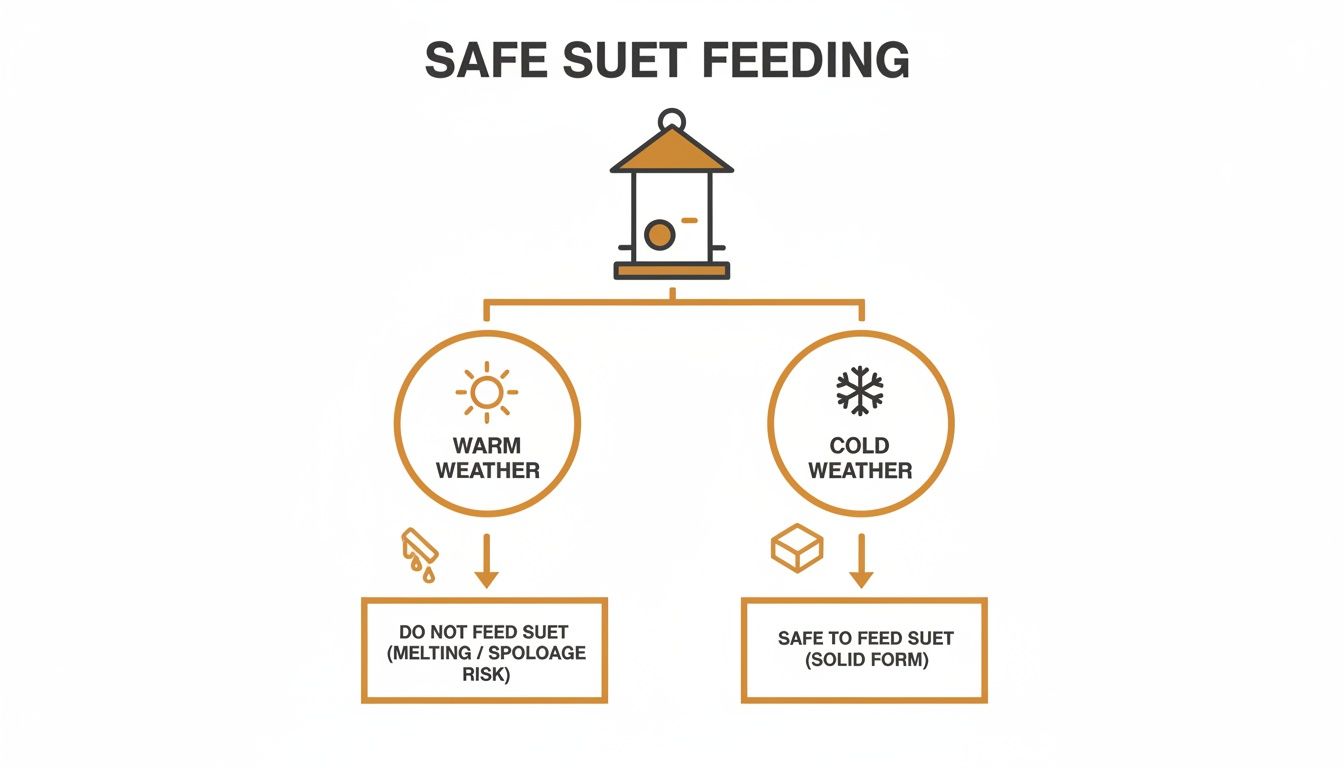
The takeaway is clear: while traditional suet is fine in the cold, a stable alternative like BSFL is a worry-free option you can offer all year long.
Beyond Wild Birds
One of the best parts about adding BSFL to your feeding station is how versatile they are. If you happen to keep a backyard flock of chickens or ducks, you might already know what a superfood these grubs are. Poultry go absolutely wild for them, and that same high calcium content helps your hens lay eggs with stronger shells.
This means you can buy one high-quality product that works as a fantastic suet alternative for your wild birds and a beloved treat for your domestic flock. It simplifies your shopping and your feeding routine while making sure all the birds in your care are getting top-notch nutrition.
Here’s a quick side-by-side look at how they stack up.
Traditional Suet Cakes vs High-Calcium Grubs
| Feature | Traditional Suet Cakes | Pure Grubs BSFL |
|---|---|---|
| Primary Nutrient | Fat (Energy) | Protein & Calcium |
| Calcium Content | Very Low | Naturally High |
| Spoilage Risk | High in warm weather | Extremely Low |
| Shelf Life | Shorter; requires care | Long & Stable |
| Attracts | Clinging birds (woodpeckers, nuthatches) | A wider variety of insect-eating birds |
| Multi-Species Use | Limited to wild birds | Excellent for chickens, ducks, & more |
In the end, while suet cakes for wild birds will always have a place in your winter feeding strategy, exploring high-calcium alternatives like BSFL lets you provide safer, more complete nutrition all year round.
Easy DIY Suet Cake Recipes You Can Make at Home
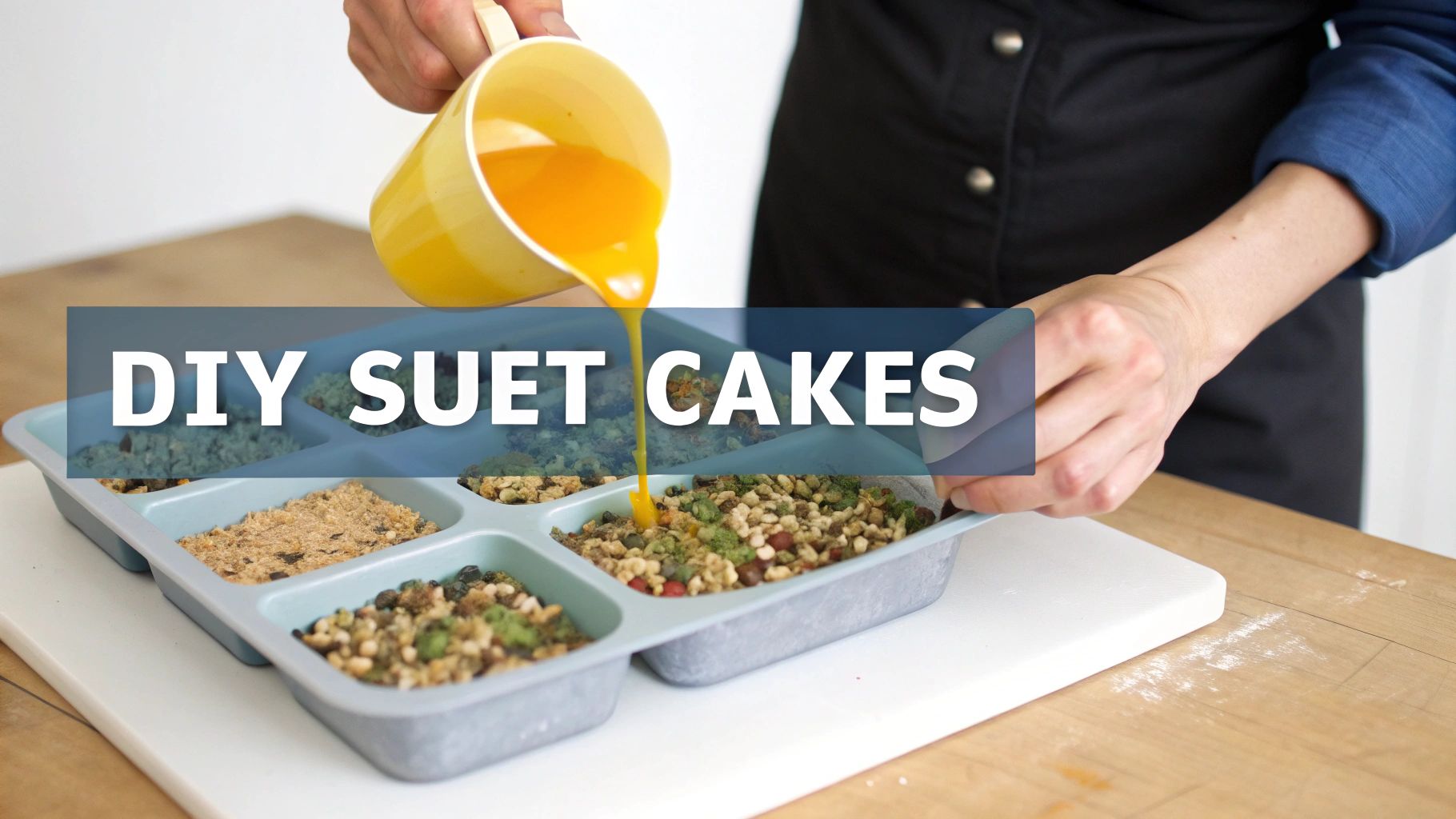
There's something incredibly satisfying about making your own suet cakes. For those of us who love watching our backyard birds, crafting a custom menu feels like a genuine connection to the wildlife just outside our window. Plus, it gives you total control over the ingredients, so you know your feathered friends are getting a fresh, high-quality meal.
The whole process is much easier than you might think. You really just need a fat to bind everything together and a mix of nutritious goodies. Melt, mix, pour, and cool—that's all it takes to create a perfect, feeder-ready treat.
The Basic Beginner’s Blend
If you're new to making suet, this is the place to start. It’s a classic, can't-go-wrong recipe that attracts a huge range of birds, from tiny chickadees to bold nuthatches.
- Melt the Fat: In a saucepan, gently melt one part beef fat, lard, or vegetable shortening over low heat. The key here is low heat—you don't want it to scorch.
- Prep the Dry Mix: In a separate bowl, stir together two parts of your dry ingredients. A simple blend of birdseed, cracked corn, and unsalted sunflower seeds works wonders.
- Combine and Pour: Once the fat has turned completely to liquid, carefully pour it over your seed mix. Stir until every little piece is coated.
- Shape Your Cakes: Pour the mixture into a mold. You can use anything from an old ice cube tray to a muffin tin or a square container lined with parchment paper.
- Chill Out: Pop the mold into the fridge or freezer and let it sit until the cake is completely solid.
Energy-Packed Peanut Butter Mix
Want to see more woodpeckers? This recipe is your secret weapon. The combination of peanut butter and hearty nuts is something they just can't resist. You'll have Downy, Hairy, and maybe even the big Red-bellied Woodpeckers making a beeline for your feeder.
The steps are the same as the basic recipe, but we'll tweak the ingredients:
- Fat Base: Stick with one part beef fat or lard.
- Mix-Ins: Melt one part creamy peanut butter right into the fat. Then, stir in two parts of a dry mix like chopped unsalted peanuts, cornmeal, and oats.
The cornmeal and oats do a great job of absorbing the extra oils from the peanut butter. This gives you a firmer, less greasy cake that holds its shape beautifully in the feeder.
Calcium-Boosted Bird Treat
During nesting season, birds are desperate for calcium. It's essential for forming strong eggshells and helping their chicks develop properly. This recipe gives a standard suet cake a serious mineral boost, offering direct support to the next generation of birds in your yard.
Adding a calcium source to your homemade suet cakes is one of the most impactful ways to support nesting birds. It turns a simple energy snack into a comprehensive nutritional supplement that helps ensure healthy, viable eggs.
You can easily adapt the Beginner's Blend for this. Just follow the recipe, but before you pour the mix into molds, stir in a good source of calcium.
- Crushed Eggshells: First, bake clean, dry eggshells at 250°F (120°C) for about 10 minutes to kill any bacteria. Let them cool, then crush them into small, grit-sized pieces.
- High-Calcium Grubs: For an even better, more natural option, mix in a handful of dried Black Soldier Fly Larvae. They deliver a powerful one-two punch of both calcium and protein.
A quick but critical word of warning: NEVER use bacon grease. It's loaded with curing salts and nitrates that are incredibly harmful to birds. Steer clear of bread, too—it has zero nutritional value and can grow dangerous mold in a heartbeat.
Common Questions About Feeding Suet
Once you get started with suet, you'll find a few practical questions almost always come up. Let's tackle the most common ones so you can feed your backyard visitors with complete confidence.
Can I Offer Suet to Birds All Year?
You absolutely can, and you should! While we often think of suet as a winter-only food, it's a powerhouse of energy that birds rely on year-round.
In the spring and summer, it’s a lifesaver for busy parent birds trying to keep their hungry nestlings fed. Come fall, it provides the critical fuel migrating birds need to pack on fat reserves for their incredible journeys.
The only trick is adjusting for the temperature. When things heat up, stick to "no-melt" suet varieties and hang your feeder in a shady spot. To be extra safe, only put out enough for a day or two at a time to ensure nothing spoils.
What Kinds of Birds Eat Suet Cakes?
Suet is a huge hit with insect-eating and omnivorous birds, especially those that are natural acrobats. You’ll have the best luck attracting birds that can cling to the side of a wire cage feeder.
Keep an eye out for these classic suet fans:
- Woodpeckers (Downy, Hairy, and Red-bellied are common visitors)
- Nuthatches, famous for their upside-down dining style
- Chickadees and Titmice, those tiny bundles of energy
- Wrens, who gobble up the high-fat treat
If you offer suet cakes for wild birds with added fruit or insects, you might even tempt bluebirds, jays, or the occasional warbler passing through.
How Do I Keep Squirrels Away from My Suet Feeder?
Ah, the age-old question. Squirrels are clever, but you can definitely stay one step ahead of them. Your best bet is a suet feeder built inside a squirrel-proof cage. Small birds can easily slip through the openings, but squirrels are stopped cold.
Another winning strategy is using a baffle. Placing one of these dome or cylinder-shaped guards above your feeder makes it impossible for squirrels to climb down from above for a free meal.
Some people swear by suet cakes made with hot pepper (capsaicin). Birds don’t have the receptors to taste the spice, but mammals like squirrels can't stand it. Finally, simple placement can work wonders. Make sure your feeder is at least 10 feet from any launchpad—like a tree branch, fence, or deck railing.
If you're looking for a modern, high-calcium alternative that's safe year-round and won't melt, consider adding Pure Grubs to your feeding station. These USA-grown Black Soldier Fly Larvae give birds the energy they crave plus essential minerals for stronger eggs and healthier chicks. You can learn more about Pure Grubs and their benefits.