

A Complete Guide to Protein Foods for Chickens
When you're looking for the best protein foods for chickens, you’ll find a great mix of options, from top-notch commercial feeds to natural goodies like insects, legumes, and even some safe kitchen scraps. For a serious boost of both protein and calcium, many savvy flock owners add dried Black Soldier Fly Larvae (BSFL) to their birds' diet. This simple addition can lead to incredible results in growth, eggshell strength, and feather quality.
Why Protein Is the Building Block of a Healthy Flock
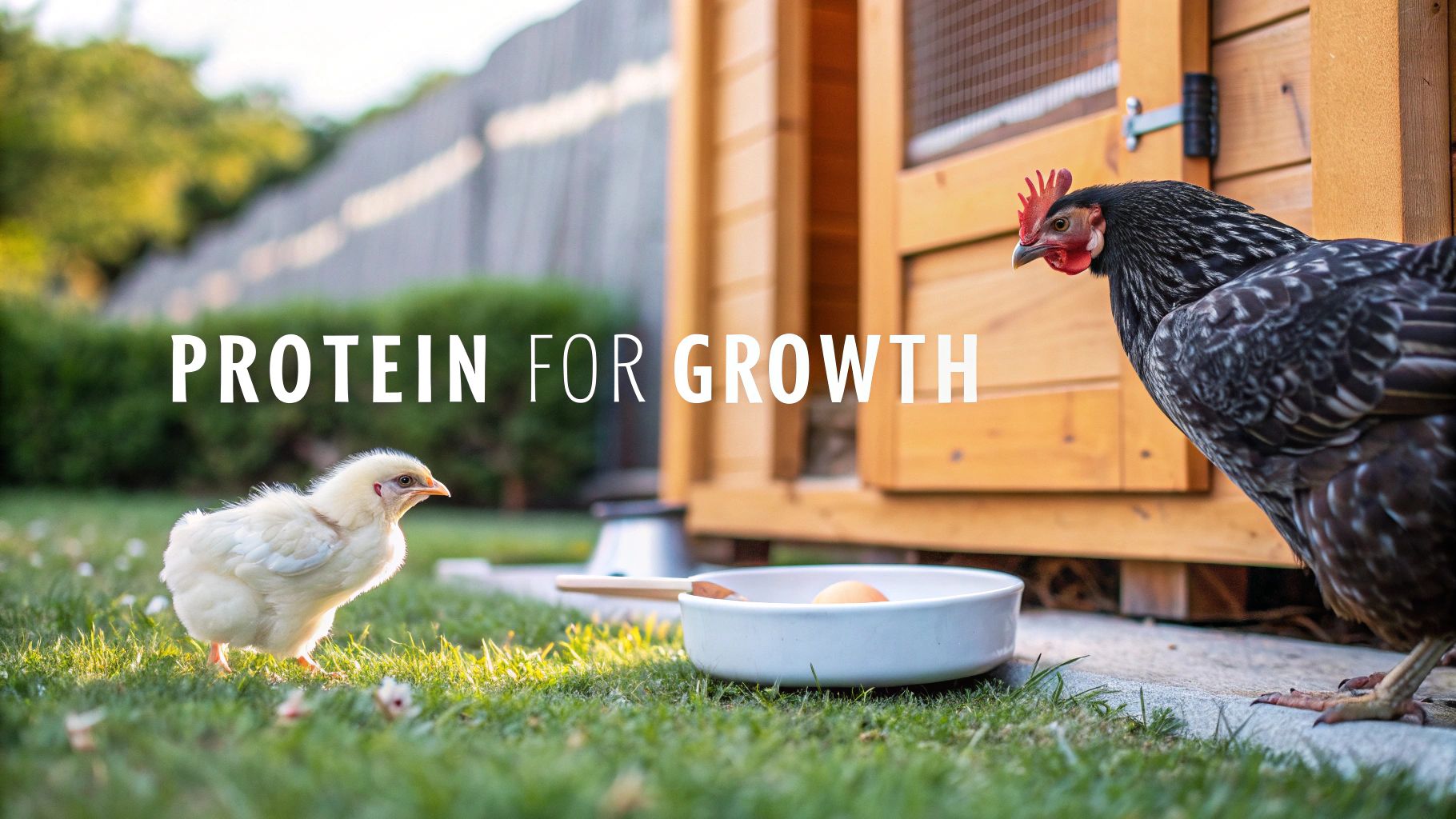
Before we jump into a list of high-protein treats, let's get a handle on why this nutrient is so incredibly important for your flock. Think of protein as the essential raw material for literally building and maintaining a healthy bird. It's made up of smaller units called amino acids, which are the fundamental building blocks for just about every part of a chicken's body.
From the tip of their beak to the very last tail feather, protein is always on the job. It's not just about building muscle; it's about everything. Without enough of it, a chicken's body just can't run its most basic systems properly.
The Role of Protein in a Chicken's Life
Protein is directly tied to the biological processes that make or break the health and productivity of your flock. Imagine a construction crew trying to build a house without bricks—that's a chicken trying to grow and lay eggs without enough protein. It just doesn't work.
Here’s where protein does its most important work:
- Feather Production: Feathers are made of roughly 90% protein, mostly a specific type called keratin. When a hen goes through a molt and has to replace every single feather, her need for protein can go through the roof.
- Egg Laying: A single large egg packs about 6 grams of high-quality protein. So, a busy hen laying five eggs a week is sending about 30 grams of pure protein out of her body. She has to get that back from her food.
- Growth and Development: From the day a chick hatches, protein is the fuel for its explosive growth. Chicks have the highest protein requirements of all, often needing 18-24% in their feed to build strong bones, muscles, and organs.
- Immune System Support: The antibodies that fight off diseases are, you guessed it, proteins. A protein-rich diet keeps the immune system strong, making your flock tougher against common illnesses.
Protein Needs Change with Age and Activity
A chicken’s protein needs aren't set in stone; they change quite a bit throughout its life. Getting a grasp on these shifts is the secret to providing the best nutrition at every stage. For example, a tiny, fast-growing chick has completely different needs than a mature rooster who isn't laying eggs. You can learn more about what chickens forage for in the wild by exploring our guide on what chickens eat naturally.
A laying hen diverts a huge chunk of her dietary protein straight into making eggs. If she doesn’t get enough from her feed, her body will start breaking down its own muscle and organ tissue to find those necessary amino acids. This can quickly lead to poor health and a drop in egg-laying.
This is exactly why a one-size-fits-all feeding plan falls short. A laying hen in her prime thrives on a feed with about 16-18% protein. But a molting hen? She might need a temporary bump up to 20% to help her regrow her feathers. Offering the right protein foods for chickens at the right time is truly the foundation of smart flock management.
Exploring the Best Natural Protein Sources for Chickens
If you've ever watched your flock tear across the yard in a frenzy after a grasshopper, you know chickens are natural foragers. They're hardwired to hunt for a varied diet. So, while a good commercial feed is the foundation of their nutrition, adding natural protein sources is how you get them to truly thrive.
This isn't just about giving them treats; it's about tapping into their instincts and rounding out their diet with a richer mix of nutrients. When we talk about natural protein, two categories stand out above all others for chickens: insects and plants, specifically legumes and seeds. Each brings something different and valuable to the table.
Insects: The Ultimate Avian Superfood
For a chicken, nothing beats the excitement of catching a wriggling worm or a crunchy beetle. It’s what they’re built to do! Insects are a perfect nutritional package for poultry, delivering a concentrated blast of protein and essential amino acids in a form they absolutely love.
A few excellent choices for supplementing their diet include:
- Earthworms: The classic foraging find, packed with protein.
- Crickets: Easy to find at pet stores and a crunchy treat your flock will go wild for.
- Black Soldier Fly Larvae (BSFL): These are the gold standard of insect protein for poultry, hands down.
BSFL, usually sold as dried grubs, are a real game-changer. They offer a massive protein boost and are full of easily digestible fats for energy. But their biggest advantage is their naturally high calcium content. This makes them an incredible all-in-one supplement that builds strong bodies and strong eggshells.
Key Insight: This is where BSFL really outshine mealworms. Mealworms have a poor calcium-to-phosphorus ratio, which can actually block calcium absorption in your hens. BSFL, on the other hand, have an almost perfect balance, making them a far better choice for laying hens who need a constant supply of calcium.
When you're buying BSFL, quality is everything. Look for a premium, USA-grown option like Pure Grubs. They’re produced in FDA-compliant facilities, so you don't have to worry about the contaminants sometimes found in imported feeds. Every batch is carefully tested for heavy metals, giving you peace of mind that you're offering a clean, safe, and incredibly nutritious snack. You can take a closer look at the benefits of grubs for chickens in our detailed guide.
Plant-Based Proteins: Legumes and Seeds
While insects are at the top of the list, don't overlook plants. Legumes and seeds are a fantastic way to add variety and a different set of nutrients to your flock's diet, as long as you prepare them correctly.
Legumes like peas and lentils are little protein powerhouses, but they must be cooked before you serve them. Raw, dried beans contain a compound called phytohaemagglutinin that is toxic to chickens. Fortunately, a simple boil neutralizes the toxin and makes all that protein available.
Seeds are another great addition, giving your chickens healthy fats and fiber along with a protein kick. Some of the best options are:
- Sunflower Seeds: Black oil sunflower seeds are a favorite. They're high in protein and fat, making them a perfect energy boost during cold weather.
- Flax Seeds: A wonderful source of omega-3 fatty acids, which help produce those rich, golden yolks and keep feathers glossy.
- Pumpkin Seeds: Many chicken keepers believe these have natural deworming properties, and they offer a good dose of protein, too.
The need for high-quality protein isn't just a backyard concern; it's a global one. Global poultry meat production is expected to reach 151.4 million metric tons by 2025, solidifying its spot as the world's most produced animal protein. This massive scale just underscores how critical efficient, protein-rich feeds are for healthy growth, whether you have a flock of five or five thousand. You can check out more on the global poultry market in Rabobank's analysis.
Balancing Commercial Feeds and Protein Supplements
Think of your chicken's diet like building a house. A high-quality commercial chicken feed is the foundation—it's been scientifically balanced to give your flock the essential protein, vitamins, and minerals they need for day-to-day health. It's the non-negotiable groundwork for a healthy bird.
But a foundation alone doesn't make a sturdy, comfortable home. That's where smart supplementation comes in. High-protein foods for chickens act like the framing, insulation, and roof. They aren’t meant to replace the main course, but to enhance it, providing a targeted boost exactly when your chickens need it most.
Why Supplements Are Not Just Treats
It’s easy to think of these additions as just fun snacks, but they are so much more. They're strategic nutritional tools that help your flock navigate periods of high stress and demand. During these times, the protein levels in their standard feed might not be quite enough to keep them in peak condition.
A protein boost becomes critical during a few key moments:
- The Annual Molt: Feathers are nearly 90% protein. Regrowing a full coat is an exhausting process that saps a hen's energy and resources. A little extra protein helps them get through the molt faster and emerge healthier.
- Peak Egg Production: Laying an egg almost every day takes a massive amount of protein. A good supplement ensures a hen isn’t forced to pull from her own muscle tissue to keep up with production.
- Extreme Weather: Whether it's a summer heatwave or a bitter cold snap, extreme temperatures stress a chicken's body. They burn more energy and protein just trying to stay regulated and healthy.
This chart really puts the protein power of different sources into perspective, especially when you compare Black Soldier Fly Larvae to other common options.
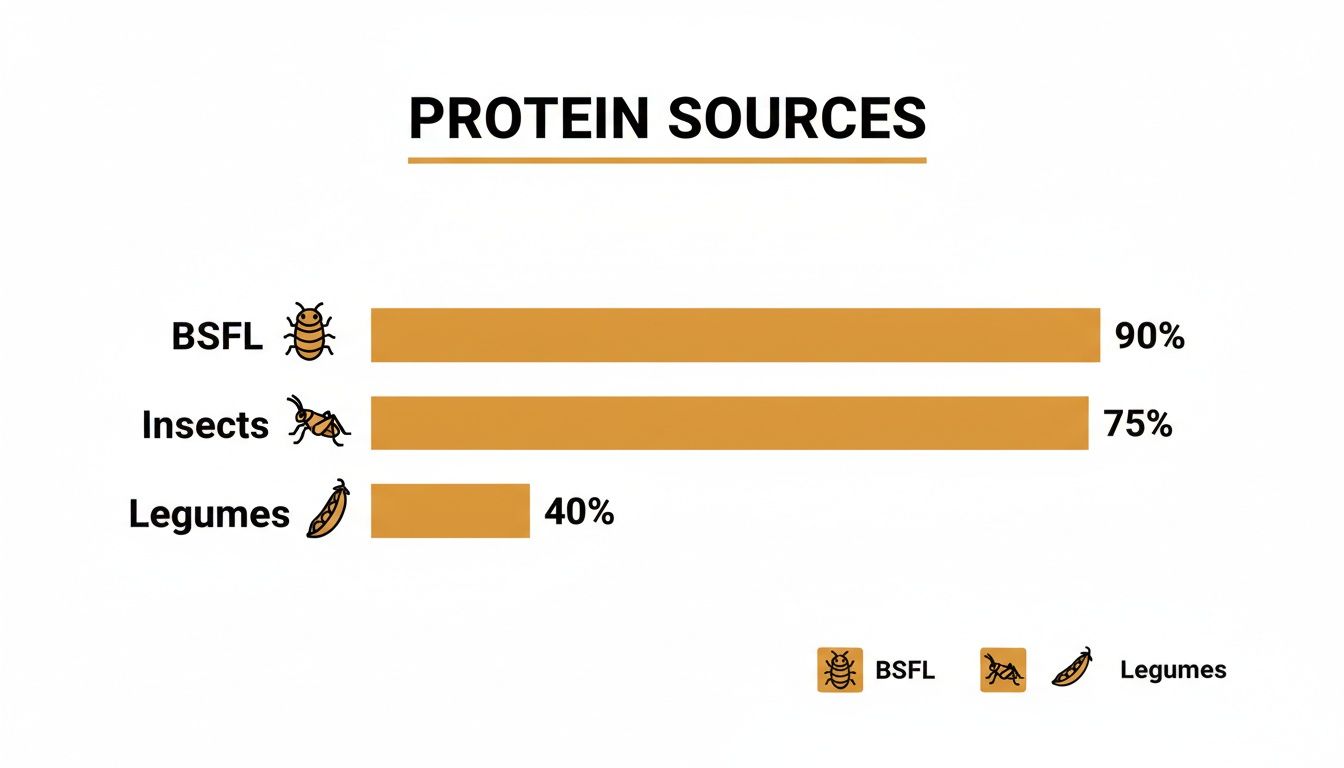
As you can see, BSFL are in a league of their own. They offer a much more concentrated protein punch than other insects or even plant-based sources like legumes.
Choosing the Right High-Protein Supplement
Now, when you're looking for a protein supplement, it's important to know that not all options are created equal. Many chicken keepers instinctively reach for mealworms, but if you dig into the nutritional data, there's a much better choice: Black Soldier Fly Larvae (BSFL). The difference isn't just about protein; it's about the other critical minerals that support a hen's entire system.
The key takeaway here is the calcium-to-phosphorus ratio. For laying hens, this is everything. BSFL naturally have an almost perfect ratio, which means the calcium they eat actually gets absorbed and used to build strong eggshells. Mealworms, on the other hand, have a poor ratio that can actually get in the way of calcium absorption.
The nutritional gap is pretty stark. Premium, USA-grown BSFL like Pure Grubs can pack up to 85% more calcium than the mealworms you typically find. This makes them an absolute powerhouse for supporting not just eggshell quality, but the skeletal health of your layers, too.
To make it even clearer, let's put these two popular treats head-to-head.
Protein Treat Comparison: Black Soldier Fly Larvae vs. Mealworms
This table breaks down the key differences between USA-grown BSFL and the standard imported mealworms you might find elsewhere.
| Feature | Pure Grubs (USA-Grown BSFL) | Standard Mealworms (Often Imported) |
|---|---|---|
| Protein Content | High (~40%), promoting healthy growth and feathering. | Moderate (~20%), offering a decent protein boost. |
| Calcium Level | Very High, with an ideal calcium-to-phosphorus ratio for strong eggshells. | Very Low, with a poor calcium-to-phosphorus ratio that can inhibit absorption. |
| Fat Content | Provides healthy, easily digestible fats for sustained energy. | High in fat, which can lead to obesity if overfed. |
| Origin & Safety | Grown in the USA in FDA-compliant facilities. Tested for heavy metals. | Often imported with unclear sourcing and inconsistent quality control. |
Ultimately, choosing a supplement is an investment in your flock's health and productivity. The data really speaks for itself—USA-grown BSFL offer a far more complete nutritional package. When you choose a trusted brand like Pure Grubs, you're giving your flock a clean, safe, and powerfully beneficial protein source, without the worries of heavy metals or contaminants that can come with imported feeds. It’s a simple switch that elevates their diet from just "good enough" to truly exceptional.
How to Safely Feed High-Protein Treats
Knowing the best protein-rich foods for your chickens is one thing, but knowing how to feed them is what really keeps a flock healthy and thriving. I always tell people to think of their flock’s main feed as a complete, nutritionally balanced meal. Treats, on the other hand, are like dessert—a little bit is fantastic, but too much can throw their whole diet out of whack.
The golden rule here is the 10% rule. It’s simple: treats should never make up more than 10% of your chickens' total daily diet. The other 90% has to come from their complete feed. That's non-negotiable if you want them to get all the vitamins and minerals they need to stay healthy.
Matching Protein to Your Flock's Age
A chicken's protein needs change quite a bit as they grow. What’s right for a tiny chick isn't right for a full-grown layer, and getting it wrong can cause real problems. Too little protein can stunt a bird's growth, while too much puts a dangerous strain on their kidneys.
Here’s a quick guide to what they need at different stages:
- Chicks (0-8 weeks): These little fluffballs are growing like weeds. They need a high-protein starter feed, typically 18-24%, to build strong bones, feathers, and muscles.
- Pullets (8-18 weeks): Think of this as their "teenage" phase. Their protein needs dip a little to 16-18%. This encourages a slow, steady growth spurt so they don't start laying before their bodies are ready.
- Laying Hens (18+ weeks): To keep up with daily egg production and maintain their own bodies, a steady 16-18% protein feed is perfect. A temporary boost from protein-rich treats is a huge help when they go through a hard molt.
Protein-Rich Foods to Keep Away From Your Flock
While plenty of foods are great for chickens, some are downright dangerous. Tossing the wrong scraps into the coop can lead to serious illness or worse.
The big one to watch out for is uncooked dried beans and lentils. In their raw form, they contain a toxin called phytohaemagglutinin, which can be fatal to chickens. If you're going to share legumes, they must be cooked thoroughly. Also, be sure to avoid anything spoiled or moldy, salty processed meats, and avocados—all of which are toxic to birds.
The goal is to supplement, not sabotage. A handful of safe, high-quality protein treats enhances their diet. A scoop of unsafe kitchen scraps can quickly undo all your hard work and endanger your flock.
Why Safe Sourcing is So Important
Where you get your flock's treats from is just as crucial as what they are. It might seem natural to let your chickens forage for bugs, but it's a bit of a gamble. Wild insects can be loaded with internal parasites or contaminated with pesticides and heavy metals from the soil. Those toxins can build up in your birds and even find their way into their eggs. For a deeper dive, you can learn more about the benefits of dried grubs for chickens in our comprehensive article.
This is exactly why choosing a trustworthy, reliably sourced protein supplement makes all the difference. With a product like Pure Grubs, you get complete peace of mind. They are grown right here in the USA in FDA-compliant facilities, and every single batch is tested for nasty stuff like lead and arsenic.
It's about giving them a clean, powerful protein boost without any of the risks that come with foraged insects or sketchy imported feeds. Stick with the 10% rule and choose certified-safe treats, and you can feel great about supporting your flock's health.
Easy DIY Recipes for Protein-Packed Chicken Treats
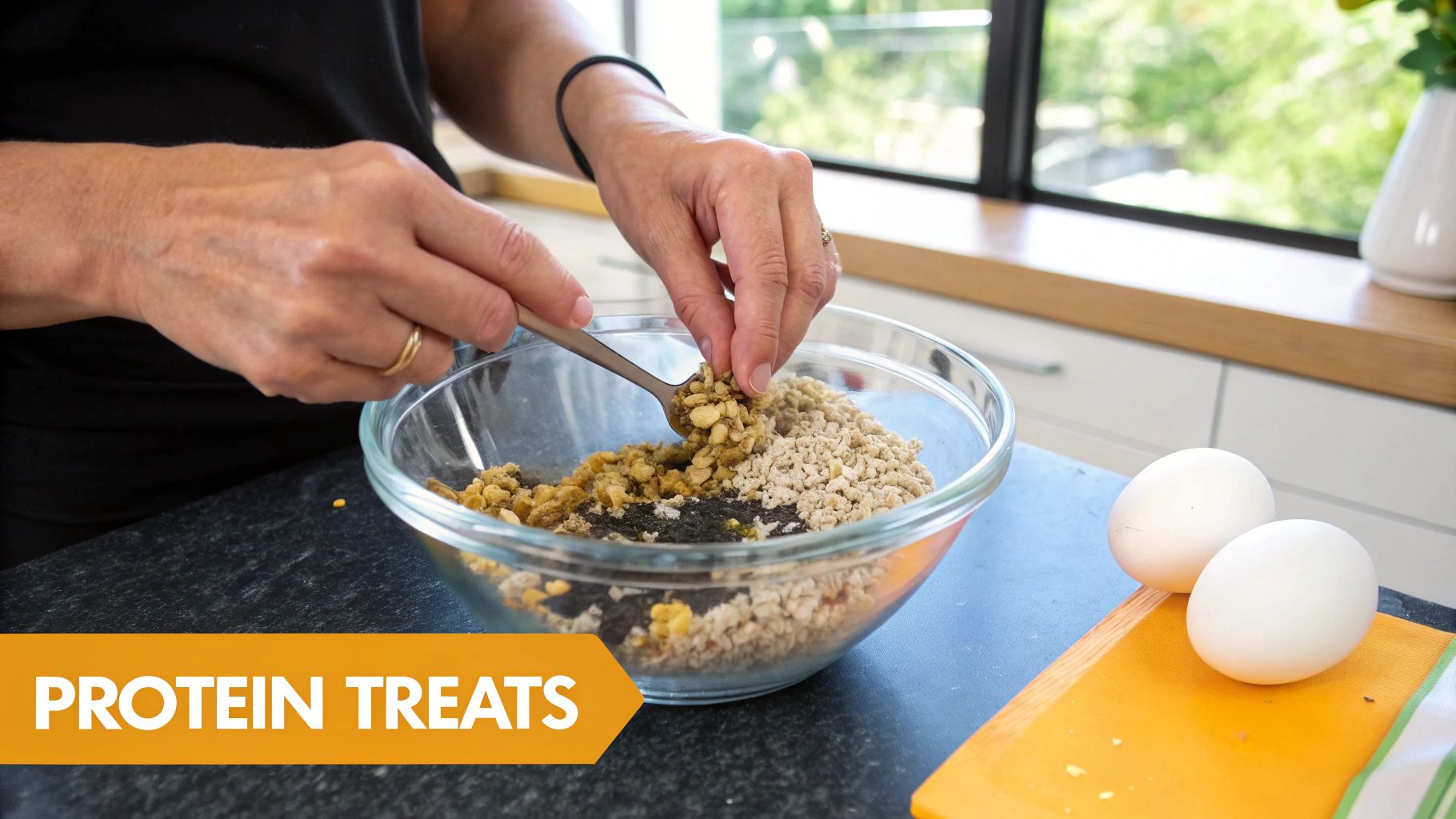
Whipping up a special treat for your flock is one of the best parts of chicken keeping. It’s a great way to give them a nutritional boost and, let's be honest, it's just plain fun to watch them go wild for something you made. These simple recipes are packed with protein and feature Pure Grubs to give your birds something to really get excited about.
Think of these as more than just snacks. They’re targeted supplements you can use to help a hen through a tough molt or give everyone some cool relief on a blistering summer day. A little homemade goodness can make all the difference.
Molting Power Mash
The annual molt is tough on a chicken's body. Feathers are almost 90% protein, so growing a whole new set is a massive nutritional drain. This warm, soft mash is exactly what they need—it’s easy to eat and loaded with the good stuff to get them feathered up and fabulous in no time.
Ingredients:
- 1 cup of uncooked oatmeal
- 2 scrambled or hard-boiled eggs, chopped up (shells and all!)
- 1/2 cup of Pure Grubs
- Warm water or unsalted broth
Instructions:
- Grab a bowl and mix the oatmeal, chopped eggs (the shells add a great calcium kick), and Pure Grubs.
- Slowly stir in just enough warm water or broth to make a thick, crumbly mash. You want it moist, not soupy.
- Serve it up right away while it’s still warm. They’ll find it irresistible.
The combination of eggs and grubs provides a serious protein punch, while the oatmeal offers the slow-burn energy needed to fuel all that feather growth.
Summer Cool-Down Pucks
When the summer sun is beating down, chickens can really suffer from the heat. These frozen "pucks" are a game-changer. They deliver hydration, a little protein, and electrolytes all in one cool, refreshing package. I like to make a batch ahead of time so they're always ready in the freezer.
Ingredients:
- 1 cup of plain yogurt or kefir
- 1/2 cup of mixed berries (blueberries and raspberries are a favorite)
- 1/2 cup of Pure Grubs
Instructions:
- In a mixing bowl, just stir the yogurt, berries, and Pure Grubs all together.
- Spoon the mixture into a silicone muffin tin or even just a standard ice cube tray.
- Freeze for at least four hours, or until they're frozen solid.
- On a hot afternoon, pop one out and watch your flock peck away at their icy treat.
This works so well because the frozen yogurt and berries provide instant cooling and hydration, while the grubs ensure your flock gets essential protein foods for chickens without having to generate extra body heat through digestion.
Forager's Flock Block
Chickens are born to scratch and peck. A bored chicken can be a mischievous chicken, so this flock block is the perfect cure. It provides hours of entertainment and a slow-release source of energy and protein, encouraging their natural instincts.
Ingredients:
- 1 cup of melted coconut oil or suet
- 1 cup of mixed seeds (black oil sunflower seeds and cracked corn are great)
- 1/2 cup of rolled oats
- 1 cup of Pure Grubs
Instructions:
- Gently melt the coconut oil or suet in a small pot over low heat.
- While that's melting, mix your seeds, oats, and Pure Grubs in a separate bowl.
- Pour the melted oil over the dry mix and stir until every little bit is coated.
- Pack the mixture tightly into a small loaf pan, a suet cage, or any mold you have on hand. Pop it in the fridge to set up.
- Once it's hard, hang the block in the run and let the foraging fun begin
The Link Between Quality Feed and Healthy Eggs
When you decide to feed your chickens high-quality protein, you're doing more than just filling their bellies. You're making a direct investment in their health, and just as importantly, in the quality of the eggs they lay for your family. The old saying, "you are what you eat," is just as true for hens, and you can see the proof in every egg.
Think of it this way: when you offer premium, easily digestible nutrition from a source like Pure Grubs, you’re handing your hens the perfect building blocks they need to thrive. A hen's body is wired for survival, so if her diet is subpar, egg production is one of the first things to get shut down. High-quality protein gives her everything she needs for her own health and for consistent laying.
From Clean Feed to Your Family's Table
There's a real peace of mind that comes from knowing exactly where your flock's food comes from. When you choose a protein source that's been carefully tested for things like heavy metals, you're building a vital safety net between potential environmental toxins and your breakfast plate.
You really can't put a price on that kind of assurance. Grubs or other supplements grown in unregulated environments can soak up contaminants like lead and arsenic from the soil. Those toxins can then build up in a hen's body and, you guessed it, end up in her eggs. By choosing a USA-grown, FDA-compliant product like Pure Grubs, you don't have to second-guess what might be hidden in their treats.
Choosing a certified-safe protein source is about more than just flock health; it's about food security for your family. It ensures the fresh, wholesome eggs you gather each morning are as clean and nutritious as possible.
A Sustainable Choice for a Healthier Flock
Beyond the direct nutritional benefits, your choice of protein has a ripple effect on the environment. Farming Black Soldier Fly Larvae, for instance, is an incredibly sustainable model. These amazing insects are raised on pre-consumer food waste, which means they turn tons of organic material that would otherwise hit a landfill into top-tier animal feed. It’s a closed-loop system that’s much kinder to the planet.
This commitment to quality and sustainability really shows up in your flock’s health. Hens on a superior diet just do better—they have stronger eggshells, richer, more colorful yolks, and an overall energy you can see. They also seem to handle stressful times like molting more easily and maintain a stronger immune system year-round.
In the United States, chicken is king when it comes to protein, with projections showing we'll each be consuming about 102.8 pounds by 2026. This huge demand just underscores how important it is to have efficient, high-quality poultry nutrition to support healthy flocks, whether you have a few birds or a few hundred. You can dig deeper into these trends in the Global Poultry Meat Consumption Demand Report 2025-2026.
Ultimately, picking a premium, tested, and sustainably sourced protein is one of the most impactful things you can do as a flock owner. It’s an act of care that strengthens your hens, improves your eggs, and brings a whole lot of confidence to your homestead.
Got Questions About Protein? We've Got Answers.
When you're trying to give your flock the best, a lot of questions can pop up. It's completely normal. Let's walk through some of the most common ones I hear from fellow chicken keepers to clear things up.
Is There Such a Thing as Too Much Protein?
You bet. Just like with us, too much of a good thing can cause problems. Forcing your chickens' bodies to process excessive protein puts a serious strain on their kidneys over the long haul.
A healthy laying hen really only needs a feed that's about 16-18% protein. Anything extra just gets turned into waste, making their system work overtime for no reason. This is exactly why we talk about the 10% rule—treats should be just that, a treat, making up no more than 10% of their daily diet. That way, you give them a fun boost without messing up their core nutrition.
What's the Real Difference Between Mealworms and BSFL?
This is a big one. Both are popular, but from a nutritional standpoint, Black Soldier Fly Larvae (BSFL) are in a completely different league, especially for your laying girls. It all comes down to the calcium-to-phosphorus ratio.
BSFL hit the nutritional jackpot with a naturally perfect balance of calcium and phosphorus. This means your hens can actually absorb and use the calcium, which is critical for strong eggshells and healthy bones. Mealworms, on the other hand, have a ratio so out of whack it can actually block calcium absorption. For laying hens, BSFL is the hands-down winner.
Are Kitchen Scraps a Safe Bet for Protein?
They can be, but you have to be really picky. Think of scraps as a fun little bonus, not a primary protein source. Things like leftover cooked meat, a few scrambled eggs, or a spoonful of plain yogurt are fantastic, and your flock will go wild for them.
The key is knowing what to avoid. Never, ever give your chickens anything moldy, super salty, or processed. And some foods are downright toxic, like avocado, raw potatoes, chocolate, or uncooked beans. If you're ever on the fence, it's always safer to stick with a professionally prepared treat you know you can trust.
For a treat that's guaranteed safe, packed with protein, and loaded with the good stuff like calcium, you can't go wrong with Pure Grubs. Our USA-grown Black Soldier Fly Larvae are tested like crazy to make sure you're only giving your birds the best. Ready to give your flock the premium nutrition they deserve? Learn more about Pure Grubs.