

A Practical Guide to Organic Hen Farming
Raising hens organically is about more than just following a rulebook; it's a commitment to a whole system that puts animal welfare and environmental health first. It means you’re providing 100% certified organic feed, giving your flock real access to outdoor pasture, and completely avoiding routine antibiotics or synthetic chemicals.
This isn't just a different way to farm—it's a different mindset. It’s about creating a sustainable loop where happy, healthy hens contribute to healthier land.
Why Go Organic With Your Flock?
Choosing to raise your hens organically is often a personal decision, one that goes beyond simple profit margins. It's about building a system that feels right because it works with nature, not against it. You're not just providing for your hens' basic needs; you're creating an environment where they can actually be chickens—scratching, foraging, and dust-bathing to their hearts' content.
For a lot of us, this comes from a desire to produce food we’d be proud to put on our own family’s table. Or maybe it's about being a good steward of the land, leaving it in better shape than we found it. At the same time, customers are more tuned in than ever to where their food comes from, and they're actively looking for products that reflect their values on animal welfare and environmental impact.
What Really Makes It "Organic"?
At the core of it all are a few non-negotiable principles. Getting these right is what separates a true organic operation from everything else.
-
It's All About Animal Welfare: Organic rules require that your hens get outside. We're not talking about a small concrete porch, either. They need real access to fresh air, sunshine, and pasture where they can engage in their natural behaviors. This is fundamental to their physical health and mental well-being.
-
Working with the Environment: Organic practices focus on building healthy soil and protecting the ecosystem. That means no synthetic pesticides or fertilizers on your pastures. Instead, you'll rely on smart farming techniques like rotational grazing to enrich the soil and keep pests in check naturally.
-
Clean, Natural Nutrition: This is a big one. Your hens' diet must be 100% certified organic. The feed can't contain any genetically modified organisms (GMOs), animal by-products, or synthetic additives. The goal is simple: pure, wholesome nutrition that builds a strong immune system from the inside out.
Thinking about the differences between organic and conventional farming can be a lot to take in. Here’s a quick table to break down the key distinctions at a glance.
Organic vs Conventional Hen Farming at a Glance
| Practice Area | Conventional Farming | Organic Farming |
|---|---|---|
| Feed | Standard feed, may contain GMOs, animal by-products, and synthetic additives. Prophylactic antibiotics may be used. | 100% certified organic feed. Free from GMOs, animal by-products, and synthetic additives. Antibiotics prohibited. |
| Outdoor Access | Not required. Hens are often housed indoors for their entire lives in battery cages or aviary systems. | Required. Hens must have access to outdoor pasture, weather permitting, to encourage natural behaviors. |
| Living Space | Space per bird is often minimal, restricting movement and natural behaviors. | Minimum space requirements per bird are mandated to ensure ample room indoors and outdoors. |
| Antibiotics | Prophylactic use (to prevent disease) is common. | Prohibited. Sick birds must be treated, but cannot be sold as organic if treated with antibiotics. |
| Pesticides/Herbicides | Synthetic pesticides and fertilizers are commonly used on land where feed is grown. | Prohibited. Pastures and feed crops must be managed without synthetic chemicals. |
| Forced Molting | Permitted. Food and water may be withheld to stimulate a new egg-laying cycle. | Prohibited. Molting must occur naturally. |
This table really highlights the philosophical divide. Organic farming is a proactive system focused on holistic health, while conventional methods often react to problems with chemical or pharmaceutical solutions.
Tapping Into a Growing Market
The move toward organic food isn't just some passing trend—it's a significant shift in consumer behavior. People are voting with their wallets, and they're increasingly willing to pay more for food that aligns with their values. This creates a real opportunity for small-scale farmers and even dedicated backyard keepers to build a viable business.
The proof is in the numbers. The global organic chicken market is already valued at USD 10.5 billion and is projected to hit USD 17.9 billion by 2035. That's a massive 70.5% increase, showing a strong and lasting demand for ethically raised poultry. You can dig into the data yourself and see what it means for farmers by checking out more on the organic chicken market's growth projections.
Navigating the Path to Organic Certification
Getting that official “USDA Organic” seal for your eggs can feel a little daunting, but it’s really just a series of manageable steps. Think of it less like a test and more like a way to formally document the thoughtful, natural practices you're probably already committed to.
At its core, the certification process is about proving you’re not just raising chickens—you're managing a whole ecological system. This is the philosophy that the USDA's National Organic Program (NOP) wants to see reflected in every corner of your farm.
Finding Your Certification Partner
Your first real move is to choose an accredited certifying agent. These are the third-party organizations authorized by the USDA to inspect and certify farms. They become your guide and your auditor, so finding one you click with can make the whole journey much smoother.
The USDA website has a full directory of certifiers. When you’re shopping around, look at their fee structures, sure, but also ask about their experience with small poultry operations. It can be incredibly helpful to talk to other organic farmers in your area to see who they use and recommend.
A good certifier should feel like a partner, not just a police officer. They ought to be able to clearly explain the rules and help you figure out the best way to document your practices to meet the standards.
The Heart of Your Application: The Organic System Plan
Once you've picked a certifier, it's time to tackle the main event: your Organic System Plan (OSP). This document is the blueprint for your entire operation. It’s where you lay out, in detail, exactly how you’ll meet and maintain organic standards day in and day out.
Don't think of it as a one-and-done document; it's a living plan for your farm. It needs to cover everything, including:
- Land History: You’ll need to prove the land your hens will use has been free of prohibited stuff (like synthetic pesticides and fertilizers) for at least 36 months.
- Animal Sourcing: Your plan must show your chicks came from an organic hatchery. If not, you have to prove they've been managed organically from no later than their second day of life.
- Feed and Supplements: This is a big one. You'll detail your feed sources, confirming they are 100% certified organic, and list any health supplements you use, all of which must be on the approved list for organic production.
- Housing and Pasture Management: Here, you'll describe your coop design, how much space your birds have, and your plan for getting them outside. You’ll also explain how you manage your pasture—maybe through rotational grazing—to keep it healthy.
- Record-Keeping: Meticulous records are completely non-negotiable. Your OSP will outline the system you'll use to track every bag of feed, every health check, egg production numbers, and all your sales.
This diagram really gets to the heart of what organic farming is all about, and these are the principles your OSP must embody.
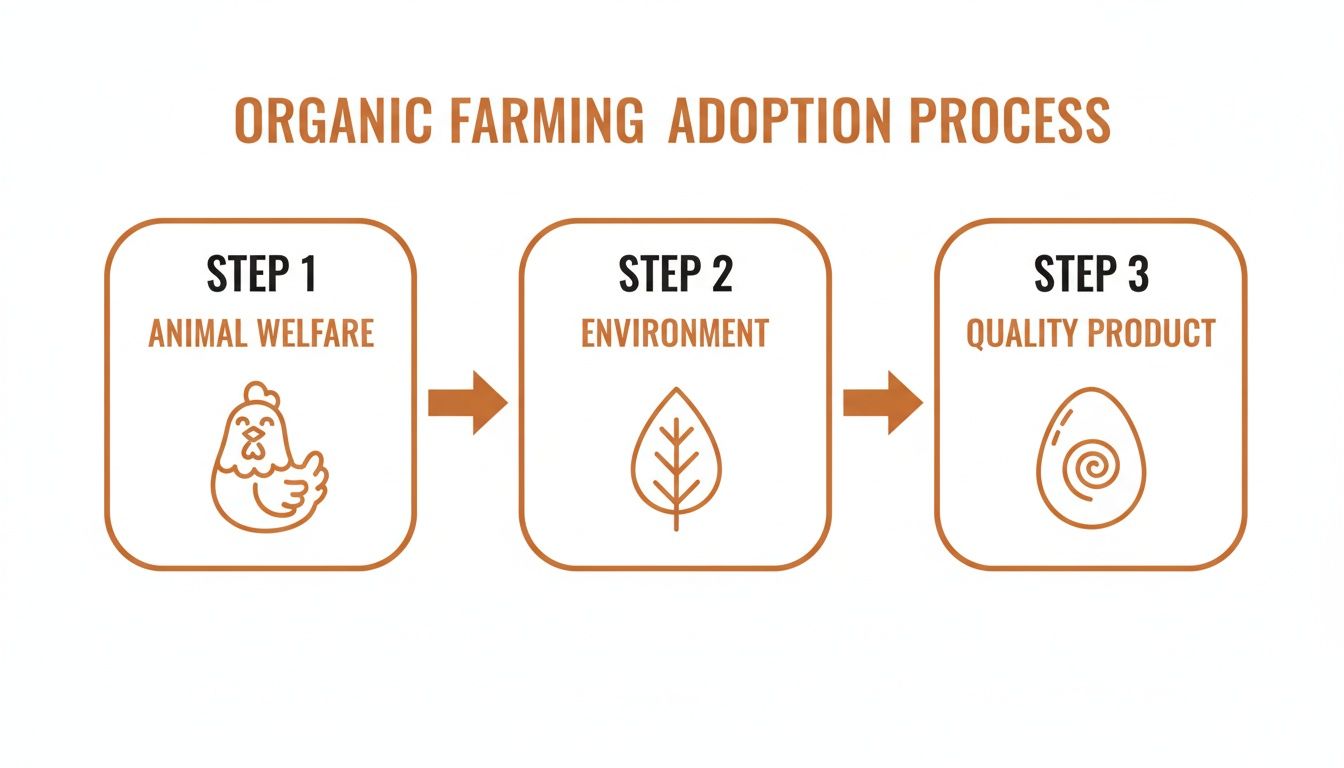
As you can see, the whole approach is built on a foundation of animal welfare, environmental stewardship, and producing a high-quality product.
Getting Ready for the Farm Inspection
After your certifier reviews and approves your OSP, they'll schedule an on-site inspection. An inspector will come out to your farm to make sure what you’ve written down matches what's actually happening on the ground.
Try not to view it as an interrogation. It's really just a verification visit.
The inspector will walk your property, look at your coop, observe your flock, and, most importantly, review your records. This is where being organized really pays off. Have your binders ready to go with feed receipts, health logs, and records showing when your hens were on pasture.
My best piece of advice: Don't wait for the inspection to get your records in order. Start from day one. A simple binder with dividers for "Feed," "Health," and "Sales" works perfectly. This habit turns the inspection into a simple review instead of a stressful scramble.
If the inspector finds something that isn't quite up to standard, they’ll issue a notice of noncompliance. This isn't a failing grade. It's just a chance to fix the issue, update your OSP, and show you're committed to the process. Once everything checks out, you'll get your organic certificate and officially join the community of certified organic producers.
Developing a Natural Feed and Nutrition Plan
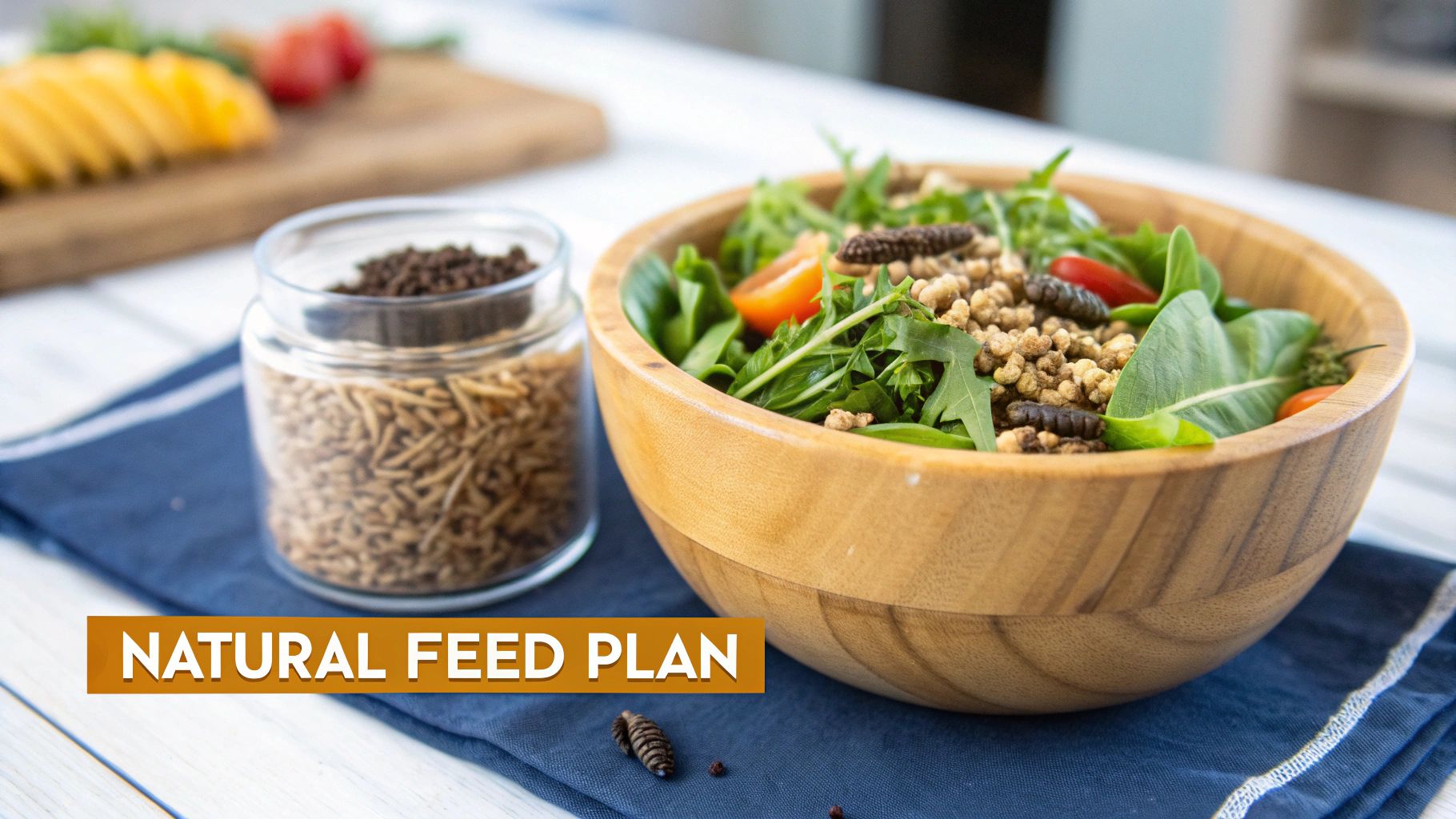
The diet you provide is the absolute foundation of your organic flock. This isn't just about filling feeders; it's a holistic approach that dictates everything from egg quality and shell strength to your birds' overall resilience. The guiding principle is simple: what goes into your hens must be as clean and wholesome as the environment they live in.
This journey starts with the feed. To meet organic standards, all commercial feed must be 100% certified organic. This certification guarantees the grains and seeds were grown on land free from prohibited synthetic pesticides and fertilizers for at least three years. It also means the feed is free of genetically modified organisms (GMOs), animal by-products, and synthetic preservatives.
You really have two main paths here: buy pre-mixed certified organic feed or mill your own. For most small farms and backyard enthusiasts, buying a pre-formulated bagged feed is the most straightforward and reliable route. It guarantees a balanced ration without the logistical headache of sourcing and storing bulk ingredients.
Balancing Rations for Peak Health and Production
A hen's nutritional needs aren't static—they shift dramatically as she grows. A young pullet needs a protein-heavy diet to build a strong frame, while a mature layer needs a completely different formula, rich in calcium, to produce beautiful, strong eggs every day.
- Chicks (0-8 weeks): Need a high-protein "starter" feed, usually around 20-22% protein, to fuel that initial, explosive growth.
- Pullets (8-18 weeks): Should be moved to a "grower" feed with a bit less protein, around 16-18%, to support steady development without pushing them into lay too soon.
- Layers (18+ weeks): Require a "layer" feed with moderate protein (around 16%) but a big boost in calcium to keep up with daily egg production without depleting their own reserves.
One of the most common mistakes I see is feeding a whole mixed-age flock the same thing. Giving high-calcium layer feed to non-layers, like roosters or young pullets, can cause serious kidney problems over time. Always match the feed to the bird's life stage.
To get you started, here's a breakdown of the most critical nutrients for your laying hens and where they can find them in an organic system.
Key Nutrients for a Healthy Organic Flock
| Nutrient | Primary Role | Common Organic Sources |
|---|---|---|
| Protein | Essential for growth, feather production, and egg formation. | Organic soy, peas, fish meal, flax, insects (like BSFL), and foraged bugs. |
| Calcium | Crucial for strong eggshells and skeletal health. | Oyster shell, limestone, bone meal, and high-calcium insects (BSFL). |
| Phosphorus | Works with calcium for bone and eggshell development. | Organic grains, wheat bran, fish meal, and bone meal. |
| Vitamins (A, D, E) | Support vision, immune function, and reproductive health. | Fresh greens, alfalfa, sunlight (for Vitamin D), and certified organic feed. |
| Energy (Carbs/Fats) | Fuels daily activity, body heat, and egg production. | Organic corn, wheat, barley, oats, and sunflower seeds. |
Mastering chicken nutrition is a science, and if you decide to mix your own feed, getting the formula right is absolutely critical. For anyone interested in diving deeper, our guide to a homemade chicken feed recipe is a great resource for understanding how ingredients work together.
The Power of Foraging and Natural Supplements
Certified organic feed is your baseline, but a truly stellar nutrition plan taps into the power of nature itself. Giving your flock access to a well-managed pasture isn't just a box to check for certification; it's a vital part of their diet.
Hens are born foragers. Out on pasture, they instinctively supplement their diet with a rich buffet of:
- Greens: Nutrient-dense grasses and weeds provide key vitamins.
- Seeds: A natural source of energy and healthy fats.
- Insects: Worms, beetles, and crickets offer a high-quality protein kick.
This behavior does more than just provide nutrition—it keeps your birds active, curious, and far less likely to develop stress-related habits like feather pecking.
Introducing High-Calcium Insect Feeds
To round out their diet, especially during stressful periods like the annual molt or in winter when fresh forage is scarce, high-quality supplements can be a game-changer. One of the best and most sustainable options out there is Black Soldier Fly Larvae (BSFL).
Unlike mealworms, which are surprisingly low in calcium, dried BSFL are a nutritional powerhouse. They can contain up to 85% more calcium than mealworms, a mineral that is absolutely essential for laying hens. This bioavailable calcium helps build impressively strong eggshells, dramatically reducing the number of soft or broken eggs you find in the nesting box.
The rich protein in BSFL also supplies the amino acids needed for vibrant, healthy feather regrowth, making it the perfect supplement during molt. Just be sure to choose a high-quality source that raises them in a controlled environment, ensuring the product is clean and free from contaminants. This way, you're giving your flock a pure, powerful boost that fits perfectly within organic principles.
Crafting a Thriving Organic Coop and Pasture
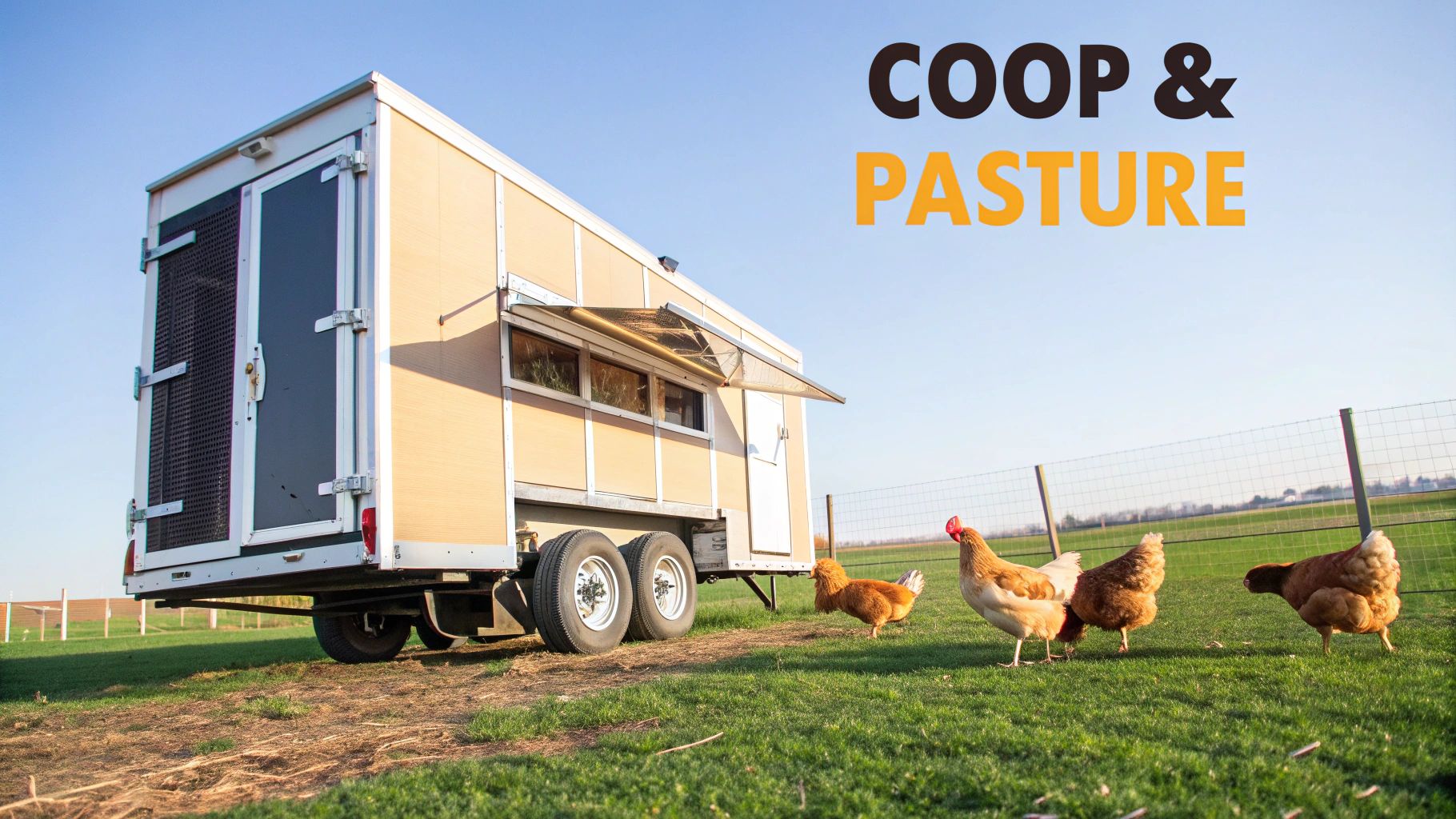
The heart of any successful organic hen operation isn't just the birds—it's the world you build for them. We're not just talking about a box to keep them dry. We’re designing a dynamic system that meets strict organic rules while letting chickens be chickens: scratching, foraging, and living a good life. A well-thought-out coop and pasture system is the bedrock of animal welfare and, ultimately, your farm's productivity.
The demand for this kind of farming is exploding. It's a clear sign that both consumers and farmers are committed to better living conditions for livestock. Just look at the numbers for laying hens: by late 2021, there were more than 25.4 million organic hens spread across 40 states. This boom generated sales topping USD 9.68 million that year alone. The market for eggs from happy, well-cared-for flocks is undeniably strong. You can dig into the full report to learn more about U.S. organic poultry and egg production.
The Foundation: Your Indoor Space
Think of the coop as your flock's home base. It’s their safe haven for roosting at night, laying their eggs, and getting out of a bad storm. Organic regulations are quite specific about this indoor space, primarily to prevent overcrowding and stress. Getting this part right is the first major step toward a healthy, compliant flock.
The big rule here is space. While your certifier will have the final say, a solid benchmark is to provide at least 1.5 to 2 square feet of floor space per hen inside the coop. This gives them enough room to stretch their wings and move around without constantly bumping into each other, which goes a long way in cutting down on pecking and other bad habits.
Ventilation is another non-negotiable. A stuffy, damp coop is a recipe for respiratory illness and ammonia buildup. Your design needs to promote great airflow without creating drafts. A common and effective setup combines ridge vents up high with lower windows or vents you can open or close. This creates a natural chimney effect, pulling moist, stale air out and drawing fresh air in.
Don't underestimate the power of good bedding. The deep litter method is a game-changer for organic coops. You just keep adding fresh, dry carbon material like pine shavings or straw on top of the old stuff. It creates a composting base that absorbs moisture, insulates the floor, and gives the hens something interesting to scratch and dig in all day.
Finally, you have to think about the furniture. Make sure you have enough linear roosting space—I always aim for about 8 to 10 inches per bird—so everyone can find a comfortable spot to sleep. Nesting boxes should be clean, dark, and inviting. A good ratio is one box for every four to five hens, which helps prevent squabbles and cracked eggs. Our guide on designing a coop for easy egg collection has some great tips to make that daily chore a breeze.
Taking It Outdoors: The Pasture System
In organic farming, outdoor access isn't a bonus feature—it's a requirement. The pasture is where your hens truly come alive, foraging for tasty insects, taking dust baths, and soaking up the sun. Managing this space well is just as important for your flock's health as it is for the long-term health of your land.
The pasture itself has to be certified organic, which means no synthetic pesticides or fertilizers have touched it for at least three years. Your goal isn't just dirt and grass; it's a vibrant, living landscape that supplements your flock’s diet and keeps them stimulated.
A single, static pasture will quickly become a muddy, overgrazed lot. This is where rotational grazing becomes your secret weapon. By fencing off your pasture into smaller paddocks and moving the flock from one to the next, you give the land a chance to rest and regrow. It's a simple concept with huge benefits.
This method is a win-win-win:
- Healthier Soil: The hens' scratching and manure act as natural fertilizer, building rich topsoil over time.
- Fewer Parasites: Moving the flock breaks the life cycle of intestinal worms and other pests that thrive in contaminated ground.
- Fresh Forage: Your birds are constantly moving to fresh salad bar of grass, clover, and bugs, which boosts their nutrition.
Mobile coops, often called "chicken tractors," are the perfect partner for a rotational system. These shelters on wheels make it incredibly easy to move your entire flock to fresh pasture every few days or once a week. Whether you have a large trailer or a small A-frame, the principle is the same: keep the birds moving to keep the pasture thriving.
Keeping Your Flock Healthy the Organic Way
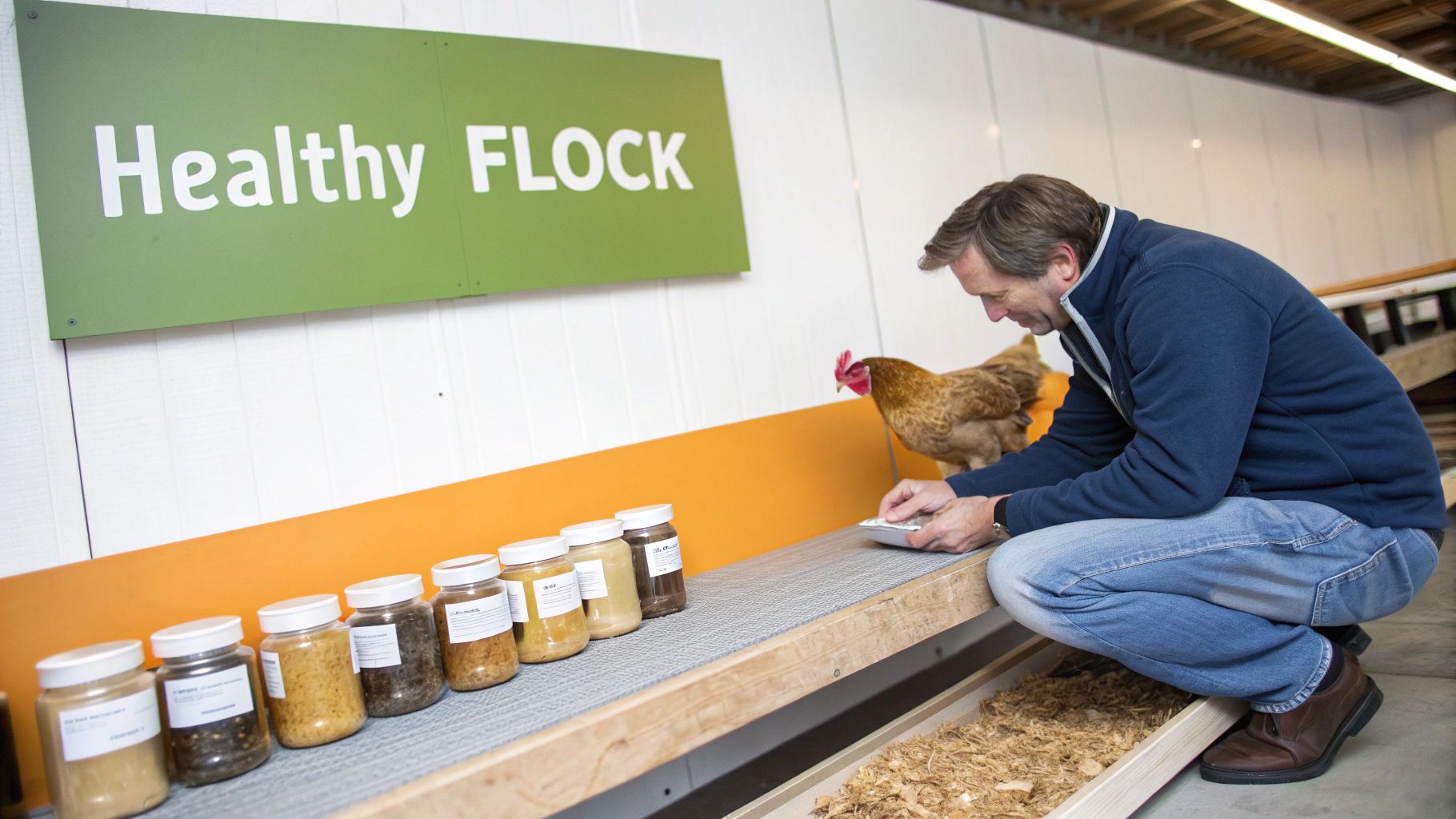
When you're farming hens organically, the old saying "an ounce of prevention is worth a pound of cure" isn't just a quaint phrase—it's your entire management philosophy. You can't reach for routine antibiotics or synthetic chemicals, so your whole system has to be built around preventing problems before they start.
This means focusing everything on building a resilient, healthy flock from day one. It all boils down to a clean environment, low-stress living conditions, and a rock-solid diet that keeps their immune systems firing on all cylinders.
At the heart of this preventative mindset is biosecurity. It might sound like a complicated scientific term, but it’s really just a set of practical, common-sense habits to keep diseases off your farm. A good biosecurity plan is your first and most effective line of defense.
Creating a Biosecurity Bubble
It helps to think of your farm or homestead as a protected bubble. Every time something new crosses that boundary—a person, a vehicle, a new chicken—it introduces a potential risk. Your job is to manage those entry points with care.
A ridiculously simple but effective tactic is to have dedicated farm boots. Keep a pair of boots that you only wear inside the coop and pasture areas. This one habit can stop you from tracking in all sorts of nasty contaminants you might pick up in the outside world.
You'll also need a plan for visitors. If friends or neighbors want a tour, have them wear clean shoes or provide some disposable boot covers. It’s also smart to politely ask that they don’t visit if they’ve been around other poultry flocks in the last 24 to 48 hours.
But let's be honest, the biggest biosecurity threat usually comes from the excitement of getting new birds.
Quarantine is non-negotiable. I can't stress this enough: never, ever add new hens directly to your existing flock. They need their own separate coop and run, ideally at least 30 to 40 feet away, for a minimum of 30 days. This buffer period gives you plenty of time to watch for any signs of sickness before they mingle with your girls.
Boosting Immunity the Natural Way
A hen's best defense against getting sick is her own immune system. While a clean coop and a low-stress life are the foundation, you can also use a few natural supplements to give your flock an extra boost. Think of these not as cures, but as tools for supporting good gut health and overall vitality.
Lots of organic farmers, myself included, add a splash of raw, unfiltered apple cider vinegar (ACV) to the waterers a few times a week. The "mother" in the ACV is full of probiotics that support a healthy gut. A good rule of thumb is about one tablespoon per gallon of water.
Poultry-specific probiotics are another excellent tool for maintaining that healthy gut flora, which is directly tied to immune response. If you don't want to buy a special supplement, a spoonful of plain yogurt or kefir makes a great occasional treat.
You can also look to your garden or pantry for support:
- Garlic: Crush a few cloves and add them to their water to leverage its natural immune-supporting properties.
- Oregano: Known for its natural antibacterial qualities, you can add fresh leaves to their feed or use oil of oregano in their water.
- Herbs: I like to sprinkle dried herbs like thyme, parsley, and sage in their feed and nesting boxes. It provides enrichment and may offer subtle health perks.
Managing Common Health Challenges Organically
Even with the best preventative care, health issues will pop up. It happens. The key is to catch problems early and respond quickly with organic-compliant solutions. This means you need to become a student of your flock's behavior.
Pay attention to the little things. Is one hen hanging back from the flock? Does she seem listless or have a pale comb? These are the first signals that something is wrong. Knowing the common symptoms of illness in chickens is critical for intervening before a small issue becomes a big one.
External parasites like mites and lice are a constant battle. The birds' best defense is a well-maintained dust bath—just a shallow pit of loose dirt, sand, and a bit of food-grade diatomaceous earth. They instinctively know how to use it to smother pests in their feathers.
For internal parasites like worms, rotational grazing is your strongest weapon. Moving hens to fresh pasture breaks the parasite life cycle, drastically reducing their exposure. If you do suspect a worm problem, many organic-approved dewormers use natural ingredients like pumpkin seeds or garlic. Just remember to always check with your certifying agent before giving any treatment to make sure it's on their approved list.
So, You're Ready to Sell Your Organic Eggs?
You've done the hard part—you've raised healthy hens and are collecting beautiful, nutrient-rich organic eggs every day. That's a huge win. But getting those eggs into your customers' kitchens is the final piece of the puzzle, and it’s just as important as everything you’ve done so far. This is where you turn all that hard work into a sustainable business.
Before you sell a single carton, though, let's talk labeling. If you've gone through the process to become certified, you absolutely must use the official USDA Organic seal. Think of it as a badge of honor. It instantly tells shoppers you've met the rigorous standards, and for many people, it's a non-negotiable sign of quality they actively look for.
Where to Sell Your Eggs
For most small farms, selling directly to the people who will eat your eggs is the way to go. You’ll get the best prices, and honestly, it’s far more rewarding to build those personal connections.
Here are a few places where I've seen small organic producers thrive:
- Farmers' Markets: This is the quintessential starting point for a reason. You have a captive audience of people who are already there specifically to buy fresh, local food. It’s a perfect match.
- Community Supported Agriculture (CSA): Find a local vegetable CSA and see if they'd be open to an "egg add-on." This is a brilliant way to lock in consistent, pre-paid sales week after week. It takes a lot of the guesswork out of your cash flow.
- Local Restaurants: Chefs at farm-to-table restaurants are always on the hunt for top-tier local ingredients. Walk in with a dozen of your best-looking eggs and be ready to talk about your farm. That one conversation can easily turn into a steady, long-term wholesale account.
Here's a tip that’s served me well: Don't just sell eggs, sell your story. When you're at the market, you're not just a vendor—you're the farmer. Put up some great photos of your hens out on green pasture. A simple sign explaining what "organic" and "pasture-raised" really mean on your farm can make a world of difference.
It's Your Story That Sells
In a market where customers have a lot of choices, your story is what sets you apart. What got you into raising organic hens in the first place? What’s unique about how you do things?
Maybe you're passionate about your rotational grazing system that builds soil health, or you're proud of the high-quality supplemental feeds you use. Sharing those details builds a powerful connection. It shows people the true value behind the price and turns a first-time customer into a loyal advocate for your farm.
Questions I Hear All the Time About Raising Organic Hens
When you're first dipping your toes into the world of organic chicken keeping, you're bound to have questions. It’s a rewarding path, but it has its own set of rules. Here are the honest answers to the questions that come up most often.
What’s the Toughest Part?
Hands down, the two biggest hurdles are the cost of feed and the paperwork. Certified organic feed can easily run 25-50% more than conventional feed, and that hits your wallet directly.
Then there’s the record-keeping. For organic certification, you have to meticulously document everything—and I mean everything. From feed receipts to when and where you moved your flock on pasture, it’s a non-negotiable part of the deal that requires real discipline.
Can I Just Start with a Few Chickens?
Of course! In fact, I highly recommend it. Many of the most successful organic farms I know started with just a handful of hens in the backyard.
Starting small lets you get the hang of organic practices without the pressure of a huge investment. You can fine-tune your systems, figure out your record-keeping flow, and even start building a small, loyal customer base. As you get more comfortable and see demand, you can scale up.
My Two Cents: The core principles of organic care are the same whether you have 10 hens or 1,000. Starting small is just a smart, lower-risk way to learn the ropes and prove your market before you go all in.
What's the Daily Time Commitment Like?
For a small flock—say, under 50 birds—you're probably looking at about 30-45 minutes a day. That time covers the non-negotiables: feeding, fresh water, collecting eggs, and giving everyone a quick once-over to make sure they look healthy.
You'll also have weekly chores like moving a chicken tractor or doing a coop clean-out, which might add another hour or two. As your flock gets bigger, so does the time commitment, but you also get much more efficient as you find your groove.
At Pure Grubs, we're all about giving your flock the best nutritional support with high-quality, USA-grown insect protein. Our Black Soldier Fly Larvae are packed with the calcium and protein your hens need for strong eggshells and beautiful feathers, fitting perfectly into an organic feeding strategy. To give your flock a boost, check us out at puregrubs.com.