

Why Did My Chickens Quit Laying Eggs
If you're asking, "why did my chickens quit laying eggs," the answer almost always comes down to one of five things: daylight, diet, stress, health, or natural cycles. Getting a handle on these five areas is the first step to getting those nesting boxes full again.
Your Guide to the Empty Nesting Box
It’s a moment every chicken keeper knows well. You reach into the nesting box, expecting that satisfying warmth of a fresh egg, but you come up empty-handed. When it happens day after day, it's easy to start worrying.
But a pause in egg production is rarely a mystery without a solution. Most of the time, your hens are just responding to something in their environment or a natural shift in their own bodies.
Think of an egg-laying slump not as a failure, but as a message from your flock. They're telling you something isn't quite right. The real trick is learning how to read the signs.
Diagnosing the Problem
Before you can fix anything, you have to figure out what's actually going on. Did production drop off a cliff overnight? That might point to a predator scare. Has it been a slow, gradual decline? That's more likely a sign of seasonal light changes or a gap in their nutrition.
Here are the most common culprits when your chickens quit laying:
- Environmental Stressors: This is a big one. It covers everything from not enough daylight in the fall and winter, to an overcrowded coop or a hawk circling overhead.
- Nutritional Deficiencies: An egg is a nutritional powerhouse, and a hen can't make one from nothing. A diet low in protein or calcium, or a habit of giving too many "junk food" treats, will shut down the egg factory fast.
- Natural Cycles: Hens have their own rhythms. They'll stop laying during their annual molt to pour energy into regrowing feathers, or when they go broody and decide it's time to hatch some eggs.
- Underlying Health Issues: Pests like mites or internal worms can sap a hen's energy, forcing her body to choose survival over laying.
Of course, sometimes the problem isn't that they've stopped laying—it's that you just can't find the eggs! Before you dive too deep into diagnostics, give your coop and run a thorough search for a secret nest. If you’re still coming up empty, you can get some great ideas from our guide to improving your chicken coop egg collection.
This simple decision tree can help you narrow down the possibilities in a hurry.
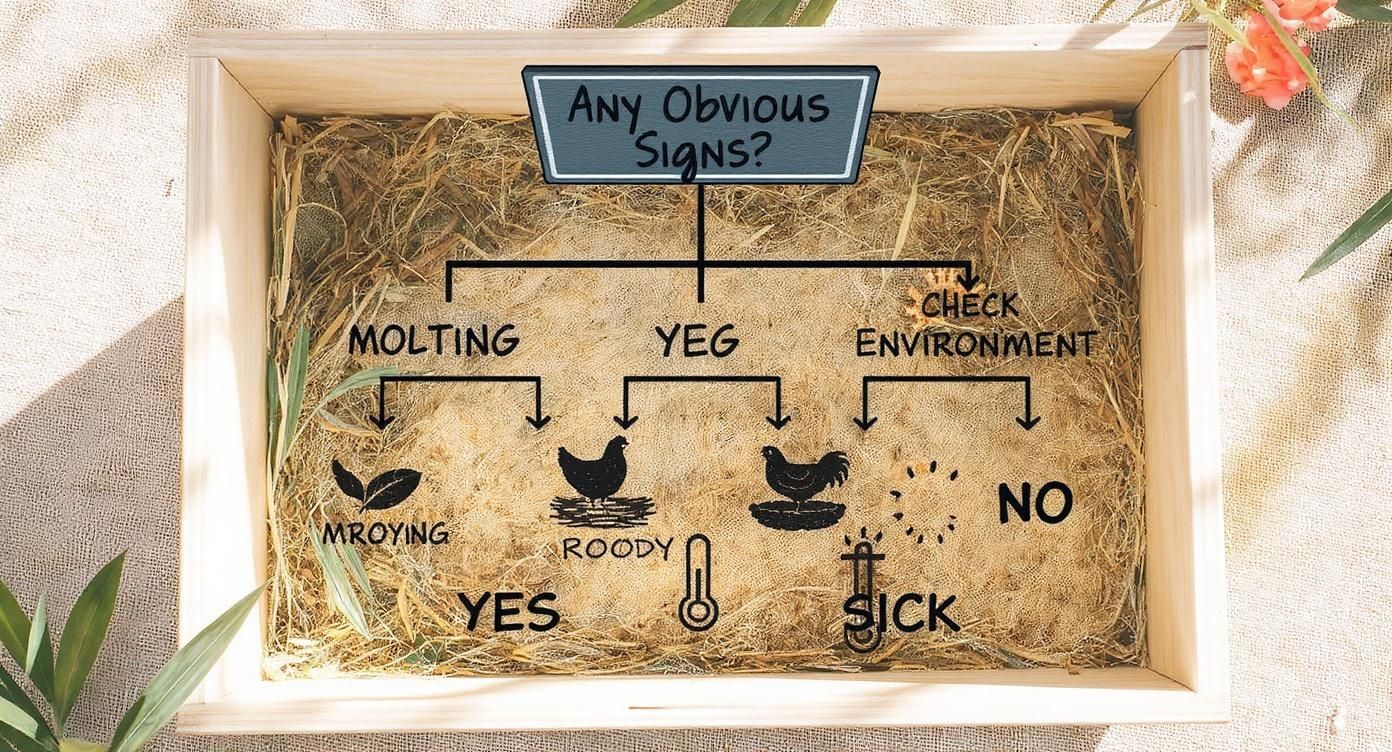
As you can see, if there are obvious physical signs, you're likely dealing with molting, broodiness, or an illness. If your hens look perfectly normal, it's time to start looking at their environment for clues.
Common Reasons for an Egg Laying Pause
Here's a quick look at the most frequent causes for a drop in egg production and their typical recovery times.
| Reason | Key Symptom | Typical Downtime |
|---|---|---|
| Molting | Feather loss, "pin feathers" | 6-12 weeks |
| Broodiness | Sitting on nest, puffed-up, growling | 3-4 weeks (if "broken") |
| Seasonal Lighting | Shorter days (fall/winter) | 2-4 months (or until light is added) |
| Nutritional Gap | Thin shells, lethargy, slow recovery | Varies, but can improve in 1-2 weeks |
| Acute Stress | Sudden drop after an event (e.g., predator) | 1-2 weeks |
| Illness/Parasites | Lethargy, poor appetite, abnormal droppings | Varies widely based on issue |
This table can give you a rough idea of what to expect, but remember that every flock and every hen is a little different. Patience is key.
How Coop Stress Shuts Down Egg Production
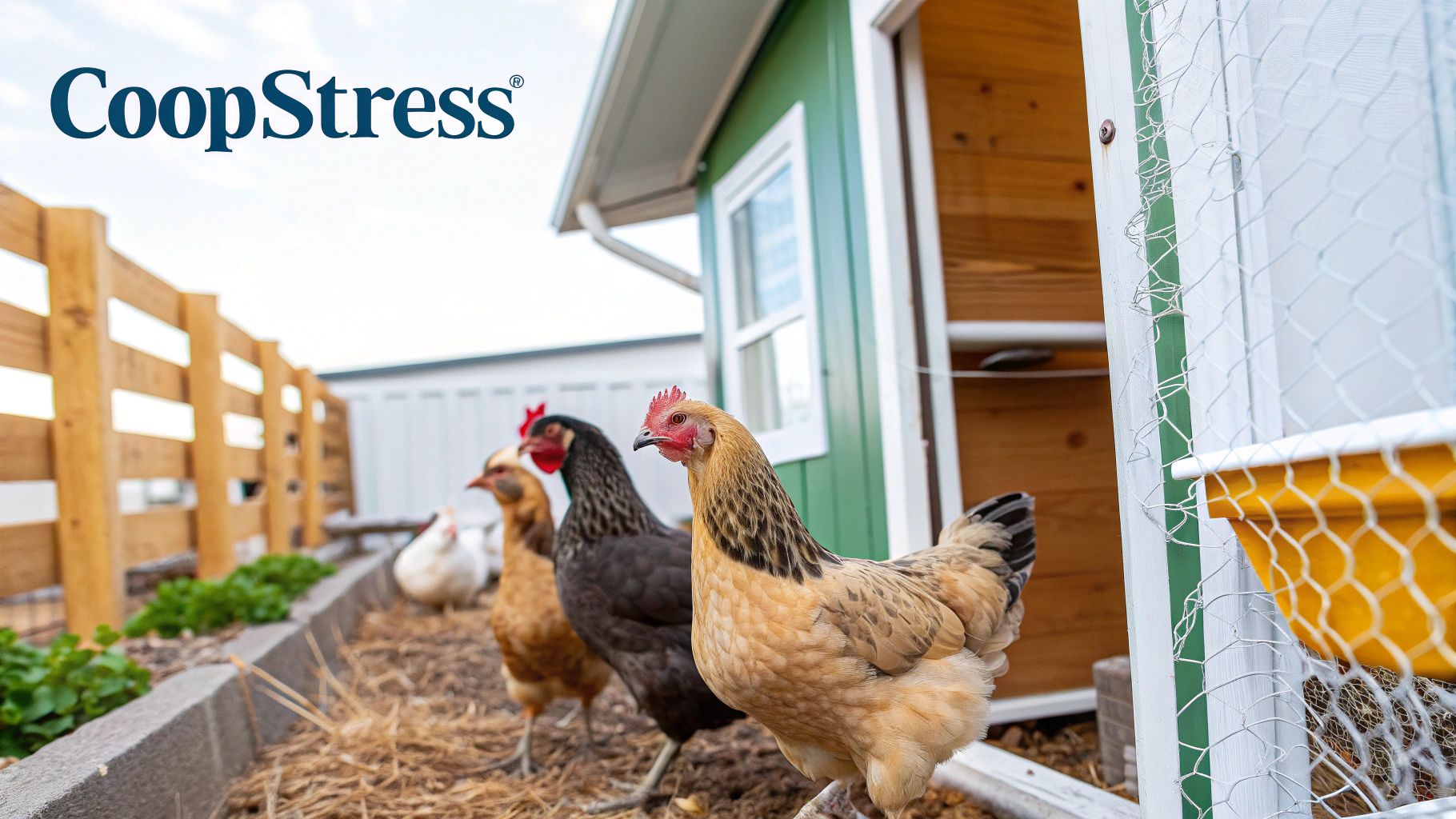
When the egg basket starts coming up empty, the first place I always check is the coop environment itself. Chickens are creatures of habit, and they're far more sensitive to their surroundings than most people realize. A stressed-out hen will divert all her energy from producing eggs to simple survival, and it doesn’t take much to push her over that edge.
The most common environmental trigger, without a doubt, is the change of seasons. A hen’s entire reproductive cycle is wired to daylight. To keep laying consistently, she needs about 14 to 16 hours of light per day. Once autumn rolls in and the days dip below 12 hours, her body gets the natural signal that it's time to take a break for the winter.
This is a deep-seated biological response, nature's way of ensuring she isn't trying to raise chicks when food is scarce and the weather is harsh. For a lot of us backyard keepers, this seasonal pause is a well-deserved rest for the flock.
Using Supplemental Light the Right Way
If you need a steady supply of eggs year-round, you can use supplemental lighting to trick their bodies into thinking the days are still long. But you have to be smart about it, or you’ll just create more stress. The goal here is to gently mimic the slow, natural sunrise of springtime.
- Go for Low Wattage: A simple 40-watt bulb is plenty for a standard coop. You want the light to be just bright enough for them to see their food and water, not so bright it feels like the middle of the day.
- Add Light in the Morning: This is the most important tip. Always set your timer to add the extra light in the pre-dawn hours. This lets the hens roost naturally as the sun goes down, which prevents the shock of being plunged into sudden darkness when a timer clicks off in the evening.
- Consistency is Everything: A timer is non-negotiable. The light needs to come on at the exact same time every single day. An erratic schedule is a major stressor and will completely defeat the purpose of adding light in the first place.
Key Takeaway: A hen’s body requires at least eight hours of complete, uninterrupted darkness to rest and recharge. Never, ever leave a light on 24/7. This can cause serious health issues and throw their natural rhythms into chaos.
Beyond just light, a hen's sense of security is everything. Stressors that seem minor to us can feel like a life-or-death threat to them, and that's enough to bring egg production to a dead stop.
Common Environmental Stressors
Try to look at your coop and run from a chicken’s point of view. Is it a calm, predictable home, or is it a place of constant chaos and threats?
Overcrowding is a classic culprit. A good rule of thumb is to provide at least four square feet of coop space per hen and about ten square feet in the run. Without that personal space, bullying and pecking order disputes go through the roof, creating a constant state of tension that shuts down laying.
Bringing new birds into the flock is another guaranteed stress event. It throws the entire social hierarchy into disarray, leading to fights and anxiety until a new pecking order is established. It’s not uncommon for the whole flock to stop laying for a week or more during this transition.
I learned this lesson the hard way a few years back when my neighbor got a very yappy puppy. Its constant barking right along the fence line was enough to put my entire flock off lay for almost two weeks. They saw that noise as a relentless predator, even though the dog couldn’t get to them. Once the novelty wore off for the pup and the barking subsided, the eggs slowly started to reappear.
That experience really drove home how even unseen threats can have a real impact. Loud construction noises, kids constantly running through the yard, or even just the lingering scent of a raccoon that snooped around last night can create an atmosphere of fear. In that state, a hen’s body will always choose self-preservation over making you an egg. A secure, predictable, and peaceful environment isn't just nice to have—it's essential for a productive flock.
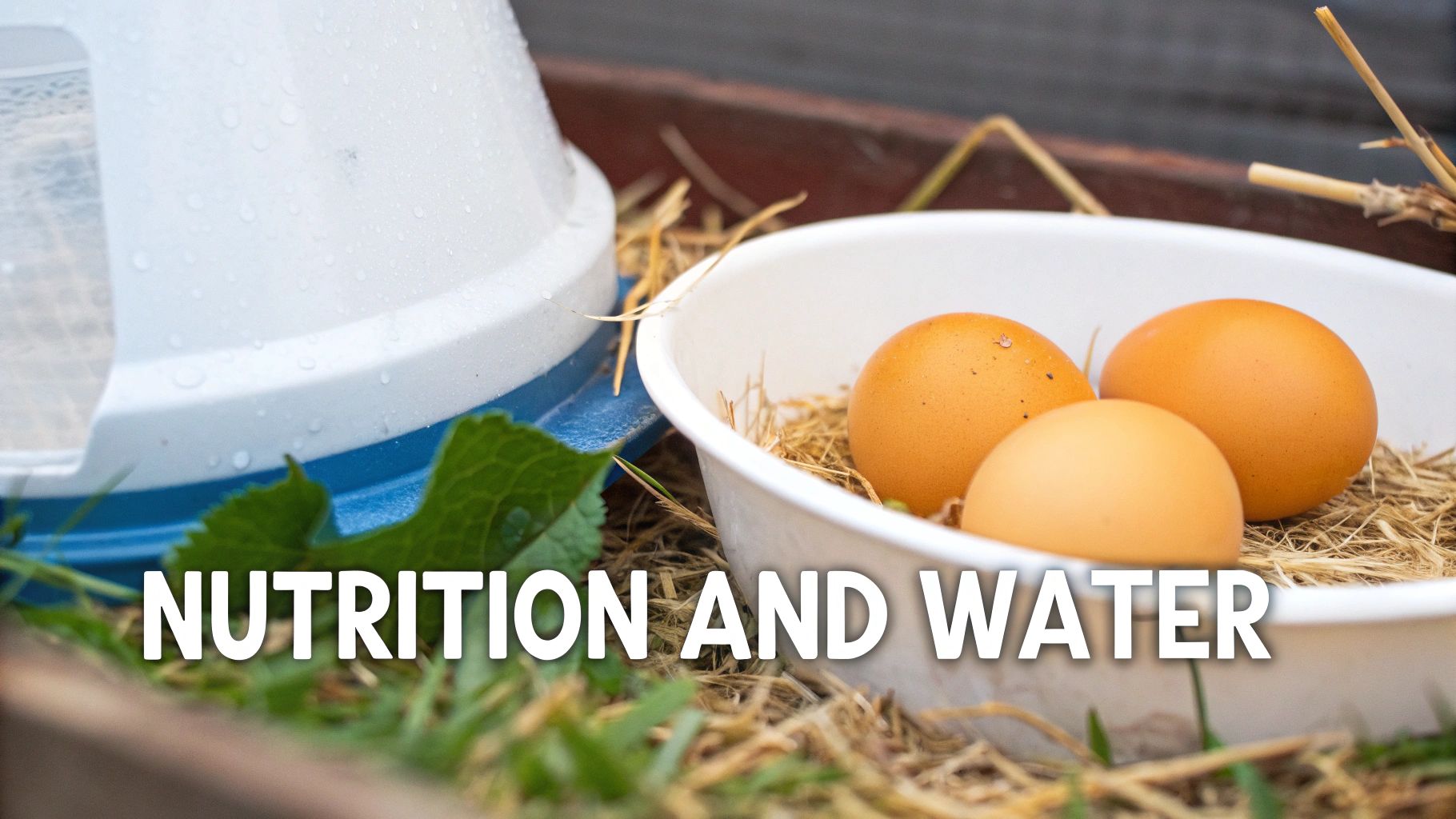
The Impact of Nutrition and Hydration
If you've ruled out stress and lighting issues, your next stop should be the feed trough. An egg is a nutritional powerhouse, and a hen’s body simply can't create one day after day without the right fuel. In my experience, when my own hens suddenly stop laying, a quick diet audit is often all it takes to find the culprit.
The foundation of any laying flock's diet has to be a high-quality layer feed. This isn't just generic "chicken food"; it’s a specific recipe designed to provide everything a hen needs to produce eggs. Check the label—you want a feed with a protein content between 16-18%. Protein is crucial for everything from feather health to immune function, but it's an absolute non-negotiable for egg formation.
Then there's calcium. It takes a staggering 2 grams of elemental calcium to form a single eggshell. If a hen isn't getting enough from her diet, she’ll pull it directly from her own bones, a dangerous and unsustainable process. To protect herself, her body will eventually just shut down the egg factory. This is precisely why you should always have crushed oyster shell available in a separate dish, so they can take what they need, when they need it.
The Problem With Unbalanced Treats
We all love spoiling our flocks, but tossing them too many kitchen scraps can do more harm than good. Think of their layer feed as a perfectly balanced meal. When you give them too many low-nutrient treats like lettuce, bread, or scratch grains, it's like letting a toddler fill up on candy before dinner.
They get full from the "junk food" and ignore their proper feed, which effectively dilutes their overall nutrition. Before you know it, they have a major deficit in the protein and calcium needed for egg production, and the assembly line grinds to a halt. A good guideline to live by is the 90/10 rule: at least 90% of their diet should come from their complete layer feed, with no more than 10% from healthy treats.
Expert Tip: A sudden increase in thin-shelled or shell-less "wind eggs" is a classic red flag for a calcium deficiency. It’s your hen's first signal that her diet isn't supporting proper shell formation.
Boosting Nutrition to Kickstart Laying
If you suspect a nutritional slump is the problem, you can actively give your flock’s diet a boost to get them back on track. This is where high-protein, high-calcium supplements become your best friends.
When you're trying to fill these nutritional gaps, a few key supplements can make a huge difference. Each one offers something a little different.
Nutrient Boosters to Encourage Laying
| Supplement | Primary Nutrient | Best Use Case | Feeding Tip |
|---|---|---|---|
| Dried Grubs (BSFL) | Protein & Calcium | For an all-in-one boost to support both egg whites and strong shells. | Mix a small scoop into their feed or offer as a high-value afternoon treat. |
| Oyster Shell | Calcium | To correct calcium deficiencies and prevent weak or missing eggshells. | Always offer free-choice in a separate container, never mixed into the feed. |
| Fermented Feed | Probiotics & Vitamins | To improve gut health and help hens absorb more nutrients from their base feed. | Prepare small batches daily; feed should be damp but not soupy. |
| Flax Seeds | Omega-3 Fatty Acids | For enriching the eggs with healthy fats and supporting overall hen health. | Offer whole or cracked seeds in very small amounts as a treat. |
Choosing the right supplement often comes down to identifying the specific gap in your flock's diet.
One of the most effective ways to provide this boost is with dried Black Soldier Fly Larvae. Unlike mealworms, which are surprisingly low in calcium, grubs like Pure Grubs offer a powerful one-two punch of both protein and readily absorbable calcium. They provide the raw materials for the entire egg—protein for the inside and calcium for the shell. For more specific ideas, check out our detailed guide on what to feed laying hens for optimal health.
The Critical Role of Water
Finally, never, ever underestimate the power of water. An egg is about 75% water. If a hen goes without access to fresh, clean water for even a few hours on a hot day, her body can halt egg production immediately. Dehydration is a massive stressor, and her system will always prioritize retaining moisture for survival over making an egg.
Make sure your waterers are always full, clean, and easily accessible. In the winter, this means checking them multiple times a day to break up ice. A dehydrated hen is a hen that will not lay, making consistent hydration just as vital as the feed she eats.
Understanding Molting and Broodiness
Sometimes, the drop in egg production has nothing to do with what you're doing wrong. It's often just a natural part of a hen's life cycle. Two of the most common—and totally normal—culprits are molting and broodiness.
If your coop suddenly looks like a pillow fight exploded and your hens are looking a bit pathetic and ragged, don't panic. You're just witnessing the annual molt. This usually happens in the fall, and it's how your flock sheds its old, tired feathers to grow a beautiful, dense new coat for winter.
Making new feathers is a massive undertaking for a hen’s body. Since feathers are made of 85% protein, she has to divert all her nutritional resources away from making eggs and put them directly into feather production. Egg laying will screech to a halt and won't start again until her new plumage is fully grown, which can take anywhere from 6 to 12 weeks.
Supporting a Molting Hen
You can’t stop a molt from happening, but you can absolutely help your flock get through it faster and with less stress. The secret is to seriously up their protein intake.
- Boost Their Protein: A good move is to temporarily switch to a higher-protein feed. Look for a "feather fixer" blend or even a starter/grower feed with 20-22% protein.
- Provide High-Value Treats: Supplement their diet with protein-packed snacks. This is the ideal time to offer Pure Grubs, as that high-quality protein directly fuels feather regrowth.
- Minimize Handling: Those new pinfeathers emerging are incredibly sensitive and even painful. Try to avoid picking up your hens during this time—they'll thank you for it.
Once their sleek new feathers are in, they'll typically get right back to laying, often with more gusto than before.
A Personal Tip: When my flock is molting, I make sure their feeder is always full and offer high-protein treats daily. It's a simple strategy, but I've found it makes a noticeable difference in how quickly they get feathered out and back to filling the nesting boxes.
What Is a Broody Hen?
The other major natural pause you'll encounter is broodiness. Trust me, you'll know it when you see it. A broody hen will plant herself in a nesting box and refuse to leave. She’ll puff up her feathers, flatten her body over a clutch of eggs (or even an empty nest), and emit a low, guttural growl if you dare get too close.
This is a powerful, primal instinct to hatch eggs. A determinedly broody hen will barely eat or drink, and she will stop laying completely. While this is exactly what you want if you're trying to hatch chicks, it can be a problem if you aren't. A broody hen can lose a dangerous amount of weight if left to sit for weeks on end.
To get her back to her normal self, you'll need to "break" her broodiness. This usually means making her nesting spot less cozy and encouraging her to rejoin the flock. Gently removing her from the box multiple times a day and even blocking her access to it can work. A stubborn broody can be a frustrating reason your chickens quit laying eggs, but a little gentle persistence is usually all it takes.
Time to Play Detective: Uncovering Hidden Health Issues
So, you’ve tweaked the lighting, upgraded their feed, and created a coop environment that’s the chicken equivalent of a five-star resort. And yet, the nesting boxes are still empty. When the usual suspects have been ruled out, it’s time to dig a little deeper and consider your hens' health.
A hen's body is incredibly smart. When it detects an illness or a parasite infestation, it goes into survival mode. All non-essential systems are shut down, and egg production is the first thing to go. Every last bit of energy is redirected to fighting off the problem. A hen can look perfectly fine on the outside while a hidden issue is quietly draining her resources.
How to Give Your Hens a Quick Health Check
Learning how to do a quick, hands-on wellness check is one of the most valuable skills you can have as a chicken keeper. Think of it as preventative maintenance—it’s not just for when they stop laying, but a great way to catch problems before they spiral.
First, just watch your flock. Do they all seem active, scratching and pecking with purpose? Or is one hen hanging back, looking puffed up and miserable? Behavioral changes are almost always the first sign something is off.
When you handle a hen, do it calmly and systematically. A healthy bird should feel solid and well-muscled, especially around her breastbone (keel).
- Comb and Wattles: They should be a vibrant, fleshy red. If they look pale, shrunken, or have a bluish tint, that’s a big red flag for poor circulation or a potential illness.
- Eyes and Nostrils: Check for brightness and clarity. Any discharge, bubbling, or swelling needs immediate attention.
- Breathing: Listen closely. You shouldn't hear any sneezing, gurgling, or wheezing. Those sounds often point to a respiratory infection.
- Droppings: Get familiar with what normal poop looks like for your flock. Runny, bloody, or weirdly colored droppings are a clear sign of trouble.
These simple checks are your best first defense. For a more in-depth guide, we've put together a list of the primary symptoms of illness in chickens that can help you pinpoint what might be wrong.
The Invisible Egg Thieves: Mites, Lice, and Worms
Parasites are notorious for causing an abrupt halt in egg production. They are tiny energy vampires, stealing vital nutrients from your hens and leaving them too weak to lay.
The most common culprits are external parasites like mites and lice. These critters are a huge nuisance, hiding under feathers (especially around the vent) and feeding on blood and skin. A bad infestation leads to anemia, intense stress, and a complete shutdown of the egg factory. To check for them, gently part the feathers near the vent and under the wings. In good light, you’ll be able to see tiny dark specks moving around or clusters of white eggs stuck to the feather shafts.
Internal worms are just as bad. These parasites set up shop in the digestive tract and steal nutrients right from the food your hen eats. A heavy worm load makes it impossible for a hen to get the resources she needs to form an egg. Chatting with a vet to establish a regular deworming schedule is a fundamental part of keeping a healthy, productive flock.
A sick hen’s only job is to get better. Her body won't waste precious energy making an egg until she feels completely healthy and safe again. This is why being proactive about flock health is the real secret to keeping those nesting boxes full.
We saw just how fragile commercial egg production can be during the global crisis of 2024-2025. Between early 2022 and March 2025, disease outbreaks led to the culling of over 170 million birds in the U.S. alone. A huge number of those were laying hens, causing massive disruptions. You can discover more insights about the global egg market report to see how quickly flock health can impact the entire supply chain.
Common Questions About Egg Laying Pauses
https://www.youtube.com/embed/n3vjblu5Xbo
Even after you've pinpointed why your chickens stopped laying, you'll probably still have a few questions. That’s perfectly normal. Knowing what to expect and how long you might have to wait can give you some peace of mind while you watch those empty nest boxes.
Let's dig into some of the most common things keepers ask.
How Long Until My Hens Start Laying Again?
This really comes down to what caused them to stop in the first place. Getting back to laying isn't like flipping a switch, and a little patience goes a long way.
A simple fix, like refilling a waterer that ran dry for an afternoon, might have your hens back to business in a day or two. But if you’ve corrected a bigger nutritional issue, give them 2 to 3 weeks to get their systems fully back on track before you see eggs again.
The longer, natural cycles take more time. A hen going through a hard molt is putting every ounce of her energy into growing new feathers, a process that can easily take 4 to 8 weeks from start to finish. If you’ve just broken a broody hen, it might take a week for her to snap out of it, and then another week or two for her hormones to reset for laying.
At What Age Do Hens Stop Laying for Good?
A hen does her best work in her first couple of years. After that, you'll notice a slow, natural decline in production.
Most of our girls will still give us the occasional egg into their fifth year, but they usually retire for good around age six or seven. Even then, she’s still a valuable part of the flock—a champion bug-eater and garden pest patrol for years to come!
Don't Forget the Pecking Order: Bringing new birds into the flock is a huge social shake-up. The stress of figuring out a new pecking order almost always puts the whole flock off-lay for a week or two. My advice? Always integrate new members slowly and carefully to keep the disruption to a minimum.
Should I Worry If I Get No Eggs for One Day?
Nope, not at all. Even the most reliable layer has an off day. A hawk swooping overhead, an unexpectedly hot day, or just a tiny hiccup in her cycle can cause a hen to skip a day. A single day with an empty nesting box is no reason to sound the alarm.
It's when a good layer goes three or more days without an egg, or when several hens stop all at once, that it’s time to put on your detective hat. That's your cue to start looking for the real reason.
Once you've sorted out any environmental or health issues, a nutritional boost is the quickest way to get things going again. Pure Grubs deliver that high-quality protein and essential calcium they need to bounce back from a molt and get their egg-laying engines restarted. Give them the building blocks they need to start laying again. Learn more at https://puregrubs.com.