

Your Complete Leopard Gecko Feeding Guide for a Thriving Pet
Keeping a leopard gecko happy and healthy all comes down to their diet. It’s not just about tossing a few crickets in the tank; it's about providing the right balance of gut-loaded live insects, essential supplements, and a feeding schedule that evolves as they grow. Nailing their nutrition from the start is the best way to head off common health problems and help your gecko truly thrive.
Your Essential Leopard Gecko Feeding Blueprint
Figuring out what to feed your leopard gecko can feel a bit overwhelming at first, but I promise it's simpler than it looks. The easiest way to think about it is like building a healthy meal for a person—you need a good mix of protein, vitamins, and minerals. For a gecko, that translates to a diet of live insects dusted with the right supplements.
This guide is your roadmap. We'll walk through the fundamentals of what to feed, how often, and how much. By the end, you'll have the confidence to build a feeding routine that keeps your little friend in peak condition.
A Gecko's Diet Through Time
A leopard gecko’s appetite and nutritional needs change quite a bit as they grow up. A tiny hatchling has a ravenous appetite to fuel its growth, while a full-grown adult eats much less often. This timeline gives you a great visual of how their feeding schedule and supplement needs shift over time.
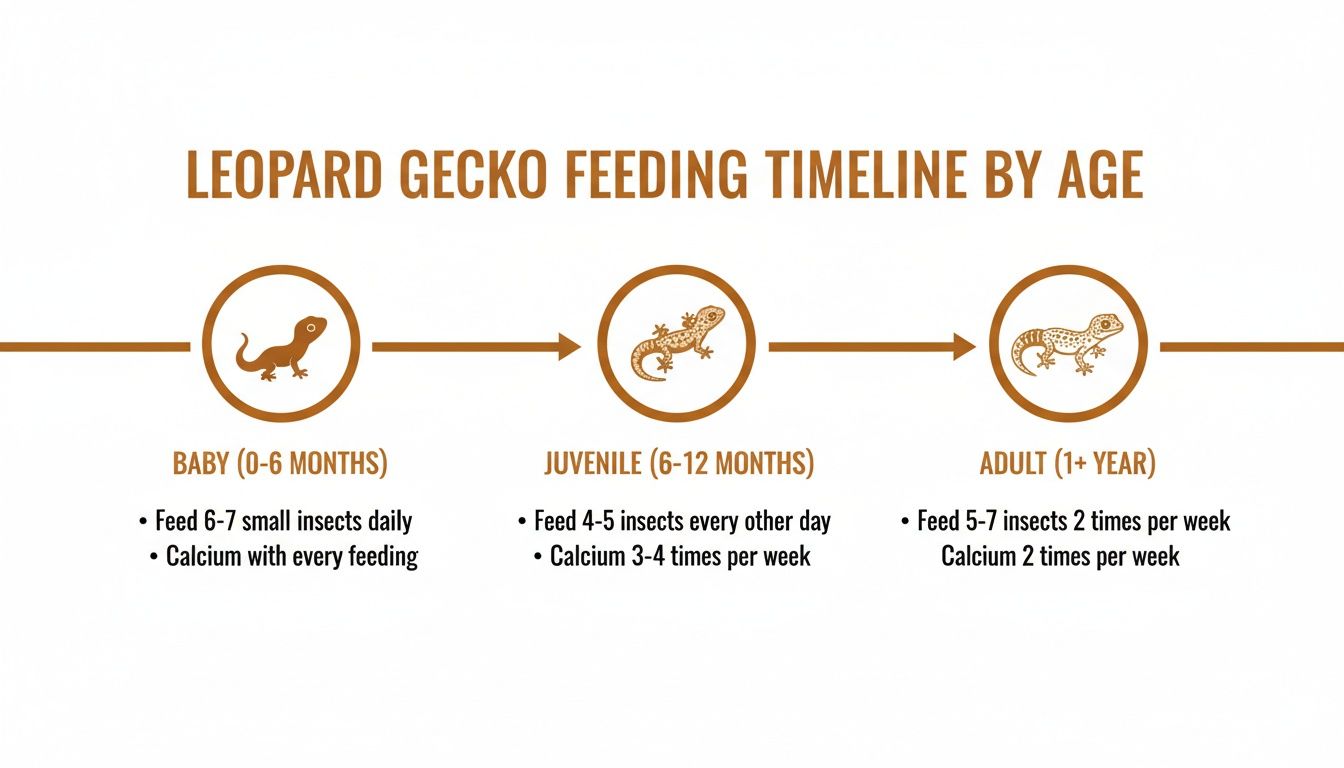
As you can see, young geckos need to eat every single day. As they mature, you’ll slowly taper this down to just a few times a week to help them maintain a healthy weight.
The Building Blocks of a Healthy Diet
A solid diet really just comes down to a few core principles. If you get these right, you're setting your gecko up for a long and healthy life.
- Live Insects are a Must: Leopard geckos are born hunters. The movement of live insects triggers their natural feeding instincts, providing crucial mental enrichment that dead or dried food just can't match. Live prey is also much easier for them to digest.
- Variety is the Spice of Life: You wouldn't want to eat chicken and broccoli every day, and neither does your gecko. Rotating between different staple insects like dubia roaches, crickets, and mealworms ensures they get a broader range of nutrients.
- Supplements are Non-Negotiable: This is a big one. Feeder insects on their own are low in calcium, and without it, geckos can develop Metabolic Bone Disease (MBD), a devastating and preventable illness. Dusting their food with calcium and a multivitamin is absolutely essential.
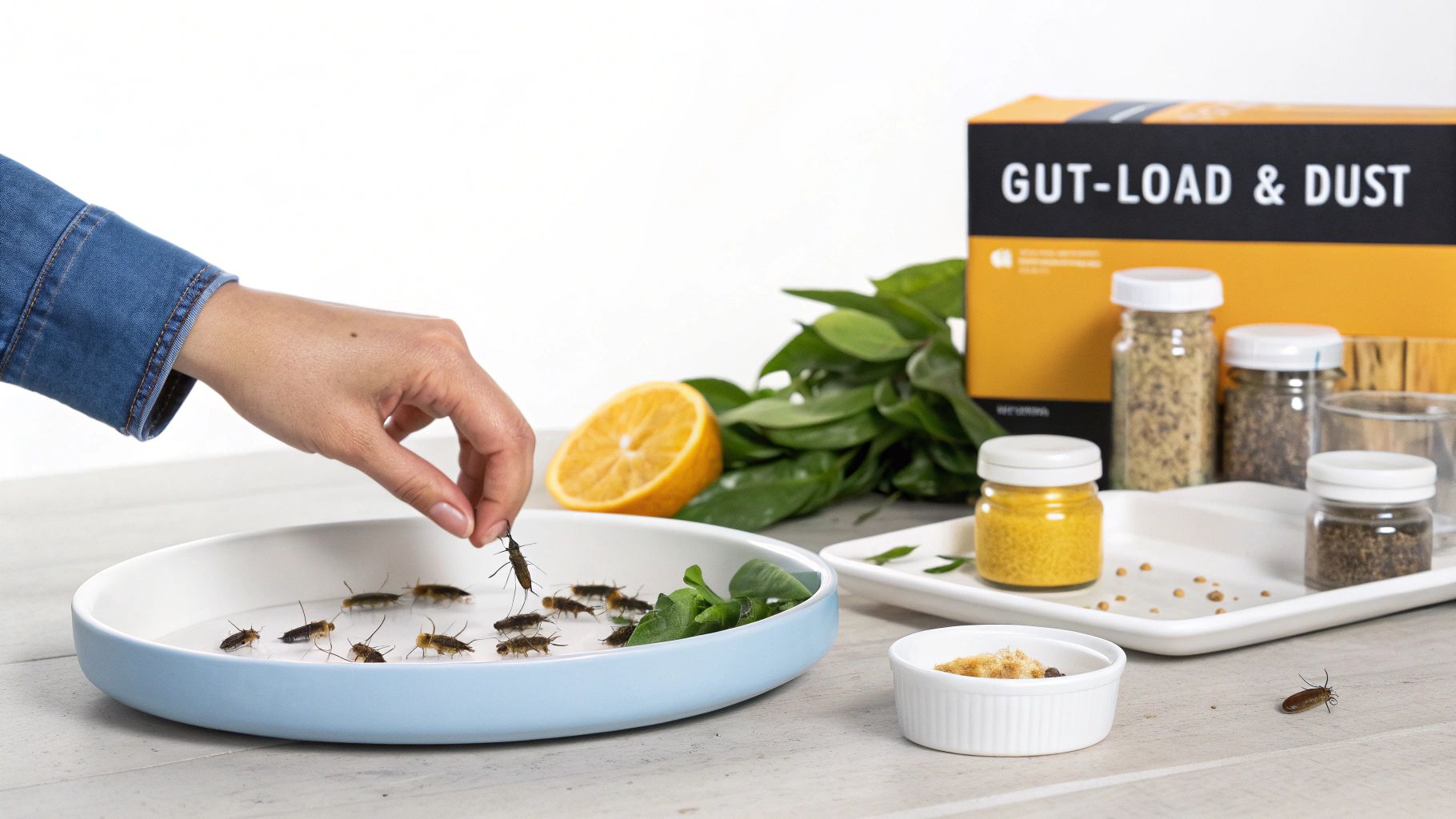
One of the most common rookie mistakes is forgetting to "gut-load" feeder insects. This just means feeding the insects a nutritious meal 12-24 hours before you give them to your gecko. Think of it as marinating the bugs in vitamins, which get passed directly to your pet.
For a great high-calcium treat, many keepers like to offer Black Soldier Fly Larvae. If you're curious about adding them to the mix, you can learn more about dried Black Soldier Fly Larvae and their impressive nutritional stats.
To make things even easier, here’s a quick-reference chart you can use to stay on track.
Leopard Gecko Feeding Cheat Sheet By Age
| Life Stage (Age) | Feeding Frequency | Recommended Portion Size | Key Staple Insects |
|---|---|---|---|
| Hatchling (0-4 Months) | Every day | 5-7 small insects | Small crickets, dubia roaches |
| Juvenile (4-12 Months) | Every other day | 6-8 medium insects | Medium crickets, dubia roaches, mealworms |
| Adult (12+ Months) | 2-3 times per week | 7-10 large insects | Large dubia roaches, superworms, crickets |
This table should give you a clear, at-a-glance starting point for feeding your gecko at any age. Just remember that every gecko is an individual, so you may need to adjust portion sizes based on their appetite and body condition.
How Often Should You Feed Your Leopard Gecko?
Figuring out the right feeding schedule for your leopard gecko is a huge part of being a good owner, and it’s something that changes quite a bit as they grow up. A baby gecko's metabolism is like a tiny, raging furnace—it's built for incredibly fast growth and needs a constant supply of fuel to build strong bones and healthy tissue.
An adult's metabolism, on the other hand, is more like a slow-burning ember. They’ve already done all their growing and now just need enough energy to maintain their body and go about their day. This core difference is exactly why you have to adjust their feeding schedule as they age to keep them healthy.
Feeding Frequency For Baby and Juvenile Geckos
Leopard geckos under a year old are in their most critical growth phase. To keep up with this amazing development, they need to eat every single day. Their little bodies just tear through calories and nutrients at an unbelievable rate, so daily meals are non-negotiable.
If you skimp on food during this stage, you risk stunting their growth and leaving them with a weaker immune system for life. A steady, daily diet of properly sized, gut-loaded insects gives them all the building blocks they need to grow into robust adults.
Key Insight: Think of a gecko's first year as a sprint, not a marathon. Daily feedings are the high-octane fuel they need for that explosive period of growth, and it lays the foundation for their health for years to come.
Feeding Schedule For Adult Leopard Geckos
Once a leopard gecko hits adulthood, usually around the 12-month mark, their needs change completely. Growth pretty much grinds to a halt, and their energy is now spent on day-to-day activities like hunting, exploring, and just existing. This is when you absolutely must cut back on their feeding schedule.
A healthy adult leopard gecko should be fed every other day, or roughly 3-4 times per week. Dialing it back like this gives their slower digestive system plenty of time to fully process each meal. This schedule is a cornerstone of any good leopard gecko feeding guide because it helps prevent one of the most common health problems we see in captive geckos: obesity. Overfeeding an adult can easily lead to fatty liver disease and put a lot of strain on their joints.
This age-based approach really is crucial. While a juvenile needs food daily to grow, a healthy adult (which can be anywhere from 7-10 inches long) does best on an every-other-day schedule. This simple change helps prevent overeating, a major problem that affects as many as 20-30% of pet geckos whose owners stick to a baby feeding schedule. You can explore more about leopard gecko dietary requirements to get a deeper understanding of these needs.
Adjusting The Schedule For Your Gecko's Health
While age is your main guide, you always have to look at your individual gecko. Their tail is the best and easiest way to gauge their body condition and fat stores.
- Underweight Geckos: A skinny, stick-like tail means your gecko is likely underweight. This could be from an illness, stress, or even recent egg-laying in females. In these situations, you can temporarily bump feedings back up to every day or offer a few more high-calorie insects until their tail plumps up nicely.
- Overweight Geckos: If your gecko's tail is wider than its neck, that’s a sure sign of obesity. When you see this, it’s time to scale back. Cut feedings down to just twice a week and be extra careful not to offer too many fatty treats like waxworms.
- Sick or Recovering Geckos: A sick gecko often won't have much of an appetite. It's still important to offer them food more often, even if they only take a bug or two, just to encourage them to eat. If your gecko stops eating entirely or shows other signs of being unwell, it's time to call an exotics vet.
Learning to read these visual cues from your gecko is the key to fine-tuning their diet perfectly. It allows you to adjust on the fly and make sure they stay healthy, active, and at a perfect weight throughout their entire life.
Figuring Out Portion Sizes And The Best Bugs To Feed
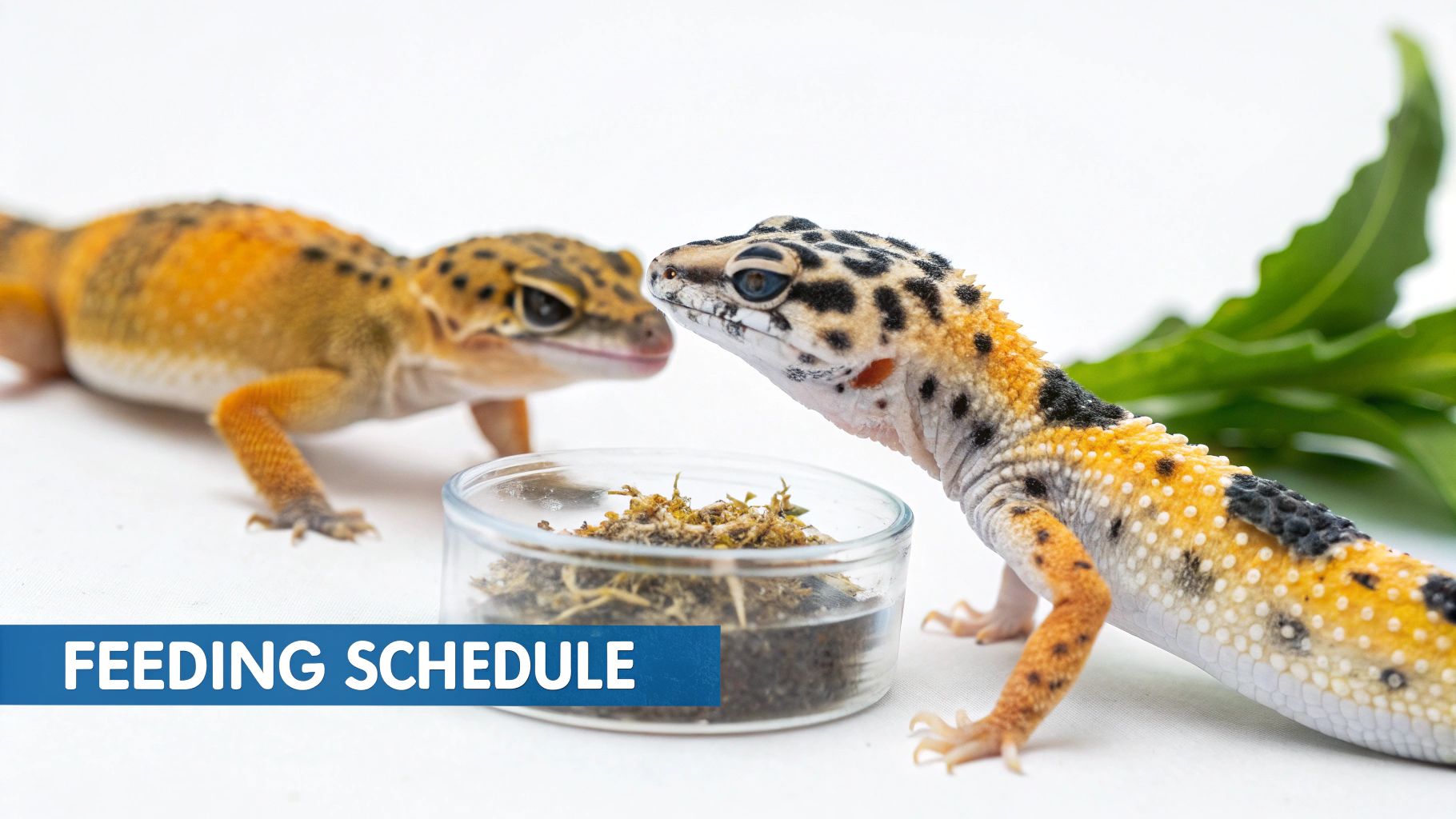
Knowing how often to feed your gecko is just one piece of the puzzle. Getting the portion sizes right is just as important. If you feed too much, you risk your gecko becoming obese. If the bugs are too big, you can cause some really serious digestive problems.
Luckily, there are two golden rules that make portion control pretty much foolproof. Sticking to these guidelines helps you pick the right-sized insect and the perfect number of them for every meal, keeping your gecko healthy and safe.
The Golden Rules Of Portion Control
To serve the perfect meal every time, you just need to keep two things in mind. One rule is all about the size of the insect, and the other is about how many to offer.
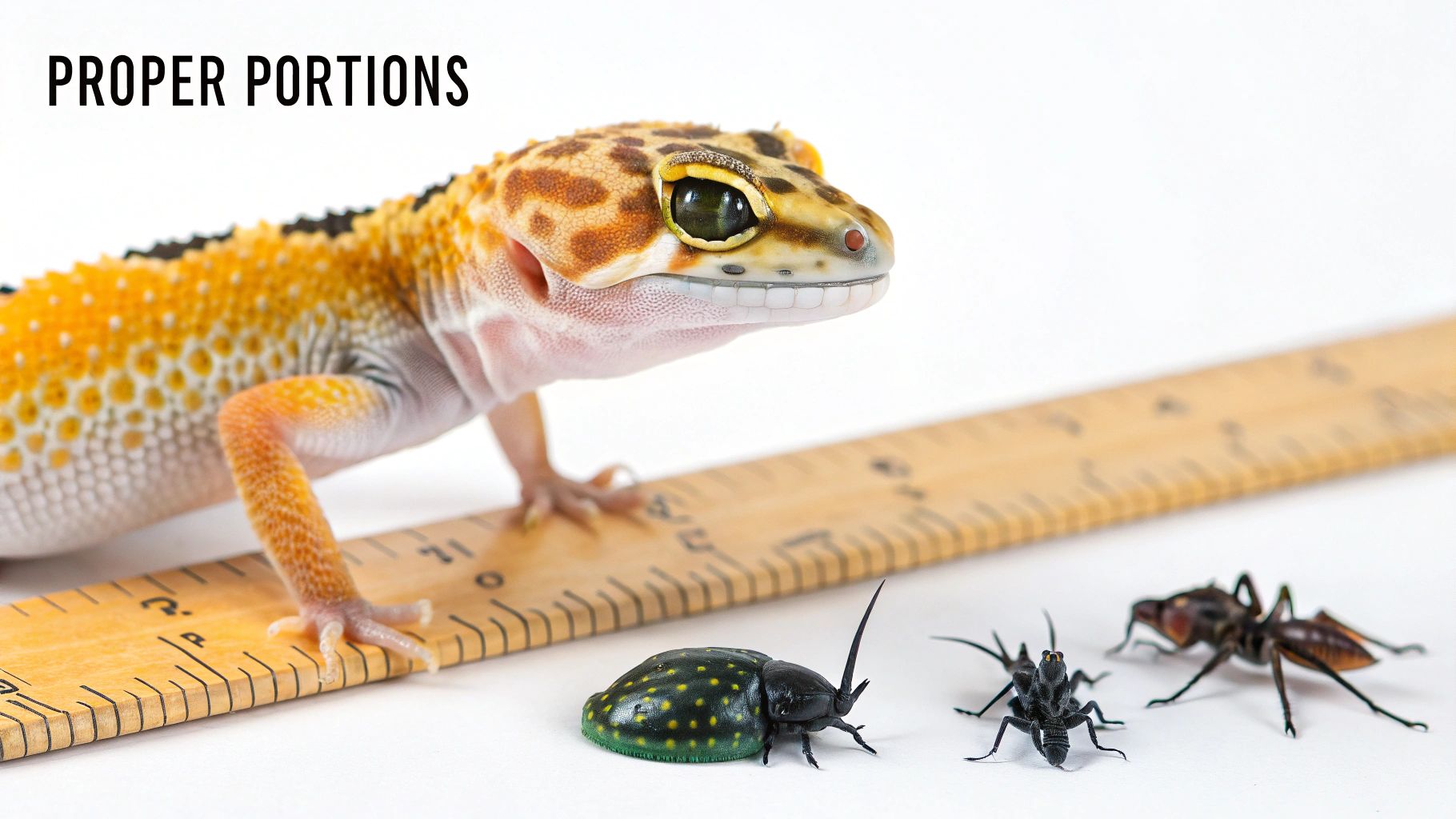
- The Size Rule: This is the big one. Never, ever offer an insect that’s wider than the space between your leopard gecko's eyes. This simple check is your best defense against choking, regurgitation, and impaction, which is a life-threatening intestinal blockage.
- The Quantity Rule: A great starting point is to offer two appropriately-sized insects for every one inch of your gecko's total length. This straightforward formula makes it easy to calculate the right amount of food to support healthy growth without overdoing it.
It's really easy to apply these rules. A tiny 3-inch hatchling would get six very small insects (3 inches x 2 insects), while a full-grown 9-inch adult would get 18 larger bugs. The method scales perfectly as your gecko grows up.
Important Takeaway: Seriously, don't forget the "space between the eyes" rule. It's your ultimate safety check. An insect might look small to you, but if it's wider than that gap, it’s just too big for your gecko to handle safely.
Staple Bugs vs. Occasional Treats
Just like our own diets, a gecko's menu should be built on a foundation of healthy staples, with the "junk food" offered only as a special treat. The big difference between them comes down to their nutritional content—especially protein, fat, and the all-important calcium-to-phosphorus ratio.
The Best Staple Insects
These are the workhorses of a healthy leopard gecko diet. They're nutritionally balanced and you can feed them regularly without any worry.
- Dubia Roaches: Honestly, these are probably the best staple you can get. Dubia roaches are packed with protein and have a fantastic calcium-to-phosphorus ratio. Better yet, they're easy to gut-load, can't climb smooth surfaces, and don't make any noise.
- Crickets: Another excellent choice. Crickets are fantastic for encouraging natural hunting behaviors, which is great enrichment for your gecko. The downside? They can be noisy, a bit smelly, and don't live very long.
- Mealworms: Mealworms are a solid choice to add some variety and are super easy to keep. They are a bit higher in fat, though, so it's a good idea to rotate them with other staples instead of feeding them exclusively. If you're looking for a low-maintenance option, our info on dried bulk mealworms might give you some ideas for your setup.
Fun "Treat" Insects
Think of these as candy for your gecko. They should only be given sparingly because they're often high in fat and can lead to obesity if you get carried away.
- Waxworms: These are basically little butterballs. They are extremely high in fat and should be offered maybe once or twice a month, max. They are fantastic for helping a rescued or underweight gecko put on some weight, but they are absolutely not for regular meals.
- Superworms: While they have a bit more nutritional value than waxworms, superworms are still quite fatty. They also have a tough exoskeleton that can be hard to digest, so save these as an occasional snack for adult geckos only.
- Hornworms: These bright green caterpillars are a great hydrating treat because they're full of moisture and low in fat. The catch is they grow incredibly fast, so you have to feed them off quickly while they're still a safe size for your gecko.
As a general rule, offering two insects per inch of your gecko's length is a reliable way to calculate portions. So, a typical 8-inch adult might get 16 insects per feeding, while a 4-inch baby would get 8. This simple guideline helps prevent overfeeding, which can lead to obesity—an issue affecting an estimated 25% of overweight pets.
The Critical Role Of Supplements And Gut-Loading
Feeding your leopard gecko a steady diet of insects is a great start, but it's only half the story. Think of feeder insects as a plain, empty container. They provide the protein, but they're missing the essential vitamins and minerals your gecko needs to truly thrive. This is where supplements and a practice called gut-loading come in—they turn that empty container into a complete, nutritious meal.
These two habits are absolutely non-negotiable for a healthy gecko. Without them, you're opening the door to serious health issues, most notably Metabolic Bone Disease (MBD). It’s a devastating but entirely preventable condition caused by a chronic lack of calcium.
The Three Must-Have Supplements
Walking down the reptile supplement aisle can be overwhelming, but for a leopard gecko, you really only need to focus on three core products. Each one plays a distinct, vital role in keeping your little friend healthy.
Here’s the simple trio you'll need to keep on hand:
- Calcium without D3: This is your gecko's everyday calcium source. It should always be available in a small, shallow dish (like a bottle cap) inside the enclosure, allowing them to lick it up whenever they feel the need.
- Calcium with D3: Vitamin D3 is the key that unlocks calcium, allowing your gecko’s body to actually absorb and use it. This powder is what you'll use to "dust" insects on a set schedule.
- Multivitamin: This covers all the other bases. A good multivitamin provides a spectrum of other crucial nutrients, like Vitamin A for healthy eyes and skin, that insects just don't contain on their own.
Key Takeaway: Providing supplements isn't just a good idea—it's essential for preventing painful and life-threatening diseases. Mastering a simple dusting schedule is one of the most important things you can do as a responsible gecko owner.
The Perfect Dusting Schedule
When it comes to dusting, consistency is everything. Too much of a good thing can be just as bad as not enough, so a regular schedule takes out all the guesswork. It ensures your gecko gets exactly what it needs, when it needs it.
A simple and highly effective rotation looks like this:
- First Feeding: Dust the insects with Calcium with D3.
- Second Feeding: Dust the insects with your Multivitamin.
- Third Feeding: Offer plain, gut-loaded insects with no dust.
- Repeat: Start the cycle over again.
This rotation prevents any single nutrient from building up to potentially harmful levels. For an adult gecko eating three times a week, you might dust with Calcium + D3 on Monday, the multivitamin on Wednesday, and offer plain gut-loaded feeders on Friday. Easy!
What Is Gut-Loading And Why Is It So Important?
Gut-loading is a simple concept with a huge impact. It's the process of feeding your insects a highly nutritious meal 12-24 hours before you feed them to your gecko. Basically, you are what you eat, and the same goes for your gecko's food.
By gut-loading, you turn the insects into tiny, nutrient-packed delivery systems. All the good stuff from the fruits, veggies, and grains the insects ate gets passed directly to your pet. It dramatically boosts the nutritional value of every single bite.
So, what should you feed your feeders? Stick to high-quality, nutritious foods. Some great options include:
- Rolled oats or whole wheat bread
- Dark, leafy greens like kale, dandelion greens, or collard greens
- Vibrant veggies like carrots, sweet potatoes, and squash
Some insects, like Black Soldier Fly Larvae, are a bit of a cheat code—they are naturally packed with calcium and don't need much gut-loading. You can learn more about the incredible benefits of black soldier fly larvae for reptiles and how they can give your gecko a natural calcium boost. Making gut-loading a standard part of your routine ensures every meal is packed with goodness.
What Foods Your Leopard Gecko Must Avoid
Knowing what to feed your gecko is only half the battle. Just as crucial—if not more so—is knowing what to keep far away from their dinner bowl. Some foods aren't just unhealthy for a leopard gecko; they can be incredibly dangerous or even fatal.
Leopard geckos are insectivores through and through. Their entire digestive system is built to do one thing exceptionally well: process insects. Trying to feed them anything else is a recipe for disaster, leading to everything from digestive impaction to severe poisoning.
Toxic and Dangerous Insects
Not every bug is a suitable meal. In fact, some common insects can cause serious harm. It’s absolutely vital to know which creepy crawlies are on the "do not feed" list.
- Wild-Caught Insects: A bug from your backyard might seem like a free and easy meal, but it's a huge gamble. Wild insects can be loaded with parasites or carry residual pesticides that could be toxic to your gecko. Always play it safe and stick to captive-bred feeders.
- Fireflies (Lightning Bugs): This is a big one. Fireflies are extremely toxic to leopard geckos. They contain a chemical called lucibufagin, which is a defensive steroid that can kill a gecko in a very short amount of time.
- Hard-Bodied Bugs: Insects with tough, chitinous shells—like stink bugs, many beetles, and ladybugs—are just too difficult for a gecko to digest. They present a major risk for impaction, which is a serious and potentially fatal blockage of the digestive tract.
Critical Safety Warning: The danger of fireflies cannot be overstated. Even a single firefly can be a lethal dose for a leopard gecko. Always source your feeder insects from a reputable supplier to avoid accidental exposure.
Why Fruits, Vegetables, and Human Food Are Off-Limits
It might seem harmless to offer your gecko a tiny nibble of banana or a piece of lettuce, but their bodies simply can't handle it. As strict insectivores, they don't have the digestive enzymes required to break down plant matter.
Feeding them fruits or vegetables can cause painful digestive upset, diarrhea, and long-term health problems. The same goes for any "human food." The fats, salts, and complex ingredients are completely alien to their system. Just stick to the bugs.
Busting Common Feeding Myths
A few dangerous ideas have unfortunately made their way around the reptile-keeping community over the years. Let’s set the record straight on what is and isn't safe.
One of the oldest myths is that you can feed an adult gecko a "pinkie" mouse as a treat. While larger lizards might eat them, a pinkie is far too rich in fat and protein for a leopard gecko, leading to obesity and serious organ damage.
Another misconception is that any insect is fair game. As we just covered, that's definitely not the case. Some bugs are just indigestible, while others are straight-up poisonous.
To put it all in one place, here’s a quick-reference table to help you distinguish the good from the bad.
Safe Feeders vs. Foods To Avoid
| Category | Safe Foods (Examples) | Foods to Strictly Avoid (Examples) |
|---|---|---|
| Staple Insects | Dubia Roaches, Crickets, Mealworms | Wild-Caught Insects, Fireflies, Spiders |
| Treat Insects | Waxworms, Superworms, Hornworms | Stink Bugs, Ladybugs, Centipedes |
| Other Foods | N/A | Fruits, Vegetables, Pinkie Mice, Human Food |
Ultimately, a gecko's safety comes down to responsible choices. By sticking to a clean, well-gut-loaded diet of appropriate feeder insects, you're giving your pet the best foundation for a long and healthy life.
Solving Common Leopard Gecko Feeding Issues
It can be really worrying when your leopard gecko suddenly stops eating or shows other odd behaviors around mealtime. But don't panic! Most of the time, these little hiccups are a sign of something in their environment that's easy to fix.
Think of it this way: if you were feeling sick, or if your house was suddenly freezing cold, you probably wouldn't have much of an appetite. It's the exact same for your gecko. The problem often isn't the food itself, but something else going on.
My Leopard Gecko Won't Eat! What's Going On?
A gecko refusing food is probably the number one concern I hear from new owners. Before you assume you have a picky eater on your hands, let’s run through a quick checklist. More often than not, the solution is surprisingly simple and has to do with their overall care, not the bugs.
- Chilly Temps: Leopard geckos are cold-blooded, which means they need heat from their environment to digest their food. If the warm spot in their tank dips below 88°F (31°C), their whole system slows down, and their appetite disappears with it.
- Stress: Did you just get your gecko? Or maybe you moved their tank or added a bunch of new decorations? Any big change can cause stress, and a stressed-out gecko is not a hungry gecko. High-traffic, noisy areas can also be a major appetite killer.
- Shedding Time: It's totally normal for geckos to go on a hunger strike a few days before, during, and right after they shed. It's a big process that takes a lot of energy! Their appetite will bounce back once they're in their new "skin."
- Breeding Season: If it’s between January and July, hormones might be the culprit. Both males and females can get so focused on breeding that they lose interest in food. This is a natural, temporary behavior.
Expert Tip: The absolute first thing to check when a healthy gecko stops eating is the temperature. Grab your temp gun and make sure that basking spot is warm enough. Nine times out of ten, that's your problem.
Dealing With Regurgitation and Impaction
Finding a full, undigested insect in the tank can be pretty jarring. This is called regurgitation, and it's a clear signal that something went wrong with digestion.
The most common reason for this is feeding an insect that’s just too big. The golden rule is simple: never offer a bug that's wider than the space between your gecko's eyes. A meal that's too large, or feeding when the tank is too cold, can lead to regurgitation or something much worse: impaction.
Impaction is a serious, life-threatening blockage in the digestive tract. While people often blame loose sand or soil, the real cause is almost always poor care. If the temperatures are consistently too low, food can't be digested properly. A lack of proper calcium supplementation also weakens their digestive muscles, making it harder to pass food and waste.
When It's Time to Call the Vet
While you can solve most feeding problems at home by tweaking their environment, some symptoms are red flags that need a professional's eye. Don't hesitate to contact an experienced exotics vet if you see any of these signs:
- Rapid weight loss, especially if their tail starts looking thin and shrunken.
- Lethargy. Is your gecko weak, floppy, or unable to stand and walk normally?
- No poop for more than a week could mean a serious blockage.
- Refusing food for over two weeks, especially if it's not tied to shedding or breeding season.
Paying close attention to your gecko's routine is the best tool you have. By keeping their home just right and spotting potential issues early, you can tackle most feeding troubles before they become serious, ensuring your little friend stays happy and healthy for a long time to come.
Got Questions? We've Got Answers: Your Leopard Gecko Feeding FAQ
Even with the best guide in hand, you're bound to run into a few head-scratchers when feeding your leopard gecko. That's perfectly normal! Let's tackle some of the most common questions that pop up, giving you the quick, practical answers you need to feel confident in your routine.
Why Did My Leopard Gecko Suddenly Stop Eating?
It’s alarming when your gecko suddenly refuses a meal, but don't panic just yet. More often than not, it's a simple environmental issue, not a sign of illness. The number one culprit is almost always temperature. If the warm spot in their tank dips below 88°F (31°C), their digestion slows to a crawl, and they simply won't have an appetite.
If the temps are perfect, here are a few other common reasons for a hunger strike:
- Stress: Did you just move them to a new tank? Is their enclosure in a busy, noisy part of the house? Big changes can easily put a gecko off their food for a bit.
- Shedding: It's completely normal for geckos to refuse food for a few days before, during, and right after they shed their skin.
- Breeding Season: From roughly January to July, hormonal shifts can cause both males and females to lose interest in eating. It's a natural cycle.
Can I Just Feed My Gecko Dried Insects?
While it might seem convenient, dried insects should never be the main course. Think of them as an occasional treat, not a meal replacement. The biggest reason is that the twitching and crawling of live insects is what triggers your gecko's natural hunting instinct. This isn't just about food; it's vital mental enrichment.
On top of that, live insects that have been properly gut-loaded are packed with moisture and far more nutrients than their dried-out versions. Dried bugs are the gecko equivalent of a protein bar—handy in a pinch, but not a substitute for a real meal.
How Long Can a Leopard Gecko Go Without Food?
This is where that chunky tail comes in handy! A healthy, well-fed adult leopard gecko with a nice, fat tail can easily go for 10-14 days without a meal. They are built to last. Young, growing juveniles are a different story; they're burning through energy and shouldn't go more than a few days without food.
If your adult gecko looks healthy but has refused food for over two weeks—and you've already checked your temperatures and ruled out stress—it's time to schedule a check-up with a vet who specializes in reptiles.
Are Those Water Gel Crystals a Good Idea?
Steer clear of water gels and crystals. They're often marketed for keeping feeder insects hydrated, but they offer zero nutritional value and can be a serious impaction risk if your gecko accidentally swallows a piece.
The best way to keep your gecko hydrated is the old-fashioned way: a shallow dish of clean, fresh water that you change out every day. Honestly, they get most of the moisture they need directly from their juicy, gut-loaded prey anyway.
Here at Pure Grubs, we're all about giving your pets the absolute best. Our premium, USA-grown Black Soldier Fly Larvae make for a fantastic high-calcium treat to add some healthy variety to your gecko's diet. Want to give your pet a natural boost? Check out our products at https://puregrubs.com.