

A Complete Guide to the Kinds of Feeds for Chicken
When it comes to raising chickens, what you put in their feeder is the single most important decision you'll make for their health. A good, balanced commercial feed is the foundation of it all, providing the precise protein, vitamins, and minerals your birds need to thrive at every stage of life.
Think of it as the nutritional blueprint for strong bones, vibrant feathers, and a steady supply of fresh eggs.
Why the Right Feed is Everything
I like to think of feeding chickens like building a house—the quality of your materials dictates how strong the final structure will be. You wouldn't use shoddy lumber and expect a sturdy home, and you can't skimp on nutrition and expect healthy, productive birds.
The right chicken feed is about so much more than just filling a bowl. It’s about delivering a carefully balanced diet that fuels every single aspect of a chicken’s life, from hatching to laying. This is critical because a chicken's dietary needs change dramatically as they grow.
A Chicken's Shifting Needs
You wouldn't feed a newborn baby the same thing you'd feed a professional athlete, right? The baby needs specific nutrients for rapid growth, while the athlete needs a high-energy diet to perform. Chickens are no different. Their nutritional requirements shift through very distinct phases.
- Chicks (0-8 weeks): They need a high-protein starter feed—around 20-24% protein—to fuel the explosive growth of their muscles, bones, and feathers.
- Pullets (8-18 weeks): As their growth rate starts to slow, they move to a "grower" feed with a bit less protein, getting them ready for adulthood.
- Laying Hens (18+ weeks): Mature hens need a layer feed. It has less protein but a whole lot more calcium, typically 3.5% to 5%, to produce strong eggshells day after day without stealing it from their own bones.
Matching your feed to your flock's age is the cornerstone of good chicken keeping. It prevents health problems in young birds and keeps your adult hens happy and productive for years to come.
This guide is your roadmap to understanding the different kinds of feeds for chicken you'll find at the store. We'll break down everything from the essential "complete" feeds to helpful supplements and healthy treats. You’ll learn not just what to feed your flock, but why it matters.
By the time we're done, you'll be able to walk into any feed store, confidently read the labels, and pick out the perfect plan for your birds. Let's dig in.
Understanding the Three Main Kinds of Feeds for Chicken
Walking down the feed aisle can feel like a pop quiz you didn't study for. But once you get the hang of it, it’s actually pretty simple. The most important thing to know about are complete feeds, which are the absolute bedrock of a healthy flock’s diet.
Think of a complete feed as a perfectly balanced, all-in-one meal. It’s been scientifically formulated by poultry nutritionists to give your chickens the exact blend of protein, vitamins, and minerals they need for their specific stage of life. This means you don't have to play scientist and mix your own supplements—it's all been done for you.
Choosing the right complete feed is easily the most reliable way to make sure your birds are getting everything they need to grow strong, stay healthy, and lay fantastic eggs.
From Chick to Hen: Age-Specific Formulas
A chicken's nutritional needs change drastically as it grows up. What a tiny, fluffy chick requires is worlds apart from what a full-grown laying hen needs. That’s why using an age-appropriate formula isn’t just a good idea—it’s essential for raising a healthy flock.
-
Starter Feed (0-8 Weeks): This is the high-octane fuel for baby chicks. It’s packed with protein, usually 20-24%, to support their incredible, rapid growth. Everything from their internal organs to their very first feathers is built with this crucial nutrition.
-
Grower Feed (9-18 Weeks): Welcome to the awkward teenage phase. As your birds mature, their growth rate naturally slows down. Grower feed reflects this by dialing back the protein to around 16-18%. This helps prevent them from putting on weight too fast, which can lead to leg problems and other health issues down the road.
-
Layer Feed (18+ Weeks): Once your hens approach point-of-lay, it’s time to switch to the main event. Protein stays moderate at around 16%, but the calcium content gets a massive boost to 3.5-5%. This extra calcium is non-negotiable; it goes directly into forming strong, perfect eggshells day after day, without forcing the hen to pull calcium from her own bones.
Giving a chick layer feed too early can cause serious kidney damage from the high calcium. On the flip side, keeping a laying hen on grower feed will lead to weak, rubbery eggshells and potential health problems. Matching the feed to the flock's age is one of the most important jobs you have as a chicken keeper.
This pyramid shows just how foundational a balanced complete feed is for everything else.
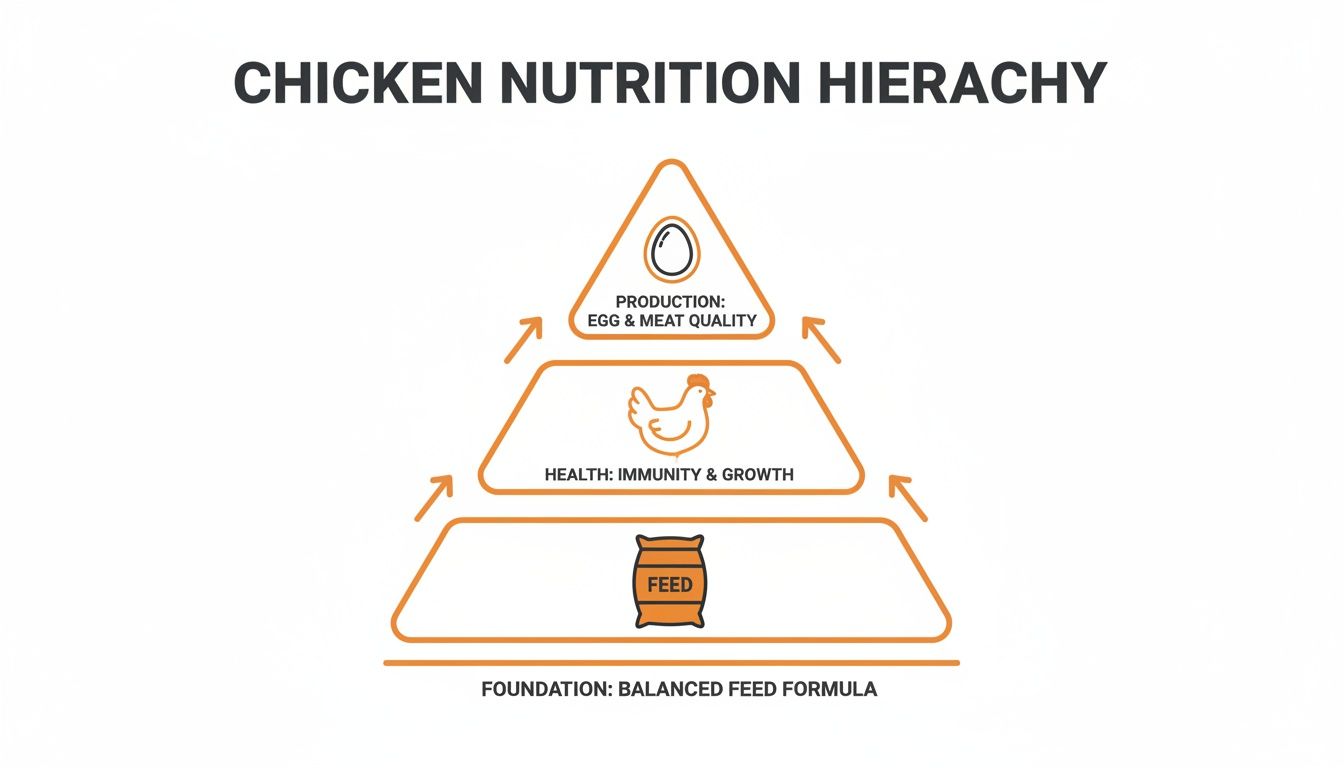
It all starts with that complete feed. Get that right, and you're building a solid foundation for health and production.
Decoding the Textures: Mash, Crumble, and Pellets
On top of the nutritional formula, complete feeds also come in three different textures. This isn't just about appearances; the physical form of the feed is designed to suit chickens of different sizes and to help minimize waste. It's a bit like the difference between baby food, a chopped salad, and a steak—all food, but made for different diners.
-
Mash: This is a fine, unprocessed feed that has the consistency of loose soil or cornmeal. It's the perfect texture for tiny chicks who can't swallow bigger pieces. The main drawback is that it can be a bit messy, and clever chickens might try to pick out just their favorite bits, leading to an unbalanced diet.
-
Crumbles: This is the perfect "in-between" feed. Crumbles are just pellets that have been broken up into smaller, more manageable pieces. It’s an ideal transitional feed for growing pullets who are too big for mash but not quite ready for full-sized pellets.
-
Pellets: Here, the mash is steamed and compressed into uniform little nuggets. This is the cleanest and most efficient form of feed, as it prevents birds from picking and choosing. Every bite is a balanced bite. Pellets are the standard for adult chickens.
The main energy source in most of these feeds is corn. For decades, corn has been the cornerstone of poultry feeds worldwide because it helps chickens efficiently convert feed into body mass and eggs. In the U.S. alone, corn-based feeds are a huge part of the $240.4 billion global poultry feed market, an industry that's expected to hit $406.7 billion by 2035. You can read more about the global poultry feed market on Future Market Insights.
To make the choice even clearer, here’s a quick breakdown of the different feed textures.
Comparing Feed Forms Mash vs Crumble vs Pellet
| Feed Form | Texture | Best For | Primary Benefit |
|---|---|---|---|
| Mash | Fine, loose, unprocessed grounds | Baby chicks (0-8 weeks) | Easy for tiny beaks to eat without choking |
| Crumble | Coarsely broken pellets | Pullets and Bantams (8-18 weeks) | Provides a transitional texture and reduces waste |
| Pellet | Compressed, uniform nuggets | Adult hens (18+ weeks) | Minimizes feed waste and ensures balanced nutrition in every bite |
Ultimately, choosing the right combination of formula and texture is how you set the stage for a healthy, productive, and happy flock. It's the most fundamental part of good chicken keeping.
The Power Players: Protein and Grains in Your Feed
When you crack open a bag of chicken feed, you're looking at a carefully crafted recipe. It’s got a whole mix of vitamins and minerals, but two ingredients do most of the heavy lifting: corn and soybeans. They aren't just filler; they're a dynamic duo that provides the fundamental building blocks for a healthy, productive flock.
Think of it like the engine and the chassis of a car. One provides the raw power, and the other gives it structural strength. You absolutely need both for the machine to run right, and neither can do the job alone. For chickens, this partnership is the key to everything from their daily energy to laying that morning egg.
Corn: The Energy Provider
Corn is the number one source of carbohydrates in most commercial chicken feeds. Carbohydrates are pure energy, fueling every single thing your chickens do—from scratching in the yard and chasing bugs to the demanding process of laying an egg.
A hen's body is always working. Just like a marathon runner carbs-up before a race, a chicken needs a constant supply of energy to keep going. The starches in corn are easy to digest, providing this fuel efficiently. This helps your birds maintain body heat in the winter and stay active all year. If they don't get enough energy, their bodies will prioritize survival over everything else, and egg-laying is often the first thing to go.
Soybeans: The Protein Powerhouse
While corn provides the fuel, soybean meal delivers the building materials. Protein is made of amino acids, which are literally the building blocks of life. They’re essential for creating muscle, growing strong feathers, and, of course, producing the protein-packed whites of an egg.
Soybean meal is a rockstar in poultry nutrition because it has an incredible amino acid profile, loaded with critical ones like lysine and methionine. These are vital for the rapid growth of young meat birds and for the daily wear-and-tear repair and feather regrowth in adult hens. A shortage of these key amino acids can lead to poor growth, brittle feathers, and a serious drop in egg production. You can dive deeper into different protein foods for chickens in our detailed guide.
This reliance on soybeans is a huge deal in the poultry world. In fact, soybean meal is the go-to protein source in most chicken feeds, making up 20-30% of the formula in major markets. This demand drives a massive global industry, with the poultry feed market projected to hit $216.82 billion in 2025 and climb to $332.40 billion by 2035. You can discover more insights about the poultry feed market from Precedence Research.
Why Balance is Everything
The real magic happens when these two ingredients are balanced with precision. The ratio of protein to energy is one of the most critical parts of formulating the different kinds of feeds for chicken.
An imbalance can cause real trouble. Too much protein without enough energy means the chicken's body will wastefully burn expensive protein for fuel. On the flip side, too much energy without enough protein can lead to overweight birds that are less productive and more prone to health problems.
This is exactly why age-specific feeds are so crucial:
- Starter Feed: It's high in protein to support the explosive muscle and feather growth that happens in the first few weeks of a chick's life.
- Layer Feed: This feed has a more moderate protein level (16-18%) combined with plenty of energy to maintain a hen's body condition while supporting consistent egg-laying.
Understanding this dynamic also explains why some flock owners look for alternatives. The massive scale of corn and soy farming brings up questions about sustainability and cost. This has led many keepers to find supplemental ingredients and high-quality treats to diversify their flock's diet, reduce reliance on just two grains, and add unique nutritional perks.
Boosting Health with Supplements and Treats
Think of a complete feed as the solid foundation of your flock's diet. It’s the daily bread, the essential stuff. But supplements and treats? That’s where you can take their health from just good to genuinely great.
It really helps to separate these into two categories. Supplements are the non-negotiables that fill in specific nutritional gaps. Treats, on the other hand, are high-value goodies that provide enrichment and a targeted health boost. One is a necessity, the other is a powerful bonus.
Essential Supplements Your Flock Needs
Even the highest-quality complete feed can't always meet every single nutritional demand, especially for hardworking laying hens. There are two supplements that are staples in the chicken-keeping world. The best way to offer them is "free-choice"—just put them in a separate dish and let your chickens take what they need, when they need it.
-
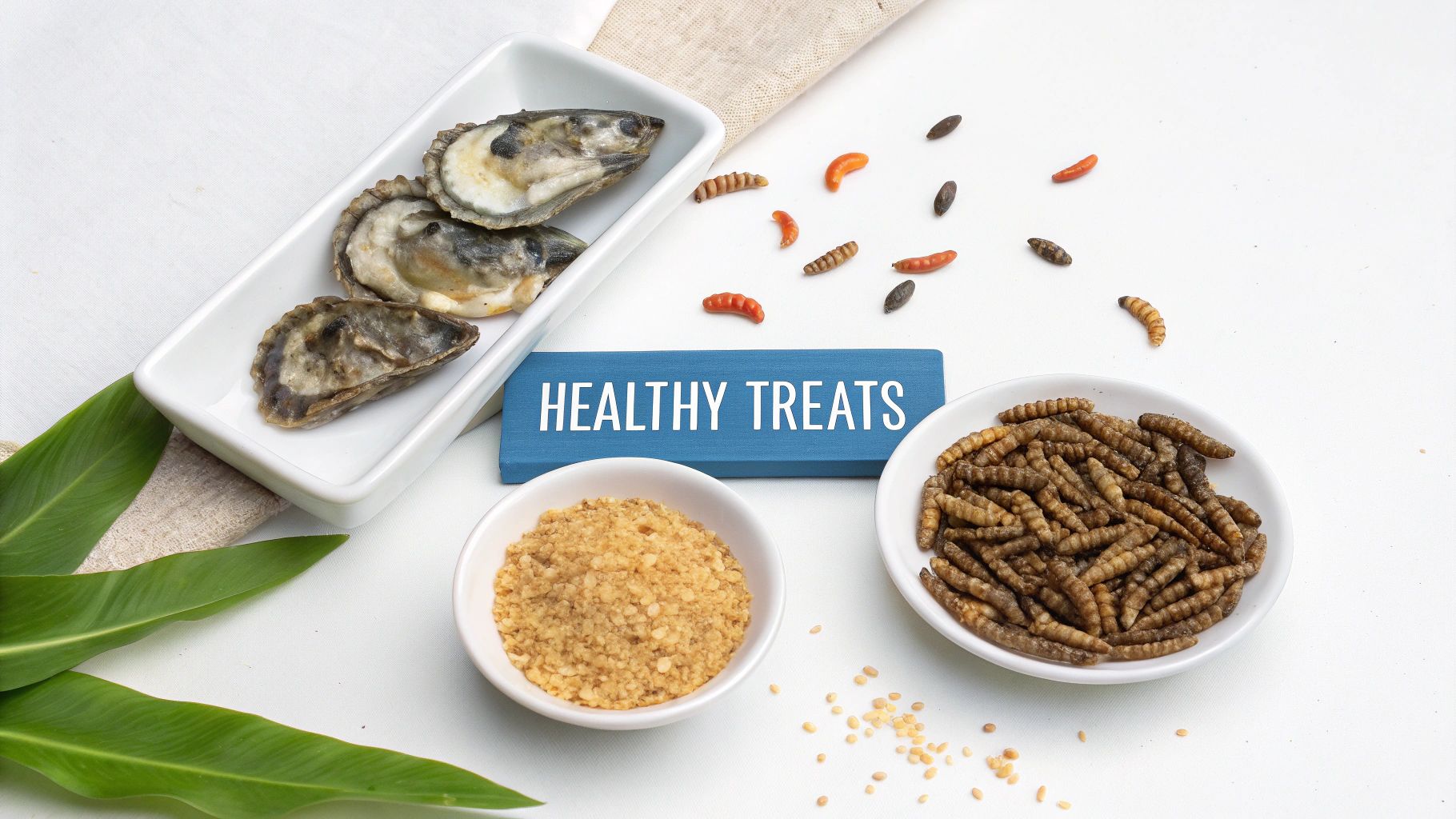
Poultry Grit: Chickens don't have teeth. Instead, they have a tough, muscular organ called a gizzard that grinds up their food. To get the job done, they need to swallow small, hard particles like tiny stones or sand. Grit is just the store-bought version of this, usually made from insoluble crushed granite. It’s absolutely essential for any chicken eating scratch grains, kitchen scraps, or anything foraged from the yard. Without it, they simply can't digest their food properly.
-
Oyster Shell: A laying hen uses an incredible amount of calcium to form a strong eggshell every single day. While layer feed has extra calcium, some hens—especially fantastic layers or older birds—need an extra source to avoid pulling calcium from their own bones. Crushed oyster shell provides a slow-release form of calcium they can snack on. For a deeper dive into this crucial mineral, check out our guide on the best calcium supplements for chickens.
Always keep grit and oyster shell in their own dedicated containers, away from the main feeder. This lets each bird decide for herself exactly how much she needs.
Choosing Treats That Double as Health Boosters
Now for the fun part—treats! Chickens are notorious for eating almost anything, but savvy keepers choose treats that do more than just make them happy. The best treats are packed with protein and nutrients that support everything from feather growth to immune health and egg production.
This is where insect-based treats really shine.
For years, the go-to protein snack was dried mealworms. But a far superior option has come along that directly targets a laying hen’s greatest needs: Black Soldier Fly Larvae (BSFL).
Black Soldier Fly Larvae, like Pure Grubs, pack a serious nutritional punch. They naturally contain up to 85% more calcium than mealworms, making them a fantastic tool for promoting stronger, thicker eggshells and supporting a hen's bone health.
This incredible calcium content is a game-changer. Instead of offering just "empty" protein, BSFL deliver a one-two punch of both protein and critical minerals at the same time.
Why USA-Grown BSFL Matter for Your Flock
Where your flock's treats come from is just as important as what they are. Pure Grubs are proudly grown in the USA in facilities that follow strict FDA and AAFCO safety standards. Every single batch is tested for heavy metals, so you can be confident the treats you're giving your birds are clean, safe, and won't introduce contaminants into their bodies—or into the eggs your family eats.
That peace of mind is priceless. When you choose a high-quality, American-sourced product, you know exactly what’s going into your flock.
The global poultry feed market is huge, valued at $233.02 billion in 2025 and expected to hit $339.07 billion by 2032. Insect-based feeds are a fast-growing piece of that pie. As a premium BSFL brand, Pure Grubs offers an AAFCO-compliant treat with 42% protein and exceptionally high calcium, proven to fortify eggshells and support hen immunity—all without the risks that can come with some imported products.
Here’s a side-by-side look at how Pure Grubs BSFL stack up against traditional mealworms.
Nutrient Showdown BSFL vs Mealworms
This table makes the nutritional advantage of Black Soldier Fly Larvae (BSFL) crystal clear, especially when it comes to the nutrients that matter most for laying hens.
| Nutrient | Pure Grubs BSFL | Typical Dried Mealworms |
|---|---|---|
| Calcium | Very High (avg. 1.5%) | Very Low (avg. 0.05%) |
| Protein | High (42%) | High (50%) |
| Ca:P Ratio | Ideal (2:1 to 3:1) | Poor (1:7) |
| Origin | USA-Grown & Processed | Often Imported |
| Safety | Heavy Metal Tested | Often Untested |
The numbers don't lie, but the calcium-to-phosphorus (Ca:P) ratio is especially telling. For a chicken to properly absorb and use calcium, the ratio needs to be balanced. BSFL naturally have an ideal ratio, whereas mealworms are so imbalanced they can actually interfere with calcium absorption over time.
By choosing smart supplements and high-value treats like BSFL, you’re leveling up from just feeding your chickens to actively managing their health. You’re not just providing food; you’re investing in stronger eggshells, healthier birds, and a more vibrant flock.
Smart Feeding Strategies for a Happy Flock
Knowing the different kinds of feeds for chicken is a great start, but how you put that knowledge into practice day-to-day is what really counts. Think of it this way: you can have a pantry stocked with healthy ingredients, but it's the cooking that turns it into a balanced meal. The same goes for your flock—great nutrition needs a great delivery system.
This is where you fine-tune your routine to make sure every bird gets exactly what it needs, without creating a huge mess or wasting expensive feed.
How Much Food and Water Does My Flock Need?
Figuring out daily portions is simpler than you might expect. As a solid rule of thumb, a standard adult laying hen will eat about 1/4 pound of complete feed per day, which works out to roughly 1/2 a cup. But remember, that’s just a baseline.
Chickens are actually pretty good at regulating their own food intake. They'll eat more in the cold winter months to stay warm and a bit less when summer temperatures soar. The best approach is to provide enough feed so the feeder is nearly empty by evening but never completely bare. This ensures everyone gets their fill without you having to ration every scoop. For a more detailed breakdown, you can read our complete chicken feeding guidelines.
And then there's water. It's just as crucial as feed, if not more so. A chicken's body is over 65% water, which fuels everything from digestion to temperature regulation. A single egg is about 75% water!
You must provide constant access to fresh, clean water. A hen can survive for a few days without feed, but just a few hours without water on a hot day can cause serious stress, stop egg production, and quickly lead to life-threatening dehydration.
Choosing the Right Equipment to Minimize Waste
The right feeders and waterers are your best friends in keeping your flock healthy and your feed bill under control. Open bowls and simple troughs are basically an invitation for chickens to kick, scratch, spill, and soil their food and water. This doesn't just waste money; it creates a breeding ground for nasty bacteria.
A small investment in purpose-built equipment pays off big time:
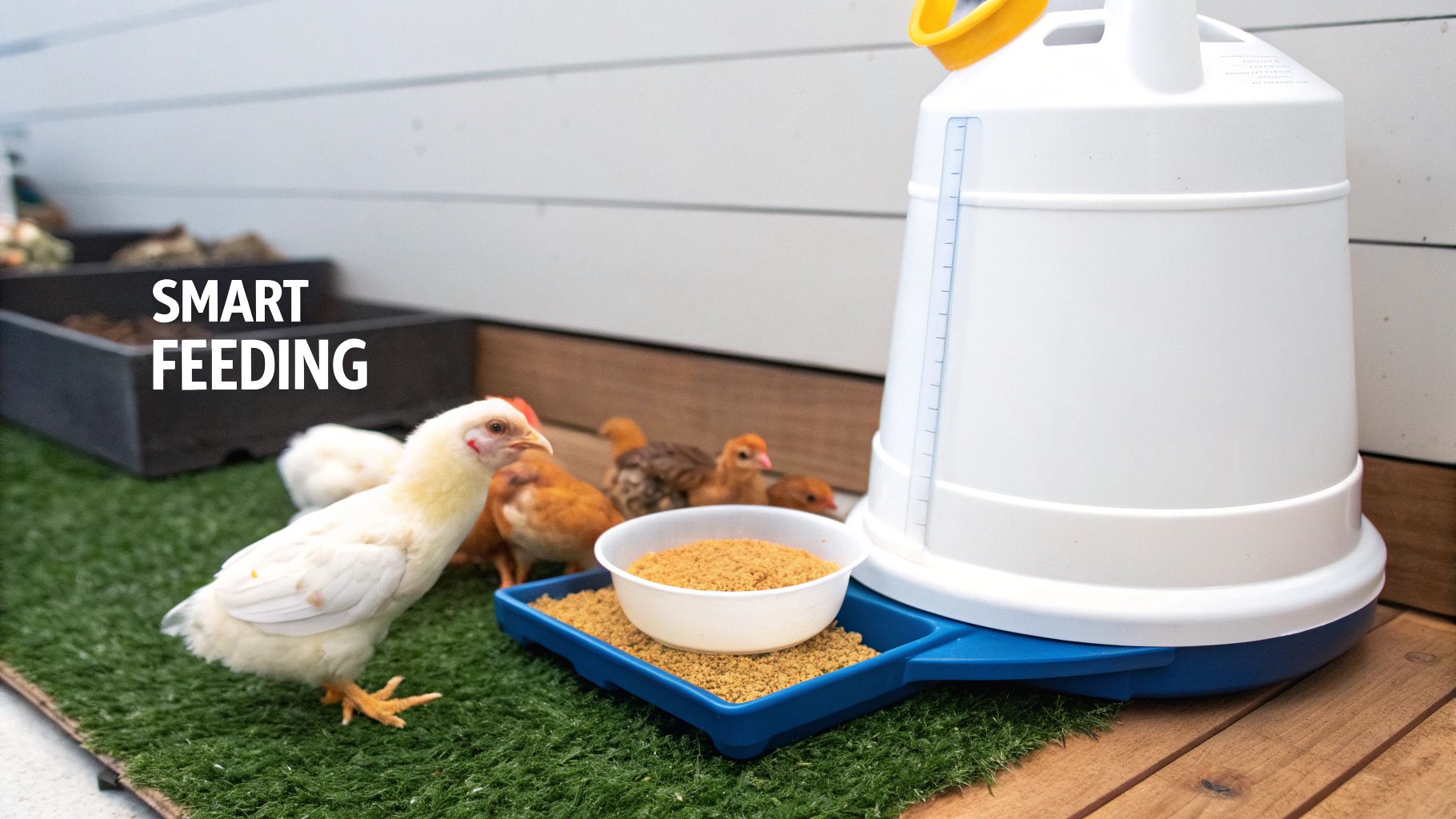
- Hanging Feeders and Waterers: Get the gear off the ground! This keeps it clean from dirt and droppings. The sweet spot is positioning it so the lip is level with the height of your chickens' backs.
- Treadle Feeders: These are brilliant. A lid keeps the feed safe from rodents and wild birds, and it only opens when a chicken stands on a platform to eat.
- Poultry Nipples or Cups: This is the best way to deliver clean water. The flock gets fresh water on demand, which completely prevents the contamination you see in open-trough waterers.
The Importance of Proper Feed Storage
Finally, let's talk storage. How you store your feed is a critical, and often overlooked, part of your feeding strategy. A bag of feed left open in a damp shed will quickly lose its nutritional punch. Worse, it can develop toxic mold.
Protecting that investment is simple.
Always store chicken feed in a sealed, rodent-proof container—think metal or thick, chew-proof plastic. Tuck it away in a cool, dry spot, far from direct sunlight. This one simple step preserves all those vital nutrients and ensures you’re giving your flock the safe, high-quality nutrition they deserve.
Answering Your Top Chicken Feeding Questions
No matter how long you've been keeping chickens, questions always come up. Let's tackle some of the most common feeding puzzles you might run into so you can keep your flock happy and healthy.
What About Feeding Chickens Kitchen Scraps?
You bet, but think of them as treats, not a meal. Leftover leafy greens, veggie peels, and cooked grains are fantastic. Just be sure to steer clear of anything toxic for them—things like avocado, raw potatoes, onions, chocolate, and of course, anything moldy or rotten.
The golden rule here is the 90/10 rule. A whopping 90% of their diet should come from their balanced feed, with no more than 10% made up of scraps and other goodies. Sticking to this prevents nutritional gaps and keeps them in top shape.
How Can I Tell If I'm Feeding Them Enough?
Most adult laying hens will put away about 1/4 pound of feed a day, which works out to roughly half a cup. The real test, though, is to watch your feeder. It should be getting low by the end of the day but never bone-dry.
A well-fed flock is a vibrant one. Look for active birds with bright eyes, smooth, glossy feathers, and, of course, a steady supply of eggs with solid shells. Remember, they'll eat more when it's cold to stay warm, so you'll need to fill the feeder a bit more during the winter months.
Help! Why Are My Hens' Eggshells So Thin?
Weak or thin eggshells almost always point to one culprit: not enough calcium. Even the best layer feed sometimes isn't enough for champion egg-layers or older hens who have been laying for a few years.
The easiest and most effective fix is to offer crushed oyster shells on the side in a separate dish. They'll take what they need, when they need it. For an extra boost that also doubles as a treat, high-calcium Black Soldier Fly Larvae are an excellent choice to help them build stronger shells.
Should I Try Fermenting My Flock's Feed?
Fermenting feed can be a game-changer. The process of soaking feed in water encourages beneficial bacteria to grow, which can seriously improve your flock's digestion, help them absorb more nutrients, and even cut down on your feed bill since they waste less.
The only catch is that it requires a bit of a routine. You have to manage the process daily to make sure it doesn't go bad. It's a fantastic practice if you've got the time and dedication, but it might be a bit much if your schedule is already packed.
For a treat that boosts health and supports strong eggshells, trust Pure Grubs. Our USA-grown Black Soldier Fly Larvae are a safe, high-calcium, and high-protein snack your flock will love. Learn more and give your flock the best at PureGrubs.com.