

How to Store Chicken Feed for Maximum Freshness and Safety
When it comes to storing chicken feed, it really boils down to four simple rules: keep it cool, keep it dry, keep it sealed, and use the oldest feed first. Get this wrong, and you could be quietly sabotaging the nutritional value of even the best feed out there. This not only wastes your money but can lead to real health headaches for your flock. Let’s walk through exactly how to get it right.
Why Proper Feed Storage Is a Non-Negotiable
Keeping your flock's food fresh and safe is one of the most critical parts of raising healthy chickens. It's a common stumbling block for both new and seasoned backyard keepers, often with consequences that sneak up on you—sick birds, a drop in egg quality, or a big pile of spoiled, wasted feed.
The whole game is about defending your feed from its four biggest enemies:
- Moisture: This is public enemy number one. Just a little bit of humidity or condensation is all it takes for mold and mycotoxins to take hold, and that stuff can be downright toxic to your flock.
- Pests: Rodents, insects, and even wild birds are always on the lookout for a free meal. An unsecured feed bag is basically a welcome mat, inviting contamination from droppings and spreading disease.
- Heat: Warm temperatures are terrible for feed. They speed up the breakdown of crucial vitamins and healthy fats. In fact, research shows that key vitamins like A, D3, and E can lose over 50% of their punch in just a few months if stored in a warm spot.
- Light & Air: When feed is exposed to sunlight and oxygen, it starts to oxidize. This process degrades fats and turns the feed rancid, which not only tastes awful to your chickens but also destroys vital nutrients.
Understanding these threats is half the battle. If you don't protect your feed, you're not just risking spoilage; you're undermining the very nutrition you're trying to provide. You might as well be feeding them empty calories, no matter how high-quality the blend you bought.
Key Takeaway: Treat your chicken feed like any perishable food in your own kitchen. You wouldn't leave a bag of cereal open on the garage floor, right? The same logic applies here. Proper storage protects the investment you've made in your flock's health.
This is even more true for premium supplements like Black Soldier Fly Larvae (BSFL). Their high fat and protein content makes them extra vulnerable to moisture and heat, so you need to be even more careful to protect those high-value nutrients. To get a better handle on what goes into a good bag of feed, you can explore the various contents of chicken feed in our detailed guide. From here on, we'll cover the actionable steps to make sure every scoop you give your chickens is as fresh as the day it was milled.
Choosing the Right Storage Containers
The first thing to understand is that the paper bag your chicken feed comes in is just for getting it from the store to your home. It's not meant for storage. Those bags are practically an open invitation for moisture, mold, and every mouse in a five-mile radius. So, the absolute first step, before you do anything else, is to get that feed into a proper, secure container.
When it comes to picking a container, you’re generally looking at two main contenders: galvanized metal cans or food-grade plastic bins. I’ve used both over the years, and each has its pros and cons depending on where you're storing the feed and what your biggest challenges are.
Metal vs. Plastic Containers
Galvanized metal trash cans are the undisputed champions of rodent-proofing. If you've got a problem with mice or rats in your barn or shed, this is your best bet. They simply can't chew through steel. These cans are tough, they last forever, and they get the job done.
The one major watch-out with metal, though, is condensation. If you live somewhere with big temperature swings from day to night, moisture can form on the inside of the lid and drip right into your feed. To avoid a moldy mess, try to keep metal cans in a spot with a relatively stable temperature, like a garage or basement, and always make sure that lid is on tight.
Food-grade plastic bins are another great option. They're lighter, usually cheaper, and won't ever rust. Being able to easily move and clean them is a huge plus. The key here is to make absolutely sure you're using food-grade plastic. Check the bottom for the recycling symbols #2 (HDPE), #4 (LDPE), or #5 (PP). You don't want any nasty chemicals leaching into your flock's dinner.
The downside? A flimsy plastic tote is no match for a determined rat. You have to be picky. Look for heavy-duty plastic barrels or bins withしっかり-locking or screw-on lids. For a deeper dive into what you're storing, take a look at our guide on the different types of chicken feed.
Sizing Your Storage to Your Flock
Buying feed in bulk is a great way to save money, but it’s a total waste if it goes bad before your flock can eat it. A good rule of thumb is to store no more than a 4-6 week supply at any given time.
- Small Flock (1-6 hens): A 5-gallon bucket with a gamma seal lid is perfect. It holds about 25 pounds of feed, it's a breeze to carry, and it creates a fantastic airtight seal.
- Medium Flock (7-20 hens): This is where a 30-gallon metal trash can or a food-grade plastic barrel really shines. You can easily dump one or two 50-pound bags in there with room to spare.
- Large Flock (20+ hens): You’ll want to have multiple large barrels or cans. This isn't just for capacity; it makes it much easier to rotate your stock and make sure you’re always using the oldest feed first.
It all starts with this one simple decision: getting your feed into a safe, sealed container.
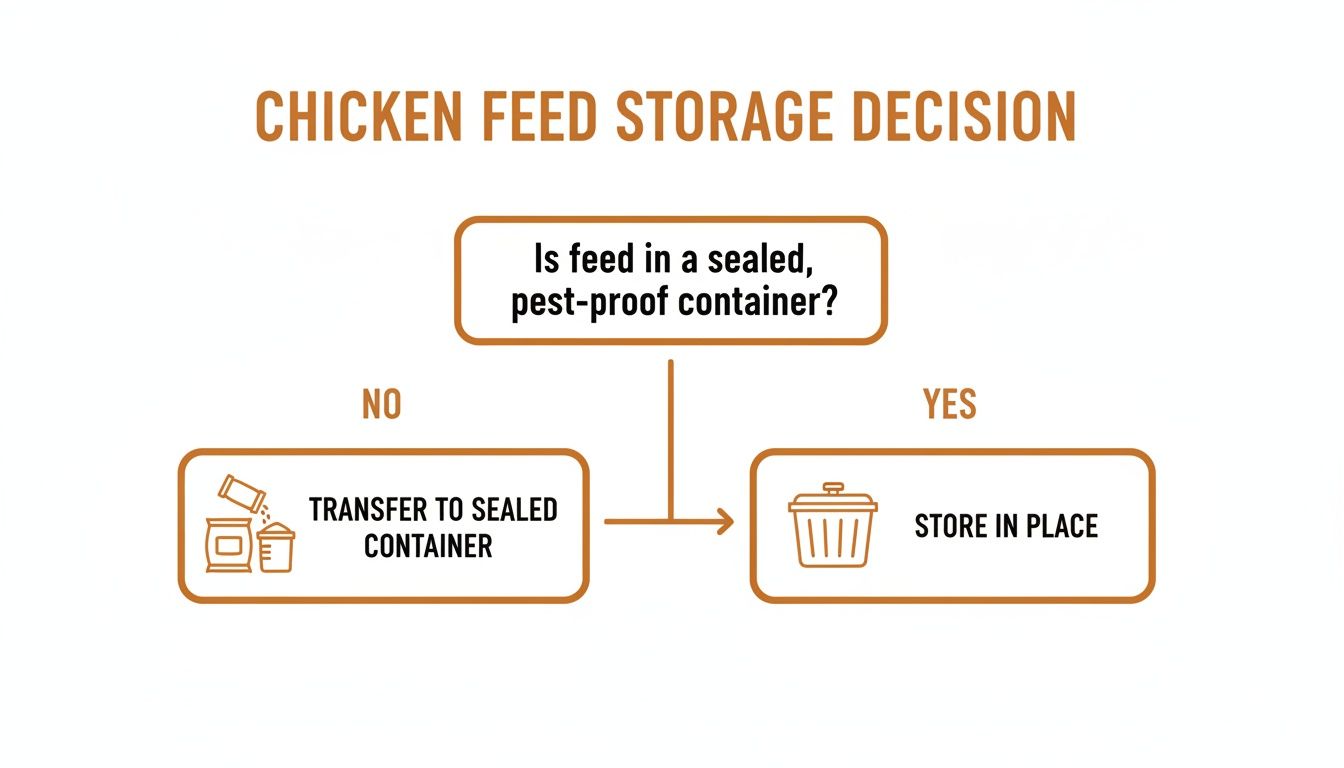
As you can see, the most critical move is getting that feed out of the bag and into something secure.
Pro Tip: Do yourself a huge favor and get in the habit of labeling every container. Just a piece of painter's tape with the date you bought the feed is all it takes. This is the cornerstone of a "first-in, first-out" system and stops you from accidentally feeding your hens stale, less nutritious food.
Finding the Ideal Storage Location
Where you stash your chicken feed matters just as much as the container you put it in. It might feel like a smart shortcut to keep a bag of feed inside the coop for those early morning feedings, but I've seen firsthand how this common practice can backfire. It's one of the riskiest mistakes a chicken keeper can make.
The coop is a bustling, humid place, full of moisture from droppings and the birds' own breathing. That humidity, combined with fluctuating temperatures, creates the perfect environment for mold to take hold. Worse yet, storing feed where your flock lives is like hanging a giant, flashing "All-You-Can-Eat Buffet" sign for every mouse, rat, and wild bird for miles around. This doesn't just mean you're losing feed; you're inviting disease and contamination right into their home.
The Perfect Micro-Environment for Feed
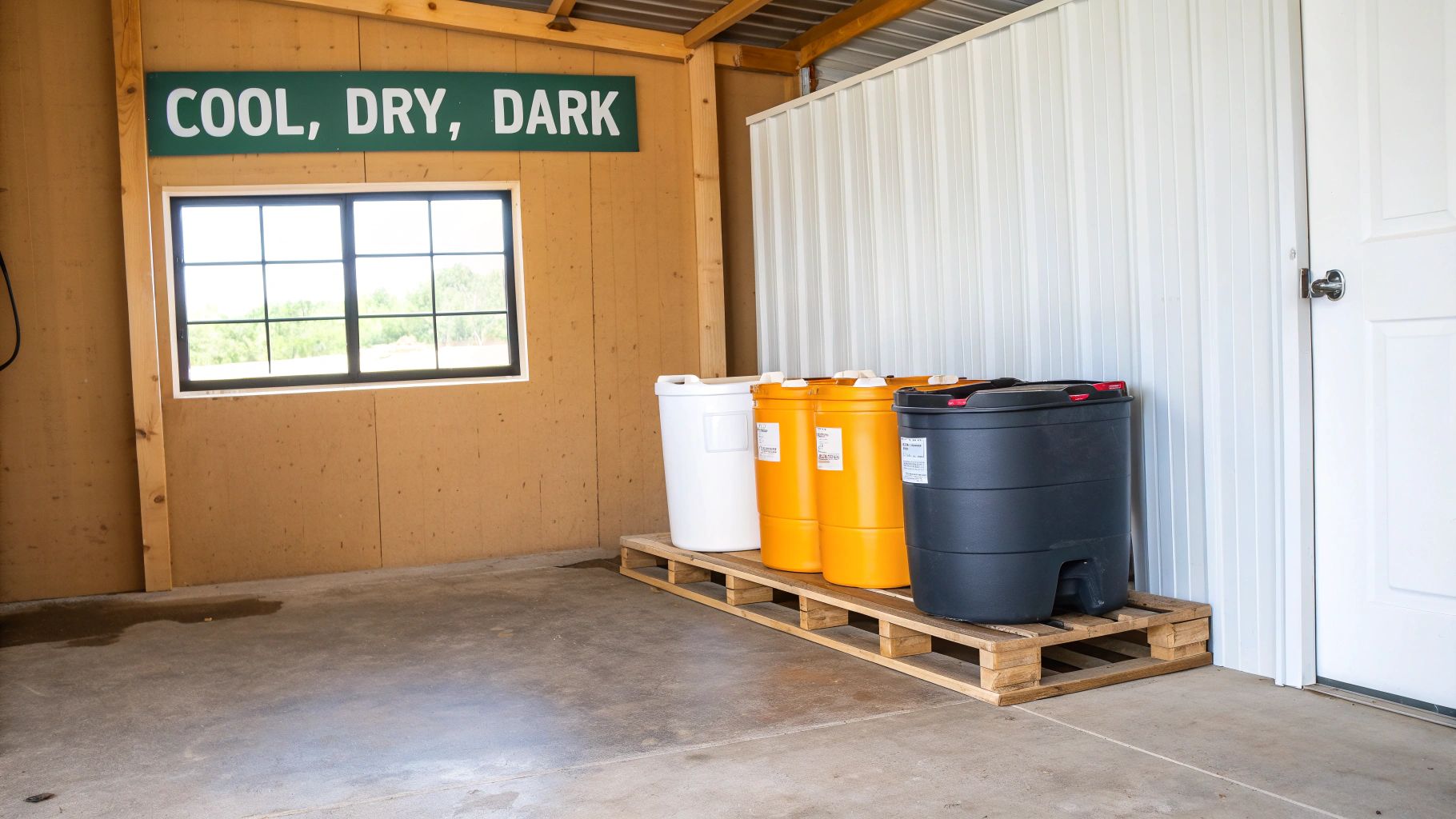
The sweet spot for storing chicken feed is somewhere consistently cool, dry, and dark. Think about a corner of your garage, a well-ventilated shed, a utility room, or even a dry basement. The whole idea is to create a stable little micro-environment that preserves the feed's nutritional value from the moment you get it home.
These kinds of spots protect the feed from its two biggest enemies: heat and moisture.
- Cool Temperatures: Heat is a thief. It quickly breaks down essential vitamins and causes the healthy fats in the feed to go rancid. Keeping the temperature below 70°F (21°C) slows this process way down, making sure your flock gets all the goodness they're supposed to.
- Low Humidity: Moisture is public enemy number one. High humidity can cause condensation inside even a sealed container, which is all it takes for mold to start growing. This can lead to nasty mycotoxins that are invisible to the naked eye but can be incredibly harmful, and sometimes even fatal, to your chickens.
Practical Location Tips for Success
Setting up the right storage spot doesn't need to be a huge project. A few simple tweaks can make a massive difference in protecting your feed investment and your flock's health.
One of the most common slip-ups I see is people putting feed containers directly on a concrete floor. Concrete acts like a sponge, wicking moisture up from the ground and creating a damp, cool spot at the bottom of the bin—a perfect recipe for a moldy disaster. Always get your containers off the ground.
Here are a few easy, actionable things you can do right now:
- Get It Off the Floor: This is non-negotiable. Place your feed bins on a simple wooden pallet, a couple of cinder blocks, or a sturdy shelf. Creating even a small air gap underneath is crucial for stopping moisture from creeping in from the floor.
- Stay Out of the Sun: If your storage area has windows, make sure your containers aren't sitting in a patch of direct sunlight. UV rays can degrade vitamins, and the heat from the sun can warm up the container and speed up spoilage.
- Keep It Away from Chemicals: Always store feed far away from things like gasoline, pesticides, or other strong-smelling chemicals. Feed bags and even some plastics can absorb those odors, which can make the feed unappealing to your birds.
By simply moving your feed supply out of the coop and into a dedicated spot, you immediately make your flock’s home less of a target for pests. You’re building a secure food supply chain that ensures the only ones enjoying that high-quality feed are your chickens.
Implementing a First-In, First-Out Rotation
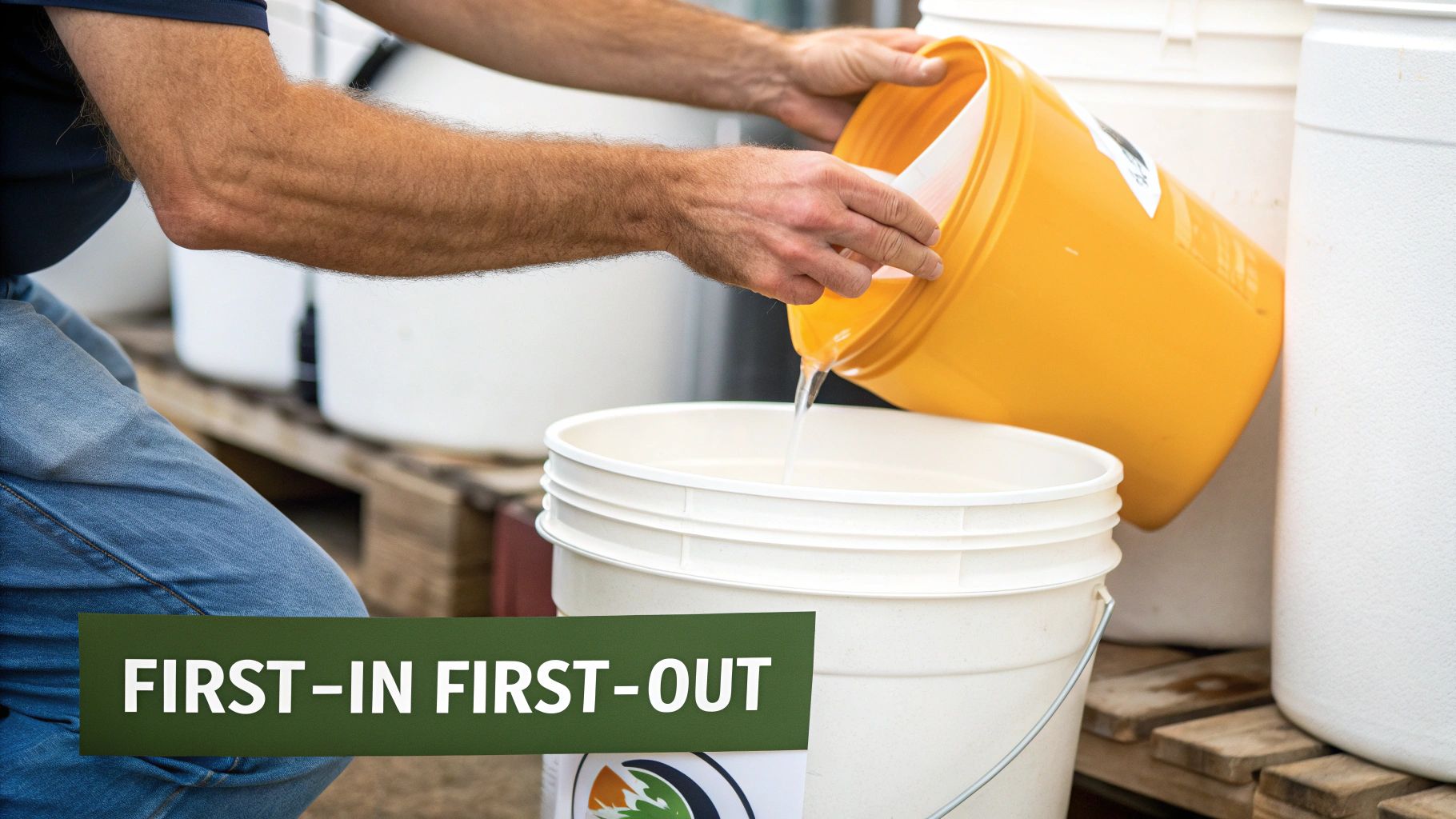
Here's a trick I learned from years in the restaurant industry that works wonders for keeping chicken feed fresh: First-In, First-Out (FIFO). The idea is simple: always use the oldest feed first. It sounds like common sense, but it’s a step many chicken keepers accidentally skip, especially on busy mornings.
The biggest mistake is just dumping a new 50-pound bag of crumbles on top of the old stuff. When you do that, the feed at the very bottom of the bin can sit there for months, slowly losing its nutritional punch. Worse, it can get stale, clump up, and even grow mold, creating a hidden health hazard for your flock.
Making FIFO a habit is probably one of the best things you can do for your chickens' long-term health. It guarantees every scoop you give them is as fresh and potent as possible.
The Five-Minute FIFO Habit
You don't need any fancy gear to get this right. Just a spare bucket, maybe a marker, and five minutes of your time each time you open a new bag. It's a small chore that pays off big time in feed quality.
Start with labeling. Whenever you fill up a feed container, just scribble the date you bought the feed on a piece of painter's tape and stick it on the lid. If you have a few bins going at once, this little reminder makes it instantly obvious which one to grab from first.
Now, here’s the crucial part. When you're ready to add a new bag of feed to a container that isn't completely empty, resist the urge to just top it off.
Here's what I do: Let's say I've got a few inches of feed left in my main 30-gallon bin. I'll grab a clean, empty bucket and pour that leftover feed into it. I just set that bucket aside for a minute.
With the main bin now empty, I pour the entire new bag in. Then, I take the bucket with the older feed and pour it right on top of the new stuff. It’s a two-step process that takes barely any time at all.
Why This Method Works
This quick shuffle ensures the oldest feed is always on top, ready to be used next. You completely sidestep the problem of creating a forgotten, stale layer at the bottom of your bin.
By making this part of your routine, you’ll prevent a few common headaches:
- Nutrient Loss: Vitamins and minerals in feed degrade over time. FIFO ensures your flock gets the full benefit of their food before that happens.
- Mold Growth: Old feed is a magnet for moisture, which can lead to dangerous mycotoxins. Constant rotation keeps things fresh and dry.
- Picky Eaters: Chickens can tell when their food is stale. Keeping it fresh ensures they eat well and stay healthy.
This five-minute habit is really the cornerstone of good feed management. It’s a simple, powerful way to protect your feed investment and, more importantly, the health and happiness of your flock.
Special Storage Needs for High-Protein Grubs
While your standard chicken feed is pretty forgiving, high-value treats like dried Black Soldier Fly Larvae (BSFL) need a little extra care. When you invest in a premium supplement to boost your flock's health, the last thing you want is for it to go bad. Think of these grubs as a nutritional powerhouse—and like any high-octane fuel, they need to be handled correctly.
What makes these grubs so great for your chickens also makes them delicate. Their high protein and fat content—the very things that give you strong eggshells and beautiful feathers—can break down if they aren't stored properly.
Unlike regular grain-based feed, the biggest enemy of dried grubs is moisture. Even a little bit of humidity can make the larvae clump together, which is the first step toward spoilage. You’ll know it’s happened if you catch a musty smell your chickens will turn their beaks up at.
Protecting Potent Proteins and Fats
The absolute best way to keep your grubs fresh is to seal them off completely from air and humidity. For products like Pure Grubs, the resealable bag they come in is an excellent first line of defense. It was designed for this exact purpose. If you make a habit of squeezing all the air out and sealing it tight after every use, you're already ahead of the game.
Of course, bags can rip, or maybe you just prefer something a bit more bulletproof. In that case, an airtight container is your best friend.
- Glass Jars: A big, clean glass jar with a screw-on lid works perfectly for smaller amounts. You get a fantastic seal, and you can see exactly how much you have left.
- Airtight Plastic: Food-grade plastic containers with a gasket-sealed lid are also a great choice. The key is to make sure the container is bone dry before you pour the grubs inside.
Critical Tip: Whatever you do, keep your grubs out of the sun. Direct sunlight is the quickest way to ruin them. The UV rays will destroy the essential fatty acids and proteins, stripping them of their nutritional punch. A dark pantry, cupboard, or cabinet is the perfect spot.
Protecting these supplements is just plain smart. When you consider that the global poultry feed market was valued at USD 217.91 billion and is still growing, it really highlights how vital quality nutrition is. Getting the most out of premium supplements like BSFL is one of the easiest ways to support your flock's health.
To dig deeper into why they're so beneficial, check out our guide to dried mealworms and grubs. By following these simple storage steps, you can be sure every grub you toss out is just as packed with protein and calcium as the day it was harvested.
Your Top Questions About Storing Chicken Feed
Even with a solid plan, questions are bound to come up. I've heard them all over the years. Here are the most common ones I get from fellow chicken keepers, with some straight-to-the-point advice to help you keep your feed in top shape.
How Long Is Chicken Feed Good For After Opening?
Once you crack open a new bag, the clock starts ticking. You’ll want to aim to use it all up within 4 to 6 weeks. That's the sweet spot for making sure your flock gets all the nutrients promised on the label before key vitamins and fats start to break down.
Keep in mind, that timeline can shrink fast in hot, humid weather. If you're dealing with southern summers or a damp climate, it’s much smarter to buy smaller bags more often than to risk a huge bag going bad over a couple of months.
Is It Really That Bad to Store Feed in the Coop?
Yes, it really is. I can't stress this enough—avoid it at all costs. Coops are naturally humid environments thanks to chicken droppings and respiration. Combine that with fluctuating temperatures, and you’ve created the perfect breeding ground for mold and spoilage.
Even more concerning, an open food source inside the coop is like putting out a giant welcome mat for rodents and wild birds. Not only will they steal your feed, but they’ll leave behind droppings that can contaminate your flock's food and living space, spreading disease right where your chickens sleep.
What Should I Do If My Chicken Feed Gets Wet?
If your feed gets wet, there's only one thing to do: throw it out immediately. Don't even think about trying to salvage it.
Moisture is the number one trigger for toxic mold and mycotoxins, which can be devastating and even fatal to your flock. A new bag of feed is a small price to pay for the health and safety of your birds. It's a non-negotiable rule of chicken keeping.
Are Plastic Storage Containers Safe for Chicken Feed?
Absolutely, as long as you pick the right kind. You need to use food-grade plastic to make sure no nasty chemicals leach into the feed. It's easy to check—just flip the container over and look for one of these recycling symbols on the bottom:
- #2 (HDPE)
- #4 (LDPE)
- #5 (PP)
Make sure whatever bin you choose has a lid that locks or screws on tight. This is your best defense against both air and pests. I'd steer clear of those flimsy, cheap plastic totes; a determined rat can chew through one of those in no time.
Keeping your feed fresh is a simple but crucial part of raising a healthy flock. When you're ready to give their diet a nutritional boost, Pure Grubs are a fantastic choice. These premium, USA-grown Black Soldier Fly Larvae are packed with the calcium and protein hens need for strong eggshells and overall vitality. You can grab a bag of your flock's favorite treat and see the difference for yourself.