

A Complete Guide to Buying Dried Bulk Mealworms
If you've ever wondered about that bag of crunchy, golden-brown bits your neighbor tosses to their chickens, you've likely seen dried mealworms. They are exactly what they sound like: a shelf-stable, high-protein treat for a whole host of animals, from poultry and wild birds to reptiles and fish. They’ve become incredibly popular because they’re an easy, nutrient-packed way to boost an animal's diet and encourage their natural instinct to forage for bugs.
Why Everyone Is Buying Dried Bulk Mealworms
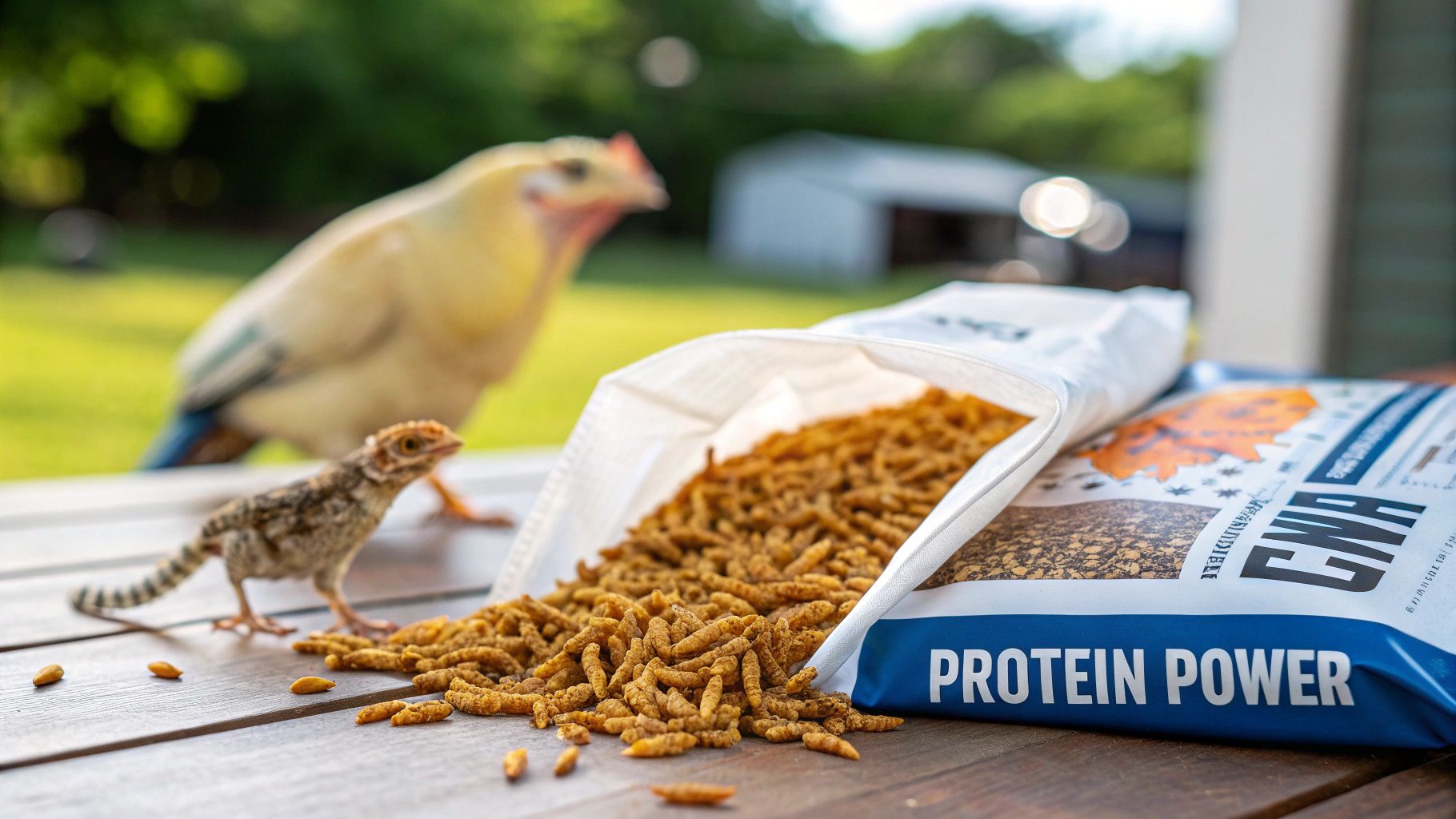
Walk into any feed store or browse online for animal treats, and you'll see them everywhere: dried bulk mealworms. It's not just a trend; these little critters have become a staple for everyone from seasoned farmers to casual birdwatchers. And it’s easy to see why. They're more than just a tasty snack—they're a concentrated source of the nutrients animals need to thrive.
First things first, what are they? Mealworms aren't actually worms. They're the larvae of the darkling beetle, Tenebrio molitor. A simple drying process turns them into a lightweight, long-lasting treat that animals go absolutely wild for. You can think of them as nature's protein bars for your flock or backyard critters.
The Rise of a Superfood Supplement
The buzz around dried mealworms isn't just hype; it's rooted in a perfect mix of nutrition, convenience, and even eco-friendliness. For years, they were a well-kept secret among reptile keepers and serious bird breeders. But as more people started raising their own chickens and setting up backyard bird feeders, the secret got out.
At their core, dried mealworms offer a simple promise: a convenient way to deliver high-quality, animal-based protein. This single benefit addresses numerous needs, from bolstering egg production in hens to helping wild birds survive harsh winters.
This growing demand is fueled by some clear advantages, especially when you start buying them in bulk.
- Packed with Protein: Usually boasting over 50% protein, mealworms provide the amino acids crucial for healthy feather growth during a molt, strong eggshells, and overall development in young animals.
- Seriously Convenient: Forget the hassle of live insects. Dried mealworms are mess-free and don't need refrigeration. Just scoop, serve, and store the bag in a cool, dry place. It's that simple.
- Smart Economics: Buying dried bulk mealworms dramatically cuts the cost per pound. This makes it an affordable way to consistently supplement your animals' diet without blowing your budget.
- Surprisingly Sustainable: We'll dig into this more later, but farming mealworms is remarkably efficient. It uses far less land, water, and feed compared to traditional protein sources like soy or fishmeal.
This powerful combination has cemented their place in the feeding routines of animal lovers everywhere. What was once a niche product is now a go-to for anyone wanting to give their animals a high-value treat that truly supports their health.
The Nutritional Punch Packed in Dried Mealworms
If you've only ever thought of dried mealworms as a simple treat, you're missing the bigger picture. They're far more than that. Think of them less like candy and more like a high-performance protein bar, perfectly crafted by nature for animals that love to eat insects.
The secret to their power is what's inside. Dried mealworms are famous for their incredibly high protein content, often topping 50%. This isn't just any protein, either—it's loaded with the essential amino acids that are the literal building blocks for everything from muscle growth to a healthy immune system.
What This Means for Your Animals
The dense nutrition in dried bulk mealworms translates into real, visible health benefits. That high protein is a game-changer for birds, especially during their annual molt when they need a ton of resources to regrow strong, beautiful feathers. For your laying hens, that protein boost often means more eggs and tougher shells.
But it’s not just about protein. Dried mealworms also offer a healthy dose of fat, which is a fantastic source of energy. This helps your animals stay warm during the cold months and gives them the fuel they need for all their daily activities, like foraging and nesting. They even contain fiber for digestive health and key minerals like phosphorus and potassium.
It's this one-two punch of protein, fat, and minerals that really makes mealworms a superfood. They fill nutritional gaps that a standard grain-based feed often misses, providing a natural, easy-to-digest source of animal-based nutrients.
It’s no wonder the world is catching on. The mealworm market is expected to explode, growing from about USD 1.38 billion in 2025 to a massive USD 7.15 billion by 2032. This boom shows just how much people are realizing their value in everything from backyard chicken feed to pet food.
How Mealworms Stack Up Against Other Options
To really get a feel for their value, it helps to put them side-by-side with other popular feed supplements. While things like Black Soldier Fly Larvae (BSFL) and soybean meal have their place, dried mealworms offer a unique nutritional profile that stands out.
The high protein in mealworms is a major plus, making them a go-to for supporting growth and feather production. If you're looking for more ways to boost your flock's protein intake, check out our guide on high-protein foods for chickens.
Here’s a quick look at how the numbers compare.
Nutritional Comparison Mealworms vs Alternatives
This table breaks down the key differences between the most common feed supplements so you can see where each one shines.
| Nutrient | Dried Mealworms (Approx. %) | Dried BSFL (Approx. %) | Soybean Meal (Approx. %) |
|---|---|---|---|
| Protein | ~53% | ~42% | ~48% |
| Fat | ~28% | ~35% | ~1% |
| Fiber | ~6% | ~7% | ~7% |
| Calcium | ~0.1% | ~2-3% | ~0.3% |
The numbers don't lie. While BSFL are the undisputed champions of calcium, dried mealworms excel in protein, making them the perfect choice when you’re focused on muscle development, feather health, and energy. Soybean meal is a decent plant-based protein, but it just can't compete on fat content or the natural, instinct-driven appeal that insects have for foraging animals.
At the end of the day, adding dried mealworms to your feeding routine provides a targeted nutritional boost that few other supplements can deliver.
How to Feed Mealworms to Your Animals
Alright, you've got your hands on some dried bulk mealworms and you know they're packed with good stuff. So, what's the best way to serve them up? The good news is, it’s pretty simple. But a little know-how can turn a simple snack into a major health boost for your animals.
Think of it less like dumping food in a bowl and more like tailoring a supplement to fit the creature you're feeding. You wouldn't water a cactus the same way you water a fern, right? The same idea applies here. A few small tweaks based on the animal will make all the difference.
Feeding Your Backyard Chickens
If there's one thing chickens go absolutely bonkers for, it's dried mealworms. They're a fantastic way to boost their protein intake, especially during molting season, and can even help you build a stronger bond with your flock.
The key with chickens is to remember that mealworms are a treat, not their main course. A good rule of thumb is about one tablespoon per chicken, per day. It's more than enough to give them the benefits without messing up their balanced diet.
Here are a few ways my flock likes them best:
- Scatter Feeding: I just toss a handful on the ground in their run. This gets them scratching and foraging just like they would naturally, which keeps them busy and entertained.
- Mixing with Feed: On busy days, I'll just mix the mealworms right into their regular layer feed. This makes sure even the more timid hens get their share of the protein-packed goodness.
- Hand-Feeding: This is my favorite. Offering mealworms from my hand is the fastest way to get new birds to trust me. Before you know it, they'll be running up to you every time you step outside.
If you want to go deeper on how insects can fit into your flock's diet, check out our guide on the benefits of dried grubs for chickens.
Attracting Wild Birds to Your Yard
Dried mealworms are a secret weapon for bringing in insect-loving birds that often skip the standard seed feeder. If you want to see bluebirds, robins, wrens, or chickadees in your yard, this is how you do it.
The best way to offer them is in a feeder that keeps the bigger, pushier birds (and squirrels!) out. A simple platform feeder works, but a dedicated bluebird feeder with small entry holes is even better. I just put a small scoop out in the morning and enjoy the show.
Pro Tip: Putting out mealworms during nesting season is a huge help for parent birds. They get a reliable, high-energy food source to bring back to their hungry babies, which is a great way to support your local ecosystem.
This chart shows you exactly why mealworms are such a powerhouse compared to other common feed supplements.
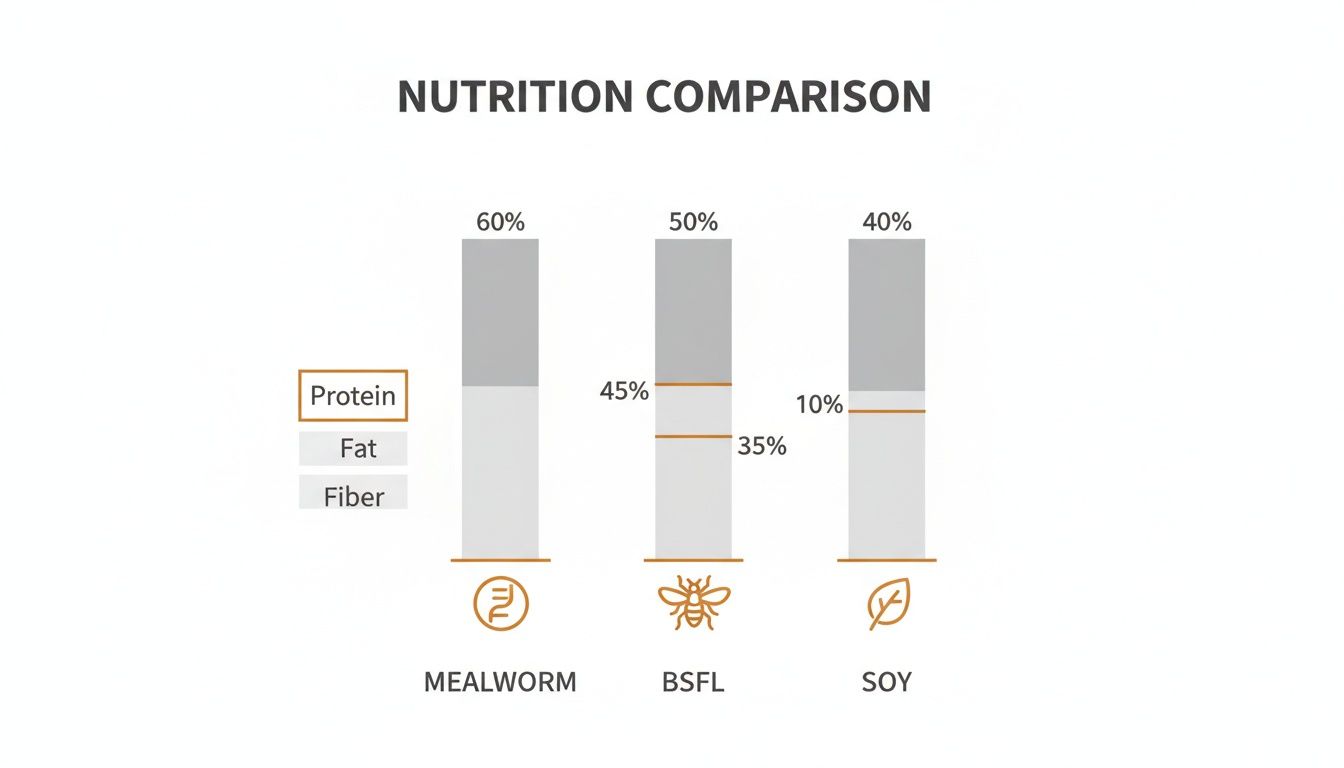
As you can see, that high protein level is what makes them such a premium treat for growth and energy.
Treats for Reptiles and Fish
Don't forget your other critters! Insect-eating reptiles and fish also get a huge nutritional kick from dried mealworms. For bearded dragons, geckos, and turtles, they make an excellent addition to a varied diet.
You can simply place them in a shallow dish. If you have a picky eater that prefers live prey, try gripping a mealworm with feeding tongs and wiggling it a bit—that little bit of movement is often enough to trigger their hunting instinct.
For pond fish like koi or aquarium dwellers like cichlids, dried mealworms are a great floating treat. Just sprinkle a few on the water's surface. The key is not to overdo it; only give them what they can gobble up in a minute or two to avoid clouding up your water.
Should You Rehydrate Dried Mealworms?
This question comes up all the time: should you soak your dried bulk mealworms before feeding? The answer is, it depends.
Soaking them in a bit of warm water for 15-20 minutes makes them soft and plump. This is fantastic for baby chicks or smaller songbirds, as it makes the mealworms easier to swallow. It's also a sneaky way to provide extra hydration during a hot summer day.
That said, for healthy adult chickens, wild birds, and fish, serving them dry is perfectly fine and a lot more convenient. I usually serve them dry, but I'll rehydrate a batch if I have young birds or during a heatwave.
A Buyer's Guide to Choosing Quality Mealworms
When you decide to buy dried bulk mealworms, you’re making a real investment in the health of your animals. But a quick online search will throw a ton of options at you, and it's important to get one thing straight: not all mealworms are created equal. The quality can swing wildly from one brand to another, and that directly affects the nutrition and safety of what you're feeding.
Becoming a savvy buyer just means knowing what to look for. Think of it like picking out fresh produce at a farmer's market—you instinctively look for vibrant colors and firm textures. The same idea applies here. With a little bit of knowledge, you can confidently choose mealworms that aren't just a treat, but a genuinely healthy supplement.
What to Look for in High-Quality Mealworms
The first thing to do is a simple visual check. Honestly, good quality dried mealworms should look appealing. You want to see whole, golden-brown larvae that are all about the same size. Picture a bag of premium granola versus the dusty crumbs at the bottom of the box—you're looking for the granola.
Here are the key things your eyes should be looking for:
- Wholeness and Integrity: Open the bag and look for intact mealworms. If you see a lot of breakage or a layer of fine dust at the bottom, it's a sign of rough handling or a poor drying process. A few broken pieces are totally normal, but the bag shouldn't be mostly fragments.
- Uniform Color: A consistent, rich golden-brown hue is a great sign. Be wary of bags with a mix of very dark or even black mealworms, as that can mean they were overcooked, spoiled before drying, or are just plain old.
- Minimal Debris: The bag should contain mealworms, period. If you spot other stuff like bedding material, shed skins, or other insect parts, it points to sloppy quality control during processing.
Quality control is everything. The best suppliers invest in clean, modern farming and processing facilities to ensure the final product is pure and safe. This commitment is what separates a premium supplement from a risky gamble.
Choosing a trusted source is just as critical as the visual cues. A reliable company will be upfront about where their mealworms come from and how they're prepared.
Sourcing and Safety Are Non-Negotiable
The mealworm market is global, with different parts of the world specializing in production. The Asia-Pacific region, for example, is a powerhouse, accounting for 47.3% of the global market share. This is thanks to a long history of insect farming in places like China and Thailand, now combined with modern research. Knowing a bit about the global mealworm market can help you understand where your supply might originate.
No matter where they come from, safety has to be your number one priority. Always look for suppliers who use third-party labs to test for nasty contaminants like salmonella, E. coli, and heavy metals. This is especially important if you're feeding laying hens, since those contaminants can potentially pass into the eggs you eat. Good brands are transparent about their testing and certifications—they'll be proud to show you.
Understanding Different Drying Methods
How the mealworms are dried makes a huge difference in their final nutritional value, texture, and how long they'll last on your shelf. Not all methods are created equal when it comes to preserving the good stuff.
Here’s a quick rundown of the most common techniques:
- Microwave Drying: This is the go-to method for most dried bulk mealworms. It’s fast and efficient, creating that crispy texture animals love and a long shelf life, all while keeping protein and fat levels high.
- Freeze-Drying: This is a much gentler process. The mealworms are frozen and then the moisture is removed in a vacuum. It’s fantastic at preserving nutrients and the natural shape of the larvae, but it's also the most expensive option.
- Oven-Drying: While less common for huge batches, slow oven-drying can also work well. The risk here is that if the temperature is too high, it can cook out some of the nutrients and leave you with a darker, more brittle product.
By keeping these things in mind—how they look, who you're buying from, and how they were made—you can confidently pick a product that delivers the powerful nutritional punch your animals deserve.
How to Properly Store Your Bulk Mealworms
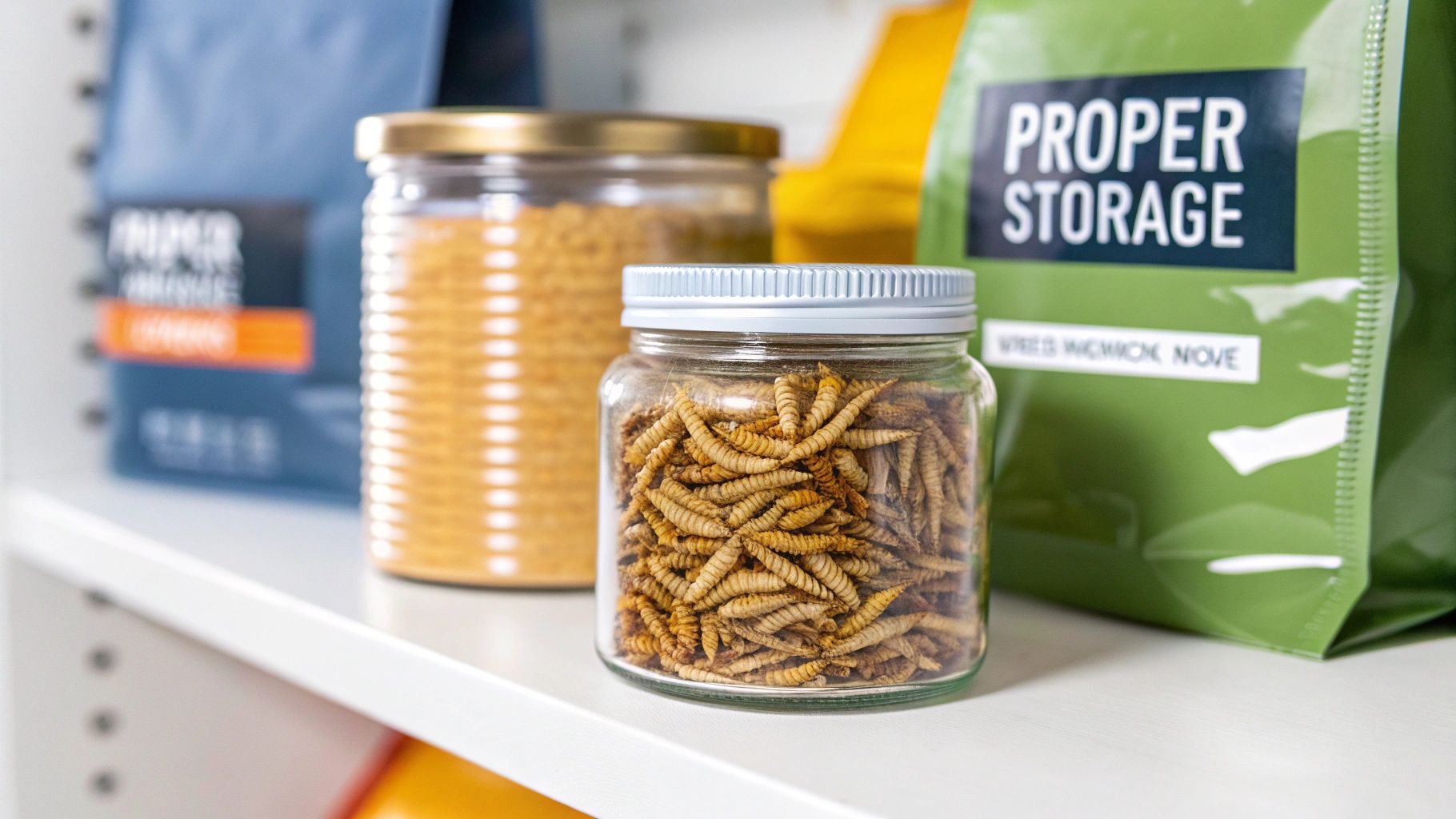
Buying dried bulk mealworms is a great way to save money and keep a high-protein treat on hand for your flock, fish, or wild birds. But that value disappears if they go bad before you can use them. Proper storage is what protects your investment and locks in all that powerful nutrition.
Think of your dried mealworms like any other premium pantry staple—oats, flour, or coffee beans. Just like those foods, their biggest enemies are light, heat, moisture, and pests. Your goal is simply to keep them protected from those four things.
Thankfully, getting it right is easy. You don't need any special gear, just a good container and a smart spot to put it. This little bit of effort ensures the last scoop from your supply is just as fresh and nutritious as the first.
Finding the Perfect Storage Spot
The perfect home for your mealworms can be described in three words: cool, dark, and dry. Heat can cause the healthy fats inside the mealworms to turn rancid, and direct sunlight will break down their valuable vitamins. A stable, cool temperature is what you're aiming for.
Great storage locations include:
- A pantry or cabinet, especially one that's not right next to the stove or oven.
- A garage or shed, as long as it doesn't get baked in the summer sun.
- A basement, provided it isn't damp.
Places to avoid are sunny windowsills, hot attics, or right next to a furnace. Consistency is what helps you get the most out of their impressive shelf life—dried bulk mealworms can easily last for one to two years when stored correctly.
The single most important step is to get your mealworms out of the bag they came in and into a sturdy, airtight container. This is your best defense against the elements.
An airtight seal is non-negotiable. It locks out humidity, which leads to mold, and it keeps pantry pests from finding their way into your stash. A simple plastic tote with a snap-on lid, a large glass jar with a gasket seal, or even a five-gallon bucket will do the trick perfectly.
How to Tell if Mealworms Have Gone Bad
Even with perfect storage, it pays to know the warning signs. Trust your senses—they are your best guide. Fresh, good-quality dried mealworms should have a subtle, nutty, or earthy smell. If you pop the lid and get hit with a foul, rancid, or musty odor, that’s a clear sign they’ve turned.
Look for visual clues, too. Any sign of mold, which often looks like fuzzy white or black spots, means they're spoiled. You should also watch out for clumping, as that's a tell-tale sign that moisture has snuck in. If you notice any of these red flags, it's best to be safe and toss the batch. Your animals' health always comes first.
What Makes Mealworms a Sustainable Choice?
When you toss a scoop of dried bulk mealworms to your flock, you're doing more than just giving them a treat. You're actually part of a bigger shift toward smarter, more sustainable ways to feed our animals. In a world looking for better protein sources, mealworms are a surprisingly powerful and eco-friendly answer.
Let’s think about the old standbys for animal feed, like soy and fishmeal. Soy farming eats up huge amounts of land and water, and it’s often linked to deforestation. Fishmeal can put a major strain on wild fish populations. Mealworm farming completely flips that script, offering a much more efficient path forward.
A Tiny Footprint with a Big Impact
The environmental math on mealworm farming is pretty incredible. They need just a fraction of the resources to produce the same amount of protein, making them a no-brainer for sustainability.
- Less Land: You don't need sprawling fields for mealworms. They're farmed vertically in stacked trays, which means you can produce a massive amount of protein in a space as small as a warehouse.
- Less Water: Compared to raising livestock or growing soy, mealworms sip, not gulp. Their whole life cycle is remarkably water-efficient.
- Lower Emissions: The process of farming mealworms creates far fewer greenhouse gases than traditional livestock operations. This helps shrink the carbon footprint of the entire animal feed industry.
This kind of efficiency is a game-changer. It’s a clear example of how a simple choice in what you feed your animals can support a system that’s much kinder to the planet.
Nature's Ultimate Recyclers
Beyond their small footprint, mealworms are champions of the circular economy. The whole idea is to turn "waste" into something valuable, and that's exactly what mealworms do. They thrive on agricultural byproducts—think wheat bran or leftover vegetable scraps that might otherwise just get thrown away.
Mealworms are nature’s clean-up crew. They have this amazing ability to take low-value organic material and bio-convert it into high-quality protein and fats. They literally close the loop in our food system.
This process turns would-be trash into a nutritional treasure, creating a self-sustaining cycle that’s a world away from the one-and-done systems in traditional agriculture. While mealworms are fantastic, it's also worth exploring other sustainable insects. For a great comparison, our guide on dried black soldier fly larvae explains how BSFL are calcium powerhouses and even more efficient at waste conversion.
It's no surprise that the demand for these proteins is exploding. The mealworm feed market alone was valued at around $850 million in 2023 and is on track to blow past $2.5 billion by 2029. This boom is being driven by the animal feed industry as more people catch on to the environmental and nutritional perks. You can read the full market research to see just how fast this industry is growing. By choosing dried bulk mealworms, you're supporting an industry that's offering real, practical solutions to some of our planet's toughest challenges.
Got Questions About Dried Mealworms? We've Got Answers.
As you start thinking about adding dried mealworms to your animals' diet, a few questions are bound to pop up. It's totally normal. From how much is too much to whether you should soak them first, getting the details right is the key to using them well.
Let's walk through some of the most common things people ask. This is your quick-and-dirty guide to feeling completely confident when you start feeding.
Can I Give My Pets Too Many Dried Mealworms?
You absolutely can. It's probably the most important thing to remember: dried mealworms are a treat, a supplement, not a complete meal. Think of them like a high-protein power bar, not the main course.
For most backyard animals like chickens or wild birds, mealworms shouldn't make up more than 10-20% of their total daily food. This rule of thumb ensures they're still getting the balanced nutrition they need from their main feed.
Going overboard can cause a few problems:
- Nutrient Imbalance: Packing in too much protein and phosphorus can throw off the crucial calcium-to-phosphorus ratio. This is a big deal for laying hens needing strong eggshells or any animal needing healthy bones.
- Creating Picky Eaters: If you offer up an endless mealworm buffet, your animals might start turning their noses (or beaks) up at their regular, balanced feed.
- Weight Gain: That high fat content is great for a boost of energy, but just like with us, too much of a good thing can lead to packing on extra weight.
A small handful for a flock or a tablespoon or so per animal each day is the sweet spot. It gives them all the good stuff without any of the downsides.
Should I Rehydrate Dried Mealworms?
That's a great question, and the answer is—it depends! You don't have to, but sometimes it's a really good idea. Rehydrating them is easy: just soak the mealworms in warm water for about 15-20 minutes. They'll plump right up, becoming soft and much easier to swallow.
Soaking is a game-changer for:
- Chicks and baby birds whose tiny beaks might struggle with hard, crunchy insects.
- Certain reptiles or fish that are used to eating softer foods.
- Giving everyone a hydration boost on a scorching hot day.
For healthy adult chickens, wild birds at your feeder, or fish in your pond, serving them dry is perfectly fine and a lot less fuss. Many animals seem to love the crunch. It really just comes down to who you're feeding.
Are Mealworms Safe for All Kinds of Birds?
Mealworms are an incredible treat, but they're specifically for insect-eating birds (insectivores). These are the birds that naturally spend their days hunting for bugs. If you're hoping to attract bluebirds, robins, wrens, or chickadees, putting out mealworms is one of the best things you can do.
Expert Tip: Setting up a dedicated mealworm feeder is one of the most effective ways to support your local insect-eating birds, especially during nesting season when they're desperate for extra protein for their chicks.
However, they won't do you much good if you're trying to attract seed-eaters like finches and sparrows, or nectar-drinkers like hummingbirds. Those birds just aren't wired to see insects as food and will likely ignore them completely.
Will Dried Mealworms Make My Garage Smell or Attract Pests?
Not if you store them right! When kept properly, dried mealworms have a faint, nutty scent that you'll barely notice. The trick is to keep them in a sealed, airtight container.
Trouble starts when they're left in an open bag or, even worse, get wet. Moisture is the enemy. Damp mealworms will spoil, and that's when you'll get a nasty smell that could attract rodents or other pests. Just follow the golden rule of storage—cool, dry, and sealed tight—and you’ll have nothing to worry about.
Ready to provide your flock with a superior, USA-grown nutritional boost? Pure Grubs offers premium Black Soldier Fly Larvae, packed with up to 85% more calcium than mealworms for stronger eggshells and healthier birds. Shop our tested, safe, and all-natural grubs today at https://puregrubs.com.