

How to Care for Pet Ducks A Practical Guide
So, you're thinking about adding a few waddling, quacking personalities to your backyard? Fantastic! Keeping ducks is an incredibly rewarding experience, but it’s a world away from having a cat or even chickens. Get the basics right from the start, and you'll have a happy, healthy flock that brings nothing but joy (and a bit of mud) to your life.
Diving Into the World of Pet Ducks
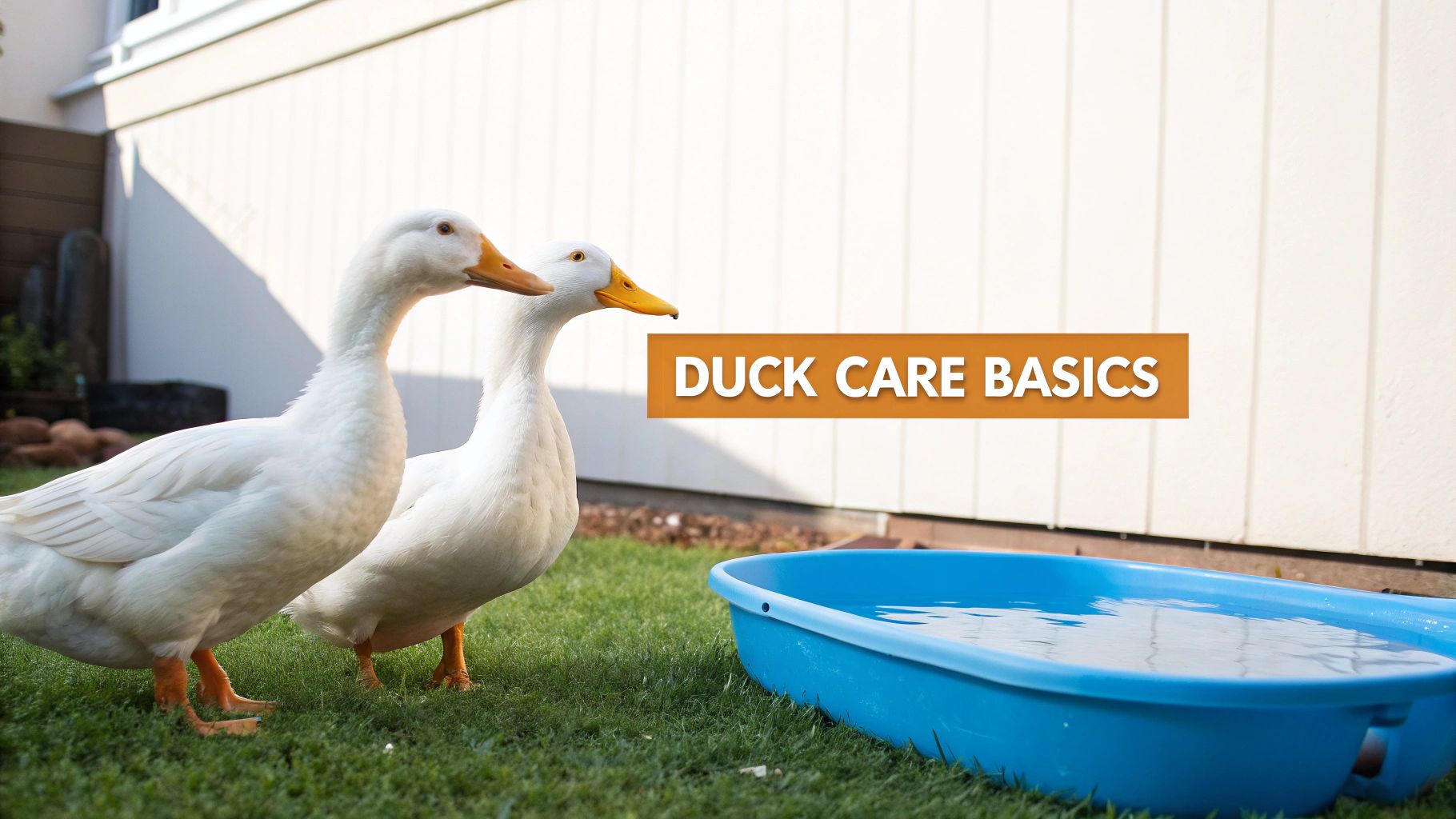
Welcome to the wonderfully messy, delightful world of pet ducks. These birds are far more than just pond ornaments; they're intelligent, social creatures with big personalities who can form surprisingly strong bonds with their keepers.
Before you jump in, it’s crucial to understand that ducks have their own unique set of needs, especially when it comes to water and their social lives. This guide is here to walk you through the practical, day-to-day realities of duck care, so you’re ready for the commitment. Trust me, the joy of watching your flock forage and splash around is worth every bit of the effort.
The Four Pillars of Duck Care
When it comes down to it, keeping ducks successfully hinges on four absolute must-haves. Think of these as the non-negotiable foundation for a thriving flock. If one of these pillars is weak, you’ll quickly run into issues with stress, health, or behavior.
- Friends Are Mandatory: A lone duck is a lonely, stressed-out duck. They are intensely social birds that rely on their flock for safety and well-being. You should always plan on keeping at least two, but a small flock of three or more is even better.
- A Safe Place to Sleep: Ducks need a secure, predator-proof coop to lock them in at night. This isn't just a suggestion—it's essential for protecting them from raccoons, hawks, stray dogs, and other threats, not to mention shielding them from rough weather.
- Water, Water, Everywhere: It’s not just for drinking. Ducks need water deep enough to dunk their entire heads to keep their eyes and nostrils clean and prevent infections. You don't need a fancy pond; a simple kiddie pool works perfectly.
- The Right Fuel: Good nutrition is everything. Their diet should be built around a high-quality waterfowl feed, not just random scraps. Treats are great for bonding and enrichment, but they should be healthy and supplemental.
A huge mistake I see new owners make is feeding ducks bread. It has zero nutritional value and can cause serious health problems, including a wing deformity called "angel wing." Just don't do it. Stick to their proper feed, leafy greens, and healthy, high-protein treats.
It's no surprise that backyard poultry has exploded in popularity. In the UK alone, there are now an estimated 1.3 million domestic fowl, including ducks. We've seen a 15-20% surge in interest since 2020 as more people discover the joys of raising their own birds. If you're curious, you can find more fascinating pet ownership trends and statistics that show just how popular these feathered friends have become.
To keep things simple, I've put together a quick reference table with the absolute essentials.
Quick Guide to Pet Duck Care Essentials
| Care Pillar | Key Requirement | Quick Tip |
|---|---|---|
| Companionship | A minimum of two ducks | Keep a small flock of 3-5 to establish a natural pecking order. |
| Housing | Predator-proof coop with good ventilation | Use hardware cloth over chicken wire on all openings for better security. |
| Water Access | Daily access to clean, deep water | A 50-gallon plastic tub or large kiddie pool is an excellent, affordable option. |
| Diet | Waterfowl-specific feed with niacin | Supplement their diet with healthy greens and high-calcium treats. |
Nailing these four areas will set you and your new ducks up for a long, happy, and entertaining life together.
Creating the Perfect Home for Your Flock
Getting your ducks' housing right is the absolute cornerstone of good care. Think of it less like a simple shed and more like their personal fortress—a safe haven from predators, a dry retreat from bad weather, and a comfortable spot to rest after a long day of foraging.
The duck house itself doesn't need to be fancy, but it absolutely must be secure and dry. Sturdy is the name of the game. Solid wood or even tough composite panels work great because they'll stand up to beaks, moisture, and general duck chaos. Whatever you do, don't use flimsy materials that a determined raccoon could peel back in minutes.
One thing you can't skimp on is ventilation. Ducks breathe out a surprising amount of moisture, and their droppings are wet. This creates a humid coop, which is a recipe for respiratory issues or even frostbite in the winter. The trick is to add vents up high near the roofline, covered with 1/2-inch hardware cloth, to let damp air escape without creating a cold draft right on your birds.
Designing the Perfect Duck Coop
When you're thinking about the inside of the coop, space is everything. Ducks love to snuggle up in a pile to sleep, but they still need room to waddle around without stepping all over each other.
A good baseline is to give them at least 4-5 square feet of floor space per duck inside their house. This gives everyone enough elbow room, which cuts down on squabbles and helps keep the bedding from getting soaked too quickly. For a small flock of four ducks, for example, a coop with a 4x4 foot floor would be a comfortable starting point.
The biggest mistake I see new duck owners make is using chicken wire on windows and vents. Raccoons can reach right through those wide gaps or just tear the wire open. Always, always spend the extra money on hardware cloth for any and all openings.
The floor needs to be practical, too. A dirt floor will turn into a stinking, muddy mess in no time. A solid floor, either wood or concrete, is far easier to keep clean and sanitary. This solid base is also the perfect setup for the next essential piece of the puzzle: bedding.
The Importance of Deep Bedding
Let's be honest: ducks are messy. There's just no getting around it. Their droppings are much wetter than a chicken's, so you need seriously absorbent bedding to keep their home healthy. This is where the deep litter method becomes your best friend.
Start by laying down a thick, fluffy layer of 3-4 inches of good bedding. Pine shavings are a fantastic and popular choice, but chopped straw or hemp bedding also work wonders. This initial layer is your moisture-soaking, waste-composting base.
To keep it going, just give the bedding a quick stir with a rake every couple of days and toss a fresh, thin layer on top whenever it starts to look damp or compacted. Over time, you’re creating a living compost system right on the coop floor that helps manage ammonia smells and provides a warm, insulated cushion for your flock, which is especially nice in the cold.
A well-managed deep litter system might only need a full clean-out once or twice a year. It's a huge time-saver that keeps your ducks healthy. In fact, research shows that providing deep bedding is critical, as ducks produce droppings that are 50% wetter than chickens'. You can learn more about how housing and other factors contribute to their well-being by exploring insights on modern pet care standards.
Creating a Safe Outdoor Space
Your ducks will want to be outside for most of the day, so their run needs to be just as secure as their coop. The goal here is to give them a space to forage, splash, and be ducks, all without you having to worry about predators.
- Secure Fencing: Your fence should be at least 4 feet high to keep ducks in and most ground predators out. To stop diggers like foxes, bury hardware cloth at least a foot deep along the entire perimeter of the fence.
- Overhead Protection: If you have hawks or owls in your area, you'll want to cover the run with netting. This is an absolute must if you have smaller bantam ducks, which are easy targets for aerial predators.
- Plenty of Room: Aim for at least 15-20 square feet of outdoor space per duck. Honestly, more is always better. It gives them enough room to roam and prevents the ground from turning into a total mud pit overnight.
The Critical Role of Water
Finally, no duck paradise is complete without a pool. And this isn't just for fun—it's absolutely vital for their health. Ducks need to be able to fully submerge their heads to clean out their eyes and nostrils, which prevents nasty infections. Splashing around also helps them preen, keeping their feathers perfectly waterproofed and in top condition.
You don't need a picturesque pond in your backyard. Simple solutions work just fine:
- Kiddie Pool: The classic hard-plastic kiddie pool is a favorite for a reason. It's deep enough for a good splash and dunk, and it’s a breeze to tip over, scrub, and refill.
- Large Tubs: A big rubber or galvanized steel livestock tub is another great, durable option. Many even come with a drain plug, which makes water changes much easier.
- Small Pre-formed Pond: If you're looking for something more permanent and natural-looking, you can dig in a small, pre-formed pond liner from a garden supply store.
Whatever you choose, that water needs to stay clean. You'll have to get in the habit of dumping and refilling it daily, or at least every other day, to keep harmful bacteria from growing. A clean little swimming hole is one of the best things you can provide for a happy, healthy flock.
Fueling Your Ducks with the Right Nutrition
Getting your ducks' diet right is probably the single most important thing you can do for their health. It's the foundation for a happy, productive flock. And it’s not as simple as tossing out some scratch grains; their nutritional needs change dramatically from the day they hatch into fluffy ducklings to when they become full-grown, egg-laying adults.
A duckling’s first few weeks are a period of explosive growth. To fuel this, they need a high-protein starter feed. Look for a non-medicated waterfowl or chick starter crumble with about 20-22% protein for their first two weeks.
After that initial growth spurt, you can dial back the protein a bit. Transition them to a grower feed with a protein content of around 16-18%. They'll stay on this until they're about 18 weeks old or start to lay their first eggs.
The Critical Role of Niacin
Here’s a crucial tip that every new duck owner needs to know: ducks need way more niacin (vitamin B3) than chickens. A niacin deficiency can cause serious, and often irreversible, leg and bone problems, like splayed leg or lameness.
While most modern feeds include niacin, I never take any chances. I always supplement to be safe. It’s easy—just add some brewer's yeast to their feed or water. A good rule of thumb is to mix about one tablespoon of brewer's yeast per cup of feed. This simple step helps them build strong, healthy bodies for life.
I’ve found the best way to make sure they get their niacin is to mix the brewer's yeast into a wet mash. Just add a little water to their feed and stir it all together. This way, they can't just pick out the tasty bits and leave the dusty powder behind.
Feeding Your Adult Ducks
Once your ducks mature and start laying, their dietary needs shift again. It's time to switch them over to a quality waterfowl layer pellet. This feed is specifically formulated with around 16% protein and, more importantly, has the extra calcium they need to produce eggs with strong, solid shells.
An adult duck generally eats about a quarter-pound of feed each day. It’s best to offer it in a feeder that keeps it clean and dry. And always, always make sure they have fresh water nearby. Ducks need water to swallow and properly digest their food. For more on a solid feeding routine, check out our complete duck feeding guide.
Boosting Nutrition with High-Value Treats
Treats aren't just for fun—they provide fantastic enrichment and can fill in important nutritional gaps. Ducks go wild for greens like lettuce (but never iceberg!), peas, and corn. But for laying hens, high-protein, high-calcium treats are especially valuable. This is where something like Black Soldier Fly Larvae (BSFL) really makes a difference.
Did you know ducks convert food 15% better than chickens and can lay 250 eggs a year? But without enough calcium, up to 12% of those eggshells can fail. This is a common headache for duck keepers that’s easily solved with the right supplement. For instance, Pure Grubs BSFL are made in the USA, tested for heavy metals, and pack a serious calcium punch at 9% by weight. That's a whopping 85% more than mealworms, helping to build stronger bones and leading to up to 30% stronger eggs. The importance of this kind of quality nutrition is being recognized more and more, as highlighted in recent reports on pet food trends.
This infographic shows just how critical some of these basic care elements are.
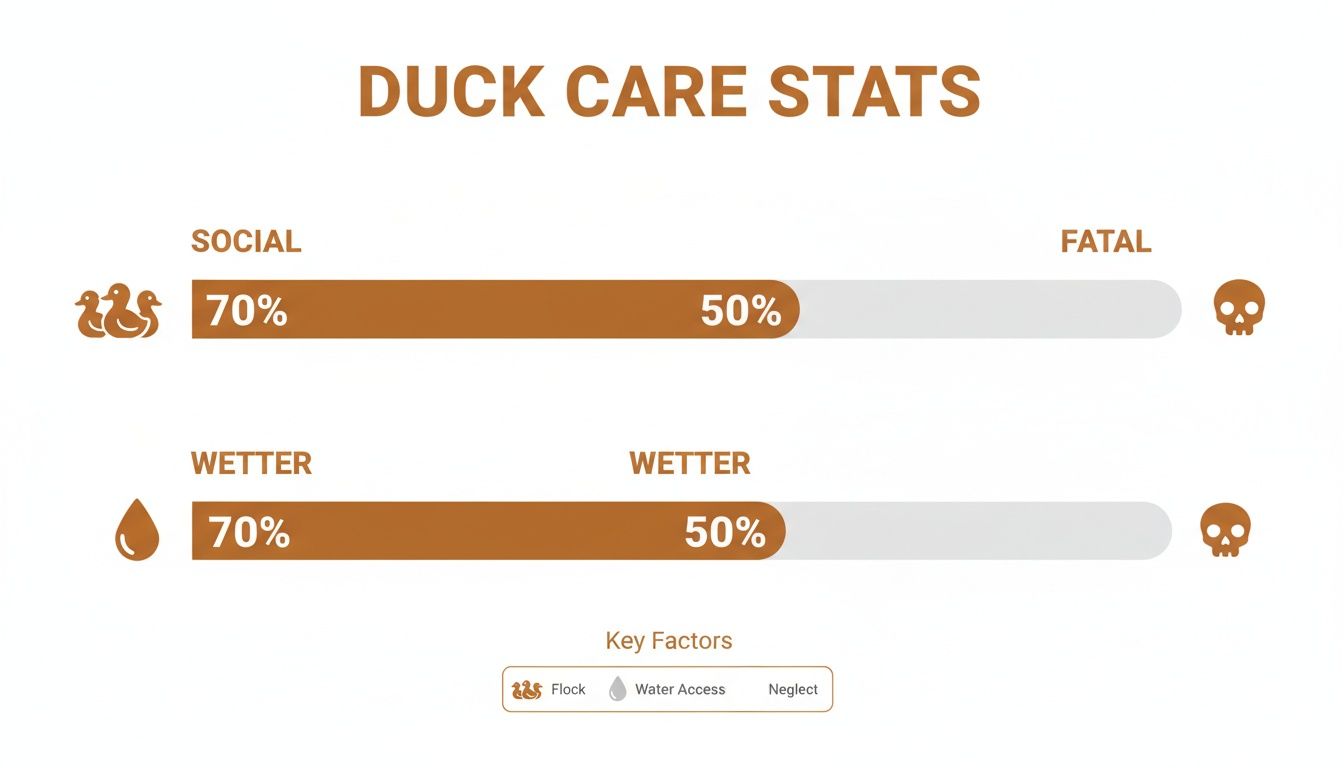
As you can see, overlooking things like social needs, water access, and basic health precautions can have truly devastating results for a flock.
Practical Ways to Feed BSFL
Getting BSFL into your ducks' diet is easy and a great way to let them act like ducks.
- Scatter Them: Tossing a handful into the run encourages them to forage, scratch, and search for food just like they would in the wild.
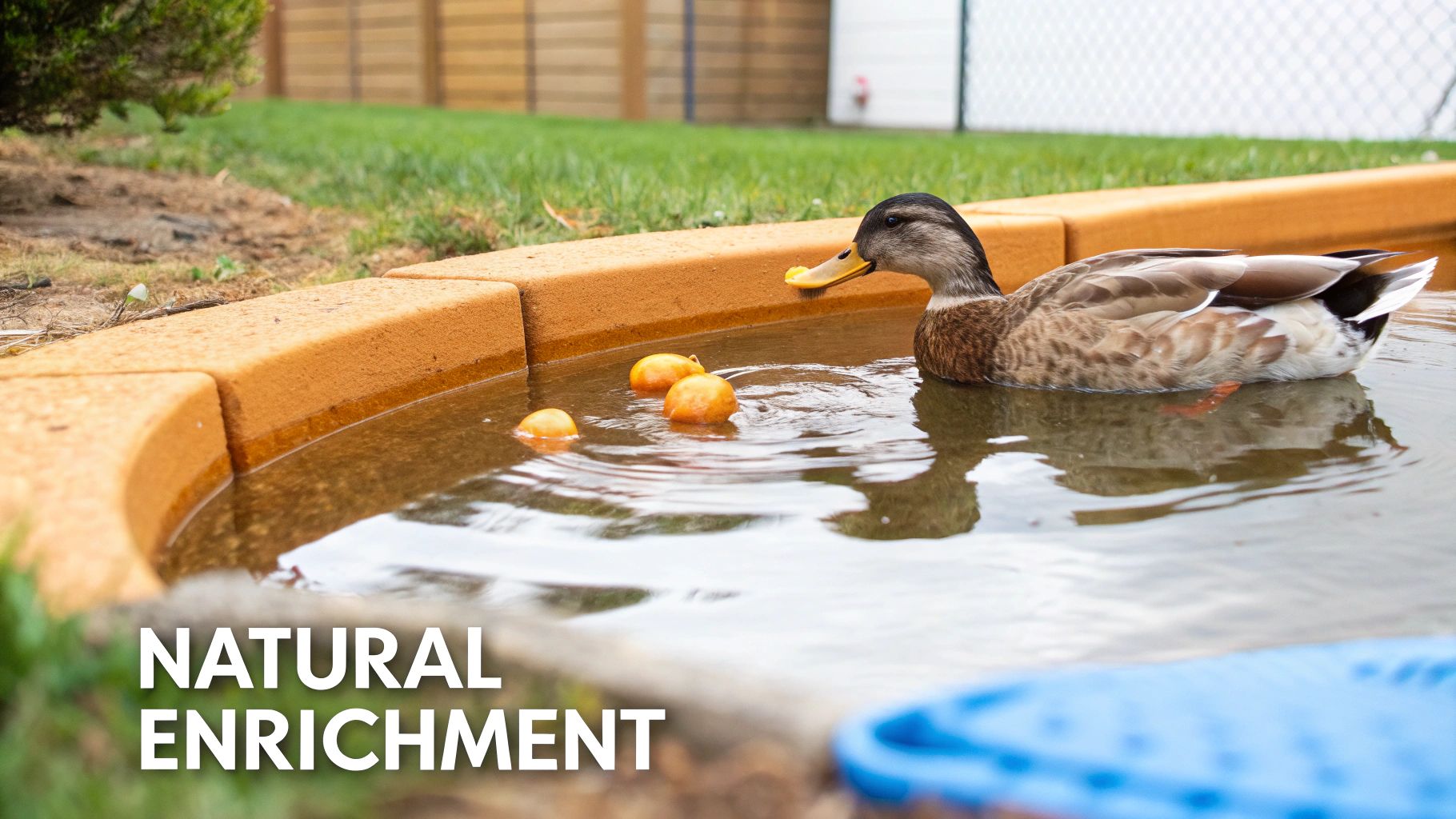
- Float Them: My favorite method is to float the grubs in their pool or water tub. It triggers their natural dabbling instincts and is so much fun to watch. They’ll eagerly scoop them up, getting a nutritious snack and mental stimulation at the same time.
To show you exactly why I'm such a big fan of BSFL over other treats, let's compare them directly to the ever-popular dried mealworm.
Comparing Popular Duck Treats BSFL vs Mealworms
I put together this table to make the nutritional differences crystal clear. It's not just about protein!
| Nutritional Factor | Pure Grubs BSFL | Dried Mealworms |
|---|---|---|
| Calcium Content | Very high (approx. 2-3%) | Very low (approx. 0.03-0.1%) |
| Calcium-to-Phosphorus Ratio | Ideal at ~1.5:1 | Poor at ~1:7 |
| Fat Content | High in healthy lauric acid | Moderate |
| Protein Level | High (approx. 40%) | Very high (approx. 50%) |
So, while mealworms look good on paper with their high protein, the story changes when you look at calcium. Their incredibly low calcium levels and poor calcium-to-phosphorus ratio can actually work against your ducks by preventing proper calcium absorption.
Pure Grubs BSFL, on the other hand, offer a perfectly balanced profile that actively supports strong eggshells and bone health. For your flock, it’s a much smarter and healthier choice.
Keeping Your Flock Healthy and Safe
Good food and clean water are the foundation, but truly knowing how to care for pet ducks means becoming their dedicated health advocate. The best approach is always prevention—catching a small issue before it escalates into a big problem. This all starts with getting into the habit of performing quick, regular health checks so you know what's normal for your birds.
A healthy duck is a busy duck—active, bright-eyed, and alert. Their eyes should be clear and wide open, without any gunk, discharge, or bubbling. Take a look at their nostrils (nares); they should be clean and dry. A duck's feathers are a great health indicator, too. They should look sleek and well-preened, not messy, broken, or ruffled.
Finally, just watch them move around. A duck in good shape has a steady, if endearingly wobbly, gait. You shouldn't see any limping, stumbling, or hesitation. These daily observations are your first and best line of defense. You'll get to know each duck's personality quirks and be the first to notice when someone is acting "off"—maybe they're hiding in a corner, seem sluggish, or have lost their appetite.
The Quick Weekly Health Check
Once a week or so, it's smart to do a quick, hands-on check. The key is to make this as calm and stress-free as possible for everyone involved. Gently guide the duck into a corner, pick it up with calm confidence, and make sure you're supporting its body and wings securely.
During this quick once-over, you're looking for a few key things:
- Legs and Feet: Run your hands gently down their legs. Do you feel any unusual swelling or heat? Take a close look at the bottom of their feet for any cuts, scrapes, or the dreaded black scab that signals the start of bumblefoot, a serious and common staph infection.
- Body Condition: As you hold them, feel their body. Does the duck feel plump and well-muscled, or is its keel bone (the one running down its chest) sharp and prominent? A sudden drop in weight is a major red flag that something is wrong.
- Vent Area: The area under their tail, called the vent, should be clean and dry. If you see messy, "pasted-on" feathers, it could be a sign of digestive issues or parasites.
Bumblefoot is one of the most frequent health problems in backyard ducks, and it often starts with just a tiny cut on their footpad. The best prevention is simply keeping their run clear of sharp rocks, broken sticks, and other hazards. It’s a simple chore that can save you a world of trouble later on.
Common Ailments to Watch For
While this isn't a veterinary manual, knowing the early signs of a few common duck problems can make a huge difference. Besides bumblefoot, be on the lookout for wry neck, a condition where a duck’s head is twisted at an unnatural angle. It’s often linked to a nutritional deficiency (especially Vitamin E and selenium) or a head injury.
Parasite control is another big part of proactive health. Internal worms can lead to weight loss and lethargy, while external pests like mites can cause feather damage and skin irritation. Keeping their bedding clean and dry is your best defense. If you can rotate their run to a new patch of ground every so often, that's even better for breaking parasite life cycles. Some duck keepers also use a dewormer as a preventative measure once or twice a year, usually in the spring and fall.
Creating a Hazard-Free Environment
A safe space is every bit as important as a healthy diet. Ducks are incredibly curious and will explore everything with their bills, so it's on you to duck-proof their living area. This is a non-negotiable part of learning how to care for pet ducks properly.
Start by taking a walk through their pen and looking at it from a duck's point of view. Get rid of any sharp objects—loose screws, bits of wire, shards of plastic. Check your fencing for any gaps where a head could get stuck or a predator could slip through. And speaking of predators, a secure coop is non-negotiable. For some great, practical advice, check out our guide on how to keep raccoons away from your property.
You also need to be aware of toxic plants. Many beautiful and common garden plants are poisonous to ducks. Here's a short list of definite no-nos to keep out of their reach:
- Azalea and Rhododendron
- Yew
- Foxglove
- Lily of the Valley
- Plants from the Nightshade family (this includes potato and tomato leaves)
Finally, and this is a big one: never use pesticides, herbicides, or rodent poisons anywhere your ducks can access. These chemicals are incredibly toxic and can be fatal even if ingested in tiny amounts. By making these simple health and safety checks part of your regular routine, you'll be creating a safe, thriving environment where your flock can live a long and happy life.
Enrichment and Understanding Duck Behavior
A busy duck is a happy duck. Once you’ve covered the basics of food, water, and a safe place to sleep, the next step is enriching their world. These are incredibly smart, social birds, and they absolutely thrive on activities that let them act like, well, ducks.
Enrichment isn't about fancy, expensive toys. It's about giving your flock opportunities to express their natural instincts. A bored duck can easily become a stressed duck, and that stress can show up as feather-plucking, squabbling with flock mates, or other problem behaviors. A few simple tweaks to their environment can make all the difference.
Encouraging Natural Instincts
For a duck, life revolves around two main activities: foraging and dabbling. Your goal is to find fun, simple ways for them to do these things every single day. This keeps their minds sharp and their bodies healthy.
One of the easiest ways to do this is to make them work a little for their treats. Instead of just putting snacks in a bowl, try scattering tasty morsels like peas, corn, or high-calcium BSFL around their run. This kicks their foraging instincts into high gear and keeps them happily occupied for ages.
My favorite trick is floating treats in their pool. Tossing in a handful of Pure Grubs or some fresh peas turns swim time into an exciting game. It's fantastic to watch them dunking and scooping, totally engaged and loving life.
This simple act transforms a static pool into an interactive feeding station, providing crucial mental and physical exercise.
Simple Enrichment Ideas
You really don't need a big budget to keep your flock entertained. Honestly, some of the best enrichment ideas are cheap or even free—they just take a little creativity.
Here are a few practical ideas you can try this afternoon:
- Make a Mud Puddle: Find a low spot in their enclosure, grab the hose, and let them go to town. Ducks are in heaven when they can dig through the mud with their bills, hunting for bugs and tasty roots.
- Add Some "Furniture": A few logs, some large, smooth rocks, or even a small bale of straw can completely change their space. It gives them new things to climb on, hide behind, and explore.
- Serve a "Duck Salad": Hang a head of lettuce or cabbage from a string, just high enough that they have to stretch to get a bite. It’s a game and a healthy snack all in one.
For even more inspiration on healthy snacks that pull double duty as enrichment, check out our guide on the best treats for ducks.
Decoding Duck Language
Part of the joy of keeping ducks is learning to understand what they're trying to tell you. They communicate through a surprisingly complex mix of body language and vocalizations.
Happy, relaxed ducks will often greet you or each other with a gentle, rhythmic head-bob. It’s a clear sign of friendship. On the other hand, a series of short, sharp quacks is often an alarm call, alerting the flock to something they see as a threat, like a hawk flying overhead.
Pay attention to the tone and urgency of their quacks. A soft, chattering quack is completely different from a loud, insistent one that's probably demanding food right now. Female ducks are usually the loudest members of the flock; most drakes have a much quieter, raspier voice. Learning these nuances will help you tune in to their needs and make you a much more confident and connected duck keeper.
Common Questions About Pet Duck Care
Even with the best-laid plans, keeping ducks always comes with questions. It's just part of the journey. You'll notice little quirks and wonder, "Is that normal?" or face a situation you didn't see coming.
We've been there. So, we've pulled together some of the most common things people ask, whether they're just starting out or have been keeping ducks for years. Think of this as a quick-reference guide for those day-to-day head-scratchers.
Can I Keep Just One Duck?
This is probably the most important question for anyone considering a pet duck, and the answer is a hard no. Ducks are intensely social animals, and their well-being depends entirely on having a flock. A lone duck is a lonely, stressed-out duck, period.
That stress isn't just a feeling; it can cause real physical and behavioral problems. A single duck might get anxious, go off its food, or develop obsessive habits. They truly need companionship to feel safe and secure. The absolute minimum is a pair, but a small flock of three to five is even better for a healthy, happy social dynamic.
Do My Ducks Need a Large Pond?
While we all love the image of ducks gliding across a big, beautiful pond, it's not a must-have. What is an absolute, non-negotiable requirement is giving them a source of water deep enough for them to dunk their entire heads.
Why is this so important? It’s how they clean their eyes and nostrils (nares), a daily ritual that prevents nasty infections. Splashing around is also critical for preening their feathers, which is how they stay waterproof and insulated.
A simple hard-plastic kiddie pool is a backyard duck keeper's best friend. They're cheap, tough, and just deep enough for a good dunk and splash. Best of all, they're easy to tip out, scrub, and refill every day or so—which is crucial for keeping the water clean and safe.
Other great options are large livestock troughs or those pre-formed pond liners you can find at a garden supply store. It’s not about the size of the pond, but the cleanliness and depth of the water you provide.
How Do I Introduce New Ducks to My Flock?
Bringing new ducks into an established flock takes a bit of patience and a clear plan. If you just toss the newcomers in with your current flock, you’re asking for chaos and fighting. The golden rule here is to go slow.
Start by setting up a temporary quarantine pen right next to your main coop or run. For at least two weeks, the ducks should be able to see and hear each other without actually being able to get at one another. This "look but don't touch" phase lets everyone get used to the idea and protects your original flock from any illnesses the new birds might be carrying.
When it's time for the first face-to-face meeting:
- Find Neutral Ground: Don’t do the first introduction in the main coop, which your original flock sees as their territory. A different section of the yard works well.
- Supervise, Supervise, Supervise: Stick around for these first interactions. You can expect some chasing and chest-bumping as they sort out the new pecking order.
- Create a Diversion: Scatter some high-value treats around, like fresh greens or Pure Grubs BSFL. This gives them something else to focus on besides sizing each other up.
- Start with Short Visits: Keep the first few meet-and-greets brief, maybe just 15-20 minutes. You can gradually increase their time together over the next several days.
It might take a little time, but they'll eventually figure it out and settle into their new flock structure.
What Are the Best Treats for My Ducks?
Treats are a fantastic way to bond with your ducks and add a little extra nutrition and fun to their day. But you have to choose wisely. The number one rule? Never feed your ducks bread. It has zero nutritional value and can cause serious health problems.
Instead, stick with healthy, natural foods that are similar to what they'd forage for themselves.
- Chopped Greens: Ducks go wild for leafy greens like romaine lettuce (avoid iceberg), kale, and swiss chard.
- Veggies: Peas (thawed from frozen are a huge hit), corn, and chopped cucumber are always crowd-pleasers.
- High-Calcium Snacks: If you have laying ducks, calcium-rich treats are a huge plus. Pure Grubs BSFL are a perfect choice because they deliver a powerful calcium boost for stronger eggshells and healthier feathers.
Remember, treats are just that—a treat. They should never be more than 10% of your ducks' diet. The other 90% needs to come from a high-quality, balanced waterfowl feed.
Ready to give your flock a treat that's as healthy as it is delicious? Pure Grubs offers USA-grown Black Soldier Fly Larvae packed with the calcium your ducks need for strong eggs and vibrant health. Provide your flock with the best by visiting https://puregrubs.com to learn more.