
How to attract bluebirds to feeder: A Simple, Compelling Guide
If you want to bring bluebirds to your feeder, the first step is to stop thinking like you're trying to attract a finch. It’s a completely different ballgame. Success hinges on offering the right food, in the right kind of feeder, and placing it in an open, safe spot. Forget the typical seed mixes; bluebirds are insectivores at heart. They're looking for things like mealworms or dried black soldier fly larvae, served up in an accessible tray or a specialized, predator-proof feeder.
Ultimately, attracting them is about creating an entire habitat that screams "safety and abundance" in bluebird language.
Thinking Like a Bluebird: What They Really Want
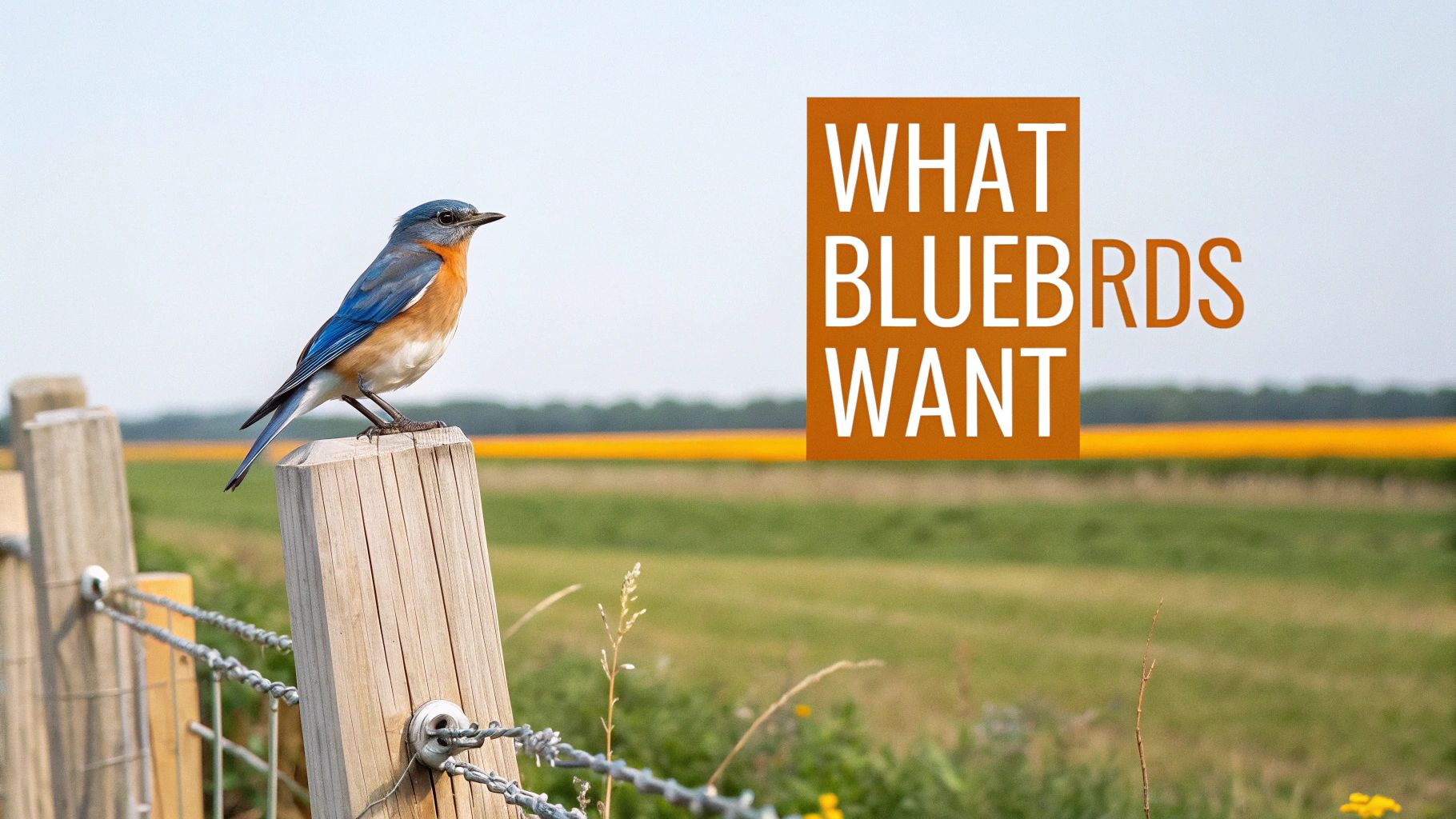
Unlike the cardinals and finches that crowd traditional seed feeders, bluebirds operate on a different set of instincts. Their world revolves around spotting insects from above, keeping a sharp eye out for predators, and finding a secure cavity to raise their young. Getting into that mindset is the secret to creating a yard they'll actually use.
Bluebirds are primarily ground-foragers. You'll often see them perched on a fence post or a low tree branch, scanning the ground for movement before dropping down to snatch a grasshopper or beetle. This hunting style is precisely why they so often ignore the hanging tube feeders filled with seeds they can't—and won't—eat.
What Bluebirds Look For
To make your yard truly irresistible, you have to provide the specific environmental cues they're hardwired to seek out. These aren't just nice-to-haves; they are the essential features bluebirds look for when deciding where to set up shop.
- Open Spaces: Bluebirds thrive in open lawns, meadows, and fields. They need clear flight paths and a wide-open view to spot their next meal and any potential threats. A yard choked with dense, overgrown shrubs just won't feel safe to them.
- Perching Spots: A few well-placed perches are non-negotiable. Think fence lines, a strategically placed shepherd's hook, or scattered trees that offer a good vantage point. These are their hunting posts.
- Reliable Water Source: Never underestimate the power of water. A clean, shallow birdbath provides a critical resource for drinking and preening, and the sight and sound of splashing water can act like a magnet for any bluebirds passing through.
Beyond the Feeder: A Safe Haven
At the end of the day, learning how to attract bluebirds to a feeder is about more than just what you put in it; it's about building a sanctuary. Bluebird populations famously declined due to fierce competition for nesting sites from invasive house sparrows and starlings. It was the widespread effort to install specialized nest boxes that played a huge role in their incredible comeback.
Today, the estimated global population of Eastern Bluebirds is around 23 million individuals, a true conservation success story.
By offering the right mix of food, water, and shelter, you're doing more than just setting up a bird feeder. You're creating a complete ecosystem that supports their entire life cycle.
This holistic approach is what transforms your backyard from a quick pit stop into a preferred territory. It's how you go from getting a fleeting glimpse of a bluebird to having them stick around for the season. Getting a handle on what wild birds eat in general is a fantastic place to start this journey.
Choosing a Feeder That Bluebirds Will Actually Use
If you've ever put out a standard tube or hopper feeder and hoped for bluebirds, you’ve probably been disappointed. Those feeders are built for birds that cling and crack seeds, which is completely foreign to a bluebird's behavior. To get bluebirds to even notice your feeder, you have to think like they do.
Bluebirds are also incredibly cautious. They need a clear, wide-open view of their surroundings so they can spot any potential danger and make a quick getaway. This is why an open-concept design is almost always the best way to get them comfortable at first.
Start with Open Tray Feeders
The easiest starting point, by far, is a simple open tray or dish feeder. This setup mimics how bluebirds hunt naturally—spotting a bug from a perch, swooping down, and grabbing it. You don't need anything fancy; a basic platform feeder, a small dish set on a deck railing, or even a hanging tray will do the trick.
The main advantage here is pure visibility. A bluebird flying by can easily spot the wriggling mealworms or suet nuggets, which is often all it takes to pique their curiosity. The obvious drawback, though, is that it's a free-for-all. Everyone from robins to starlings will find it just as appealing.
Upgrade to Enclosed Bluebird Feeders
Once you’ve confirmed that bluebirds are visiting, it’s time to give them their own private dining room. An enclosed bluebird feeder is your best long-term solution, specifically designed to keep bigger, pushier birds out. Starlings and grackles can wipe out a day's worth of mealworms in minutes, so this step is crucial.
Look for a feeder with these key features:
- A solid roof to keep the food dry and fresh.
- Clear plexiglass sides so the bluebirds can see the treats inside.
- Entry holes precisely 1.5 inches in diameter. This is the magic number for Eastern Bluebirds—it's just big enough for them but too tight for most starlings.
This design gives bluebirds a secure spot where they can eat in peace. It’s what turns a fleeting visitor into a daily regular.
Remember, the goal is to create a reliable and safe feeding station. An enclosed feeder tells a bluebird that your yard offers not just a meal, but also a sanctuary from competitors.
Consider Specialty "Jail" Feeders
Another fantastic option is the "jail-style" feeder. It might sound intimidating, but the design is simple: a cage or wire mesh surrounds a central dish for the food. The spacing of the bars is key—it lets smaller birds like bluebirds slip right through while physically blocking larger ones.
I’ve even seen clever birders build their own by adding a cage made of hardware cloth around an existing tray feeder. It’s a great DIY project and works just as well. Whichever style you land on, the principle is the same: give bluebirds easy access while putting up a barrier for their competition. This is one of the most important lessons in learning how to attract bluebirds to your feeder and convince them to stay.
What to Feed Bluebirds (It's Not Birdseed!)
If you want to bring bluebirds to your yard, the single most important thing to get right is the food. Forget the standard seed mixes you see at the store; bluebirds are insectivores and fruit-eaters, and they won't even give a passing glance to millet or sunflower seeds.
Your goal is to offer them what they naturally crave.
The Undisputed Bluebird Magnet: Mealworms
There's no getting around it: mealworms are the secret weapon for attracting bluebirds. They are, without a doubt, the number one treat that will get them to investigate your feeder. Think of it as their version of five-star dining.
You have two main options here: live or dried. Live mealworms are fantastic because their wiggling movement is a powerful visual cue for a passing bluebird. The downside? They can be a hassle to store and keep alive. Dried mealworms, on the other hand, are incredibly convenient, last for ages, and are just as appealing once the bluebirds find them. For most people, dried is the way to go.
A little pro tip: when you're just starting, don't dump a whole bag in the feeder. Just offer a small handful in an open dish or tray. It minimizes waste while you wait for your first beautiful blue visitors to discover the new restaurant in town.
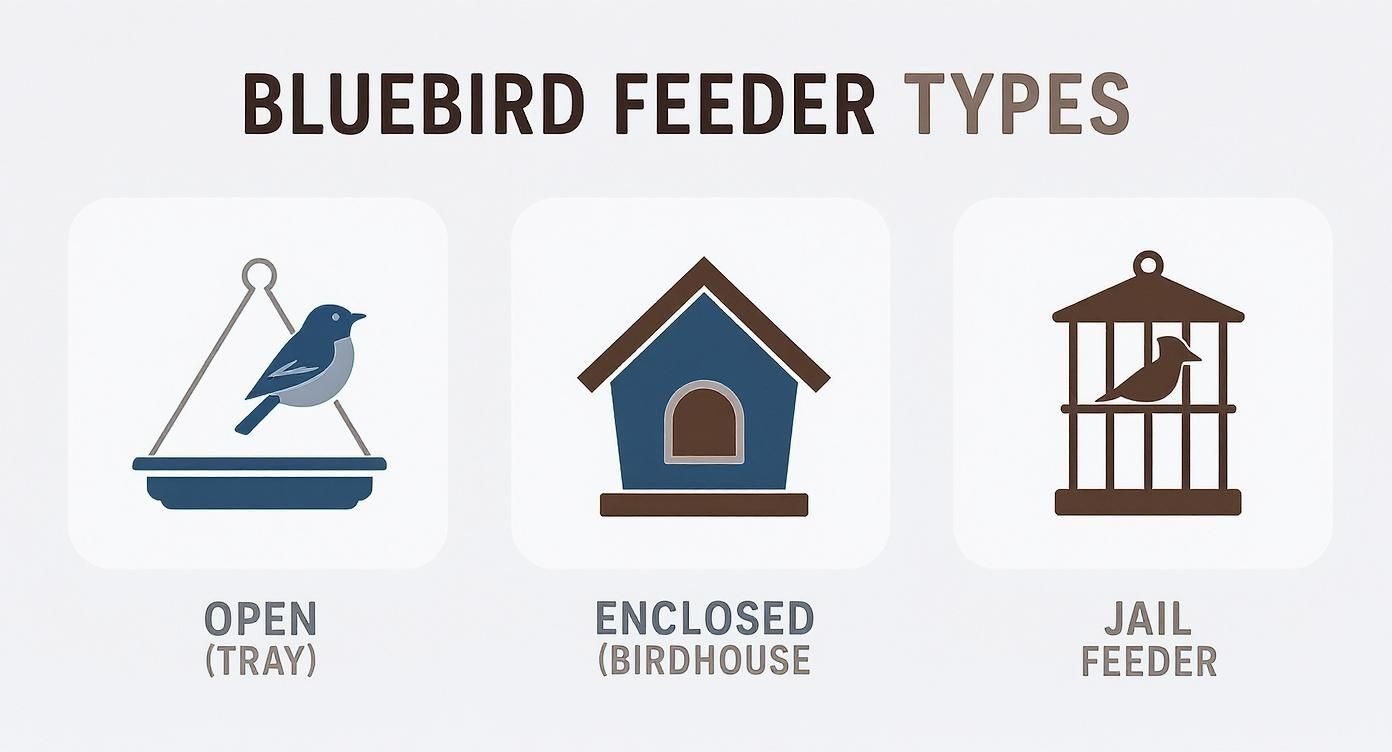
The feeders shown above are all designed with a bluebird's diet in mind, from simple trays to clever designs that keep bigger birds out.
Building Out the Buffet
While mealworms will get them to show up, a varied menu will keep them coming back and, more importantly, help them thrive. Think of it as providing a more balanced diet, which is critical during the stressful nesting season.
Here are a few other bluebird-approved foods to add to the rotation:
- Suet Nuggets: Look for insect or berry-based suet nuggets or crumbles. The high fat content is a fantastic energy source, especially in the colder months when insects are hard to find.
- Fruit Pieces: Bluebirds love fruit! Try offering small, chopped-up bits of blueberries, softened raisins, or raspberries. It's a great source of natural sugar and hydration.
- Calcium-Rich Power Foods: This is a big one. During nesting, female bluebirds need a massive amount of calcium to form healthy eggs. You can offer crushed eggshells (bake them first to sterilize), but an even better choice is dried black soldier fly larvae. They are a nutritional powerhouse, packing up to 85% more calcium than mealworms, making them the ultimate supplement for nesting families.
To get a better sense of how different foods stack up, I've put together a quick comparison.
Bluebird Feeder Food Comparison
This table breaks down the best foods to offer, what they're good for, and when to serve them.
| Food Type | Primary Benefit | Best Season | Serving Tip |
|---|---|---|---|
| Mealworms (Dried/Live) | High protein; irresistible attractant | Year-round, especially Spring/Summer | Serve in a smooth-sided dish to prevent escape (if live). Start with small amounts. |
| Black Soldier Fly Larvae | Extremely high in calcium | Spring/Summer (Nesting) | Mix with mealworms or offer separately. Crucial for egg-laying females. |
| Suet Nuggets/Crumbles | High fat for energy | Fall/Winter | Choose insect or berry blends. Avoid melt-prone suet in hot summer weather. |
| Fruits (Berries, Raisins) | Natural sugars and hydration | Fall/Winter, but can be offered year-round | Chop into small, bite-sized pieces. Soften dried fruits by soaking in water first. |
Choosing the right mix from this list will make your feeder the most popular spot in the neighborhood for bluebirds. For a deeper dive into what works for various backyard birds, check out our guide on the best bird feeder food.
Adjusting Your Menu for the Seasons
A truly successful feeding strategy changes with the calendar. You have to anticipate what the bluebirds need at different times of the year.
In spring and summer, it's all about protein. The adults are working tirelessly to feed their constantly hungry chicks, so keeping the feeder stocked with mealworms and black soldier fly larvae provides essential support.
A key takeaway from experienced birders is that offering mealworms right as nesting season kicks off is the most impactful thing you can do. You're not just feeding the adults; you're directly helping them raise the next generation.
As fall approaches, start mixing in more fruits. This helps bluebirds build up the fat reserves they need for migration or to survive a cold winter. For those of us with year-round bluebird populations, continuing to provide high-energy foods like suet and mealworms through the winter can be an absolute lifeline when snow and ice cover their natural food sources.
This isn't just about putting out food; it's about being a reliable partner for your local bluebirds. That consistency is what will turn a fleeting visitor into a cherished, year-round resident.
Strategic Feeder Placement for a Bluebird-Friendly Yard
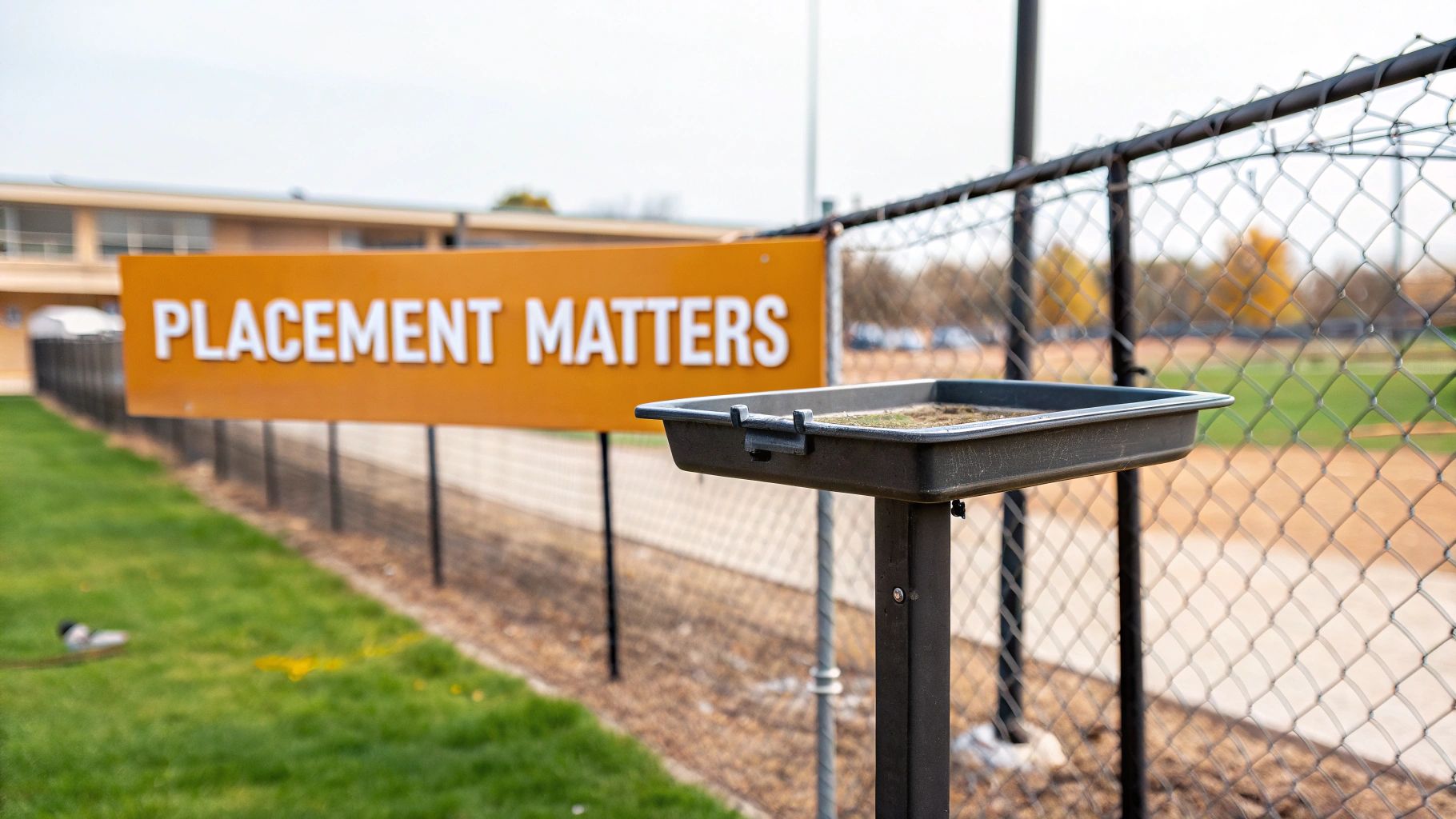
So you've got the perfect feeder and the tastiest mealworms. That's a great start, but it's only half the battle. The final, critical piece of the puzzle is location. Where you decide to place your feeder can make all the difference, turning a potential bluebird hotspot into a completely ignored offering.
Bluebirds are naturally cautious creatures. They prioritize safety and a good view of their surroundings above almost everything else. Their ideal dining spot will mimic their natural hunting grounds—think open areas with clear lines of sight. This gives them a chance to spot any approaching predators, like hawks or neighborhood cats, long before they become a threat.
Finding the Sweet Spot for Your Feeder
Try to think like a bluebird searching for a safe place to eat. They're looking for a spot that feels open enough to hunt but secure enough to relax. This means you should avoid tucking the feeder away in a corner right next to dense bushes or shrubs where predators could easily hide and wait.
Instead, find an open patch in your yard, keeping the feeder at least 15-20 feet away from any thick cover. For the feeder itself, mounting it on a pole about five to six feet off the ground is ideal. This height is comfortable for them and adds another layer of protection from ground-level threats.
But here's a key tip many people miss: bluebirds need a safe place to land and check things out before they commit. They love having a "staging area."
- Nearby Perches: Try to position the feeder within 10 to 20 feet of a good perch. This could be a fence line, a shepherd's hook, or even a lone tree branch. You'll notice they almost always fly to this spot first to survey the scene before dropping down to the feeder.
- Window Safety: Window collisions are a serious risk. To prevent them, place your feeder either very close to a window (within 3 feet), so birds can't build up enough speed to get hurt, or much farther away (more than 30 feet). That middle distance is the most dangerous zone.
Beyond the Feeder: Creating a Bluebird Habitat
Attracting bluebirds successfully means thinking beyond just the food you offer. You need to create an entire ecosystem that signals to them that your yard is a premium, five-star territory worth sticking around for. A welcoming habitat provides everything a bluebird needs to thrive: food, water, and shelter.
The most successful backyard birders understand that a feeder is just one component of a larger invitation. The real magic happens when you provide a complete, supportive environment that caters to the birds' every need.
Often, the very first thing that draws bluebirds into a new yard isn't food, but water. A clean, reliable water source is a magnet for them. A shallow birdbath with gently sloping sides works perfectly. For an extra boost, the sound of moving water from a dripper or a small solar fountain is an incredibly powerful attractant.
Plant Natives and Ditch the Pesticides
Another fantastic way to make your yard irresistible is to supplement your feeder with a natural pantry. Planting native, berry-producing shrubs like dogwood, serviceberry, or holly provides a vital food source, especially in the fall and winter when insects are harder to find.
Finally, one of the most impactful things you can do is to stop using pesticides and herbicides. Bluebirds are insectivores at heart, and a chemically treated lawn is like a barren buffet to them. A healthy, insect-rich lawn is a sign of a thriving ecosystem that will naturally support them. To learn more about creating an inviting space, you can explore our detailed guide on how to attract wild birds to your property.
From Visitor to Resident: Providing the Perfect Nest Box
Getting a bluebird to show up at your feeder is a huge win, but the real magic happens when you convince them to stay. The single best way to turn a fleeting visitor into a season-long resident is to offer them a safe place to raise a family. A well-designed nest box isn't just an invitation; it's a commitment to helping them thrive.
This simple act is part of a much bigger picture. Bird feeding has become a massive passion for people everywhere, with over 52 million Americans actively feeding wild birds. This enthusiasm has created a market valued at around USD 216.8 million in 2024, all driven by a growing interest in conservation and wildlife. When you put up a specialized home like a bluebird box, you're doing more than just birdwatching—you're actively supporting your local ecosystem. You can find more insights about the growing outdoor bird feeder market on cognitivemarketresearch.com.
What Makes a Perfect Nest Box?
Bluebirds are surprisingly picky about their real estate, so not just any birdhouse will do. The details really matter. Get them wrong, and the box will be ignored at best or, even worse, become a death trap. Precision is everything when you’re trying to provide a safe home.
For a bluebird-friendly nest box, these features are non-negotiable:
- The Right-Sized Door: For Eastern Bluebirds, the entrance hole must be exactly 1.5 inches in diameter. This is the golden rule. It’s the perfect size to let bluebirds in while keeping larger, aggressive birds like European Starlings out.
- No Perch, Ever: Resist the urge to buy a box with a little perch under the hole. Bluebirds don't need it, but predators and invasive House Sparrows will use it as a foothold to harass the nest and harm the occupants.
- Good Drainage: The floor of the box should have small holes or clipped corners. This ensures that any rainwater that blows in can easily drain out, keeping the nest and the baby birds dry and healthy.
- Proper Ventilation: Look for small gaps at the top of the side walls. These allow hot air to escape, which is absolutely critical for preventing the box from overheating on a sweltering summer day.
Location, Location, Location
Where you place the nest box is just as crucial as its design. Bluebirds are birds of open spaces, and they need a spot that feels secure while giving them a clear view of their hunting grounds. Think open fields, expansive lawns, or meadows.
Your best bet is to mount the box on a smooth metal pole about five feet off the ground. When you pair this with a predator guard—like a cone or stovepipe-shaped baffle—you've created your best line of defense against climbing predators like raccoons, snakes, and cats.
Face the entrance hole away from prevailing winds, which usually means pointing it east or south. This simple trick shelters the nest from harsh weather and lets the morning sun warm the box.
Try to position the box in an open area, but with a tree or fenceline about 50 to 100 feet away. This gives the fledglings a safe, reachable target for their very first flight. It’s like giving them a soft landing spot for their big debut.
Finally, make a habit of cleaning the box out after each brood has fledged. Bluebirds often raise two or even three broods in a single season, and removing the old nest material encourages them to set up shop again for their next family.
Got Questions? Let's Talk Bluebirds
Even with the best intentions and a perfect setup, you're bound to have some questions. Getting bluebirds to show up can feel like a bit of an art form, and it's totally normal to hit a few snags. Here are some straightforward answers to the common hurdles people run into.
How Long Until the Bluebirds Show Up?
Honestly, patience is the name of the game here. Sometimes, bluebirds will find a new feeder in just a couple of days. Other times, it can take a few weeks, and that’s perfectly normal. It really depends on if they're already hanging around your neighborhood and how easy it is for them to spot your feeder.
To speed things up, try placing the feeder out in the open where they’ll see it as they fly overhead. A nearby birdbath is probably your best advertisement—the flash and sound of water is a huge magnet for birds and can lead them right to the food you’ve put out.
Who Else Is Going to Eat the Mealworms?
Oh, you will definitely have other visitors. Mealworms are like candy to most birds, so you can expect robins, wrens, and mockingbirds to stop by for a snack. The real trouble, though, comes from aggressive birds like starlings. A flock of them can clean out a feeder in minutes.
Your best defense is a feeder built just for bluebirds. Look for an enclosed feeder with a 1.5-inch entrance hole or a "jail-style" feeder with bars spaced to keep bigger birds out. This gives your bluebirds a private dining room.
Another great trick is to get them on a schedule. Try putting out a small scoop of mealworms at the same time every morning. Bluebirds are sharp and will catch on quickly, often waiting nearby for their breakfast before the other birds even know it's there. It's a simple habit that works wonders.
Should I Keep Feeding Bluebirds All Year?
You don't have to, but offering food year-round is a huge help to them and incredibly rewarding to watch. Think of your role as changing with the seasons.
- Spring & Summer: Your feeder becomes a high-protein power-up for exhausted parent birds who are working nonstop to feed their hungry babies.
- Fall & Winter: When bugs disappear, your feeder turns into a crucial lifeline. It provides the energy non-migratory bluebirds need to survive cold nights and tough weather.
If you do decide to feed them all year, the two most important things are consistency and cleanliness. A clean feeder prevents the spread of disease, keeping your backyard visitors safe and healthy. You can also mix things up in the winter by adding suet nuggets or some chopped berries to the menu for an extra energy boost.
For a high-calcium, USA-grown treat that supports strong eggs and healthy birds, consider Pure Grubs Black Soldier Fly Larvae. They offer up to 85% more calcium than mealworms, making them an ideal supplement for your bluebirds, especially during nesting season. Shop Pure Grubs today!