

How Many Eggs Do Birds Lay? Species and Flock Guide
Most wild bird species lay just 2 or 3 eggs per clutch, while domestic backyard chickens are biological outliers capable of laying an egg nearly every day. The exact answer depends on the species, habitat, season, and whether you're looking at a wild nest or a selectively bred laying hen.
You check the nesting boxes before coffee and find fresh eggs waiting in the straw. After a few mornings like that, it's natural to wonder whether all birds follow the same schedule. They don't. A songbird, duck, gull, and chicken use very different reproductive strategies, so the question “how many eggs do birds lay?” needs a species-specific answer.
For a backyard keeper, the practical lesson is simple: wild clutch size and domestic egg production aren't interchangeable benchmarks. A hen's steady output reflects generations of selective breeding, daily egg collection, nutrition, and light exposure. A wild bird usually lays a smaller clutch, then shifts its energy toward incubation and raising young.
The Daily Nesting Box Reality for Backyard Keepers
You open the coop before breakfast and find fresh eggs in the straw. One hen is still in the box, another is waiting her turn, and the flock's routine makes daily laying seem ordinary. That pattern belongs to a managed laying flock, not to birds as a whole.
A clutch is the set of eggs produced for one nesting attempt. For a wild bird, producing that set is like filling a small nursery before switching jobs. She then directs energy toward incubation and feeding the young. According to the Cornell Lab of Ornithology's explanation of clutch size, most small songbirds lay between 2 and 5 eggs per clutch, while larger birds such as albatrosses may lay only one egg every one to two years.
A laying hen follows a different pattern because people remove eggs from the nest. Regular collection can keep the nest from reaching the conditions that encourage incubation, especially in breeds selected for laying rather than brooding. It does not create unlimited production. Her body still has limits, and output may slow with age, molt, stress, illness, weather, or shorter daylight.
Coop rule: Treat a chicken's near-daily egg as a production pattern, not as the universal bird standard.
That distinction helps when a wild nest appears in the garden. A small clutch can be perfectly normal, while one missed egg from a hen does not automatically signal illness. For timing and nest hygiene, daily chicken egg collection guidance can help you establish a consistent routine. The same principle connects wild biology with flock care: support the hen's needs without expecting her to ignore natural limits.
Average Clutch Sizes Across Wild Bird Species
Wild birds show a wide spread in clutch size. The Stanford Birds overview of variation in clutch size reports that petrels, albatrosses, and shearwaters usually lay 1 egg. Auks and vultures commonly lay 1–2, terns and gulls 2–3, shorebirds and cormorants 3–4, and hawks and songbirds 2–5.
The range becomes larger among several ground-nesting and waterfowl groups. Grouse and ptarmigan typically lay 5–12 eggs, ducks 7–12, and pheasants and partridges 8–18, using the same Stanford reference. These figures describe typical group ranges, not guarantees for every nest or every individual female.
Typical clutch sizes by bird group
| Bird group | Typical clutch size |
|---|---|
| Petrels, albatrosses, and shearwaters | 1 |
| Auks and vultures | 1–2 |
| Terns and gulls | 2–3 |
| Shorebirds and cormorants | 3–4 |
| Hawks and songbirds | 2–5 |
| Grouse and ptarmigan | 5–12 |
| Ducks | 7–12 |
| Pheasants and partridges | 8–18 |
A global comparison of 5,290 bird species found that more than half lay 2 or 3 eggs, with a median clutch size of 2.8 and a mode of 2. The same PLOS Biology study found a strong latitude pattern. Average clutch size reaches about 4.5 eggs at high northern latitudes, but falls to just over 2 eggs in the tropics.
The reason is linked to breeding opportunity. Seasonal birds in northern regions have a short window in which food and weather may support nestlings, so a larger clutch can make that window count. Tropical birds often face a different balance of food availability, predators, competition, and year-round breeding opportunities, favoring smaller clutches with reproductive effort spread over time.
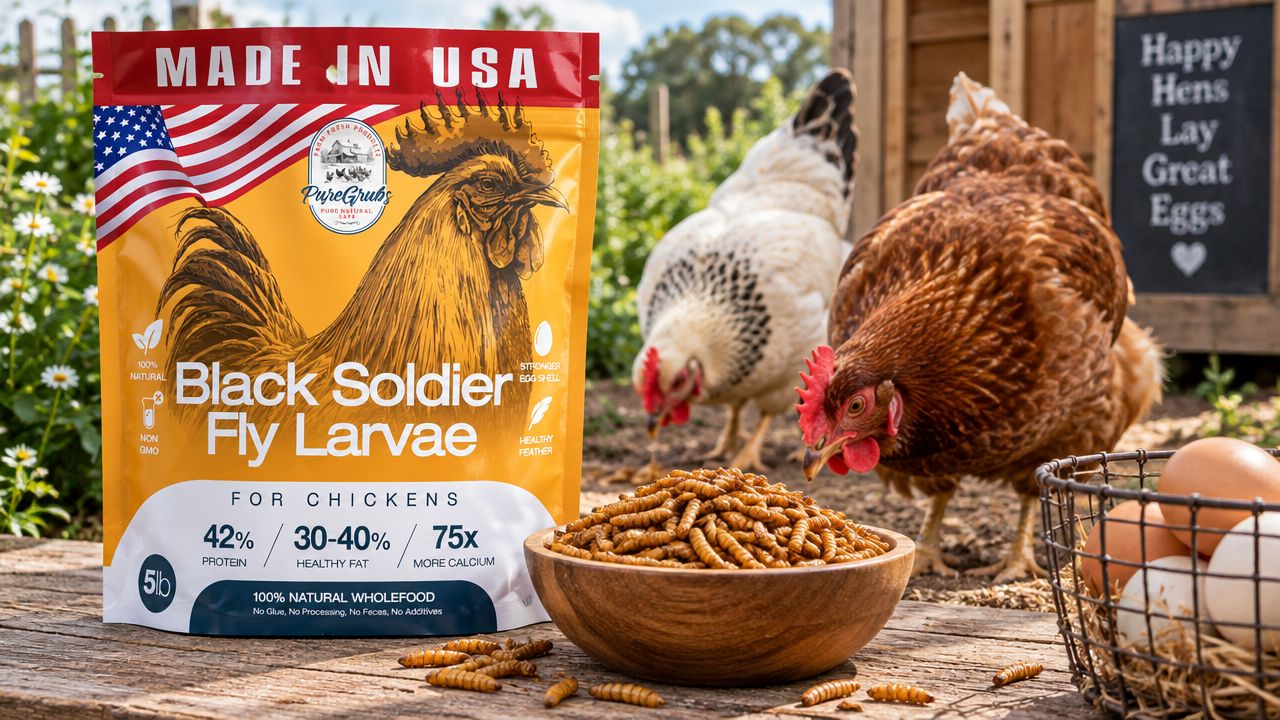
For poultry keepers, nutrition still matters because egg formation requires resources. If you offer USA GROWN BLACK SOLDIER FLY LARVAE FOR CHICKENS, use them as a supplemental treat rather than a replacement for a balanced poultry ration.
Why Domestic Poultry Defy Natural Laying Rules
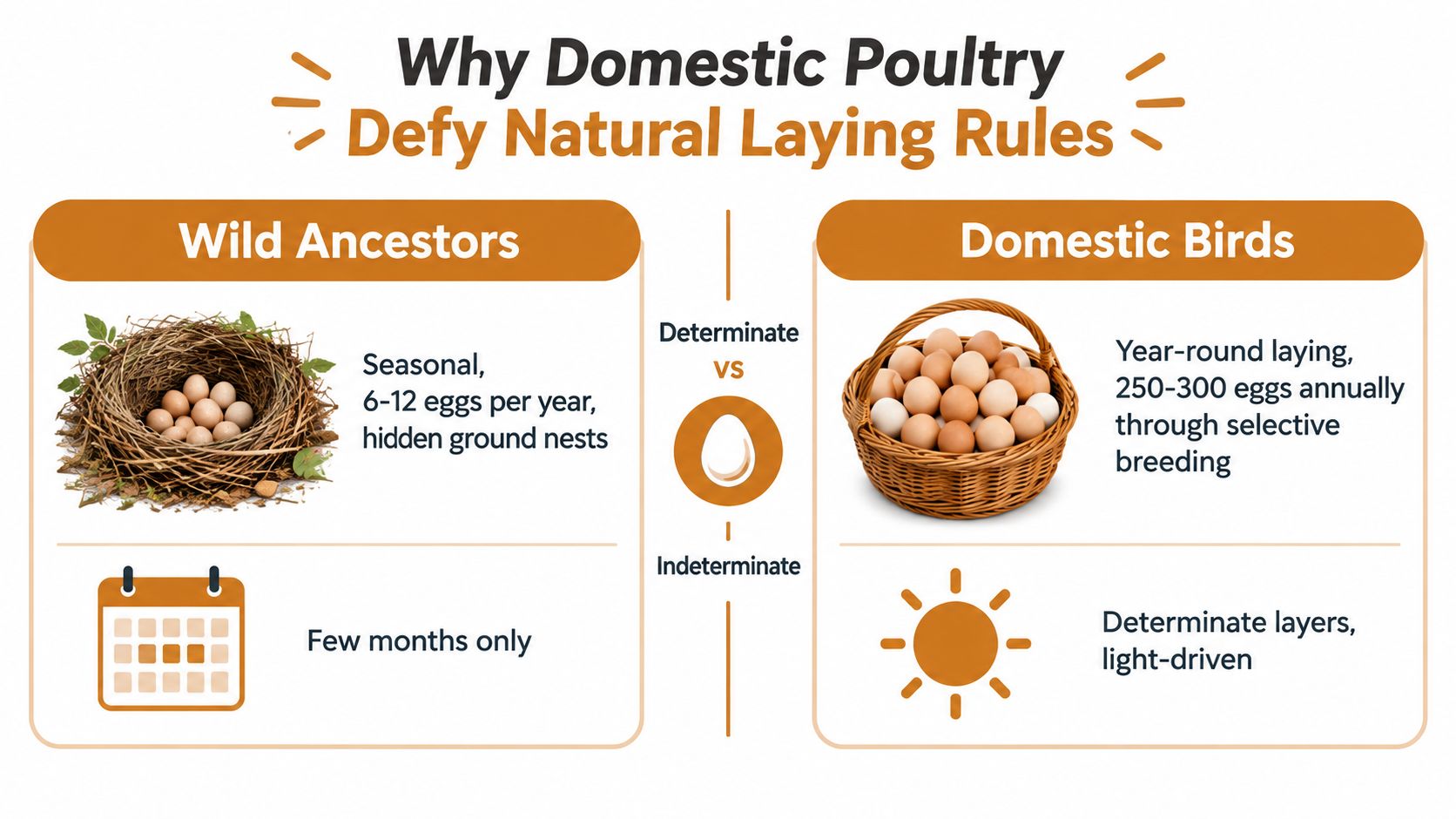
A wild bird's nest is organized around a finished clutch. A modern laying hen's routine is organized around continued ovulation, human collection, and a body selected for sustained output. That difference explains why a chicken can seem to ignore the reproductive rule that applies to most wild birds.
Birds lay at most one egg per day, and the interval between eggs isn't always identical. The NestWatch nesting-cycle guide explains that clutch size is connected to whether a species is a determinate layer, a bird with a more defined clutch endpoint, or an indeterminate layer, one whose laying can continue when eggs are removed.
Wild nesting and domestic production
A wild bird generally lays until its clutch is complete. Then it incubates, protects the nest, and feeds its offspring. Removing an egg from a wild nest doesn't necessarily make the bird produce indefinitely, because the species' reproductive program may still set a limit.
Domestic chickens have been selected for a different balance. Breeders favored hens that devoted more energy to laying and less to sitting on eggs. Daily collection also removes the growing clutch from the nest, so a hen may continue laying instead of switching into incubation behavior.
The familiar laying rhythm isn't a perfect clock. A hen may lay earlier on one day and later on the next, then pause before starting again. That pattern reflects the time required to mature a yolk, add albumen, build the shell, and move the finished egg through the oviduct.
You can see the same contrast with ducks. Domestic ducks may produce eggs regularly, but their output still varies by breed, age, daylight, diet, and season. Domestic poultry are highly productive, not biologically unlimited.
For a deeper explanation of common pauses and slowdowns, see why chickens stop laying eggs. The useful keeper's mindset is to compare each hen with her own normal pattern rather than expecting every bird to lay on the same schedule.
Environmental Factors That Disrupt Egg Production
A keeper can open the nest boxes one morning and find noticeably fewer eggs than usual. If the hens are alert and eating, start by checking their surroundings and life stage before treating the change as an emergency. Egg production responds to several outside signals, much like a seasonal timetable.
Start with the common triggers
Daylight is a major signal. Birds read day length as information about breeding conditions. Shorter days can slow reproductive activity, while longer days often support laying. Artificial lighting may affect production, but use it carefully and consistently, keeping the flock's welfare in view.
Molting redirects resources. A hen replacing feathers may devote less energy to eggs. A temporary decline is easier to understand when you see pin feathers, loose plumage, or a generally untidy appearance. Let her body complete the molt rather than treating every pause as a feeding problem.
Age changes the pattern. Young pullets may take time to settle into a regular rhythm. Older hens often lay less consistently than they did during their strongest period. That change belongs in normal flock planning, alongside adjustments for breed and individual history.
Weather adds pressure. Heat, cold, storms, and sudden changes can alter appetite, water intake, movement, and laying behavior. Check shade, ventilation, dry shelter, and clean water first. These basic conditions often matter more than changing feed or lighting immediately.
Wild birds also adjust reproduction as conditions change. A Chicago-area study found that many species nested earlier than they had about a century before, while some advanced their first egg dates substantially. Long-term monitoring of glaucous-winged gulls likewise recorded smaller average clutches over time, along with reduced egg volume. These findings provide useful context for the coop: natural laying is responsive to season and conditions, not a fixed production promise.
A drop in eggs is information. Check light, molt, weather, feed, water, behavior, and body condition before assuming the cause.
Seek veterinary advice if reduced laying comes with lethargy, breathing trouble, severe weight loss, repeated soft-shelled eggs, straining, or other illness signs. Production records help reveal a pattern, but the bird's condition matters more than the basket count.
Fueling High Output with Proper Flock Nutrition
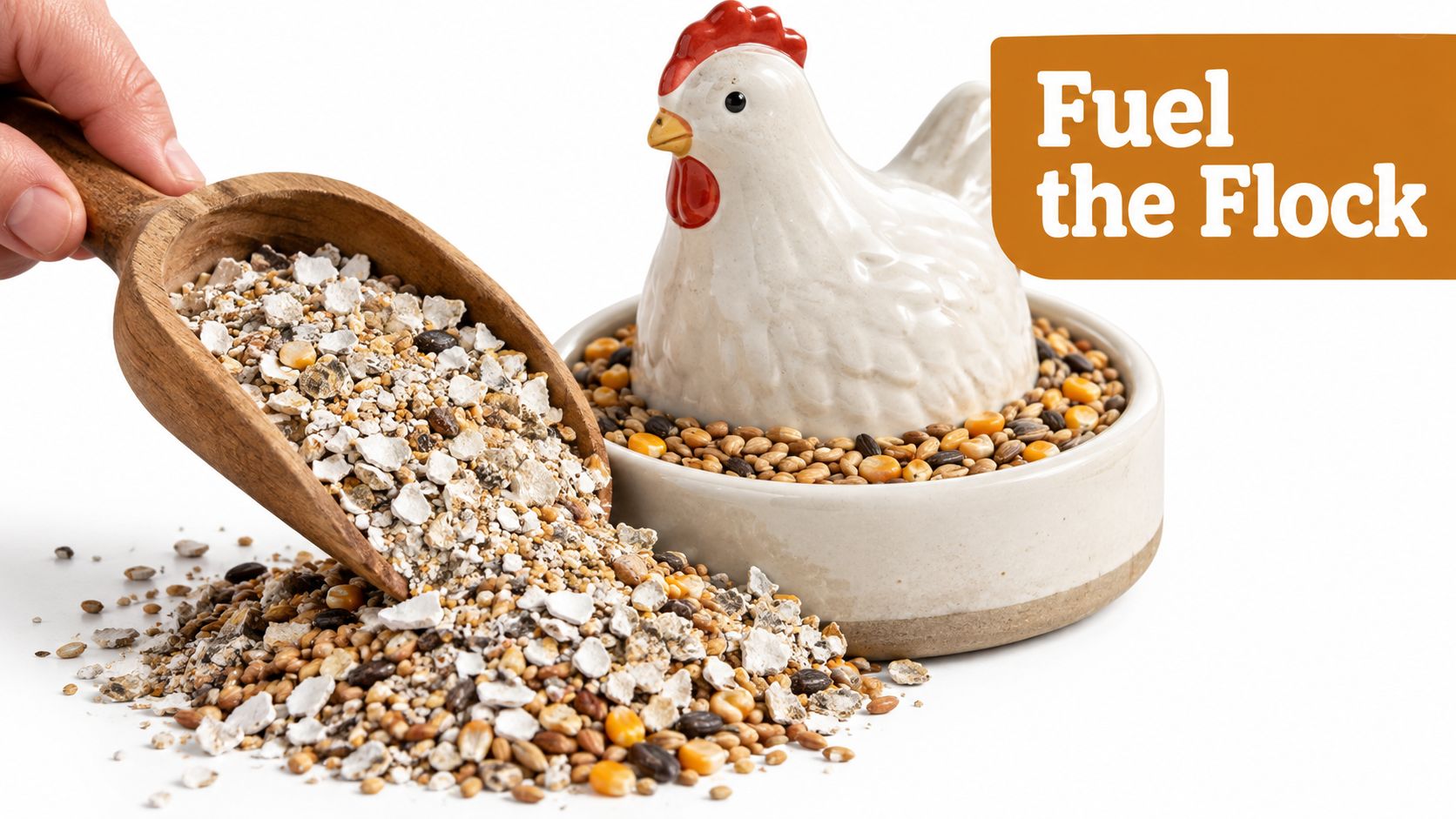
An egg carries protein, minerals, water, and energy out of the hen's body. A laying flock therefore needs more than scraps and scratch, especially when several hens are producing regularly. Start with a complete layer ration appropriate for the birds' age and species, then make sure the flock can eat without competition from dominant hens.
Calcium protects shells and bones
Calcium supports shell formation, but a hen also needs a usable supply for her own skeletal system. Weak shells, rough shells, shell-less eggs, and changes in laying consistency can all justify a closer look at the diet, though they can also have other causes.
Offer an appropriate calcium source separately when recommended for your flock, and keep it available alongside balanced feed. Don't assume that adding more calcium will solve every shell problem. Water quality, disease, stress, age, and overall nutrition also matter.
Protein supports production and molt
Protein helps a hen maintain body tissue, form eggs, and replace feathers. During molt, the flock may need especially careful feeding because feather growth competes with egg production for nutrients.
Pure Grubs' dried black soldier fly larvae are listed as a supplemental feed with 36–42% crude protein, 30–40% healthy fats, and 75 times more calcium than mealworms, according to the provided product information. The same catalog snapshot describes them as USA-grown, plant-fed, dried without additives or preservatives, and suitable as a treat for chickens and other birds.
Use insect treats as an addition, not the foundation of the ration. Keep portions modest enough that hens still consume their complete feed, and introduce any new food gradually. Young pullets, broody hens, molting birds, and laying hens may have different nutritional needs, so match the main ration to the flock rather than feeding every bird identically.
A practical feeding setup has three parts: complete feed as the daily base, clean water available at all times, and supplemental foods used sparingly. That approach supports the hen's body without turning the egg basket into the only measure of success.
Best Practices for Monitoring and Supporting Your Flock
Good flock care starts with observation. You don't need a complicated spreadsheet, but you do need a reliable sense of what each bird normally eats, looks like, and produces.
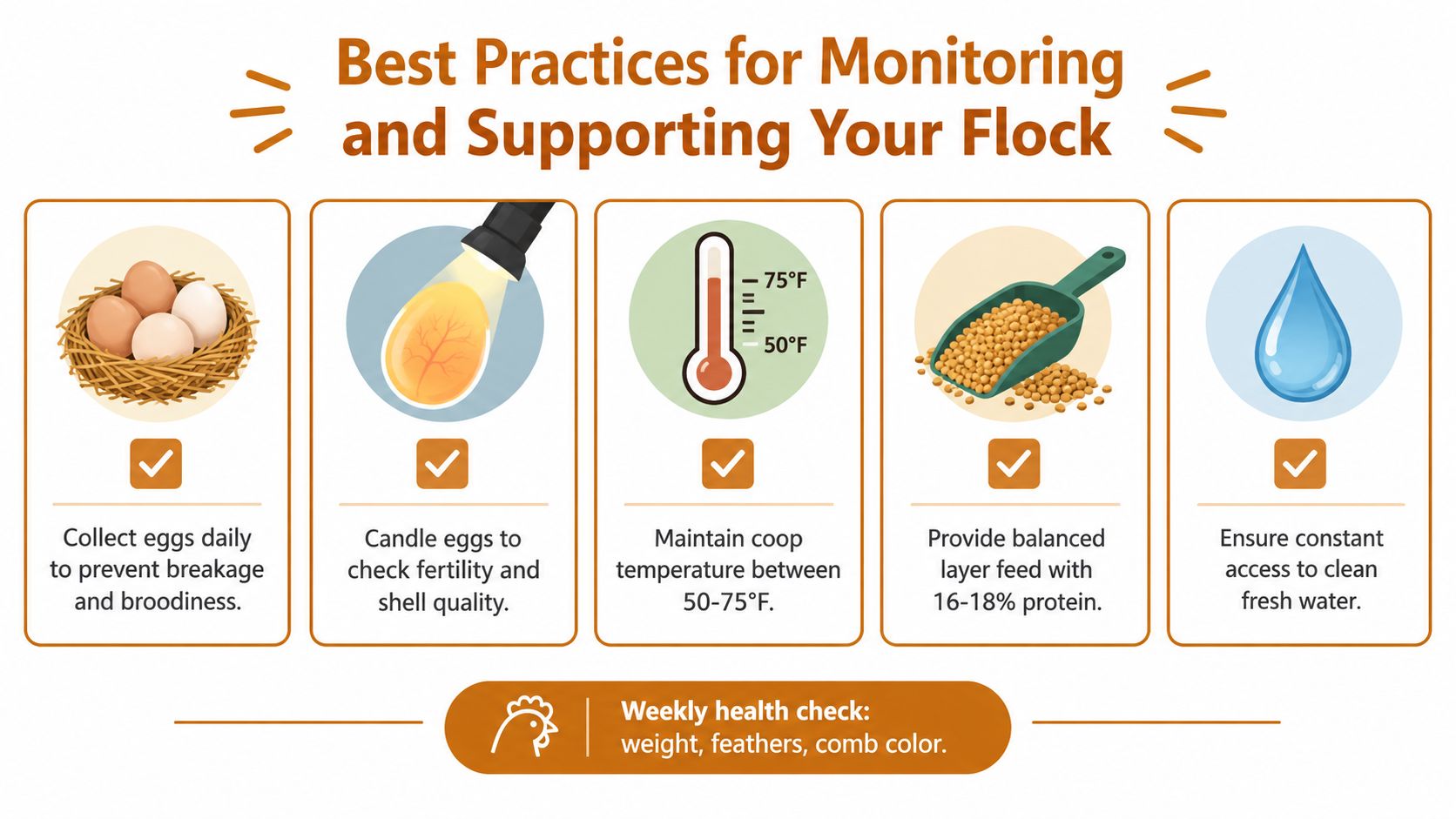
Build a simple daily routine
- Collect eggs consistently: Gather eggs on a regular schedule to reduce breakage, discourage nest contamination, and notice changes promptly.
- Watch individual hens: Learn which bird is laying, which is broody, and which is being pushed away from feed or water.
- Inspect shell quality: Record soft, cracked, misshapen, or unusually thin shells instead of dismissing them as random.
- Check feed and water: Confirm that feeders aren't empty, wet, or blocked, and that every bird can reach clean water.
- Scan behavior: Look for alert movement, normal appetite, healthy droppings, clean eyes, and a comb appropriate to the bird's condition.
A weekly check can be more useful than staring at the basket total. Handle birds calmly, inspect feet and feathers, and look for changes in body condition. If one hen stops laying while the rest continue, compare her behavior and physical signs with the flock before changing everyone's diet.
Keep notes through seasonal changes. Mark molt, broody behavior, heat waves, cold snaps, feed changes, and illness in the same record as egg collection. Over time, that log gives you a realistic baseline and helps separate an expected pause from a problem that deserves professional attention.
The best answer to “how many eggs do birds lay?” is therefore both biological and practical. Wild birds usually produce a species-specific clutch, while domestic hens can sustain frequent laying under managed conditions. Your job as a keeper isn't to force a fixed number. It's to provide sound nutrition, safe housing, clean water, and enough observation to recognize what your birds are telling you.
Pure Grubs offers USA-grown dried Black Soldier Fly Larvae as a supplemental treat with protein, healthy fats, and calcium for chickens and other birds. If you want to add a traceable insect-based option to your flock's nutrition routine, visit Pure Grubs and choose a product that fits your birds' needs.