


High Calcium Supplements Side Effects in Chickens Guide
You add a little extra oyster shell to the feeder because your hens are laying hard, then add calcium treats because one egg has a thin patch. A few days later, the droppings look dry, a hen drinks more than usual, or the shells become oddly rough. The instinct is understandable. Calcium builds eggshells, so more calcium seems like the safest answer.
The trouble is that a hen's body isn't a bucket that can be filled without limits. It works more like a small farm with a fixed supply route. Calcium must move through the gut, blood, bones, kidneys, and shell gland while staying in balance with other minerals. This guide will help you recognize high calcium supplements side effects in chickens, understand the hidden mineral trade-offs, and correct an over-supplemented feeding routine without guesswork or panic. If you're comparing safe calcium products for animals, a resource such as buy calcium for pets can also help you review supplement choices before adding them to a flock's routine.
Why Too Much Calcium Can Hurt Your Hens
A laying hen may need substantial calcium for each eggshell, especially through heavy laying. Her body must still coordinate that mineral with bone reserves, digestion, hydration, and kidney function. That can tempt a keeper to keep adding oyster shell or another supplement after seeing a soft or thin-shelled egg.
The risk begins when every shell problem is treated as a calcium shortage. Poor feed balance, low food intake, illness, stress, age, or difficulty using calcium can produce similar results. Adding several concentrated sources at once may leave more calcium than the bird can process.
What keepers may notice first
Watch the ordinary coop clues:
- Droppings change: Manure may become unusually firm or dry, and a hen may pass less of it.
- Water use rises: She may return to the drinker often or produce more watery urine.
- Appetite slips: Digestive discomfort can reduce interest in feed.
- Eggs look different: Shells may become rough, misshapen, thin, or unusually thick.
- Behavior changes: Weakness, quietness, or reluctance to move calls for closer attention.
These signs do not confirm calcium overload by themselves. Heat, infection, dehydration, kidney disease, reproductive trouble, and an unbalanced ration can look similar. Timing provides a useful clue: did the changes begin after a supplement was introduced or increased?
Why the balancing idea matters
Calcium works like traffic on a narrow farm road. In excess, it can interfere with how the body handles other minerals. A hen may receive plenty of calcium yet make poor use of phosphorus, zinc, manganese, or other nutrients that support bones, feathers, growth, and egg production. The result can involve both egg quality and general condition, even though the feeder appears well supplied.
A complete ration therefore matters more than repeatedly adding one mineral. Extra calcium should address a clear nutritional gap, not become a daily reflex whenever an egg looks imperfect.
Flock rule: Check the whole feeding routine before adding another concentrated supplement.
Human medical guidance cannot provide poultry dosing instructions, but it illustrates why concentrated calcium deserves care. The Institute of Medicine calcium safety summary identifies 2,000 mg per day as a major intake threshold where adverse-effect risk may rise, and describes gastrointestinal effects and increased kidney-stone risk associated with oral calcium supplements. Chickens are not small humans. The practical lesson is narrower: ordinary feed ingredients and concentrated mineral products should not be treated as interchangeable, and a flock showing several warning signs needs the entire ration and supplement routine reviewed. A resource such as buy calcium for pets can help compare products before adding one to a flock's routine.
How Calcium Works in a Chicken Body
Calcium moves through distinct stages from feed to the shell gland and bone storage. The shell gland uses it to build an eggshell, while bones store and release calcium as the bird's needs change. A pullet that is not laying has a different demand from an actively laying hen, yet both need a complete diet rather than a single mineral poured over their feed.
From feed to shell
The process begins when a hen eats calcium in feed, shell material, or another food source. Her intestine absorbs part of it, with vitamin D3 supporting that absorption. Blood then carries usable calcium to tissues that need it, including bone and the shell gland.
Bone is more than a rigid frame. It works as a reserve depot, releasing calcium when shell production requires extra supply. Repeated strain on that reserve can affect skeletal strength and overall condition. If intake exceeds immediate needs, the kidneys help remove the surplus.
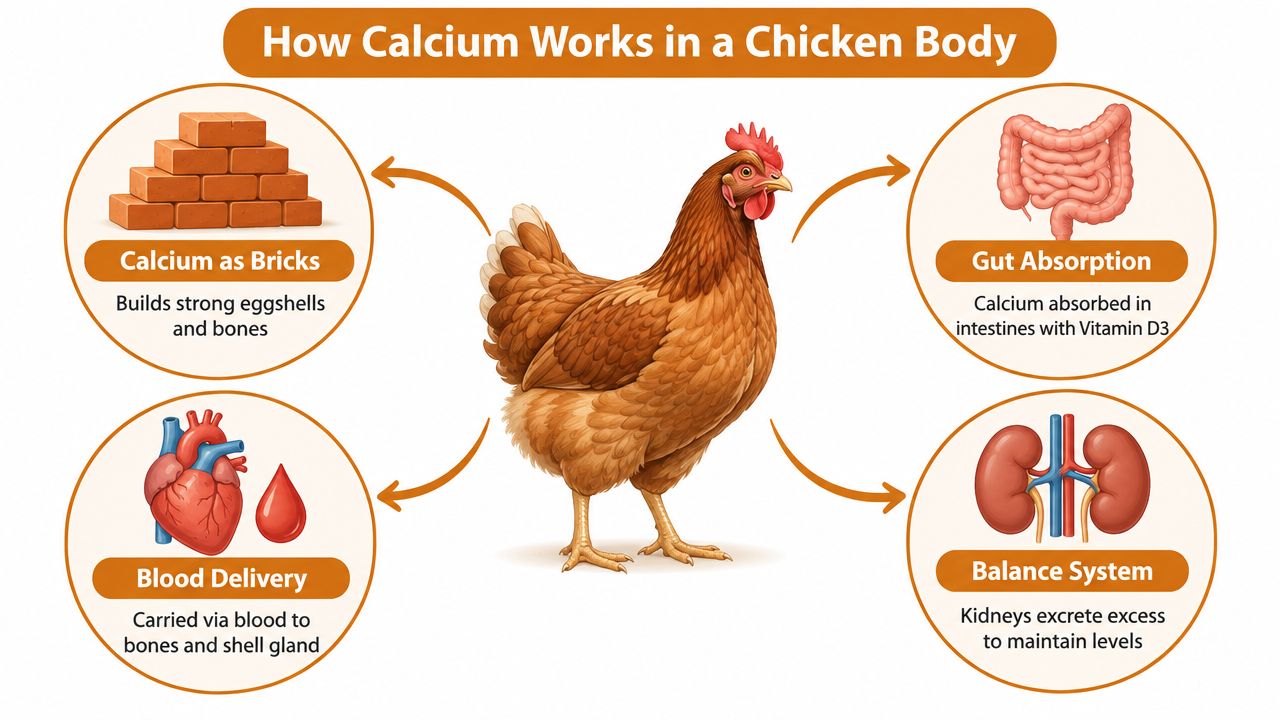
The calcium budget
A keeper's calcium budget has five stages:
- Intake: The hen eats a complete ration and any extras.
- Absorption: The gut selects and absorbs available calcium.
- Distribution: Blood carries it to bones and the shell-forming system.
- Storage: Bones hold reserve mineral for later demand.
- Removal: Kidneys excrete what the body does not retain.
A concentrated supplement makes that budget harder to control when mixed into the main ration. Every bird receives the added mineral, including roosters, chicks, non-laying hens, and birds that may already meet their needs. A separate source gives the flock more control over intake, although free-choice feeding still calls for sensible observation.
Why more is not automatically better
A shell does not improve simply because more calcium passes through the digestive tract. The bird also needs appropriate phosphorus, vitamin D3, protein, energy, and general health to use that calcium. If one part of the system falls out of balance, extra calcium can leave less room for other minerals to do their jobs, while adding strain to egg production and kidney handling.
The National Center for Biotechnology Information clinical overview describes digestive effects of calcium supplements in people and notes a connection between excess intake and kidney stones. Poultry are not small humans, so the information does not set a chicken dose. It does reinforce a practical point: judge a supplement by the whole bird, its ration, shell production, droppings, and general condition, not by shell appearance alone.
Most Common High Calcium Side Effects in Poultry
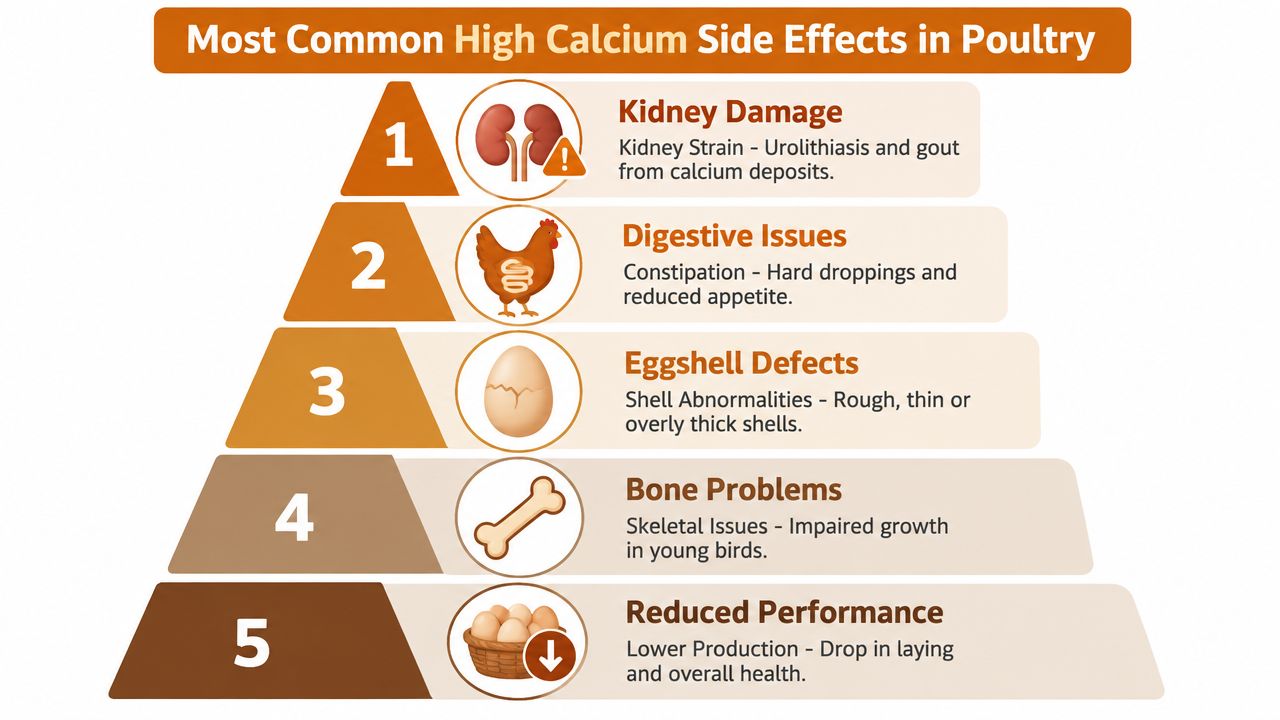
A hen may start showing excess calcium after a new powder, mineral block, calcium-rich treat, or feed mixture enters the routine. Her droppings become firm, the waterer needs refilling sooner, or she spends more time standing. Those changes are easy to blame on heat, dry feed, or ordinary flock variation, so compare them with when the supplement began.
Digestive and urinary clues
Constipation and digestive upset may appear as hard droppings, reduced appetite, straining, or less activity. Calcium supplements are known to cause gastrointestinal effects in people, including constipation, indigestion, nausea, and vomiting, as described in the clinical calcium reference. A hen cannot report nausea, so her appetite, posture, droppings, and activity provide the useful clues.
Greater thirst and urination can indicate that the body is trying to keep fluid and mineral levels steady. A hen may return to the water repeatedly, pass more urine, or leave wetter patches around her feces. Heat, kidney illness, and other problems can cause the same pattern. Record the changes and review the full situation before blaming the supplement alone.
Kidney strain makes persistent signs more concerning. Unused calcium still has to be handled and removed, and an excess can raise calcium levels in the body and burden the kidneys. Birds with poor mineral handling may develop urinary deposits or gout-like disease. A visual check cannot confirm the cause, so veterinary assessment matters when signs continue or worsen.
Egg and performance changes
Eggs offer useful clues, though they do not measure calcium balance by themselves. Rough, thin, overly thick, or misshapen shells can reflect an unbalanced ration, reproductive stress, illness, or poor calcium use. Shell defects appearing with digestive or urinary changes call for a review of the complete feeding program, not an automatic second calcium product.
Mineral or kidney stress may leave a hen weak, quiet, or reluctant to move. Laying can fall as well, but molt, age, daylight, illness, and environmental stress can produce similar changes. A shell problem is therefore a signal to investigate the flock's mineral balance, rather than proof that calcium alone is low or high.
Urgent sign: A hen with marked weakness, confusion-like behavior, difficulty standing, repeated straining, severe appetite loss, or obvious illness needs veterinary advice, especially if she has a known kidney or parathyroid problem.
A WebMD overview of calcium supplements lists frequent urination, thirst, confusion, nausea, muscle weakness, abnormal heart rhythm, and kidney problems among possible signs associated with high calcium in people. Birds can present differently, but the practical lesson remains clear: high calcium supplements side effects can involve the gut, kidneys, movement, and laying performance, not only shell appearance.
How Excess Calcium Blocks Other Vital Minerals
A hen can consume plenty of calcium and still function as though another mineral is missing. In the digestive tract, minerals share absorption pathways and may bind with one another. A heavy calcium load can therefore interfere with how the bird uses phosphorus and some trace minerals. The risk is a mineral imbalance, not calcium in isolation.
Calcium works like a crowd at a narrow doorway. If too many calcium molecules arrive together, or bind with available partners, phosphorus and trace minerals may have less opportunity to pass through and be used. The effects can develop gradually, showing up as slow feather recovery, poor growth in young birds, weak skeletal development, reduced laying, or uneven shell quality.
The mineral domino effect
Phosphorus works alongside calcium in bone formation and mineral balance. Zinc supports skin, feathers, immune defenses, and tissues. Manganese contributes to skeletal development and reproductive function. Higher calcium intake does not make these nutrients unnecessary.
| Mineral Blocked | Role in Poultry | What Deficiency Looks Like |
|---|---|---|
| Phosphorus | Supports bones and works with calcium in mineral metabolism | Poor skeletal condition, impaired growth, and weak overall development |
| Zinc | Helps maintain skin, feathers, tissues, and immune function | Feather quality problems, skin changes, and reduced vitality |
| Manganese | Supports bone formation and reproductive function | Skeletal abnormalities, poor growth, and egg-production concerns |
| Other trace minerals | Help enzymes, tissues, and metabolism function normally | General poor condition that can be difficult to trace to one cause |
A complete poultry ration helps keep these minerals in a usable relationship. Adding one concentrated mineral to an already balanced diet can disturb that relationship, particularly when every bird receives the same amount.
Read the pattern, not one symptom
A rough shell does not automatically call for more calcium. A feather problem does not prove that calcium has blocked zinc. Compare the pattern across ages and bird types. If shell trouble appears only in laying hens, review their ration and calcium access. If chicks, pullets, roosters, and layers all receive the same concentrated supplement, the shared feeding method deserves attention first.
Mineral balance also matters for the kidneys. Calcium that cannot be used efficiently must be handled and excreted, while disrupted phosphorus use can affect bones and general condition. Digestive changes, urinary concerns, shell defects, or declining performance together provide a stronger reason to review the whole ration than any single sign alone.
For a closer explanation of how these minerals interact, see the guide to the phosphorus and calcium ratio. Keepers do not need to calculate perfect mineral math at the expense of observing their flock. They do need to stop treating calcium as a stand-alone answer to every bone, feather, or eggshell concern.
Supplemental Calcium Versus Food Based Calcium
A hen may eat a calcium-rich treat, a complete layer ration, or a measured supplement, yet those sources do not affect mineral balance in quite the same way. Complete feed distributes calcium alongside phosphorus and other nutrients. Powder or liquid supplements place a denser dose into each mouthful, especially when mixed through all the flock's feed.
That feeding method removes choice. A hen receives the extra calcium whether her body needs it or not. A separate dish of oyster shell or another approved shell source gives laying hens more opportunity to adjust intake, but it cannot replace a properly formulated ration or make unlimited calcium harmless.
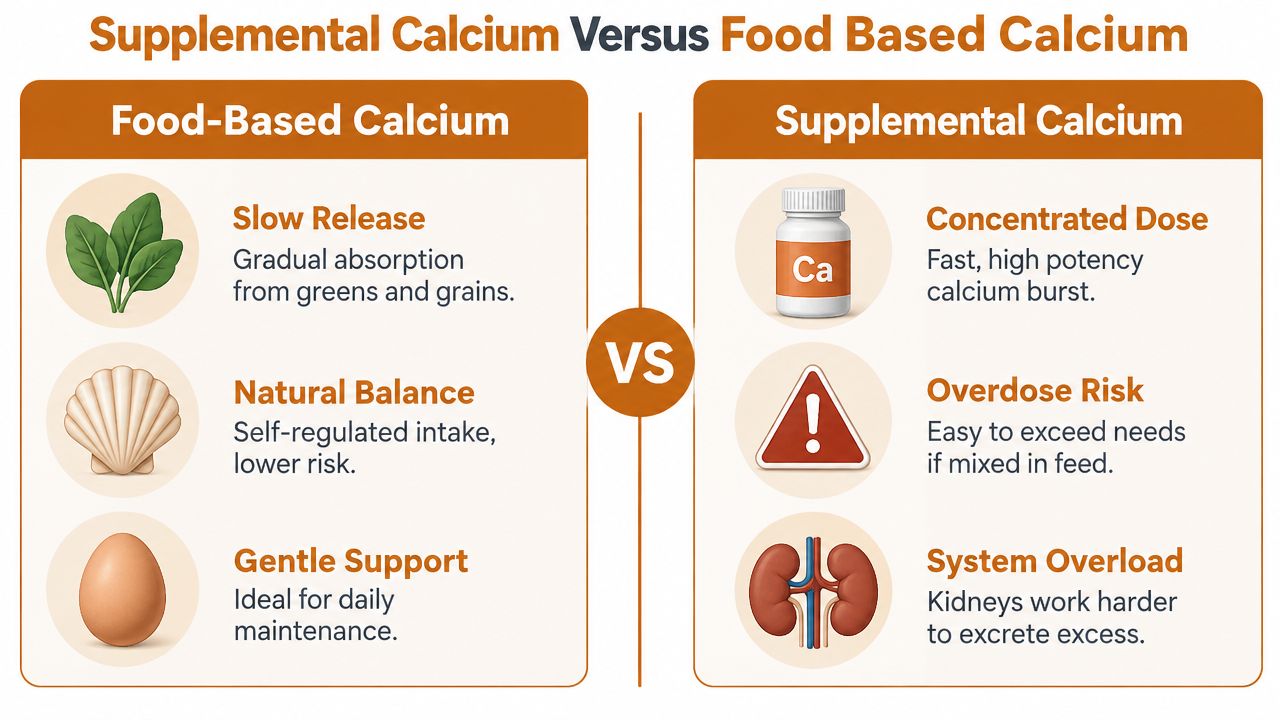
A practical side-by-side view
Food-based calcium usually arrives with other nutrients and takes longer to eat and digest. Layer feed, suitable greens, and calcium-containing treats can fit into a broader feeding plan. “Natural” still does not mean unlimited, and treats should remain part of the whole ration rather than displacing balanced feed.
Supplemental calcium is concentrated and easier to overapply. It may suit a confirmed dietary gap or a need identified by a veterinarian, but routine use should have a clear reason. The medical literature on calcium intake and kidney stones distinguishes supplemental calcium from dietary calcium. In the reviewed evidence, supplements were associated with higher kidney-stone risk, while dietary calcium did not show the same cardiac signal.
Human research adds context without proving that careless supplementation is safe. A 2023 meta-analysis of 12 randomized controlled trials found no association between calcium supplementation and myocardial infarction, stroke, heart-failure admission, or all-cause or cardiovascular mortality, according to the published meta-analysis. Poultry keepers should still consider dose, timing, existing health, and the calcium source. The mineral balance of the entire ration matters more than the label on one product.
Choosing a treat
Count calcium-containing treats as part of the flock's mineral supply. USA GROWN BLACK SOLDIER FLY LARVAE FOR CHICKENS are listed in the supplied product information as having 75 times more calcium than mealworms and 36–42% crude protein. Offer such treats modestly alongside complete feed. They should not replace feed or become a reason to add calcium everywhere else.
For a broader food-focused review, see these sources of calcium for chickens. The soundest choice is the source that fits the ration, the bird's life stage, and the flock's actual needs.
Safe Dosing and How to Fix an Over Supplemented Flock
A hen that suddenly drinks more, lays poorly, or produces unusual droppings may be receiving too much calcium, but the supplement is not always the only cause. Start by mapping the whole feeding system. Record the complete ration, every supplement, mineral block, treat, and which birds can reach each feeder. Separating the intake of laying hens from that of chicks, pullets, and roosters often reveals the imbalance.
Correct the setup first
Use these steps to remove the extra calcium without creating a new mineral problem:
- Stop automatic additions: Pause nonessential calcium powders, liquid products, and calcium-heavy extras while you review the ration.
- Return to complete feed: Give each group a complete feed suited to its age and purpose.
- Separate access: Place oyster shell or another approved calcium source in a separate container instead of mixing it into every mouthful. Hens can then take what they need.
- Refresh water: Provide clean, readily available water. Do not force a sick bird to drink or add unapproved substances to the drinker.
- Observe daily: Check droppings, appetite, thirst, posture, movement, eggshells, and laying behavior.
A separate calcium dish also makes intake easier to observe. If every bird eats from a calcium-rich mix, a hen that needs less receives the same mineral load as a productive layer. Calcium balance works more like a carefully adjusted recipe than a single ingredient to keep increasing.
Reserve extra calcium for laying hens as a starting point, while considering age and health. Chicks and young pullets have different needs, and a rooster should not be fed as though he were producing shells.
When professional help matters
A hen with persistent thirst, weakness, severe appetite loss, abnormal droppings, difficulty standing, or suspected kidney disease needs examination by an avian or poultry veterinarian. Seek help sooner if several birds are affected, signs are worsening, or a highly concentrated supplement was given.
Do not try to “flush” the flock with excessive water or home remedies. Fresh water supports normal hydration, but it cannot reliably correct high blood calcium, kidney injury, infection, or another underlying disease. A veterinarian may need the feeding history and clinical testing to distinguish calcium overload from other causes.
The backyard chicken supplements guide can help organize additions, but it does not replace a complete ration or professional advice for an ill bird. Keep the product label, note when you began using it, and record which birds consumed it. These details give the veterinarian a clearer starting point.
Keeping Calcium in Balance for a Healthy Flock
A hen may have a rough shell today and a kidney problem later if calcium is treated as the whole answer. Strong shells depend on a working mineral team: balanced feed, phosphorus, trace minerals, water, healthy kidneys, and the demands of laying. Calcium works like one beam in the coop roof. Add more beams while blocking the others, and the structure still suffers.
Use a simple daily check to spot changes early:
- Watch the flock: Are the birds alert, moving normally, and eating?
- Check water use: Is one hen drinking repeatedly, or are wet droppings becoming common?
- Inspect droppings: Note ongoing hardness, straining, or major changes.
- Gather eggs: Look for recurring rough, thin, overly thick, or misshapen shells.
- Review recent changes: Did a new supplement, treat, or mixed feed appear before the problem?
A complete layer ration usually needs no concentrated calcium added because of one imperfect egg. Check the hen's age, laying status, water access, health, and the rest of the mineral program before changing feed. This helps protect kidney function, bones, feathers, and steady egg production.
Small flock habits matter. Audit the feeders, remove unnecessary calcium additions, and keep any extra source separate so actual intake remains clear. For an insect treat containing calcium, visit Pure Grubs and review its Black Soldier Fly Larvae options before deciding how they fit your flock's balanced routine.