

Backyard Chicken Supplements Compared for Healthy Flocks
You're standing at the coop with a basket of thin-shelled eggs, a bag of oyster shell, and a flock that treats every new treat as a personal invitation. One hen is molting, another is laying normally, and the pullets are eating whatever the older birds leave behind. It's easy to assume everyone needs the same backyard chicken supplements, but that approach can create as many problems as it solves.
A better system starts with the flock's actual need. Calcium supports shells and bones, insoluble grit supports digestion, insect treats add concentrated protein and enrichment, and vitamins or electrolytes belong mainly in specific stress situations. The right choice depends on age, laying stage, weather, housing, and the quality of the complete ration already in the feeder.
| Supplement category | Main job | Best fit | Main caution |
|---|---|---|---|
| Calcium source | Eggshell formation and skeletal support | Laying hens, older layers, thin shells | Excess can disrupt mineral balance |
| Insoluble grit | Grinding whole feed in the gizzard | Birds eating grass, grains, or scratch | It isn't a calcium supplement |
| Insect treats | Protein, fat, minerals, and enrichment | Molting, cold weather, training, boredom | Treats shouldn't replace complete feed |
| Vitamins and electrolytes | Short-term support during stress | Heat, transport, recovery, deficient diets | Routine use may be unnecessary |
| Probiotics | Gut-support strategy | Transitions or selected flock-management plans | Choose a poultry-specific product and follow its label |
Why Backyard Flocks Need Supplements Beyond Complete Feed
A complete layer ration should be the flock's nutritional foundation. It's formulated to supply the major nutrients laying hens need, so adding several products automatically isn't a sign of better care. In many cases, the most useful supplement is the one you decide not to use.
The decision gets less obvious when flock members have different demands. A mature hen producing eggs needs substantial calcium for both shell formation and bone maintenance. A pullet that hasn't started laying has a different priority, while a molting bird needs support for feather regrowth rather than a constant stream of extra calcium. Heat can further complicate the picture because stressed hens may produce thinner shells and drink differently.
I use a simple triage routine before changing the feed program:
- Check the base ration. Confirm that the birds are eating a complete feed appropriate to their stage instead of filling up on scratch, kitchen scraps, or treats.
- Look at the flock, not one egg. A single misshapen shell doesn't prove a deficiency. Repeated thin, soft, or easily broken shells deserve closer attention.
- Check water, shade, ventilation, and parasites. Poor shell quality can accompany environmental stress, illness, or poor intake. A supplement won't correct a dirty waterer or an overheated coop.
- Add one change at a time. If you introduce calcium, insect treats, electrolytes, and probiotics together, you won't know what helped or caused a new imbalance.
What changes across the year
Older laying hens, birds under heat stress, and flocks with inconsistent feed intake are more likely to need targeted support. A slow molt, poor feather condition, reduced appetite, or a noticeable decline in shell quality should prompt observation and, when necessary, veterinary advice rather than a shopping spree.
For a practical overview of what a balanced daily ration should look like, use this guide to a healthy diet for chickens. The key lesson is simple: supplements should fill a defined gap or serve a defined management purpose. They shouldn't compensate for an unsuitable base feed.
Understanding the Core Supplement Categories for Backyard Chickens
Choose a supplement by the flock's need, not by the product label. Calcium supports shell formation, grit supports digestion, insect treats add protein and enrichment, and vitamins or probiotics address narrower situations. Confusing those jobs can create an imbalance instead of solving one.
Calcium minerals
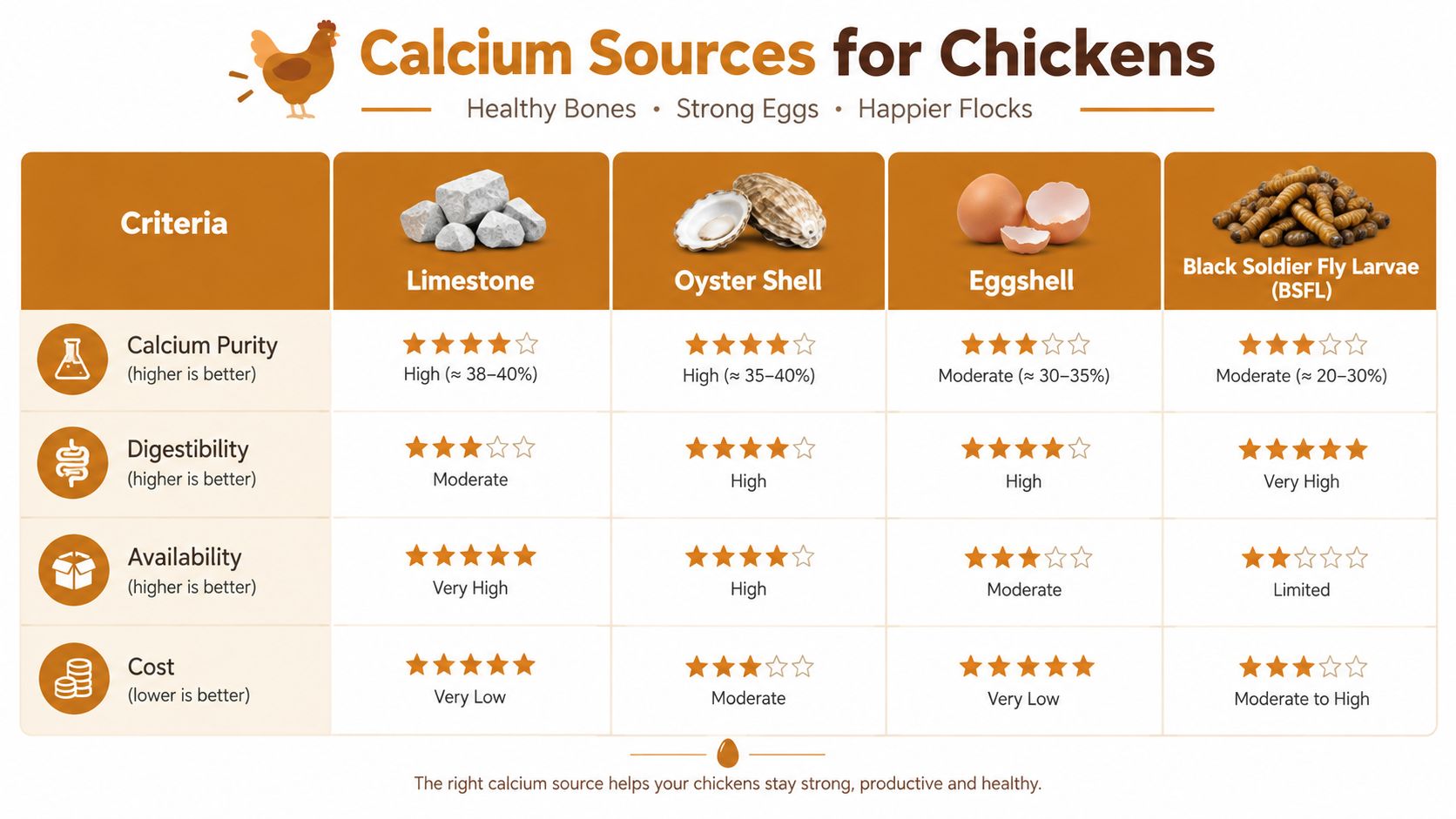
Active layers have a steady calcium demand. Poultry guidance lists calcium, phosphorus, and salt among the minerals birds require in substantial amounts, and identifies limestone, oyster shell, and meat-and-bone meal as common calcium sources for laying hens (University of Georgia poultry guidance). Calcium supports eggshell production and skeletal health, but extra calcium is useful only when it matches the bird's intake and needs.
Many keepers offer oyster shell or another coarse calcium source separately, allowing hens to consume it as needed. Eggshell-derived calcium is another practical option. Clean and dry the shells, then crush them thoroughly. Fine pieces reduce the chance that birds associate recognizable shell fragments with fresh eggs.
Insoluble grit
Insoluble grit consists of hard particles that stay in the gizzard and grind whole grains, grass, and other fibrous material. It does not replace oyster shell or limestone. Hens eating only a suitable commercial ration may need little added grit, while birds receiving whole grains or spending time foraging generally need access to an appropriate supply.
Protein insect treats
Live or dried insects provide concentrated treats for molt, cold weather, training, or boredom. They also offer enrichment, since foraging and pecking are part of the value. Keep portions controlled so treats do not displace complete feed.
Black soldier fly larvae have a useful mineral profile alongside protein and fat. A 2024 poultry nutrition review reports that BSFL can reach up to 9% calcium on a dry-matter basis and examines their potential to reduce reliance on added limestone or oyster shell in some diets (2024 BSFL poultry nutrition review). That supports their use as a multifunctional treat, not as a replacement for a correctly formulated layer ration.
Vitamins, electrolytes, and probiotics
These products suit specific conditions. Vitamin D3 helps birds use calcium and phosphorus. Electrolytes can support short periods of heat or transport stress. Probiotics may assist gut management, but a healthy flock eating complete feed does not automatically need them every day.
Calcium Sources Compared for Stronger Shells and Bones
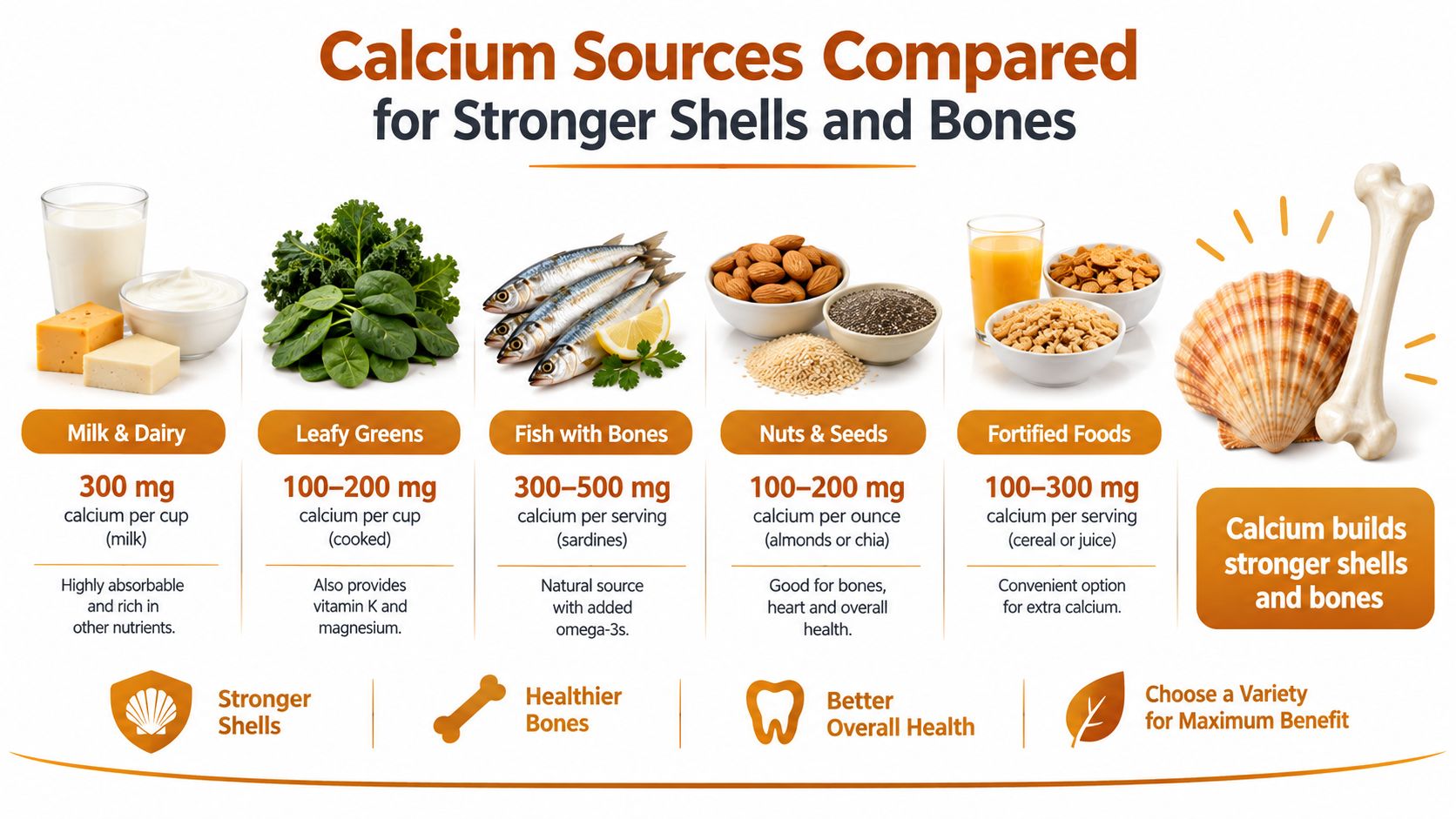
A reliable calcium program depends on amount, particle size, availability, and timing, not on adding the largest possible quantity. Limestone is concentrated and predictable, which is why complete layer feeds commonly include it. Oyster shell works well as a free-choice option because its larger particles can remain in the digestive tract longer and provide calcium when a hen forms an eggshell.
Eggshells offer a practical reuse option. Wash or otherwise clean them, dry them thoroughly, then crush them into small pieces or powder. Preparation must be consistent. Fine crushing also reduces concern that recognizable shell pieces could encourage egg-eating behavior.
BSFL serve a different purpose. They combine calcium with protein and fat, while pecking and foraging add enrichment. A poultry nutrition review reports calcium levels of up to 9% on a dry-matter basis and discusses possible contributions to bone and eggshell quality. That makes larvae a multifunctional treat, not a replacement for correctly formulated layer feed.
The practical calcium ceiling
Layer diets commonly contain 3.5% to 4.0% calcium, with about 4% used as a practical target for shell quality (layer calcium guidance). The same guidance describes limited benefit above roughly 4%. It also reports that a 4.5% calcium diet during an extended laying period increased shell breakage and led some hens to stop laying.
Practical rule: Improve the calcium source and the Ca:P balance before increasing the total amount.
A laying hen needs roughly 2 to 3 grams of calcium per eggshell. Dietary calcium supplies about 60% to 75%, with the skeleton providing the remainder. A shortfall can therefore affect shell quality quickly, especially when intake is inconsistent. Keep complete layer feed as the nutritional base, and offer a suitable free-choice calcium source when flock needs justify it.
For broader context on calcium forms and bone nutrition, Vitamin Planet bone nutrition provides a human nutrition resource. Poultry-specific feeding guidance still takes priority.
A focused comparison of poultry calcium options is available in this guide to the best calcium supplement for chickens. USA GROWN BLACK SOLDIER FLY LARVAE FOR CHICKENS is one combined calcium and protein option. Its catalog lists 36% to 42% crude protein and 30% to 40% fat. Use larvae as a controlled supplement, while balanced layer feed supplies the foundation.
Protein Treats Compared BSFL Versus Mealworms for Everyday Feeding
A flock may rush for either insect, but the better choice depends on the job. Mealworms offer an easy training reward and foraging activity. Black soldier fly larvae, or BSFL, add a stronger calcium contribution alongside protein and fat. Both remain treats, not replacements for complete layer feed.
| Attribute | BSFL | Mealworms |
|---|---|---|
| Calcium | Can provide a substantially higher calcium contribution than mealworms, depending on processing and product | Lower calcium contribution than the BSFL comparison described in the product information |
| Protein | 36% to 42% in the listed product snapshot | Not specified in the verified data |
| Fat | 30% to 40% in the listed product snapshot | Not specified in the verified data |
| Best practical use | Molting support, enrichment, training, and a mineral-rich treat | Simple protein treat and scatter-foraging reward |
| Main trade-off | Rich treat that should remain supplemental | Less calcium-focused, so it shouldn't be treated as a shell-support product |
The calcium advantage matters most when the treat has a job beyond entertainment.
During molt, an insect treat can improve feeding interest while supplying concentrated nutrients. A review of BSFL meal in laying-hen diets reported potential improvements in feed efficiency and egg-yolk color without harming performance. That result does not mean every backyard flock needs BSFL meal in its ration. Processing, the complete diet, and the amount offered still determine whether the treat fits.
Calcium should guide the decision, rather than the product label alone. If hens already receive a complete layer ration and maintain good shells, mealworms may be enough for occasional training or scattered foraging. If you want an insect treat with a more useful mineral contribution, BSFL may fit better. Neither treat corrects an underlying calcium imbalance, poor feed intake, or a health problem.
The welfare benefit also matters. Research has examined live and dehydrated BSFL as environmental enrichment for chickens, and poultry work has reported no negative effects on nutrient utilization, gut microbiota, or production performance (study of BSFL enrichment in chickens). Scatter a modest portion through clean bedding or a dry run so birds search for it, rather than tipping a large quantity into the feeder.
When each insect makes sense
Choose mealworms for a familiar training reward, quick handling, or simple scatter-foraging. Choose BSFL when calcium contribution, traceable sourcing, and combined protein-mineral value matter to the decision. Offer either in controlled portions, and keep the complete ration as the nutritional base.
Keep a feeding record during molt or stressful weather. Note appetite, feather regrowth, activity, and egg quality, then change one major input at a time. This makes flock responses easier to judge across seasons. For additional treat ideas and feeding context, see this guide to high-protein chicken treats.
Vitamins Electrolytes and Probiotics When to Use Them
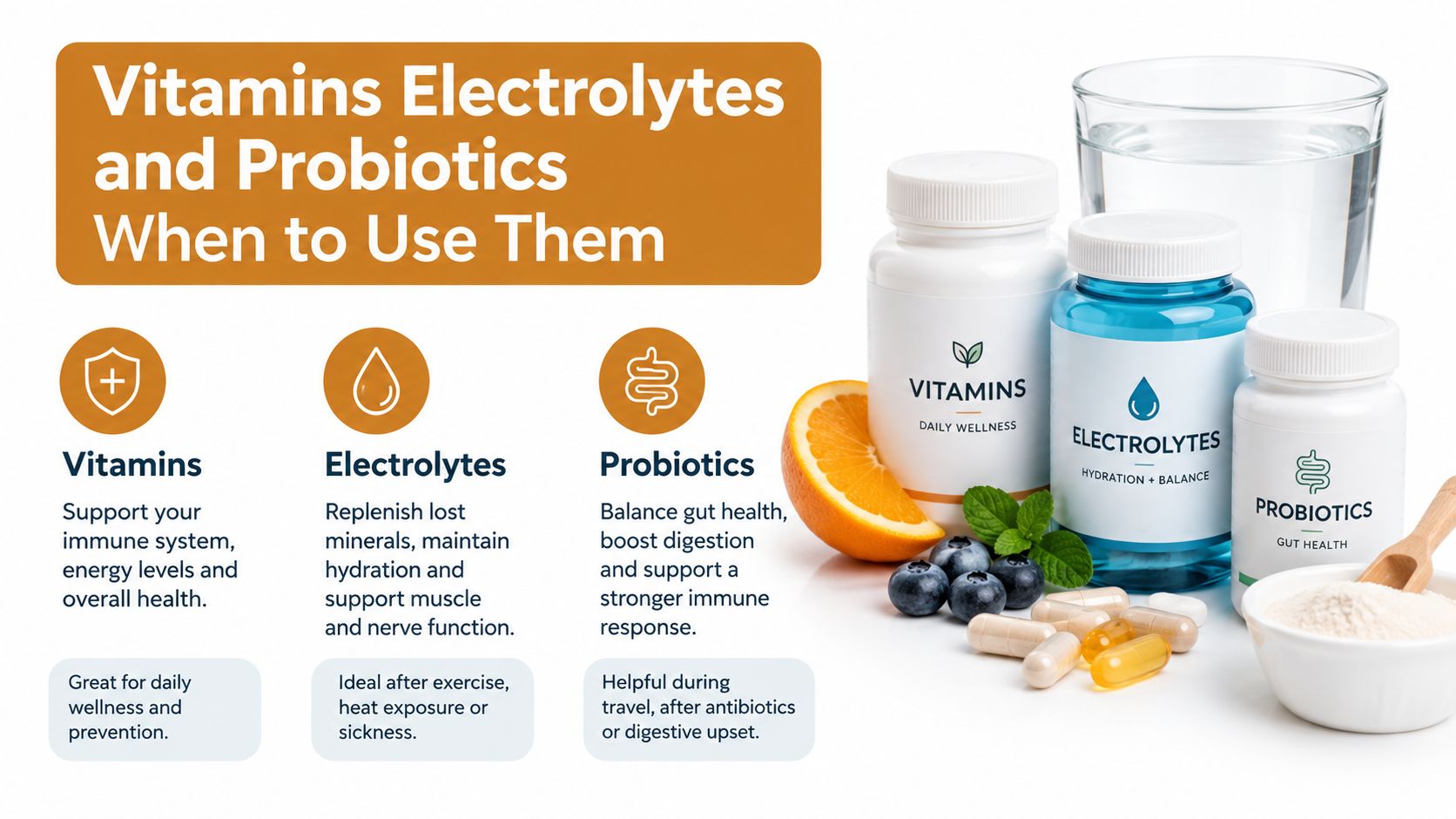
These products are most useful when the flock faces a specific challenge. They're not automatically necessary every day, particularly when birds eat a complete ration and show normal appetite, droppings, activity, feather condition, and shell quality.
Vitamin D3 belongs in a mineral strategy
Vitamin D3, also called cholecalciferol, helps birds use calcium and phosphorus. Recent poultry work indicates that it can materially improve tibia mineralization and nutrient digestibility when diets are deficient in calcium and phosphorus (research on vitamin D3 and mineral deficiency). That's a targeted finding, not a reason to add concentrated vitamin products indiscriminately.
If the base ration is complete, first check intake and storage. Moldy, stale, or poorly stored feed can create a more fundamental problem than a missing supplement.
Electrolytes are for stressful windows
Heat, transport, flock introduction, illness recovery, and severe weather can reduce drinking and feeding consistency. A poultry electrolyte product may be appropriate during such an event, but follow the product label and prepare fresh water as directed. Don't combine multiple water additives unless their labels specifically allow it.
Stop when the stressful event has passed, and watch the birds rather than continuing automatically. If hens remain lethargic, pant heavily, isolate themselves, or stop eating, contact a veterinarian.
Probiotics need a clear purpose
Probiotics may fit transitions such as adding birds, recovering from stress, or managing a flock where gut consistency is a concern. Evidence around poultry probiotics is product-specific, so use a poultry-labeled option and avoid treating a supplement as a cure for infection or parasites.
A complete ration, clean water, dry bedding, and good ventilation remain the foundation. Supplements can support that system, but they can't replace it.
Grit Safety Testing and How to Choose a Trustworthy Supplement
Grit and calcium should live in separate mental categories. Insoluble grit helps grind whole foods in the gizzard. Soluble calcium supports mineral needs. A hen can have access to oyster shell and still need grit if she eats whole grains or spends time foraging.
Offer grit according to the birds' diet and environment, and keep it clean and dry. Don't assume a dusty material from an unknown source is suitable just because chickens show interest in it.
A supplement-buying checklist
- Read the intended species: Confirm the product is labeled for poultry and appropriate for laying hens or pullets.
- Check the origin: Look for clear country-of-origin information and a manufacturer willing to explain how the ingredient is produced.
- Ask about compliance: The publisher describes Pure Grubs as produced in facilities meeting FDA and AAFCO safety standards. Treat that as a sourcing detail to verify on the product information, not as a substitute for reading the label.
- Look for contaminant testing: Heavy-metal screening should address lead, arsenic, mercury, and cadmium when the product is an insect feed or mineral source.
- Inspect the ingredient list: Avoid unnecessary fillers, additives, and preservatives when a clean single-ingredient treat is what you want.
- Protect storage quality: Keep dried supplements sealed, dry, and away from rodents. Discard anything with mold, moisture damage, or an unusual smell.
- Follow the label: Don't convert commercial poultry dosing into backyard measurements by guesswork.
If the supplement is intended for eggs, traceability matters. A clean production chain, batch documentation, and clear feeding directions give you more confidence than attractive packaging or a long list of vague benefits.
Choosing the Right Supplement Mix for Your Flock Needs
The best plan is built around the bird in front of you.
| Flock situation | Calcium approach | Protein treat approach | Vitamins or electrolytes |
|---|---|---|---|
| Active layers with sound shells | Complete layer ration, with a separate calcium source if needed | Occasional BSFL or mealworms | Usually unnecessary |
| Older layers or repeated thin shells | Review total calcium and phosphorus, then offer an appropriate calcium source | BSFL can combine enrichment with mineral value | Consider only if a broader deficiency or stress issue is identified |
| Molting birds | Don't raise calcium blindly if they aren't laying normally | Use a protein-rich insect treat as a supplemental reward | Use only for a defined stress or recovery need |
| Pullets before lay | Avoid routine layer-level calcium supplementation | Small treats, with the ration remaining primary | Usually unnecessary |
| Heat-stressed hens | Protect water, shade, airflow, and feed intake first | Keep treats modest during poor appetite | Electrolytes may fit a short stress window under label directions |
| Mixed flock with ducks | Feed species-appropriate complete rations | Use treats sparingly and monitor all species | Choose products labeled for the animals receiving them |
Build the plan in layers
Start with feed and water. Add insoluble grit if the flock eats whole foods or forages. Add calcium when the laying group needs a separate source or shell quality repeatedly declines. Use insect treats for a specific purpose, such as molt support, enrichment, or training, rather than as a replacement for feed.
Then observe. Shell texture, appetite, body condition, feather progress, droppings, and flock behavior tell you more than a supplement label alone. If a change makes no visible difference, remove it rather than collecting products indefinitely.
A good supplement program is deliberately boring. It has a clear reason, a defined feeding method, and a stopping point.
For persistent shell defects, weakness, weight loss, respiratory signs, or abnormal behavior, seek veterinary guidance. Calcium and treats can't solve every health problem, and delaying diagnosis can put the whole flock at risk.
Pure Grubs offers USA-grown dried black soldier fly larvae with listed protein, fat, calcium, and sourcing details, making them one option for keepers who want a traceable insect supplement alongside a balanced ration. Visit Pure Grubs to review the product information and choose whether BSFL fit your flock's calcium, protein, or enrichment needs.