

The Ultimate Guide to a Healthy Diet for Chickens
When it comes to keeping chickens, nothing you do is more important than getting their diet right. A healthy chicken diet is built on a high-quality commercial feed that’s right for their age, with a few safe treats and, of course, constant access to fresh, clean water. This combination delivers the essential protein, calcium, and vitamins they need for everything from strong eggshells to glossy feathers.
Think of it as the blueprint for a happy, thriving flock.
Building a Foundation for Your Flock's Health
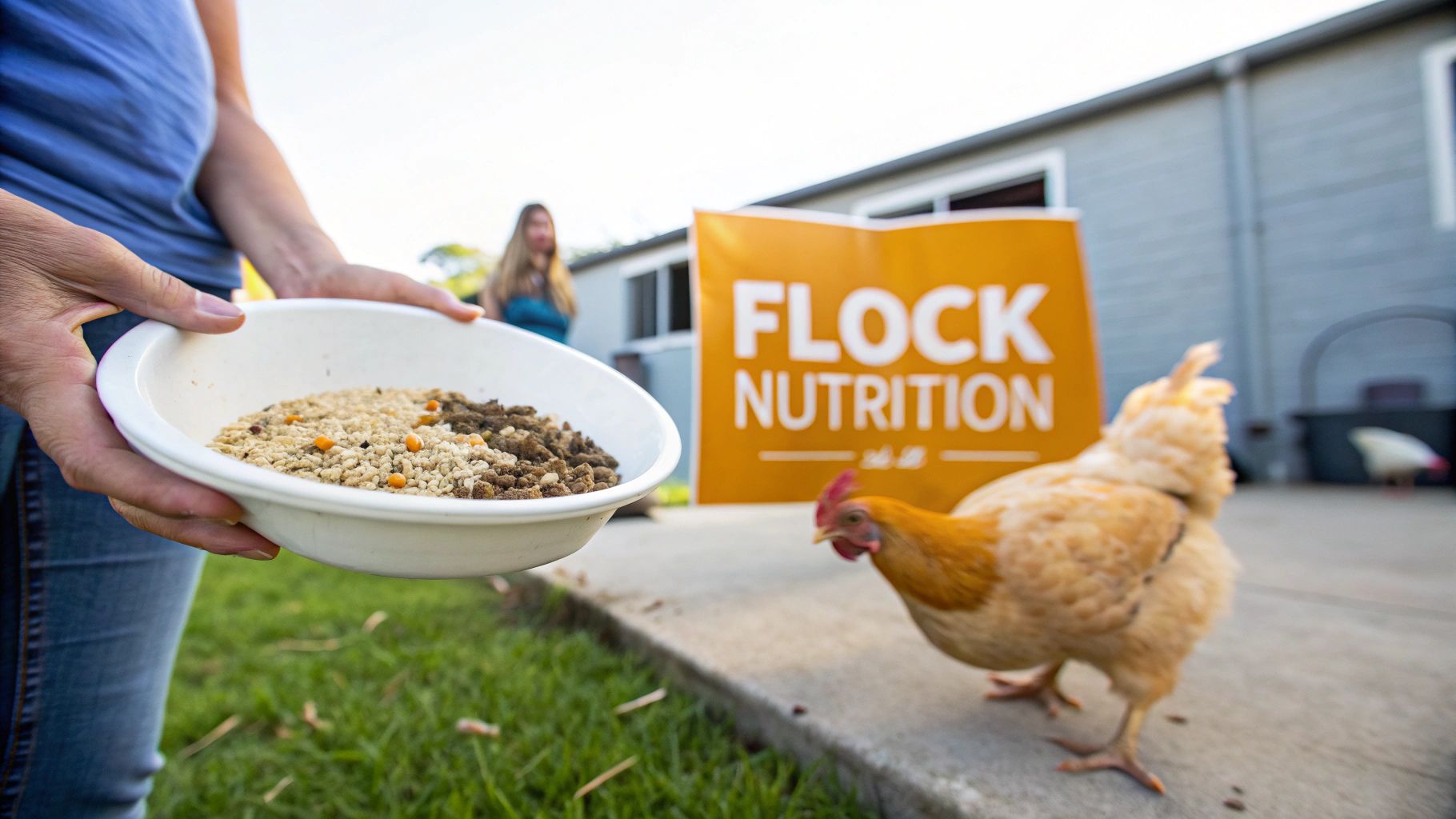
Crafting the perfect diet for your chickens directly impacts everything—from how strong their eggshells are to their ability to fight off illness. Good nutrition isn't just about tossing some grain in a feeder; it's about giving their bodies the specific building blocks they need to flourish at every stage of life.
A one-size-fits-all approach just won't cut it. A newly hatched chick has completely different needs than a hardworking laying hen. Once you get a handle on these changing requirements, you stop being just a chicken keeper and start becoming your flock's personal nutritionist, setting them up for success from day one.
The Pillars of Poultry Nutrition
I like to think of a chicken's diet as a structure held up by four critical pillars. If one of them weakens, the whole thing becomes unstable. These are the absolute non-negotiables:
- Protein: This is the engine for growth. It fuels feather production and is absolutely essential for egg development.
- Calcium & Minerals: You can't get strong eggshells without them. These are also vital for strong bones and overall skeletal health.
- Vitamins: These are the spark plugs. They keep the immune system running, help convert food into energy, and maintain overall vitality.
- Fresh Water: This is the most overlooked nutrient, but it's arguably the most important. Water drives digestion and helps your birds regulate their body temperature.
Providing the right nutrition is an investment not just in your birds, but in the quality of the food they produce for your family. A well-fed hen is a productive and resilient hen.
This focus on quality is more relevant than ever. Consumers are actively looking for high-quality, nutritious protein sources, and chicken has become a go-to choice for millions, packing up to 31 grams of protein per serving. By investing in top-notch nutrition for your flock, you're raising birds that meet today's high standards for healthy, ethically produced food. If you're interested in the bigger picture, you can explore more insights into the organic chicken market and what drives consumer trends.
In the sections that follow, we'll dive deep into each of these nutritional pillars, giving you the practical "how-to" that brings all this "why" to life in your own backyard.
What Goes Into a Healthy Chicken Diet? The Building Blocks of a Thriving Flock
Think about building a house. You can't just toss a pile of lumber, nails, and drywall on a plot of land and expect a sturdy home to appear. You need the right materials, in the right amounts, assembled in the right order. A balanced diet for your chickens is exactly the same—each nutrient is a critical building block for a healthy, productive bird.
If you get the mix wrong, their health can go downhill fast. Getting a handle on these core nutrients is the first real step to becoming your flock's personal nutritionist and making sure they have everything they need to thrive.
Protein: The Framework for Growth and Eggs
Protein is the absolute foundation of your chicken's body. It’s what builds muscle, grows strong feathers, and—most importantly for your egg basket—produces those delicious eggs. In fact, a single egg is about 13% protein, which means a laying hen needs a steady supply just to keep up with her daily production schedule.
This is especially true for little chicks. Their starter feed needs to be packed with protein, usually around 20-24%, to fuel their explosive growth. As they get older, their protein needs dip a bit, but it never stops being the cornerstone of their diet. Skimp on protein, and you’ll see problems like slow growth, a drop in egg-laying, and even feather-picking as the birds desperately try to find this essential nutrient.
If you’re looking for great ways to give your flock an extra boost, check out these safe, high-protein foods for chickens.
Carbs and Fats: Fuel for a Busy Day
If protein builds the house, then carbohydrates and fats are the power that keeps the lights on. Chickens are busy creatures, spending their days scratching, foraging, and figuring out the pecking order. All that activity burns a surprising amount of energy.
- Carbohydrates: These are the quick-burning fuel. Found in grains like corn, wheat, and oats, they give your chickens the immediate energy they need for their daily antics.
- Fats: Fats are more of a slow-burn, concentrated energy source. They're also vital for absorbing certain vitamins and helping your flock stay insulated and warm when the temperature drops.
Any good commercial feed is carefully formulated to provide the right mix of these energy sources, ensuring your birds have the get-up-and-go for a full day of being a chicken.
Calcium and Phosphorus: The Eggshell Dream Team
For laying hens, no two minerals are more crucial than calcium and phosphorus. I like to think of them as the bricks and mortar of eggshell production.
You can have all the calcium in the world, but without phosphorus, the body can't absorb and use it properly. One is basically useless without the other. They have to work together.
A good layer feed will contain around 3.5-4.5% calcium to meet this huge daily demand. An eggshell is almost 95% calcium carbonate, and if a hen doesn't get enough from her diet, her body will start pulling it directly from her bones. This is a recipe for weak skeletons and health problems. This is why offering a separate, free-choice source of calcium, like crushed oyster shells, is so important. It lets each hen take exactly what she needs, right when she needs it.
Vitamins and Minerals: The Unsung Heroes
Beyond the big-ticket items, a whole crew of vitamins and minerals are working behind the scenes. They’re like the project managers on the construction site, overseeing thousands of tiny processes that keep the whole operation running smoothly, from the immune system to metabolism.
Here's a quick look at some of the most important ones:
- Vitamin A: Essential for good eyesight and a strong immune response.
- Vitamin D: The key that unlocks calcium absorption. Without it, the "mortar" never sets.
- B Vitamins: These help convert all that feed into usable energy.
- Vitamin E: A powerful antioxidant that supports muscle and cell health.
These micronutrients are all interconnected. A shortage in just one can cause a ripple effect, undermining the bird's overall health.
To make it easier to see how everything fits together, here’s a quick-reference table.
Essential Nutrients for Chickens At-a-Glance
| Nutrient | Primary Function | Common Sources |
|---|---|---|
| Protein | Builds muscle, feathers, and eggs. | Commercial feed, insects (like BSFL), seeds, legumes. |
| Carbohydrates | Provides primary, quick-access energy. | Corn, wheat, oats, barley, and other grains. |
| Fats | Concentrated energy, vitamin absorption, warmth. | Seeds (sunflower, flax), vegetable oils, quality feed. |
| Calcium | Forms strong eggshells and bones. | Layer feed, crushed oyster shell, limestone grit. |
| Phosphorus | Works with calcium for bone and shell strength. | Commercial feed, bone meal. |
| Vitamins A, D, E, K, B | Immune function, calcium absorption, metabolism. | Formulated feed, fresh greens, sunlight (for D). |
| Water | Hydration, digestion, nutrient transport. | Clean, fresh water sources. |
Having this basic understanding helps you appreciate just how much goes into a simple bag of high-quality chicken feed.
Water: The Most Important Nutrient of All
Finally, let's talk about the single most critical nutrient, and the one we most often overlook: fresh, clean water. A chicken's body is over 60% water. It’s fundamental to literally every biological process—it regulates their temperature, helps them digest food, and carries nutrients where they need to go.
And get this: an egg itself is about 75% water. A hen who is even a little dehydrated will stop laying almost immediately. That’s why the easiest and most powerful thing you can do for your flock's health and productivity is to make sure they have constant access to clean, cool water. No exceptions.
Feeding Your Flock Through Every Life Stage
A chicken's nutritional needs aren't static—they change dramatically from the moment a chick pecks its way out of the shell to its golden years as a flock elder. You wouldn't feed a toddler the same meal as a marathon runner, and the same logic applies here. Feeding a chick the right food is completely different from feeding a hardworking laying hen.
Getting this right is the secret to a healthy, productive flock. Think of it as a journey with distinct milestones. Each stage—chick, pullet, and layer—has a unique dietary blueprint to support what its body is doing. Nailing these transitions means your birds get exactly what they need, right when they need it, setting them up for a long and vibrant life.
Hatchlings and Chicks: The First Eight Weeks
From day one to about eight weeks old, a chick has one main job: grow. And boy, do they grow fast. To fuel that explosive development of bones, muscles, and feathers, their diet needs to be absolutely packed with protein.
This is where starter feed comes in. This special crumble is formulated with 20-24% protein, giving them all the essential building blocks for a strong start. The feed is designed in small, easy-to-manage crumbles perfect for their tiny beaks. It’s best to hold off on treats or scratch grains during this critical window, as they can dilute this nutrient-dense feed and slow down their development.
And don't forget clean, fresh water. It's non-negotiable. Chicks can get dehydrated in a flash, so make sure their waterer is always full and shallow enough to keep them safe from accidental drowning.
This infographic gives you a quick visual on the core nutritional priorities for a chicken.
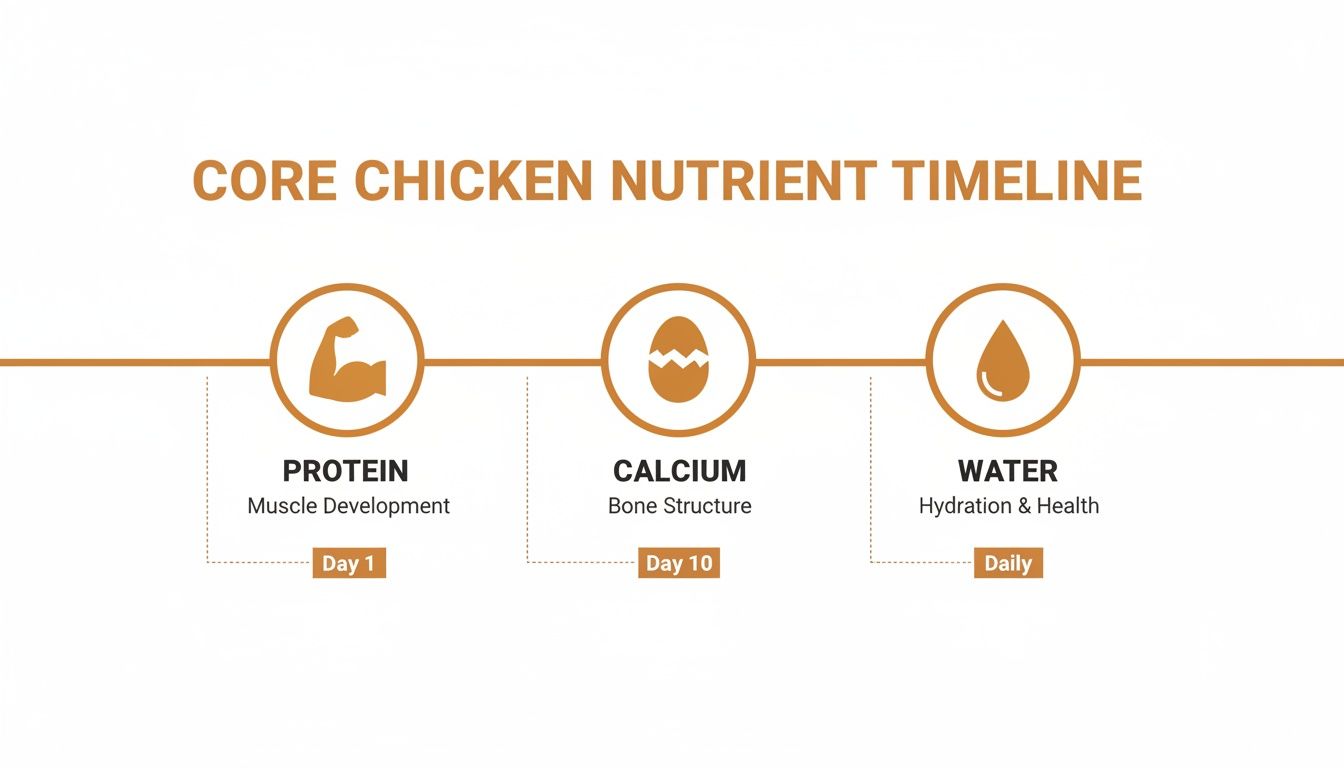
As the timeline shows, protein is the top priority from day one. The need for calcium really kicks in as they get closer to laying age, while water is a daily must-have from start to finish.
Pullets: The Awkward Teenage Phase
Once your birds hit about eight weeks old, they enter their "teenage" phase and are now called pullets. This stage lasts until they lay their first egg, usually around 18-20 weeks. Their growth rate slows way down as their bodies begin preparing for the serious business of egg production.
At this point, you'll want to transition them from starter feed to grower feed. This new formula dials back the protein to about 16-18%. Crucially, it doesn't have the high levels of calcium found in layer feed.
Feeding a high-calcium layer feed too early is a big mistake. It can cause serious, long-term kidney damage because a pullet's body just isn't ready to handle it. Making the switch to grower feed is a vital step for their long-term health.
This transition period supports steady, healthy development without putting their reproductive systems into overdrive. It’s like letting them mature at their own pace, building a solid foundation for a long, productive laying career.
Laying Hens: Fueling the Egg Machine
The moment you spot that first, glorious egg in the nesting box, it's time to make the final switch to layer feed. This is the diet your hens will be on for most of their adult lives. Layer feed keeps the protein steady at around 16% but ramps up the calcium significantly, to about 3.5-4.5%.
Think about it: an eggshell is almost pure calcium carbonate. To form a strong shell every single day, a hen needs a massive amount of calcium. If she doesn't get it from her food, her body will steal it from her own bones, leading to weak, rubbery eggshells and, eventually, skeletal problems.
That’s why it’s also a great idea to offer a separate, free-choice source of calcium on the side.
- Crushed Oyster Shell: This is the old-school standard for a reason. It provides a slow-release source of calcium that hens can peck at as they need.
- High-Calcium Treats: Supplementing with something like Black Soldier Fly Larvae, which can have over 85% more calcium than mealworms, gives them a boost they’ll go crazy for.
This two-pronged approach lets each hen regulate her own intake. She knows what her body needs better than anyone, and this ensures she can get it.
Broilers, Roosters, and Seniors
Not every bird in your flock is a laying hen, and their diets need to reflect that. A truly healthy diet for chickens takes these special cases into account.
- Broilers (Meat Birds): These birds are bred for rapid muscle growth. They’re typically fed a high-protein "finisher" feed designed to support that quick development.
- Roosters: Your gentlemen don't lay eggs, so they absolutely do not need the extra calcium in layer feed. A standard "flock raiser" or grower feed with around 16% protein is perfect for them.
- Aging Hens: Once a hen retires from laying, her calcium needs drop dramatically. Switching her back to a lower-calcium grower feed can help protect her kidney health as she enjoys her golden years.
Choosing Safe Treats and Powerful Supplements
A high-quality commercial feed should always be the cornerstone of your flock's diet, but treats and supplements are where the fun really begins. Think of their daily feed as the balanced, essential meal they need to thrive, while treats are the healthy, purposeful snacks that boost their nutrition and strengthen your bond with them.
Offered the right way, treats add variety, deliver a powerful punch of key nutrients, and are a fantastic way to get your flock to come running when they see you. But just like with us, there’s a world of difference between a nutrient-packed snack and plain old junk food. The goal is to offer goodies that add to their diet, not throw it out of balance.
The Golden Rule of Treating Your Flock
Before we get into the fun stuff, let's lock down the single most important rule of thumb: the 90/10 rule. It's simple, but it's absolutely critical for keeping your flock’s diet on track.
At least 90% of what your chickens eat each day should come from their complete, formulated feed. Treats, scratch grains, and kitchen scraps should make up no more than 10% of their total diet.
Sticking to this is non-negotiable. If you overdo it with treats—even the healthy ones—you'll dilute the carefully balanced nutrition in their main feed. This can quickly lead to deficiencies, weight issues, and a noticeable drop in egg production. The 90/10 rule ensures treats stay a beneficial boost, not a dietary problem.
The Best Supplements for Strong Eggshells
When it comes to supplements that double as treats, some are simply in a league of their own. For laying hens, one of the best things you can offer is a snack that’s high in both protein and, most importantly, calcium.
This is where Black Soldier Fly Larvae (BSFL) completely outshine the competition. Many people reach for mealworms, but while they're high in protein, they're surprisingly low in calcium. BSFL, on the other hand, are a true nutritional powerhouse.
- Superior Calcium Content: Dried BSFL pack up to 85% more calcium than mealworms. That makes them a far better choice for building strong, solid eggshells.
- Ideal Calcium-to-Phosphorus Ratio: They naturally have a balanced ratio of these two minerals, which is crucial for helping a hen's body actually absorb and use the calcium effectively.
- High in Protein: You still get that fantastic protein boost, which is a huge help for feather growth, especially when your flock is going through a molt.
Products like Pure Grubs give you a safe, USA-grown source of BSFL, so you can have peace of mind knowing you're offering a clean and potent supplement. This focus on premium nutrition mirrors a larger trend. The market for fresh and frozen organic chicken hit $2.26 billion in 2023, driven by consumers who want poultry raised on clean, additive-free diets. By choosing top-tier supplements, backyard keepers can directly impact their flock's health and the quality of their eggs. Discover more about chicken consumption trends to see how backyard practices are leading the way.
Safe Kitchen Scraps and What to Avoid
Your kitchen can be a treasure trove of free, enriching snacks for your flock. They absolutely love the variety, and it's a brilliant way to cut down on food waste.
Safe and Healthy Kitchen Scraps:
- Leafy Greens: Kale, lettuce, and a little bit of spinach are vitamin goldmines.
- Berries: Blueberries, strawberries, and raspberries are packed with antioxidants.
- Melons: Watermelon (rind and all!) and cantaloupe are hydrating and a huge hit on hot days.
- Cooked Grains: Leftover oatmeal, rice, or pasta are great sources of energy.
- Vegetables: Carrots, cucumbers, and cooked squash are always flock favorites.
Just as important is knowing which foods are dangerous. Some common kitchen items are toxic to chickens and should be avoided at all costs.
Toxic Foods to NEVER Feed Chickens:
- Avocado: The pit and skin contain persin, a toxin that's deadly to birds.
- Raw or Dried Beans: They contain a compound called phytohaemagglutinin that can be fatal.
- Rhubarb Leaves: These are high in oxalic acid, which can cause kidney failure.
- Moldy or Rotten Food: Never give them anything you wouldn't eat; it can cause botulism or other serious illnesses.
- Salty, Sugary, or Processed Foods: These offer zero nutritional value and can mess with their digestion.
By being smart about what you toss into their run, you can safely enrich their diet with tasty, healthy additions. For a more complete list of what's safe and what's not, check out our detailed guide on the best snacks for chickens.
How to Spot and Correct Nutritional Deficiencies
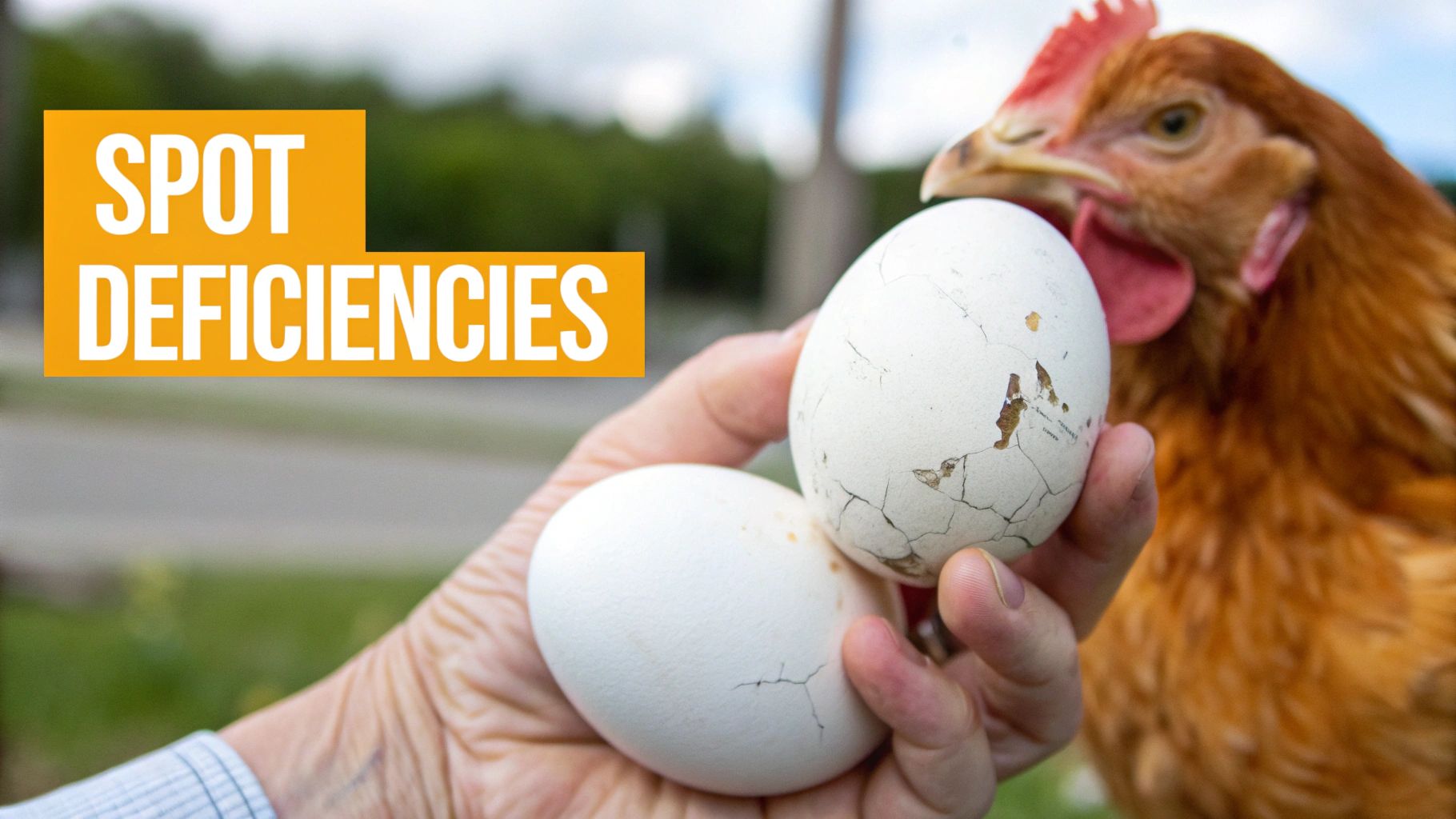
Chickens are masters of hiding when they feel unwell, a survival instinct from their wild ancestors. But one thing they can't hide is the physical evidence of a poor diet. Learning to read these signals is one of the most valuable skills you can have as a flock owner.
Think of yourself as a detective for your flock's health. By keeping a close eye on their eggs, feathers, and behavior, you can catch nutritional gaps early and make simple fixes to get everyone back on track.
Even with a top-notch commercial feed, things can get out of balance. Individual needs, seasonal stress, or just a few too many "junk food" treats can throw things off. Spotting a minor issue today can prevent a major health crisis tomorrow.
Common Signs of a Calcium Deficiency
A weak, rubbery, or soft-shelled egg is the classic, undeniable sign of a calcium shortage. It takes a massive amount of calcium for a hen to form a strong shell every single day. If her diet is lacking, her body will start pulling calcium from her own bones, leading to brittle bones and those disappointing, fragile eggs.
Luckily, this is one of the easiest problems to spot and solve.
- Offer Free-Choice Oyster Shell: Don't mix it into their feed. Keep a separate dish of crushed oyster shell available at all times. This lets each hen take exactly what her body tells her she needs.
- Use High-Calcium Treats: Supplement with calcium-rich goodies like Black Soldier Fly Larvae. They are a far better choice for laying hens than mealworms because their natural calcium-to-phosphorus ratio is ideal for egg production.
Protein and Salt Deficiency Symptoms
Feather-picking and, in severe cases, cannibalism can be shocking to witness. More often than not, these aggressive behaviors are rooted in a simple dietary shortfall. When chickens aren't getting enough protein or salt, they may start pecking at each other in a desperate attempt to find those missing nutrients.
While a complete layer feed should prevent this, sometimes fast-growing pullets or birds going through a heavy molt need an extra boost. Aggressive pecking is a sign that something is fundamentally missing from their diet.
To fix this, first double-check that your birds are on an age-appropriate feed with at least 16% protein. You can also offer high-protein supplements like BSFL to help them through demanding periods like molting. Adding a tiny pinch of mineral salt to their feed can also help curb the pecking.
Decoding Vitamin and Mineral Shortfalls
Beyond the big two—protein and calcium—a lack of specific vitamins and minerals can trigger a whole range of other issues. The signs are often more subtle, but they're just as important for maintaining a truly healthy flock.
Sometimes, a quick-reference chart is the best way to connect the dots between what you're seeing and what your flock might be missing.
Common Nutritional Deficiencies and Their Signs
Here’s a quick troubleshooting table to help you identify and address common nutritional problems in your flock.
| Symptom or Sign | Potential Deficiency | Recommended Solution |
|---|---|---|
| Thin, Weak, or Soft Eggshells | Calcium, Phosphorus, or Vitamin D | Offer free-choice oyster shell and high-calcium treats like BSFL. Ensure access to sunlight for Vitamin D synthesis. |
| Feather-Picking or Cannibalism | Protein or Salt | Verify feed has 16-18% protein. Supplement with BSFL during molting. Add a small amount of mineral salt to the diet. |
| Curled-Toe Paralysis in Chicks | Riboflavin (Vitamin B2) | Add poultry-specific vitamins with Riboflavin to their water source. Nutritional yeast is also a good source. |
| Lethargy and Poor Feather Quality | General Malnutrition or Protein | Review the primary feed to ensure it's a complete, balanced formula. Boost protein with safe supplements. |
| Soft Bones or "Rickets" | Vitamin D or Calcium | This is critical in young, growing birds. Ensure their feed is appropriate and they get adequate, safe sunlight exposure. |
Remember, a high-quality feed is your first line of defense, but keen observation is what allows you to fine-tune your flock’s nutrition for peak health and happiness.
Sourcing High-Quality Feed and Ensuring Its Safety
A healthy diet for your flock starts long before they take their first bite. The foundation is built on the quality and safety of the feed you bring home. Ultimately, your chickens' health—and the quality of their eggs—hinges on sourcing fresh, safe products from brands you can trust.
Think of yourself as the gatekeeper for your flock's nutrition. A little due diligence at the feed store can save you a world of trouble down the line by preventing issues caused by spoiled or contaminated feed.
Decoding the Feed Label
Every bag of feed has a label that's basically its nutritional resume, and learning to read it is a key skill. The most important part is the "guaranteed analysis," which lists the minimum percentages of crude protein and fat and the maximum percentage of fiber. This is your quick check to confirm you’ve grabbed the right formula for your birds' age and purpose.
Beyond the nutrients, always hunt for the manufacturing or expiration date. Chicken feed doesn't last forever, especially formulas containing oils that can go rancid. Fresher is always better for both nutrition and taste.
The Importance of Proper Storage
Once that feed is in your hands, keeping it fresh is your responsibility. Bad storage can ruin a brand-new bag of high-quality feed faster than anything else. Moisture is the ultimate enemy; it invites mold and mycotoxins, which can be devastating to a chicken's health.
The best practice is to store feed in a cool, dry place inside a rodent-proof, airtight container. A classic galvanized metal can with a tight lid works perfectly. It keeps the feed fresh and locks out pests. For a more detailed walkthrough, check out our guide on how to properly store chicken feed.
Rule of thumb: Never, ever use feed that looks clumpy, smells musty, or has any visible mold. Even a small spoiled spot can release invisible toxins that have contaminated the entire bag. When in doubt, throw it out.
Sourcing Safe Supplements and Treats
This same level of care extends to any treats or supplements you offer, especially when it comes to insect-based snacks. Many insect treats are imported from overseas, where safety regulations can be less strict, leaving you to guess what’s really in the bag.
Look for products with a clear and transparent U.S. origin, like Pure Grubs. This ensures the treats were produced in facilities that adhere to strict FDA safety standards and have been tested for things like heavy metals.
This push for quality is a growing movement. In 2023, the North American organic chicken market commanded a dominant 41.6% revenue share, and online sales of specialty feeds are climbing at 15.6% annually. Flock owners are clearly voting with their wallets for premium, trustworthy nutrition.
Finally, remember to think about what your chickens eat when they're out foraging. It's crucial to keep their environment safe from harmful chemicals. You can even find a great non-toxic weed killer recipe to keep your yard safe and chicken-friendly. Careful sourcing and storage truly protect your flock's health from the inside out.
Got Questions About Feeding Your Chickens?
When it comes to feeding your flock, a few common questions always seem to pop up. It doesn't matter if you're a seasoned pro or just starting out—getting the details right is a constant learning process. Let's tackle some of the most frequent queries we hear from fellow chicken keepers.
Think of this as a quick troubleshooting guide to help you dial in your feeding plan and keep your birds happy, healthy, and productive.
How Much Feed Do My Chickens Actually Need Per Day?
On average, a full-sized laying hen will eat about 1/4 pound of feed a day, which comes out to roughly 1/2 a cup. But honestly, that's just a ballpark figure. So many things can change that number: the breed, the bird's size, its age, and even the weather. Chickens will pack away more food in the winter just to stay warm.
The best approach is to let them decide. Keep their main feeder full and available "free-choice," and just top it off daily. Get in the habit of checking on your birds' physical condition. A healthy hen feels solid and well-fleshed, not bony or overly heavy. This way, you're letting their own appetites guide how much you provide.
Are BSFL Treats Really Better Than Mealworms?
For laying hens, the answer is a resounding yes. Black Soldier Fly Larvae (BSFL) are a nutritional powerhouse, packing up to 85% more calcium than mealworms. Even better, they have a near-perfect calcium-to-phosphorus ratio, which is crucial for building strong eggshells.
Mealworms are a great source of protein, but they're incredibly low in calcium. Feeding too many can actually interfere with how your hens absorb the calcium they do get. So while both are tasty protein snacks, BSFL actively support a laying hen’s most important job.
Think of it this way: BSFL are a complete package, delivering both the protein for feather health and the critical calcium for egg production. Mealworms, on the other hand, only deliver half of the equation for a laying hen.
Is It Worth the Effort to Ferment Chicken Feed?
Fermenting your flock's feed can absolutely be a game-changer for their health. The process makes the nutrients in the grain more available, adds beneficial probiotics for a healthy gut, and just makes the feed easier to digest. Many chicken keepers find their flock eats a bit less and wastes less, too.
It's pretty simple to do: just soak their regular feed in non-chlorinated water for a few days in a food-safe bucket, giving it a stir once a day. When it smells tangy and yeasty, like sourdough starter, it's ready. While the benefits are fantastic, it does add an extra step to your daily chores. It’s a great practice if you have the time, but don't feel guilty if you stick with dry feed—your flock can still be perfectly healthy.
Ready to give your flock the ultimate calcium-rich treat? Pure Grubs offers USA-grown Black Soldier Fly Larvae that are lab-tested for purity and packed with the nutrients your laying hens need for stronger eggshells and vibrant health. Shop Pure Grubs today and see the difference quality makes.