

Good Things to Feed Chickens for a Happy, Healthy Flock
So, what are the best things to feed chickens? It all comes down to a balanced commercial feed as the star of the show, with healthy treats like wholesome grains, safe kitchen scraps, and high-protein insects playing a supporting role. This layered approach is the secret to getting all the essential nutrients your flock needs for healthy growth and fantastic egg production.
Building a Balanced Diet for Your Flock
Figuring out what to feed your chickens can feel like a big deal, but it's actually pretty straightforward.
The best way to think about it is like building a pyramid. The largest and most crucial part—the foundation—is a high-quality commercial feed that’s formulated for their specific age. This is the one thing you can't skip. It provides the perfectly balanced protein, vitamins, and minerals they need to truly thrive. Everything else you give them is just a bonus built on top of that solid base.
This graphic gives you a great visual of how a chicken's diet should be prioritized.
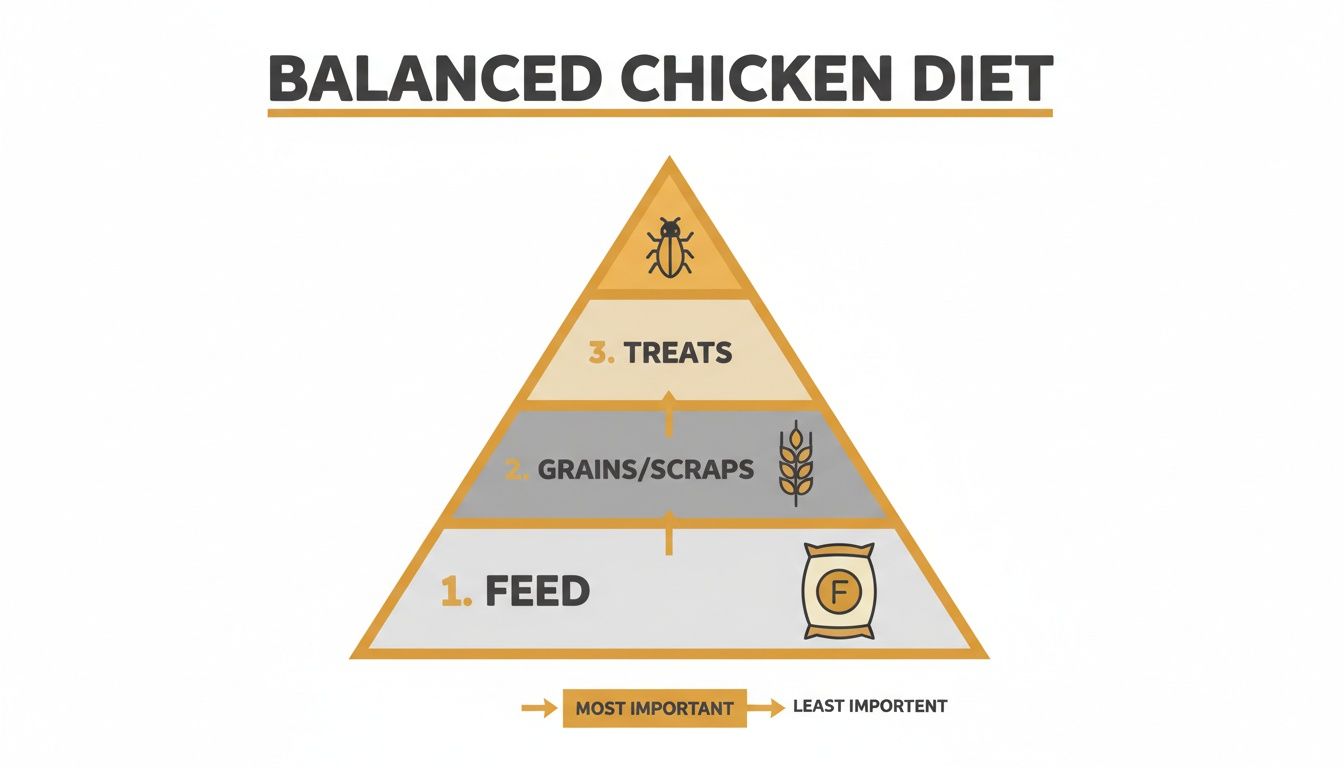
As you can see, the complete feed is the foundation. After that comes moderate amounts of grains and kitchen scraps, with high-value treats like insects used the most sparingly. Sticking to this model helps you avoid the nutritional imbalances that can cause all sorts of health headaches down the road.
To make this even clearer, here’s a quick breakdown of what a well-rounded diet looks like.
Quick Guide to a Balanced Chicken Diet
| Diet Component | Percentage of Diet | Examples |
|---|---|---|
| Complete Feed | 90% | Layer pellets, crumbles, or mash |
| Grains & Greens | 5-8% | Scratch grains, oats, fresh greens (kale, lettuce) |
| Healthy Scraps | 1-2% | Cooked rice, pasta, fruits, vegetables |
| High-Protein Treats | <2% | Black soldier fly larvae, mealworms |
This table really simplifies things, showing how complete feed should always be the main event, with everything else offered in moderation.
The Core Components of Chicken Nutrition
A chicken's dietary needs are surprisingly complex. They need a very specific mix of nutrients to stay healthy, energetic, and productive. Getting a handle on these building blocks will help you make much smarter choices when you're picking out feeds and treats.
Here are the main things they need:
- Protein: This is essential for everything from feather development to egg production. Your laying hens need a feed with about 16-18% protein. We dive deeper into this in our guide to high-protein foods for chickens.
- Carbohydrates: Think of carbs as pure energy. They fuel all those important daily activities, from scratching around the yard to taking a good dust bath.
- Fats: Fats are another concentrated energy source, but they're also vital for absorbing certain vitamins and keeping skin and feathers in top condition.
- Vitamins and Minerals: These are the unsung heroes. Calcium is a big one, crucial for strong eggshells and bones, while a whole host of vitamins keeps their immune systems humming.
A classic mistake new chicken keepers make is giving way too many treats. It's fun to spoil them, I get it! But always remember the 90/10 rule: at least 90% of what they eat each day should be their complete feed. No more than 10% should come from treats.
Why a Balanced Diet Matters Most
If you stray too far from this balanced approach, problems can pop up. For instance, tossing out too many low-protein "filler" treats like scratch grains or bread actually dilutes the carefully balanced nutrients in their main feed. This can lead to issues like poor feather quality, a drop in egg-laying, or even obesity.
On the flip side, a well-structured diet gives you everything you want for your flock: vibrant, shiny feathers, robust immune systems, and a steady supply of delicious, healthy eggs. By starting with a quality feed and supplementing intelligently, you're setting them up for a long, happy, and productive life.
The Foundation of a Healthy Chicken Diet
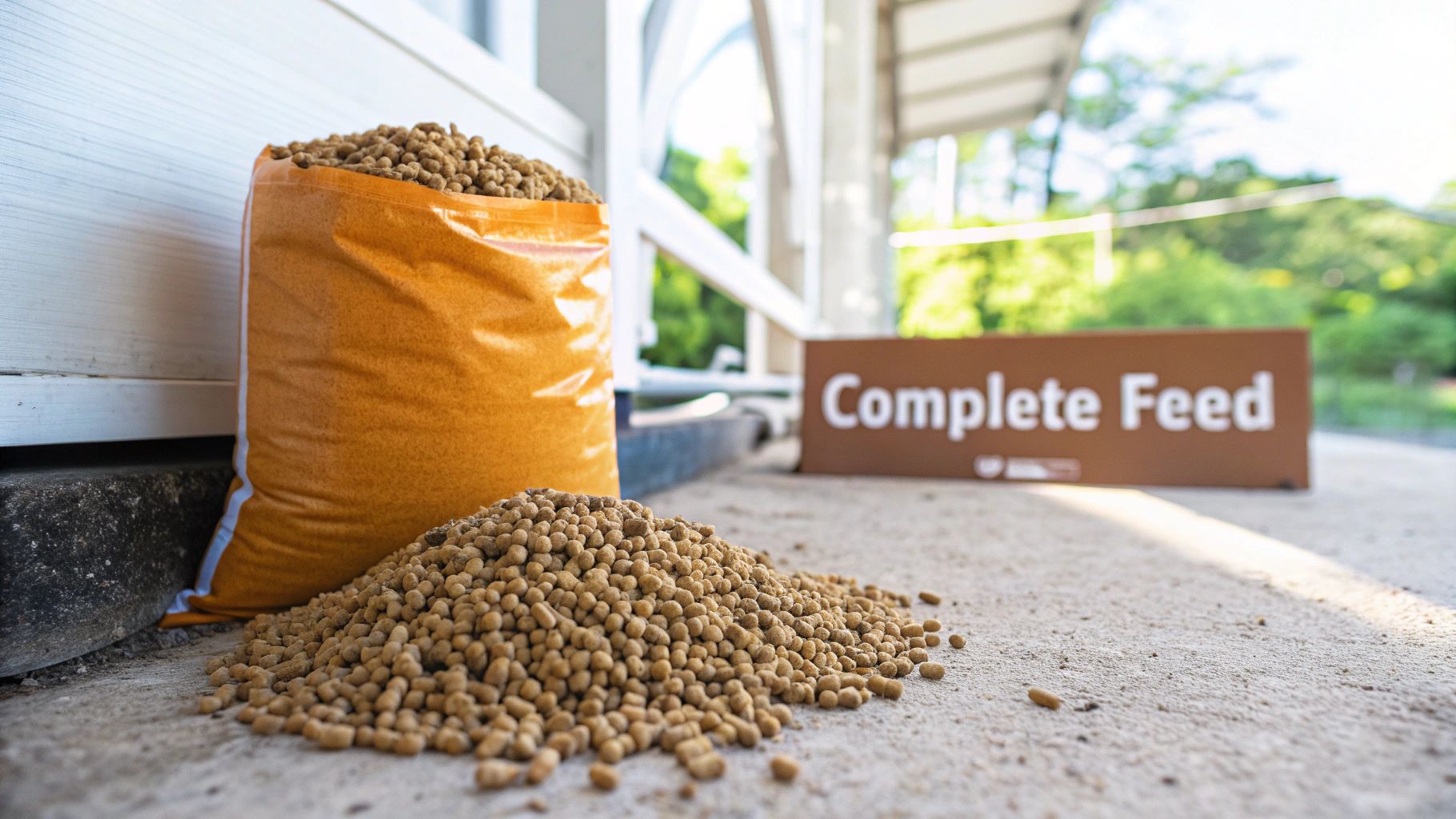
Before we start talking about the fun stuff—like treats and tasty greens—we need to get the most important part of your flock's diet right. I'm talking about a high-quality, complete commercial feed.
Think of it like building a house. You wouldn't hang the curtains before you've poured the concrete and put up the walls. For your chickens, that complete feed is their solid, unshakeable foundation.
This stuff isn't just a random bag of grains. It's a carefully balanced mix of protein, carbs, fats, vitamins, and minerals, all precisely formulated to meet every single one of a chicken's nutritional needs. One of the biggest mistakes I see new chicken keepers make is trying to raise a flock on scratch grains and kitchen scraps alone. That's a fast track to health problems.
There's a reason the poultry nutrition industry is so massive. The global market for poultry feed, including supplemental treats, hit USD 217.91 billion and is expected to climb to USD 293.67 billion by 2033. That number reflects a deep understanding of the need for precise nutrition. You can see more on the global poultry feed market from IMARC Group.
Matching Feed to Your Flock's Life Stage
You wouldn't feed a newborn baby the same thing you'd feed a teenager, right? Chickens are no different. They need different formulas as they grow, and getting the timing right is crucial for their health and development.
Chicken feeds are typically broken down into three main stages:
-
Starter Feed (0-8 weeks): This is the high-octane fuel for baby chicks. It's packed with 20-24% protein to support their explosive growth and comes in a fine "crumble" that's easy for tiny beaks to manage.
-
Grower Feed (8-18 weeks): Once your birds enter their awkward teenage phase (as pullets), their protein needs dip a bit. Grower feed drops to about 16-18% protein and has less calcium than layer feed. This is really important for their development before they start laying.
-
Layer Feed (18+ weeks): As soon as your hens start laying eggs, their bodies need a serious calcium boost to create strong eggshells. Layer feed maintains around 16% protein but is fortified with extra calcium. This is probably one of the most important good things to feed chickens for a steady supply of great eggs.
Getting these transitions right is non-negotiable. Giving a young pullet layer feed too early can lead to kidney damage from the excess calcium. On the flip side, leaving a laying hen on grower feed will result in weak, paper-thin eggshells.
Choosing the Right Feed Texture
Beyond the nutritional formula, you'll notice that feed comes in a few different forms. The nutrition is basically the same across the board, but the texture can make a big difference in how much feed gets wasted. You can dive deeper into the specific ingredients found in quality chicken feed in our detailed guide.
Common Feed Forms
| Feed Type | Description | Best For |
|---|---|---|
| Mash | A loose, finely ground feed, like flour. | Perfect for baby chicks, but it can be very messy with adult birds. |
| Crumbles | Mash that's been pressed into pellets and then broken up. | Great for growing pullets and helps prevent picky eaters from only picking out their favorite bits. |
| Pellets | Mash compressed into uniform, solid nuggets. | The cleanest, least wasteful option for adult birds. Every bite is complete. |
Ultimately, what works best might come down to what your flock prefers and how much mess you're willing to tolerate. For adult laying hens, pellets are usually the way to go. They're efficient and ensure every chicken gets a balanced mouthful every time.
By starting with the correct, high-quality complete feed, you've already taken care of 90% of your flock's nutritional needs. Everything else is just the icing on the cake.
Adding Healthy Treats and Supplements
While a complete, balanced feed is the cornerstone of your flock's diet, think of healthy treats and supplements as the extras that take their nutrition from good to great. These aren't just chicken "junk food." When used correctly, they are fantastic tools for enrichment, busting boredom, and delivering a targeted boost of nutrients that supports vibrant health and top-notch eggs.
But before we dive in, there's one golden rule every chicken keeper needs to know: the 90/10 rule. This is non-negotiable. It means at least 90% of what your flock eats every day must be their complete feed. Treats and other extras should make up no more than 10% of their diet. Going overboard on the goodies can throw their whole nutrition out of whack by diluting the essential vitamins and minerals in their main feed.
Nutrient-Dense Natural Treats
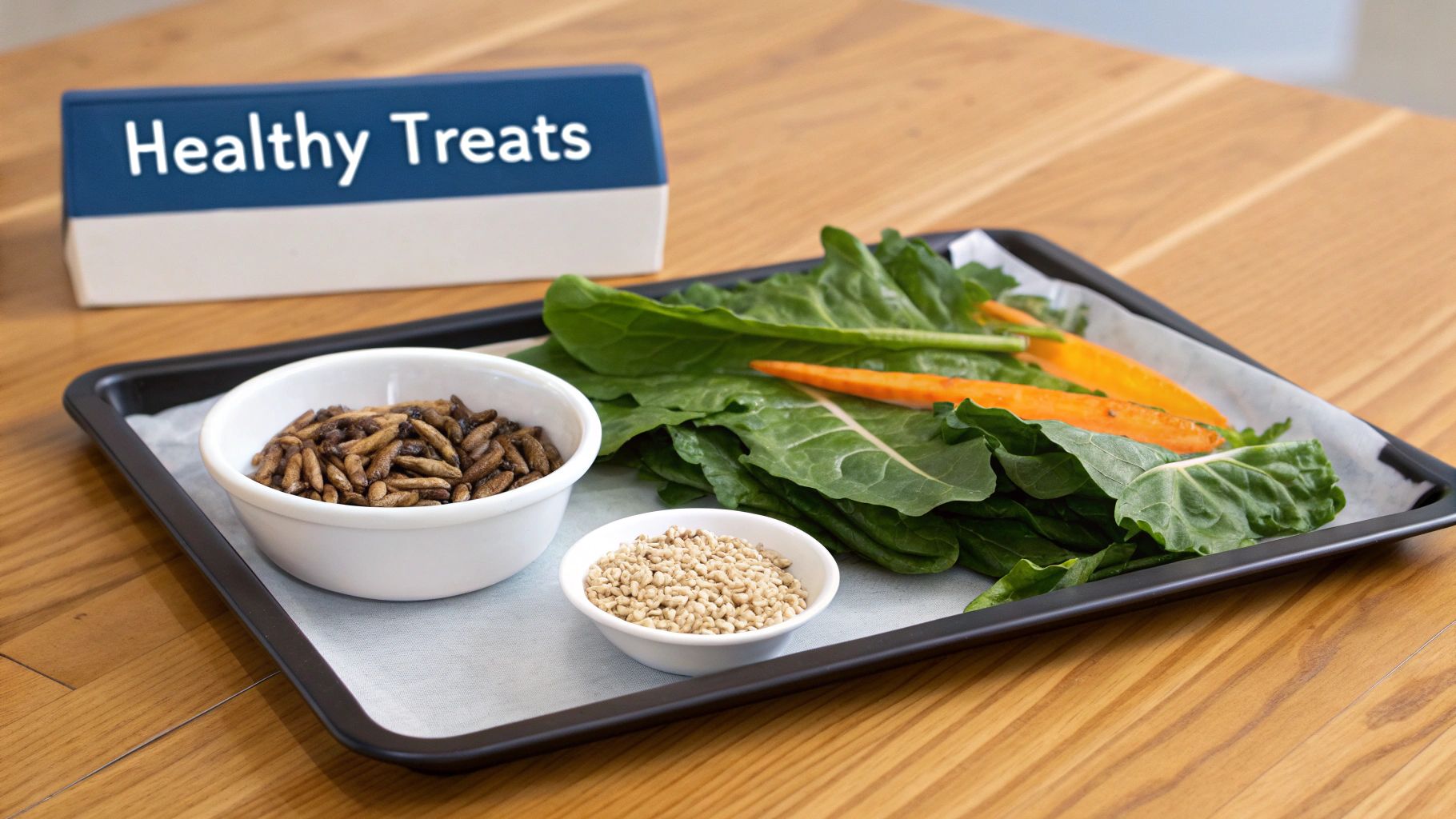
Offering the right kind of treats is a fantastic way to add variety and beneficial vitamins to their diet. Chickens are omnivores and born foragers, so a diverse menu is right up their alley. Tossing out a handful of healthy additions gets them scratching and pecking, which is exactly what they’re built to do.
Some of the best natural treats you can offer include:
- Leafy Greens: Kale, lettuce, and spinach (in moderation) are packed with vitamins. For some real entertainment, try hanging a whole head of cabbage in the run—it’ll keep them busy for hours!
- Garden Veggies: Most vegetables are a huge hit. Leftover pumpkin, squash, cucumbers, and broccoli are all fantastic sources of vitamins and fiber.
- Whole Grains: Scratch grains, oats, and cracked corn provide a great energy boost, especially when the weather turns cold. Scatter them on the ground to encourage that natural scratching instinct.
- Fruits: Chickens go wild for berries, melons, and apples (just be sure to remove the seeds). These are wonderfully hydrating treats, perfect for a hot summer day.
A quick pro-tip: always offer treats in the afternoon. This ensures your flock has already filled up on their essential layer feed for the day, getting their core nutrition in first. Think of treats as a healthy dessert, not the main course.
Introducing a Superior Treat: Black Soldier Fly Larvae
While garden scraps and grains are great, some treats pack a much bigger nutritional punch. Insects, for example, are what chickens would naturally hunt for in the wild, and they are a phenomenal source of high-quality protein.
This is where Black Soldier Fly Larvae (BSFL) come in. These aren't just another bug; they are a nutritional powerhouse, especially for laying hens. They stand out from other common treats for a few very important reasons that we'll get into.
You can think of BSFL as a chicken superfood. They offer a dense source of protein, which is vital for feather growth and egg production. But their real claim to fame is their incredibly high calcium content. This makes them one of the most effective and natural ways to support strong, healthy eggshells.
The Importance of High-Quality Protein and Calcium
Protein is literally the building block of your chicken's body. During stressful periods like the annual molt—when they regrow all their feathers—a protein boost can make a huge difference in their health and recovery speed. And think about it: a hen uses a tremendous amount of protein and calcium to form and lay an egg nearly every single day.
If their diet comes up short, their bodies will start pulling those nutrients from their own reserves, which can lead to weak bones and poor health. By providing a treat that’s rich in both protein and calcium, you help them replenish their stores and support consistent, high-quality egg production without taking a toll on their own bodies.
By thoughtfully adding treats like fresh greens and high-value supplements like BSFL, you’re doing more than just feeding your flock. You are actively enriching their lives, encouraging their natural instincts, and fine-tuning their nutrition for peak wellness. It's a simple step that turns your feeding routine into a holistic health strategy.
Why BSFL Are a Superior Protein-Packed Treat
When you're looking for good things to feed your chickens, you quickly learn that not all treats are created equal. While grains and greens are great for adding variety, some supplements are more like a superfood, packing a serious nutritional punch right where your flock needs it most. Black Soldier Fly Larvae, or BSFL, definitely fall into that superfood category. They're a powerhouse of protein and, even more importantly, calcium.
Think of it like this: if your flock's complete feed is their daily multivitamin, BSFL are a specialized calcium and protein boost. They directly support the most demanding jobs a chicken has—laying eggs and growing strong feathers.
The Critical Calcium Advantage
For a laying hen, calcium is everything. Her body needs a massive amount of it to form a strong, solid eggshell every 24 to 26 hours. If her diet comes up short, her body will start pulling that calcium straight from her own bones. This can lead to all sorts of health problems and the classic, frustrating issue of soft, brittle, or thin-shelled eggs.
This is where you see the huge difference between BSFL and other popular insect treats, like mealworms. While both offer a nice protein kick, their calcium levels are worlds apart.
BSFL are naturally loaded with calcium, containing up to 50 times more of this vital mineral than mealworms. This isn't just a small difference; it's an absolute game-changer for supporting consistent, top-quality egg production.
By tossing your flock a treat that’s naturally high in bioavailable calcium, you’re directly reinforcing their eggshell quality and supporting their long-term skeletal health. It makes BSFL a far more functional and beneficial treat, especially for a hard-working flock of layers.
BSFL vs Mealworms A Nutrient Showdown
When you put these two popular treats side-by-side, the nutritional winner for laying hens becomes obvious. BSFL offer a much more complete package.
| Nutrient | Pure Grubs BSFL | Typical Mealworms |
|---|---|---|
| Protein | High (Supports feather growth & vitality) | High (Good for protein but lacks other key benefits) |
| Calcium | Exceptionally High | Very Low |
| Calcium-to-Phosphorus Ratio | Near-perfect (Ideal for absorption) | Poor (Can hinder calcium absorption) |
As you can see, the superiority of BSFL goes beyond just the raw amount of calcium. They also have a naturally balanced calcium-to-phosphorus ratio, which is critical for how well a chicken’s body can actually absorb and use the calcium it consumes. Mealworms, on the other hand, have a poor ratio that can actually get in the way of calcium uptake. You can learn more about how dried black soldier fly larvae benefit your flock right here on our blog.
Safety and Quality You Can Trust
Where your flock's treats come from matters just as much as what's in them. Choosing USA-grown BSFL from a trusted supplier ensures the product is clean and meets strict safety standards. For example, Pure Grubs are rigorously tested for heavy metals like lead, arsenic, and mercury. This gives you peace of mind that you aren't accidentally introducing anything harmful into your chickens' diet or their eggs.
This focus on quality is part of a much bigger picture. The global poultry feed market is expected to reach USD 364 billion by 2035, which shows just how much demand there is for high-nutrition, reliable feed options. Treats like BSFL, which can offer 85% more calcium than competitors, are a perfect fit for this growing need to support healthy, productive hens.
Ultimately, adding BSFL to your flock's treat routine is one of the smartest and easiest ways to elevate their diet. It’s a simple addition that encourages their natural foraging instincts, provides essential protein for beautiful, robust feathering, and delivers that unmatched calcium boost needed for perfect eggs. Without a doubt, they are one of the very best things you can feed your chickens.
Sharing Your Kitchen Scraps: A Guide to Safe Chicken Treats
One of the real joys of keeping chickens is sharing leftovers from your kitchen. It feels great to cut down on food waste, give your flock some exciting variety, and it's a simple way to build a bond with your birds. But here's the thing: not all human food is good for chickens. Knowing the difference between a healthy treat and a real danger is absolutely critical.
I like to think of it with a simple traffic light analogy. Some foods are a definite "green light"—go for it. Others are a hard "red light"—stop, and never feed them to your flock. Keeping this in mind makes it so much easier to decide what to toss out to them from your day's cooking.
Green Light Goodies: The Best Scraps to Share
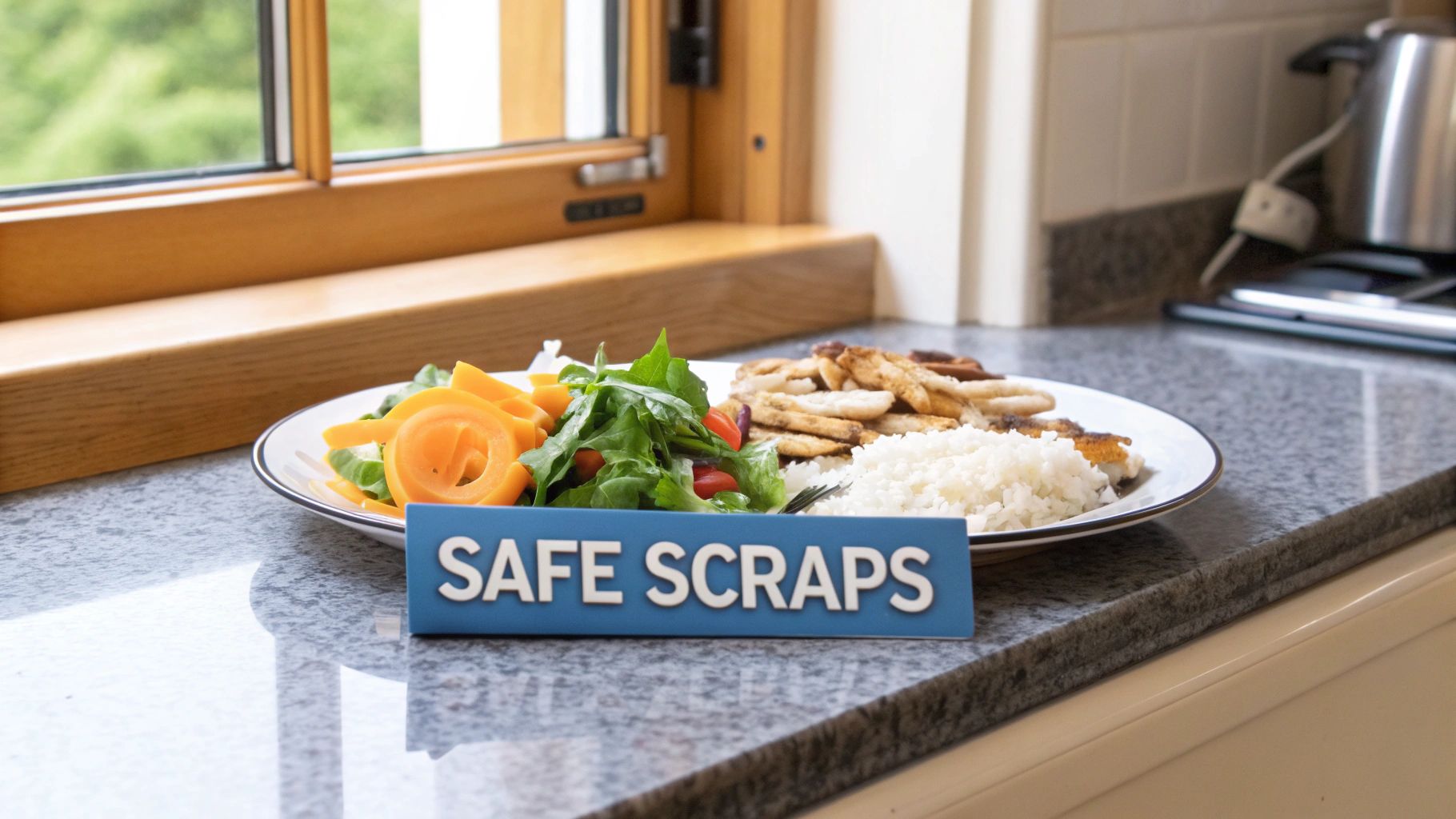
Most fruits and veggies are a huge hit with chickens and give them a fantastic boost of vitamins and minerals. Leftover cooked grains and pastas are also great for a bit of extra energy. The trick is always moderation and making sure the food is plain and unprocessed.
Your flock will go wild for these safe and healthy options:
- Veggie Peels and Ends: Think carrot peels, the ends of cucumbers, and tough broccoli stalks. Chickens have a blast tearing into these fibrous snacks.
- Leafy Greens: Got some leftover lettuce, kale, or spinach from a salad? As long as there's no dressing on it, they'll gobble it up.
- Cooked Grains: Plain cooked rice, pasta, or oatmeal are easy on their digestive system and offer a nice little carbohydrate kick.
- Most Fruits: Berries, melon rinds, and bananas are sweet treats they'll absolutely love. Just don't overdo it with fruit because of the high sugar content.
- Unseasoned Cooked Meats: A few scraps of plain, cooked meat or fish can provide a welcome protein supplement.
Stick to these kinds of wholesome, simple scraps, and you’ll be providing enrichment and good nutrition without any of the risks. It’s a win-win for everyone.
Red Light Dangers: Foods to Avoid at All Costs
Just as some foods are beneficial, others can be downright toxic or cause severe digestive problems. If you do nothing else, commit this "red light" list to memory. It's one of the most important things you can do for your chickens' health. These foods should never end up in their feeder.
A common mistake is thinking that if a food is safe for us, it must be safe for our chickens. That's just not true. A chicken's digestive system works very differently, and some of our everyday foods contain compounds that are poisonous to them.
Keep this list of no-go items far away from your flock:
- Avocado (Skin and Pit): These parts of the avocado contain a toxin called persin, which can be fatal to birds.
- Uncooked Beans: Raw or dried beans contain a highly toxic compound called phytohaemagglutinin. Once they're thoroughly cooked, beans are perfectly fine.
- Onions and Garlic (in large amounts): These contain thiosulphate, which can destroy red blood cells and lead to anemia or even jaundice. A tiny sprinkle of garlic powder in a large feed mix is okay, but whole cloves or onions are a definite no.
- Moldy or Rotten Food: This one’s simple: if you wouldn't eat it, don't feed it to your chickens. Mold can produce mycotoxins that can make your flock incredibly sick.
- Chocolate or Sugary Junk Food: These offer zero nutritional value and can cause serious digestive upset or worse.
By sticking to this straightforward green-light, red-light system, you can share your kitchen's bounty with confidence. You’ll cut down on waste, treat your chickens to something delicious, and most importantly, you’ll keep them safe, healthy, and happy.
Adjusting Your Flock's Diet Through the Seasons
A chicken's dietary needs aren't set in stone; they flow and change with the calendar. Just like we find ourselves craving a hearty stew in winter and a cool salad in summer, our flocks also need their diets tweaked to get through the year. The best way to keep them healthy and comfortable is to think like a seasonal chef for your birds.
This doesn't mean you need to reinvent their entire meal plan every few months. Far from it. Their complete layer feed should always be the foundation. We're talking about making smart, subtle adjustments to that 10% of their diet that comes from treats and supplements.
Winter Wellness: Fueling for Warmth
When the temperature drops, a chicken’s body goes into overdrive just to stay warm. That process burns a ton of calories. You can give them a helping hand by offering some energy-dense treats, especially in the late afternoon before they head to roost.
- Cracked Corn: A classic winter warmer for a reason. Corn is high in carbohydrates, which are digested slowly and generate metabolic heat through the long, cold night.
- Scratch Grains: Tossing a mix of grains into their bedding gets them moving and foraging, which is a great way to generate body heat.
- Suet Cakes: A high-fat suet block gives them a rich energy source they can nibble on all day long.
Think of these treats as extra logs for their internal furnace. A small handful gives them the fuel they need to weather the cold.
Summer Support: Staying Cool and Hydrated
Summer presents the opposite problem: heat stress. A hot bird is often a bird with a poor appetite, which makes every bite they do take that much more important. The goal is to pack in hydration and nutrients.
During extreme heat, a chicken's primary goal is to stay cool. Providing water-rich treats is one of the most effective ways to support them, as it helps replenish fluids lost through panting and prevents dangerous dehydration.
- Watermelon and Cucumber: These are made of over 90% water. You really can't find a more perfect hydrating snack for a scorching day.
- Frozen Berries: A few frozen blueberries or strawberries tossed into the run are a welcome relief—a cool, tasty, and vitamin-packed treat.
- Chilled Greens: A crisp head of lettuce or some kale straight from the fridge provides both moisture and key nutrients.
Autumn and Spring: Protein for Renewal
Fall is molting season, and it's a huge physical ordeal for a chicken. They lose and regrow their entire coat of feathers, which happen to be made of about 85% protein. As you can imagine, their need for protein goes through the roof. Spring brings its own demands with a natural increase in egg production, another process that requires a protein bump.
This is the perfect time to bring in the high-protein supplements. A daily scoop of Black Soldier Fly Larvae can make a world of difference, giving their bodies the building blocks needed for strong feather regrowth and supporting the demands of peak egg-laying. By tuning their diet to the seasons, you're giving them exactly what they need, right when they need it most.
Common Questions About Feeding Chickens
Even with the best-laid plans, raising chickens always comes with questions. When it comes to feeding, getting good answers is crucial for your confidence and your flock’s health. Let’s walk through some of the most common questions I hear from fellow chicken keepers.
Think of this as your go-to source for troubleshooting those little feeding mysteries that pop up in every backyard coop.
How Often Should I Give My Chickens Treats?
The golden rule here is the 90/10 rule. It’s simple: treats should never make up more than 10% of your flock's daily food intake. For an average chicken, that comes out to about a small handful of goodies per bird each day.
I always recommend giving treats in the afternoon. That way, you know they've already filled up on their main, nutritionally-complete feed. Giving them too many treats—even the healthy kind—can throw their diet out of whack and lead to health problems down the road.
Can Chickens Live on Scratch Grains Alone?
No, absolutely not. Chickens go wild for scratch grains, but it’s basically chicken candy. Scratch is full of carbs for a quick energy jolt, but it’s seriously lacking in the protein, vitamins, and minerals they need to be healthy.
Trying to raise a flock on scratch grains alone is a recipe for disaster. You'll quickly see nutritional deficiencies, poor feather quality, and a big drop in egg production. Save scratch for a special treat to encourage foraging or as a high-energy snack during cold snaps, but never let it replace their complete feed.
A balanced chicken feed is a carefully crafted formula. Feeding a flock only on scratch grains is like trying to build a house with nothing but sand—you’re missing all the key ingredients that hold everything together.
Is Free-Ranging Enough to Feed My Chickens?
Free-ranging is wonderful for chickens. It keeps them happy, active, and lets them munch on a natural buffet of insects, seeds, and fresh greens. However, it's very rare for a backyard environment to provide everything they need nutritionally.
The quality of your pasture changes with the seasons, and you can never be certain your birds are finding a perfectly balanced meal. To keep your hens healthy and laying consistently, always provide free access to a complete layer feed. This ensures they can top up on guaranteed nutrition whenever their foraging comes up short.
What Causes Thin or Weak Eggshells?
Nine times out of ten, thin, weak, or rubbery eggshells point directly to a calcium deficiency. A laying hen’s body is a little factory, and it needs a huge amount of calcium to produce a strong eggshell every single day.
First, double-check that you're using a high-quality layer feed that's already fortified with calcium. Then, offer a separate dish of crushed oyster shells so they can take what they need, when they need it. Adding a high-calcium treat like Black Soldier Fly Larvae is another fantastic way to help, as it provides a natural, easily absorbed form of calcium that goes right into building stronger shells.
For a treat that takes the guesswork out of providing essential calcium and protein, trust Pure Grubs. Our USA-grown Black Soldier Fly Larvae are a safe, natural, and highly effective way to support stronger eggshells and vibrant flock health. Explore our premium chicken treats at https://puregrubs.com.