

A Guide to the Best Good Foods for Chickens
When it comes to feeding chickens, the best place to start is with a complete commercial feed. This provides the balanced nutrition they absolutely need to thrive. Think of it as their main course, delivering all the essential protein, vitamins, and minerals.
Everything else—kitchen scraps, greens, grains—are the healthy side dishes. This balanced approach is the real secret to a happy, healthy flock.
The Best Foods for a Healthy Chicken Flock
Figuring out a chicken's ideal diet is a lot less complicated than you might think. Imagine you're building a house. You need a solid foundation, right? You can't just throw some bricks and wood together and hope for the best. A chicken's diet is the same—it needs a few core components working in harmony to build a healthy bird that lays great eggs.
That solid foundation is always a commercially prepared complete feed. This isn't just a random bag of grains. It's a blend that's been carefully formulated by animal nutritionists to meet a chicken's exact needs at every stage of its life.
These feeds give them the right ratio of protein for growth and egg-laying, carbs for energy, and all the vitamins and minerals they need to stay healthy. Trying to create this perfect balance yourself with just kitchen scraps is nearly impossible and often leads to serious nutritional problems.
Core Nutritional Pillars
A complete feed is built around a few non-negotiable nutritional pillars that your flock absolutely depends on.
- Energy: This is the fuel that keeps them going. Sourced mainly from grains like corn and wheat, carbohydrates give chickens the energy for all their daily activities, from scratching and foraging to simply staying warm.
- Protein: Absolutely essential for muscle development, feather growth, and, of course, egg production. Quality feeds use sources like soybean meal to ensure your birds get the protein they need.
- Calcium: This mineral is the MVP of eggshell production. A lack of calcium is the #1 cause of those dreaded soft-shelled or shell-less eggs.
- Vitamins and Minerals: A whole host of micronutrients work behind the scenes to support a strong immune system, healthy bones, and proper metabolic function, keeping your flock resilient and strong.
To help you keep track, here’s a quick breakdown of what your chickens need and where they get it from.
Quick Guide to Essential Chicken Nutrients
| Nutrient Type | Primary Role in Flock Health | Common Food Sources |
|---|---|---|
| Protein | Crucial for growth, feather production, and laying eggs. | Complete feed (soybean meal), insects (BSFL), seeds, legumes. |
| Carbohydrates | The main energy source for daily activities and warmth. | Grains (corn, wheat, oats), complete feed. |
| Calcium | Essential for strong eggshells and bone health. | Complete layer feed, oyster shell, crushed eggshells. |
| Vitamins & Minerals | Supports immune function, metabolism, and overall wellness. | Complete feed, leafy greens, vegetables, fruits. |
This table gives you a great starting point for understanding the "what" and "why" behind a balanced chicken diet.
The visual below ties it all together, showing how a complete feed is the central hub for delivering these core nutritional needs.
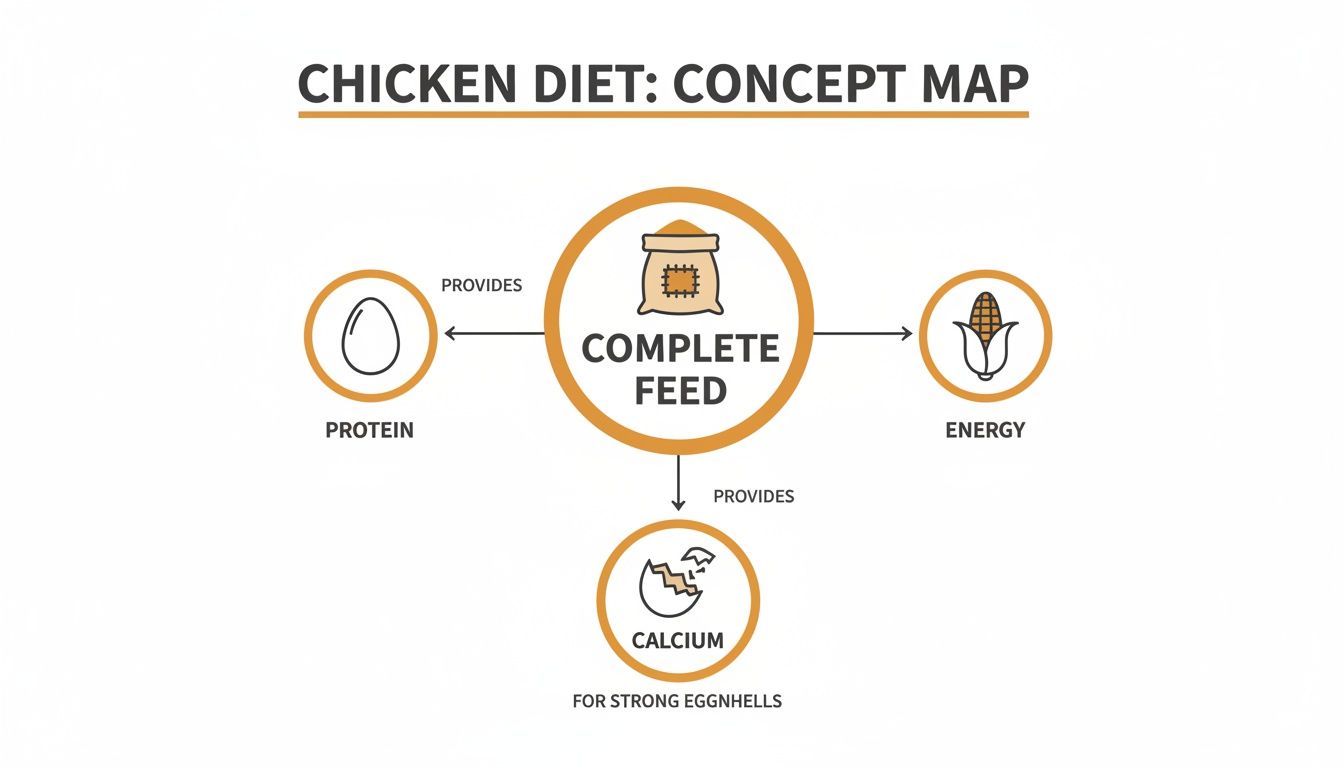
As you can see, a complete feed is the foundation. It branches out to provide the specific building blocks for energy, protein, and strong eggshells. Everything else you feed your flock, from garden greens to protein-rich grubs, should be treated as a supplement to this essential base, never a replacement.
Grains and Carbs: The Fuel for Your Flock
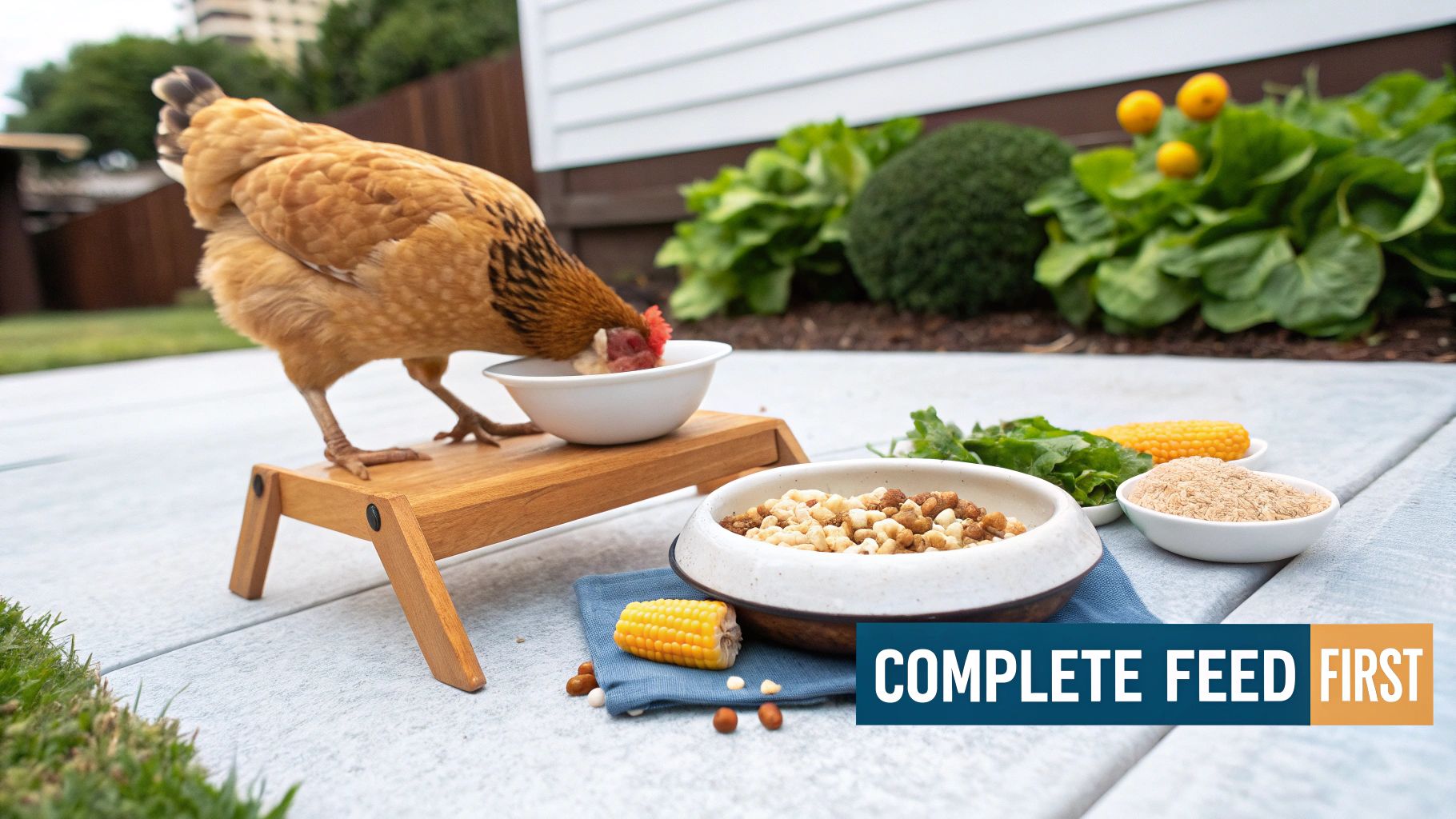
If you think of your flock's diet as a car engine, grains are the high-octane fuel that makes it run. They provide the essential carbohydrates that power everything a chicken does, from scratching in the yard to laying that perfect morning egg. Without a steady supply of this energy, you'll see a quick drop in their activity, health, and, of course, egg production.
This is exactly why grains are the undisputed foundation of any quality chicken feed. They deliver the raw energy needed for growth, staying warm, and all the biological processes that keep a chicken clucking along happily.
Corn: The King of Carbs
When you look at the ingredients list on most chicken feeds, corn is almost always at the top, and for good reason. It’s packed with energy and is incredibly easy for chickens to digest, making it an ideal fuel source. Its dominance isn't just a trend; it's a proven powerhouse for supporting healthy growth in meat birds and consistent laying in hens.
The global poultry feed market, which was valued at USD 260.0 billion back in 2025, leans heavily on this one grain. In fact, corn holds a commanding 43.0% market share in the industry, a clear sign of its vital role in poultry nutrition. This widespread use is a testament to its effectiveness, as you can see from data on the global poultry feed market.
Grains aren't just filler; they are the fundamental energy source that makes everything else possible. A diet lacking in quality carbohydrates is like trying to run a car on an empty tank—it simply won't get very far.
But while corn might wear the crown, it’s not the only grain that belongs in the royal court. A little variety goes a long way.
Beyond Corn: Building a Diverse Granary
Mixing up the grain sources in your flock's diet is a great strategy. Different grains bring different nutrients to the table, and this variety can improve the overall nutritional profile of their food. It also keeps things interesting for them, which encourages good eating habits.
Here are a few other excellent grains to look for in a feed or offer as occasional treats:
- Wheat: A fantastic source of both energy and protein, wheat is a go-to ingredient in many layer feeds. Its well-rounded profile supports both daily activity and reliable egg-laying.
- Oats: If you want to give your flock a boost, especially in the colder months, oats are your friend. They’re higher in fiber and protein, which helps with digestion and provides extra fuel for staying warm.
- Barley: While it doesn't pack quite the same energy punch as corn, barley is a hardy grain rich in fiber. It’s a great alternative that adds dietary variety and supports a healthy gut.
How to Serve Grains the Right Way
It’s not just what you feed, but how you feed it. The form of the grain can make a huge difference in how easily your chickens can digest and use its nutrients.
For instance, mature hens will happily gobble up whole grains, which also encourages them to forage. But for younger birds, processing the grains first is a much better approach.
Think about these common preparation methods:
- Cracked Grains: Breaking whole kernels into smaller bits—like with the classic cracked corn—makes them much easier for chickens of all sizes to handle. This is especially helpful for smaller bantam breeds or growing pullets.
- Whole Grains: Tossing whole grains like wheat or oats into the run as a "scratch" mix is a brilliant way to encourage natural foraging. It gets them moving, scratching, and pecking, which is great for their physical and mental health.
- Fermented Grains: This one sounds fancy, but it's simple! Soaking grains in water for a few days kicks off a fermentation process that unlocks some amazing benefits. It creates natural probiotics for better gut health and makes the nutrients in the grain much easier for your flock to absorb.
Building Blocks: Why Protein is King for Growth and Eggs
If you think of grains as the high-octane fuel for your flock, protein is the essential building material for just about everything else. It's the lumber, concrete, and steel of the chicken world.
This nutrient is absolutely fundamental for muscle development, healthy feather growth, and—what most of us are after—a steady supply of fantastic eggs.
Without enough quality protein, your chickens just can't build or maintain their bodies properly. You'll start to see it in their growth, their feathers after a molt, or in a frustratingly empty nesting box. For a thriving flock, getting the protein right is non-negotiable.
The Powerhouse Protein Sources
Peek at the ingredients on any bag of commercial chicken feed, and you'll almost certainly see soybean meal near the top. It's a true powerhouse and one of the top good foods for chickens because it’s loaded with the amino acids they need for strong bodies and great eggs. In fact, oilseed meals like soy often make up a whopping 25-30% of a commercial chicken's diet, which tells you just how vital it is. You can get more nerdy details on this from the global poultry feed market and its key ingredients.
But soy is just the beginning. Giving your flock a mix of protein sources introduces different nutritional profiles and keeps things interesting for them.
Some other fantastic protein options include:
- Fish Meal: This stuff is incredibly rich in both protein and omega-3 fatty acids. It's a premium ingredient that really supports overall health and boosts egg quality.
- Peas and Legumes: Plant-based goodies like field peas offer a solid protein kick and are often mixed into feeds to complement the soybean meal.
- Insects: Let's be real—chickens are born bug-hunters. High-quality insect treats tap into their natural instincts and provide a protein source they absolutely love.
Plant-Based vs. Animal-Based Proteins
Not all protein is created equal. It comes from both plants and animals, and each type brings something different to the table.
Plant-based proteins, like those from soy and peas, are the reliable foundation of most commercial feeds. They're affordable, easy to find, and provide a great amino acid profile for a chicken's day-to-day needs.
Animal-based proteins, like fish meal or insects, often pack a more concentrated, easily digestible punch. Take Black Soldier Fly Larvae (BSFL), for example. They're not only bursting with protein but also deliver a healthy dose of calcium—a two-for-one benefit you just don't get from plants. Understanding this difference helps you pick the right supplements for your flock. For a deeper look at this, check out our guide on high-protein foods for chickens.
A chicken's protein needs aren't static; they spike during certain times. When a hen is going through a molt, she has to regrow thousands of feathers, which are made of about 85% protein. Her demand for it goes through the roof.
This is exactly why you need to know when your flock might need an extra boost.
Spotting the Signs of Protein Deficiency
Your chickens will usually give you clues when their diet is lacking. If you learn to spot them, you can step in before a small issue turns into a real problem.
Keep an eye out for these tell-tale signs:
- Fewer Eggs: A sudden drop in egg-laying is one of the first and most obvious signs. Making an egg every day is hard work, and it requires a ton of protein.
- Poor Feather Condition: Outside of a normal molt, if you see feathers that look ragged, brittle, or just aren't growing back well, it could be a cry for more protein.
- Lethargy and Weight Loss: A chicken running low on protein might seem less active and may struggle to keep on a healthy weight.
During demanding times like the peak of laying season or the annual molt, adding a high-protein treat to their diet is one of the best things you can do. It gives them all the raw materials they need to stay strong, healthy, and productive.
5. Vitamins and Minerals from Greens and Supplements
While a good-quality feed is the cornerstone of your flock's diet, think of vitamins and minerals as the fine-tuning that keeps their bodies in peak condition. They're like the spark plugs in an engine—small but absolutely essential for everything from a strong immune system to perfect egg production.
Your chickens are natural foragers, and for good reason! Many of these crucial micronutrients are found in the plants growing right in your backyard. When your flock is busy pecking at kale or chasing down a dandelion green, they aren't just having fun; they're instinctively supplementing their diet with nature's own multivitamins.
The Power of Leafy Greens
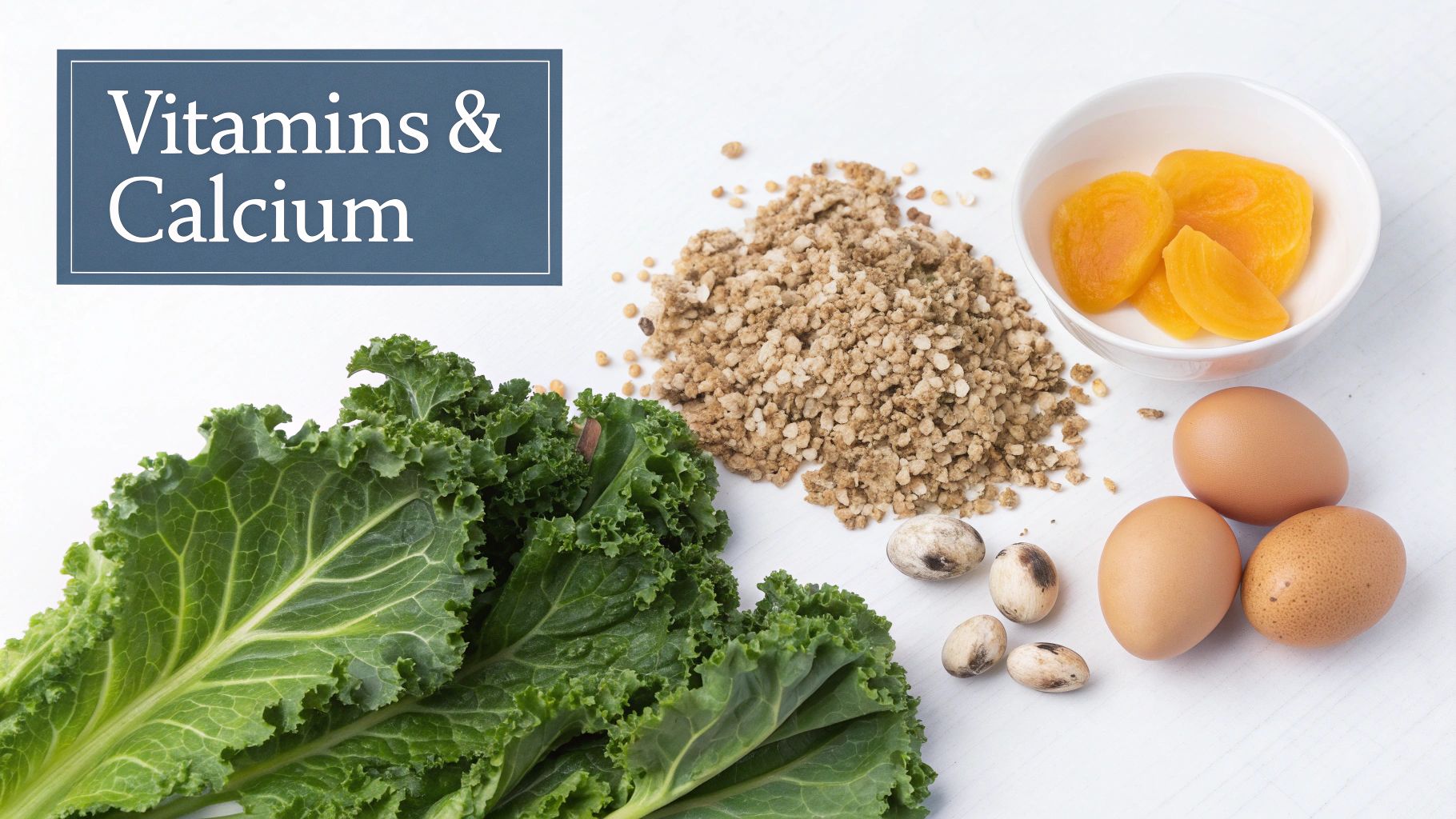
Chickens have a natural craving for dark leafy greens, and it’s no wonder why. These plants are absolutely loaded with vitamins like A, K, and E, along with minerals that support everything from healthy blood clotting to sharp vision.
Even common plants you might consider "weeds" can be a nutritional goldmine. Dandelions, for instance, are packed with vitamins and minerals, and chickens go crazy for their slightly bitter taste.
Here are a few safe, nutrient-rich greens you can offer your flock:
- Kale and Collards: These are incredibly tough plants, easy to grow, and full of vitamins. Try hanging a bunch in the coop—it provides both entertainment and a healthy snack.
- Lettuces (in moderation): Stick to darker varieties like romaine, which offer more nutrients than iceberg lettuce (it's mostly water). They're a great way to provide a little extra hydration on a hot day.
- Herbs: Plants like mint, oregano, and parsley are more than just a tasty treat. They contain natural compounds that can help support your flock's respiratory and immune health.
Just like a colorful salad is good for us, a diverse mix of greens is great for chickens. This variety helps ensure they get a wide spectrum of micronutrients that their grain-based feed might not fully cover on its own.
While greens provide a fantastic vitamin boost, there's one mineral that's so critical for laying hens that it often needs its own special attention.
Calcium for Strong Bones and Eggshells
For a laying hen, calcium is without a doubt the most important mineral in her diet. It's the primary building block of an eggshell. If she doesn't get enough, her body will start pulling calcium from her own bones to make shells, which can lead to brittle bones and those dreaded soft, rubbery eggs.
A high-quality layer feed is formulated with a good amount of calcium, but a hard-working hen's demand is so high that providing a "free-choice" supplement is non-negotiable. This is where crushed oyster shell comes in.
The key is to offer it in a separate dish, never mixed into their main feed. This simple step allows each hen to self-regulate, taking exactly what her body needs, right when she needs it. A hen getting ready to lay an egg will instinctively eat more, while a rooster or a non-laying pullet will simply ignore it.
For a deeper dive into this crucial nutrient, check out our guide on choosing the best calcium supplement for chickens. Remember, strong eggshells start with smart supplementation, and letting your hens control their own intake is the best strategy for supporting their long-term health.
Healthy Treats and Kitchen Scraps
Let's be honest, tossing treats to your flock is one of the best parts of having chickens. Who doesn't love seeing them come running? But when we're handing out goodies, we have to think more like a flock nutritionist and less like a doting grandparent with a pocket full of candy.
The most important guideline to remember is the 90/10 rule. It's simple: 90% of what your chickens eat every day should be their complete, balanced feed. The other 10% can be fun stuff like treats and scraps.
Sticking to this ratio is the secret to a healthy flock. It ensures they get the core vitamins and minerals they need from their main feed without getting loaded up on what is essentially chicken junk food. Giving them too many treats, even healthy ones, can throw their whole diet out of whack and lead to health issues down the road.
Safe Kitchen Scraps for Your Flock
Good news! A lot of the healthy food you're already eating makes fantastic treats for your chickens. Sharing leftovers is a great way to cut down on food waste while giving your birds some exciting new flavors. Since they're natural omnivores, they truly appreciate the variety.
Here are a few kitchen scraps that are always a hit:
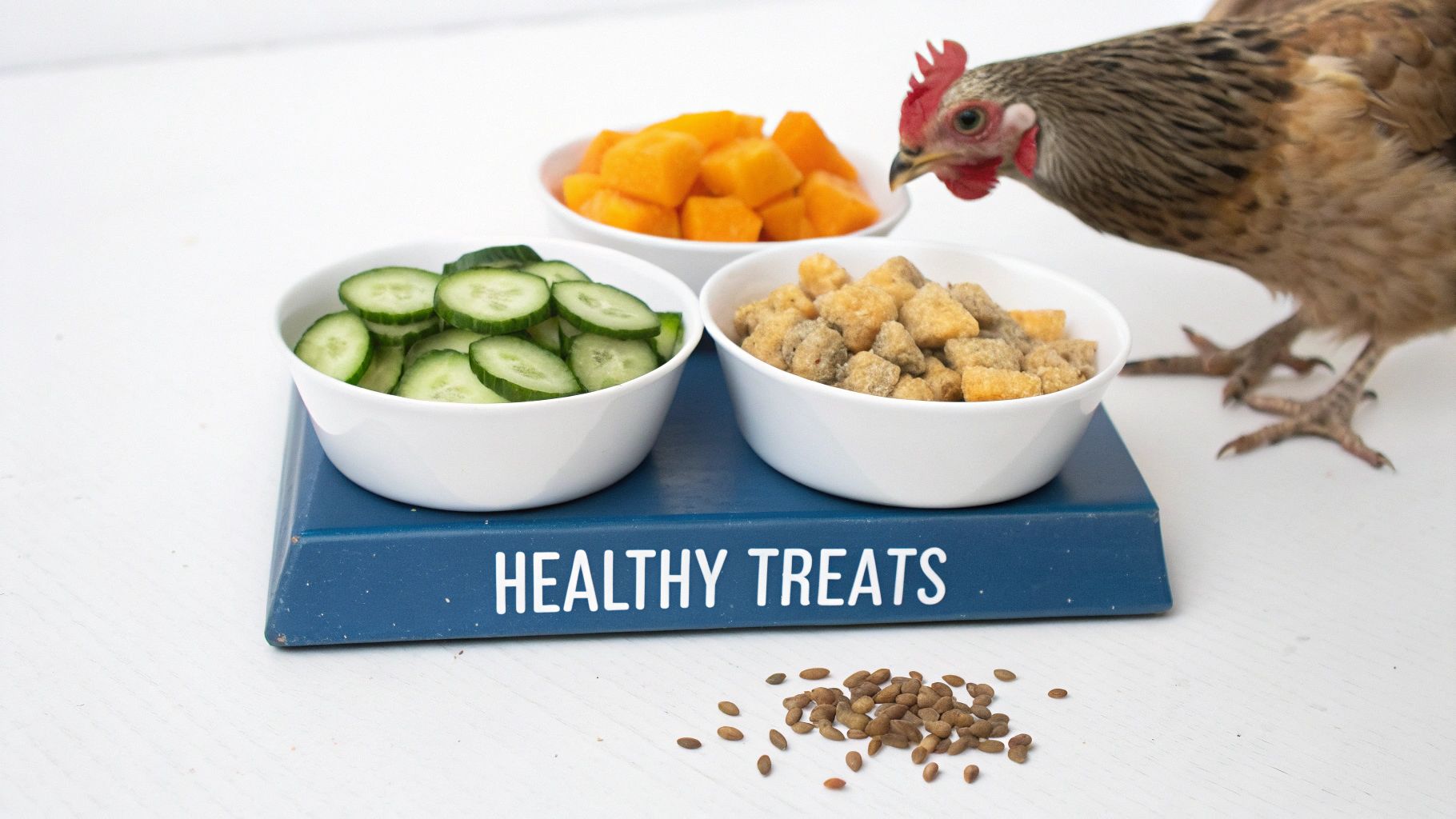
- Vegetables: Think leafy greens, carrot peelings, cucumber ends, and even cooked broccoli. They go absolutely bonkers for the stringy guts and seeds from a pumpkin or winter squash.
- Fruits: Berries, chunks of melon, and sliced apples (just be sure to remove the seeds first) are a big favorite. They offer a nice little boost of natural sugars and vitamins.
- Cooked Grains: Got some leftover pasta, rice, or oatmeal? In moderation, these are perfectly fine and give your birds an easy-to-digest source of carbs.
Keep in mind that treats do more than just provide a little extra nutrition—they're also a source of enrichment. Tossing some scraps into the coop encourages your flock’s natural instinct to scratch and forage, keeping them busy, active, and happy.
By mixing things up with these items, you're tapping into the varied diet they'd find in the wild, which is a huge plus for their overall well-being.
High-Value Treats for Foraging and Fun
Beyond your daily kitchen scraps, some treats are real powerhouses. They're perfect for encouraging natural behaviors or giving your flock a specific nutritional leg up. You'll still want to offer them sparingly, but they are an incredible tool to have in your chicken-keeping arsenal.
A classic example is scratch grains. This is just a mix of different grains like cracked corn, oats, and wheat. Tossing a handful into the run gets them scratching and digging, which is exactly what they're built to do. It’s a fantastic way to keep them moving and entertained, especially when the weather keeps them cooped up.
Insects are another game-changer. Chickens are born bug hunters, so giving them treats like dried mealworms or Black Soldier Fly Larvae speaks directly to their instincts. These are absolutely packed with protein, which is incredibly helpful when your flock is going through a demanding time like molting. If you want to dive deeper into what makes a great supplement, check out our list of good snacks for chickens.
Whenever you introduce a new food, start small and see how your flock takes to it. As long as you follow the 90/10 rule and choose your treats wisely, you can make your chickens' lives a lot more interesting without sacrificing the balanced diet they need to thrive.
Foods Your Chickens Must Absolutely Avoid
It’s great fun to share healthy snacks from the kitchen, but knowing what's dangerous is just as crucial as knowing what's good for your chickens. Some common foods can be surprisingly harmful, and a few are downright toxic.
Think of it this way: a chicken's digestive system is finely tuned for its specific diet. Many human foods contain compounds they simply can't process, leading to anything from a sour crop to a serious health crisis. This isn’t about being paranoid; it's about smart, preventative care.
Absolutely Toxic Foods
Some things are just flat-out poisonous to chickens. There’s no "safe" amount of these, so they should never, ever be offered to your flock.
- Avocado (Pit and Skin): The skin and pit of an avocado contain a toxin called persin. It’s highly dangerous for birds and can lead to respiratory failure. While a tiny bit of the ripe flesh likely won't hurt, it's best to keep avocados far away from the coop.
- Uncooked or Dry Beans: Don't ever toss dry beans into the run. They contain a potent toxin called phytohaemagglutinin, which can be fatal even in tiny amounts. If you're sharing leftover bean dishes, make sure they were thoroughly cooked first.
- Raw Green Potato Peels: When potatoes are exposed to light, their skins turn green and produce a toxic compound called solanine. This stuff can cause serious digestive and neurological damage. Cooked potatoes are fine, but any green peels or "eyes" should go in the compost.
A good rule of thumb for any kitchen scrap is this: If you wouldn’t eat it, your chickens probably shouldn’t either. This is especially true for anything moldy or spoiled.
Never, ever feed your flock moldy food. That fuzzy spot on a piece of bread or rotting piece of fruit contains mycotoxins, which can make your birds gravely ill or even kill them. When in doubt, throw it out—or better yet, compost it.
Foods to Limit or Avoid
Beyond the truly toxic stuff, there's another category of foods that aren't deadly but can cause real problems if fed too often or in large quantities. Think of these as the "once in a blue moon" treats, if you offer them at all.
This list includes foods that are perfectly healthy for us but can throw a chicken's system out of whack.
- Onions and Garlic: In large amounts, compounds in the allium family can lead to a condition called hemolytic anemia, which destroys red blood cells. A tiny scrap of leftover casserole with onion powder won't cause an issue, but don't go throwing them whole cloves or onion peels.
- Citrus Fruits: The high acidity in oranges, lemons, and grapefruit can interfere with a hen's calcium absorption. Calcium is vital for strong eggshells, so too much citrus can lead to soft, thin-shelled eggs. A tiny piece on a hot day is one thing, but it shouldn't be a regular snack.
- Salty or Sugary Foods: Chickens aren't built to handle lots of salt or sugar. Processed snacks, sugary cereals, and salty chips can easily cause dehydration and kidney problems. Stick to whole foods and save the junk food for your own cheat days.
Keeping these simple guidelines in mind makes it easy to share healthy treats without worry. A safe flock is a happy flock, and that’s what it's all about.
Got Questions About Feeding Your Chickens? We've Got Answers.
When it comes to feeding your flock, a few questions always seem to pop up, whether you're just starting out or you've been keeping chickens for years. Let's tackle some of the most common ones so you can feel confident you're doing the best for your birds.
Can I Give My Chickens Table Scraps?
Absolutely, but think of it as a treat, not a main course. Your chickens will go wild for leftover veggies, fruits, and cooked grains. It’s a fantastic way to add variety to their diet and keep them entertained.
The key is sticking to the healthy stuff. Anything processed, super salty, sugary, or even slightly spoiled is a hard no. And definitely steer clear of anything on the toxic foods list, like avocado pits, onions, or raw potato peels. A good guideline to live by is the 90/10 rule: at least 90% of their daily food should be a balanced commercial feed. The other 10% can be a mix of healthy scraps and treats.
How Much Should I Feed My Chickens Each Day?
On average, a full-grown laying hen eats about ¼ pound (or roughly ½ cup) of feed per day. But that's just a starting point—the real amount can vary quite a bit.
- Breed Matters: Tiny bantam hens will eat far less, while the big, fluffy breeds like Orpingtons or Wyandottes are going to need more.
- The Season: Chickens burn a lot more energy in the winter just to stay warm, so you'll notice their appetites increase when the temperature drops.
- Foraging Fun: If your flock spends their days free-ranging, they'll be sourcing their own snacks like bugs and greens, which means they’ll eat less from the feeder.
Honestly, the best approach is to keep their feeder full and let them decide. Chickens are pretty good at eating what they need without overdoing it.
Help! Why Did My Hens Stop Laying Eggs?
An empty nesting box can be frustrating, and nutrition is often the first place to look. But a few other culprits could be at play.
- Not Enough Protein: It takes a massive amount of protein to create an egg every day. If your hens are filling up on low-protein snacks like scratch grains or kitchen scraps, their bodies will simply shut down the egg factory.
- The Annual Molt: Once a year, every chicken goes through a full-body makeover, losing old feathers and growing a shiny new set. This process takes up every ounce of their energy and protein, so egg-laying comes to a complete halt for several weeks.
- Stress and Sunlight: A scare from a neighborhood hawk, a sudden heatwave, or even just a change in their routine can be stressful enough to stop production. The shorter days of fall and winter also naturally signal their bodies to take a well-deserved break.
The single best thing you can do for consistent egg-laying is to provide a high-quality layer feed with 16-18% protein. If egg production drops and you can't figure out why, taking a close look at their diet is always the right first step.
Do Roosters Eat the Same Food as Hens?
Great question. Their needs are a little different. Roosters don't lay eggs, so they don't require the extra calcium packed into layer feeds.
Ideally, a rooster would eat an all-purpose "flock raiser" feed. However, in a typical backyard flock where everyone eats together, it's nearly impossible to feed them separately. Don't worry—it's perfectly safe for your rooster to share the layer feed with his hens.
Ready to give your flock a nutritional boost they'll love? Pure Grubs offers USA-grown Black Soldier Fly Larvae packed with protein and calcium to support strong eggshells and vibrant feathers. Treat your birds to a safe, natural, and delicious supplement. Explore Pure Grubs today!