

Foods that chickens can eat: A Quick Guide for a Happy Flock
The secret to a happy, productive flock goes way beyond just filling a feeder. It's all about building a diet that's both balanced and exciting. Think of their standard chicken feed as the essential main course—it's got the core protein and calcium they need to stay healthy and lay those beautiful eggs. But just like us, chickens get a real boost from a little variety. Healthy 'side dishes' make all the difference.
Building Your Flock's Perfect Meal Plan
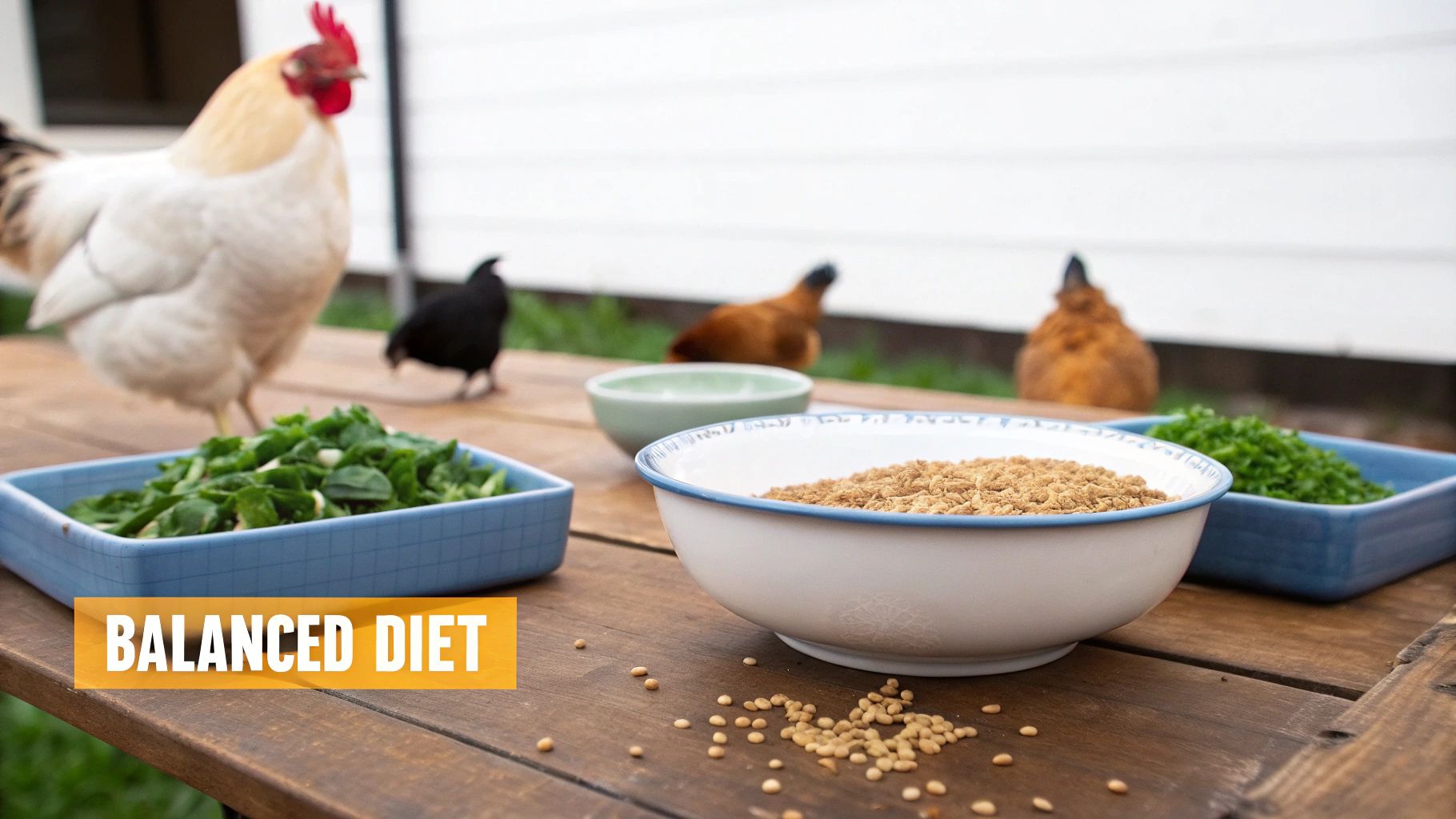
When it comes down to it, a thoughtful diet is the single most important thing you can do to raise healthy, vibrant birds. A high-quality commercial feed should always be the foundation, but supplementing it with the right treats, safe kitchen scraps, and foraged goodies is what truly completes their dietary puzzle. This guide is all about exploring those extra foods that chickens can eat, ensuring they get the full spectrum of nutrients they need to thrive.
This isn't just about spoiling them, either. It’s strategic nutrition. Different foods offer unique benefits, whether it's supporting feather growth during a tough molt or strengthening eggshells for a consistent supply. A varied diet also keeps them sharp, encouraging their natural instinct to scratch and forage, which keeps them active, engaged, and happy.
Why a Balanced Diet Matters
To build that perfect meal plan, you first have to understand the basic building blocks of their nutrition. Chickens need a specific mix of nutrients to really flourish, and getting it wrong can cause real problems.
Here’s a quick rundown of what they absolutely need:
- Protein: This is non-negotiable. It’s critical for feather development, muscle growth, and, of course, egg production. A flock going through a molt has a massive need for extra protein to regrow all those feathers.
- Calcium: You can think of calcium as the cornerstone of a good eggshell. A hen’s body uses a surprising amount of it to form a single egg. If she doesn't get enough, you’ll see weak, soft-shelled eggs, and it can even put her own health at risk.
- Vitamins and Minerals: These are the unsung heroes that support everything from a strong immune system to good eyesight and energy levels. Leafy greens and colorful veggies are fantastic sources for these micronutrients.
A well-rounded diet directly translates to a more resilient and productive flock. By providing a mix of complete feed and safe, wholesome extras, you are investing in your chickens' long-term health and happiness.
The sheer scale of poultry farming shows just how crucial good nutrition is. It's wild to think that global poultry meat production hit 139 million metric tons, with chicken meat making up about 103.5 million metric tons of that. This incredible output is why everyone, from big producers to backyard keepers, is laser-focused on finding the best diet to support their flock. For a deeper dive into your flock's daily needs, our chicken feeding guidelines can help you dial in the perfect regimen.
The Ultimate List of Chicken-Approved Foods
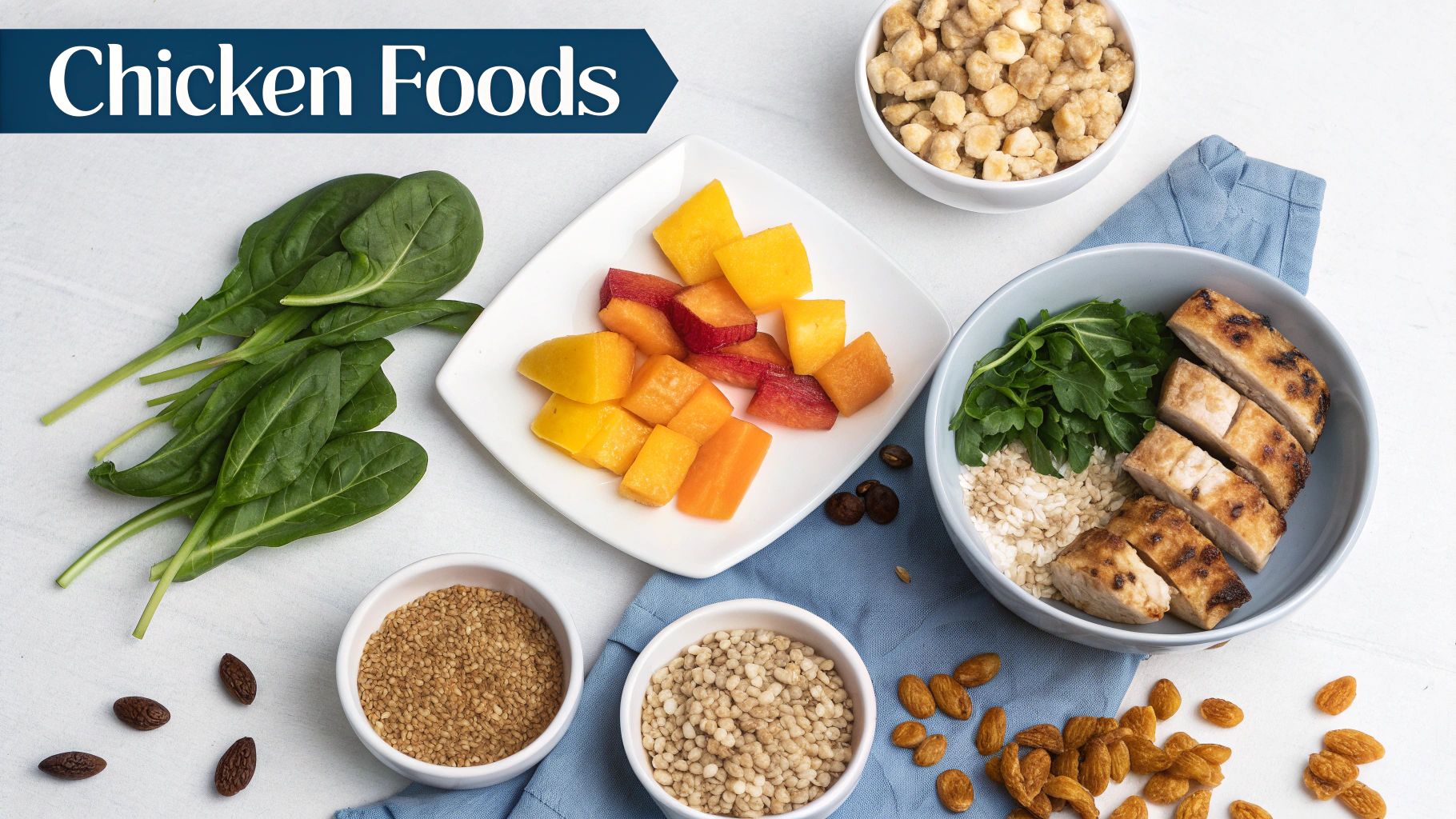
One of the best parts of keeping chickens is getting to expand their menu beyond their daily feed. While a high-quality formulated feed should always be their main course, adding a variety of safe, wholesome foods provides incredible enrichment and a welcome nutritional boost.
Think of it this way: their feed is the solid, reliable base of the cake, but the treats are the exciting, delicious toppings that make it special. This list breaks down the best foods to share, turning your garden extras and kitchen scraps into powerful fuel for a happy, healthy flock.
Garden-Fresh Vegetables and Leafy Greens
Vegetables are a fantastic cornerstone for any chicken's supplemental diet. They're packed with essential vitamins and minerals, not to mention extra hydration, making them a perfect daily offering. Leafy greens, in particular, are almost always a huge hit with the flock.
Most common vegetables you grow or buy are perfectly safe for your birds to enjoy.
- Leafy Greens: Things like romaine lettuce, kale, spinach, and cabbage are vitamin powerhouses, loaded with vitamins A, C, and K.
- Root Vegetables: Carrots, beets, and cooked sweet potatoes deliver a healthy dose of beta-carotene and other key nutrients. Just be sure to cook any hard root veggies to soften them up first.
- Other Garden Goodies: Cucumbers, zucchini, pumpkin, and squash are super hydrating and easy for chickens to peck at, making them a great choice for hot days.
A quick tip: for tougher items like raw carrots or pumpkin, grating them first makes them much easier for your chickens to manage. This simple step ensures they can get all the good stuff without a struggle.
Wholesome Grains and Legumes
Grains offer a fantastic source of energy and fiber. While they should never replace a balanced feed, they make a wonderful treat, especially during colder months when your birds need extra calories to stay warm. Think of grains as the ultimate comfort food for your flock.
Cooked rice, oats, and quinoa are all excellent choices. While uncooked rice won't hurt them, cooked grains are simply easier for their digestive systems to handle.
Spreading a handful of oats or cracked corn in their run is a great way to encourage natural scratching and foraging. It gives your chickens a fun job to do and mimics how they’d find food in the wild.
It's worth noting that bread and other processed grains offer very little nutritional value. A tiny piece of whole-wheat bread won't do any harm, but it's mostly empty calories. Stick to whole, unprocessed grains for the real health benefits.
Your Flock's Safe Foods Cheat Sheet
To make things even easier, here's a quick-reference table of common, safe foods you can offer your flock. It's a great "cheat sheet" to hang in your feed room or screenshot on your phone for easy access.
| Food Category | Safe Examples | Key Benefits |
|---|---|---|
| Vegetables | Kale, Spinach, Cucumbers, Carrots (cooked), Pumpkin | Vitamins A, C, & K; Hydration; Fiber |
| Fruits (in moderation) | Berries, Melon, Apples (no seeds), Bananas | Antioxidants; Quick Energy; Vitamins |
| Grains | Oats, Cooked Rice, Quinoa, Cracked Corn | Energy (Carbohydrates); Fiber; B Vitamins |
| Proteins | Cooked Eggs, Mealworms, Black Soldier Fly Larvae, Cooked Meats | Feather Growth; Egg Production; Calcium |
Remember to always introduce new foods slowly and in small amounts to see how your flock likes them.
Sweet and Juicy Fruits
Fruits are basically candy to chickens—they go absolutely wild for them, but they need to be given in moderation because of their high sugar content. They're great for a quick energy boost and are loaded with helpful antioxidants and vitamins.
Here are a few flock favorites:
- Berries: Blueberries, strawberries, and raspberries are perfectly sized and nutrient-dense.
- Melons: Watermelon, cantaloupe, and honeydew are incredibly hydrating. Don't throw out the rind—they'll love pecking at it on a hot day.
- Apples and Pears: These are a great treat, but you must always remove the seeds, as they contain trace amounts of cyanide.
- Bananas: A soft, easy-to-eat snack that’s a good source of potassium.
While grains make up the bulk of a commercial diet—often 60-70%—fruits and veggies can safely account for up to 10% of their total intake. Getting this balance right is crucial for egg-laying hens and is a key focus for the wider U.S. poultry industry, which produces nearly 9.16 billion broilers a year. You can learn more about commercial dietary standards by checking out market insights on chicken feed and production.
Powerful Protein Sources
Protein is an absolute must-have, especially for feather growth during a molt and for keeping egg production consistent. Your layer feed is already formulated with the right protein levels, but a little extra boost from healthy sources can make a real difference.
Cooked, unseasoned meats like chicken, fish, or beef are excellent. Just be sure to chop them into small, manageable pieces to prevent any choking hazards.
Insects are another fantastic and, more importantly, natural source of protein.
- Mealworms: A classic chicken treat that’s high in protein and fat.
- Black Soldier Fly Larvae (BSFL): A truly superior choice. Brands like Pure Grubs offer larvae that are not only packed with protein but also exceptionally high in calcium, which is vital for strong eggshells.
- Crickets and Earthworms: Your flock’s natural pest control! They will happily forage for these tasty critters in your yard.
And don't forget about eggs! Cooked and scrambled eggs are a protein-packed superfood for your chickens. Just make sure they are fully cooked to avoid encouraging any bad egg-eating habits. You can even crush up the shells and mix them back into the feed for an incredible calcium boost.
Foods to Keep Away From Your Flock
Knowing what to feed your chickens is only half the battle. The other, arguably more important half, is knowing what not to feed them. Chickens are hardy little foragers, but some common foods can cause anything from a bad stomach ache to serious illness or even death.
Think of this as your "no-go" list for the coop. Many of the most dangerous foods are common kitchen scraps you might not think twice about tossing out. Being mindful about what ends up in their run is one of the best things you can do to keep your flock happy and healthy for years to come.
The Absolutely Toxic List
Let's start with the non-negotiables. These foods are straight-up poisonous to chickens and should be avoided at all costs. Even a small amount can cause serious, irreversible harm.
Here are the big ones to keep far away from your birds:
- Avocado Pits and Skins: That creamy avocado toast is great for you, but the pit and skin are a definite no for your flock. They contain a toxin called persin, which can cause heart failure and respiratory distress in birds in as little as 48 hours.
- Raw or Dried Beans: Never, ever feed your chickens uncooked beans. Raw beans, especially kidney beans, contain phytohaemagglutinin, a nasty lectin that is incredibly toxic to birds. It can make them gravely ill almost immediately. If you're sharing beans, make sure they are thoroughly cooked, no exceptions.
- Green Potato Skins and Sprouts: You know that greenish tint potatoes get when they've been sitting out? That's a sign they've produced solanine, a toxin that's bad news for chickens. It can cause neurological issues and digestive upset. Stick to feeding them thoroughly cooked, non-green potatoes, and skip the raw peels.
A common myth is that chickens instinctively know what's bad for them. While they have some sense, a curious hen will peck at just about anything once. It’s our job as their keepers to make sure only safe options are within reach.
Problematic Kitchen Scraps to Avoid
Beyond the truly toxic stuff, there's a whole category of kitchen scraps that are just plain unhealthy for chickens. They might not cause immediate disaster, but feeding these regularly can lead to poor health, digestive problems, and weak eggshells over time.
It’s better to just toss these in the compost pile. Think of treats as a way to boost nutrition, not just to offer empty calories or potentially harmful fillers.
Here’s what to skip:
- Moldy or Rotten Food: The rule of thumb is simple: if you wouldn't eat it, don't feed it to your flock. Mold produces mycotoxins, which can make your chickens very sick. This goes for moldy bread, slimy leftovers, or any food that’s past its prime.
- Salty, Sugary, or Processed Foods: Your flock’s digestive system just isn't built to handle the junk food we eat. Things like chips, candy, and processed meals are loaded with salt and sugar. Too much salt can lead to kidney damage and dehydration, which is a serious problem for birds.
- Onions and Garlic (in large amounts): A tiny bit of leftover onion mixed in with some rice probably won't hurt, but you should never offer them in large quantities. Onions and garlic contain thiosulphates, which can damage red blood cells over time and lead to anemia.
- Chocolate and Caffeine: These are strictly for humans. Both contain compounds (theobromine and caffeine) that are toxic to birds, causing heart problems, seizures, and even death. Keep your coffee grounds and chocolate bars to yourself.
Keeping your flock safe from harmful foods is a cornerstone of good chicken keeping. For a more detailed breakdown, check out this comprehensive list of foods harmful to chickens to help you keep your birds thriving.
Boosting Nutrition With High-Value Treats
While tossing your flock some kitchen scraps or garden weeds is a great daily habit, some special treats are more like a nutritional supercharge than a simple snack. Think of them as a strategic boost, especially during demanding times like the fall molt or the peak of laying season. These are the moments when your birds’ bodies are working overtime and need extra protein and key minerals to stay in top form.
It’s a bit like an athlete downing a protein shake after a tough workout. When a hen is regrowing her feathers—a process that uses a huge amount of protein (feathers are up to 85% protein!)—her nutritional needs go through the roof. The same is true for a productive laying hen, who needs a steady supply of calcium to pump out eggs with strong, solid shells.
This is exactly where insect-based treats come in, offering a natural and powerful source of the very nutrients your flock is craving.
The Power of Insect Protein
Chickens are natural-born foragers. You see it every time they scratch and peck at the ground. Hunting for bugs is more than just a pastime; it’s how they instinctively find the high-quality protein and essential amino acids they need to be healthy and strong. Offering dried insects is a fantastic way to mimic this natural behavior.
But not all bug treats are the same. The two you’ll see most often are mealworms and Black Soldier Fly Larvae (BSFL). While both provide protein, their overall nutritional value is worlds apart, particularly when it comes to calcium. Making the right choice here can have a huge impact on your flock's health.
Choosing the right high-value treat is an investment in your flock's long-term vitality. It goes beyond a simple snack and becomes a tool for supporting stronger eggshells, brilliant plumage, and overall resilience.
This need for top-tier nutrition is a big deal across the poultry world. The global poultry feed market is expected to jump from $205,422.1 million to a whopping $294,071.8 million by 2030. That growth is all about the demand for high-protein, mineral-rich supplements that help chickens thrive, from commercial farms to backyard coops. You can find more details on the global push for better poultry nutrition on Grand View Research.
Why Black Soldier Fly Larvae Are a Superior Choice
When you’re looking at what foods that chickens can eat will give you the most bang for your buck, nutritionally speaking, Black Soldier Fly Larvae—like the ones in Pure Grubs—are the hands-down winner. They simply offer a more complete nutritional package than mealworms, especially in the calcium department. And it's not a small difference; it's a game-changer for laying hens.
Take a look at how they stack up.
BSFL vs Mealworms: A Nutritional Showdown
| Nutrient Feature | Pure Grubs BSFL | Typical Mealworms |
|---|---|---|
| Calcium Content | Packed with calcium; up to 85% more than mealworms. Excellent for eggshells. | Low in calcium. Not ideal for supporting laying hens. |
| Ca:P Ratio | Naturally balanced, promoting optimal calcium absorption. | High in phosphorus, which can block calcium absorption. |
| Protein Quality | Rich source of high-quality protein and essential amino acids. | Good source of protein, but a less complete profile. |
| Sourcing & Safety | Grown in the USA in FDA-compliant facilities and tested for safety. | Often sourced from overseas with inconsistent quality control. |
The table makes it pretty clear. BSFL provide the essential calcium laying hens need to form strong eggshells, and their balanced mineral profile means their bodies can actually use that calcium effectively.
While we're focused on what to feed, it’s just as crucial to know what not to. This infographic gives a quick look at some common toxins to keep far away from your flock.
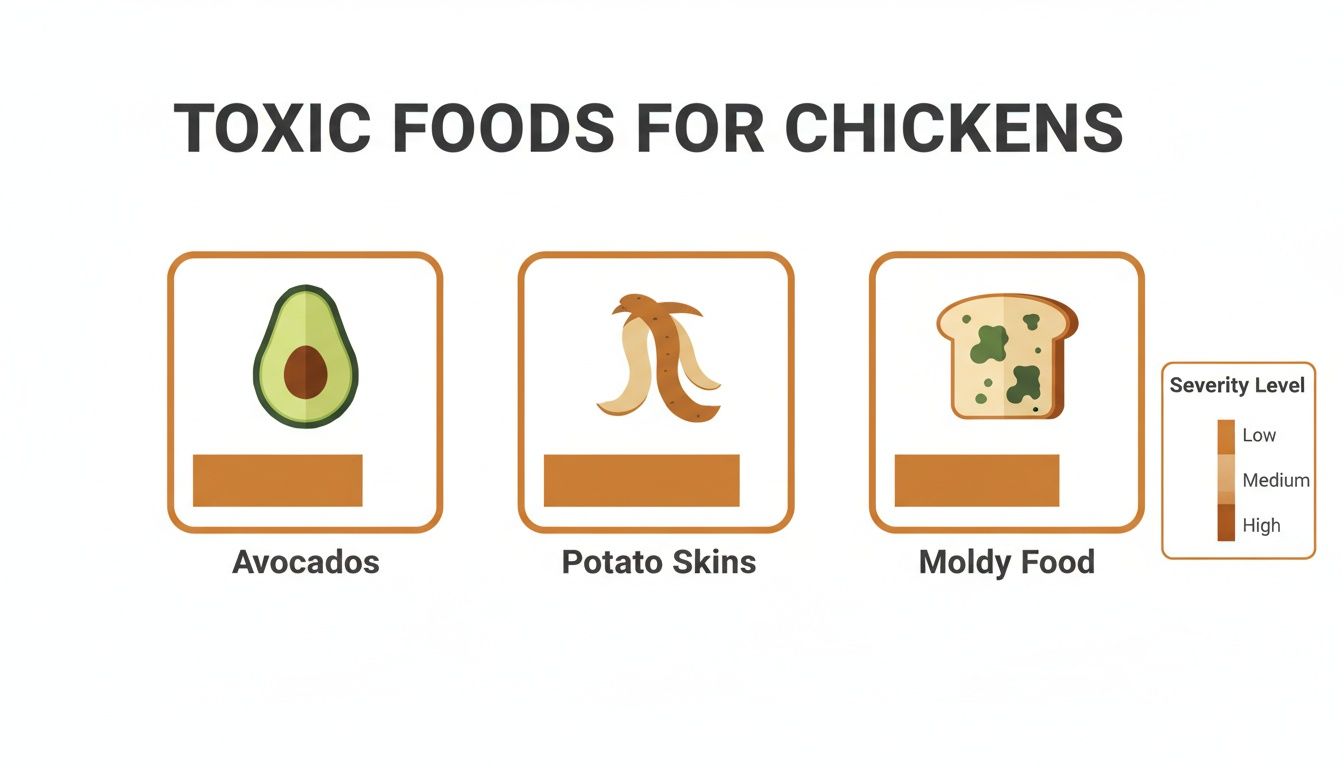
Knowing what to avoid is the first step in keeping your birds safe and healthy.
When you choose a premium treat like Pure Grubs Black Soldier Fly Larvae, you're doing more than just giving them a tasty snack. You're actively contributing to stronger eggs, faster feather regrowth during a molt, and the overall vibrant health of your flock. It's a simple swap that delivers real, visible benefits, turning treat time into a powerful tool for proactive care.
Practical Feeding Rules For a Healthy Flock
Knowing what chickens can eat is one thing, but knowing how much is where the real art of flock management comes in. It’s so easy to spoil our birds, tossing them handful after handful of tasty snacks. But when it comes to their health, moderation is everything. Too many treats can throw their diet out of whack, leading to health problems and even a drop in egg production.
The best approach I've found over the years is the wonderfully simple 90/10 rule. This principle is the foundation of a healthy chicken diet, and it works whether you have three birds or thirty.
The 90/10 Rule: At least 90% of your flock’s daily intake should come from their complete layer feed. The other 10% is reserved for all the fun stuff—treats, kitchen scraps, and anything they forage.
Think of their main feed as their perfectly balanced meal, scientifically formulated with all the protein, calcium, and vitamins they need. Treats are dessert. A little bit adds excitement and variety, but too much spoils their appetite for the essentials.
How Much Is Too Much?
So what does that 10% actually look like? A great rule of thumb is to offer about one to two tablespoons of treats per chicken, per day. That’s it. It’s a small amount, but it’s enough to give them a boost without diluting the nutrition from their main feed.
If you have a flock of five chickens, for example, that comes out to about a half-cup of treats for the whole group to share for the entire day. You could split this up—maybe a handful of kale in the morning and a sprinkle of Pure Grubs in the evening. Sticking to this simple portion guide is the best way to keep your flock’s diet on track.
It’s tough to resist when they all come running, I know! But remember, overloading them on things like low-calcium fruits or low-protein bread can directly impact their health, leading to weak eggshells and poor feathering down the line.
Make Treat Time an Adventure
Don't just dump treats in a bowl! You can use snack time to encourage your flock's natural behaviors and keep their minds busy. This turns a simple feeding into a fun, enriching activity.
Here are a couple of my favorite ways to do this:
- Scatter the Goods: Tossing scratch grains, seeds, or grubs across their run encourages them to scratch and forage just like they would in the wild. This gets them moving, fights off boredom, and helps make sure the less assertive birds get their fair share.
- DIY Treat Toys: You can buy hanging treat dispensers, or you can just make your own. An old plastic bottle with a few holes drilled in it works perfectly. Fill it with some scratch grains or dried larvae, and they'll have to work for their food, keeping them entertained for ages.
Finally, and this is non-negotiable, always provide constant access to fresh, clean water. Chickens can't digest their food or absorb nutrients properly without it. Keeping their waterers full and clean is just as important as the food you give them—it’s the foundation that makes everything else work.
Your Path to a Thriving and Happy Flock
Knowing what to feed your chickens is one of the most rewarding parts of raising them. As we've seen, it's not complicated—it just comes down to a few solid principles. The cornerstone of it all is a high-quality, complete feed that meets all their daily nutritional needs.
Once you have that solid base, the fun begins. You can start mixing in a healthy variety of safe kitchen scraps and garden greens. This is a fantastic way to give them extra vitamins and a bit of excitement, all while cutting down on your own food waste.
To really help them shine, especially during tough times like molting or peak laying season, a high-protein treat is the final piece of the puzzle. It gives them that extra boost right when they need it most.
Becoming a Proactive Flock Manager
When you learn the difference between foods that chickens can eat and those they can't, you're doing more than just feeding them. You're becoming a proactive manager of their health and well-being. You’re making a real investment in their resilience, happiness, and long-term vitality.
This thoughtful approach is what leads to stronger eggshells, vibrant feathers, and a flock that's full of life.
The real reward is seeing the results with your own eyes—watching your flock scratch around with boundless energy, cracking open an egg to find a deep, golden yolk, and just knowing you’re giving them the best care possible.
Now it's time to put this knowledge into practice. Start small by introducing a few new safe treats, always keeping the 90/10 rule in mind. Think about adding a high-calcium, protein-packed option like Pure Grubs to their routine.
The difference you'll see in your flock’s energy and health is the best proof that you’re on the right track. You've got everything you need to build a happier, healthier flock, one thoughtful treat at a time.
Got Questions About Feeding Your Flock? We've Got Answers.
When it comes to feeding chickens, a few questions always seem to pop up. Even with a good grasp of the "do's and don'ts," some foods just seem to land in a gray area. Let's tackle some of the most common things chicken keepers wonder about, so you can feel confident you're making the best choices for your birds.
We'll clear up the confusion around debated snacks like bread and dairy, and dig into the different needs of growing chicks versus full-grown hens. Getting these details right is one of the simplest ways to keep your flock happy and healthy.
Can Chickens Eat Bread or Dairy?
This is probably the number one question I hear from new chicken owners. The quick answer is yes, they can, but it comes with a big "but." Neither bread nor dairy will poison your chickens, but they don't offer much in the way of nutrition and can easily cause digestive trouble if you're not careful.
It's best to think of bread as junk food for chickens. It's full of empty calories that make them feel full, leaving less room for the high-quality feed their bodies actually need to thrive. A tiny bit of whole-wheat crust once in a while won't hurt, but it should be a very, very rare treat.
Dairy is a little trickier. Chickens don't have the right enzymes to digest lactose, the sugar in milk.
- Yogurt and Cheese: A small dab of plain yogurt (the kind with live, active cultures) or a few crumbles of hard cheese are usually handled better than straight milk.
- Milk: Offering your chickens milk is basically asking for a bout of diarrhea and an upset stomach.
The bottom line? Go easy. A spoonful of yogurt or a tiny sprinkle of cheese on a rare occasion is fine, but these should never be staples in their diet.
How Are a Chick's Needs Different From an Adult Hen's?
Just like you wouldn't feed a newborn baby the same meal as a grown adult, a tiny, fast-growing chick has completely different nutritional needs than a mature laying hen. Getting the feed right for each stage of life is absolutely critical for their health and development.
Chicks need a high-protein starter feed to fuel their incredible growth spurts. Look for a feed with 20-24% protein—this gives them all the building blocks they need for strong bones, healthy organs, and their first full set of feathers.
Once they hit about 18 weeks old, or right before they lay their first egg, it's time to make the switch to a layer feed. This formula has a bit less protein (usually 16-18%) but is packed with extra calcium, which is essential for forming strong, solid eggshells. Never give layer feed to young chicks; the high calcium content can cause permanent kidney damage.
Is It Safe to Feed Chickens Grass Clippings?
Your flock probably loves roaming around the yard, nibbling on fresh grass. So, tossing them a pile of clippings from the lawnmower seems like a great idea, right? Unfortunately, it can be surprisingly dangerous.
There are two main risks here: pesticides and crop impaction. First, many lawns are treated with fertilizers and chemicals that can be toxic to chickens.
The bigger issue, though, is how they eat them. Long, stringy blades of grass from a mower can get tangled up inside a chicken’s crop, creating a life-threatening blockage called an impacted crop. It’s very different from the short, tender bits they snip off themselves while foraging. The safest bet is to just let them graze on an untreated lawn themselves.
At Pure Grubs, we believe a healthy flock starts with smart nutrition. Give your chickens a high-value, calcium-rich treat they’ll love. Explore our USA-grown Black Soldier Fly Larvae and see the difference premium treats can make.