

Feeding Ducks and Chickens: The Complete Guide
The feed bucket is barely on the ground before the chickens rush in, scratching and shoving for position. The ducks arrive differently, often making a wet mess around the waterer, swallowing feed with a bill designed for dabbling, and leaving the ground muddy before the morning chores are finished. They can share a yard, but feeding ducks and chickens safely means managing diets that overlap without treating them as identical.
The practical answer isn't a separate farm building for every age and species. It's a reliable baseline ration, sensible feeder placement, clean water management, and close attention to which birds are growing, laying, or just maintaining condition. Small adjustments prevent the common problems that appear when chicken feed becomes the default for everyone.
The Daily Reality of Feeding Two Flocks
A mixed flock often looks simple from a distance. You fill a feeder, set down water, and let the birds sort themselves out. In practice, chickens may scatter dry feed across the bedding while ducks dunk their bills, splash water into the feeder, and turn a clean ration into wet sludge.
The first rule is to separate shared access from identical nutrition. Chickens and ducks use many of the same basic nutrients, but ducks need them in different amounts. Ducklings are especially sensitive to a ration designed only for chicks, while adult ducks can often use a suitable chicken-based all-flock feed.
Start with the flock's most vulnerable birds
Look at the youngest birds first. Ducklings should receive duck or waterfowl starter feed, or a carefully selected unmedicated ration that meets their needs. The central concern is niacin, which supports healthy leg development. Ducklings eating a chick-formulated feed without adequate niacin may develop weakness or poor growth, so a mixed flock with ducklings needs more planning than an adult flock.
Age also changes the feeding problem. A laying hen, a non-laying drake, a growing pullet, and a young duck don't have the same nutritional priorities. Feeding one specialized ration to every bird can expose some flock members to nutrients they don't need while leaving others short.
Design the routine around bird behavior
Ducks need easy access to water while eating. Their bills work best when they can wet and clear feed, but placing water directly beside a feeder can create a swamp. Use a stable, washable water station and position it so spilled water drains away from feed and sleeping areas.
Practical rule: Choose the ration for the bird with the narrowest nutritional margin, then manage supplements separately for birds with additional needs.
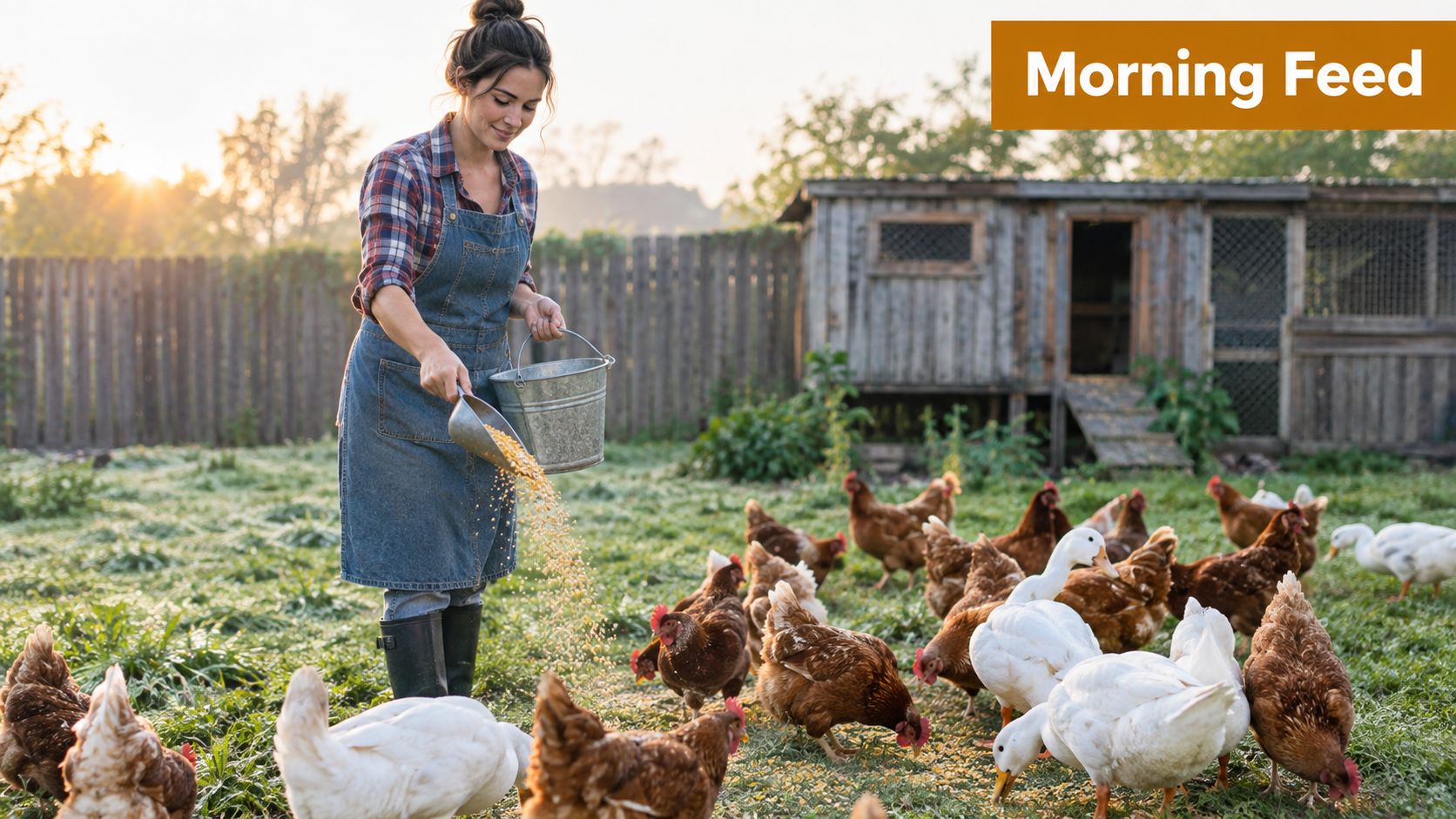
Watch the flock during the first few mornings after changing feed. If ducks are crowding a small chicken feeder, add a wider, floor-level option. If chickens are standing in wet feed, move the ration higher or farther from the duck water. Good feeding management is less about forcing natural behavior to change and more about giving each species a setup that fits how it already eats.
Nutritional Differences Between Ducks and Chickens
A feeder that works neatly for hens can become a poor fit once ducks join the flock. Ducks and chickens eat many of the same ingredients, but similar ingredients don't create identical requirements. Ducks need the same broad nutrients in different amounts, especially more niacin for healthy leg development. Ducklings should receive a duck or waterfowl starter ration, rather than being managed as oversized chicks.
Adult intake also shifts the feed budget. Laying ducks may consume about 20% to 30% more feed than similarly sized chickens, according to the RSPCA's guidance on caring for pet ducks. A general overview of poultry feed notes that mature ducks may eat roughly 4 to 6 ounces daily, depending on breed and conditions.
Dietary Requirements Comparison
| Nutrient/Aspect | Chickens | Ducks |
|---|---|---|
| Starter feed | Chick starter can suit chicks when correctly formulated | Duck or waterfowl starter is preferred for ducklings |
| Niacin | Required, but generally at a lower level than ducks | Higher levels support healthy leg development |
| Adult feed use | Often lower for a similarly sized bird | Laying ducks commonly eat more |
| Water behavior | Drinks without the same bill-cleaning requirement | Needs water access while eating and makes more splash |
| Feeder design | Narrower poultry feeders often work | Wider, open or floor-level feeders reduce crowding |
| Life-stage risk | Layer feed suits laying hens, not chicks | Layer feed isn't a universal ration for non-laying ducks |
Chicken feed is not automatically suitable for every duck. This practical guide to whether ducklings can eat chicken food explains why formulation matters. Adult ducks may manage a suitable non-medicated all-flock ration, while ducklings need closer scrutiny of the label and their growth.
Growth changes the calculation
Production goals affect when birds move toward laying diets. Laying ducks generally begin laying at about 26 weeks, compared with chickens at about 18 weeks. That later laying point gives keepers a longer growing period to manage before changing the ration.
Ducklings also grow rapidly and use considerably more water while eating. A peer-reviewed duckling growth review reports that at 14 days, ducklings can be twice as heavy as broiler chickens. A comparative study found a duckling water-to-feed ratio of 4.1:1 at 5 to 22 days, versus 2.3:1 for meat chickens at 11 to 23 days.
Those differences show up around the feeder. A duckling pen needs sufficient feed access, dependable water for clearing the bill, and equipment that can tolerate splashing. Copying a chicken setup into a duck enclosure often creates wet feed, waste, and crowding before nutrition becomes the visible problem.
Feeding Strategies for Mixed Flocks
For most mixed backyard flocks, the most workable starting point is a complete, unmedicated all-flock or flock-raiser ration. It avoids making layer feed the default for birds that aren't laying and gives adult ducks a practical shared option. Ducklings still require special care if the product was formulated for chicks rather than waterfowl.
The goal is to reduce the number of competing feed bags without pretending that one ration solves every life stage.
A practical setup
- Use pellets or crumbles. Dry mash tends to create waste and can increase choking concerns. Extension guidance from Penn State Extension on poultry nutrition and feeding notes that pelleted feed improves duck growth performance by about 10% versus mash, while mash increases waste.
- Keep feed available to growing birds. Ducklings shouldn't have to compete with adult hens for every meal. Provide enough feeder space for the entire group, and check that smaller birds can reach the ration.
- Put water beside the eating area, but not in the feed. Ducks need water while eating, yet their splashing quickly ruins feed. A low, stable drinker placed on a washable surface works better than a deep open tub beside the feeder.
- Offer oyster shell separately. Give it free-choice to laying females rather than mixing it into the shared ration. This lets laying hens select calcium without making a high-calcium layer diet the main feed for non-layers.
- Avoid medicated chick starter for ducklings. Medication intended for chicks may not be appropriate for waterfowl. Check the label and ask a poultry veterinarian when the product's directions don't clearly cover ducks.
Feeder test: If a duck has to twist, reach upward, or fight through a line of hens to eat, the feeder is too restrictive for that flock.
A wider trough or open pan at floor level usually suits ducks better than a narrow chicken feeder. Keep it raised just enough to limit bedding contamination, but low enough for ducks to eat naturally. Replace wet or fouled feed instead of stirring it back into the dry ration.
Safe Treats and Supplements
A mixed flock often reaches for the same treat, even when the birds do not have the same nutritional needs. Treats should add variety without displacing a complete ration. Insects, greens, and grains can work for both ducks and chickens, but the amount and timing still matter. Laying hens may need separate access to calcium, while non-laying ducks should not receive layer feed as their main diet only because both species share treats.
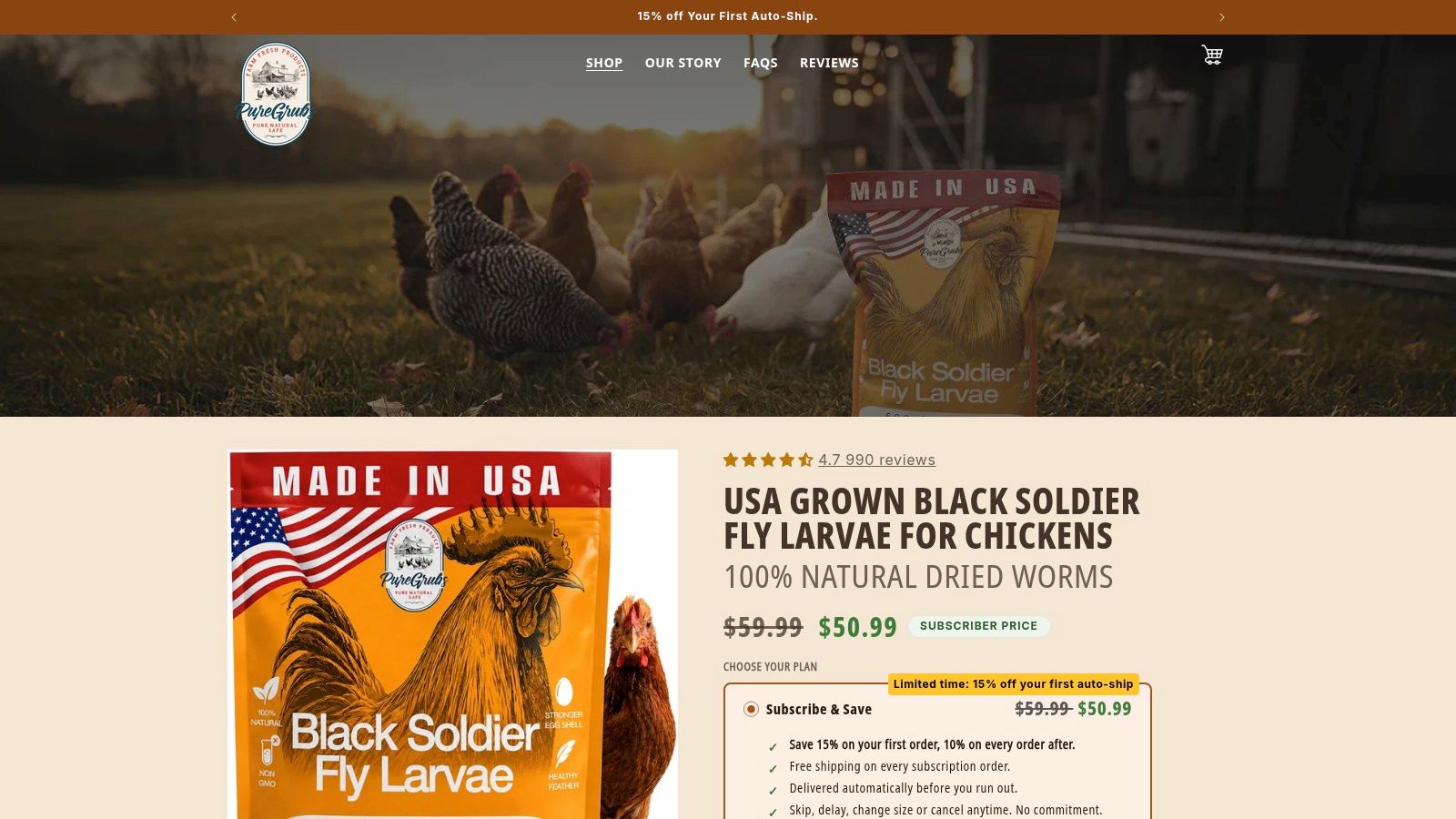
Black Soldier Fly Larvae provide a compact protein option for keepers managing two species. The catalog information for USA GROWN BLACK SOLDIER FLY LARVAE FOR CHICKENS lists 36–42% crude protein, 30–40% healthy fats, and up to 85% more calcium than mealworms. It also states that the larvae are USA-grown, plant-fed, dried without additives or preservatives, and intended for chickens, ducks, and other animals.
Use treats as a controlled supplement
Scatter a small portion on clean ground where both species can reach it, or use a shallow tray that can be removed afterward. Floating larvae may encourage dabbling, but keep the water clean and remove leftovers before they sit in the drinker. A treat that stays wet becomes a sanitation problem as well as wasted feed.
For comparisons among insect-based options, consult this guide to high-protein snacks for chickens. Introduce any new supplement gradually, then watch droppings, appetite, and body condition. If birds fill up on treats and leave their complete ration, reduce the extras and offer the regular feed first.
Avoid treating symptoms blindly
Niacin deficiency deserves attention in ducklings, but concentrated supplementation will not explain every weak or limping bird. Poor feed access, unsuitable starter, injury, slippery flooring, or another health problem can produce similar signs. Persistent leg weakness, poor growth, or difficulty standing calls for a review of the feeding setup and veterinary advice rather than guesswork.
Bread, salty snack foods, and heavily seasoned leftovers mainly displace balanced feed. Clean vegetables, suitable grains, and insects are more sensible occasional choices, but none should become the diet's foundation.
Biosecurity and Feed Management
Ducks create more than a sanitation challenge. Their water and feeding habits can also attract wild birds, and that changes the biosecurity picture for the whole property.
Research on commercial poultry farms found wild waterfowl using retention ponds, showing that standing water can become an interface between wildlife and poultry operations, as documented in this study of wild waterfowl and commercial poultry environments. The concern isn't only whether a duck splashes dirty water into a feeder. Spilled grain and accessible water can draw wild birds close to domestic poultry, increasing possible exposure pathways for avian influenza and other pathogens.
Control the attractants
Walk the feeding area after every morning ration. Look for grain under the feeder, wet feed in the mud, and open water that remains accessible beyond what the flock needs. Then make small physical changes rather than relying on perfect daily cleanup.
- Keep feed covered. Store bags and bins where wild birds, rodents, and moisture can't reach them.
- Move feed off the ground. Use a stable feeder or tray that limits scattering and makes spills visible.
- Separate water from sleeping areas. Ducks need water near feed, but wet bedding encourages contamination and creates a poor resting environment.
- Restrict open water. Farm ponds and decorative pools can attract wild waterfowl. Where possible, keep domestic birds away from those areas.
- Clean spills promptly. Grain on the ground is an invitation to every bird in the neighborhood.
Biosecurity starts at the edge of the feeder. A clean ration isn't enough if spilled grain and open water are drawing wild birds into the same space.
Feed storage also matters. Damp grain molds, while an open bag invites pests and loses freshness. Use a sealed container, rotate older feed first, and follow this practical guide to storing chicken feed safely. Check the area around the container for spilled pellets before they attract rodents or wild birds.
Building Your Daily Feeding Routine
A good routine should be easy to repeat when the weather is bad, the flock is noisy, and you have other farm work waiting. The most reliable system separates the decisions that matter from the chores that don't. You don't need to calculate every bite, but you do need to know which ration is available, which birds are eating it, and where water is going.
Morning checks
Begin with the feed, not the treats. Put out the complete unmedicated all-flock pellets or crumbles, making sure ducks have a broad, reachable feeding surface and chickens have enough room to eat without crowding. If ducklings are present, confirm that their starter ration meets waterfowl needs before allowing them to rely on a chick-formulated product.
Refresh water before the birds get busy. Position drinkers near the feeding zone, but keep them away from stored feed and sleeping quarters. Remove wet, fouled feed rather than trying to salvage it by mixing it with dry pellets.
Midday observation
You don't need to stand over the flock all day. A brief check tells you whether the setup is working:
- Watch the smallest birds. Make sure ducklings and pullets can reach feed without being displaced.
- Inspect droppings and appetite. Sudden changes deserve attention, especially after a ration change.
- Look at body condition. Poor growth, weakness, or persistent lameness calls for investigation rather than automatic supplementation.
- Check the ground. Heavy feed waste means the feeder height, shape, or location needs adjustment.
- Offer treats only after the ration. Insects such as BSFL can supplement the diet, but shouldn't replace balanced feed.
Evening reset
Before nightfall, cover feed and clear large spills. Empty or clean water containers when they become heavily fouled, and make sure the flock isn't sleeping in saturated bedding. Keep laying hens' oyster shell separate so every bird isn't forced to consume it.
A mixed flock works best when the routine respects both species. Give ducks the water and feeder access their bills require, give chickens enough dry, uncontaminated ration, and monitor life stages instead of assuming the whole yard has one nutritional need.
Pure Grubs offers USA-grown dried Black Soldier Fly Larvae as a supplemental treat for chickens, ducks, and other birds, with product information covering protein, calcium, fats, and processing. Visit Pure Grubs to review the available larvae options and choose a practical protein treat for your mixed flock.