

Chickens in the Suburbs: A Practical Backyard Guide
You've found the perfect backyard, chosen a spot near the garden, and started browsing hens online. Then a neighbor mentions that the rules on your street may not match the rules across town. Before you buy a single bird, you need to know whether your address permits chickens, where the coop can sit, whether a rooster is forbidden, and what happens if the flock creates noise, odor, flies, or rodents.
That paperwork matters more than the breed you choose. Chickens in the suburbs succeed when legal compliance, coop design, predator control, and neighbor relations come before the birds arrive. Get those pieces right, and daily care becomes pleasantly routine. Ignore them, and the first complaint or inspection can end the project quickly.
What Suburban Chicken Keeping Actually Looks Like
At 6:00 a.m., a rooster can wake three households before you reach the coop. A leaking waterer can turn a clean run into a muddy odor problem, and a raccoon can test weak hardware overnight. Suburban chicken keeping works only when the flock fits the property, the neighborhood, and the rules that govern both.
A peer-reviewed survey of 1,487 U.S. flock owners found that 30.1% described their setting as suburban, compared with 38.4% rural and 31.5% urban. The same survey found that 71% kept fewer than 10 chickens, and 70% had kept birds for fewer than five years. Those figures describe participating flock owners, not all U.S. households with poultry, but they show that backyard chicken keeping is a settled residential practice. The survey published in Poultry Science offers a useful snapshot of who is already doing it.
A USDA benchmark reaches beyond hobby-farm assumptions. Its 2024 study found that 6.7% of U.S. adults reported keeping poultry, including chickens and other domesticated birds. Results from Denver and Miami also showed chickens in major urban settings. USDA's 2024 Backyard Animal Keeping Study recorded chicken keeping among 5.2% of adults with an urban designation and 15.6% with a non-urban designation.
The suburban rule: Treat your flock as a neighborhood responsibility, not a miniature farm. Every decision can affect the household next door.
Rural keepers have more space to absorb mistakes. Suburban keepers have nearby feed stores, poultry veterinarians, hardware shops, and experienced neighbors, but little room for a loose dog, a persistent smell, flies, rodents, or pre-dawn noise. A flock that survives its first six months starts with compliance and neighbor trust. Husbandry comes after that foundation.
The practical order is clear: establish that the setup is allowed, choose a workable location, build a dry and secure coop, control predators, and keep the birds quiet and clean. Feeding, egg collection, and routine health checks then become manageable daily work. Ignore the residential constraints, and one complaint or inspection can end the project before the birds settle in.
Checking the Rules Before You Buy a Single Hen
“Chickens are legal in this city” is not enough. The controlling rule may belong to a municipality, county, zoning district, HOA, or a combination of them, and neighboring suburbs can impose completely different conditions.
Start with the jurisdiction that governs your exact property. Ask the city or county clerk for the current ordinance, zoning interpretation, permit application, inspection requirements, fee schedule, and any written guidance for backyard poultry. Then ask your HOA or neighborhood association for covenants and architectural rules. Save the documents, not just the phone number of the person who gave you verbal approval.
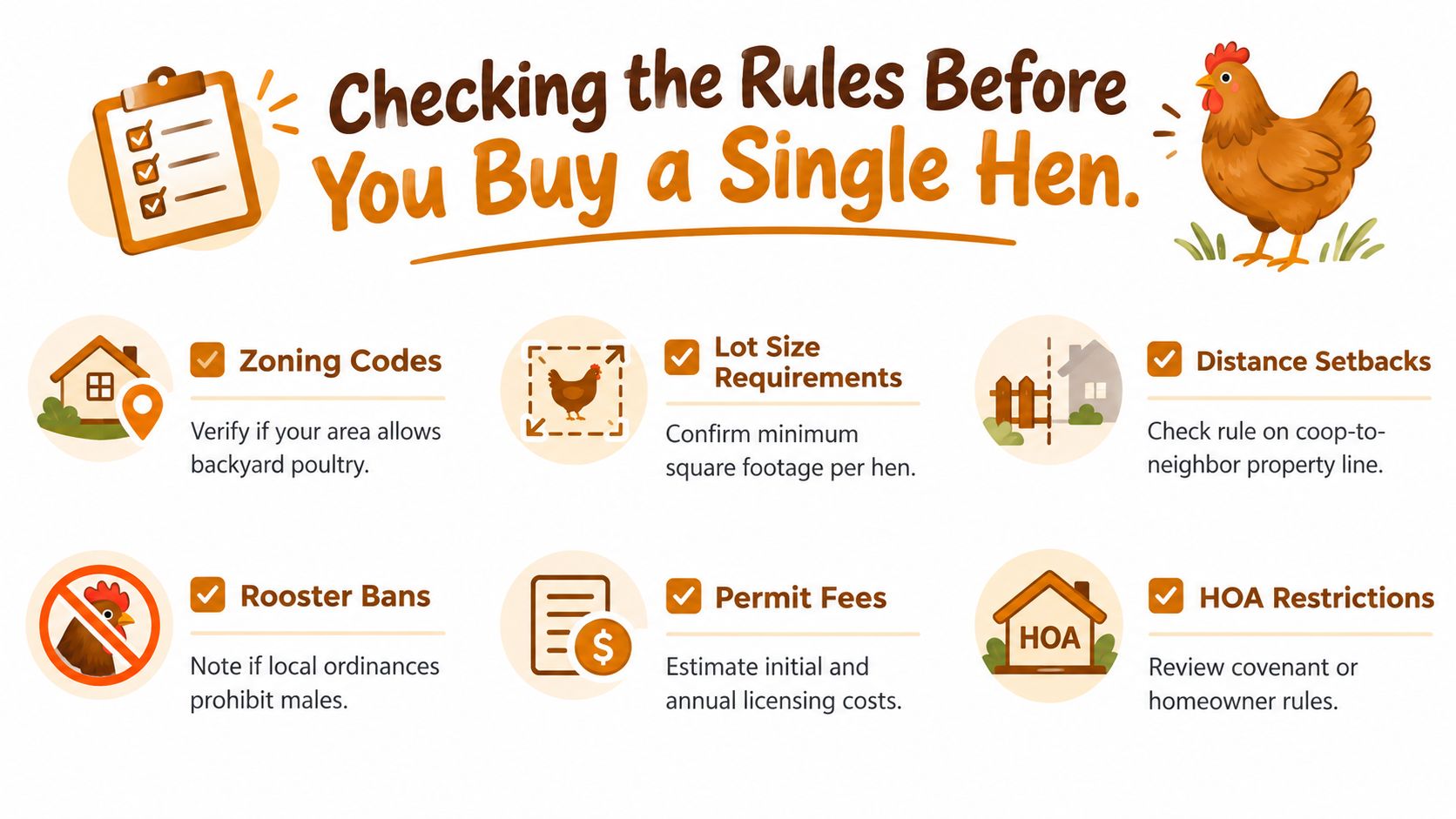
Your pre-purchase checklist
- Confirm the governing authority. Check city, county, zoning district, and HOA rules. Don't assume a countywide allowance overrides a city prohibition or a private covenant.
- Verify hen and rooster rules. Find out whether hens are allowed, whether males are prohibited, and whether the ordinance limits flock size or species.
- Measure the lot and setbacks. Mark property lines, neighboring residences, your own home, and any required distance between the coop, run, and those structures.
- Ask about permits and inspections. Some communities require an application, training course, fee, coop inspection, or recurring compliance check.
- Read the nuisance language. Look specifically for noise, odor, flies, rodents, manure storage, sanitation, and public-health provisions.
- Check egg-sale restrictions. Keeping eggs for household use may be treated differently from selling or distributing them.
A review of 25 U.S. city ordinances found nuisance provisions in 17 jurisdictions, covering issues such as noise, odor, flies, rodents, public-health concerns, and manure disposal. Sixteen cities imposed coop or property-line setbacks, with distances ranging from 10 to 90 feet from property lines and 20 to 50 feet from residences. The ordinance review available from Knoxville shows why a generic “check your local laws” warning isn't practical enough.
Recent reporting from Cleveland-area suburbs makes the point plainly. One community allows up to six hens after a course, application, fee, and inspections, while another requires 20,000 square feet of land, and other municipalities prohibit chickens. Your neighbor two streets away may be following a completely different rulebook.
If your coop will sit near a boundary, review related fence and screening requirements too. A resource on Treasure Coast privacy fence requirements can help Florida property owners understand how local fence rules may affect a privacy screen or enclosure plan, although it doesn't replace your poultry ordinance.
Sizing and Siting the Coop for a Suburban Lot
Once the legal box is checked, choose the coop location before choosing the birds. A six-hen flock needs a structure that stays dry, ventilated, washable, and easy to inspect. It doesn't need a decorative farmhouse facade. It needs enough room for the birds and enough working space for you to remove litter without crawling through a cramped door.
Utah State University Extension recommends approximately 1.5 to 2.0 square feet of indoor floor space per adult chicken, with high-level openings to release warm, moist air and lower openings positioned away from prevailing winds. That puts a six-hen flock at roughly 9 to 12 square feet of indoor floor space, before you account for nest boxes, roosts, feed storage, and access for cleaning. Utah State University's backyard chicken housing guidance explains the ventilation principle clearly.
Dry air beats thick insulation. A sealed coop traps moisture, dust, odor, and respiratory irritants. A ventilated coop lets the flock stay healthier without sitting in a draft.
Place the building close enough to the house that a daily check is effortless. If you have to cross the entire yard in rain or snow, chores will get skipped. Keep the pop door and run away from bedroom windows and shared outdoor seating, and use morning sun to help dry damp litter. Don't put the coop in a low spot where runoff collects.
Build airflow into the structure
Use protected upper vents to let warm, humid air escape. Add lower openings for replacement air, but position them away from prevailing winter winds. Cover openings with sturdy wire mesh, and make every vent raccoon-resistant. If you see condensation on the walls or windows in the morning, the coop needs more airflow.
Give the run separate consideration. Indoor square footage protects birds while roosting, but outdoor space determines whether the yard turns muddy and bare. A covered run also protects hens from hawks and owls while helping contain dust, feathers, and manure. For a broader equipment list, use this practical guide to what you need for a chicken coop.
If you use treats during coop training, USA GROWN BLACK SOLDIER FLY LARVAE FOR CHICKENS can function as a small supplemental feed. The catalog describes dried larvae with 36–42% crude protein, 30–40% healthy fats, and a calcium content stated as 75 times higher than mealworms. Treats still belong outside the complete ration, and they should never be allowed to replace proper feed.
Predator Proofing for a Residential Neighborhood
Suburban predators don't need wilderness. They need an unsecured latch, spilled feed, or a gap under the run. Raccoons are persistent and capable of manipulating simple hardware. Domestic dogs can cross a yard quickly and kill hens without intending to eat them. Hawks and owls turn free-ranging into a gamble, especially when birds have no overhead cover.
Build defenses around those three scenarios first. Use hardware cloth rather than ordinary chicken wire for the run, secure the roof, and extend a buried or outward-facing apron along the base to discourage digging. Fit the doors with latches that require deliberate human movement, not a loose hook that a raccoon can slide aside.
Fix these threats in order
- Raccoons: Lock the coop before dusk, secure feed in a hard-sided container, and inspect for bent mesh or disturbed soil each morning. Raccoons often expose weak points before they breach them.
- Dogs: Use a covered, enclosed run and never rely on a neighbor's promise that a dog is friendly. A dog can panic a flock, break birds against fencing, or dig beneath a weak edge.
- Hawks and owls: Keep the run roofed with strong netting or mesh and provide hiding areas. Free-ranging should be a supervised privilege, not the default setting for an exposed suburban yard.
Opossums and skunks will investigate unsecured feed. Rats settle beneath coops where spilled grain accumulates. In warm climates, snakes may follow eggs into nest boxes. Remove feed spills immediately, keep the area under the coop clean, and collect eggs regularly rather than leaving them overnight.
This doesn't require a fortress. Prioritize a secure roof, strong mesh, a buried edge, reliable latches, and a dusk-locking habit. Motion-sensor lights may help around the run, but they're a backup, not a substitute for physical barriers. For broader raccoon deterrence around feeding areas, see this guide to keeping raccoons away from bird feeders.
A short visual guide can help you spot weak points before the first raid:
Keeping the Peace with Your Neighbors
A clean flock with no rooster is easier to defend than a messy flock with a charming backstory. Neighbor relations aren't luck. They're maintenance, just like dry bedding and a working latch.
Introduce yourself before the birds arrive. Explain where the coop will go, tell nearby households that you're keeping hens only if that's the plan, and offer a way to contact you directly. Sharing a few eggs can turn curiosity into goodwill, but don't use gifts to cover a persistent nuisance. Fix the nuisance.
Control the complaints that trigger enforcement
Odor usually comes from wet bedding, manure buildup, poor airflow, or spilled feed. Remove saturated material, keep rain out of the run, and don't allow a deep litter system to become an excuse for neglect.
Flies follow damp waste and exposed food. Store feed securely, clean feeders, and remove manure often enough that the area doesn't become a breeding site.
Noise is where roosters cause the most trouble. A rooster's appeal to the keeper rarely outweighs the irritation he creates for sleeping neighbors, and many suburban ordinances prohibit males outright. If you want fertile eggs, find a legal and appropriate arrangement outside the residential flock. Hens can lay without a rooster.
Keep the coop visually tidy. Paint isn't required, but straight fencing, a clean access path, covered feed bins, and a screened waste area signal that you're managing the animals responsibly. A neglected-looking enclosure invites complaints before anyone smells it.
The neighbor test: If you'd be embarrassed for an inspector to see the coop after a rainy week, the setup isn't ready.
When a complaint arrives, don't argue about whether the neighbor is being unreasonable. Thank them for telling you, inspect the likely source, and offer a concrete correction. Remove manure more frequently, improve ventilation, tighten feed storage, or add a visual screen. Keep written records of conversations, dates, fixes, permits, and inspections. If the dispute escalates, use the local appeal or compliance process rather than trading accusations over the fence.
Biosecurity That Fits a Backyard
Small-flock biosecurity fails when the routine is too complicated to follow. You don't need to imitate a commercial poultry facility, but you do need habits that protect birds, children, visitors, and the household.
The CDC has emphasized handwashing, avoiding kissing or snuggling poultry, and keeping birds outdoors after multistate Salmonella outbreaks associated with backyard poultry. A review of small poultry premises found that owners generally used at least one biosecurity measure, but overall practices weren't consistently applied. The CDC-linked review and outbreak guidance support a practical middle ground.
The minimum routine
- Use dedicated footwear. Keep coop shoes by the entrance, or use a maintained footbath. Don't track manure through the kitchen.
- Wash after contact. Wash hands after handling birds, eggs, feeders, waterers, litter, or coop tools. Children need supervision, especially around chicks.
- Keep poultry outdoors. Bad weather calls for a dry, protected coop, not a bathtub, laundry room, or kitchen.
- Isolate new arrivals. Keep new birds separate from the established flock for a meaningful observation period before mixing them. Separate equipment makes this more effective.
- Control wildlife access. Store feed in closed containers, clean spills promptly, and prevent wild birds and rodents from sharing feeders and waterers.
If a bird becomes sick, isolate it and contact a poultry veterinarian or the relevant state animal-health authority. Waiting for a flock-wide problem is a poor diagnostic strategy. Pay attention to shared outdoor water when ducks, chickens, and wild birds use the same yard or pond area.
Visitors should wash their hands and avoid handling birds unless necessary. Don't let children carry chicks from coop to bedroom, and don't reward birds by putting them near your face. For readers who want more background on transmission pathways, detailed virus info from VirusFAQ.com can provide additional context, but everyday hygiene and outdoor housing remain the practical safeguards.
Feeding Your Flock for Strong Eggs and Steady Health
Feeding works best as a hierarchy. Complete ration first, calcium second, treats last. Trouble starts when a keeper reverses that order because hens come running for scraps while ignoring the less exciting feed.
Chicks and pullets need an age-appropriate starter or grower ration. Don't give growing birds layer feed. University of Maine Extension warns that the higher calcium level can cause skeletal-development problems, kidney damage, or death in developing birds. Switch to a complete layer ration when laying begins. University of Maine Extension's poultry nutrition guidance recommends approximately 2.5–3.5% calcium in layer feed.
Calcium belongs within a system
Laying hens can receive oyster shell, calcite, or limestone free-choice in a separate container. That lets individual birds regulate supplemental intake instead of forcing the same extra calcium on every bird. Weak shells can reflect inadequate calcium, poor vitamin D absorption, or excessive phosphorus that interferes with calcium use.
Household scraps and scratch are supplements, not a foundation. A generous handful of treats can dilute a nutritionally complete ration, especially in a small flock where every bird receives the same offering. Keep treats small enough that hens still eat their normal feed and have clean water available.
Dried black soldier fly larvae fit the treat category because they add concentrated protein and calcium without becoming the flock's primary ration. Pure Grubs' product information lists 36–42% crude protein, 30–40% healthy fats, and a calcium level described as 75 times higher than mealworms. The product is described as USA-grown and dried, with a plant-based diet and no additives or preservatives. Those claims come from the catalog snapshot, so use the larvae as a measured supplement rather than assuming any treat can correct an unbalanced diet.
A small treat also makes handling easier. Shake a few larvae into the run to call hens away from a gate, reward calm behavior, or guide them into the coop before dusk. For a broader feeding framework, use this guide on what to feed laying hens.
Putting It All Together for Year One
Your flock's first six months depend on compliance before husbandry. Before bringing birds home, clear four checkpoints:
- Ordinances: Get written confirmation that poultry is allowed at your address, including limits on birds, roosters, setbacks, and permits.
- Coop: Build a dry, ventilated, washable structure in the permitted location.
- Predators: Use strong mesh, a covered run, protected edges, and latches that raccoons cannot work.
- Neighbors: Tell nearby households what to expect, then set a plan for noise, odor, flies, and waste.
Once those pieces are in place, consistency keeps the flock healthy. Check birds daily, keep bedding dry, remove wet material promptly, inspect fencing and latches, and keep treats subordinate to complete feed. Five minutes each day prevents a weekend repair job.
The first months will expose weak spots. Rain will collect in one corner, a latch will fail, a hen will crowd the feeder, and a spilled scoop of feed will attract visitors. Fix each problem as it appears. The routine becomes manageable when ordinary care stops feeling like an emergency.
As noted earlier, national benchmarks confirm that backyard poultry is established, while residential flocks require deliberate management. The USDA report provides that broader context.
Aim for a lawful home, dry conditions, secure doors, clean feed, sound nutrition, and neighbors who can sleep through sunrise.
Pure Grubs offers USA-grown dried Black Soldier Fly Larvae as a supplemental treat for backyard chickens and other birds. Use measured portions for feeding, handling, and flock training, then visit Pure Grubs to choose an option for your setup.