

Chicken with Nipples: What It Really Means
Chickens don't have mammary nipples; the structure people sometimes mistake for one is usually the uropygial, or preen, gland papilla. This gland can become visible as early as 2–3 weeks after hatching, although its full development takes much longer.
So why does the phrase “chicken with nipples” appear so often? One answer belongs to anatomy, and the other belongs to the coop. A bump on a bird may be a normal preen-gland opening, while a “nipple” in poultry equipment is a small valve that releases drinking water when a chicken pecks it. Knowing which meaning you're dealing with prevents both unnecessary alarm and poorly designed watering systems.
What People Mean When They Search for a Chicken With Nipples
The direct biological answer is simple: chickens don't have mammary nipples. They aren't mammals, don't nurse their young with milk, and don't normally have mammary glands or teats.
The search phrase usually combines two separate questions:
- Anatomy: What is the small bump or opening on a chicken's body?
- Poultry equipment: How does a nipple drinker work, and can chickens learn to use one?
Both are sensible questions. A new keeper may inspect a bird, notice a raised spot, and use the closest familiar word, “nipple,” to describe it. Another keeper may have seen metal drinking valves in a commercial poultry house and want to know whether those devices are safe or practical for a backyard flock.
The anatomical meaning
The structure most often confused with a nipple is the uropygial gland papilla, also called the preen-gland opening. It sits near the base of the tail, not on the breast or abdomen. The bird uses the oily secretion from this gland during preening, spreading it across the feathers with its beak.
A bump somewhere else may have a different explanation. It could be a feather follicle, a pin feather, an unfamiliar part of the vent area, or an unusual skin structure. A small protrusion isn't enough to identify the cause by sight alone.
The equipment meaning
A nipple drinker, sometimes called a nipple waterer, is a sealed valve attached to a bucket, pipe, or water line. The chicken pecks or pushes the pin, and a small amount of water becomes available at the outlet.
That design changes the keeper's job. Instead of cleaning an open dish repeatedly, you need to verify that the valves work, the birds can reach them, and the system supplies enough water at every point. A clean-looking line isn't automatically a reliable line.
Practical rule: Treat “chicken with nipples” as an anatomy question first, then check whether the real concern is a nipple drinking system.
Chicken Anatomy and the Preen Gland Explained
Look at the upper side of a chicken's rump, where the tail begins. The uropygial, or preen, gland is positioned dorsally at the base of the tail near the pygostyle. Its small external papilla can look like a nipple when the feathers are parted, especially if you haven't handled chickens before.
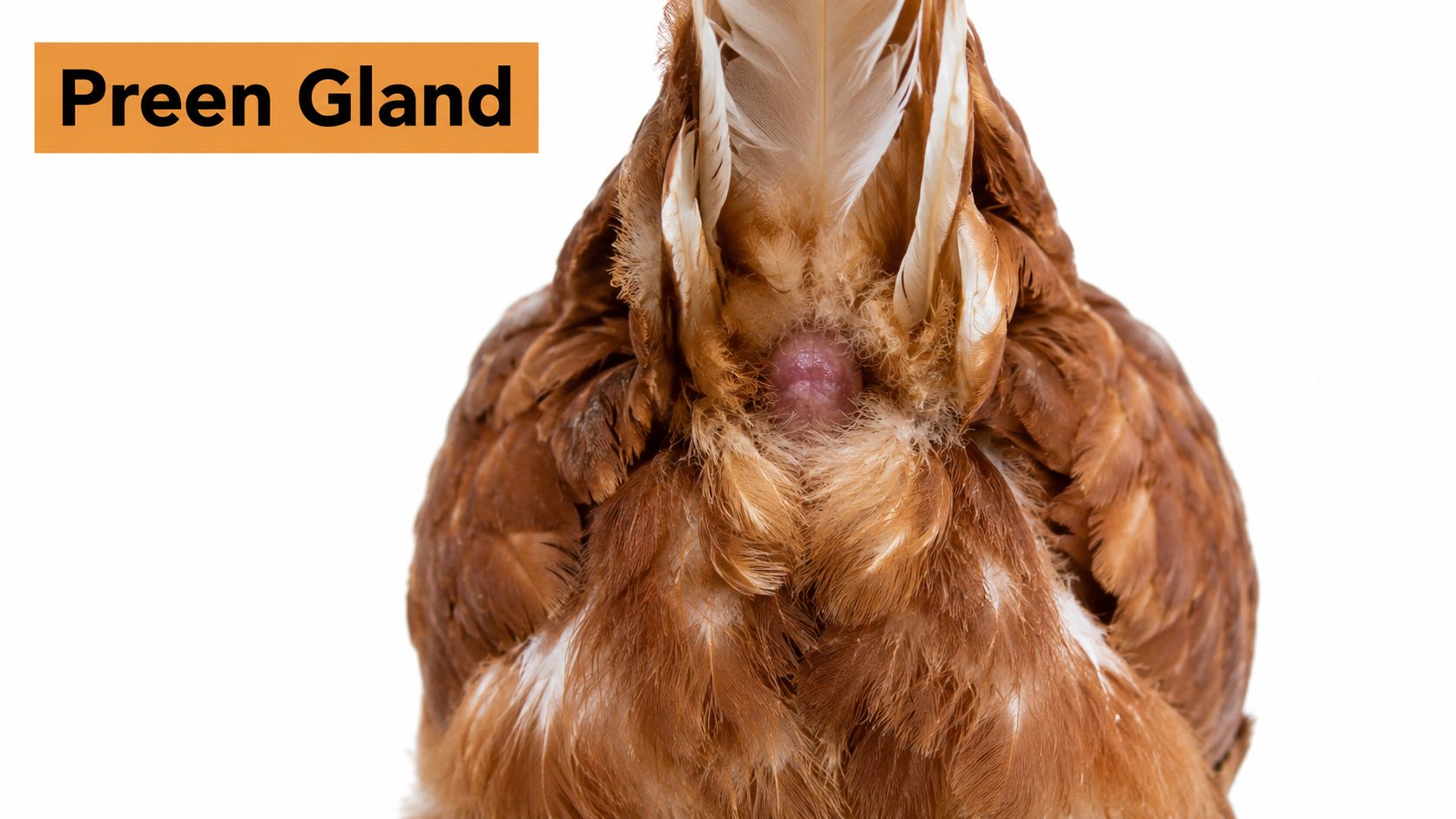
The gland has two lobes. Each lobe connects to drainage channels, and the oily secretion reaches the skin through the papilla. During preening, a chicken uses its beak to collect that secretion and work it through the plumage. Think of it as a built-in conditioner dispenser, not a feeding organ.
Research on Fulani ecotype chickens found that the gland becomes visible as early as 2–3 weeks after hatching, develops identifiable secretory-cell layers by 7–8 months, and reaches full histological development between 18 and 24 months. The same research describes approximately 5–7 tufts of fine down feathers around the papilla, which can help you locate it on a live bird. These details are documented in this research on the chicken uropygial gland.
What normal looks like
The papilla may be easier to see on one bird than another because feather coverage and body shape vary. It can also look more noticeable when you part the feathers or examine the area during a molt. A visible opening by itself isn't evidence of disease, and it shouldn't be squeezed, picked, or cut.
Watch the bird's behavior while you inspect it. Normal preening, ordinary movement, and intact surrounding feathers are reassuring signs. For a broader look at how birds use preening and other daily behaviors, see this guide to the behavior of chickens.
A true mammary nipple doesn't fit chicken anatomy. The useful distinction is between an absent mammary structure and a normal avian gland opening associated with feather maintenance.
Why a Chicken Might Appear to Have a Nipple
A keeper may notice the supposed “nipple” while holding a hen for a health check. The feathers separate, a small raised papilla appears near the tail, and the comparison to a mammal feels natural. In that location, the preen gland is the first thing to consider.
Visibility varies from bird to bird. A dense coat can hide the papilla, while sparse feathering makes it easy to spot. Molting can also change the appearance of the rump as old feathers fall and new pin feathers emerge.
Other bumps that cause confusion
The vent creates another common moment of uncertainty. It is the cloacal opening, and its appearance can change during egg-laying or when a hen is passing an abnormal or soft-shelled egg. A first-time keeper may see the area briefly stretched or irritated and assume the change represents an extra body structure.
Feather follicles create smaller bumps across the skin. Pin feathers are developing feathers enclosed in a temporary sheath, and the papillae around feather tracts can look like tiny projections when the feathers are short or missing. These structures aren't nipples, and pulling at them can cause pain or bleeding.
A healthy-looking bump is usually less concerning than a bump accompanied by other changes. Check the surrounding skin for:
- Heat or swelling: The area feels distinctly warmer or larger than expected.
- Redness or scabs: These may follow pecking, rubbing, or an injury.
- Discharge or odor: Fluid around the rump or vent needs closer attention.
- Feather loss: Bare skin can result from mites, pecking, irritation, or a gland problem.
- Rapid growth: A structure that changes quickly shouldn't be dismissed as normal anatomy.
Published veterinary literature includes congenital abnormalities in domestic chickens, including a broiler chick with polymelia, intestinal duplication, and cloacal atresia. That evidence shows that developmental abnormalities can occur, but it doesn't establish that chickens commonly develop mammary-like nipples. Skin appendages are shaped by interactions between the epidermis and underlying tissues, and research on scaleless chickens has identified epidermally expressed FGF20 as a causative mutation. You can read the documented developmental case and related findings in this veterinary report on congenital abnormalities in chickens.
If the bump is hot, bleeding, oozing, rapidly enlarging, or surrounded by damaged skin, arrange an examination with an avian veterinarian. A photograph can help you compare changes over time, but it can't replace an examination when the bird appears unwell.
From Biology to the Coop - What Nipple Drinkers Are
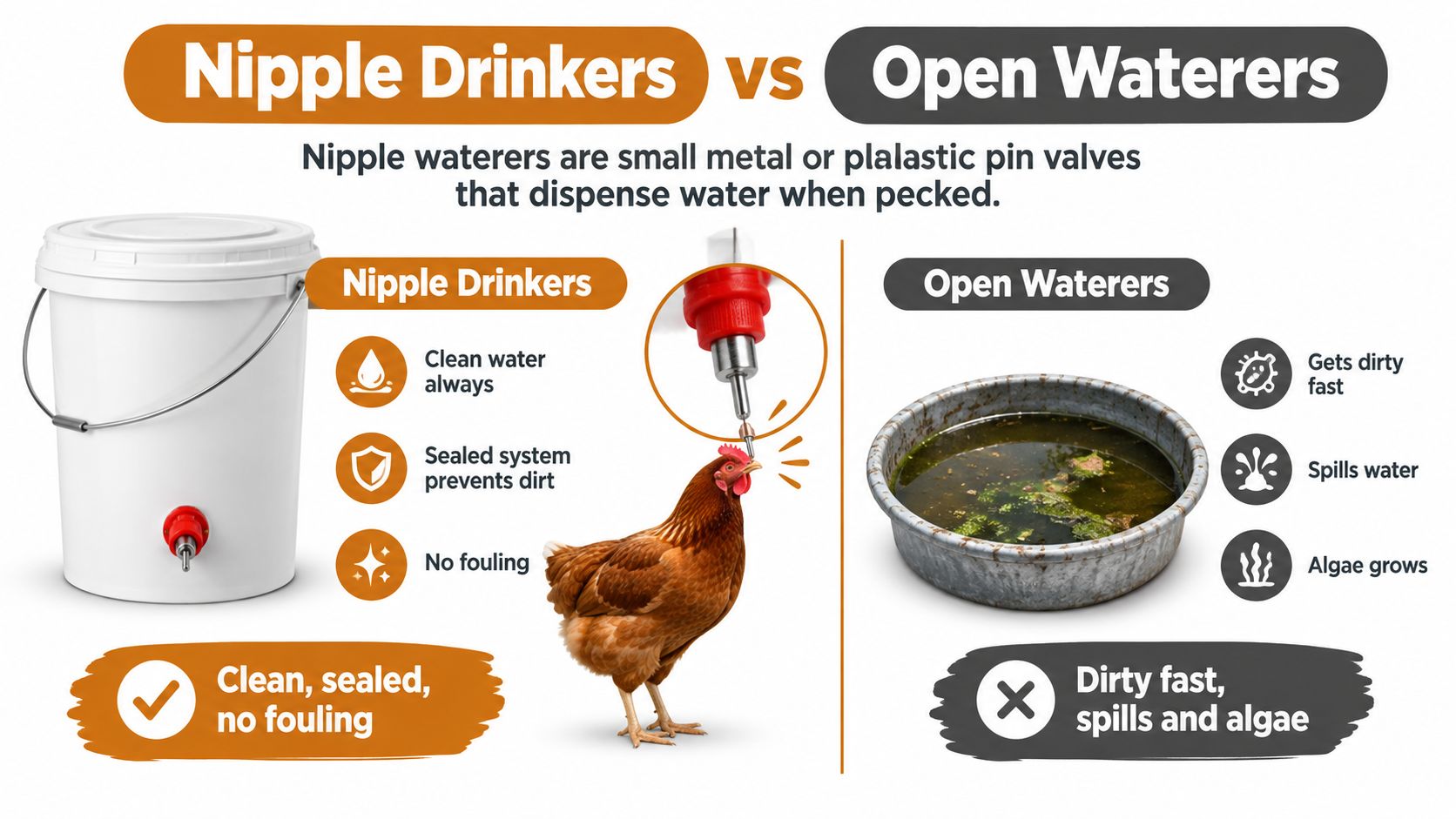
The other meaning of “chicken with nipples” has nothing to do with the bird's body. A nipple drinker is a small valve mounted on a water container or line. The valve stays closed until a chicken pecks or pushes its pin, releasing water directly at the beak.
That closed delivery point can keep bedding and droppings out of the reservoir. It can also reduce splashing and wet patches below the drinker, but only when the valve is correctly installed and maintained. A nipple system isn't automatically hygienic just because it looks enclosed. Leaks, dirty tanks, stagnant lines, and poor access can still create problems.
The main valve styles
Most backyard setups use one of two basic designs:
- Vertical valves: The drinking pin hangs downward, and the chicken activates it from below or from the side.
- Horizontal valves: The pin sits on the side of a pipe or container, so the bird pushes it upward with its beak.
The exact shape matters less than the bird's ability to activate it comfortably. A valve mounted too high forces a short bird to stretch. One mounted too low may encourage the bird to approach awkwardly or create more contact with litter.
Open bowls remain familiar and easy to inspect, but they collect bedding and manure quickly. Nipple systems trade that visible mess for a less obvious responsibility: the keeper must test the outlets and watch the flock. The question isn't whether the equipment looks clean. It's whether every bird can obtain water whenever it needs it.
A controlled broiler study tested nipple-drinker flow rates of 50, 75, 100, and 120 mL/min from 1 to 42 days. Higher flow increased water use, but the researchers found no corresponding improvement in bird performance. That result supports a useful backyard principle: more available water flow isn't automatically better when birds already have adequate access. The findings are reported in this study of nipple-drinker flow rates.
How Nipple Drinkers Work and How to Audit Flow
Inside a nipple drinker, a spring-loaded pin sits in a sealed housing. When a chicken pecks or pushes the pin, the seal opens and a metered droplet reaches the bird's beak. Once the pressure stops, the pin closes again.
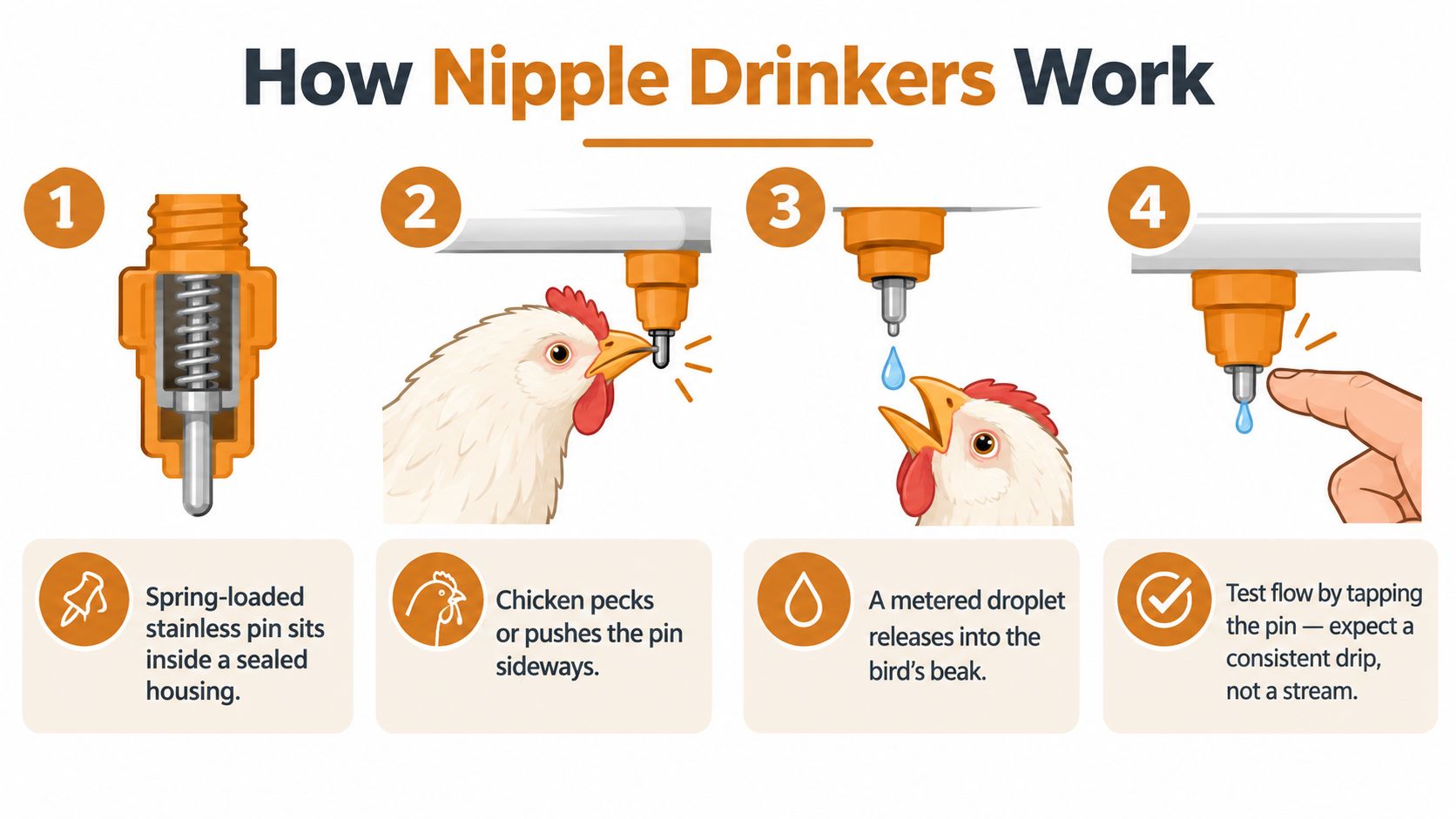
The line still needs the right pressure and a clear path to each outlet. A valve at the far end may deliver less water than one near the reservoir because friction and pressure losses reduce flow along the line. That's why testing only the easiest-to-reach nipple can give false confidence.
Use the verified flow targets
Flow needs change as birds grow. The poultry water-management guidance lists these approximate targets:
- Chicks from 0–7 days: about 20 mL/min.
- Birds from 7–21 days: about 60–70 mL/min.
- Birds older than 21 days: about 70–100 mL/min.
The targets come from this poultry guidance on drinker types and water distribution. Use the manufacturer's instructions alongside these ranges, because valve design and line pressure affect the result.
Run a simple line audit
Choose a nipple near the middle of the line and another at the far end. Hold a clean measuring container beneath one outlet, activate the nipple for 30 seconds, multiply the collected milliliters by two, and compare the result with the appropriate target and manufacturer guidance.
Then check the outlet itself. It should release water cleanly when activated, without a constant stream or persistent leak. Repeat the test at the far end, inspect threaded fittings, and look for air in the line or a slow refill.
A quiet water line can still be failing. Test the outlet furthest from the reservoir, where a pressure problem is most likely to appear first.
Bird behavior provides another useful signal. Crowding around one nipple, repeated pecking without visible water, or birds searching the floor suggests that access may be inadequate. Correct the mechanical problem before increasing pressure across the whole system.
For a related routine that helps keep water equipment and the surrounding coop in better condition, use this guide to chicken coop hygiene.
Installing and Maintaining Nipple Waterers in a Small Flock
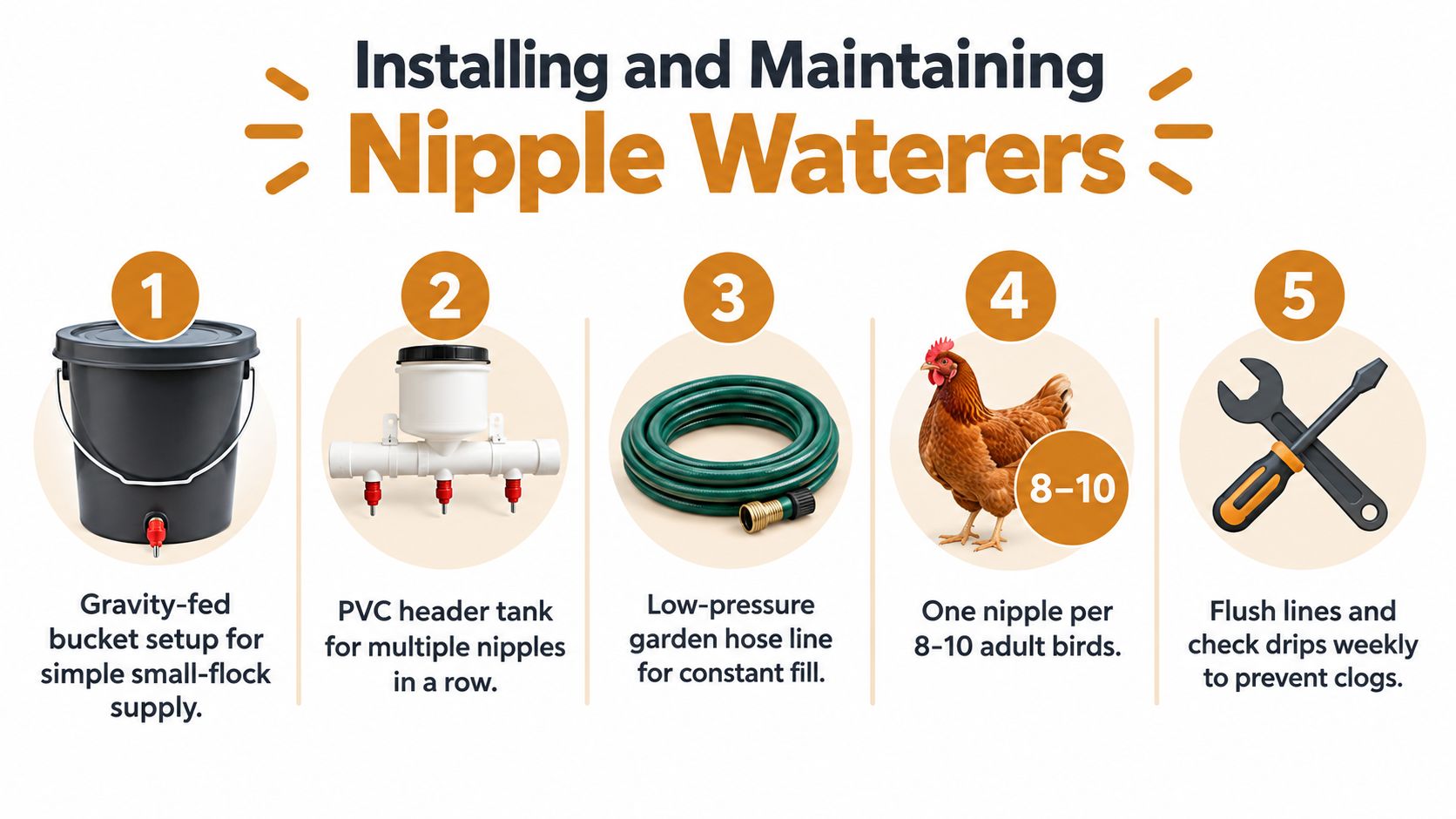
A small flock can use a gravity-fed bucket, a PVC header tank, or a low-pressure hose line. Choose the arrangement you can inspect easily. A simple bucket may be dependable because there are fewer parts, while a longer line can serve several locations but introduces more fittings, pressure changes, and potential failure points.
Place the valves where birds can reach them without straining. Adjust the height as the flock grows, and observe both the smallest and largest birds. Chicks and adult hens may need different positioning, especially when they share a coop.
Build in access and redundancy
The number of drink points should reflect demand, not just the number of birds. A veterinary poultry resource recommends one nipple for every two or three backyard birds, while a minimum welfare standard may allow one drinker for nine birds. Those figures illustrate the difference between minimum provision and a more resilient backyard design. The guidance appears in this resource on water for backyard poultry.
Consider placing multiple independent drink points rather than relying on one valve or one tank. If every outlet depends on a single reservoir, a blocked fitting, empty tank, failed pump, or pressure fault can interrupt the entire supply. A second tank or bypass gives you a practical fallback while you repair the main line.
Keep the backup source separate enough that it can still work if the primary line fails. During the first week of a new installation, watch the birds at different times of day and check droppings, activity, and drinking behavior. Hydration is a system-design problem, not merely a question of whether a chicken understands the valve.
Maintain the parts you can't see
Flush the line regularly and inspect the reservoir, valves, seals, and fittings. Look for slow drips, mineral buildup, algae, cracks, and outlets that behave differently from their neighbors. Plastic parts exposed to sunlight can become brittle, while cold weather can stop water from reaching the birds.
Clean the container according to the manufacturer's instructions, and don't assume that a sealed drinking point makes the entire system self-cleaning. If you change from an open drinker, supervise the flock until every bird has demonstrated that it can activate a valve.
A reliable setup has three qualities: every bird can reach water, every outlet works, and another source is available if the primary line fails.
Key Takeaways for Chicken Keepers
The phrase “chicken with nipples” joins an anatomy puzzle to a watering-equipment question. Separating those meanings makes the answer much clearer.
- The body part is avian, not mammalian: Chickens don't have functional mammary glands or teats. A small papilla at the tail base is usually part of the uropygial preen gland.
- The location matters: The normal preen-gland opening sits near the rump. A bump elsewhere deserves a closer look rather than an automatic label.
- Symptoms change the response: Heat, redness, scabbing, discharge, bleeding, rapid growth, or surrounding feather loss warrants veterinary attention.
- The drinker is a valve: A nipple waterer releases water when a bird activates its pin. The system needs correct height, working outlets, and a clean supply.
- Flow needs measurement: Test a middle outlet and the far end for 30 seconds, then compare the result with the appropriate life-stage target and the manufacturer's guidance.
- Redundancy protects the flock: Keep an independent backup water source available instead of making one reservoir the only route to hydration.
- Behavior completes the inspection: Watch every bird use the system, look for crowding, and check whether birds continue searching for water elsewhere.
Healthy feathers and steady hydration tell you more about a thriving flock than an unusual search phrase ever will. Leave a normal preen gland intact, and treat the watering line as equipment that requires observation, testing, and maintenance.
Pure Grubs offers USA-grown Black Soldier Fly Larvae as a supplemental treat for chickens and other birds, giving keepers another practical option for flock care alongside clean water and sound coop routines. Visit Pure Grubs to explore the available insect-feed options for your birds.