

chicken laying soft shelled eggs: Fixes for Your Flock
Finding a soft, rubbery egg in the nesting box can be alarming, but don't panic. It's a common issue that's usually straightforward to fix. More often than not, the culprit behind a chicken laying soft shelled eggs is a calcium problem—either she's not getting enough in her diet, or her body is struggling to absorb it properly. Of course, other factors like stress, a hen's age, or even an underlying illness can play a role, too.
Decoding the Causes of Soft Shelled Eggs
When you find a soft-shelled egg, it's more than just a weird discovery. Think of it as a direct message from your hen telling you that something is off-balance. To get to the root of the problem, it helps to appreciate the incredible biological marathon that goes into forming a perfect eggshell. It's a true marvel of nature, but it's also a surprisingly delicate process that can be easily thrown off track.
The Shell Formation Journey
A hard, protective eggshell is made almost entirely of calcium carbonate. Once the yolk and the albumen (the egg white) are ready, the egg travels to the hen's shell gland, or uterus. It stays there for about 20 hours while her body works tirelessly to build the shell, layer by tiny layer.
This process is a massive metabolic undertaking. The hen has to pull a huge amount of calcium from her bloodstream and even her own bones to get the job done. Any little disruption—a nutritional deficiency, a stressful event, or a health issue—can interrupt this critical final stage. For example, a sudden fright from a neighborhood dog could cause her to lay the egg prematurely, long before the shell has had a chance to harden.
A hen must mobilize roughly 10% of her body’s total calcium supply just to create a single eggshell. This highlights why a consistent, absorbable source of calcium is non-negotiable for laying hens.
Soft-shelled eggs are a known issue in commercial operations as well, though they are typically identified and removed long before reaching store shelves. While the global incidence is usually under 1%, this rate can tick upward when flocks are dealing with specific stressors or nutritional gaps. You can learn more about how the industry handles egg quality and production standards.
Quick Guide to Common Causes of Soft Eggs
Use this summary to quickly diagnose the most likely reasons for soft shelled eggs and determine your first course of action.
| Cause Category | Specific Issue | Primary Action |
|---|---|---|
| Dietary | Insufficient calcium or imbalanced phosphorus. | Provide free-choice oyster shells and a high-calcium treat like Pure Grubs BSFL. |
| Environmental | Heat stress, predator threats, or overcrowding. | Ensure adequate shade, water, ventilation, and a secure coop environment. |
| Hen Health | Age (very young or old hens), illness, or internal parasites. | Monitor the hen's behavior and droppings; consult a vet if issues persist. |
This table is a great starting point, but remember that sometimes multiple factors are at play.
By understanding this delicate balance, you can become a better flock detective, pinpointing exactly why your chicken is laying soft shelled eggs and applying the targeted solutions we'll cover next.
Fine-Tuning Your Flock's Diet for Stronger Shells
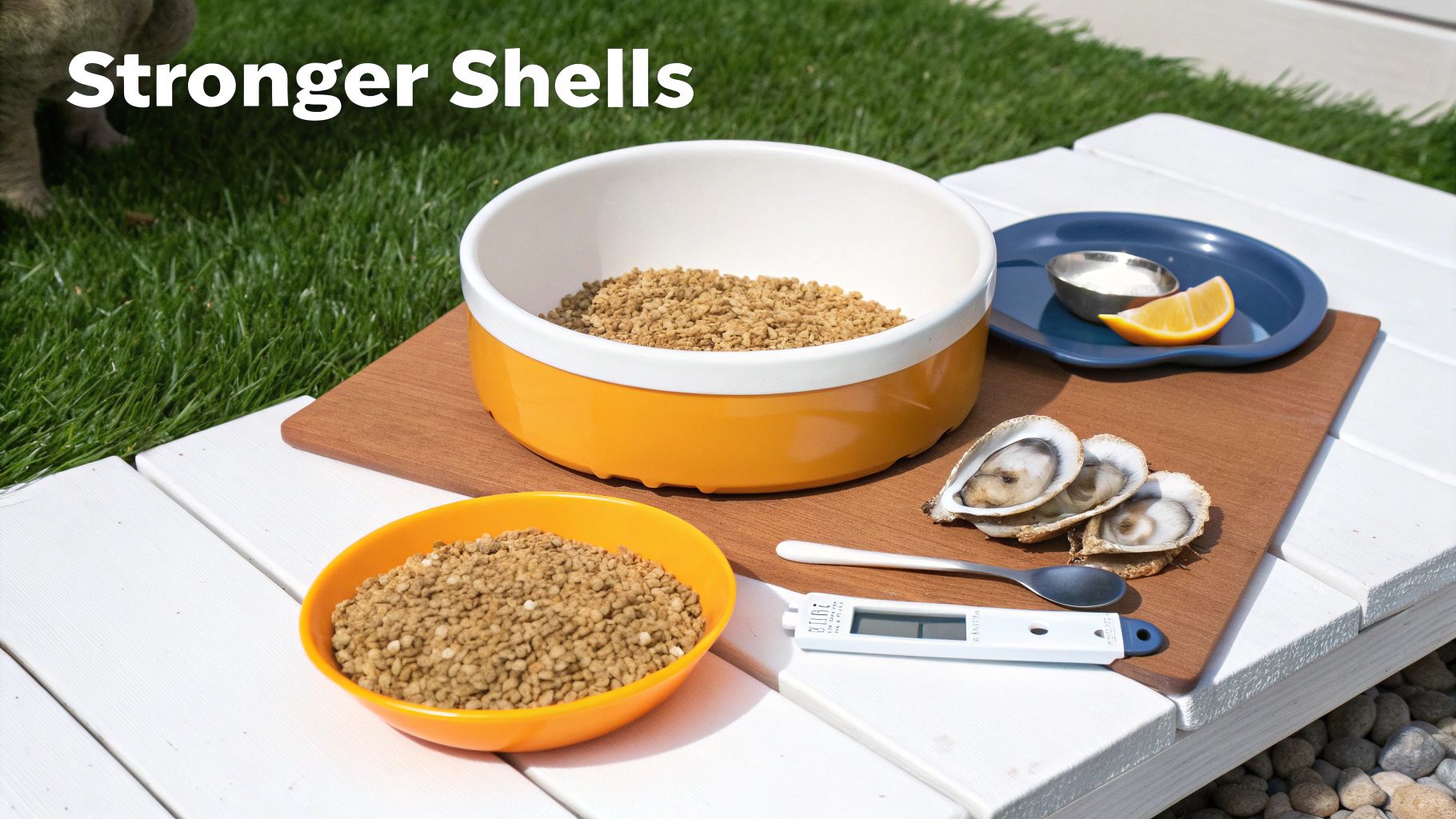
When you discover a chicken laying soft shelled eggs, the first place I always look is the feed bowl. A hen's diet is, without a doubt, the biggest factor in producing strong, healthy eggshells. It's not just about tossing more calcium at them; it's about giving them a balanced diet so their bodies can actually put that calcium to good use.
Think about this: a single laying hen needs a massive 4 to 5 grams of calcium every day to form just one eggshell. Calcium is the main ingredient, but it’s useless without the right supporting nutrients. It's like having a pile of bricks but no mortar to hold them together. Just adding more calcium won't fix a soft-shell problem if the hen can't absorb it properly.
Calcium and Its Essential Partners
The easiest and most common dietary fix is to offer a separate, free-choice source of calcium. This lets each hen take exactly what her body tells her she needs. Crushed oyster shell is the old standby, and it works well, but it’s far from the only game in town.
Calcium doesn't work in a vacuum, though. It needs a team of other nutrients to get the job done right:
- Vitamin D3: This is the gatekeeper. It unlocks the hen's ability to absorb calcium from her gut into her bloodstream.
- Phosphorus: This mineral works side-by-side with calcium to build strong bones and shells, but getting the ratio right is critical.
- Magnesium: Another key player in the process, magnesium is also vital for proper bone and shell formation.
A good-quality commercial layer feed is carefully formulated to provide all of these nutrients in the correct balance. The problem often starts when we get a little too generous with the treats. If more than 10% of your flock’s diet comes from low-calcium goodies like scratch grains or kitchen scraps, you're watering down the good stuff and paving the way for deficiencies.
It's also worth remembering that a hen's age and environment matter. For example, hens over 60 weeks of age naturally become less efficient at metabolizing calcium, making a top-notch diet even more important.
Powerful Supplements to Boost Shell Strength
Even with a great layer feed, some flocks need an extra boost. This is especially true during stressful times like molting, extreme weather, or simply if you have older hens in your flock. This is where a high-calcium, nutrient-rich supplement can completely turn things around.
I'm a big fan of Black Soldier Fly Larvae (BSFL). They're a fantastic choice because they offer a natural, easily digestible source of calcium. Unlike mealworms, which actually have a poor calcium-to-phosphorus ratio, Pure Grubs BSFL are a powerhouse, naturally containing up to 85% more calcium. This makes them an incredible tool for building up shell strength from the inside out.
If you want to explore all the options, we've put together a guide on choosing the best calcium supplement for your chickens.
By making sure your hens get a complete layer feed, have constant access to a separate calcium source, and enjoy a high-quality treat like Pure Grubs, you’re giving them the complete nutritional toolkit they need. This kind of proactive diet management is your strongest defense against the frustration of finding those dreaded soft-shelled eggs.
Creating a Low-Stress Coop Environment
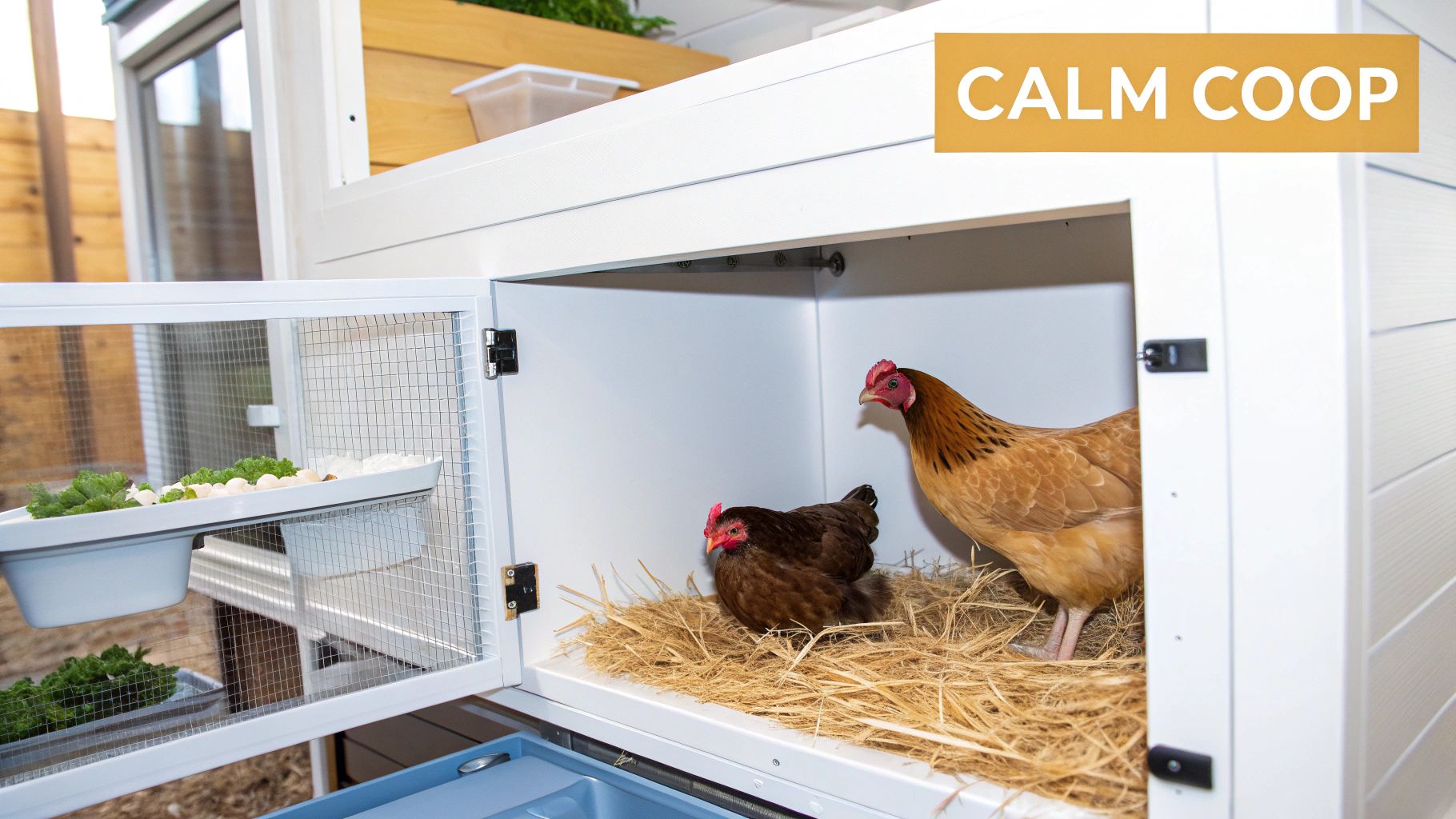
While diet is usually the first place we look for soft-shell egg culprits, a hen's environment has a massive impact. Stress is a silent disruptor in the coop, and it can mess up the egg-laying cycle even when a hen’s nutrition is spot-on. What might seem like a normal day to you could feel like a series of threats to your flock.
When a hen gets stressed out, her body floods with cortisol. This hormone can directly interfere with how her shell gland functions. A sudden fright from a hawk flying overhead, a loud backfire from a truck, or even just being handled too roughly can make her lay an egg before it's ready. The result? A thin, soft, or even non-existent shell. This is often why a perfectly healthy chicken laying soft shelled eggs does so out of the blue.
Pinpointing Hidden Coop Stressors
The goal is to create a predictable and safe space for your flock. Chickens are creatures of habit; they find comfort in routine. Just doing simple things like feeding them at the same time and opening the coop on a consistent schedule helps them feel secure.
But sometimes, the biggest stressors are right inside the coop, coming from the flock itself. You've got to pay attention to the social dynamics.
- Overcrowding: This is a huge one. Chickens crammed together get agitated. As a rule of thumb, make sure you have at least 4 square feet of coop space per standard hen and around 8-10 inches of roosting bar for each bird.
- Bullying: The pecking order is a real thing, but if it gets out of hand, it can prevent more timid hens from getting to food, water, or a nesting box. That kind of constant harassment is incredibly stressful.
- Fighting for Resources: If you’ve got one feeder for a dozen hens, you can bet the birds at the bottom of the pecking order are getting pushed aside. This leads to a double-whammy of poor nutrition and chronic stress.
A simple trick I've used for years to curb bullying is to place a second feeder and waterer at the opposite end of the run. This gives the less dominant hens a fighting chance to eat and drink without being hassled. It can make a world of difference.
Practical Steps for a Calmer Flock
A few small adjustments can turn a stressful coop into a chicken sanctuary. Start by just watching your flock. Look for signs of stress like excessive feather picking, a hen who is always hiding, or constant squabbles.
Once you know what's wrong, you can make targeted changes. If you see one hen is always getting chased from the feeder, adding that second station is an easy fix. If the coop smells strongly of ammonia, it’s time to improve the ventilation to reduce respiratory stress. A well-run coop is the foundation of a healthy flock. For more tips, check out our complete guide on how to keep your chickens healthy.
Don't forget about outside threats, either. Is your coop truly secure from raccoons, weasels, or even the neighbor’s dog? A weak latch or a small tear in the hardware cloth can leave your flock feeling vulnerable all night long. Making that coop a fortress gives your hens the peace of mind they need to do their job: laying strong, healthy eggs.
Knowing When Soft Shells Signal a Health Issue
Finding a soft-shelled egg in the nesting box can be a bit of a shock, but it doesn't always mean you need to panic. If you’ve got a young pullet just starting to lay, it’s pretty common for her to produce a few "oopsie eggs" as her reproductive system gets into the swing of things. Sometimes, a simple scare—like a dog barking or a hawk flying overhead—can cause a hen to lay prematurely, resulting in a flimsy shell. These are usually just one-offs.
The time to start paying closer attention is when you see a pattern emerge. If it’s the same hen laying soft eggs day after day, or if you suddenly have several hens doing it, that's a clear sign you need to do more than just add a little extra calcium. This is when you put on your flock detective hat and start looking for a deeper health problem.
Performing a Flock Wellness Check
When a chicken laying soft shelled eggs becomes a regular thing, it's time for a head-to-toe wellness check. Don't just zero in on the hen with the issue; take a good look at your entire flock. A healthy chicken is a busy chicken—alert, active, with bright, clear eyes.
Your first move should be to listen and watch for any respiratory symptoms. Illnesses like infectious bronchitis can directly attack the oviduct, which is the hen's shell-making factory. This often causes a sudden drop in egg production and a surge in misshapen, thin, or totally soft-shelled eggs.
Keep an eye out for these specific signs:
- Coughing, sneezing, or rattling sounds as they breathe.
- Any discharge from their nostrils or eyes.
- Swelling around their face or eyes.
- Lethargy—a hen that’s hunched over, listless, and separated from the flock.
Seeing these symptoms, especially when they show up alongside poor egg quality, is a strong indicator of an underlying illness that needs immediate attention. You can learn more in our detailed guide on the common symptoms of illness in chickens.
Distinguishing Minor Issues from Major Problems
It's so important to look at the whole picture. One soft egg from one hen is one thing, but a sudden increase across the flock is a major red flag. This is something commercial operations watch like a hawk. Industry data reveals that a healthy, well-managed flock typically keeps soft-shelled eggs below 1%, but that number can easily jump to 2-3% during a disease outbreak.
To help you sort things out, here's a quick reference table. It's a handy way to distinguish between a simple hiccup and a potentially serious health issue based on what you're observing in the coop.
| Symptoms Checklist for Common Laying Issues | ||
|---|---|---|
| Symptom | Possible Cause | Recommended Action |
| A single soft-shelled egg from one hen, who otherwise seems fine. | Stress (predator scare, loud noise), a young pullet just starting to lay. | Monitor the hen for a few days. Ensure the flock has a calm environment and adequate calcium. |
| The same hen consistently lays soft or thin-shelled eggs over several days. | Calcium deficiency, potential issue with her shell gland, older age. | Boost calcium with a high-quality supplement like Pure Grubs. If no improvement, observe her for other signs of illness. |
| Multiple hens suddenly start laying soft-shelled eggs; you also notice coughing or sneezing. | Respiratory illness (e.g., Infectious Bronchitis), major nutritional imbalance, contaminated feed. | Isolate affected hens immediately. Check feed for mold. Deep clean the coop. If symptoms are severe or spreading, consult a veterinarian. |
| A hen is lethargic, has messy droppings, and has stopped laying altogether. | Internal parasites, infection, or other serious illness. | Isolate immediately. Provide supportive care (electrolytes, quiet space). A vet consultation is highly recommended. |
This checklist isn't a substitute for a vet's diagnosis, but it's a great starting point for figuring out your next steps and how urgently you need to act.
Key Takeaway: A single soft egg is an observation. A pattern of soft eggs is a problem that requires investigation. Pay close attention to any changes in a hen's droppings, appetite, or social behavior.
If you even suspect an illness, your best bet is to isolate the affected hen right away to keep whatever she has from spreading. Give her a quiet, comfortable "hospital wing" with her own food and water where you can keep a close eye on her. While a simple diet change can fix many soft-shell issues, it won’t cure a respiratory infection. Knowing when to escalate from dietary support to isolation is one of the most important skills you can have as a chicken keeper.
A Practical Action Plan to Fix Soft Shells
Finding a soft-shelled egg can be alarming, and it's easy to jump to the worst conclusions. But instead of guessing, let's work through the problem logically. A systematic approach will help you pinpoint the cause and get your hens back on track much faster. We’ll start with the simplest and most common culprits first.
Your first stop should always be the feed station. Before you start worrying about diseases, let's double-check the basics. Are your hens getting a high-quality layer feed at all times? Is it fresh? And here’s the big one: do they have a separate, free-choice source of calcium, like crushed oyster shell, available 24/7?
A hen’s body can’t stockpile large amounts of calcium, so she needs a steady daily supply. Offering oyster shell separately is key because it lets her self-regulate. She instinctively knows when she needs more for shell formation and will take just the right amount.
Also, take a hard look at the treats you're giving. It’s fun to spoil your flock, but too many goodies can throw their whole diet out of whack. A good rule of thumb is to keep treats—even healthy ones like scratch grains or kitchen scraps—to no more than 10% of their total daily food intake.
Evaluate Environmental and Social Factors
If you're confident the diet is solid but the problem continues, it’s time to shift your focus to the coop and run. Stress is a huge factor in egg quality.
Are your hens feeling the squeeze? Overcrowding is a major stressor that can disrupt a hen's laying cycle. Make sure each standard-sized bird has at least 4 square feet of space inside the coop and about 8-10 inches of room on the roosting bar.
Next, spend some time just watching your flock interact. You might have a timid hen at the bottom of the pecking order who is being consistently bullied away from the feeder or the calcium dish. This creates a double-whammy: she's stressed and malnourished. Sometimes, adding a second feeder and waterer in a different location can completely solve this problem.
This decision tree can help you narrow down the possibilities. Is this a one-off issue, or a persistent problem?
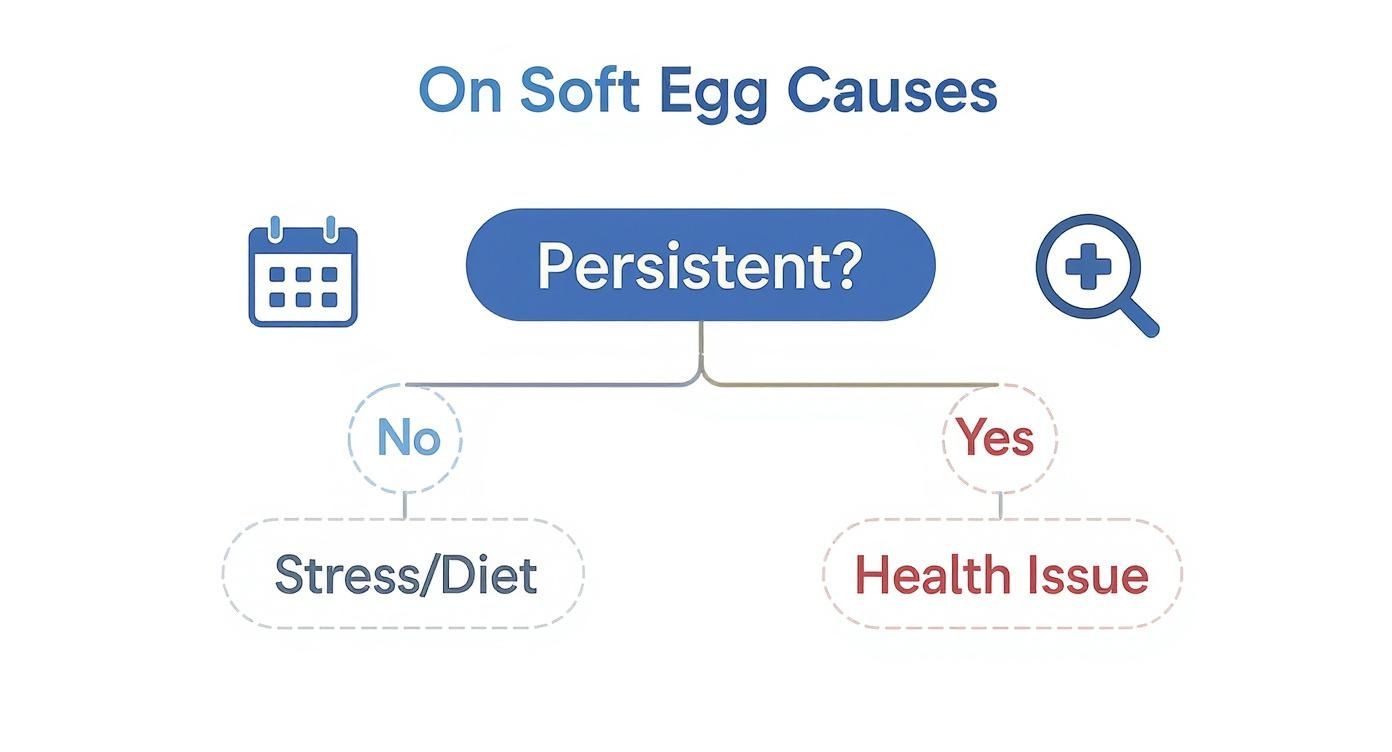
As you can see, an occasional soft shell often points to a temporary upset. But if it's happening consistently, it might be time to investigate a deeper health concern.
When to Escalate to Health Checks
After you’ve fine-tuned the diet and environment, give it a week or two. That's usually enough time to see an improvement in shell quality.
If you see no change, or if the soft shells are paired with other worrying signs like lethargy, coughing, or messy droppings, it’s time to suspect a health issue.
Your first move should be to isolate the hen. This protects the rest of the flock from anything contagious and allows you to observe her more closely. If she doesn't get better or her condition worsens, consulting a vet who has experience with poultry is the right call. By following this methodical plan, you can skip the guesswork and get straight to the solution for strong, healthy eggshells.
A Few Common Questions About Soft-Shelled Eggs
Finding a soft-shelled egg can be puzzling, even for seasoned chicken keepers. It's easily one of the most frequent worries I hear about. Let's tackle some of the common questions that pop up, so you know exactly what's going on in your coop and what to do next.
Can You Eat a Soft-Shelled Egg?
I'll be blunt: it’s a hard no on this one. It's just not worth the risk. A normal, hard eggshell is a brilliant little fortress, keeping nasty bacteria like salmonella from getting inside. Without that shell, the egg is completely vulnerable to contamination from the moment it's laid.
The safest bet is to toss any soft-shelled or shell-less eggs you find. Your energy is much better spent figuring out and fixing the root cause for your hen's sake.
How Quickly Will I See Improvement After Diet Changes?
Once you've switched to a quality layer feed and offered a separate, free-choice calcium source, you should start seeing stronger shells pretty fast—often within a week. The whole egg-making journey takes about 26 hours, and the shell itself is formed in the last 20 hours of that process.
Because of this quick turnaround, diet changes can make a noticeable difference almost immediately. If you’ve been providing consistent dietary support for about 10 days and still aren't seeing any improvement, that’s your cue to start looking into other factors, like stress or a hidden health problem.
Is a Soft Egg Normal for a Young Hen?
Yes, absolutely. This is something almost every chicken keeper experiences. When a pullet (a young hen) first starts laying, her reproductive system is still warming up and figuring things out.
Don't be surprised if her first few attempts are a bit wonky. You might get tiny "fairy eggs," double-yolkers, or, you guessed it, soft-shelled eggs. If it only happens once or twice before she gets the hang of it and starts laying normal eggs, just chalk it up to her body learning the ropes. If it keeps happening, though, it's time to double-check that her diet has all the calcium she needs.
An occasional soft egg from a new layer is just a sign of her system firing up. A consistent pattern of soft eggs, however, signals an issue that needs your attention.
Can One Stressful Event Cause a Soft-Shelled Egg?
Without a doubt. The shell-making process is surprisingly delicate, and a sudden shock can throw it completely off schedule. A hawk flying overhead, a loud thunderstorm, or even being handled a bit too roughly can be enough to stress a hen out and cause her to lay an egg prematurely.
When she's startled like that, her shell gland doesn't get the full 20 hours it needs to build a strong shell. What you get is a flimsy or soft-shelled egg. The good news is this is usually a one-off thing. Once the scare is over, her very next egg should be perfectly fine.
For a reliable, high-calcium boost that your hens will go crazy for, Pure Grubs offers USA-grown Black Soldier Fly Larvae. They’re naturally packed with up to 85% more calcium than mealworms. Give your flock the support they need for stronger shells and better health. You can check out our premium BSFL at PureGrubs.com.