

Mastering chicken feed types for a thriving flock
Figuring out the right chicken feed is a lot simpler than it looks. The secret? It all comes down to your flock's age.
Just like babies, teenagers, and adults have different dietary needs, so do chickens. What a tiny chick needs to thrive is worlds apart from what a grown, egg-laying hen requires. The whole system is built around three core feeds: starter, grower, and layer rations.
Decoding Chicken Feed for Every Life Stage
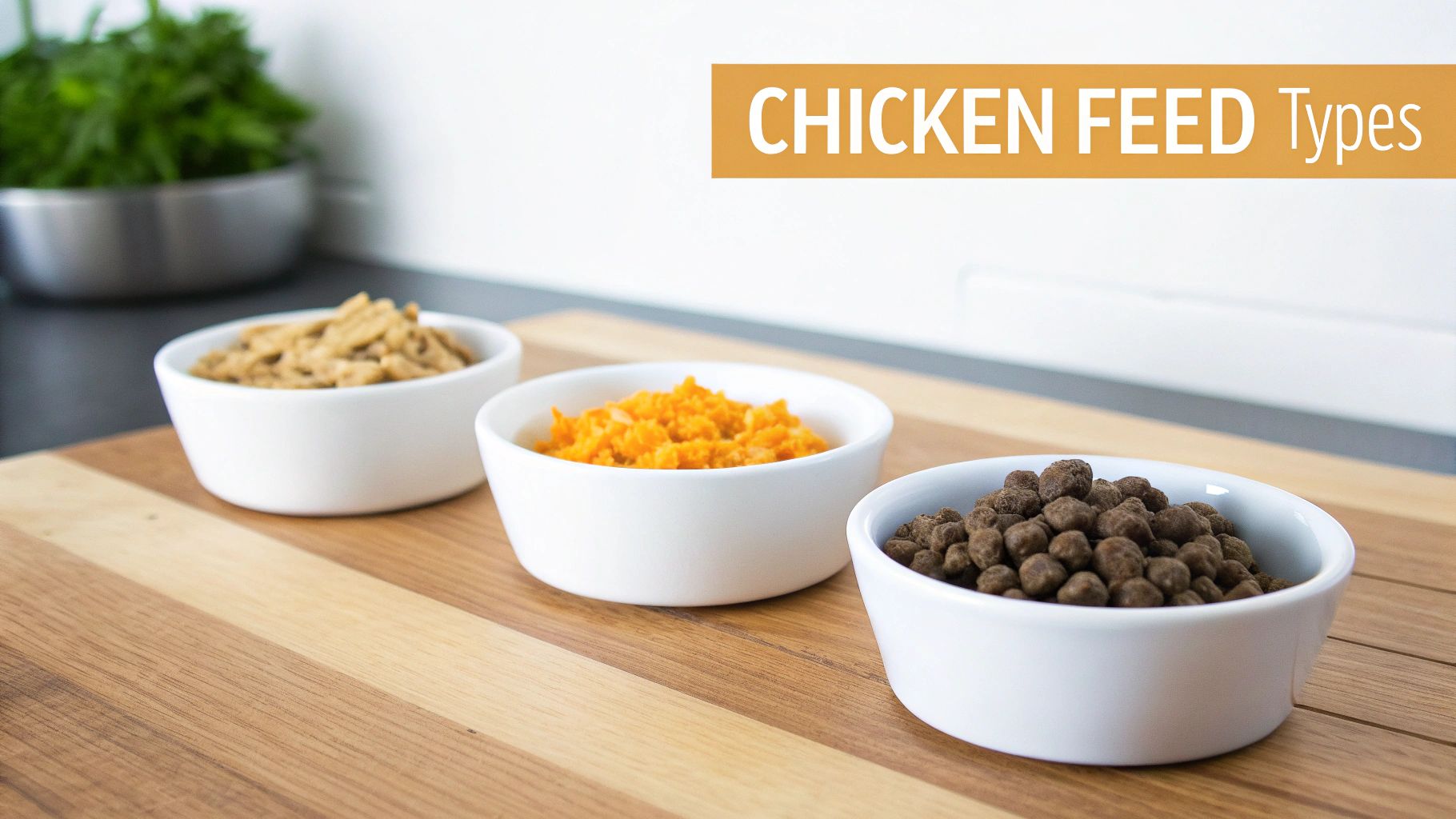
Walking into a feed store for the first time can be a bit intimidating. You're faced with a wall of bags labeled starter, grower, layer, and finisher, and it’s easy to feel lost. But don't worry—think of these feeds as a simple timeline that follows your flock’s journey from hatch to hen.
I like to think of it like building a house. Starter feed is the foundation. It’s packed with protein (20-24%) to fuel the explosive growth chicks go through in their first few weeks. It's all about building that strong base.
Then comes the "teenage" phase. Chickens switch to grower feed, which is like putting up the framing of the house. It has a bit less protein but provides all the balanced nutrition needed for steady bone and muscle development.
Finally, once your hens are mature enough to start laying, they graduate to layer feed. This is the finishing work, specially fortified with a huge boost of calcium. This ensures the house—your hen—has everything she needs to produce strong, healthy eggs day after day.
Chicken Feed Types by Life Stage at a Glance
The key differences between these feeds boil down to protein and calcium. As a chicken gets older, its need for protein dips slightly, but once it starts laying, its need for calcium skyrockets. This isn't an accident; it's essential for their long-term health. Giving the wrong feed at the wrong time—like high-calcium layer feed to a young chick—can lead to serious health issues, including kidney damage.
Here's a simple table to break it all down for you.
| Feed Type | Primary Purpose | Typical Protein % | Typical Calcium % | Age Range |
|---|---|---|---|---|
| Starter | Rapid growth and feather development in chicks. | 20-24% | 1.0-1.25% | 0-6 Weeks |
| Grower | Steady, healthy bone and muscle development. | 16-18% | 1.0-1.25% | 6-20 Weeks |
| Layer | Strong eggshell formation and hen health. | 16-18% | 3.5-5.0% | 20+ Weeks |
Think of this table as your go-to cheat sheet. While these are the three main rations you'll use, you'll come across other kinds of poultry feeds for different purposes, which we'll get into later. For now, mastering these foundational feeds is the most important step you can take to raise a happy, healthy, and productive flock.
Why a "Complete Feed" is Your Flock's Best Friend
Ever tried to make sure your family gets the perfect balance of protein, vitamins, and minerals in every single meal? It's a tough job. Now, picture doing that for a flock of chickens whose needs change dramatically as they grow. That's exactly why something called a complete feed is the cornerstone of a healthy coop.
These aren't just bags of random grains. Complete feeds are meticulously formulated to give a chicken everything it needs in one single source. It takes all the guesswork out of the equation. You don't have to wonder if your hens are getting enough calcium for their eggshells or if your growing pullets have the right amino acids for healthy development. It's all in there, in every bite.
Think of it as the ultimate meal-prep service for your flock. You wouldn't raise a toddler on just snacks, and the same idea applies here. Whether you have a small backyard setup or run a larger operation, a quality complete feed is the foundation for good health and productivity.
What's Actually in the Bag?
A lot of science goes into creating that balanced bag of feed. Each formula is designed to achieve a specific goal, whether that's fueling rapid growth in meat birds or supporting consistent egg-laying in hens.
At its core, every complete feed is built on a few key pillars:
- Protein Sources: Absolutely crucial for muscle, feathers, and egg production. This usually comes from things like soybean meal.
- Energy Sources: Chickens need fuel to scratch, forage, and lay eggs. Corn and wheat are common carbohydrates that provide this energy.
- Vitamins and Minerals: A carefully measured premix of vital nutrients is added, like Vitamin D3 to help with calcium absorption and phosphorus for strong bones.
- Amino Acids: Think of these as the essential building blocks of protein. Ingredients like lysine and methionine are often added to ensure the protein in the feed is fully utilized by the chicken's body.
When all these components come together in the right proportions, they work in harmony. The vitamins help the chicken access the energy from the carbs, and the amino acids make the protein count. It's this nutritional science that makes complete feeds so incredibly reliable.
Designed for a Specific Job
The true magic of complete feeds really shines when you look at the specialized rations available. Take broiler chickens, for instance. They are bred for meat and need an intensely high-protein, high-energy diet to support their incredibly fast growth. Their feed is engineered specifically for that outcome.
In fact, the need for this level of precision is so great that broiler feed makes up the single largest chunk of the global poultry feed market, accounting for 38.6% of the total. These formulas are tweaked to get the most efficient muscle and weight gain possible, proving just how much of a difference the right feed can make. If you're curious, you can read more research about the global poultry feed market to see how these specialized rations drive the entire industry.
A complete feed solves the problem of the picky eater. A chicken can't just pick out its favorite bits (like corn) and ignore the rest. Every pellet or crumble is a nutritionally complete package, ensuring a balanced diet with every mouthful.
This is how you get consistent, predictable results. For a laying hen, a complete layer feed delivers the 3.5-5.0% calcium she must have to form strong eggshells day after day, without robbing her own bones of a critical mineral. For a young pullet, a grower feed provides enough protein for a strong frame but not so much that she matures too quickly.
Bottom line: Relying on a complete feed is the single best thing you can do to raise a healthy, productive flock, from fluffy chick to mature bird.
A Flock's Journey Through Different Feeds
A chicken’s diet isn't a one-size-fits-all deal. Just like human babies, teenagers, and adults have different nutritional needs, so do chickens. What a tiny chick needs to thrive is completely different from what a hardworking laying hen requires.
Getting the feed right for each life stage is arguably the single most important thing you can do for your flock’s health. Think of it as a nutritional roadmap that guides them from fuzzy hatchlings to confident, egg-laying adults. This journey is broken down into three main stages, each with its own special feed.
Nailing this progression helps you sidestep common health problems, encourages strong growth, and ultimately sets your hens up for a long, productive life. It’s a simple concept, but it makes all the difference.
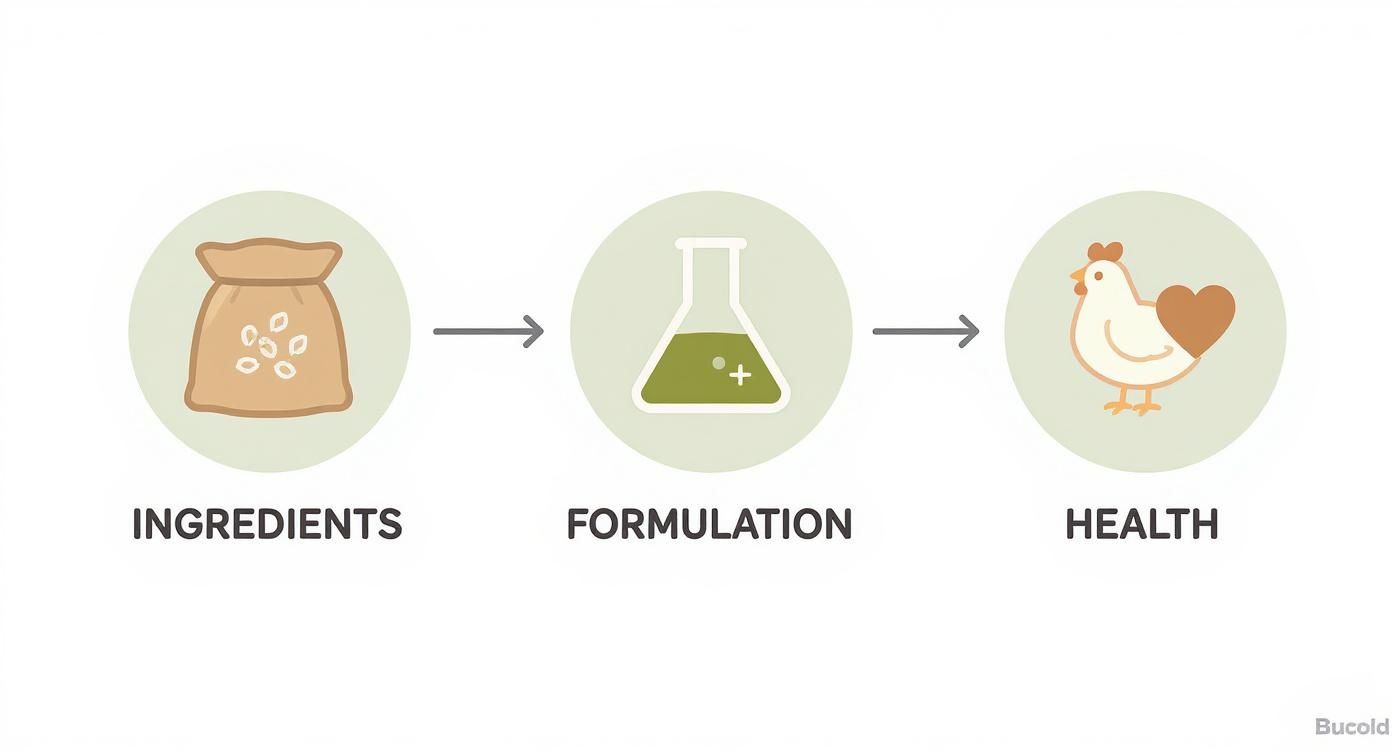
This process isn't just about mixing grains; it's a science. The right ingredients are carefully balanced to create a complete feed that fuels the health and vitality of your birds at every single step.
Stage 1: The Starter Feed Sprint
From the moment they hatch until they’re about six weeks old, chicks are in a full-on growth sprint. They’re basically little feather-making, muscle-building machines, and they need a high-octane diet to keep up. That’s where starter feed comes in.
This feed is packed with protein—typically between 20% and 24%. This protein is the essential fuel for everything from feather development to building a strong immune system. It’s the most protein-rich food a chicken will ever eat, and for very good reason.
You’ll often see medicated and unmedicated versions of starter feed. The medicated option contains a small amount of a coccidiostat like amprolium, which helps protect vulnerable little chicks from coccidiosis, a common and often deadly intestinal parasite. Many backyard chicken keepers use it as a preventative safety net for the first several weeks.
Stage 2: The Grower Feed Marathon
At around six weeks old, your chicks are no longer tiny fluffballs. They’re now in their awkward teenage phase, and it’s time to switch them over to grower feed. Their explosive growth spurt starts to level out, and their dietary needs change along with it.
Grower feed has a lower protein content, usually around 16% to 18%. This isn't a downgrade; it's a deliberate shift to support more controlled, steady growth. It helps them build strong bones and organs without pushing them to mature too quickly.
Think of it this way: starter feed is for building the frame, and grower feed is for filling it out and making it strong. It has the same low calcium levels as starter feed, which is critical. Too much calcium at this age can cause serious, permanent kidney damage. Your flock will stay on this feed until they are just about ready to start laying.
Key Insight: The whole point of the grower phase is to raise a healthy, robust pullet (a young female chicken) that can handle the physical stress of laying an egg nearly every day. Rushing this stage with the wrong feed can seriously compromise her future health and productivity.
Stage 3: The Layer Feed Payoff
The big moment usually arrives around 18 to 20 weeks of age, or whenever you spot that very first egg. This is your cue to make the final and most long-term switch to layer feed. This formula is specifically engineered to support a hen through her productive egg-laying years.
The protein stays in that 16% to 18% range, but the real game-changer is the calcium. Layer feed is loaded with it, containing anywhere from 3.5% to 5.0%. This massive boost is absolutely essential for forming strong, solid eggshells. Without it, a hen would start pulling calcium from her own bones, leading to weakness, fractures, and other health issues.
This complete feed gives a hen everything she needs to lay beautiful eggs consistently while also maintaining her own body condition. She’ll likely be on this diet for the rest of her adult life.
How to Transition Feeds Without the Drama
You never want to switch feeds cold turkey. A sudden change can easily upset a chicken's sensitive digestive system, causing stress and putting them off their food. The key is to make the change gradually.
Just follow this simple 7-to-10-day plan:
- Days 1-3: Mix 75% old feed with 25% new feed.
- Days 4-6: Move to a 50/50 mix of old and new.
- Days 7-9: Shift the ratio to 25% old feed and 75% new feed.
- Day 10: You’re on 100% of the new stuff!
This slow-and-steady approach gives the good bacteria in their gut time to adjust, making the changeover completely seamless and stress-free. By following your flock on this nutritional journey, you're giving them exactly what they need, right when they need it most.
Choosing the Right Feed Texture for Your Flock
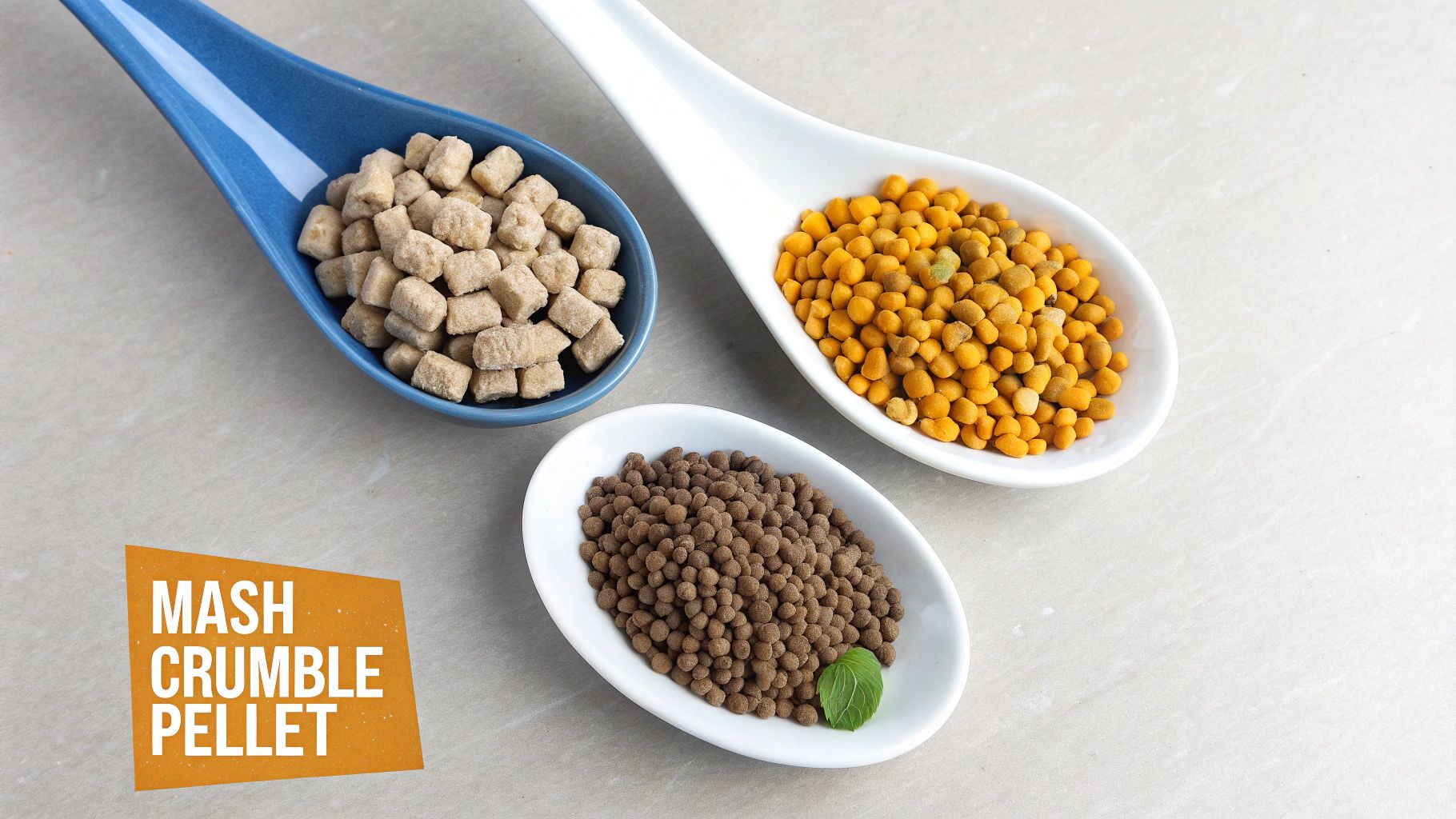
Once you've picked the right nutritional formula for your flock's age, the next thing to consider is the feed's form. It might seem like a small detail, but the actual texture—whether it’s a fine powder, a broken-up granule, or a solid nugget—makes a huge difference in how your chickens eat, how much feed gets wasted, and even how clean you can keep the coop.
Think of it like choosing breakfast cereal for your family. You wouldn't give a toddler a bowl of giant, crunchy granola clusters. In the same way, chickens have specific needs based on their age and beak size. Picking the right texture ensures every bird in your flock, from the tiniest chick to the most seasoned hen, can eat easily and get the nutrition they need.
H3: Mash: The Soft Start for Tiny Beaks
Mash is the original, old-school chicken feed. Picture all the grains, proteins, and vitamins ground down into a fine, almost flour-like consistency. It’s the softest option out there, which makes it the go-to choice for newly hatched chicks.
Their little beaks can easily pick up the tiny particles without any struggle. This is precisely why almost all starter rations come in a mash form. The major trade-off? It’s undeniably messy. Chickens love to scratch and flick their food around, and that fine powder can end up everywhere but their mouths. On the plus side, you can mix it with a bit of water to create a tempting wet mash for picky eaters or birds that are feeling under the weather.
H3: Crumbles: The Versatile In-Between
So, what do you get when you take finished feed pellets and just crack them into smaller pieces? You get crumbles. This texture is the perfect middle-of-the-road option—more substantial than mash, but still small enough for growing pullets to manage without a problem.
Crumbles are the classic choice for the "teenage" phase of a chicken's life. Many birds find the texture really appealing, which can be a big help in encouraging hesitant eaters to dig in. While crumbles offer the same balanced nutrition as pellets, they are still a bit messier and can kick up more dust in the feeder and coop.
A Quick Analogy: Think of crumbles as the "Grape-Nuts" of the chicken world. They're a satisfying, easy-to-eat texture for birds that have graduated from baby food (mash) but aren't quite ready for the adult-sized bites (pellets).
H3: Pellets: The Tidy, No-Nonsense Choice
For adult hens, pellets are the most common and efficient feed form by far. To make them, the mash is steamed and squeezed through a die to create dense, bite-sized cylinders. This process locks all the nutrients into a neat little package and dramatically cuts down on wasted feed.
Because every single pellet is a complete nutritional bundle, your chickens can't pick and choose their favorite bits of grain—a common problem with looser feeds. This ensures they get a perfectly balanced diet in every single bite. Pellets are also cleaner, less dusty, and work perfectly in most gravity-fed systems. While a few fussy hens might turn their beaks up at first, most adult flocks take to pellets right away. For a clean coop and maximum nutrition, pellets are the standard.
Comparing Feed Forms Mash vs Crumbles vs Pellets
Choosing the right feed texture really comes down to balancing ease-of-eating with waste. A brand-new chick simply can’t handle a hard pellet, while a full-grown hen will make a spectacular mess with a feeder full of fine mash. This table breaks down the pros and cons to help you match the texture to your flock’s needs.
| Feed Form | Best For | Pros | Cons |
|---|---|---|---|
| Mash | Newly hatched chicks (0-6 weeks) and birds needing soft food. | Easiest for tiny beaks to eat; can be mixed with water to encourage eating. | Very messy and leads to significant feed waste; can be dusty. |
| Crumbles | Growing pullets (6-20 weeks) and picky adult eaters. | Easy for a wide range of bird sizes to consume; highly palatable. | More waste and dust than pellets; chickens may still scatter it. |
| Pellets | Adult laying hens and mature birds. | Minimizes waste significantly; ensures balanced nutrition in every bite; clean and easy to handle. | May be too large or hard for very young birds; some picky hens may need time to adjust. |
In the end, your feed texture choices will naturally follow your flock's life story. You'll almost certainly start them on mash, move on to crumbles as they grow, and finally land on pellets for your mature, laying hens. Following this progression gives your chickens food that is not only nutritionally spot-on but also perfectly sized for them at every stage of life.
Diving into Specialized Chicken Feed
Once you get past the basic starter, grower, and layer feeds, a whole other world of chicken nutrition opens up. Think of these specialized options as tools to fine-tune your flock’s diet, whether you're looking to tackle specific health concerns or stick to a particular farming philosophy.
Getting to know these feeds helps you make smarter, more intentional choices for your birds. Maybe you're worried about common chick illnesses, or perhaps you're committed to organic practices. Whatever your goal, there's likely a feed out there to help you meet it.
Medicated Feed: A Proactive Shield for Chicks
When you first go to buy chick starter, you'll almost always face a choice: medicated or unmedicated. It's one of the first big decisions you'll make as a chicken keeper, so it's good to know what you're choosing.
Medicated feed isn't a medicine for sick birds; it’s a preventative measure. It’s simply a standard starter feed with a very small amount of a coccidiostat—usually amprolium—mixed in. Coccidiosis is a nasty intestinal parasite that can quickly overwhelm and kill young chicks, especially in warm, damp brooder conditions.
By offering medicated feed, you're giving your chicks' immune systems a leg up, allowing them to build a natural resistance to the parasite over time. Many backyard flock owners see it as a cheap insurance policy for the first few weeks, especially if their chicks didn't get a coccidiosis vaccine at the hatchery.
Fermented Feed: A Gut-Health Game Changer
One of the most popular topics among seasoned chicken keepers is fermented feed. The idea is surprisingly simple: you take your flock's regular feed, soak it in water for a couple of days, and let good bacteria work their magic.
It's essentially giving your chickens a daily dose of probiotics, much like we eat yogurt or kimchi for our own gut health. This natural fermentation process unlocks some pretty amazing benefits:
- Better Nutrition: Fermentation makes the vitamins and minerals in the feed easier for the chickens' bodies to absorb and use.
- Healthier Digestion: The live cultures help build a robust gut microbiome, which can lead to better overall health and even firmer droppings.
- Less Waste: Chickens go crazy for the tangy, porridge-like texture. They tend to eat it more eagerly and spill less, saving you money in the long run.
It does take a little more daily effort to maintain a fermentation system, but it's a fantastic way to boost the nutritional power of your feed and support your flock’s health from the inside out.
Organic vs. Non-GMO Feeds
As you browse the feed store aisles, you’ll see bags labeled "Organic" and "Non-GMO." These labels tell you about how the ingredients in the feed were grown, allowing you to match your chickens' diet with your own personal values.
An organic feed is the whole package. It's certified to be made from ingredients grown without synthetic pesticides, herbicides, or fertilizers. The ingredients are also inherently non-GMO, and the feed won't contain antibiotics or animal byproducts.
A non-GMO feed, on the other hand, guarantees that its main ingredients (usually corn and soy) don't come from genetically modified plants. While all organic feed is non-GMO, the reverse isn't true; a non-GMO feed could still be made with grains grown using conventional farming methods. Corn is a huge part of poultry nutrition worldwide because it’s packed with energy and chickens love it. In fact, corn-based feed makes up around 58% of the poultry feed market in major regions like the Middle East and Africa. You can discover more insights about the poultry feed market on Future Market Insights.
Choosing between these feeds—or adding in high-value supplements—is all about tailoring your strategy. It’s similar to how tossing in protein-packed treats like dried black soldier fly larvae can improve feather growth and eggshell quality. Selecting the right feed type helps you hit specific goals for your flock’s well-being and productivity.
Treats and Supplements: The Fun Stuff
A good, complete feed is the cornerstone of your flock's diet, but that doesn't mean there's no room for a little fun. This is where treats and supplements come in. Think of the complete feed as the main course—a perfectly balanced meal packed with everything they need. Treats are the dessert. They add variety and excitement to your chickens' lives, but they should never replace the nutritious meal.
Keeping that balance is the key to a healthy flock. It's easy to overdo it with goodies, but giving too many treats can throw their whole diet out of whack. This can lead to overweight birds or nutritional gaps that affect their health and egg-laying. A good rule of thumb is to keep treats to no more than 10% of your flock's total daily intake.
Scratch Grains: The Classic Chicken Treat
Walk down any feed store aisle, and you'll see bags of scratch grains. This stuff is chicken gold—usually a mix of cracked corn and other grains like wheat or oats. Chickens go absolutely bonkers for it.
Tossing a handful out in the run encourages their natural instinct to scratch and peck for food. It’s not just entertaining for you to watch; it's great mental stimulation and exercise for them. But remember, scratch is essentially chicken candy. It's high in carbs but low in protein, so it’s a treat that should only be given in moderation.
High-Value Supplements for an Extra Boost
Some additions to the diet are more than just a simple treat—they serve a real nutritional purpose. These are the supplements that can fill specific needs and give your flock a targeted health boost. For example, leaving a separate dish of oyster shell allows your laying hens to grab extra calcium whenever they feel they need it for strong eggshells.
High-protein supplements are especially helpful during stressful times, like when your chickens are molting. Growing a whole new set of feathers demands a massive amount of protein, and this is where a high-quality supplement like black soldier fly larvae (BSFL) can be a game-changer.
Black soldier fly larvae are a nutritional powerhouse. They're loaded with the protein chickens need for new feathers, and they're also naturally high in bioavailable calcium, which is crucial for strong bones and even stronger eggshells.
Products like Pure Grubs offer all that protein and calcium in a form your flock will find delicious. Adding a scoop a few times a week can make a real difference in your flock's feather quality, eggshell strength, and overall energy. If you'd like to learn more, check out our guide on choosing the best calcium supplement for chickens.
By using treats and supplements wisely, you can add enrichment and fine-tune your flock's nutrition without undermining the solid foundation of their complete feed. It's truly the best of both worlds: a scientifically balanced diet with the simple joy of a healthy, tasty reward.
Your Top Chicken Feed Questions Answered
Even the most seasoned chicken keeper runs into questions now and then. Let's tackle some of the most common ones I hear, so you can feel confident you're doing right by your flock.
Can I Give Layer Feed to Chicks?
That’s a hard no. It might seem like just chicken food, but layer feed is specifically formulated for hens laying eggs, meaning it's packed with calcium—we're talking 3.5% to 5.0%.
A chick's tiny, developing kidneys simply can't process that much calcium. Feeding them layer mash can lead to permanent kidney damage, stunted growth, and even death. Stick to a proper starter feed; it has the high protein and low calcium levels they need to thrive.
How Much Does a Chicken Eat Each Day?
On average, a full-grown laying hen will munch through about 1/4 pound (or roughly 1/2 a cup) of feed per day.
Of course, this isn't a hard-and-fast rule. A big Orpington will eat more than a small Bantam, and all chickens will eat more in the winter to generate body heat. If your flock gets to free-range and forage for bugs and greens, they'll naturally eat less from the feeder.
My Best Advice: Don't ration their main feed. Chickens are fantastic at knowing what their bodies need. As long as they have constant access to their complete feed, they’ll regulate their own intake just fine.
What’s the Best Way to Keep Feed Fresh?
Think cool, dry, and secure. Your biggest enemies are moisture, heat, and pests.
The best solution is a sealed, rodent-proof container. A metal trash can with a tight-fitting lid is a classic for a reason, but a heavy-duty plastic bin works great too. Store it in a shed, garage, or pantry—anywhere it's out of direct sunlight. Try to use up a bag of feed within two months of buying it to ensure your flock is getting the full nutritional punch.
When you're looking for a treat that does more than just make them happy, give Pure Grubs a try. Our USA-grown Black Soldier Fly Larvae are a natural source of high-quality protein and calcium that supports everything from strong eggshells to brilliant feathers. Find out more at https://puregrubs.com.