

Can Chickens Eat Celery? A Guide for Backyard Flocks
Yes, chickens can absolutely eat celery! It's a safe, non-toxic snack for your flock, and many birds seem to enjoy the crunchy texture. Think of it as a refreshing, hydrating treat rather than a full meal. Its high water content makes it great for a hot day, but it's pretty low on the calorie front.
The Short Answer on Feeding Chickens Celery
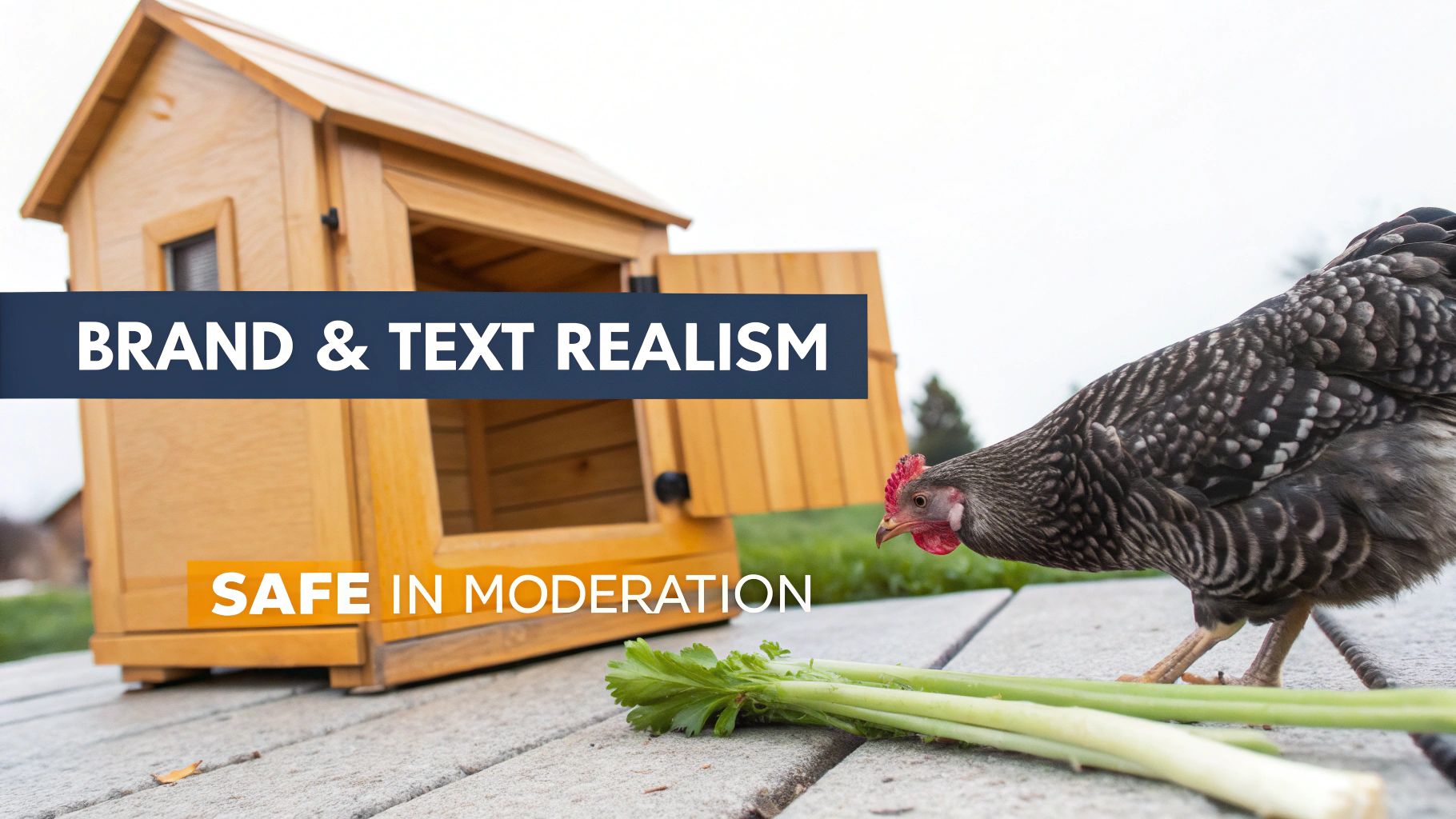
So, can chickens eat celery? The short answer is a resounding yes. But before you start tossing whole stalks into the run, there are a few important things to know. Celery is best viewed as a healthy, hydrating snack that can break up the monotony of their day, especially when the temperature starts to climb.
The key thing to remember is that celery is a supplement, not a staple. It provides some nice vitamins and minerals, but it's missing the high-protein, high-calorie punch chickens need for good health, growth, and steady egg-laying. How you prepare it also matters a great deal, but we'll get into the nitty-gritty of that in a bit.
Understanding Moderation and Nutrition
Celery is made up of about 95% water. That's fantastic for hydration, but it also means it's not a powerhouse of energy. Poultry nutrition research confirms that while it's perfectly safe, its low caloric density means it should only be an occasional treat. To keep your flock’s diet balanced, treats shouldn't make up more than 5–10% of their total daily food intake. Overdo it, and you risk diluting the essential nutrients they get from their main feed.
The golden rule for any treat, including celery, is moderation. Think of a chicken's diet like a well-built house. Their high-quality feed is the foundation and frame, while treats are the fun, decorative touches you add here and there.
To make things easy, here’s a quick summary of what you need to know before sharing this crunchy veggie with your flock.
Celery for Chickens At a Glance
This table gives you a quick rundown of the most important points to remember when feeding celery to your chickens.
| Aspect | Recommendation |
|---|---|
| Is It Safe? | Yes, celery is non-toxic and safe for chickens. |
| Main Benefit | Excellent for hydration and boredom-busting enrichment. |
| Biggest Risk | The fibrous strings can be a choking or impaction hazard. |
| Preparation | Always wash and chop it into small, pea-sized pieces. |
| Serving Size | Offer only as an occasional treat, not a daily staple. |
Following these simple guidelines ensures celery remains a fun, healthy addition to your flock’s diet instead of a potential problem.
What's Actually in Celery for Your Chickens?
When you toss a treat to your flock, it’s good to know what you’re really giving them. Celery is mostly water—we’re talking about 95% water—which makes it super hydrating but not exactly packed with calories. This is the main reason celery is fine as a snack, but it can never be a cornerstone of their diet.
Think of it like this: giving your chickens celery is like you grabbing a glass of vitamin water. It’s refreshing and has some good stuff in it, but you wouldn’t skip a proper meal for it. Celery is low in protein and energy, so it doesn't provide the fuel your flock needs for things like growing strong feathers or laying eggs every day. Their main feed is scientifically formulated for that, and too much celery just waters down all that balanced nutrition.
A Closer Look at the Vitamins and Minerals
Now, while it’s not a poultry superfood, celery does bring a few helpful micronutrients to the table. They’re not present in huge amounts, but every little bit contributes to your flock’s overall health.
Here’s what this crunchy green stalk offers:
- Vitamin K: This is probably celery’s biggest claim to fame. Vitamin K is absolutely essential for blood clotting, which is critical if a chicken gets a small cut or scrape.
- Vitamin C: A great antioxidant, Vitamin C helps keep your flock’s immune systems humming along, making them better equipped to fight off illness or bounce back from stress.
- Potassium: This mineral is key for muscle function and keeping electrolytes in balance. That’s especially helpful when the temperature climbs and your birds are dealing with heat stress.
- Fiber: Celery has a decent amount of dietary fiber, which can help keep the digestive system running smoothly, as long as they don’t overdo it.
Even with these perks, the low-calorie count really defines celery's role in a chicken's diet. A 100-gram serving of celery has only around 14 calories. That’s next to nothing for an active hen. This profile perfectly cements its status as a light, hydrating treat and nothing more.
Striking the Right Balance
So, what’s the final verdict on celery's nutritional profile? It’s a pretty clear picture. Celery is a low-impact snack that delivers a bit of hydration and a handful of vitamins without piling on extra calories or fat. That makes it a perfectly safe choice for an occasional treat.
The real value of celery isn't in its ability to be a primary nutrient source, but in its role as a healthy, hydrating snack. Its low energy content is a limitation, but it’s also what makes it a safe, guilt-free treat when offered in moderation.
At the end of the day, celery's strength is its simplicity. It’s water and a few trace vitamins that won’t throw your flock’s diet out of whack, as long as you prepare it right and offer it sparingly. It’s a useful, if not essential, veggie to have in your treat rotation.
How Celery Can Benefit Your Flock's Well-Being
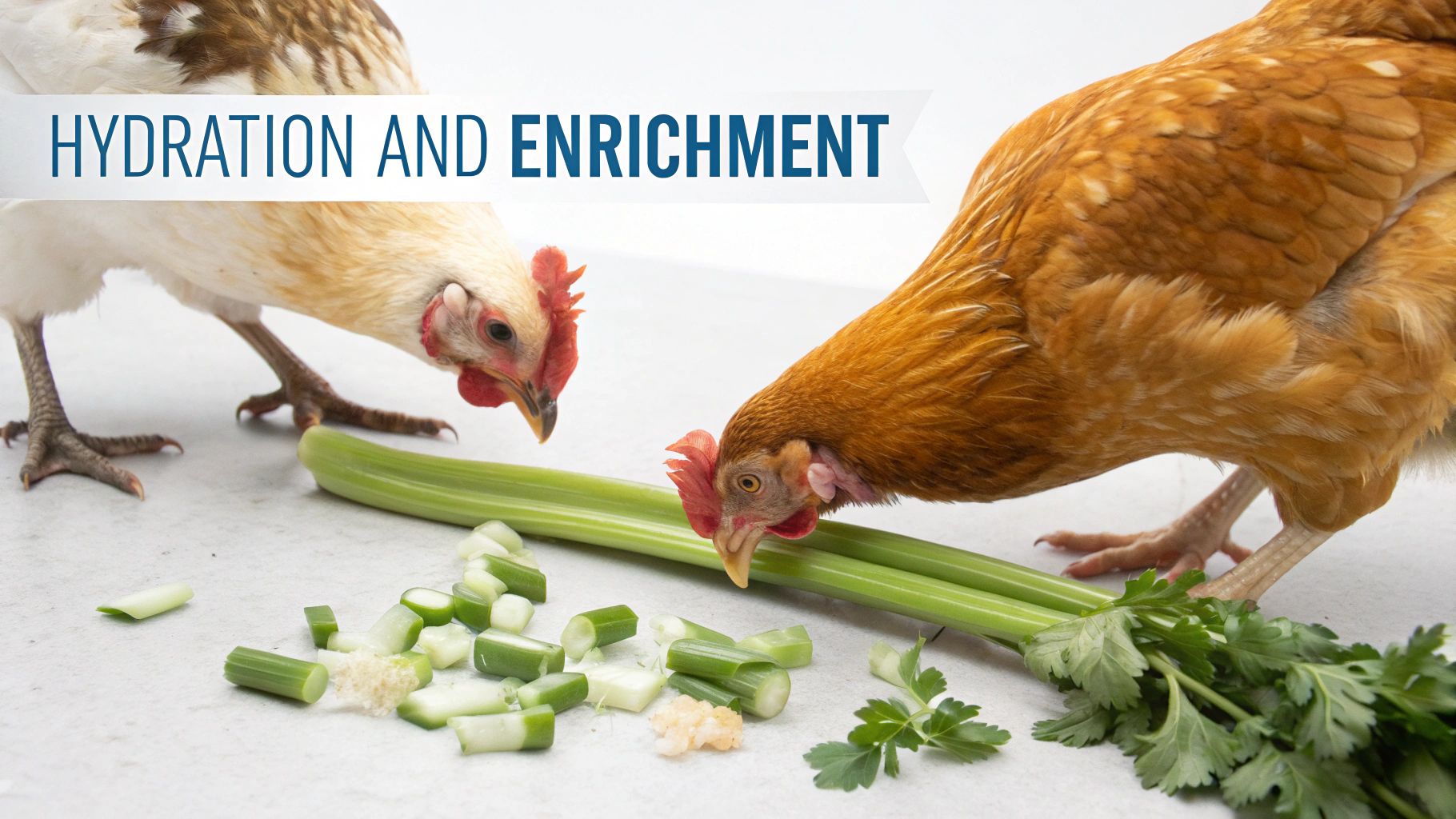
While you won't find celery at the top of any "superfood" lists for poultry, its real value for your flock comes from a different angle. It's less about powerhouse nutrition and more about improving your chickens' day-to-day life. Think of it as a tool with a two-pronged benefit: it provides a serious hydration boost and tackles the all-too-common problem of coop boredom.
The most straightforward perk is hydration. Celery is about 95% water, which makes it a crunchy, walking water source for your birds. On a scorching summer afternoon, tossing out some chopped celery is a fantastic way to help the flock stay cool and hydrated. It's a great supplement to their regular water, giving them an extra edge against heat stress.
This simple snack can genuinely make a difference in their comfort during hot spells, helping them stay more active and resilient when the temperatures soar.
Busting Boredom and Encouraging Natural Instincts
Beyond its water content, celery is a brilliant enrichment item. Any seasoned chicken keeper knows that a bored chicken can quickly become a problem chicken, leading to feather pecking and other unwanted behaviors. Celery offers a healthy, engaging distraction that plays right into their natural instincts.
When you scatter small, chopped pieces around their run, you encourage them to scratch, peck, and hunt for their food. It’s a simple way to mimic how they’d forage in the wild, keeping their bodies moving and their minds occupied. A busy, focused chicken is far less likely to start trouble with its flock mates.
And this isn't just a hunch. Providing varied, fresh vegetable treats has been shown to have a real impact on flock welfare. In fact, some studies on poultry enrichment and welfare suggest that offering these kinds of treats a few times a week can lead to a 20–30% drop in harmful pecking.
By turning snack time into an activity, you're doing more than just giving them a treat. You're actively fostering a healthier social dynamic and cutting down on the stress that often fuels aggression.
Instead of just dumping celery in a bowl, try making it more of an event:
- Scatter Feeding: Throw small, pea-sized bits around the coop or run. This gets them scratching and searching.
- Vegetable Medley: Mix the celery with other chicken-friendly veggies like shredded carrots or chopped cucumber for a more exciting foraging experience.
- Hanging Treat: Thread some larger (but still safe!) pieces of celery onto a string and hang it just high enough that they have to work for it. It becomes a fun pecking toy.
Using methods like these makes the snack last longer and provides that all-important mental stimulation. It proves that how you feed your chickens can be just as beneficial as what you feed them.
Understanding the Risks of Feeding Celery
While celery is a perfectly safe and non-toxic treat for your flock, a few things can go wrong if you don't prepare it correctly. The good news is these potential problems are completely avoidable with a bit of know-how.
The main concerns come down to the physical structure of the celery stalk, its low-calorie nature, and any pesticides that might be lingering on the surface. Understanding these points helps you offer this crunchy snack in a way that’s both enjoyable and completely safe for your birds.
The Choking and Impaction Hazard
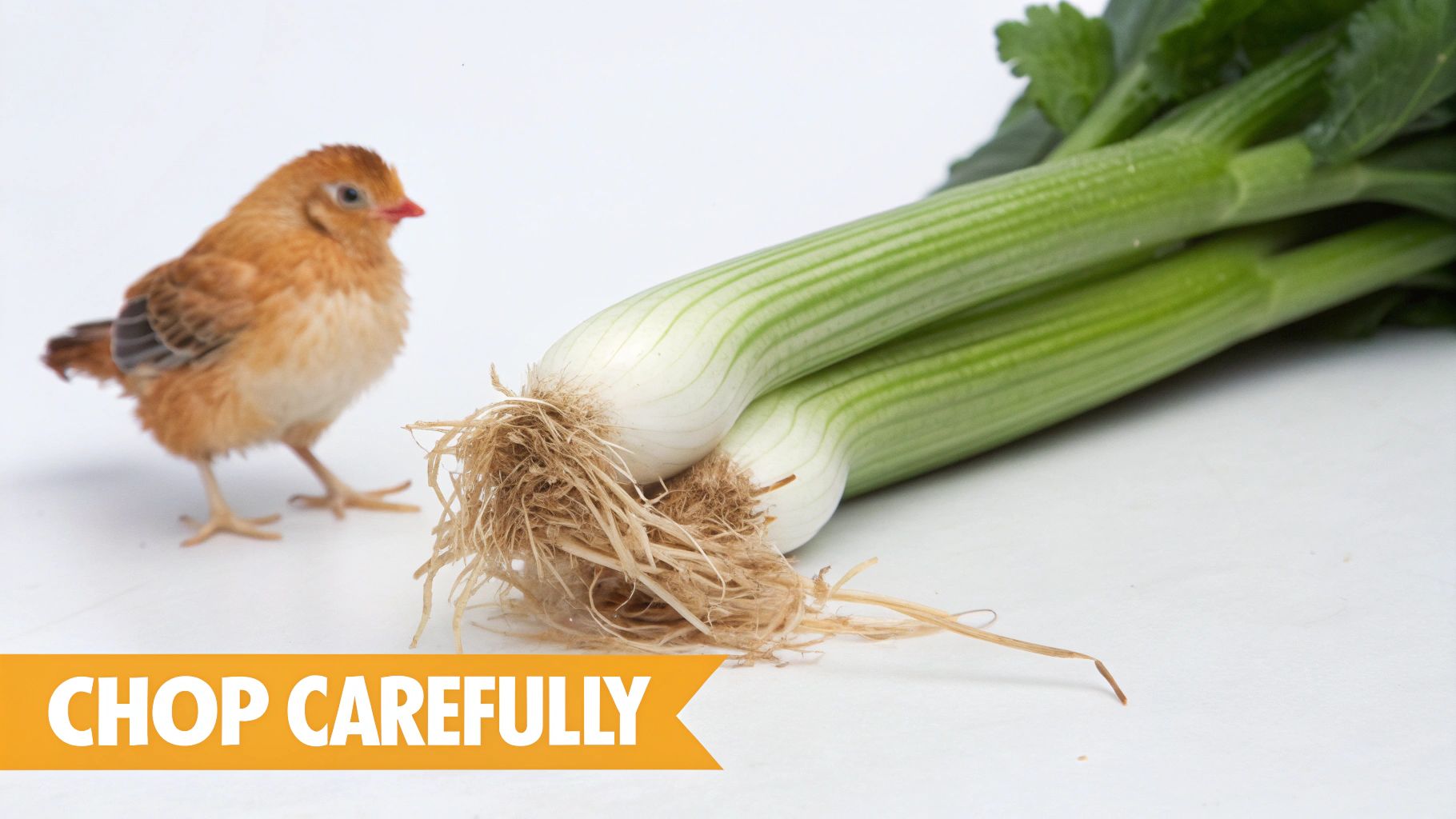
The single biggest danger with celery is its tough, stringy texture. If you've ever pulled one of those long, fibrous threads from a stalk, you know exactly what I'm talking about. Now imagine a chicken trying to swallow that whole.
These strings don't break down easily and can quickly become a serious choking hazard, especially for smaller breeds or bantams. Even if they manage to get a long piece down, the risk isn't over. Those fibers can get tangled up in the crop—the little pouch in a chicken's throat where food is stored before digestion. This can lead to a painful and sometimes fatal condition known as crop impaction, where the digestive tract gets completely blocked.
The key takeaway is simple: Never feed your chickens long, stringy pieces of celery. Chopping it up properly isn't just a suggestion; it's a critical safety step to prevent choking and internal blockages.
The Problem of Nutrient Dilution
The second issue is a bit more subtle but crucial for your flock's long-term health. Celery is about 95% water and has very few calories, which can lead to something called "nutrient dilution."
Think of a chicken's stomach like a small fuel tank. If you fill that tank with watery celery, there's not much room left for their high-quality, nutritionally complete feed. When treats make up too much of their diet, this becomes a real problem. A chicken that's full of celery won't eat enough of its main feed, missing out on the protein, calcium, and energy it needs for strong bones and consistent egg-laying. For more info, check out our guide on other foods harmful to chickens when not offered correctly.
Washing Away Pesticides
Just like most vegetables from the grocery store, celery can carry pesticide residues on its surface. Chickens are hardy, but it's never a good idea to let them ingest these chemicals.
Thankfully, the solution is simple.
- Wash Thoroughly: Always rinse celery stalks under cool, running water before serving.
- Scrub Gently: Give them a quick scrub with your fingers or a vegetable brush to be extra safe.
- Choose Organic: When possible, buying organic celery is the best way to minimize pesticide exposure from the get-go.
Taking a minute to wash the celery ensures you're giving your flock a clean, healthy treat without any unwanted chemicals.
How to Prepare Celery for Your Chickens
Tossing your flock a crunchy, hydrating snack is a great idea, but the right prep work is non-negotiable. You can't just hand over a whole stalk and call it a day. Taking a few minutes to prepare it correctly means your chickens get all the goodness without any of the danger.
First things first, grab fresh, crisp celery. If it's limp, discolored, or showing any moldy spots, it's a hard pass. Give the good stalks a thorough rinse under cool water to wash away any dirt or lingering pesticides. It’s a simple hygiene step you shouldn't skip.
The Most Important Step: Chopping
This is the part that truly matters. The long, fibrous strings running down celery stalks are a major hazard for chickens, capable of causing choking or a life-threatening crop impaction. Your job is to make those strings a non-issue.
The only way to do this safely is to dice the celery into small, pea-sized pieces. Cutting the stalk into little rounds isn't enough—that leaves the strings intact. You need to chop it both lengthwise and crosswise to break up those fibers completely.
Remember, the goal isn't just making it bite-sized. It's about neutralizing the threat from the stringy fibers. Dicing it finely is the only way to make it a safe treat, every single time.
Creative and Safe Serving Ideas
Once your celery is chopped up and safe, you can have some fun with how you serve it. This makes treat time more engaging and taps into your flock's natural behaviors.
-
Scatter and Forage: Sprinkle the little celery bits around the run or coop. This gets your chickens scratching and searching, just like they would in the wild. It’s a fantastic boredom buster.
-
Cool Summer Treats: On a sweltering day, mix the diced celery with a little water and freeze the mixture in an ice cube tray. These "chick-sicles" are a perfect way to help them cool down while staying hydrated.
-
Vegetable Medley: Don't just stop at celery! Mix it in with other chicken-friendly veggies. For more ideas on what to include, check out our guide to safe chicken food scraps.
By following these simple prep steps, you can turn a basic vegetable into a safe, enriching, and exciting part of your flock's diet.
Choosing Better Treats for a Healthier Flock
Think of celery as a fun, crunchy, water-packed snack. It’s a great diversion on a hot day, but it’s not exactly a nutritional heavyweight. For a flock that’s truly thriving, you need treats that are more than just entertaining—they need to be functional. While celery brings hydration to the table, it doesn't offer much in the way of the protein and energy your birds need for strong feathers, healthy bodies, and consistent egg-laying.
I like to picture a chicken's diet like a food pyramid. The vast majority—the entire base of the pyramid—should be their complete, balanced feed. That's non-negotiable. The next layer up is for functional treats, things that add a concentrated nutritional boost. Then, right at the tiny peak, you have occasional snacks like celery. They’re given sparingly for fun. This mindset helps ensure your flock gets the essentials they depend on while still enjoying some variety.
Elevating Your Treat Strategy
To really move the needle on your flock's health, it’s smart to bring in treats that pack a bigger nutritional punch. Celery is about 95% water, after all. Other supplements, on the other hand, are loaded with the protein and calcium that directly fuel your chickens' bodies and support egg production.
A perfect example of a high-value treat is Black Soldier Fly Larvae (BSFL). They're a world apart from celery.
- High in Protein: This is absolutely critical for feather growth, muscle development, and overall vitality.
- Rich in Calcium: Directly contributes to strong, solid eggshells—no more flimsy, soft-shelled eggs.
- Packed with Energy: Gives your birds the fuel they need to forage, scratch, and be active chickens.
It's simple, really: celery is like a refreshing glass of water, while BSFL is like a protein-packed smoothie. Both can be good, but only one is actively building a stronger, healthier bird from the inside out.
When you do offer celery, preparing it correctly is key to keeping it a safe, harmless snack.
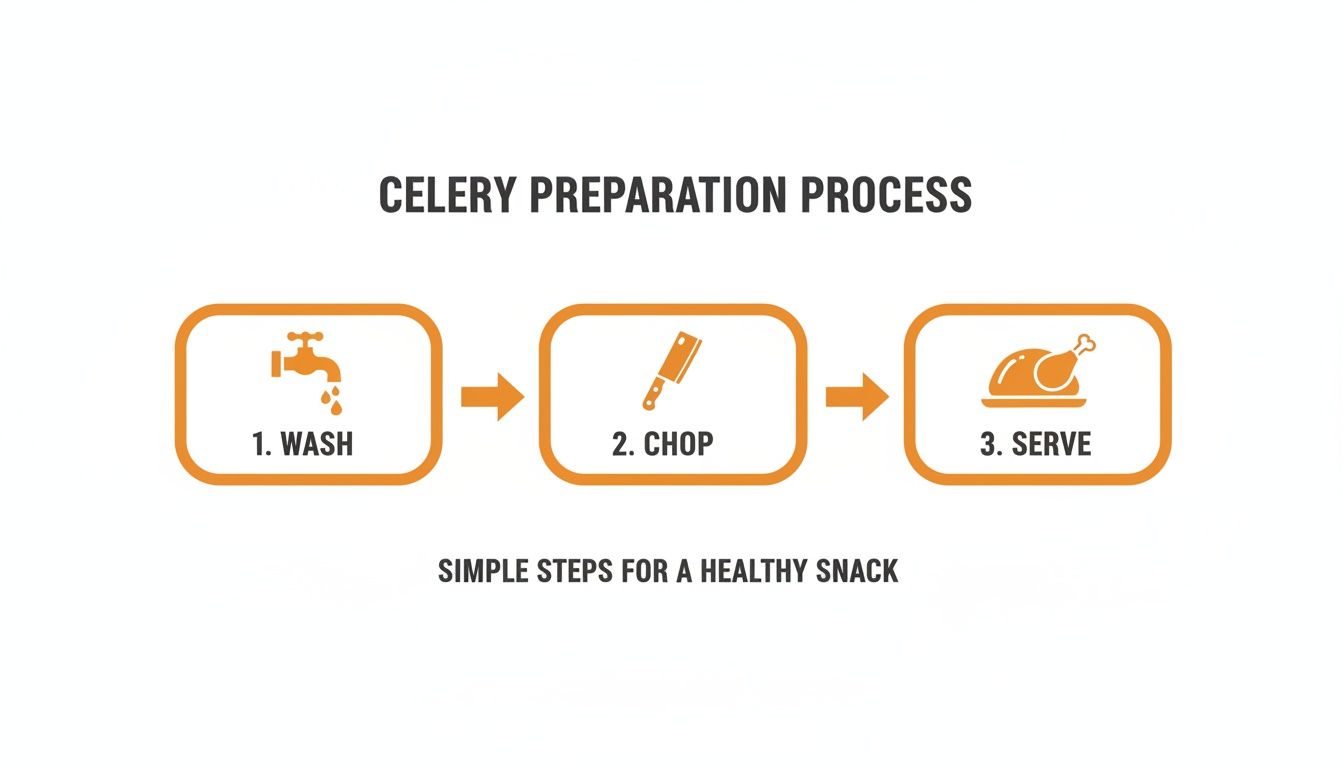
As the visual shows, a quick wash, a good chop, and you're ready to serve. This simple process makes sure it stays a fun part of your treat rotation.
Comparing Chicken Treats: Celery vs. BSFL
Let's look at the numbers to see just how different these two treats are for your flock's nutrition.
| Nutritional Aspect | Celery (per 100g) | BSFL (per 100g) |
|---|---|---|
| Protein | ~0.7 g (Very low) | 40-50 g (Extremely high) |
| Fat (Energy) | ~0.2 g (Negligible) | 25-30 g (Excellent energy source) |
| Calcium | ~40 mg (Minimal) | ~2,000-5,000 mg (Outstanding for eggshells) |
| Water Content | ~95% (High hydration) | ~5-10% (Nutritionally dense) |
| Primary Benefit | Hydration, enrichment, and a low-calorie diversion | Core nutrition for growth, feathers, and eggs |
The table makes it crystal clear: celery is for hydration, while BSFL is for nutrition.
By building a smart and well-rounded treat strategy, you can use celery for what it's good at—a refreshing treat—while relying on superior supplements like BSFL for the heavy lifting. To find more high-impact options, check out our guide on the best snacks for chickens. A balanced approach like this ensures every treat you offer contributes to a happier, healthier, and more productive flock.
Common Questions About Chickens and Celery
Still have a few questions? You're not alone. Let's tackle some of the most common things keepers ask about feeding celery to their flock, so you can feel totally confident tossing them this crunchy green snack.
Can Chickens Eat Celery Leaves and Roots?
They sure can! Don't toss those leafy tops. The leaves are actually more nutrient-dense than the stalks and are tender enough for chickens to gobble up without any issue. They're a fantastic, vitamin-rich part of the plant.
The root, often called celeriac, is a different story. It's perfectly safe, but it's also incredibly tough and woody. If you want to offer the root, you absolutely must prepare it first. Your best bet is to either cook it until it's soft or run it through a grater to create small, manageable shreds. This eliminates any choking risk and makes it far easier for your flock to digest.
How Much Celery Is Too Much for Chickens?
This is where the golden rule of chicken treats comes in: the 10% rule. No matter what the treat is—celery, watermelon, or mealworms—it should never make up more than 10% of their daily food intake. The other 90% needs to be their complete, balanced layer feed.
So, what does that look like in practice? Think about one or two small, finely chopped pieces of celery per chicken, maybe two or three times a week at most. It's a special occasion snack, not a daily staple. Too much can cause digestive upset and, more importantly, fill them up on watery crunch instead of the essential nutrients they need from their main feed.
Remember, moderation is everything. More isn't better when it comes to treats. Sticking to the 10% rule ensures their diet stays balanced for peak health and consistent egg-laying.
Can Baby Chicks Eat Celery?
It’s best to hold off on celery for the little ones. For the first few weeks, a baby chick's digestive system is incredibly delicate and developing rapidly. They need all the space in their tiny bellies for a high-quality starter crumble, which is packed with the high protein and specific nutrients essential for healthy growth.
If you really want to give them a taste, wait until they're at least 4 to 5 weeks old. Even then, it should be an incredibly tiny amount of very finely minced celery, offered as a rare treat. Their starter feed has to remain their primary source of nutrition to ensure they grow into strong, healthy adults.
If you're looking for a treat that does more than just add a little fun, a high-protein, calcium-rich supplement can make a real difference. Pure Grubs are premium, USA-grown Black Soldier Fly Larvae that are fantastic for supporting strong eggshells and promoting glossy, full feathers. They deliver the kind of functional nutrition celery just can't provide.
You can give your flock’s diet a serious boost by checking them out at https://puregrubs.com.