

Your Guide to Chicken Food Scraps
Giving your chickens kitchen scraps is one of the best parts of raising a flock. It’s a win-win: you cut down on kitchen waste, and your birds get a varied, exciting diet. It’s a simple way to turn leftovers into nutritious treats, making your chickens happier and your compost pile a little smaller.
Why Bother With Kitchen Scraps?
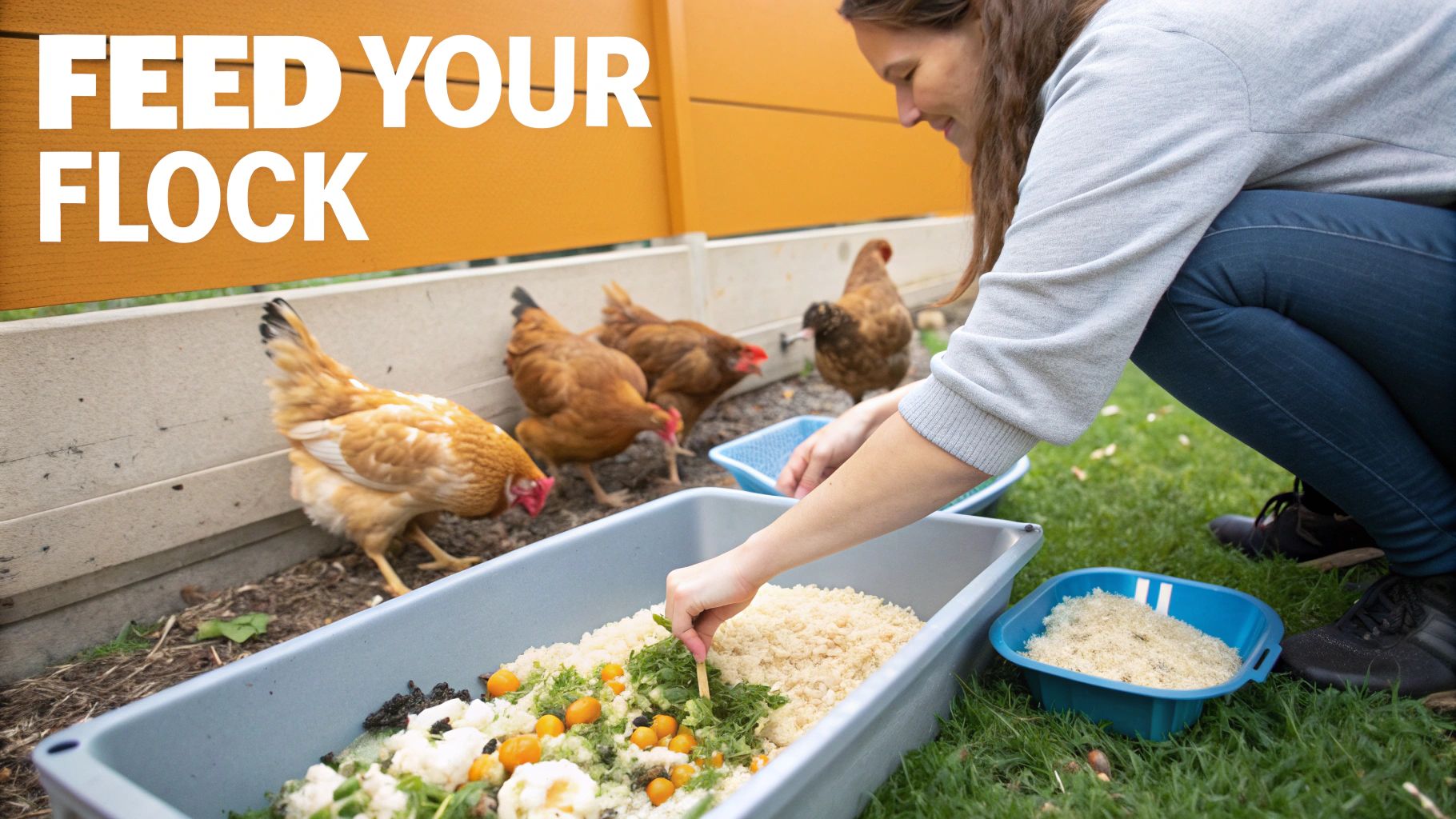
Turning leftovers into chicken feed is about more than just saving a few bucks. It’s a practical step toward a more sustainable homestead. When you toss scraps into the coop instead of the trash, you're creating a neat little closed-loop system right in your own backyard. Your chickens get to feast on a diverse menu, and you get the satisfaction of knowing your food isn't just rotting in a landfill.
On a global scale, the impact of food waste is staggering—around 1 billion tons of food produced for us ends up lost or wasted every year. It’s a huge problem, but chickens are actually becoming part of the solution. Some cities in Belgium have even started programs that give chickens to residents specifically to help them manage household food waste.
The Real Perks of Feeding Scraps
Bringing scraps into your chickens' routine offers some pretty clear benefits beyond just reducing waste. For those of us with backyard flocks, it really comes down to improving our birds' well-being.
- A More Interesting Diet: Tossing in different fruits, veggies, and grains introduces a whole new range of vitamins and minerals they might not get from their regular feed. Plus, variety is the spice of life, right? It keeps your flock excited for treat time.
- Encourages Natural Instincts: Chickens are born to scratch and peck. A pile of interesting scraps gives them a reason to forage, which keeps them mentally stimulated and prevents the boredom that can lead to bad habits in the coop.
- Saves a Little Money: Scraps should never completely replace a high-quality layer feed, but they absolutely help stretch it further. Over time, you’ll notice you’re buying a little less commercial feed, which is always nice on the wallet.
- Better Eggs, No Joke: I’ve seen it myself—a varied diet can absolutely lead to eggs with deeper, richer-colored yolks and tougher shells. It’s a direct benefit you can see and taste every morning at breakfast.
It's a simple change that pays off in big ways. By thoughtfully using your kitchen scraps, you’re not just feeding your flock. You’re building a more self-sufficient and sustainable way of life.
Just remember, scraps are a treat, not the main course. For a serious nutritional punch, especially protein and calcium, high-quality supplements are key. Treats like Black Soldier Fly Larvae are fantastic for rounding out their diet. You can read all about the benefits of Black Soldier Fly Grubs in our guide.
Safe Kitchen Scraps Your Flock Will Love
Figuring out which kitchen scraps to feed your flock can seem daunting at first, but it's really quite simple. The best part is, many of the healthiest things you eat are fantastic for your chickens too. I like to think of it less like dumping leftovers and more like creating a custom "salad bar" for my birds, filled with goodies that actually boost their health.
This little practice does more than just spoil your flock; it cuts down on household waste and creates a nice, sustainable loop right in your backyard. It's a small-scale version of what's happening in the bigger picture of sustainable agriculture. Chickens are amazing converters, turning these leftover nutrients into high-quality protein—our beloved eggs. It's cool to see how backyard habits fit into the global outlook on sustainable agriculture and make a real difference.
Fresh From the Garden
Vegetables are almost always a safe bet and a huge hit. My chickens go absolutely bonkers for leafy greens like kale, chard, and lettuce. The dark, leafy types are loaded with vitamins A, K, and B, which are fantastic for their immune systems and contribute to those gorgeous, deep-orange yolks.
Root vegetable scraps are another winner. Think carrot peels, beet greens, and the skins from your sweet potatoes—don't toss them! Just remember to always cook regular potatoes and their peels; when raw, they contain solanine, a toxin you want to keep far away from your flock.
A few flock-favorite vegetables include:
- Broccoli and Cauliflower: The florets and leaves are great, raw or lightly steamed. They're a nice source of vitamins.
- Cucumbers and Zucchini: These are mostly water, making them an incredible, hydrating treat on a scorching summer day.
- Cooked Corn: On the cob or loose kernels, chickens love corn. It gives them a great little energy boost.
Fruits as Occasional Treats
Think of fruit as dessert for your chickens. Because of the high sugar content, it's best offered in moderation. But in small amounts, fruits are a wonderful source of vitamins and antioxidants.
Things like apple cores (just remove the seeds, as they have trace amounts of cyanide), banana peels, and melon rinds are perfect. My own flock has a blast chasing blueberries and raspberries around the run. It's entertainment and a snack, all in one.
A Quick Tip: For bigger items like a melon rind or a whole cabbage head, I always chop them into smaller, more manageable chunks. This stops one bossy hen from dragging the whole thing off and ensures everyone gets a fair shot.
Grains and Legumes for Energy
Leftover cooked grains are an excellent source of carbs, giving your chickens much-needed energy. This is especially helpful in the winter when they burn more calories just to stay warm. Cooked rice, plain oatmeal, and unsauced pasta are all safe choices. Just make sure they're free of a lot of salt, sugar, or heavy oils.
Cooked beans and lentils are also a fantastic protein source. But, and this is a big one, never feed chickens raw or undercooked beans. They contain a toxin called hemagglutinin that is extremely dangerous and can be fatal. Make sure they are cooked all the way through until they're soft.
To help you keep track, here's a handy reference table for some of the best kitchen scraps you can offer.
A Quick Guide to Safe Chicken Treats
Use this reference table to quickly identify safe kitchen scraps, how to prepare them, and the key benefits they offer your flock.
| Food Category | Safe Scraps Examples | Preparation Notes | Key Benefits |
|---|---|---|---|
| Leafy Greens | Kale, spinach, lettuce, chard, beet tops | Chop finely; can be served raw or slightly wilted. | High in vitamins A, K, and B for yolk color and health. |
| Root Vegetables | Carrot peels, sweet potato skins, cooked potatoes | Always cook regular potatoes. Chop or grate for easy eating. | Good source of carbohydrates and essential vitamins. |
| Cruciferous Vegs | Broccoli, cauliflower, cabbage | Raw or cooked is fine. Chop into bite-sized pieces. | Provides fiber and key nutrients like Vitamin C. |
| Fruits | Berries, melons, apple cores (no seeds), bananas | Offer in moderation due to sugar. Remove seeds from apples. | Rich in antioxidants and vitamins; provides hydration. |
| Grains & Legumes | Cooked rice, oats, pasta, cooked beans | Always cook thoroughly; never feed raw beans. Serve plain. | Excellent source of energy and plant-based protein. |
| Protein Sources | Cooked meat scraps, crushed eggshells | Ensure meat is unseasoned and cut small. Bake and crush eggshells. | Provides protein and crucial calcium for eggshells. |
Remember, this table is just a starting point. The key is variety and moderation.
Protein Power-Ups
Don't forget the protein! Small bits of unseasoned, cooked meat are always a welcome treat. Another nutritional powerhouse is something you already have on hand: eggshells. After you’ve made breakfast, just rinse the shells, pop them in the oven for about 10 minutes at 350°F until they're brittle, and crush them up.
This simple trick does two important things:
- It gives your hens a massive, easy-to-absorb calcium boost, which is vital for laying strong eggs.
- Crushing them makes them unrecognizable, which helps prevent any curious hens from developing an egg-eating habit.
While all these scraps add wonderful variety and nutrition to their diet, they are still just supplements. For a complete picture of what a healthy chicken diet looks like, you can find a lot more information in our guide to the best snacks for chickens.
Foods You Must Never Feed Your Chickens
Knowing which kitchen scraps are safe is only half the battle. What’s even more critical for a healthy flock is knowing what's dangerous. Chickens are tough, but some common foods we eat contain toxins that can cause anything from a sour crop to something far more serious. This isn't about being paranoid; it's about avoiding simple, preventable mistakes.
Many seemingly harmless foods contain natural compounds that are toxic to poultry. Uncooked beans, for instance, have a nasty lectin called hemagglutinin that’s lethal unless you cook it out completely. It's the same story with green potato peels or any green parts of the potato plant—they contain solanine, a toxin that can mess with a chicken's nervous system.
Forbidden Foods A Chicken Keeper's Checklist
It's tempting to think what's healthy for us is great for our birds, but that's a dangerous assumption. To make it crystal clear, here’s a quick-reference table of the absolute no-gos. Keep this list handy, and when in doubt, just toss it in the compost instead.
| Forbidden Food | Toxic Compound or Reason | Potential Health Risk |
|---|---|---|
| Avocado Skin & Pit | Persin | Respiratory distress, heart failure, and sudden death. |
| Raw or Dried Beans | Hemagglutinin | Rapidly fatal; causes red blood cells to clump together. |
| Green Potato Skins/Sprouts | Solanine | Diarrhea, vomiting, neurological damage, paralysis. |
| Onions & Garlic (in quantity) | Thiosulphate | Can cause hemolytic anemia (damage to red blood cells). |
| Chocolate & Caffeine | Theobromine & Caffeine | Heart problems, seizures, and can be fatal. |
| Rhubarb Leaves | Oxalic Acid | Kidney failure, tremors, and digestive issues. |
| Moldy or Spoiled Food | Mycotoxins | Can cause severe illness, respiratory issues, and death. |
| Sugary or Salty Processed Foods | High Sugar/Salt Content | Leads to obesity, dehydration, and kidney damage. |
This isn't an exhaustive list, but it covers the most common offenders you're likely to find in your kitchen. Always err on the side of caution.
Common but Dangerous Kitchen Scraps
Let’s look a little closer at a few of these. Some of them pop up in our own meals all the time, so it’s easy to slip up.
- Avocado Skin and Pits: While the fleshy part is generally fine in very small amounts, the skin and pit contain a toxin called persin. It’s highly toxic to birds and can cause heart failure.
- Onions and Garlic: A tiny bit of leftover cooked stew isn’t going to cause a problem. But handing over a pile of onion peels or a few garlic cloves is a bad idea. In large amounts, they can destroy red blood cells and lead to anemia.
- Chocolate and Caffeine: Just like for dogs, these are a definite no. Theobromine in chocolate is toxic and can cause serious cardiac problems. Coffee grounds and tea bags? Straight to the compost pile.
This little flowchart is a great mental checklist to run through before you head out to the coop with a bowl of scraps.
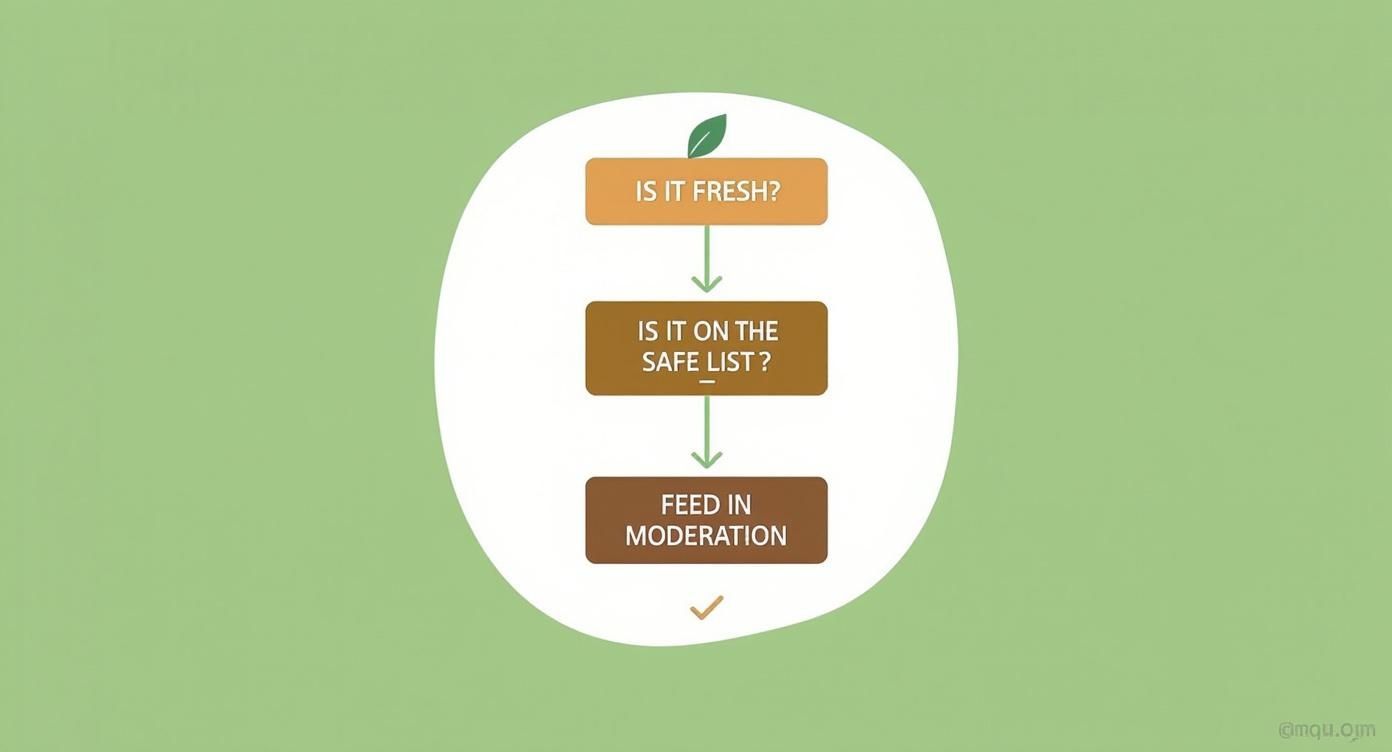
It really boils down to three simple checks: is it fresh, is it on the safe list, and am I only giving it as a treat?
The Dangers of Spoiled and Processed Foods
Here’s a rule to live by: never feed your chickens anything moldy or spoiled. If you wouldn't eat it, they shouldn't either. Molds produce mycotoxins that are incredibly dangerous and can lead to fatal respiratory illnesses.
This goes for spoiled meat, too. While chickens are omnivores and love a bit of cooked meat, scraps that have gone bad can harbor botulism and other nasty pathogens.
The golden rule for feeding kitchen scraps is simple: Fresh, plain, and in moderation. Anything questionable should be composted or discarded to keep your flock safe.
Steer clear of highly processed foods as well. Things loaded with salt, sugar, and unhealthy fats offer zero nutritional value and can cause digestive upset and obesity. Sticking to whole, unprocessed foods is always the healthier path.
Thinking about what your birds would find in the wild is a great way to guide your choices. To get a better feel for their natural instincts, check out our guide on what chickens eat naturally.
Getting Scraps Ready for Your Flock
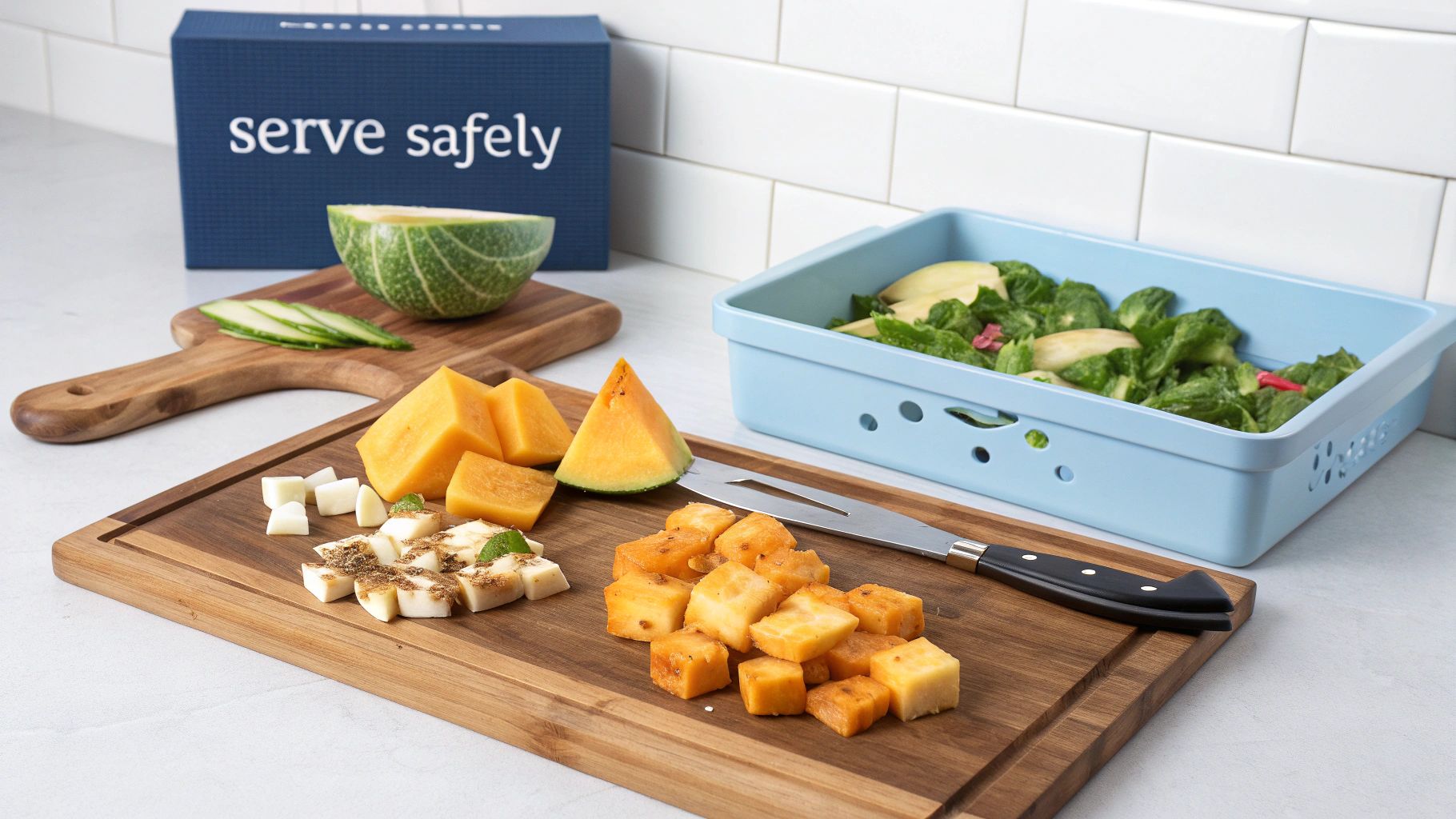 Once you know which scraps are safe, the next step is making them easy for your birds to actually eat. Proper preparation isn't about creating a gourmet meal; it’s about safety and digestion. A few minutes of prep can prevent choking and help your chickens get the most out of their special treats.
Just think about how a chicken eats—they don't chew, they just peck and swallow. Something as simple as a big, tough cabbage leaf or a large chunk of melon rind can be a real struggle for a hen to break apart, not to mention a serious choking hazard. I always take a moment to chop bigger items into small, bite-sized pieces.
Smart Prep for Happy Hens
Before you toss those scraps into the run, give them a quick once-over. The main goal is to make everything easy to swallow. Since chickens don’t have teeth, you’re essentially doing the “chewing” for them.
Here are a few habits I’ve picked up over the years:
- Chop, Dice, or Shred: Anything large, stringy, or tough—like vegetable peels, celery, or watermelon rinds—gets a rough chop. This gives everyone in the flock a fair shot at grabbing a piece without a fight.
- Always Cook Certain Foods: As mentioned earlier, things like raw potatoes and uncooked dried beans are a big no-no. Cooking them thoroughly until they’re soft breaks down the toxic compounds and makes them perfectly safe.
- Keep It Simple: Chickens are not equipped to handle our seasoned leftovers. Avoid anything with a lot of salt, sugar, spicy seasonings, or heavy oils. Plain steamed veggies or leftover boiled pasta are great; a heavily sauced casserole is not.
My rule of thumb is this: if it's simple and whole, it's probably fine. Anything overly processed or rich can throw their digestive systems out of whack and cause health problems down the road.
Serving It Up the Right Way
How you serve the scraps is just as important as how you prepare them. It’s tempting to just scatter the treats on the ground, but that’s an open invitation for problems. Food that gets trampled into the dirt and mixed with droppings can quickly grow harmful bacteria.
A clean approach is always the best bet for a healthy flock. I use a shallow dish, a small tray, or even just a clean, flat board to keep the food off the ground. It’s a simple step that cuts down on waste and keeps the food from getting contaminated.
Finally, don’t forget about cleanup. I only give my flock what they can gobble up in about 15-20 minutes. Anything left after that gets cleared away before evening. This is non-negotiable in our coop, as leftover food is a magnet for pests like rodents and raccoons, which you definitely don't want hanging around your flock.
Keeping Scraps in Their Proper Place: A Balanced Diet
This is the golden rule of feeding chickens kitchen scraps: they are treats, not a meal. It's a blast watching your flock go wild over leftover watermelon or a handful of pasta, but those tasty extras should never replace their main feed.
A high-quality layer feed is specifically formulated to give them everything they need for strong eggs and vibrant health. Think of it as their nutritionally complete, all-you-can-eat buffet. Kitchen scraps are the dessert cart that rolls around afterward.
When the dessert cart becomes the main course, problems start. Chickens, like kids, will often fill up on the "fun" stuff and ignore the essentials. This can lead to nutritional gaps, which might show up as brittle eggshells, a drop in egg production, or even unhealthy weight gain from too many carb-heavy treats.
Stick to the 10% Rule
So, how much is too much? The best practice, followed by seasoned chicken keepers everywhere, is the 10% rule. All treats combined—kitchen scraps, scratch grains, and high-protein snacks like Pure Grubs BSFL—should make up no more than 10% of your flock’s daily diet.
That means a solid 90% of what they eat needs to be their complete layer feed. For a standard-sized hen, this boils down to about one or two tablespoons of treats per day. It’s not a lot, but it’s enough to add variety and enrichment without messing up their nutrition.
Remember, that 10% is a total daily budget. If you toss out some mealworms in the morning and a handful of lettuce in the afternoon, both count toward that daily treat allowance.
A Daily Routine That Works
Putting this into practice is pretty straightforward. The key is to make sure they've eaten their "real" food before you bring out the goodies.
I’ve found the best rhythm is to serve their main feed first thing in the morning when they're hungriest. Then, save the scraps for an afternoon snack.
Here’s a simple routine that keeps everyone healthy and happy:
- Morning: Top off their feeder with complete layer feed and make sure they have plenty of fresh, clean water. This is their foundation for the day.
- Late Afternoon: Offer a small, measured amount of scraps. A small handful per bird is a good visual guide. I like to scatter them around the run to encourage foraging.
- Before Dusk: Make a final check of the coop and run, removing any leftover scraps. This is non-negotiable—it keeps rodents away and prevents food from spoiling and making your chickens sick.
By sticking to this simple system, you get the best of both worlds. Your flock gets the perfectly balanced nutrition they need to thrive, plus the joy and excitement of pecking through some delicious, healthy leftovers. It's that discipline that makes all the difference.
Answering Your Top Questions About Feeding Scraps
Once you get the hang of feeding scraps, you'll find a rhythm. But a few questions always seem to pop up for new and even experienced chicken keepers. Let's clear those up so you can treat your flock with confidence.
Can Chickens Eat... Chicken?
It sounds a little weird, I know. The idea of feeding a chicken... well, chicken. But let's break it down because it's one of the most common questions I hear.
-
Cooked Chicken: Absolutely. As long as it's unseasoned, cooked chicken is a fantastic protein boost. Just make sure you pull it off the bone and shred it into small, easy-to-eat pieces. They'll go nuts for it.
-
Their Own Eggshells: Yes, and you absolutely should! This is one of the best things you can do for your layers. To prep them, just bake the clean shells in the oven on low heat until they're dry and brittle. Then, crush them up. This gives them a powerful calcium kick for strong shells and, just as importantly, it prevents them from recognizing them as "eggs," which helps stop any potential egg-eating habits before they start.
How Often Should My Flock Get Scraps?
Think of kitchen scraps as a fun afternoon snack, not their main meal. Moderation is your best friend here.
The golden rule is the 10% rule: all treats combined (scraps, grubs, greens) should make up no more than 10% of their total daily food intake. For most chickens, this works out to a small handful or two per bird.
I find the best time to offer them is late in the afternoon. This ensures they've already eaten plenty of their nutrient-balanced feed throughout the day.
Pro Tip: Whatever they don't finish in about 15-20 minutes, clean it up. Leaving food out overnight is like sending a dinner invitation to every raccoon and rodent in the neighborhood.
Am I Giving Them Too Many Scraps?
Your chickens will tell you if you're overdoing it. The biggest red flag is when they start turning their beaks up at their regular feed, basically holding out for the "good stuff."
When that happens, their nutrition can get thrown out of whack. Keep an eye out for these signs:
- Fewer Eggs: A sudden drop in egg production is a classic indicator.
- Weak Shells: Are the eggs thin, soft, or easily broken?
- Weird Poop: Look for consistently loose or watery droppings.
- Weight Gain: Overly fatty scraps can lead to pudgy, unhealthy birds.
If you notice any of these things, it's time to pull back on the treats immediately. Double-check that their primary feed is always fresh, full, and the star of their diet. A healthy flock starts with a balanced foundation.
A great way to ensure your flock gets the right balance of protein and calcium without overdoing it on scraps is to supplement with high-quality treats. At Pure Grubs, we offer USA-grown Black Soldier Fly Larvae that are packed with the nutrients your chickens need for strong eggshells and vibrant health. Learn more about making a safer choice for your flock.