

Best Mealworms for Chickens: Buyer Guide & BSFL Comparison
You're standing in the feed aisle with a bag of dried mealworms in one hand and a flock of hens racing toward the gate in the other. The label promises protein, the birds clearly want the treat, and yet the actual question is harder than “Which brand do they like?” The best mealworms for chickens are the ones that fit your flock's nutritional needs, come from a traceable source, and stay firmly in the treat category.
A good insect treat can add enrichment, energy, and useful nutrients. It can't replace a complete layer or grower ration, and a high protein number alone doesn't prove that it will support eggshells, growth, or feather production. The practical choice depends on calcium, digestibility, processing, sourcing, and inclusion level, not just size, color, or chicken enthusiasm.
The Truth About “Best” Mealworms for Chickens
The right bag of mealworms depends on the job it must do. Before comparing brands, decide whether you need a training reward, an enrichment treat, or an occasional protein addition that will not displace complete feed.
Chickens usually accept mealworms readily, which makes them useful for recall training, handling, enrichment, and encouraging birds to forage. Strong preference still says little about nutritional completeness. In a cafeteria-style study of 60 broiler chickens, mealworm meal eventually reached 50% of total intake, while the mealworm-access group showed lower feed intake and lower growth performance across the experimental periods. The findings appear in the 2020 cafeteria-style poultry study.
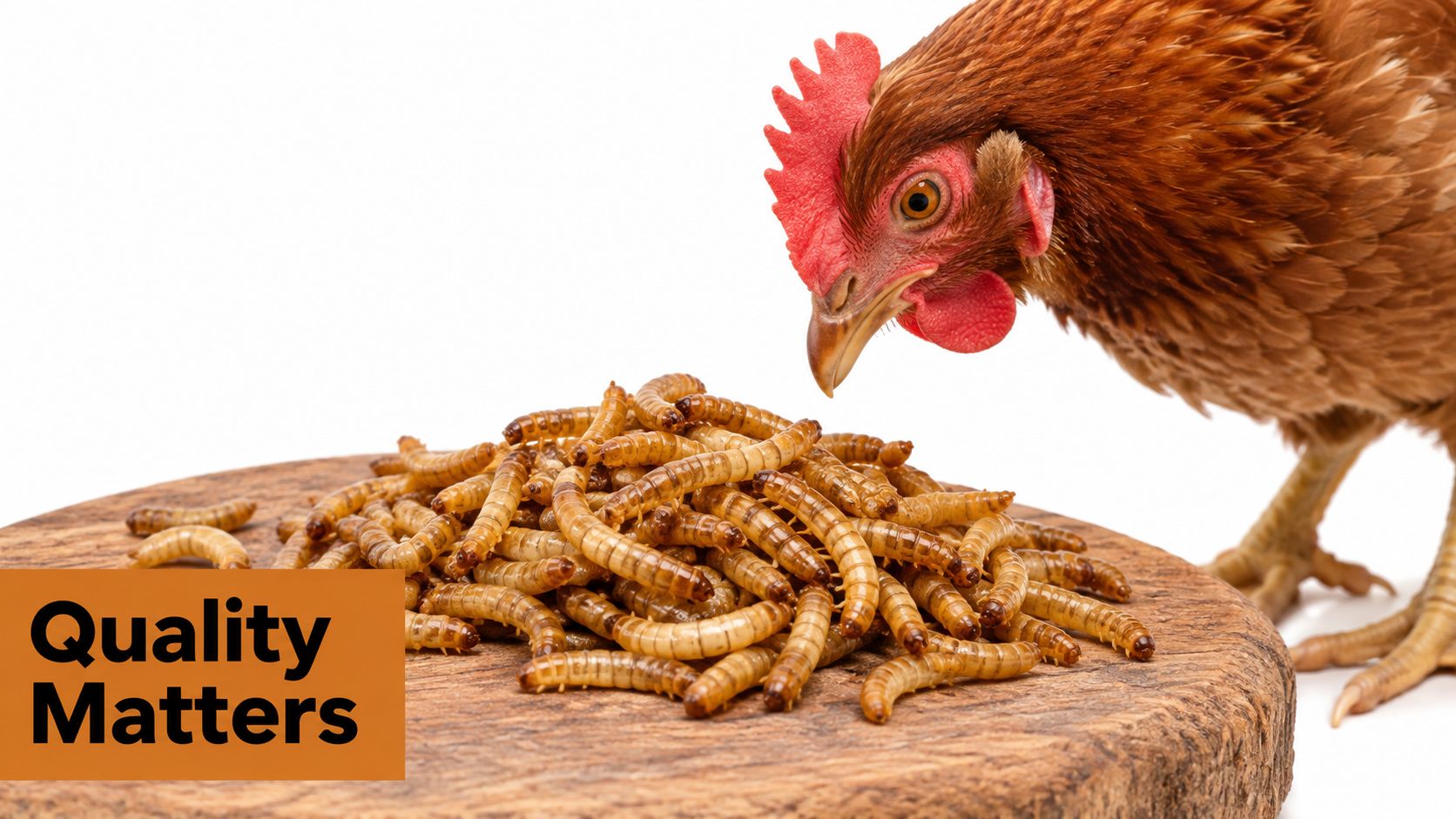
A hen may choose an insect because it is tasty, fatty, or familiar, while still needing the amino acids, minerals, and energy provided by a formulated ration. In a 2021 experiment involving 180 broiler chickens, a diet containing 2.5% Tenebrio molitor larval meal improved starter-phase body-weight gain and feed-conversion ratio compared with the control. The birds showed no increase in mortality or reduction in feed intake. The research is discussed in this peer-reviewed poultry nutrition paper.
What actually makes an insect treat better
Use four filters before buying:
- Mineral purpose: High protein does not make a treat high in calcium. Laying hens still need a dependable calcium source, and insect species can differ substantially in mineral density.
- Declared composition: Check protein, fat, calcium, and phosphorus. A label that only says “high protein” leaves important nutritional questions unanswered.
- Supply-chain transparency: Country of origin, permitted substrate, processing method, storage directions, and batch testing provide more useful information than terms such as “natural” or “farm-raised.”
- Feeding role: Whole dried larvae, live larvae, and formulated insect meal are not interchangeable. Results from a mixed ration do not translate neatly to a handful scattered in a backyard run.
Bulk dried products can simplify regular treat use, but convenience does not replace label inspection. For a worked example of label details worth comparing, see this guide to dried bulk mealworms, which breaks down composition claims and packaging information.
Practical rule: Choose the insect for the job. Mealworms suit palatability and digestible energy, while black soldier fly larvae deserve consideration when calcium is the deciding factor.
The strongest case is for moderate inclusion, not replacement feeding. A separate 2018 study of 160 male broiler chicks found that a 15% mealworm-meal diet negatively affected intestinal morphology, including villus height and the villus-height-to-crypt-depth ratio. For a backyard flock, keep insects alongside complete feed rather than allowing them to crowd it out.
Nutritional Realities of Dried and Live Mealworms
A flock can rush to a handful of mealworms and still miss important nutrients if the treat replaces too much complete feed. Dried and live larvae differ in handling, moisture, and feeding behavior, but both need to remain supplements rather than the foundation of the diet.
Dried mealworms are shelf-stable, easy to scatter through bedding, and nutritionally concentrated because processing removes water. Live larvae provide moisture and movement, making them useful for enrichment and for slowing consumption. They also need more careful storage and handling.
Protein is only part of the calculation
Product labels typically declare yellow mealworm protein across a broad range, roughly 27% to 54%, depending on the product and processing. That variation is enough to make “high protein” an incomplete buying criterion. Check the full analysis, including fat, calcium, and phosphorus, rather than judging the product by protein alone.
Chickens need amino acids, energy, minerals, and other nutrients in balance. A palatable treat can supply useful protein and energy while diluting a layer ration when hens fill up on it. Strong preference does not automatically mean stronger growth or better laying performance.
Digestibility gives the comparison more context. A controlled poultry-diet study reported apparent ileal digestibility of approximately 86% for mealworm larvae meal versus 68% for BSFL meal. Total-tract digestibility showed no significant difference for most nutrients, while ether-extract utilization favored mealworms, according to the Journal of Animal Science comparison. These results describe formulated diets, not a recommended scoop size for backyard hens.
In practical terms, mealworms can work well as a palatable, energy-dense reward, especially when dietary fat matters. Their protein value does not make them a substitute for a complete layer feed, and their calcium contribution may be much lower than that of black soldier fly larvae.
Live or dried mealworms
Live mealworms make birds work for the reward. Scatter them through clean straw or leaf litter and the flock scratches, searches, and competes. This method also slows eating compared with offering a concentrated handful.
Dried mealworms are easier to store, carry, and portion. They suit bad-weather enrichment, recall training, and situations where a treat needs to remain usable without spoiling quickly. Both forms should stay supplemental.
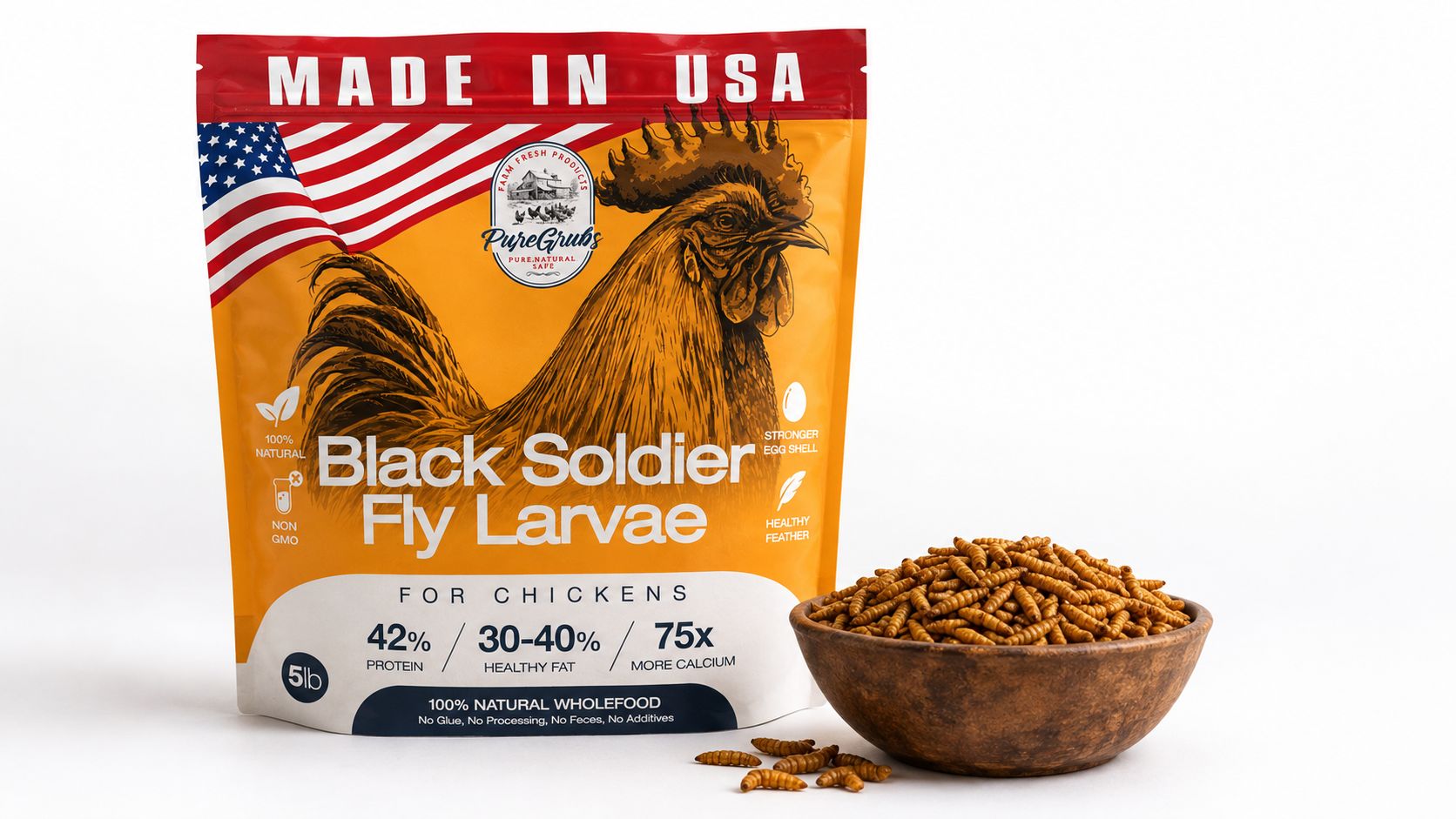
For keepers comparing another insect option, USA GROWN BLACK SOLDIER FLY LARVAE FOR CHICKENS is presented with a published crude-protein analysis in the high 30s and a calcium-focused nutritional position. Treat those figures as product-label information, then check the current package analysis and feeding directions before buying.
The practical test is the whole label. Protein shows crude-protein content, not calcium adequacy, amino acid suitability, or production controls. The best mealworm product is therefore the one whose sourcing, analysis, handling requirements, and intended inclusion level fit the flock's complete diet.
Mealworms Versus Black Soldier Fly Larvae for Flocks
A hen chasing live mealworms through straw and a layer eating black soldier fly larvae are receiving different kinds of value. Both insects can enrich a backyard flock, yet the better choice depends on the goal, the product's analysis, and how it fits around complete feed. High protein alone does not determine feeding value, and high protein does not guarantee adequate calcium.
Black soldier fly larvae generally suit calcium-conscious feeding better than mealworms. A poultry-nutrition review reports BSFL meal at approximately 1.21% to 4.39% calcium, compared with about 0.06% to 0.55% for yellow mealworm meal. BSFL phosphorus is reported at roughly 0.74% to 0.95% in the same Frontiers review of insect meals. Batch, processing method, and whether the larvae are whole or defatted can change the final figures.
Nutrient and Practical Comparison: Mealworms vs BSFL
| Metric | Yellow Mealworms | Black Soldier Fly Larvae |
|---|---|---|
| Primary strength | Strong palatability, digestible energy, and reward value | Higher mineral density, particularly calcium |
| Typical fat consideration | Often the more energy-dense treat, depending on processing | Fat content varies with feed and whether larvae are whole or defatted |
| Rearing-substrate consideration | Supplier information should identify what the larvae consumed | Substrate controls matter because the rearing material can affect the finished product |
| Practical handling | Live insects provide foraging; dried insects store and portion easily | Commonly offered dried or whole, with storage and label directions varying by product |
| Best practical fit | Training, enrichment, and concentrated rewards | Calcium-oriented treats for layers |
| Main caution | Protein does not make mealworms a complete ration | Calcium density does not make BSFL a complete ration |
This comparison does not make mealworms a poor choice. It prevents protein from becoming a shortcut for judging an insect treat. Species labels cover broad nutritional variation, so the package analysis and the intended inclusion level deserve equal attention.
Match the insect to the flock's goal
For laying hens, BSFL are the more sensible option when calcium is the priority. They can complement complete layer feed and a dependable calcium source, but they should not be treated as a guaranteed solution for thin shells. Shell quality also reflects the hen's overall diet and condition.
Mealworms fit flocks that need a highly motivating reward. Their digestible energy can suit training, cold-weather enrichment, or birds that respond poorly to less appealing treats. Keep portions controlled so the flock continues eating its nutritionally complete ration.
In a broiler study, increasing mealworm meal from 0.1% to 0.3% was associated with body-weight gain rising from 1,322.0 g to 1,423.3 g and feed-conversion ratio improving from 1.88 to 1.75, without reducing feed intake, as reported in the Journal of Animal Science study. Those results came from formulated diets, not a direct recipe for backyard treats, so they should not be copied as a feeding target.
For more context on the role of black soldier fly larvae in chicken feeding, compare the label with the flock's actual need. Choose mealworms for strong enrichment and digestible energy, BSFL for a calcium-focused treat, and complete feed for the nutritional foundation.
How to Vet Supply-Chain Safety and Sourcing Claims
A lively flock and bright-looking larvae cannot confirm safe production. The feed used to raise mealworms matters because larvae may accumulate contaminants from their rearing material. Treat sourcing as part of choosing the product, not as a branding detail.
Research from Wageningen found that insect safety varies with the substrate. Cadmium can bioaccumulate, and substrates containing category-2 meat meal produced higher concentrations of cadmium, mercury, lead, and arsenic than other tested substrates, although the finished larvae remained within legal limits in that study. See the findings in the Wageningen substrate-contamination trial.
Ask what the label leaves out
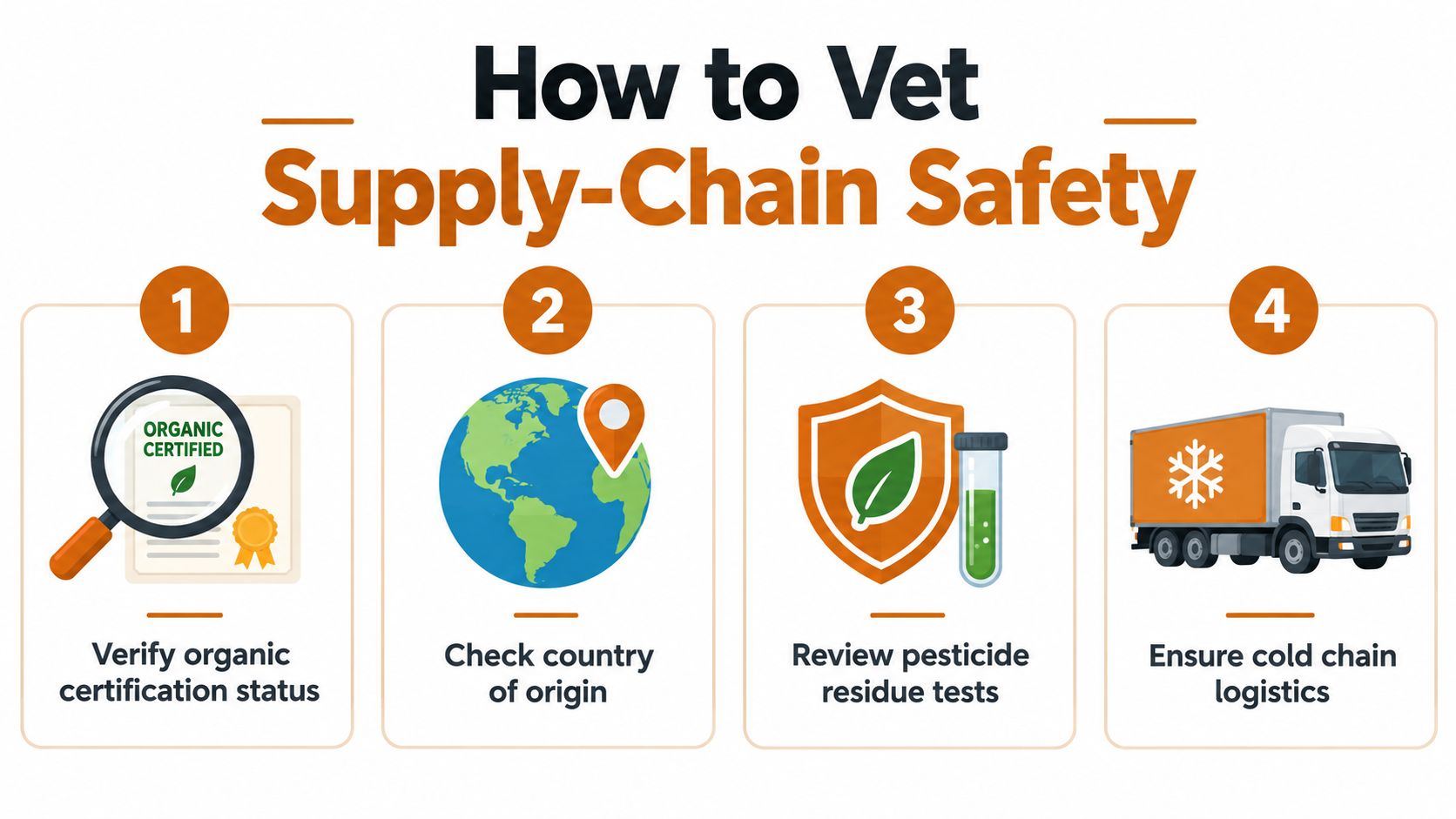
“Natural” tells you very little by itself. Before buying, ask the supplier for:
- Country of origin: The label should identify where the insects were raised and processed. A packaging location may not identify the production source.
- Rearing substrate: Ask what the larvae ate. Plant-based or otherwise permitted substrates should be described clearly rather than concealed by a broad “farm-raised” claim.
- Batch testing: Request records for heavy metals and relevant pathogens. Without testing details, comparing products becomes guesswork.
- Processing and storage: Confirm whether the insects were dried, how they should be stored, and how the packaging limits moisture and contamination.
- Lot traceability: A lot number or equivalent identifier should connect the bag to production and testing records.
An emerging poultry-feed project is testing insect meals for Salmonella, Listeria, and Campylobacter, while measuring metabolizable energy and digestible amino acids. The EU insect-meal pathogen-testing project reflects an ongoing quality question: pathogen control and nutritional consistency should be documented rather than assumed from advertising.
Treat marketing language as a starting point
“Human-grade,” “organic,” and “USA-grown” can describe a product, but they do not replace the feed label or test records. Ask what each certification covers in that jurisdiction, whether it applies to the insects or only the facility, and whether the supplier can provide current documentation.
For a model of what transparent sourcing documentation looks like in practice, see this guide to supply-chain transparency.
Buyer's checkpoint: If a seller can describe the origin but cannot explain the substrate, testing, and lot controls, you still lack enough information to call the product safe.
Clear sourcing does not make mealworms suitable in unlimited quantities. It helps you reduce avoidable risks while keeping the treat's role separate from the flock's complete staple feed.
Real-World Use Cases for Different Flock Goals
The right insect changes with the job. A handful used to call hens back into the run has a different purpose from a calcium-conscious reward for laying birds or an energy-dense snack during cold weather.
During molt
Molting birds often attract attention because they look ragged and seem less active. Mealworms are useful here as a palatable way to add supplemental protein and energy, but they aren't a guaranteed feather-growth treatment. A complete ration still supplies the balanced amino acids and minerals that a concentrated treat may lack.
Scatter a small amount through clean bedding instead of dropping it in a bowl. The hens must scratch and search, which turns feeding into activity and slows the rush of dominant birds taking everything at once.
For laying hens
A hen with weak shells needs a diet review, not an automatic increase in mealworms. Mealworm preference and protein content don't establish that the insect will correct calcium deficiency. In a 2025 laying-hen study, adding 1%, 2%, or 4% mealworm larvae for four weeks didn't change laying rate, egg weight, shell quality, or egg composition, although the 4% treatment improved feed-conversion ratio. The results are available in this 2025 laying-hen study.
BSFL are the better fit when you specifically want a calcium-rich insect treat, but free-choice calcium and complete layer feed remain central. Watch the shells, body condition, feed intake, and general behavior rather than assuming an insect will solve a problem on its own.
For winter rewards and training
Dried mealworms are convenient when live insects are difficult to keep. Their concentrated form works well for recall, gentle handling, or rewarding birds that enter a coop on command. Because chickens can swallow them quickly, scatter them across a wider area or use them sparingly during training.
BSFL can also work as a training reward, particularly for owners who want the treat itself to contribute more calcium. Don't confuse that advantage with permission to increase the quantity. The reward should remain small enough that birds return to their normal ration.
A useful routine is to reward the behavior first, then provide the flock's usual feed. That keeps the insect associated with handling or recall without allowing it to become the meal.
Making Your Final Choice and Feeding Strategy
The best mealworms for chickens aren't necessarily the largest, darkest, or most popular product on the shelf. They're the treat that matches your purpose and passes a basic quality check.
Use this shortlist before buying:
- For calcium: Compare the declared calcium analysis and consider BSFL when mineral density matters.
- For enrichment: Choose live or dried larvae that you can scatter safely and store correctly.
- For energy: Mealworms may suit a treat strategy centered on digestible fat and strong palatability.
- For safety: Confirm origin, substrate, processing, storage instructions, and testing information.
- For flock balance: Keep the complete layer or grower feed available without allowing insects to displace it.
Don't calculate value from protein alone. Compare the nutrient you need per unit of product, then account for waste, storage, and whether the flock will consume the treat without fighting. A cheaper bag with unclear sourcing isn't necessarily better value than a traceable product with a clear analysis.
If you're also reducing reliance on purchased feed ingredients, review practical guidance on alternative crops for chicken feed. Homegrown additions still need to complement, rather than replace, a nutritionally complete poultry ration.
For most backyard flocks, a sensible hybrid strategy is straightforward. Use mealworms when palatability, recall, or enrichment is the goal. Use BSFL when calcium is the more important specification. In both cases, offer measured treats, maintain unrestricted access to appropriate staple feed and calcium, and reassess if egg shells, body condition, or feed intake changes.
Pure Grubs offers USA-grown dried black soldier fly larvae for chickens, with catalog information describing 36–42% crude protein and a calcium-focused formulation. Visit Pure Grubs to review the product details and compare a traceable BSFL option with the mealworm treats already in your feeding routine.