

Best foods for chickens to lay eggs: Essential Guide to Higher Egg Production
When it comes to keeping your nesting boxes full, it all boils down to what you put in the feeder. The secret to a productive flock isn't complicated; it's a nutritional foundation built on three key pillars: high-quality protein, plenty of calcium, and the right mix of essential vitamins and minerals. Think of a complete layer feed as the non-negotiable starting point for every hen.
Your Quick Guide to a Full Nesting Box
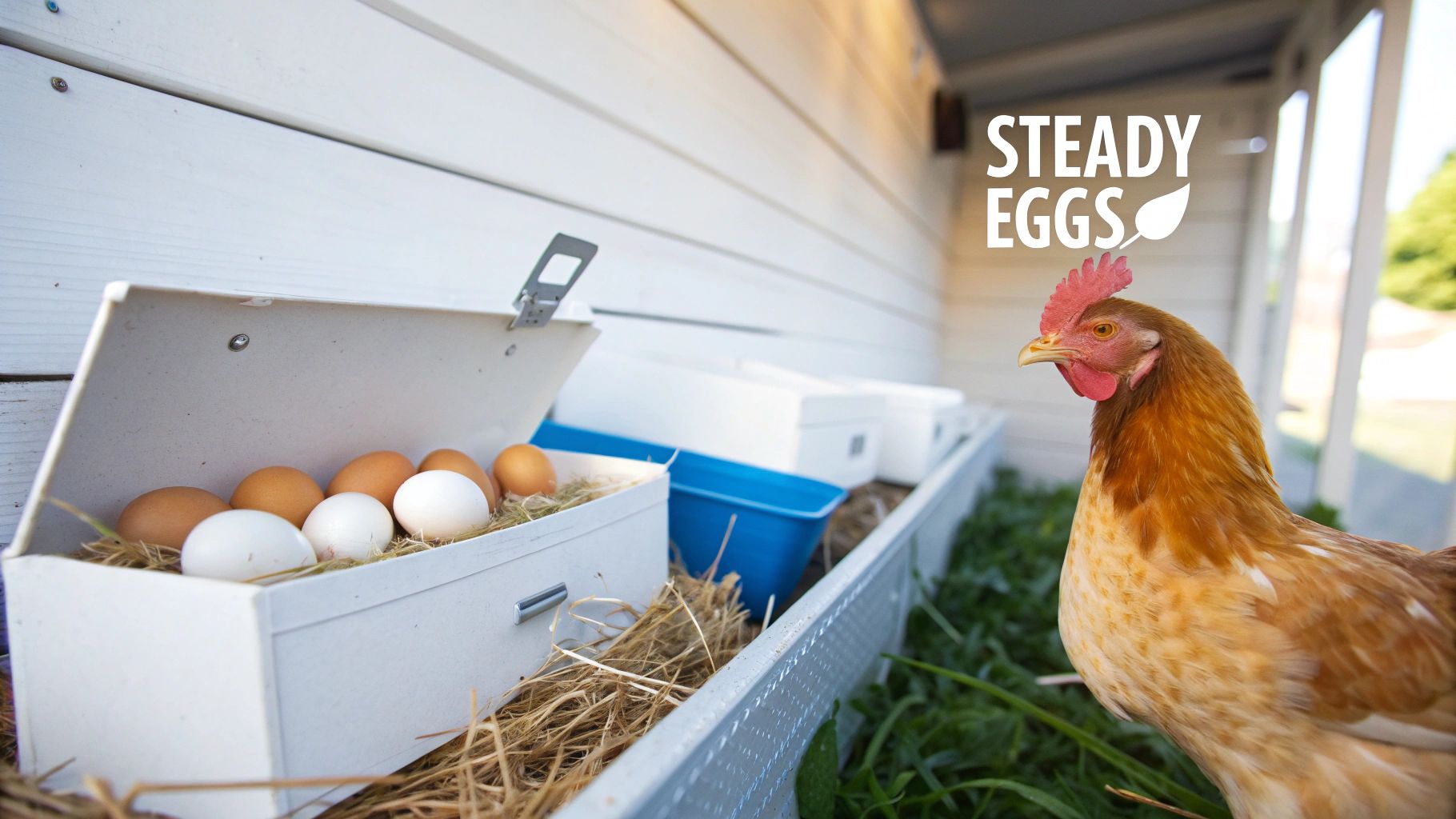
Feeding your flock the right stuff isn't just about getting more eggs—it's about getting stronger, healthier eggs while keeping your hens in top condition. A laying hen is a tiny biological factory, working hard every single day to convert her food into a perfectly packaged egg. That's an incredibly demanding job for her body.
Imagine you had to build a brand-new car from scratch, every single day. You'd need a constant, reliable supply of steel for the frame, rubber for the tires, and plenty of fuel to run the whole operation. A hen's nutritional needs are just as specific. If she doesn't get the right raw materials, the production line either slows down or starts making duds, like those frustrating soft-shelled or shell-less eggs.
The Foundation of a Productive Diet
A hen's diet directly impacts everything from how often she lays to the strength of the eggshell and even the color of the yolk. To get consistent results, you have to manage her nutrition carefully. It really comes down to three main components:
-
Complete Layer Feed: This is the workhorse of your feeding program and should make up about 90% of your flock's diet. It’s scientifically formulated with the right balance of protein (usually 16-18%), calcium, and other nutrients she needs to lay daily.
-
Supplemental Calcium: Even though layer feed has calcium, busy layers often need a little extra. Giving them a free-choice source, like crushed oyster shell or high-calcium treats, lets them take what they need, when they need it.
-
High-Value Treats: Healthy extras like leafy greens, vegetables, and protein-packed insects are great for boosting nutrition and keeping your flock happy. Just remember to keep them limited to no more than 10% of their total diet to avoid unbalancing the core nutrients.
This balanced approach is precisely why modern chicken keepers see such great results.
Optimized nutrition is the engine behind productivity. It’s what enables hens to reach their full genetic potential for laying, turning good feed into great eggs, day after day.
The proof is in the numbers. On a commercial scale, a U.S. flock of 311 million laying hens produced an incredible 93.1 billion table eggs, with the average hen laying 301 eggs per year. This massive output is largely thanks to optimized diets. You can find more insights into modern egg production and the critical role of nutrition on the United Egg Producers website. It just goes to show that what you feed your hens is the single most important factor in keeping those nesting boxes full.
Core Food Groups for Optimal Egg Laying
To make it even simpler, here's a quick breakdown of the core food groups and what they do for your laying hens. Think of this as your cheat sheet for a healthy, productive flock.
| Food Category | Primary Nutrient | Key Benefit for Laying Hens |
|---|---|---|
| Complete Layer Feed | Balanced Protein & Calcium | Provides the all-in-one nutritional foundation for daily egg formation. |
| Oyster Shell/Limestone | Calcium Carbonate | Offers a slow-release source of calcium for strong eggshell creation. |
| Legumes & Grains | Protein & Carbohydrates | Supplies energy and the amino acid building blocks for the egg white (albumen). |
| Leafy Greens | Vitamins A, K, & E | Boosts yolk color and provides essential vitamins for overall hen health. |
| Insects (e.g., BSFL) | Protein & Calcium | Delivers a highly digestible, natural source of protein and vital minerals. |
By ensuring your flock has consistent access to these key food types, you're not just feeding them—you're fueling a highly efficient egg-production machine.
The Nutritional Blueprint for a Perfect Egg
Ever stop to think about what it takes for a hen to lay an egg? Every single day, she’s essentially building a tiny, perfect house from scratch. Her body is a little factory, turning the feed you give her into a masterpiece of nutrition and structure. But for that factory to run smoothly, it needs a precise set of building materials.
Think of it like this: protein is the sturdy frame of the house, forming the rich yolk and the protective egg white. Calcium is the brick and mortar for the walls, creating a strong, resilient shell. And all the other vitamins and minerals? They're the essential wiring and plumbing that make the whole system work.
If any of these key ingredients are missing, the production line slows down, or even shuts down completely. Getting a handle on this nutritional blueprint is the first step to keeping those nesting boxes full.
The Power of Protein
Protein is, without a doubt, the cornerstone of egg production. A single large egg packs about six grams of protein, and your hen has to source all the raw materials for that from her daily meals.
This is why a high-quality layer feed is formulated to contain 16-18% protein. That’s not just some random number; it’s the sweet spot that gives a hen enough fuel to maintain her own body and still have plenty left over to produce an egg almost every day.
When a hen's diet is low on protein, egg-laying is one of the first things to go. You might see smaller eggs, fewer eggs, or she might just stop laying altogether. Her body is smart—it will redirect that precious protein to more critical jobs, like staying healthy and growing feathers.
The Critical Role of Calcium
If protein builds the inside of the egg, calcium builds the protective outside. An eggshell is a marvel of natural engineering, made of about 94% calcium carbonate. It takes a hen around 20 hours to form just one shell, a process that pulls a huge amount of calcium from her system.
To keep up, a laying hen needs to take in roughly 4 grams of calcium every single day. That's a massive demand.
A hen's ability to lay strong-shelled eggs is directly tied to her daily calcium intake. A deficiency, even for a short period, can lead to thin, weak, or even shell-less eggs, putting the hen at risk for health complications like egg binding.
This is why you can't just feed your laying hens a standard chicken feed; they need a layer feed specifically fortified with calcium. Even then, a hen’s needs change with her age and the season. The best practice is to offer a separate, free-choice source of calcium, like crushed oyster shell. This lets each hen take exactly what she needs, right when she needs it. To really dive into this vital nutrient, check out our guide on the best calcium-rich foods for chickens.
Vitamins and Minerals: The Unsung Heroes
Protein and calcium get all the glory, but a whole team of vitamins and minerals are working tirelessly behind the scenes. Think of them as the support crew—without them, the main actors can’t do their jobs.
Here are a few of the most important players:
- Vitamin D3: This is the gatekeeper for calcium. A hen can eat calcium all day long, but without enough Vitamin D3, her body can't absorb it. Poor shell quality is often a sign of a D3 shortage.
- Phosphorus: This mineral is calcium’s partner. The two need to be in the right balance for strong bones and solid eggshells.
- Omega-3 Fatty Acids: Good for us, and great for them! A diet rich in Omega-3s from sources like flax or kelp can lead to those beautiful, deep-orange yolks and even boost the nutritional value of the eggs themselves.
- Vitamins A and E: These are crucial for a healthy reproductive system and a strong immune response, keeping your hen in top shape to be a consistent layer.
At the end of the day, it all works together. A truly balanced diet gives your flock the complete toolkit they need to do what they do best: fill your egg cartons with beautiful, healthy eggs.
Comparing the Top Foods for Your Laying Flock
Now that we understand what goes into making an egg, picking the right food becomes a lot easier. You’re not just tossing out feed; you're providing the specific building blocks your hens need for the demanding job of daily egg production. Let’s walk through the best options and see how they stack up.
The absolute foundation of a healthy laying hen's diet is a high-quality commercial layer feed. This isn't just a suggestion—it's the bedrock of good nutrition. Think of it as a hen's perfectly balanced meal, expertly formulated by poultry nutritionists to deliver the ideal ratio of protein, calcium, and essential vitamins every single day.
The Cornerstone: Commercial Layer Feed
You'll find layer feeds in a couple of different forms, but the nutritional content is what really matters. You're looking for a feed with 16-18% protein, which is the sweet spot for a productive hen.
- Pellets: These are little compressed cylinders of feed. I'm a fan because they cut down on waste—chickens can't easily pick out just their favorite bits and leave the rest behind.
- Crumbles: This is just the pelleted feed broken into smaller pieces. It's a great choice for smaller bantam breeds, young hens just switching to layer feed, or any bird that seems to prefer a finer texture.
Whichever style you go with, this complete feed should make up about 90% of your flock’s daily intake. It’s hands-down the most reliable way to ensure they get the consistent, balanced nutrition they need to lay strong eggs day after day. Trying to mix your own feed from scratch is incredibly difficult and often leads to gaps in their diet.
The Great Calcium Debate: Oyster Shell vs. BSFL
Even with an excellent layer feed, some of your best layers might need a little extra calcium boost. This is where supplements come into play, and the two most popular options are traditional oyster shell and Black Soldier Fly Larvae (BSFL).
For years, oyster shell has been the go-to. It's a fantastic slow-release source of calcium that you offer in a separate dish. Hens are smart about it—they’ll only eat as much as their bodies tell them they need. It does the job, but it only solves one part of the nutritional puzzle: calcium.
This is where BSFL, like our Pure Grubs, really shine. They're a nutritional powerhouse, delivering not just high protein but also a massive amount of naturally occurring, easy-to-absorb calcium.
Black Soldier Fly Larvae can contain up to 85% more calcium than mealworms. This is a huge deal because mealworms are actually quite low in calcium, making BSFL a far superior choice for supporting strong eggshells.
When you give your flock BSFL, you're not just giving them a treat; you're giving them a potent protein and calcium supplement all in one. It simplifies your routine and provides a nutrient-packed snack that your chickens will go wild for.
To get a better handle on how different calcium sources stack up, take a look at this comparison table.
Supplemental Calcium Sources for Strong Eggshells
Here's a quick comparison of the most popular calcium supplements for laying hens, highlighting what they bring to the table.
| Calcium Source | Calcium Content | Additional Benefits | Best For |
|---|---|---|---|
| Oyster Shell | Very High (~38%) | Slow-release, hens self-regulate. | Providing a free-choice, dedicated calcium source separate from feed. |
| Pure Grubs (BSFL) | High (~3-5%) | High in protein (40%), healthy fats, and phosphorus for calcium absorption. | A dual-purpose treat and supplement that boosts protein and calcium simultaneously. |
| Eggshells | Very High (~38-40%) | Free and readily available. Must be crushed and sterilized. | A cost-effective, recycled option for experienced flock owners. |
| Liquid Calcium | Variable | Fast-acting for correcting deficiencies. | Emergency use or for individual hens showing signs of calcium deficiency. |
Each source has its place, but BSFL stand out for their ability to deliver multiple key nutrients in a single, natural treat.
The infographic below shows exactly where all those nutrients from a balanced diet end up.
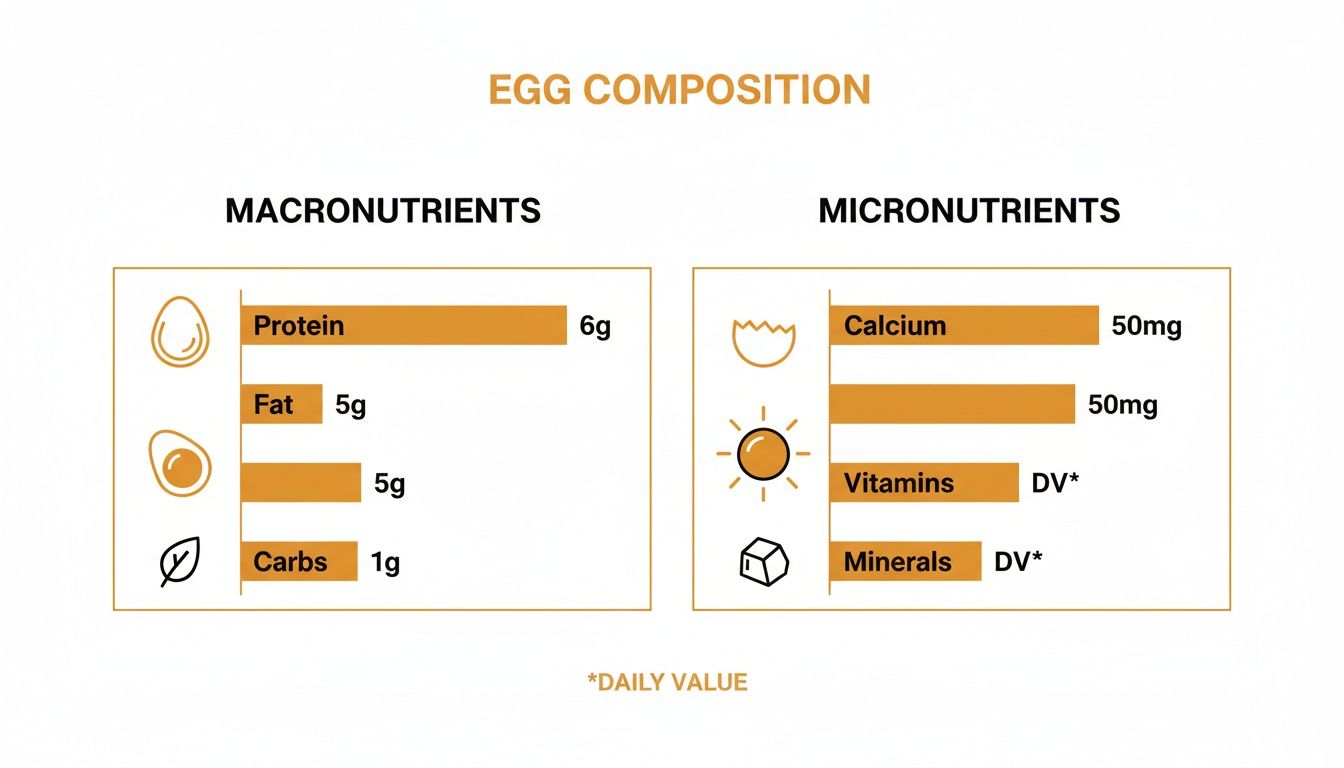
As you can see, protein is vital for forming the rich yolk and albumen, while calcium is almost entirely dedicated to building that strong, protective shell.
Kitchen Scraps and Scratch Grains: The 10% Rule
We all love spoiling our chickens, and tossing them some kitchen scraps or a handful of scratch grains is one of the joys of keeping them. But it’s critical to remember these are treats, and they should never make up more than 10% of your flock’s total diet.
Think of it like dessert. A little is a wonderful thing, but if you let your kids fill up on cookies before dinner, they won't eat their vegetables. It's the same with chickens. If they fill up on lower-value treats like bread, pasta, or scratch grains, they eat less of their balanced layer feed.
This can quickly throw their nutrition out of whack, leading to a drop in egg production or, worse, thin, weak eggshells. For a deeper dive, check out our article on high-protein foods for chickens, where we explain this balance in more detail.
- Good-to-Go Scraps: Leafy greens, fresh herbs, cooked oatmeal, and most veggies are fantastic, healthy choices.
- Use Scratch Grains Wisely: A mix of cracked corn and other grains is best saved for a special treat. It's great for encouraging natural scratching behavior and gives them a little energy boost in cold weather, but it's low in the specific nutrients they need to lay eggs.
By making a complete layer feed the star of the show and supplementing smartly with high-value treats like BSFL, you'll create a diet that keeps your flock happy, healthy, and laying plenty of beautiful, strong-shelled eggs.
Crafting the Perfect Daily Menu for Your Hens
Knowing what nutrients your hens need is one thing, but putting it all together day-to-day is what actually fills the egg carton. Don't worry, creating a daily menu isn't about complicated recipes. It’s all about consistency, balance, and getting a feel for what your flock needs.
Let's break down how to build a practical feeding plan that works.
The first question on every new chicken keeper's mind is, "How much do I actually feed them?" A solid rule of thumb is that a standard laying hen will eat about 1/4 pound of feed per day, which works out to roughly 1/2 cup. But remember, this is just a starting point. A big Orpington in the dead of winter will eat more than a little Leghorn on a hot summer day when she's out foraging for bugs.
Because of this, trying to perfectly measure out their daily food is a fool's errand. The best method is to provide their main feed "free-choice." Just keep their feeder full of a quality layer pellet or crumble, and let them decide how much they need. Chickens are surprisingly good at regulating their own intake and won't typically overeat their main course.
The Foundation: The 90/10 Rule
If you take one thing away from this guide, let it be the 90/10 Rule. This is the secret to keeping your hens in peak laying condition while still having fun with treats.
It’s beautifully simple:
At least 90% of your hen's diet should come from her complete layer feed. The other 10% can be made up of healthy supplements and treats.
Sticking to this rule helps you avoid a classic mistake: loving your chickens a little too much with treats. When a hen fills up on tasty but less-nutritious scratch grains or kitchen scraps, she won't eat enough of her balanced feed. This can throw her system out of whack surprisingly fast, often leading to a sudden stop in laying or those dreaded soft-shelled eggs.
A Sample Daily Feeding Schedule
So, what does this look like on a typical day in the coop? Here’s a sample routine that puts the 90/10 Rule into practice. Think of it as a blueprint you can easily tweak for your own flock.
Morning (As soon as they're out of the coop):
- Action: Top off their main feeder with their complete layer feed and make sure they have fresh, clean water.
- Why: Hens are usually ravenous first thing in the morning. Giving them immediate access to their most important food ensures they load up on essential nutrition before anything else.
Midday (Optional):
- Action: Toss them a handful of leafy greens—kale, weeds from the garden, or a bit of lettuce work great.
- Why: This gives them something fun to do and mimics natural foraging behavior. It's a healthy, low-calorie treat that provides extra vitamins without spoiling their appetite for the real meal.
Late Afternoon (An hour or two before they head in to roost):
- Action: Scatter a small amount of a high-value treat, like Pure Grubs Black Soldier Fly Larvae.
- Why: Timing is everything. By offering treats late in the day, you know they've already eaten most of their layer feed. A protein and calcium-packed snack like BSFL gives them a final boost to fuel the demanding overnight process of forming a strong eggshell. This is the perfect time to give them that "10%" bonus.
By structuring the day like this, you're not just giving them random snacks; you're using treats as a strategic supplement. This simple, consistent routine is one of the best things you can do to keep your hens healthy, happy, and the eggs coming.
Foods to Avoid and Common Feeding Mistakes
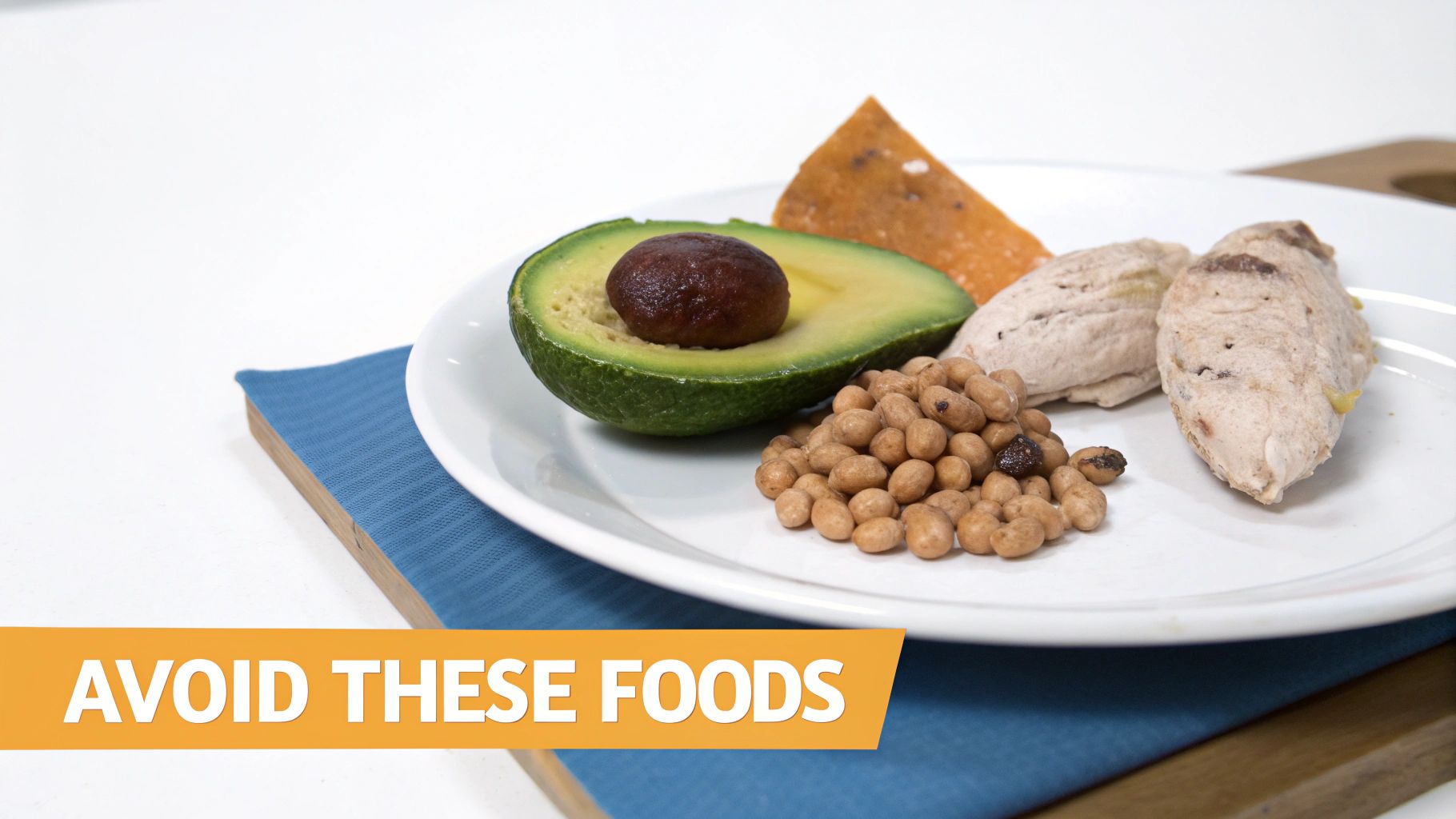
Knowing the best foods to feed your hens is only half the battle. Just as important is knowing what they should never eat. Keeping your flock safe from common household toxins is key to making sure they stay healthy enough to be great layers.
Many kitchen scraps that seem perfectly harmless can actually cause serious problems for chickens, from an upset stomach all the way to death. Their digestive systems are more sensitive than ours, so avoiding these potential dangers is a huge part of being a responsible chicken keeper.
The Do-Not-Feed List
Some foods contain compounds that are flat-out poisonous to poultry. To keep your hens healthy and their egg production on track, always make sure your flock never gets ahold of anything on this list.
- Avocado Pits and Skins: These contain a toxin called persin, which can lead to respiratory distress and even heart failure in chickens.
- Uncooked or Dried Beans: Raw beans are a big no-no. They contain a natural insecticide, phytohaemagglutinin, that is extremely toxic to birds, even in tiny amounts.
- Moldy or Spoiled Food: A simple rule of thumb: if you wouldn't eat it, don't feed it to your flock. Mold can produce mycotoxins that are lethal to chickens.
- Green Potatoes or Potato Peels: The green parts of potatoes contain solanine, a poison that can cause serious digestive and neurological issues.
- Onions and Garlic (in large amounts): While opinions vary on small amounts, large quantities can cause hemolytic anemia, a condition that destroys their red blood cells.
This isn't a complete list, so it always pays to be cautious. For a deeper dive, check out our detailed guide on specific foods harmful to chickens and the risks they pose.
Common Feeding Mistakes That Hurt Egg Production
Even if you avoid toxic foods, some common feeding habits can accidentally bring egg-laying to a screeching halt. These mistakes usually come from a good place, but they create nutritional imbalances that directly interfere with a hen's ability to form an egg.
The most common mistake is breaking the 90/10 rule. It’s tempting to spoil your chickens with treats like scratch grains, bread, or table scraps. While they’ll gobble them up happily, they're essentially filling up on low-nutrient "junk food."
When a hen fills her crop with treats, she eats less of her complete layer feed. This creates a critical nutrient deficit—especially in protein and calcium—which are the primary building blocks for eggs.
This imbalance is one of the top reasons hens suddenly stop laying or start producing eggs with weak, paper-thin shells. If you want a steady supply of eggs from your nesting boxes, their formulated feed must always come first. Think of treats as a small supplement, not a main course.
Answering Your Top Chicken Nutrition Questions
Even with the perfect feeding plan, questions are bound to pop up. Chickens aren't machines, after all. Their laying habits can be influenced by everything from the weather to their individual quirks. We've gathered some of the most common questions we hear from backyard keepers to give you clear, straightforward answers.
Think of this as your go-to reference when you hit a bump in the road. Having this knowledge on hand will help you troubleshoot common issues and feel more confident in keeping your flock healthy and productive.
How Long Does It Take for a Diet Change to Affect Egg Production?
This is the big one, isn't it? You've made a change, and you're eagerly checking the nesting boxes every morning. While we all wish for an overnight miracle, a hen's body needs time to adjust and rebuild its nutritional reserves. Patience really is a virtue here.
Generally, you can expect to see the first positive changes within 2 to 4 weeks. Often, the very first thing you'll notice is better eggshell quality. As your hen's calcium stores get replenished, those frustratingly thin or soft shells will start to firm up.
A real uptick in the number of eggs might take a little longer, often closer to the 4-week mark. Just remember that other factors are always at play—the season, your hens' age, and any stress can all impact their cycle. Still, a consistent, high-quality diet is the fastest way to get things moving in the right direction.
Can I Mix My Own Chicken Feed Instead of Buying Commercial Pellets?
The romance of mixing your own custom feed is powerful, especially if you're aiming for a self-sufficient homestead. While you can do it, this is a path that requires a lot of caution and knowledge.
Formulating a balanced chicken feed is a science. It's far more than just throwing some grains in a bucket. You have to hit precise ratios of protein (usually 16-18%), calcium, phosphorus, essential amino acids, and a whole spectrum of vitamins. Get it wrong, and you can quickly cause serious nutritional deficiencies, which will stop egg production cold and can even damage your hens' health.
For the vast majority of us, a high-quality commercial layer feed is simply the safest and most reliable choice. It takes all the guesswork out of the equation and ensures your hens get exactly what they need, day in and day out.
Unless you have a deep background in poultry nutrition and access to all the necessary ingredients, sticking with a professionally formulated feed is your best bet for a healthy, productive flock.
Why Are My Hens Laying Eggs with Thin Shells?
Finding a thin, fragile, or even shell-less egg is always a bit alarming. Your first thought is probably "calcium!"—and you're often right. But what if you're already providing a good layer feed and have oyster shell available? Other things could be going on.
A very common culprit is heat stress. When the temperature soars, a hen’s body just can't absorb and process calcium as efficiently. This is why you'll often see more shell problems pop up during a summer heatwave.
Age is another big factor. As a hen gets older, her shell-making machinery isn't as robust as it used to be. She might lay bigger eggs, but the shells will often be noticeably thinner than the ones she laid in her prime.
To help, make sure your flock always has access to plenty of fresh, cool water. And never stop offering a separate, free-choice source of calcium like crushed oyster shell. This lets each hen take exactly what she needs, which can change from one day to the next.
Are Mealworms a Good Treat for Laying Hens?
This is a really important distinction for laying flocks. Chickens go absolutely bonkers for mealworms, and they are a fantastic source of protein. However, when it comes to supporting egg production, mealworms fall short.
The problem is their mineral profile. Mealworms are high in protein but critically low in calcium. Even worse, their calcium-to-phosphorus ratio is out of whack. When a hen eats too much phosphorus without enough calcium to balance it, it can actually block her body from absorbing the calcium she needs for shell formation.
This is exactly why Black Soldier Fly Larvae (BSFL) are such a smarter choice for laying hens. They are a nutritional powerhouse, naturally loaded with both protein and easily digestible calcium. They deliver the perfect one-two punch: the protein boost chickens crave and the essential calcium they need for strong eggshells.
For a treat that actually supports egg production instead of working against it, Pure Grubs offers USA-grown Black Soldier Fly Larvae packed with the protein and calcium your laying hens need. Give your flock a treat that works for them at https://puregrubs.com.