

The Best Bird Seed for Cardinals Your Ultimate Guide
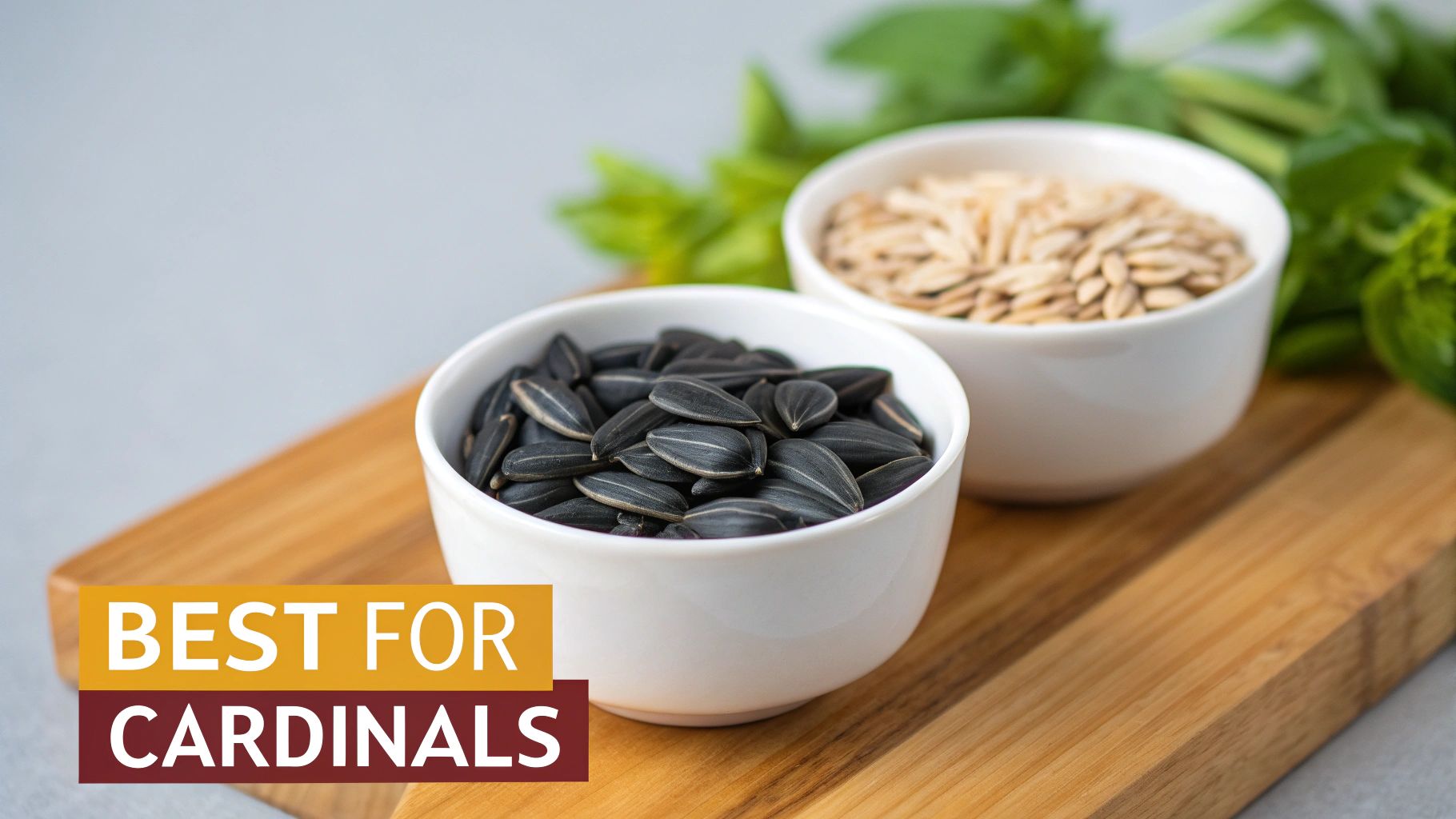
If you want to bring those stunning flashes of red to your backyard, the secret is surprisingly simple: fill your feeders with black oil sunflower seeds. They are, without a doubt, the number one choice for attracting cardinals. Safflower seed is a very close and strategic second.
These two seeds are cardinal magnets because they pack the high-energy punch these birds need. Plus, their powerful beaks can crack them open with ease, making for a perfect meal.
What Seeds Do Cardinals Actually Prefer?
To understand why cardinals go crazy for certain seeds, you have to look at their anatomy and needs. Unlike tiny birds that peck gently, cardinals come equipped with strong, cone-shaped beaks built for business. They're natural seed-cracking machines.
This makes high-energy seeds with a rewarding kernel inside their go-to food, especially when the weather turns cold and their metabolism kicks into high gear to stay warm.
H3: Black Oil Sunflower: The Undisputed Champion
When it comes to rolling out the red carpet for cardinals, nothing beats black oil sunflower seeds. Their shells are noticeably thinner and easier to break open than the classic striped sunflower seeds you might see in trail mix. For a cardinal, that means less work for a bigger reward—a quick, high-calorie meal.
It's no surprise that these little black gems are considered the best bird seed for cardinals. Decades of birdwatching confirm it. In North America, where about a third of adults over 16—that's roughly 80 million people—feed wild birds, black oil sunflower seeds reign supreme. Their high oil content provides crucial fat and calories, and their small size is perfect for a cardinal's beak. For a deeper dive, you can find more great info on the best seeds for backyard birds on georgiawildlife.com.
H3: Safflower: The Smart, Squirrel-Proof Alternative
While black oil sunflower gets all the glory, safflower seed is an incredibly clever runner-up. Its secret weapon? A tough, slightly bitter shell that most squirrels, grackles, and starlings simply can't stand. Cardinals, on the other hand, handle it just fine.
Expert Tip: If you're tired of squirrels and grackles emptying your feeders in a matter of hours, making the switch to safflower is one of the smartest moves you can make. It's like putting up a "Cardinals Only" sign, reserving the buffet for them and other desirable guests like finches and chickadees.
Making the right choice for your backyard can be tough. So, to help you visualize the differences, here is a quick comparison of these two powerhouse seeds.
Top Bird Seeds for Cardinals at a Glance
This table breaks down what makes each of these seeds such a great option for your feeding station, so you can pick the one that best fits your backyard setup.
| Seed Type | Key Benefit for Cardinals | Attracts | Squirrel Resistance |
|---|---|---|---|
| Black Oil Sunflower | High in fat for energy; thin, easy-to-crack shell. | Cardinals, finches, chickadees, jays, nuthatches. | Low |
| Safflower Seed | Thick, bitter shell deters squirrels and bully birds. | Cardinals, house finches, grosbeaks, doves. | High |
Ultimately, whether you choose the all-around favorite or the pest-resistant alternative, both black oil sunflower and safflower seeds are surefire ways to make your yard the most popular spot on the block for cardinals.
Why Cardinals Are So Picky About Their Seeds
If you've ever watched a cardinal at a feeder, you've seen something pretty special. They don't just peck around randomly. They land with purpose, grab a single seed, and with a quick, decisive crack, get right to the good stuff inside. This isn't just a preference; it's a display of evolutionary perfection.
A cardinal's food choices are tied directly to the incredible tool it carries on its face: its beak.
A Masterclass in Design: The Cardinal's Beak
Think of a cardinal's beak as less of a mouth and more of a high-powered, perfectly engineered nutcracker. Its short, thick, conical shape is built to exert serious pressure, making short work of tough shells on seeds like sunflower and safflower to get to the rich kernel.
It’s all in the mechanics. The lower part of the beak has a neat little groove that holds the seed steady. When the cardinal clamps down, the sharp upper part slices cleanly through the shell. It's an incredibly efficient system designed to get the most energy for the least amount of work.
Birds with slender, tweezer-like beaks are built for snatching insects or sipping nectar. But the cardinal? It's a seed-cracking specialist. This physical advantage dictates their entire diet, guiding them toward foods that play to their strengths. A hard-shelled seed isn’t an obstacle; it's exactly what they're looking for.
Fueling a High-Energy Lifestyle
Cardinals are busy birds. They’re constantly on the move, and that high metabolism requires a ton of fuel to keep their internal furnace burning, especially when it gets cold. Seeds packed with fat and protein are the ultimate power food, like tiny energy bars that help them survive long days and even colder nights.
This need for high-octane fuel becomes critical in winter. When the temperature drops to 32°F, a cardinal's digestive efficiency can plummet by 16% compared to warmer days, forcing them to eat significantly more just to stay warm. It’s no surprise that in the booming U.S. bird food market—expected to hit USD 4,049.4 million by 2035—sunflower seeds are still king. You can find more great tips on backyard bird feeding on georgiawildlife.com.
When you put out the right high-fat, high-protein seeds, you’re doing more than just feeding a bird. You're giving it the essential fuel it needs to make it through the harshest weather, so you can hear its song from the treetops come spring.
The connection between their powerful beak and their metabolic demands is the whole story. They are biologically wired to find the most energy-dense food they can crack open.
Matching the Seed to the Bird
Once you understand this, choosing the best bird seed for cardinals becomes simple. You just need to offer foods that fit their natural tools and nutritional needs.
Here's why the top choices work so well:
- Black Oil Sunflower Seeds: The shells are thin, making them a breeze for a cardinal's beak to crack open. Inside is a kernel loaded with fat and protein—the perfect high-reward, low-effort meal.
- Safflower Seeds: These shells are a little tougher, but still no match for a cardinal's powerful beak. The prize inside is a fatty kernel that makes the effort worthwhile. As a bonus, most squirrels find safflower bitter and leave it alone.
By stocking your feeders with seeds that align with their natural abilities, you turn your backyard into a reliable, life-sustaining haven they'll visit again and again.
Exploring the Top Cardinal-Approved Seeds
If you want to turn your backyard into a cardinal hotspot, you have to start thinking like a cardinal. Their powerful, cone-shaped beaks and high-energy needs are what guide their food choices. They're looking for the most bang for their buck, and while plenty of seeds might attract birds in general, only a select few are truly irresistible to these crimson visitors.
Let's break down the absolute best seeds for cardinals, exploring what makes them so special and how you can use them to create the perfect menu.
The key is understanding the connection between their anatomy and their diet. A cardinal's beak is a specialized tool, perfectly designed to crack open shells and get to the high-energy food inside—fuel that's essential for survival.

Grasping this simple concept is the first step to successfully attracting them to your feeders all year long.
Black Oil Sunflower: The Gold Standard
If you could only offer one seed to attract cardinals, this would be it. Black oil sunflower is the undisputed champion, and for a couple of very practical reasons.
First off, its shell is much thinner and softer than the larger striped sunflower seeds. A cardinal can crack it open with minimal effort, getting quick access to the nutritious kernel inside. This kind of efficiency is a huge deal, especially during the cold winter months when every bit of conserved energy counts.
Second, that little kernel is an absolute powerhouse of nutrition. It’s packed with fat—sometimes as high as 40%—making it an incredibly rich source of calories. This is the fuel cardinals need to maintain their body temperature and stay active. Simply put, offering black oil sunflower seeds is the single most effective thing you can do to make your feeder a regular stop.
Safflower: The Smart and Strategic Choice
Think of safflower seed as the secret weapon of savvy birdwatchers. While cardinals will happily eat it, many of the common feeder pests won't. Squirrels, grackles, and starlings often turn their noses up at its thick shell and slightly bitter taste, leaving more for the birds you actually want to see.
By switching to safflower, or mixing it with sunflower seeds, you’re basically putting up a “Cardinals Welcome” sign while discouraging the bullies. This lets them feed in peace without being crowded out, making it a fantastic choice for yards with persistent squirrel problems.
It still offers a high-fat, high-protein meal that a cardinal's strong beak can easily handle. If you find your local cardinals are a bit hesitant to try it at first, just mix a small amount into their favorite black oil sunflower blend and gradually increase the ratio over time.
Other Worthy Contenders
While sunflower and safflower are the stars of the show, a few other options can help round out your cardinal buffet. Each has its own pros and cons to consider.
- Striped Sunflower Seeds: These are the bigger cousins of black oil sunflower seeds, with thicker, harder shells. Cardinals can definitely crack them, but it takes more work. They're a decent backup but not nearly as preferred.
- Cracked Corn: You'll often see cardinals foraging for cracked corn, especially if you offer it on a platform or ground feeder. Just be warned: it’s also a huge favorite of less desirable visitors like starlings, House Sparrows, and, of course, squirrels.
- Hulled Sunflower Seeds (Hearts or Chips): This is a fantastic, no-mess option. With the shell already removed, birds get instant access to the high-energy kernel. The best part? No more pile of discarded shells under your feeder. The main downside is the price tag—they're more expensive and can spoil faster in wet weather without their protective shell.
By understanding these different seeds, you can start to tailor your offerings and create the ultimate dining experience. If you want to learn even more about matching food to feathers, our guide on the best bird feeder food is a great next step. Crafting your own custom blend is a surefire way to turn your yard into the most popular cardinal restaurant in the neighborhood.
Choosing the Right Feeder and Placing It for Success
Even if you offer the best seed in the world, you won't see that iconic flash of red unless cardinals feel safe and comfortable at the dinner table. The right feeder—and where you put it—is just as crucial as the menu itself.
Unlike tiny, nimble finches that can cling to almost any surface, cardinals are a bit more particular. They're medium-sized songbirds that need a solid, stable place to perch while they eat. They aren't built for hanging upside down or balancing on tiny pegs, so your feeder choice really matters.
Cardinal-Friendly Feeder Types
Not all feeders are created equal in the eyes of a cardinal. While they might make a grab-and-go attempt from any source, they’ll consistently return to feeders that offer easy access and a sturdy perch.
Here are the top three styles cardinals absolutely love:
- Hopper Feeders: Think of these as little houses for seed. They protect a large amount of seed from the weather and usually have wide ledges on the sides—perfect for the stable footing cardinals need.
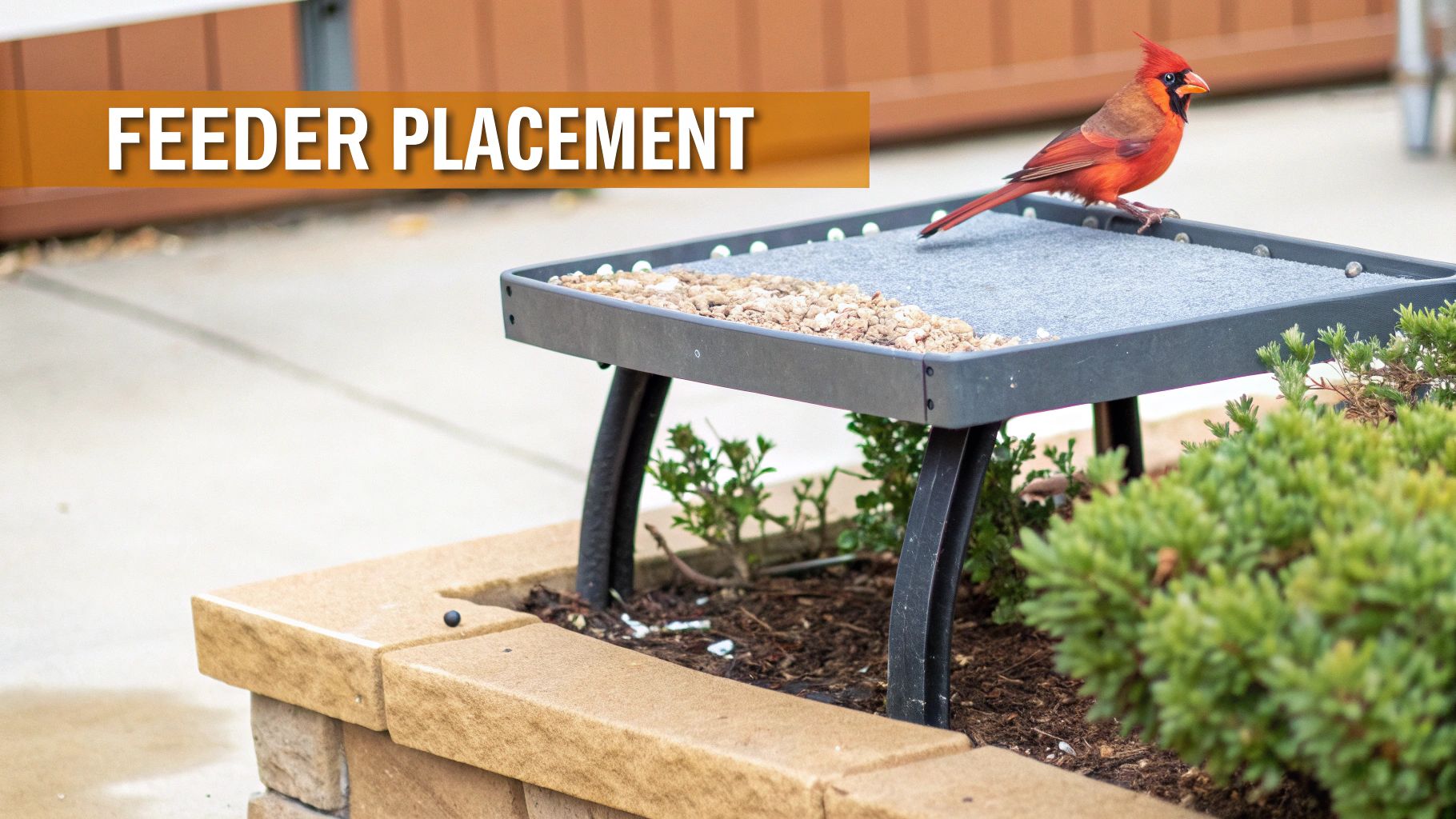
- Platform or Tray Feeders: This is the most straightforward option. It’s essentially an open tray that perfectly mimics the ground-feeding behavior cardinals often show in the wild. It gives them plenty of space to land, hop around, and eat comfortably.
- Tube Feeders with a Tray: A standard tube feeder is typically a no-go for cardinals. But if you add a seed-catching tray to the bottom, you instantly make it cardinal-friendly. That simple addition provides the landing pad they need to access the seed ports.
Key Takeaway: The common thread here is a stable, spacious perching area. If a cardinal can land and eat without performing a balancing act, you’ve picked a winner.
The Art of Perfect Feeder Placement
Where you hang your feeder is a strategic game. You want it close enough for you to enjoy the view, but placed in a way that makes cardinals feel secure from predators like hawks and neighborhood cats. Honestly, poor placement is one of the biggest reasons people struggle to attract these beautiful birds.
For the best results, try to find a spot roughly 10 to 12 feet away from any dense shrubs or trees. This distance is a strategic sweet spot. It gives them a nearby place to dart for cover if a predator shows up, but it's just far enough to prevent squirrels from launching a treetop raid on your feeder.
As for height, placing your feeder about five to six feet off the ground is ideal. This keeps it out of reach of prowling cats and other ground-level pests while still being low enough for you to easily refill and clean it.
Finding that perfect balance can make all the difference. For a deeper dive, our guide on how to attract cardinals to your feeder has even more tips for creating an irresistible setup.
Ultimately, your goal is to create a safe haven. When you combine the right seed with a sturdy feeder in a secure location, you’re not just offering a meal—you’re providing a reliable dining spot they’ll return to day after day.
Creating the Ultimate Cardinal Buffet
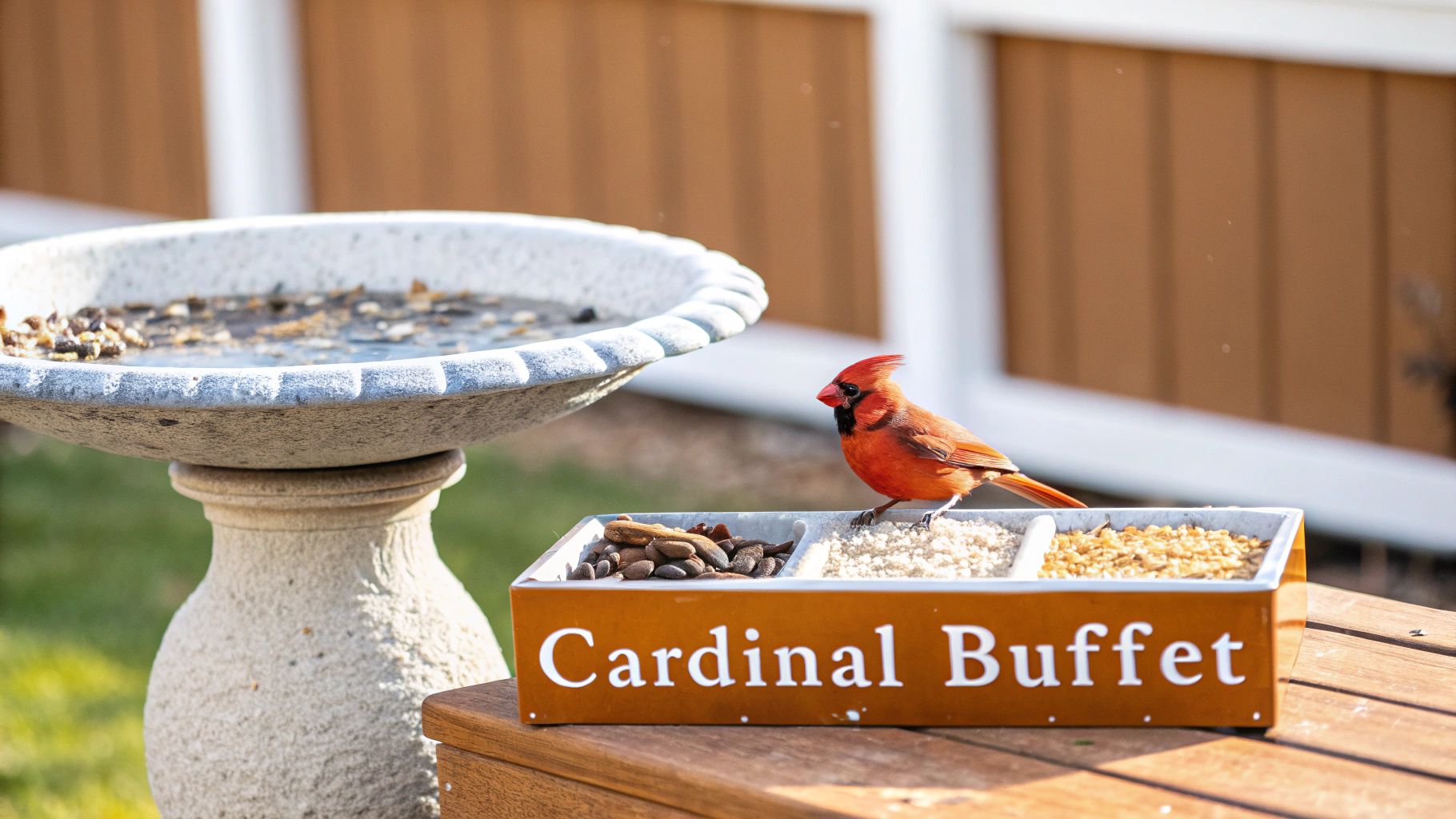
Putting out the best bird seed for cardinals is a fantastic start, but if you want to turn your yard into a place they truly can't resist, you have to think beyond just the seed. To create a genuine haven, you need to provide everything these gorgeous birds need to feel safe and well-fed. It’s this complete-package approach that convinces them to not only visit but to make your yard a regular stop.
Think of your feeder as the main course. Now, let's add the sides and a refreshing drink to complete the meal. When you provide for all their needs, you're building a reliable sanctuary that supports their health all year long.
The Underestimated Power of a Water Source
It might surprise you, but one of the single most effective ways to attract cardinals—and nearly every other bird in your neighborhood—has nothing to do with seed. A clean, reliable source of fresh water is an absolute game-changer. Birds don't just need water for drinking; they need it for bathing to keep their feathers in top shape for insulation and flight.
You don't need anything fancy. A simple birdbath will do the trick.
Whether it's a classic pedestal, a hanging dish, or a saucer on the ground, the most important thing is keeping it clean and full.
- Year-Round Magnet: In the blistering summer heat, a cool bath is a lifesaver. And in the dead of winter, when ponds and puddles freeze over, a heated birdbath can draw in birds from miles around.
- Easy Maintenance: Just give the basin a quick scrub and refill it with fresh water every couple of days. This simple step prevents algae from growing and keeps the water inviting.
Adding this one feature can dramatically increase not just the number of cardinals you see, but the variety of all birds visiting your yard. It truly completes the picture.
Supercharging Their Diet with High-Protein Treats
While seeds are packed with the fats and energy cardinals need, they don't cover all the nutritional bases. During really demanding times—like nesting season, molting, or a brutal winter—birds crave an extra boost of protein and calcium that seed alone just can't provide. This is where a few well-chosen treats can make all the difference.
It’s just like how people take a daily vitamin. We eat a good diet, but a supplement helps fill in any gaps. For cardinals, high-protein treats do the same thing, supporting everything from strong eggshells to healthy feather growth.
Providing a variety of food sources mimics a bird's natural foraging habits and offers a more well-rounded diet. It’s the difference between running a fast-food joint and a gourmet restaurant for your backyard visitors.
To really elevate their diet, consider adding a high-quality insect treat. This one small addition can have a huge impact on their overall health and vitality.
Why Pure Grubs Are a Superior Choice
One of the absolute best supplements you can offer is dried Black Soldier Fly Larvae (BSFL), and Pure Grubs are an exceptional choice. These aren't just filler; they are a nutritional powerhouse, loaded with the protein and—most importantly—the calcium that cardinals and other songbirds need.
You'll be glad to know that Pure Grubs are FDA-compliant, tested for heavy metals, and contain zero additives. They also pack an incredible punch, with 85% more calcium than mealworms. That calcium is absolutely vital for strengthening eggshells and supporting robust feather development.
Offering Pure Grubs couldn't be easier. You can mix them right in with your current cardinal seed blend or serve them on their own in a small dish or platform feeder. By taking this simple step, you’re providing a complete nutritional package that supports the long-term health of your cardinals, keeping them coming back to your ultimate backyard buffet. For more ideas, take a look at our guide on what to put in bird feeders.
Troubleshooting Your Cardinal Feeder
So, you've set up a feeder with what should be a cardinal's favorite meal, but things aren't going quite as planned. It happens to the best of us. Maybe you're dealing with greedy squirrels, a flock of pushy grackles, or—even more frustrating—a complete absence of cardinals. Don't worry, these are common bumps in the road, and they're usually easy to fix.
Most feeding station troubles boil down to one of three things: unwelcome visitors, seed going bad, or the birds simply not showing up. Let's walk through how to handle each one.
Outsmarting Squirrels and Bully Birds
There's nothing more disheartening than watching a squirrel or a gang of starlings drain a feeder in minutes, chasing away the very birds you hoped to attract. But you don't have to surrender. The trick is to make the feeder less appealing to them without discouraging the cardinals.
Think of it as setting a specific dress code for your backyard café.
- Install a Baffle: This is your first and best line of defense. A dome-shaped baffle hung over the feeder or a cone-shaped one mounted on the pole below creates a physical barrier that squirrels just can't seem to figure out. It's often all you need.
- Switch to Safflower Seed: This is a brilliant move. Cardinals enjoy safflower, but squirrels and grackles apparently hate the bitter taste and tough shell. It’s like putting something on the menu that only your favorite customers will order.
- Use a Weight-Activated Feeder: These are smartly designed feeders. The seed ports stay open for lightweight cardinals, but the second a heavy squirrel or grackle lands on the perch, their weight triggers a mechanism that shuts the door.
A Quick Word of Caution: Please don't grease your feeder poles. I know it looks hilarious in online videos, but it's really harmful. The grease can get matted in a squirrel's fur or a bird's feathers, which can leave them dangerously exposed to the elements.
Keeping Your Cardinal Feeder Fresh and Safe
Have your cardinals suddenly vanished? Before you assume they've moved on, go check the seed. Bird seed, especially in damp or humid weather, can get moldy, clumpy, and downright dangerous for birds. A clean, dry feeder isn't just nice to have—it's essential for their health.
A clean feeder is a safe feeder, plain and simple. I recommend giving your feeders a good scrub every two weeks, and even more often if you've had a lot of rain.
My Go-To Feeder Cleaning Routine:
- Empty It Out: Toss all the old seed. If it looks damp or smells musty, it's got to go.
- Scrub It Down: I use a simple solution of one part bleach to nine parts hot, soapy water. A good bottle brush is perfect for getting into all the nooks and crannies.
- Rinse, Rinse, Rinse: This is the most important step. You have to rinse it with clean water until you're absolutely sure all the cleaning solution is gone.
- Let It Dry Completely: Set it out in the sun to air dry. Putting fresh seed in a damp feeder is a recipe for instant mold.
What to Do When Cardinals Don't Show Up
You’ve got the perfect feeder, the best seed, and... nothing. Not a single flash of red. Before you get discouraged, remember that cardinals can be a bit shy. It can take them a little while to trust a new food source. If a week or two has gone by with no visitors, it's time to run through a quick mental checklist.
First, take another look at your feeder's placement. Is it in a relatively safe spot, maybe 10-12 feet away from the cover of a bush or tree? That distance gives them a safe place to retreat to but is just far enough to prevent squirrels from making an easy leap.
Next, give the seed a sniff. Is it fresh? Birds have a better sense of this than we do. If it's been sitting out for a long time, they'll just ignore it. And finally, be patient. Sometimes all it takes is for one brave cardinal to discover your offering. Once that happens, you can be sure its friends will quickly follow.
Frequently Asked Questions About Feeding Cardinals
Even after you've set up the perfect feeder, some questions inevitably pop up. Let's tackle some of the most common ones I hear from fellow bird watchers so you can create a cardinal-friendly yard with complete confidence.
Do Cardinals Eat Bird Seed Off the Ground?
They sure do! Cardinals are natural ground foragers, so they're perfectly happy hopping around and cleaning up seeds that have fallen from your feeders. Honestly, some of them seem to prefer it.
This is exactly why a low-to-the-ground platform feeder works so well for them. If you can place it near some cover—like a few shrubs or a small evergreen tree—they'll feel much safer as they peck away. It just feels more natural to them.
What Time of Day Do Cardinals Usually Feed?
Cardinals are big on routine. You'll almost always see the most activity during two specific times: early in the morning just as the sun is coming up, and again in the late afternoon as dusk begins to settle.
They're often the first birds to show up for breakfast and the last to grab a bite before turning in for the night. Keeping your feeders full means they'll learn to count on your yard for those critical meals.
A full feeder at dawn and dusk is one of the best ways to guarantee regular cardinal sightings. They count on that reliability, especially when food is scarce.
Should I Stop Feeding Cardinals in the Summer?
Nope, there's no reason to stop. While it’s true that their diet shifts to include more insects and wild berries in the warmer months, they absolutely still appreciate a reliable, high-energy food source. Think of it as a helpful supplement.
Feeding in the summer is especially beneficial for parent birds who are frantically trying to keep their hungry nestlings fed. The only real change for you is to be extra vigilant about cleaning your feeders. In warm, humid weather, mold and bacteria can take hold quickly, so regular cleaning is key.
Why Are Cardinals Not Eating My Safflower Seeds?
If your cardinals are snubbing the safflower you put out, don't worry—this is a common problem. Birds can be a bit suspicious of new foods, and it's likely they just don't recognize it yet.
The trick is to introduce it gradually. Start by mixing a small handful of safflower into their beloved black oil sunflower seeds. Over a couple of weeks, you can slowly increase the amount of safflower as they get a taste for it. And, of course, always make sure your seed is fresh. Birds know stale or moldy seed when they see it and won't touch the stuff.
For a truly irresistible treat that provides essential calcium and protein, consider adding Pure Grubs to your cardinal buffet. These high-quality, USA-grown Black Soldier Fly Larvae give your birds the nutritional boost they need for strong feathers and overall health. Learn more and give your cardinals the best.