

What to Feed Ducks for a Healthy Flock
So, what’s the best thing to feed a duck? The short answer is a high-quality commercial waterfowl feed, with some healthy, natural treats like leafy greens, cracked corn, and protein-packed insects on the side. This mix gives them everything they need to be healthy and happy, unlike junk food like bread, which fills them up without offering any real nutrition.
The Foundations of a Healthy Duck Diet
Figuring out what to feed your ducks all comes down to one simple idea: knowing the difference between their main meal and a snack. It's a lot like how we think about our own food. You wouldn't try to live on cake and cookies, right? The same goes for your flock. The bulk of their diet has to come from a feed that was specifically created for waterfowl.
This “complete feed” is their dietary foundation. It’s been carefully formulated with just the right mix of protein, vitamins, and minerals that ducks need at every stage of life—including crucial nutrients like niacin for strong legs. Everything else you give them, from fresh garden scraps to yummy grubs, is a treat. Treats are wonderful for keeping your ducks engaged and providing extra nutrients, but they should never be more than 10% of their total food intake.
Staples Versus Treats
The real secret to a healthy duck is understanding which foods are the staples and which are just fun extras. Staples are the bedrock, giving them consistent and complete nutrition every single day. Treats, on the other hand, add variety and can provide a nice little boost without throwing their core diet out of whack.
A well-balanced diet is the cornerstone of a duck's health, directly impacting everything from egg quality and feather strength to their overall energy and longevity. Prioritizing a complete feed ensures they receive all the necessary building blocks for a healthy life.
This visual guide is a great way to see the difference between the everyday essentials and the occasional goodies.
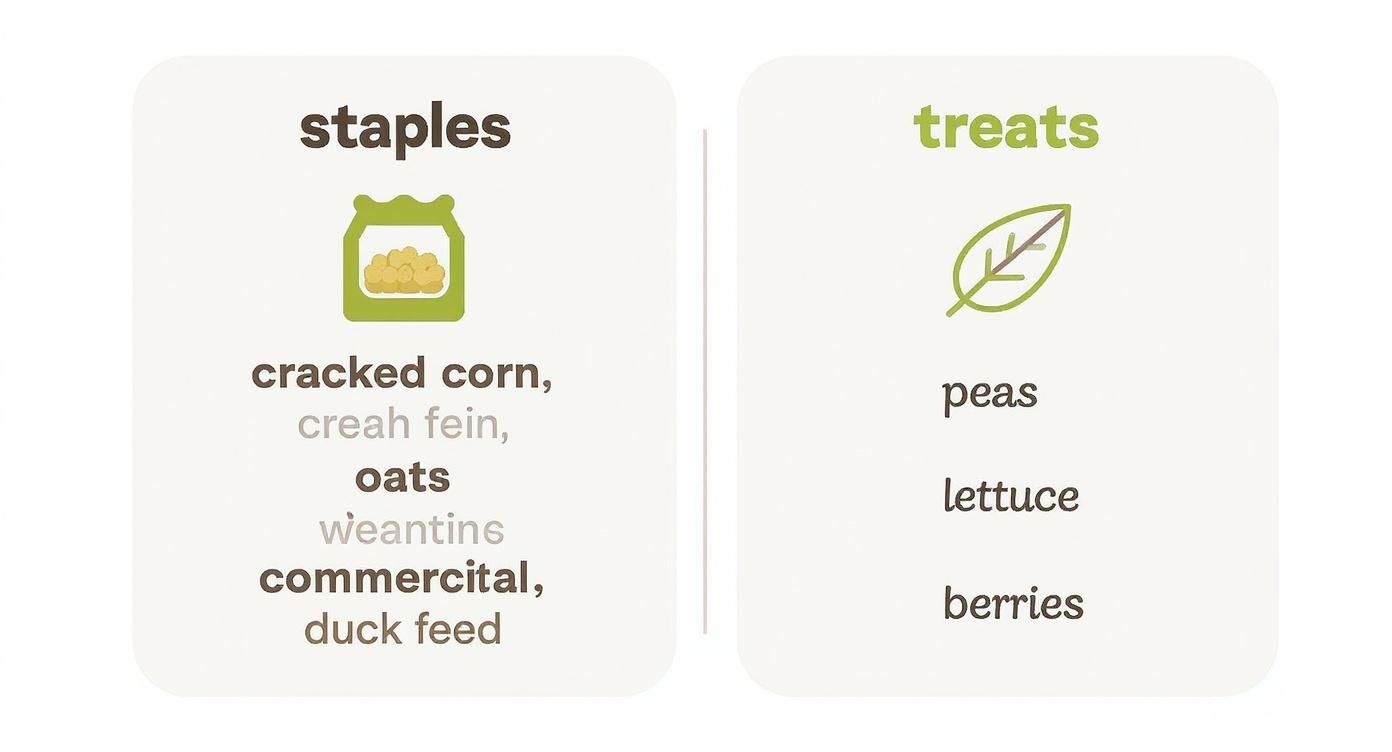
Just like the infographic illustrates, the daily staples are the non-negotiables that provide complete nutrition. Treats are for moderation and variety. Sticking to this simple principle helps you avoid overfeeding them on snacks and guarantees they get the balanced diet they truly need to thrive.
Duck Diet At a Glance Staples vs Treats
To make it even clearer, here’s a quick comparison of the foods that should be available daily versus those that are best saved for special occasions.
| Food Category | Examples | Feeding Frequency |
|---|---|---|
| Staples | Commercial waterfowl feed (pellets or crumbles), fresh water | Daily, free-choice |
| Treats | Leafy greens (lettuce, kale), cracked corn, oats, insects, fruits, veggies | Sparingly, a few times a week |
This table helps you see at a glance how to prioritize your flock's menu. Always lead with the staples and use treats as a fun, healthy supplement.
Building a Balanced Feeding Plan
What does all this look like day-to-day? It’s pretty straightforward. Your ducks should always have access to their main commercial feed and plenty of clean, fresh water. Seriously, don't forget the water—they need it to swallow and digest their food, so it’s a good idea to keep their water source right next to their feeder.
Then, a few times a week, you can liven things up with some treats. Tossing some chopped kale into their run or a handful of oats into their water provides great enrichment and adds valuable nutrients. If you want to give them a serious protein and calcium boost—especially important for laying hens—a high-quality supplement like Black Soldier Fly Larvae (BSFL) is an excellent choice. This balanced approach gives your ducks the best of both worlds: the solid, reliable nutrition of a complete feed and the fun variety of wholesome, natural snacks.
Decoding Duck Nutritional Needs
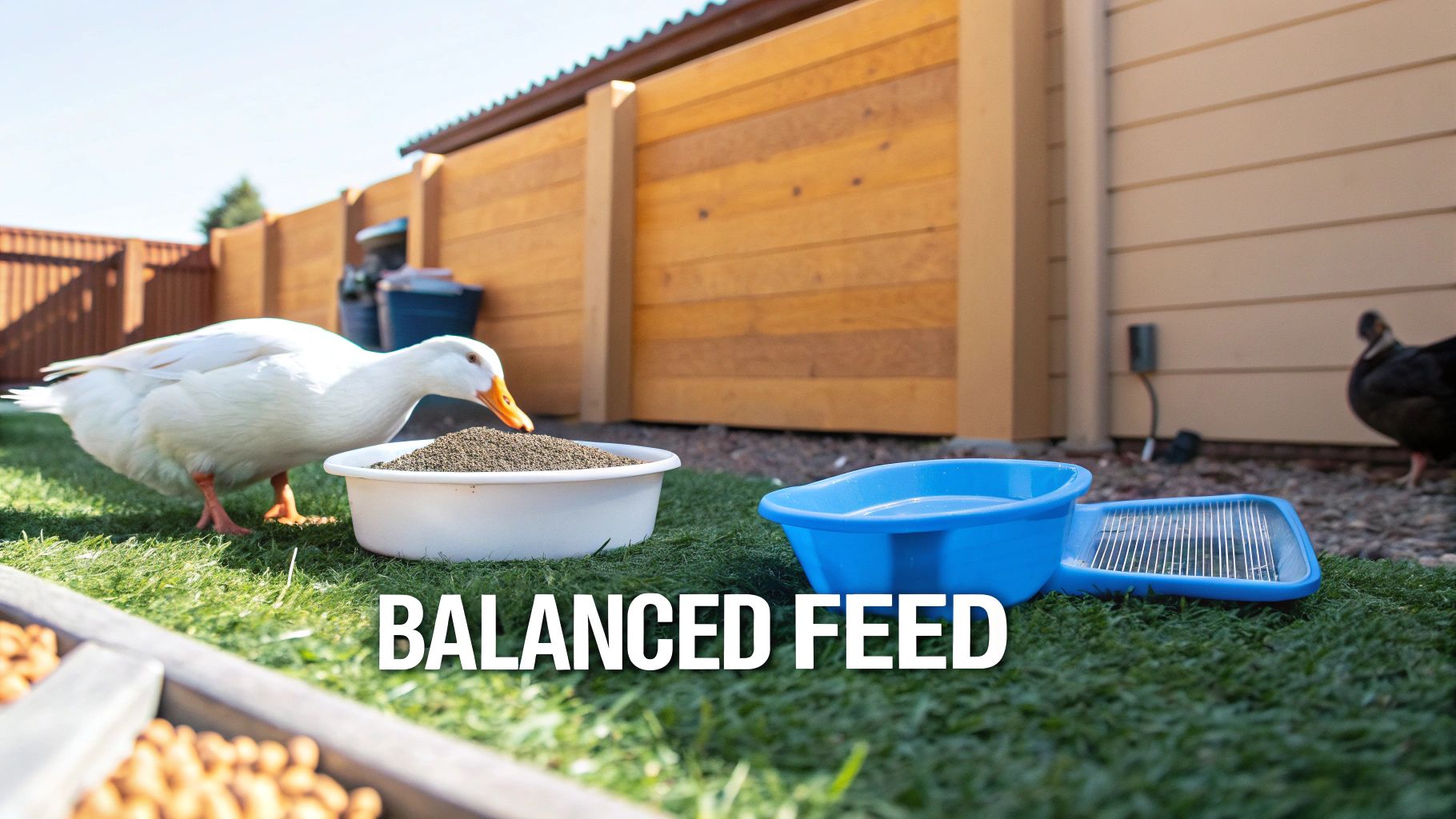
Before we can talk about what to feed ducks, we have to understand what their bodies are designed for. Think of their diet as the fuel for a high-performance engine. The right mix of nutrients is what allows them to grow, lay beautiful eggs, and waddle around with endless energy. Their dietary needs are a delicate balance of key components that shift as they grow from duckling to adult.
At the core of their diet are protein and fat. Protein is the fundamental building block for just about everything—muscle, feathers, and healthy organs. Fats, on the other hand, provide the dense, concentrated energy source ducks need to fuel their very active days. This is exactly why a good quality commercial feed is the cornerstone of their diet; it's scientifically formulated to get these crucial ratios just right.
This isn’t just a backyard concern, either. The global focus on proper duck nutrition is massive. The duck feed market was valued at an impressive USD 3.2 billion in 2022 and is projected to climb to USD 4.5 billion by 2028. This growth highlights a worldwide understanding that quality feed is key to raising healthy, productive ducks. If you're curious, you can explore more data on the global duck feed market for a deeper look.
Essential Vitamins and Minerals
Beyond protein and fat, it's the micronutrients—the vitamins and minerals—that really fine-tune a duck's health. These components perform highly specific, critical jobs inside the body. A shortage of even one can lead to surprisingly serious health issues down the road.
Two of the most talked-about micronutrients in the duck world are niacin and calcium, and for good reason.
- Niacin (Vitamin B3): This is absolutely non-negotiable, especially for ducklings. They need much more niacin than baby chicks do, and it’s essential for proper bone and leg development. Without enough of it, they can quickly develop debilitating leg problems.
- Calcium: For laying ducks, calcium is everything. It’s what allows them to form strong, solid eggshells. If a hen doesn't get enough calcium from her diet, she might start laying thin or soft-shelled eggs. Even worse, her body will start pulling that calcium from her own bones, leaving her weak and brittle.
Understanding these specific needs shows why simply tossing out kitchen scraps just won't cut it. A duck’s diet is a science, where each nutrient is a building block for a healthy life—from the strength of their legs to the quality of their eggs.
When you start with a feed that meets these intricate requirements, you’re setting your flock up for success. This knowledge also helps you make smarter choices about supplemental treats, ensuring they actually enhance your ducks' diet instead of disrupting that careful balance.
What to Feed Your Ducks (Besides Their Main Feed)
A high-quality commercial waterfowl feed should always be the cornerstone of your ducks' diet, but that doesn't mean it has to be boring! Sprinkling in some fresh, natural foods adds variety, excitement, and a powerful nutritional boost. Think of it as adding healthy, delicious side dishes to their main course.
Giving your ducks different foods to try does more than just round out their diet. It actually mimics their natural instinct to forage, keeping them mentally stimulated and happy. The golden rule is to keep these supplemental foods to no more than 10% of their total daily food intake. This ensures they’re still getting the balanced nutrition from their primary feed.
To give you some ideas, here's a quick rundown of safe and healthy foods you can offer your flock.
Safe and Healthy Foods for Ducks
| Food Type | Examples | Key Nutrients | Preparation Notes |
|---|---|---|---|
| Vegetables | Kale, romaine, Swiss chard, cucumbers, peas, corn, grated carrots. | Vitamins A, C, & K, fiber, hydration. | Always chop into small, bite-sized pieces to prevent choking. Avoid iceberg lettuce (low nutritional value). |
| Fruits | Berries (blueberries, strawberries), melon (watermelon, cantaloupe), apples, bananas. | Antioxidants, natural sugars for energy. | Offer in moderation due to sugar content. Remove large seeds or pits. |
| Grains | Uncooked rolled oats, cracked corn, cooked rice (unsalted), wheat. | Carbohydrates for energy, B vitamins. | A great source of energy, especially in colder weather. Grains should be a small part of their treat allowance. |
| Protein | Earthworms, crickets, mealworms, Black Soldier Fly Larvae (BSFL). | Protein for muscle & feather growth, calcium. | Crucial for laying ducks and during molting season. BSFL are especially high in calcium for strong eggshells. |
Remember, this is about supplementing, not replacing, their main feed. A few handfuls of greens or a scoop of grubs is plenty.
Leafy Greens and Veggies
Vegetables are hands-down one of the best additions you can make. They're packed with vitamins and low in sugar, making them a perfect daily treat. Most leafy greens are a huge hit, providing both key nutrients and extra hydration.
Just be sure to chop everything up into small, manageable pieces so nobody chokes.
Some duck-approved favorites include:
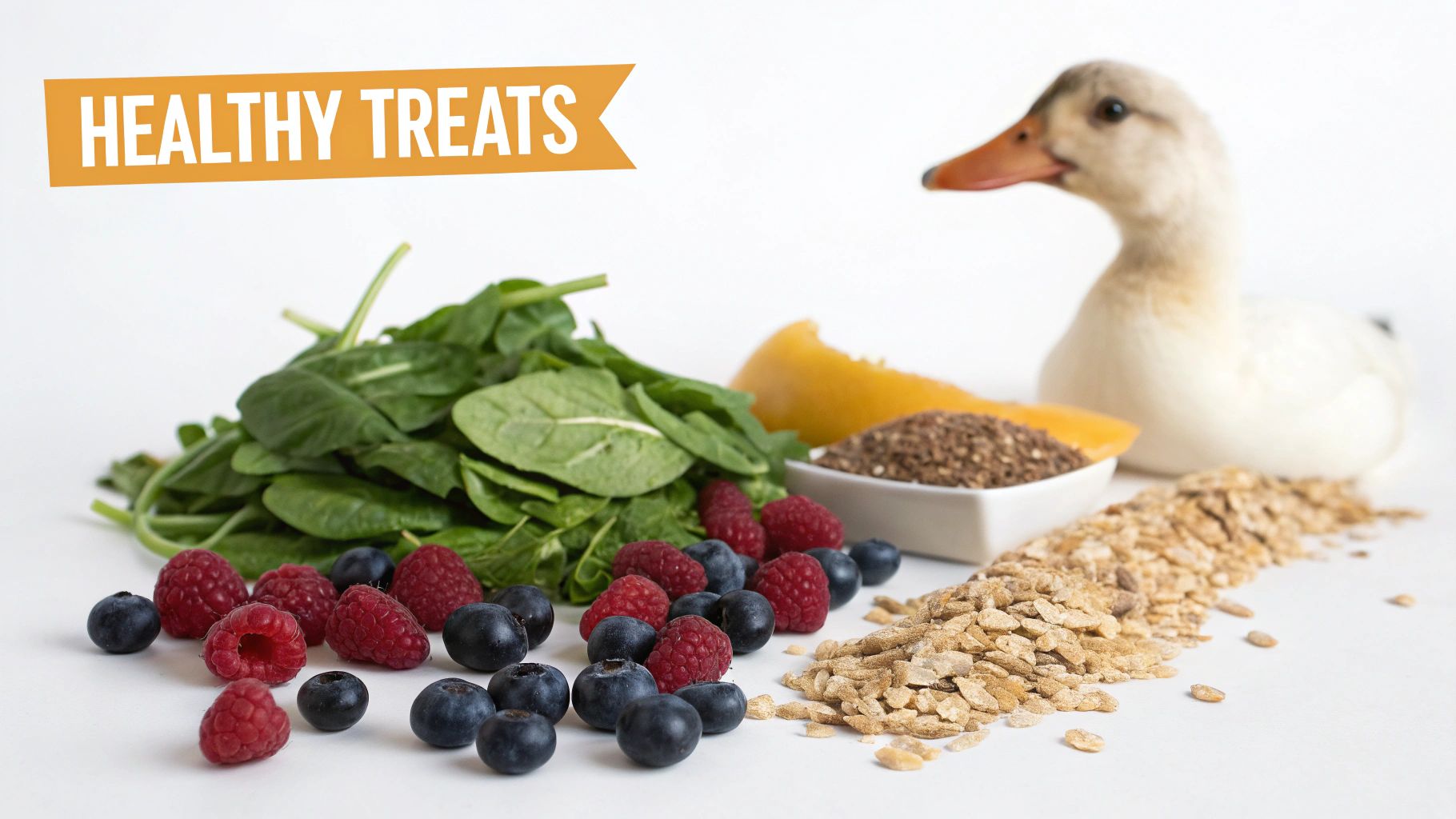
- Leafy Greens: Ducks go wild for kale, romaine lettuce, Swiss chard, and bits of cabbage. They're loaded with vitamins A, C, and K.
- Peas and Corn: It's pure entertainment watching ducks chase down peas and corn. You can serve them fresh, frozen (just thaw them first!), or canned (make sure there's no salt added).
- Root Veggies: Try offering some grated carrots, chopped cucumbers, or bits of sweet potato.
These are all easy for your ducks to digest and a fantastic way to introduce fresh food into their diet.
Fruits and Grains (In Moderation!)
Fruits and grains offer a great energy kick, but they need to be treated like, well, treats! They're higher in sugar and carbs, so think of them as an occasional dessert, not a daily staple.
Too much sugar is no better for a duck than it is for us. A few sweet bites now and then keeps their diet interesting without spoiling their appetite for their main feed.
Here are a few safe and popular options:
- Berries: Blueberries, strawberries, and raspberries are full of powerful antioxidants.
- Melons: Chopped-up watermelon (rind and all!), cantaloupe, or honeydew are wonderfully hydrating treats, especially on a hot summer day.
- Grains: A small scoop of uncooked, rolled oats or some cracked corn is a classic choice that provides a nice burst of energy.
A Boost of Healthy Protein
Protein is absolutely essential, especially for your laying hens who need it for egg production and for the whole flock during their yearly molt. When ducks are out foraging, they snap up all sorts of bugs and worms. You can help them out by providing your own healthy protein sources.
Earthworms and crickets are great, but for the best nutritional bang for your buck, you can't beat Black Soldier Fly Larvae (BSFL). They are packed with protein and, more importantly, have an incredibly high calcium content—which is a game-changer for strong, healthy eggshells. If you want to add this powerhouse supplement to your feeding routine, you can easily learn where to buy Black Soldier Fly Larvae from high-quality suppliers. It's one of the best ways to round out a truly healthy diet.
Why Bread Is Dangerous and Other Foods to Avoid
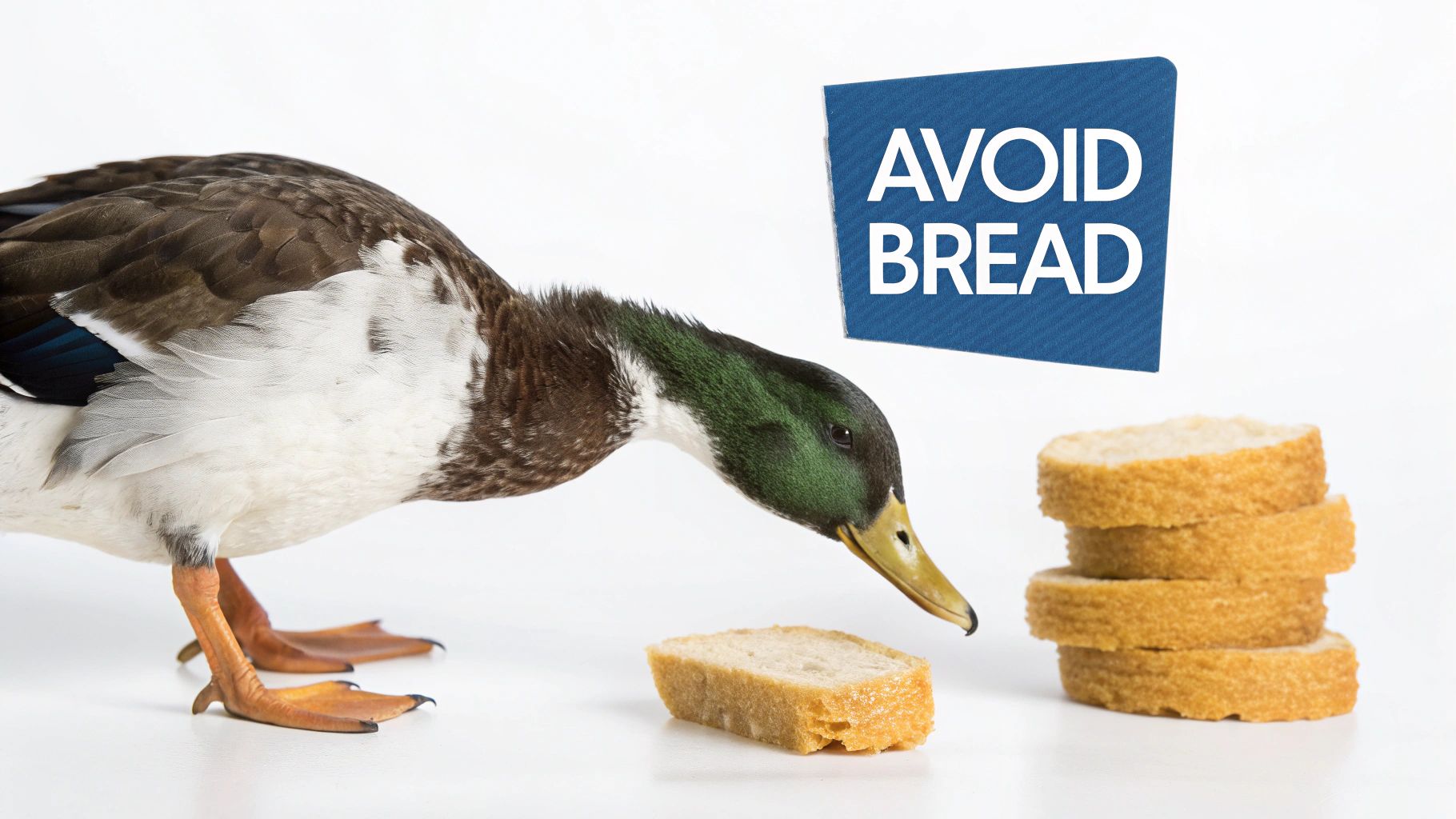
It’s a classic scene: tossing leftover bread to ducks at the local pond. But what feels like a kind gesture is actually one of the most harmful things you can do for them. For waterfowl, bread is the ultimate junk food. It fills them up fast, tricking their bodies into feeling full without delivering any of the vital nutrients they need to stay healthy.
Think of it like a kid who only eats candy. They'd get a quick burst of energy, sure, but they would quickly become malnourished and sick. That's exactly what happens to ducks that feast on bread. This reliance on empty calories can lead to serious health issues, including a heartbreaking and irreversible deformity known as "angel wing," which causes the wing to twist permanently outward.
So, learning what to feed your ducks is only half the battle. Knowing what not to feed them is just as crucial for their well-being.
The Problem with Processed Foods
Most of our favorite snacks are a terrible choice for ducks. They're packed with salt, sugar, and preservatives that a duck's digestive system just isn't built to process. Feeding them these processed foods can cause anything from an upset stomach and dehydration to more severe, long-term health problems.
Here are some common foods you should never give your flock:
- Salty Snacks: Things like crackers, chips, and pretzels can throw a duck’s electrolyte balance completely out of whack, leading to dehydration and even kidney damage.
- Spoiled or Moldy Food: The rule of thumb is simple: if you wouldn't eat it, don't feed it to your ducks. Mold can contain toxins that can be fatal to birds.
- High-Fat Foods: Greasy or fatty leftovers are tough for ducks to digest and can contribute to weight problems and other health issues down the road.
- Onions and Garlic: Both contain chemical compounds that can destroy a duck’s red blood cells, which can lead to a dangerous form of anemia.
- Avocados: Every single part of the avocado plant contains a toxin called persin, which is extremely dangerous for birds.
The most compassionate thing you can do is skip the junk food entirely. Opting for a healthy alternative like oats or cracked corn shows you care about their long-term health, not just the fleeting fun of feeding them.
Understanding proper nutrition is more important than ever, especially as duck farming continues to expand. To give you some perspective, global duck egg production hit a staggering 4,590,000 tons way back in 2009. Fast forward to today, and the duck feed market is on track to reach USD 20.1 billion by 2033, largely because of the growing demand for high-quality poultry.
These numbers aren't just statistics; they show how much is riding on getting duck nutrition right on a massive scale. You can discover more insights into the duck feed market and see just how much the industry is evolving.
Powering Up Their Diet with Smart Supplements
A high-quality commercial feed is the cornerstone of your ducks' health, covering their daily needs. But think of supplements as a targeted boost—a way to supercharge their diet, especially during demanding times like laying season or the annual molt. It’s not about replacing their main food; it’s about giving them an extra edge when they need it most.
This idea of fine-tuning nutrition is catching on everywhere. In fact, the global duck feed market is projected to expand from USD 5.04 billion in 2024 to USD 6.39 billion by 2032. This growth is fueled by a deeper understanding of how scientifically formulated feeds can elevate the health and productivity of flocks. When you add a smart supplement, you’re tapping into the best practices in modern waterfowl care. You can learn more about the growth in the duck feed industry and see how these advancements are making a real difference.
The Natural Advantage of Black Soldier Fly Larvae
When you start looking at supplements, one option stands out for its incredible nutritional profile: Black Soldier Fly Larvae (BSFL). These little grubs are a natural powerhouse, perfectly aligned with what a duck's body craves.
BSFL are packed with two critical nutrients:
- High-Quality Protein: Protein is the building block for everything, from strong muscles to healthy feathers. A duck's protein needs go through the roof during a molt when they have to regrow their entire coat. BSFL provide a concentrated source of the amino acids they need to get through it with strong, vibrant plumage.
- Easy-to-Absorb Calcium: For laying ducks, calcium is everything. BSFL contain up to 85% more calcium than mealworms, which directly supports the creation of strong, solid eggshells. This helps prevent the brittle, weak eggs that can signal a calcium deficiency.
You can think of BSFL as nature’s multivitamin. They’re a concentrated dose of the exact nutrients ducks need to get through their toughest physical cycles, keeping them healthy, productive, and resilient.
Knowing When to Offer Supplements
The real secret to using supplements is all in the timing. They aren’t an everyday necessity, but weaving them into your routine during specific periods can make all the difference.
Here are the key times to consider adding a high-impact supplement like Pure Grubs BSFL:
- During Laying Season: This gives your hens the extra calcium they need to produce strong-shelled eggs day after day. The principles are similar for all poultry, and our guide to the best calcium supplements for poultry has more great info.
- Through the Molt: That extra protein helps your ducks regrow their feathers faster and with less stress, getting them back to their happy, waterproof selves more quickly.
- In Cold Weather: A little extra protein and fat can provide the energy boost your flock needs to stay warm when the temperature drops.
By using supplements this way, you move beyond just feeding your ducks and start truly nourishing them. It's a targeted strategy that ensures they have what they need to thrive, no matter the season.
Practical Feeding Tips for a Happy Flock
Knowing what to feed your ducks is half the battle. The other half is how you feed them. A simple, consistent routine is your best friend here—it makes your flock feel secure and ensures they get all the nutrition they need without a bunch of waste. Your goal should be a feeding station that’s clean, efficient, and totally stress-free for your birds.
A solid schedule is the bedrock of this routine. Try to feed your ducks around the same time each morning and evening. This simple act helps regulate their metabolism and cuts down on the kind of anxious behavior that can lead to squabbles. Keep an eye on them; you'll want to provide just enough food that they can clean it up in about 15-20 minutes. This little trick is a game-changer for preventing leftovers that attract pests or turn moldy.
The Unbreakable Rule of Water Access
Let's be clear: you can't talk about feeding ducks without talking about water. Ducks don't just drink it; they need water to actually eat their food. They’ll grab a mouthful of feed, then immediately dip their bill in water to wash it down. This is how they're built to eat.
It's an absolute must to have a clean water source available right next to their food at all times. A duck trying to eat without water is at serious risk of choking. This is a non-negotiable rule for their safety.
Make sure their water source is deep enough for them to dunk their entire bill. This isn't just for drinking—it's how they keep their nostrils and eyes clean and healthy.
Keeping Feed Clean and Fresh
It's surprisingly easy to cut down on food waste and keep things sanitary with a few smart moves. A dedicated feeder that keeps rain and droppings out is a fantastic starting point. Tossing feed directly on the ground is a recipe for contamination from dirt and bacteria, so a trough or hanging feeder is always a better, cleaner choice.
Here are a few quick tips you can use right away:
- For Backyard Coops: A no-waste feeder is a great investment. It seriously minimizes spillage, which saves you money on feed and keeps the coop area much cleaner and less inviting to rodents.
- At Public Ponds: If you're offering healthy treats like oats or peas, don't just dump them in one big pile. Scatter them in several smaller spots. This gives the less assertive ducks a chance to get some and prevents big clumps of uneaten food from fouling the water.
A lot of these ideas work well for other birds, too. For example, high-protein treats like Black Soldier Fly Larvae are just as beneficial for chickens, a topic we cover in our guide on dried grubs for chickens, which shares similar advice on clean feeding practices.
Frequently Asked Questions About Feeding Ducks
Figuring out the right diet for your ducks can feel a bit overwhelming, but it's really just a matter of knowing a few key things. We've gathered some of the most common questions people ask, with clear answers to help you feed your flock with confidence.
What Is the Best Food for Baby Ducks or Ducklings?
From the moment they hatch, ducklings are on a fast track to growth, and their food needs to fuel that journey. They need a special "starter" crumble formulated just for them, with a protein content of around 20-22%.
It’s also absolutely critical that their feed contains enough niacin to support strong bone and leg development. One thing to watch out for: never give them medicated chick starter. Ducks eat a lot more than chicks, and they can easily get sick from consuming too much of the medication in the feed.
After the first few weeks, you'll transition them to a "grower" feed, and finally to an adult formula once they're fully feathered.
Can Ducks Eat Common Kitchen Scraps?
Absolutely! Many of the healthy leftovers from your kitchen can be a fantastic treat for your ducks. Think about things like leftover salad greens (no dressing, please!), vegetable peels from carrots or cucumbers, a little bit of cooked rice, and small pieces of fruit.
A great rule of thumb is: if you wouldn't eat it, your ducks probably shouldn't either. Stay far away from anything with lots of salt, sugar, or fat. And never, ever give them food that's spoiled or moldy.
Just be sure to chop up any larger scraps into bite-sized pieces so nobody chokes.
How Can I Safely Feed Ducks at a Public Park?
It's tempting to toss them pieces of bread, but it's one of the worst things for them. Instead, you can bring treats that are much closer to what they'd find in nature.
A few great, safe options include:
- Cracked corn
- Uncooked rolled oats
- Standard birdseed
- Frozen peas that have been thawed
When you feed them, try to scatter the food on the ground a little ways from the water. This helps keep the pond clean and doesn't attract as many pests. The most important thing is to only offer small amounts at a time, ensuring everything gets eaten and nothing is left behind to rot.
If you're looking for a premium, high-protein treat that helps build strong eggshells and keeps feathers looking brilliant, Pure Grubs are the answer. Our USA-grown Black Soldier Fly Larvae are a natural, wholesome supplement your flock will go wild for. Shop for Pure Grubs today.