

What Temperature Is Too Cold for Chickens Explained
You open the coop on a sharp winter morning and find frost on the latch, ice in the waterer, and your hens standing close together on the roost. The weather app says one thing, the thermometer inside the coop says another, and you're left wondering whether the flock is comfortable or struggling.
The answer to what temperature is too cold for chickens isn't one magic number. A young chick, a fully feathered adult, and a hen halfway through a molt don't experience the same cold in the same way. A dry, well-ventilated coop can protect birds in weather that would be dangerous in a damp, drafty shelter, while a poorly placed perch can expose them to colder air than the forecast suggests.
This guide gives you a practical way to judge the risk. You'll learn how chickens conserve heat, where comfort generally ends, why age and feather cover matter, which signs deserve attention, and how to prepare the coop without turning it into a sealed, overheated box. A sound winter routine, such as the wider flock-health practices described in this guide to keeping chickens healthy, starts with observing the birds rather than trusting one number on a screen.
How Chickens Handle Cold and Where Comfort Ends
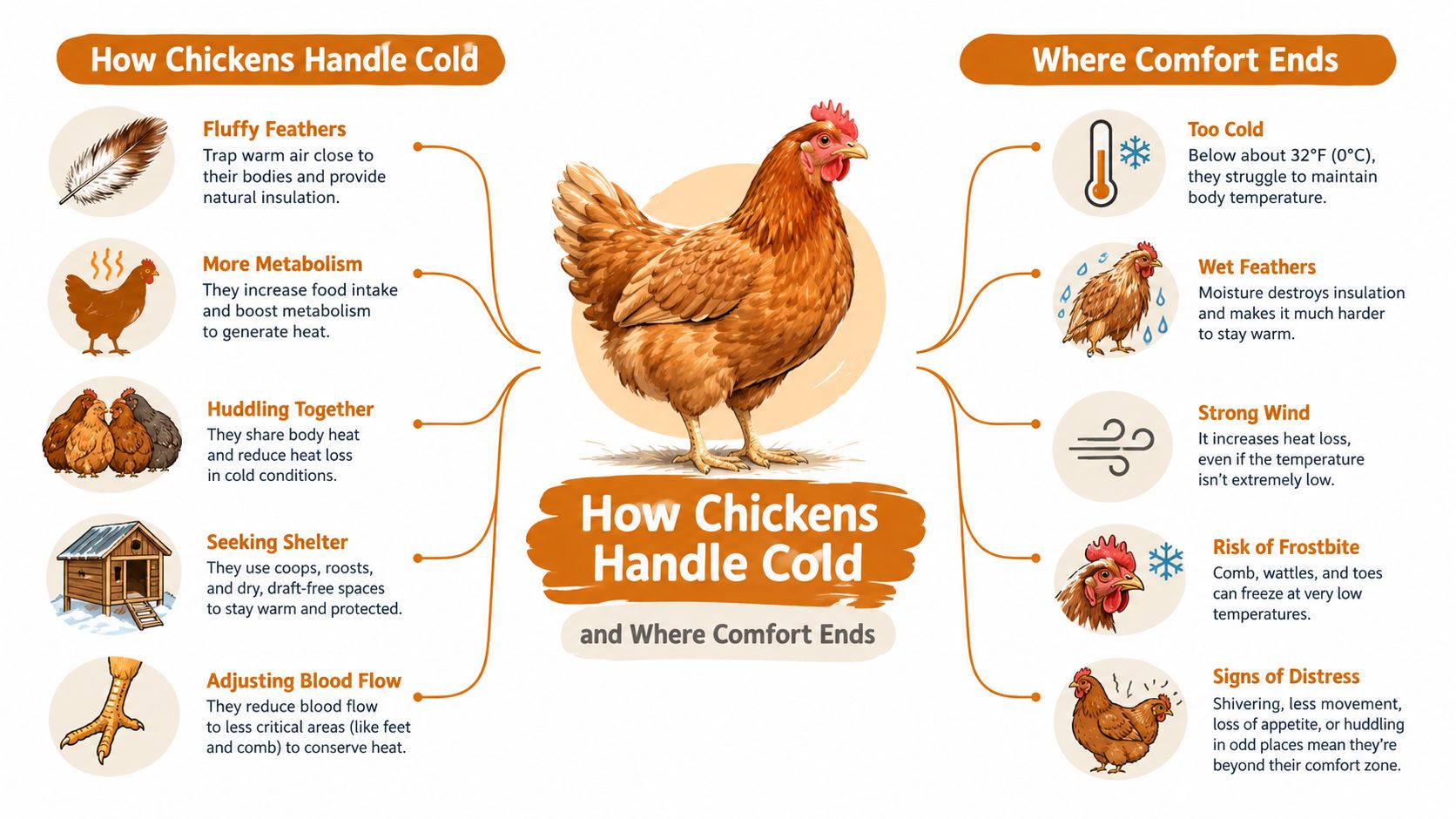
Think of a chicken's body as a small house with its own thermostat. Feathers act like a winter coat, the bird's metabolism supplies heat, and behaviors such as fluffing, tucking the head under a wing, and gathering close reduce heat loss. When the bird can maintain its body temperature without spending extra energy, it's inside its thermoneutral zone, the range where staying warm doesn't require unusual effort.
For most poultry, including chickens, a commonly cited comfortable ambient range is about 15–24°C, or 60–75°F. Cold stress is commonly considered to begin below 15°C, or 60°F, although research reviews describe adult chickens with a broader thermoneutral zone of roughly 13–28°C. These ranges overlap because comfort depends on the bird, its surroundings, and the conditions used to measure temperature. See the Modern Poultry overview of cold temperatures and poultry welfare for the distinction between general comfort and practical housing decisions.
The lower critical temperature
The important point is not the moment a chicken becomes unable to survive. It's the point where the bird must begin working harder to stay warm. Poultry sources place the adult comfort range at roughly 16–23°C, or 61–73°F, with cold stress beginning below about 16°C. Once the air drops below that lower critical temperature, the bird diverts more energy toward heat production instead of growth, maintenance, or egg production. The poultry research review in PMC explains why this threshold is more useful than a single survival temperature.
That extra effort may not look dramatic at first. A hen may eat more, move less, and spend longer periods fluffed up. Wind leakage, damp bedding, high humidity, poor feather condition, and crowding can make a moderate temperature feel much harsher. Conversely, a dry bird with a complete feather coat and shelter from moving air may cope well with much colder outdoor conditions.
Why roost-level temperature matters
Your phone reports the outdoor forecast, but your chicken sleeps at roost height. Warm air can collect near the roof while cold air settles around the perch, or a crack can send a narrow stream of icy air directly across the birds' backs. Measure where the flock rests, and check the nest-box area if that's where they spend time during the day.
University extension guidance recommends considering supplemental heat when the temperature at the height of the nest boxes or lower roost rung falls below 35°F, about 1.7°C. That recommendation isn't a universal survival cutoff. It's a practical management signal, especially when birds are exposed to dampness, drafts, or other stressors.
Safe Temperature Ranges by Age Breed and Feathering
A chick and an adult hen should never share the same cold-weather benchmark. Young birds have less insulation, less body mass, and a much narrower ability to regulate temperature. Research notes that young chicks may need an environment close to 30°C until roughly 2 weeks of age, while adult chickens have a much broader thermoneutral range, described in one review as approximately 13–28°C. The Frontiers review of cold stress in poultry shows why age must come before the thermometer when you assess risk.
| Bird Category | Comfort Zone | Cold Stress Begins |
|---|---|---|
| Very young chicks | About 30°C until roughly 2 weeks of age | Below their brooding needs, with risk rising quickly as warmth falls |
| Growing pullets | Transitional, depending on feather development and body condition | Earlier than a fully feathered adult if the coat is incomplete or the shelter is drafty |
| Fully feathered adult chickens | Roughly 15–24°C, or 60–75°F, as a practical general comfort range | Commonly below 15°C, or 60°F, with applied coop concern below 35°F, about 1.7°C, at roost or nest-box height |
| Molting, thin, injured, or poorly feathered birds | Warmer and drier conditions than a healthy, fully feathered adult | Cold becomes a concern sooner because insulation is missing or body reserves are limited |
Chicks need a different plan
Don't move adult hens' cold tolerance backward onto chicks. A brooder should give young birds access to the warmth they need while also allowing them to move away from the heat. Chicks that pile tightly together, cheep continuously, or remain directly under the heat source may be telling you the environment is too cold. Chicks spread far from the heat, pant, or avoid the warm area may be overheated.
Growing pullets sit between these two categories. Their risk changes as feathers replace down, and a weather change can expose a weakness that wasn't obvious indoors. Keep the transition gradual, watch their behavior, and avoid putting partially feathered birds into a cold, windy coop just because the calendar says they're ready.
Breed helps, but it doesn't decide everything
Breed differences matter, but they're only one part of the picture. A heavily feathered, cold-tolerant bird may handle winter better than a lightly feathered, heat-adapted type. Even within one breed, a mature, well-conditioned hen can cope differently from a small pullet, a bird in molt, or one with damaged feathers.
Use breed as a planning clue, not a guarantee. The Pure Grubs guide to chicken breeds can help you compare general breed traits, but the bird in front of you still provides the most useful evidence. A dry coat, steady appetite, normal movement, and a sheltered roost matter more than a breed label alone.
How to Spot Cold Stress and Frostbite Early
Temperature readings become useful when you pair them with flock behavior. A thermometer can tell you the air is cold, but your hens can tell you whether that cold is costing them too much energy. Watch the flock at roosting time, after the coop opens, and during feeding, because a bird that looks normal for a quick glance may show a pattern over several checks.
Early signs are usually quiet. Chickens may huddle more closely, keep their feathers puffed for long periods, tuck their heads into their body feathers, or spend less time scratching and exploring. One bird may lag behind the group or choose a sheltered corner instead of joining normal activity.
Read the progression
Look for a cluster of signs rather than reacting to one brief behavior. A flock that settles together during a cold night may be conserving heat. A flock that stays tightly packed, avoids movement, and shows reduced interest in feed needs a closer assessment of the coop environment.
Cold also changes the economics of the bird's energy budget. Research has associated exposure around 15.5°C with reduced feed intake, poorer feed conversion, lower body weight, and higher mortality in growing chickens, as summarized in the Frontiers review of cold stress responses. Those findings concern controlled and production settings, so don't treat the temperature as a direct household prediction. Treat them as a reminder that performance can suffer before a bird reaches an obvious emergency.
Watch the feed bucket: Rising feed demand, or a change in how efficiently birds maintain body condition, can be an early clue that cold is taking more energy than the flock can comfortably spare.
More advanced signs include persistent reluctance to leave the roost, unusual weakness, pale or darkened comb tissue, and a bird that doesn't compete normally for food or water. Check the comb, wattles, and feet for cold injury, especially after damp weather or when exposed skin has contacted a cold surface.
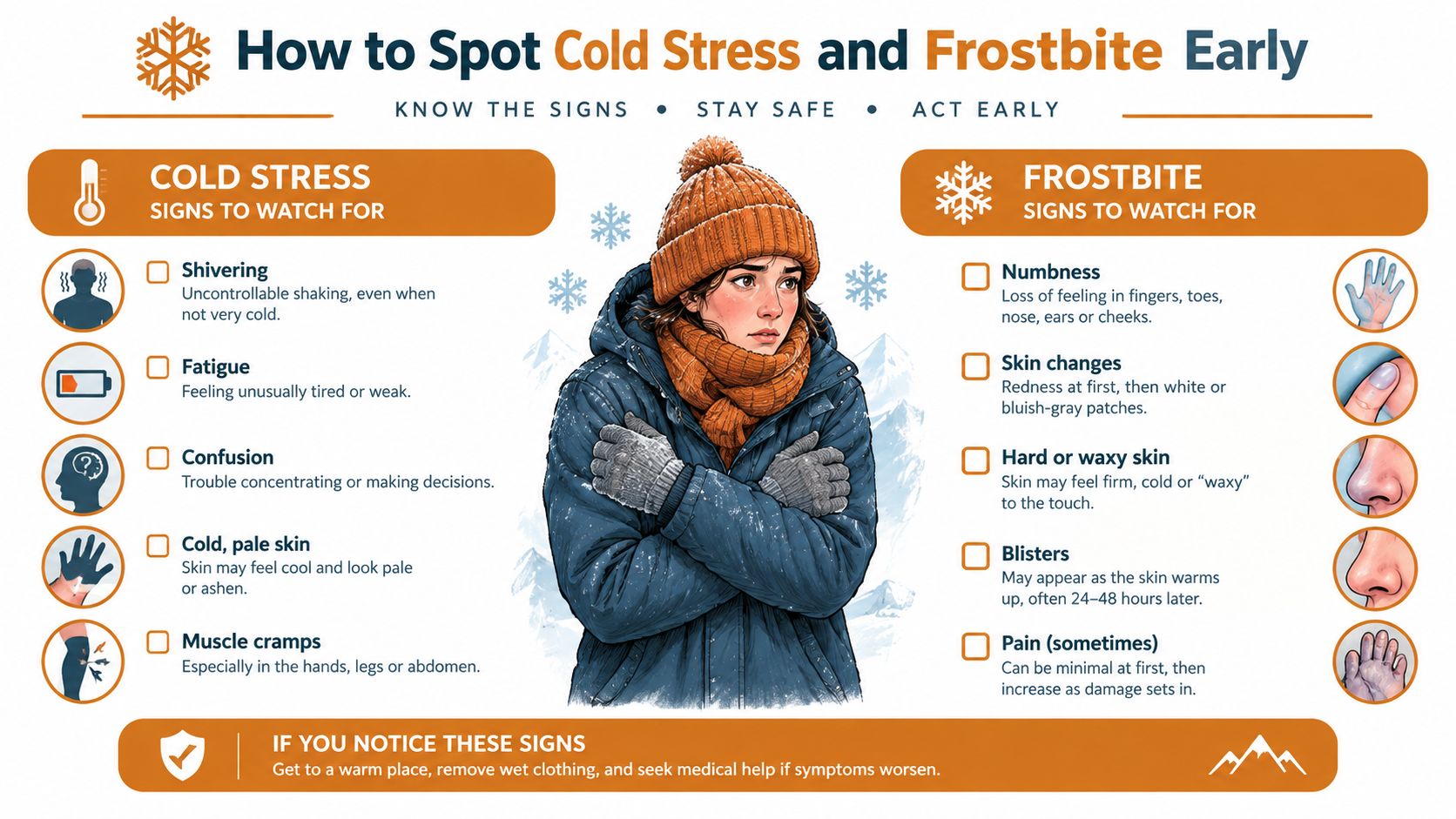
A simple winter check should include body condition, appetite, water access, walking ability, and exposed skin. If tissue becomes swollen, discolored, blistered, or visibly damaged, move the bird to a warm, dry, quiet space and contact a poultry veterinarian for guidance. Don't rub frozen tissue, apply uncontrolled heat, or return a weak bird to the flock before it can safely eat and drink.
Keeping the Coop Warm Without Overheating or Drafts
A warm coop isn't necessarily a healthy coop. Chickens need fresh air, but they shouldn't sleep in a direct stream of cold air. The goal is dry, still air around the birds with controlled ventilation above them, not a sealed box and not a heated room.
Start at roost height. On a cold evening, hold a thin strip of tissue near wall joints, doors, and vents. If it moves steadily, a draft is reaching the birds. Seal cracks that blow across the perch, then preserve high-level openings that let humid air escape. Moisture trapped inside the coop can settle on feathers and increase the risk of chilling and frostbite.
Build protection in layers
- Seal the bird-level gaps: Repair cracks and poorly fitted doors where wind crosses the roost.
- Keep upper ventilation open: Let stale, humid air leave near the roofline without directing the opening at the birds.
- Raise and shape the roost: Give every chicken a stable perch broad enough for it to cover its toes with feathers. Avoid positioning it directly beside an exterior opening.
- Use dry bedding: Replace wet patches promptly. A deep litter system can add insulation and reduce floor chill, but only if you manage moisture and waste rather than allowing ammonia to build.
- Block prevailing wind outside: A windbreak can reduce pressure on the coop walls and run while leaving ventilation paths intact.
- Protect water access: Frozen water creates a nutrition and hydration problem even when the birds look warm. Check it frequently and use equipment designed for poultry settings.
For wall and roof projects, a practical insulation guide for sheds from Firm Foundations offers useful background on choosing and installing insulation materials. Adapt any shed advice to the coop's cleaning needs, moisture load, and ventilation layout.
Use supplemental heat carefully
Applied extension guidance says to consider supplemental heat when the temperature measured at nest-box or lower-roost height falls below 35°F, about 1.7°C. Use that as a decision point, not permission to place an unprotected heat lamp beside dry bedding. Any heating device introduces fire and electrical risks, and sudden equipment failure can leave birds unprepared if they've become dependent on a very warm coop.
Choose stable, purpose-designed equipment, secure cords away from pecking and water, and keep the birds able to move away from the heat. Never close every vent to hold warmth. If you smell ammonia, ventilation is already inadequate, regardless of the outdoor temperature.
Cold Weather Effects on Egg Laying and Nutrition Needs
Cold weather can reduce egg production because a hen has a limited energy budget. When she must use more feed energy to generate body heat, less energy remains for laying, maintenance, or feather growth. Shorter daylight and molting can push production down at the same time, so a winter slowdown doesn't automatically mean the coop is dangerously cold.
Feed quality matters more than offering a pile of treats. Keep a complete poultry ration available, protect it from dampness, and make sure every bird can reach it. Fresh water remains essential, since a hen can't maintain normal intake or digestion if the drinker freezes.
Support body condition
Check the breast muscle and overall weight by handling birds calmly and regularly. A hen that is losing condition, being bullied away from feed, or growing back feathers needs attention beyond adding heat. Protein supports tissue maintenance and feather development, while calcium remains important for laying hens, but treats should complement a balanced ration rather than replace it.
The practical guidance in this winter chicken food guide can help you organize feed, treats, and water through the colder season. Make changes gradually, and keep treats modest enough that birds continue eating their complete feed.
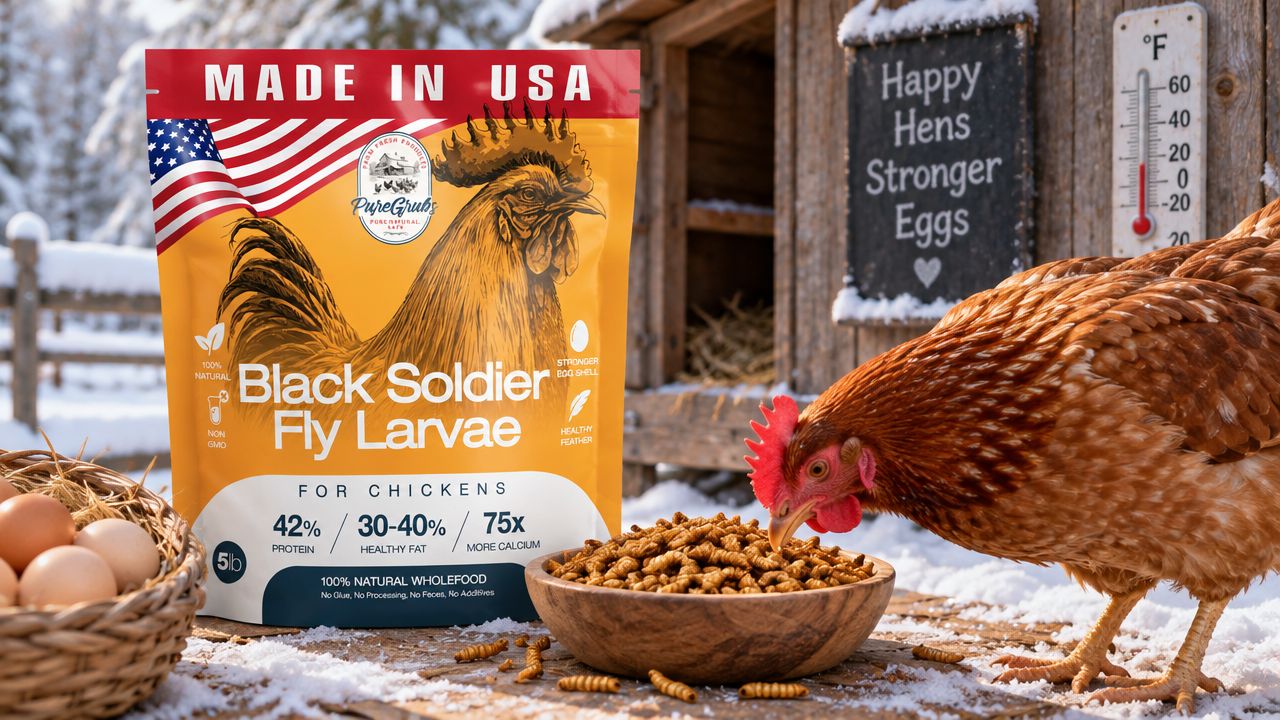
One optional supplemental food is USA GROWN BLACK SOLDIER FLY LARVAE FOR CHICKENS, which the catalog describes as containing 36–42% crude protein, 30–40% healthy fats, and 75 times more calcium than mealworms. Those product figures come from the catalog snapshot, not a general rule for winter feeding, so use the larvae as a treat or supplement and continue providing the flock's normal balanced ration.
Emergency Steps and Winter Ready Checklist for Your Flock
When a bird looks cold-stressed, move calmly. First check whether it can stand, breathe normally, eat, and drink. Place it in a warm, dry, draft-free area with safe access to water, and let it rewarm gradually rather than holding it against a heater or applying direct heat to its skin.
Separate a weak bird if flockmates are preventing it from eating or resting. Contact a poultry veterinarian when the bird remains weak, cannot drink, has breathing trouble, shows severe discoloration or injury, or fails to improve after moving into suitable conditions. Frostbite damage can worsen after the initial exposure, so avoid rubbing affected tissue and record what you observe.
Before the next cold snap, walk through this checklist:
- Measure the right place: Check temperature at roost height and near nest boxes, not only outside.
- Inspect air movement: Find drafts at bird level while keeping high ventilation open.
- Check feather cover: Give extra attention to chicks, molting birds, thin birds, and those with damaged feathers.
- Secure supplies: Store feed dry and keep a reliable plan for unfrozen water.
- Test equipment: Inspect heaters, cords, guards, and bedding clearance before you need them.
- Observe daily: Look for huddling, persistent puffing, reduced activity, appetite changes, and comb or foot injury.
A well-prepared flock doesn't need a perfect winter forecast. It needs dry shelter, sensible airflow, adequate feed and water, and a keeper who notices small changes early.
Pure Grubs offers USA-grown dried Black Soldier Fly Larvae as a supplemental chicken treat with the catalog-listed protein, fat, and calcium content described above. Visit Pure Grubs to explore the available flock-feeding options and add a practical nutrition supplement to your winter care routine.