

What Human Foods Can Chickens Eat A Guide for Healthy Flocks
Before you start tossing your dinner scraps over the fence, there's one golden rule every chicken keeper needs to live by: the 90/10 principle. It’s a simple but crucial guideline. No more than 10% of your flock's daily calories should come from treats. The other 90% has to be their complete, commercially formulated chicken feed.
The 90/10 Rule For Feeding Chickens Human Food
Think of it this way: your chicken's main feed is their perfectly balanced, nutrient-packed meal. It has every single protein, vitamin, and mineral they need to stay healthy and lay beautiful eggs. Human foods are just the fun dessert—a tasty bonus, but not something they can live on.
Following the 90/10 rule is probably the most important thing you can do to keep your flock in top shape. It's easy to get carried away with treats, but overdoing it, even with healthy scraps, can cause real problems. Chickens who fill up on yummy snacks will often ignore their proper feed, leading to nutritional gaps.
This can quickly cause weak eggshells, poor feathering, or even obesity, which puts a huge strain on their little bodies. The 90/10 rule is all about giving them the best of both worlds: the essential nutrition they absolutely need and the exciting variety they love.
This flowchart breaks down the simple logic of the 90/10 rule and helps you decide what's best for your flock's diet.
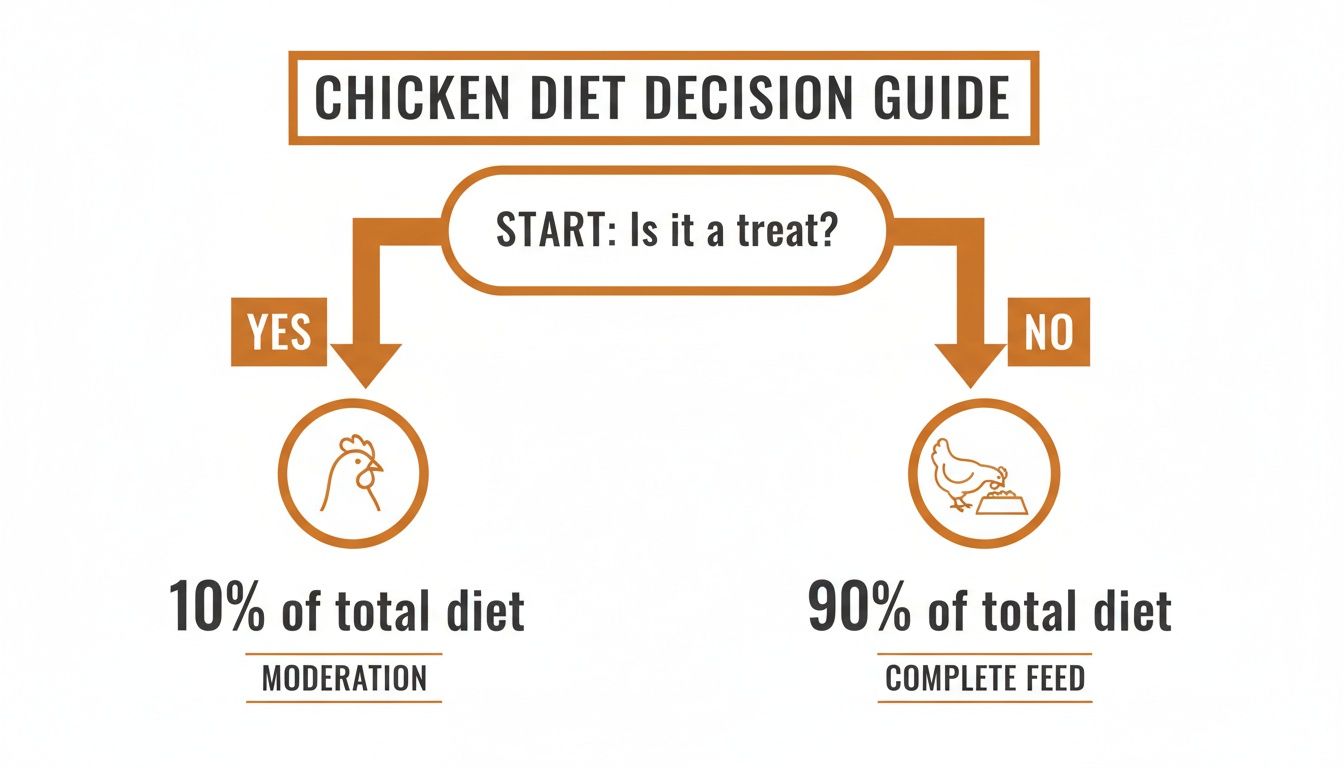
As you can see, their complete feed is the foundation. Everything else is just an occasional extra.
Why This Balance Is Non-Negotiable
A balanced diet isn't just about avoiding issues; it's about actively fueling a chicken's body to do what it does best.
- Consistent Egg Production: Laying hens need a serious amount of calcium—we're talking at least 4-5 grams per day—to form strong eggshells. You just can't get that from kitchen scraps. Commercial layer feed is formulated specifically to meet this high demand.
- A Strong Immune System: Complete feeds are packed with essential vitamins like A, D, and E that are critical for helping your flock fight off illnesses.
- Healthy Weight Management: A good feed provides all the energy your chickens need without the excess fat that can lead to health complications down the road.
Stick to this simple guideline, and you can confidently share some kitchen extras without worrying about their health. For an even deeper dive into crafting the perfect diet, check out our complete chicken feeding guidelines.
Quick Reference Guide Safe vs Unsafe Foods
To make things even easier, here's a quick cheat sheet. It’s always best to double-check if you're unsure, but this table covers some of the most common foods you might consider sharing with your flock.
| Food Category | Safe Examples in Moderation | Unsafe and Toxic Foods to Avoid |
|---|---|---|
| Fruits | Berries, melons, bananas, apples (no seeds), pumpkin, tomatoes (ripe fruit only) | Avocado (all parts), citrus peels, rhubarb leaves, uncooked potato peels (green) |
| Vegetables | Leafy greens (lettuce, kale, spinach), cooked beans, carrots, cucumbers, broccoli | Onions, garlic, uncooked dry beans, moldy produce of any kind |
| Grains & Starches | Cooked rice, cooked pasta, oatmeal, whole-grain bread | Sugary cereals, raw dough, processed junk food (chips, candy) |
| Protein & Dairy | Cooked eggs, plain yogurt, cottage cheese, cooked meat/fish (unseasoned) | Chocolate, caffeine, alcohol, excessively salty or greasy foods |
Remember, even safe foods should be given in small amounts. A spoonful or two per chicken is plenty. This list isn't exhaustive, but it’s a great starting point for making healthy choices for your birds.
The Ultimate Safe Foods List for Your Flock
Once you get the hang of the 90/10 rule, you can start looking at your kitchen scraps in a whole new light. They're not just leftovers; they're opportunities to give your flock a boost of fresh vitamins, minerals, and interesting textures. Just like we feel better when we eat a varied diet, your chickens will thrive with the enrichment that comes from a few safe, tasty extras.
The trick is to stick with whole, unprocessed foods. If it’s something you’d eat in its natural state, chances are it’s a great choice for your chickens, too. Let's break down the best options by category to keep things simple.
Nutrient-Dense Vegetables
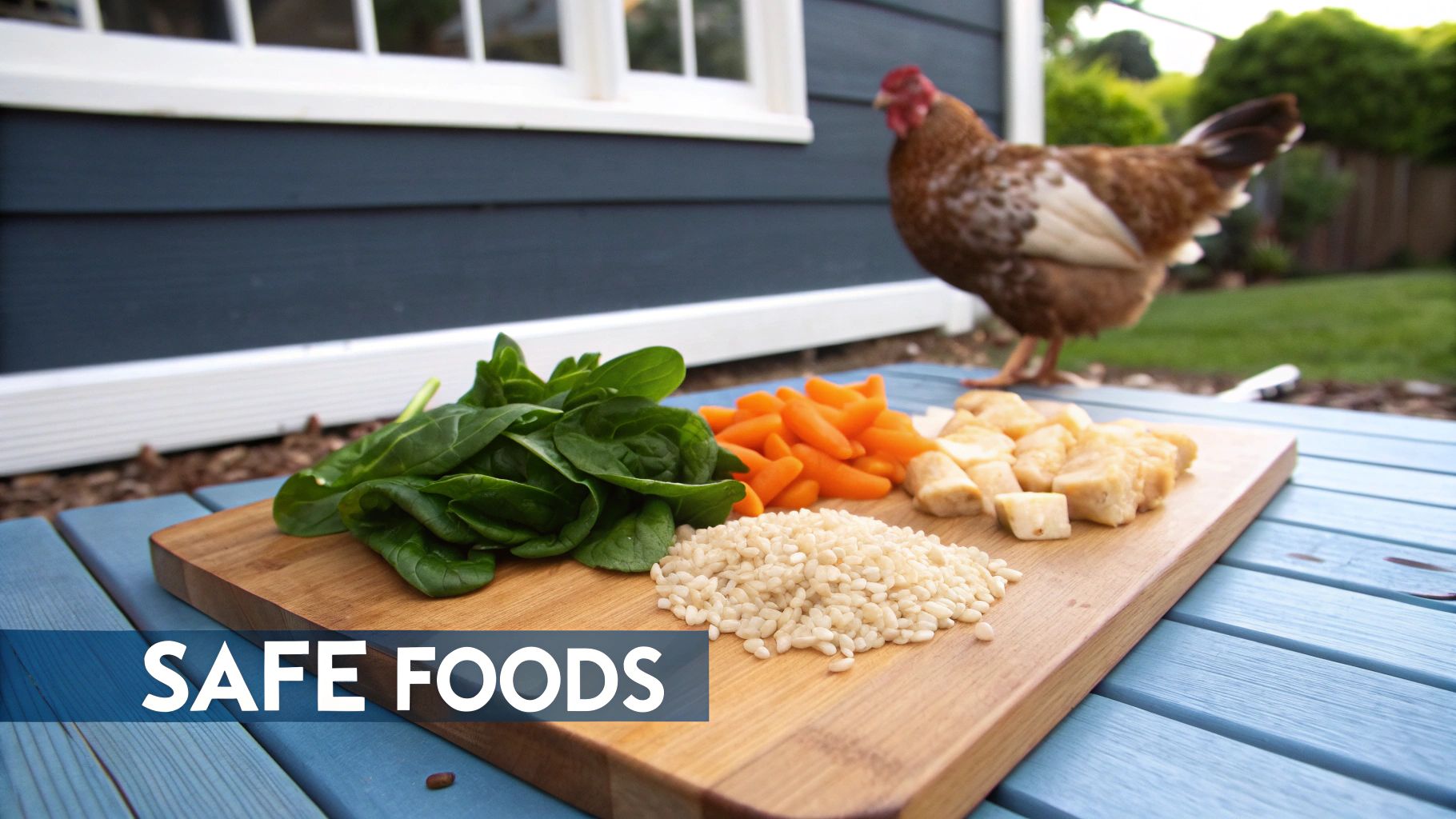
Vegetables are a fantastic go-to and probably the most common scrap you'll have. They are absolutely packed with vitamins and minerals that boost your flock's health and can even make their egg yolks a richer, more vibrant color.
Leafy greens are a great place to start. Things like lettuce, kale, spinach, and Swiss chard are wonderful sources of vitamins A, C, and K. A word of caution, though: offer greens in moderation. Too much spinach, for example, can interfere with how well your chickens absorb calcium.
Hardier vegetables are also a huge hit with any flock. Try tossing these out:
- Carrots: Both the orange root and the leafy green tops are perfectly safe. Carrots are loaded with beta-carotene, which a chicken’s body turns into Vitamin A—a must-have for a strong immune system.
- Cucumbers and Zucchini: On a hot summer day, these are a game-changer. They’re full of water and give your flock a cool, hydrating treat to peck at.
- Broccoli and Cauliflower: Chickens can eat the florets and the leaves. Just chop them into smaller, beak-sized pieces to make them easier for your birds to handle.
- Cooked Sweet Potatoes: Never feed raw potatoes of any kind, but cooked sweet potatoes are a nutrient-dense powerhouse of energy.
- Pumpkin and Squash: The flesh and seeds from winter squashes are amazing for chickens. In fact, many old-timers swear the seeds act as a natural dewormer.
The benefits of adding these kinds of scraps are well-known. Backyard chicken keepers always want to know what human foods chickens can eat, and it turns out that wholesome leftovers like veggie peels and fruits can safely make up 10-20% of a chicken's daily food without causing any problems. Here in the United States, where so many of us have backyard flocks, owners often see a 15% jump in egg production just by supplementing feed with safe human foods like carrots and lettuce.
Wholesome Grains and Legumes
Grains are a fantastic energy source. While you don't want them to be the main treat, they're a welcome and filling snack, especially in the colder months when your flock needs more fuel to stay warm.
The golden rule for grains is to always serve them cooked and completely plain. No salt, butter, oil, or seasonings. These additives can wreak havoc on a chicken's digestive system.
Safe grain options include:
- Cooked Rice (Brown or White): A simple, easy-to-digest energy boost.
- Cooked Pasta: Plain, leftover pasta is a treat they will devour in seconds.
- Oatmeal: A warm bowl of cooked, unsweetened oatmeal is the perfect comfort food for a chilly morning.
- Cooked Lentils and Beans: Legumes offer a great protein punch, but they must be cooked thoroughly. Raw or even undercooked beans contain a toxin called phytohaemagglutinin, which is extremely poisonous to chickens.
Fruits in Moderation
Think of fruit as the chicken equivalent of candy. They go absolutely wild for the sweetness, but because of the high sugar content, you should offer fruit more sparingly than vegetables. A few pecks per chicken is more than enough.
Most fruits are perfectly safe, but you have to be careful about the seeds and pits. Always remove apple seeds and the pits from stone fruits like peaches, plums, and cherries. They contain trace amounts of cyanide that can be harmful.
Some excellent fruit choices are:
- Berries: Blueberries, strawberries, and raspberries are full of antioxidants and are the perfect size for chickens to gobble up.
- Melons: Watermelon, cantaloupe, and honeydew are incredibly hydrating and a flock favorite. Your chickens will happily pick the rind completely clean.
- Bananas: A great source of potassium. You can offer them small pieces of the fruit, but it's best to skip the peel.
Protein-Packed Powerhouses
Finally, a little extra protein can be a huge help, especially when your flock is molting and regrowing their feathers. Feathers are made of about 85% protein, so a chicken's need for it skyrockets during this time.
Cooked, unseasoned meat and fish are fantastic sources. A small amount of leftover plain cooked chicken or some fish flakes will be a highly prized treat. Scrambled or hard-boiled eggs are another brilliant option—and yes, chickens can absolutely eat eggs! It’s a perfect protein source for them. Just be sure the eggs are cooked to prevent any salmonella risk and to keep them from getting any ideas about eating the eggs from the nesting box.
For a deeper dive into great treat ideas, you can check out our detailed guide on the best snacks for chickens.
Toxic Foods That Can Harm Your Chickens
Sharing kitchen scraps is one of the joys of raising chickens, but it comes with a big responsibility. While many foods are perfectly fine, some common items from our own kitchens are downright dangerous for a flock. Knowing what to avoid is just as critical as knowing what’s safe to share.
Think of it this way: what’s a harmless snack for you could be a serious threat to your birds. A little bit of knowledge goes a long way in preventing an emergency trip to the vet, or worse. Let's walk through the absolute "do-not-feed" list to keep your flock safe and sound.
The Absolute No-Go List
Some foods contain compounds that are toxic to a chicken’s unique digestive system. There’s no grey area with these—they should be kept away from your coop at all costs.
Here are the top offenders to keep on your radar:
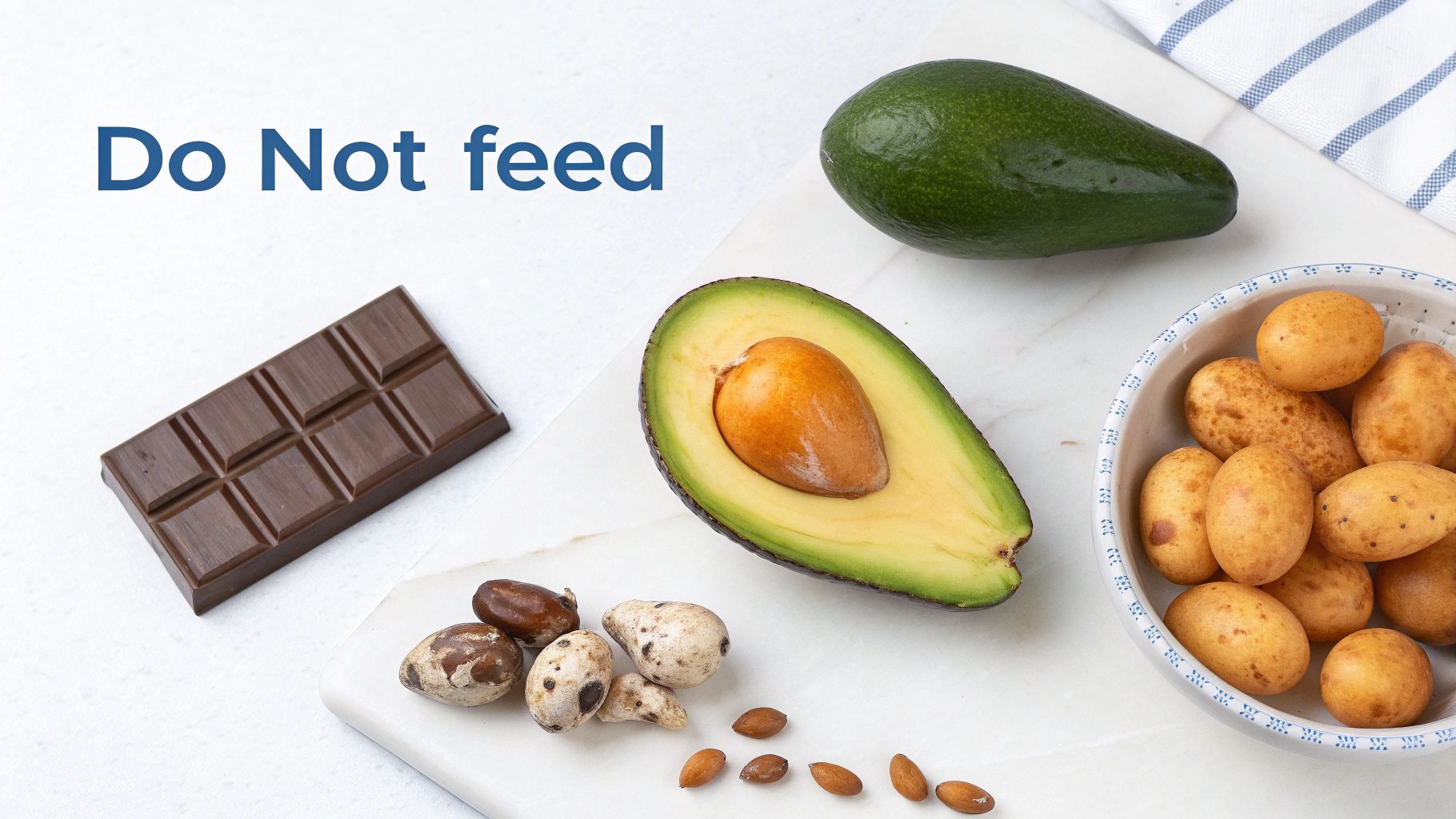
- Avocado (Skin and Pit): This is a big one. Avocado pits and skin are loaded with a toxin called persin. While we barely notice it, persin is incredibly toxic to birds and can trigger heart failure and breathing problems in as little as 24-48 hours.
- Raw or Undercooked Beans: Don't ever toss uncooked dry beans into the chicken run. They contain a potent toxin called phytohaemagglutinin, and just a few raw kidney beans can be fatal. If you're sharing beans, they must be cooked thoroughly, no exceptions.
- Onions and Garlic: These kitchen essentials contain thiosulfate, a compound that can wreck a chicken's red blood cells and lead to severe anemia. A tiny, accidental piece might not cause immediate issues, but feeding them regularly is asking for trouble.
- Chocolate and Caffeine: Much like with dogs, the theobromine in chocolate is highly toxic to chickens and can cause cardiac arrest. This also applies to anything with caffeine, so keep those coffee grounds and used tea bags out of the compost bucket if your flock has access to it.
It’s a myth that chickens have iron stomachs. They’re pretty tough, but their biology is fundamentally different from ours. A food that’s perfectly healthy for us can be a real poison to them.
Foods to Avoid for Other Reasons
Beyond the truly toxic, some foods pose other health risks, from causing digestive blockages to introducing harmful bacteria. It's best to just keep these out of your flock's treat rotation altogether.
Moldy or Spoiled Food
This should be a hard and fast rule: if you wouldn't eat it, don't feed it to your chickens. Moldy or rotting food can be crawling with mycotoxins, which can make your flock incredibly sick and can even be lethal. Stick to fresh scraps.
Green Potatoes and Peels
You know how potatoes can turn green when exposed to light? That green hue signals the presence of solanine, a toxic alkaloid that can cause nasty digestive and neurological problems in chickens. While a bit of cooked white or sweet potato is a fine treat, never give them raw potato peels, especially if they have any green on them.
Highly Processed and Salty Foods
Your flock thrives on a natural diet. Junk food doesn't do them any favors. Heavily processed snacks packed with salt, sugar, and preservatives provide zero nutritional value and can lead to obesity and other health issues.
Steer clear of giving your chickens things like:
- Chips, pretzels, and other salty snacks
- Candy, donuts, or sugary breakfast cereals
- Greasy fast-food leftovers
Keeping your flock safe is pretty straightforward once you know the ground rules. For a deeper dive into hazardous foods, check out our complete guide on the top foods that are harmful to chickens. By sticking to the safe list and avoiding these problem items, you can make sure treat time is always a happy—and healthy—experience.
How to Properly Prepare and Serve Kitchen Scraps
Knowing what human foods your flock can eat is just the start. The real trick is understanding how to prepare and serve those kitchen scraps. Getting this part right is what turns a simple handout into a genuine health booster for your birds.
Think of yourself as the flock's personal chef. You wouldn't just toss a whole raw potato to a dinner guest, right? The same logic applies here. A little bit of prep work makes a world of difference, ensuring your chickens can actually eat, digest, and get all the goodness from the snacks you give them.
When you master the prep, simple leftovers become powerful supplements. A bit of pumpkin puree can lead to richer yolks, and some cooked lentils give them a much-needed protein kick during a tough molt. You're no longer just feeding them; you're managing their nutrition.
The Art of Preparation
The number one rule is to make food easy and safe for a chicken to eat. Chickens don't have teeth—they rely on their gizzard to do all the grinding. You can give that hardworking organ a big helping hand by preparing scraps the right way.
Your main goal is to prevent choking and digestive blockages. Foods that are too big, too hard, or even too stringy can cause serious trouble. A few simple steps are all it takes.
Here’s what you need to remember:
- Chop Everything Up: Always cut food into small, beak-sized bits. A good rule of thumb is to aim for the size of a pea or a corn kernel. This goes for everything from apple slices to leafy greens.
- Cook Hard Vegetables: Tough veggies like potatoes, squash, and carrots absolutely need to be cooked until they're soft. Cooking breaks down the tough fibers, making them far easier to digest and unlocking more of their nutrients.
- Mash Soft Foods: For softer treats like bananas, cooked pumpkin, or berries, a quick mash with a fork is perfect. This also makes it easier for the whole flock to get a taste, instead of one bossy hen running off with the entire prize.
Portion Control Is Non-Negotiable
Just as crucial as how you prep the food is how much you give. It’s incredibly easy to get carried away when you see how excited your chickens get, but always stick to the 90/10 rule. Treats are a supplement, not a replacement for their main feed.
Picture a chicken's daily diet as a dinner plate. A full 90% of that plate must be their balanced, formulated feed. The remaining 10% is a small slice reserved for all the fun stuff—kitchen scraps, supplements like Pure Grubs, and other treats combined.
For a typical backyard chicken, this works out to no more than one or two tablespoons of scraps per day. That small amount is plenty to provide variety and fun without messing up their core nutrition. Overdo it, even with healthy scraps, and you risk creating picky eaters who turn up their beaks at the essential feed they actually need.
Serving with Success
How and when you serve the scraps matters, too. Just tossing food onto the ground is a recipe for introducing bacteria and parasites into your flock’s diet. A few small changes can create a much cleaner, more engaging experience.
- Use a Designated Dish: Put the scraps in a shallow dish or on a clean board. This keeps the food out of the dirt and stops it from getting trampled into the bedding.
- Time It Right: Offer treats in the afternoon. This ensures your chickens have already spent the morning filling up on their complete feed, getting their essential vitamins and minerals in first.
- Scatter for Foraging: For dry treats like cooked grains or seeds, scattering them in a clean area of the run is a fantastic way to encourage natural foraging. It keeps them busy and provides great mental stimulation.
These aren't just old wives' tales; the benefits are seen on farms all over. While we humans rely on poultry for our diets, the chickens themselves thrive when their own diets are supplemented correctly. In countries like China, which leads in chicken consumption, small farms have long used human food like cornmeal and berries to improve flock health, with some trials noting a 25% improvement in feather quality. Here in the US, backyard chicken keepers have seen egg weights increase by up to 18% with the careful addition of high-protein treats. You can learn more about these fascinating global poultry trends over at World Population Review.
By following these simple guidelines for preparation and serving, you can confidently turn your kitchen scraps into a safe, effective, and delicious part of your flock’s routine.
Boosting Nutrition Beyond Kitchen Scraps
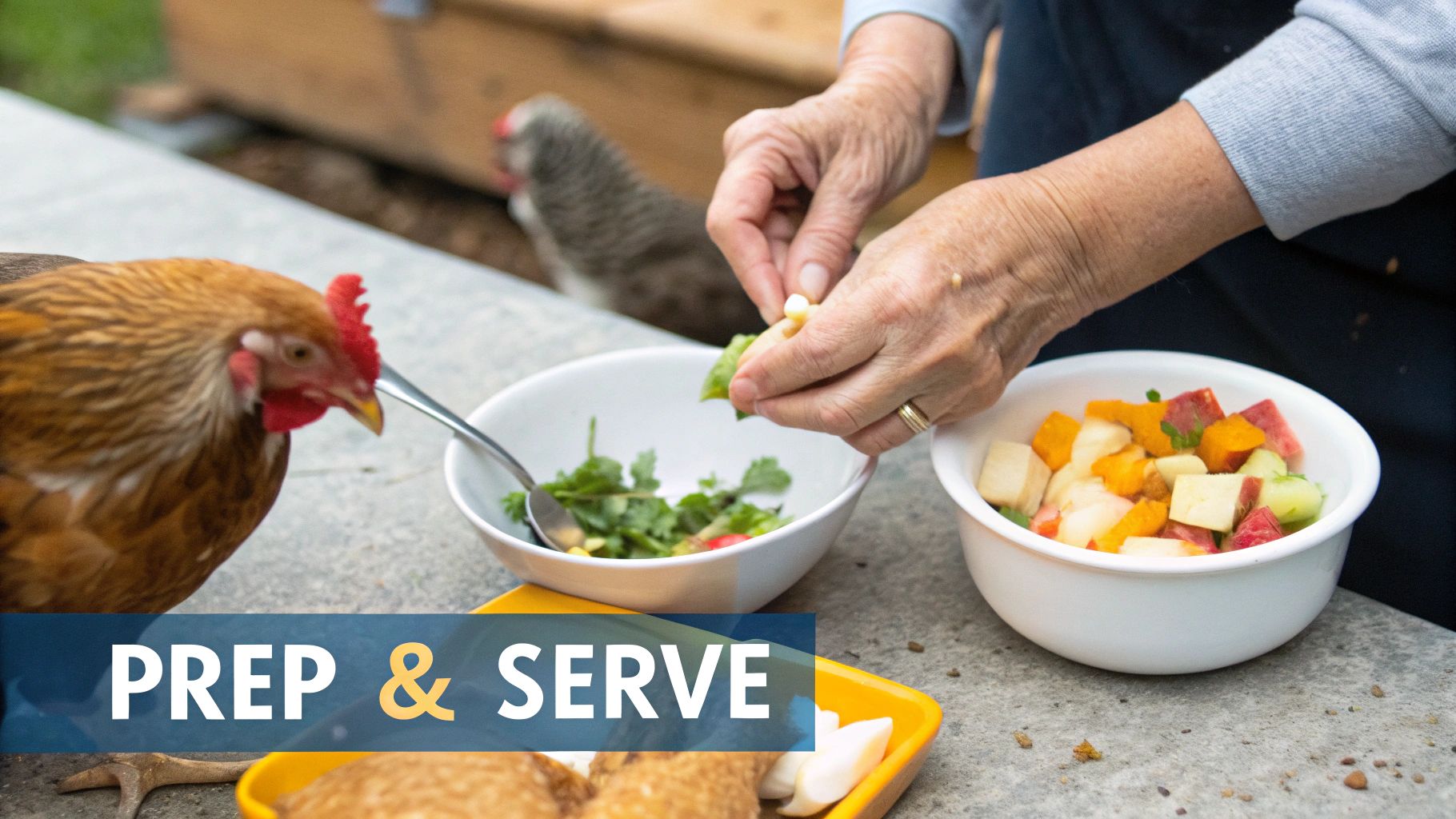
It’s great fun to share healthy kitchen scraps with your flock, but relying on them as a primary treat can create a real nutritional rollercoaster. One week they might hit the jackpot with leftover kale and berries; the next, it might just be plain pasta and rice. This inconsistency can leave your birds on a feast-or-famine cycle that doesn't always meet their needs.
Think of it like building a house. Some days you might have sturdy bricks, but on others, all you can find is flimsy cardboard. You wouldn't trust the finished structure, would you? A chicken's health is built the same way—it needs a steady supply of crucial nutrients, especially protein and calcium, to truly thrive.
Kitchen leftovers are fantastic for adding variety and keeping your flock entertained, but they aren't a reliable source for those core building blocks. That’s where a dedicated, high-quality supplement comes in, acting as the nutritional safety net that guarantees your flock gets what they need, day in and day out.
Bridging the Nutritional Gap with a Premium Supplement
A good supplement isn't meant to stop you from sharing fun kitchen scraps. Far from it! Instead, it works as the perfect partner, filling in those unavoidable nutritional gaps. Think of it as a daily multivitamin for your chickens—a foolproof way to ensure they get a concentrated dose of the essentials that fuel everything from egg production to feather health.
One of the best options out there is Black Soldier Fly Larvae (BSFL). They are a true nutritional powerhouse. Unlike mealworms, which are surprisingly low in calcium, BSFL offer a dense, dependable source of both protein and, most importantly, easily absorbable calcium.
By adding a dedicated supplement to your treat routine, you elevate your flock’s diet from just getting by to truly thriving. You’re moving beyond random snacks to a deliberate strategy that supports their long-term health and productivity.
The Power of Protein and Calcium
For a laying hen, protein and calcium are everything. Their daily demand for these two nutrients is immense, and a consistent source is non-negotiable.
- Protein for Feather Growth: Did you know feathers are about 85% protein? When a chicken molts, its protein needs go through the roof to regrow an entire coat. A steady protein supply makes this demanding process much faster and smoother.
- Calcium for Strong Eggshells: To create a single eggshell, a hen uses up nearly 10% of her body's total calcium. An unpredictable supply from kitchen scraps just can't keep up with that kind of daily output, which is why you often see thin, weak, or even soft-shelled eggs.
This is where a dedicated supplement really proves its worth. For the best results, you'll want to pair your kitchen scraps with a high-calcium treat like Pure Grubs' Black Soldier Fly Larvae. They deliver an incredible 85% more calcium than mealworms, which is a game-changer for shell strength. Plus, they are backed by FDA-compliant testing for heavy metals, making them a much safer bet than many imported alternatives. For a deeper dive, you can check out these chicken consumption insights from the University of Kentucky.
By weaving a premium supplement like BSFL into your feeding routine, you provide that reliable foundation your flock depends on. This lets you continue sharing the joy of kitchen scraps without ever having to worry about nutritional shortfalls. It's the best of both worlds—a complete plan that balances fun and enrichment with the essential, consistent nutrition your chickens need to live long, healthy, and productive lives.
Common Questions About Feeding Chickens
When it comes to treating your flock, a lot of specific questions pop up. Even once you’ve got the 90/10 rule down and a good list of what’s safe (and what’s not), real-life situations can still leave you wondering.
To help you feel completely confident, we've put together answers to the most common questions we hear from backyard chicken keepers. Think of this as your quick reference guide for clearing up any confusion and getting your feeding routine just right.
How Often Should I Give My Chickens Treats?
The single most important rule to live by is the 90/10 principle. No matter what you're offering—be it kitchen scraps or a high-quality supplement like grubs—treats should never make up more than 10% of your flock’s daily food intake. The other 90% has to come from their balanced layer feed.
So, what does that look like in practice? For a standard-sized chicken, you’re looking at about one or two tablespoons of total treats per day. That’s it. This small amount gives them the enrichment you want to provide without watering down the critical nutrition they get from their main feed.
A great tip is to save the treats for the afternoon. This encourages your chickens to fill up on their complete feed all morning, ensuring they get the essential vitamins and minerals they need before the fun stuff arrives.
Can Chickens Eat Leftovers From My Dinner Plate?
Ah, the classic question! The answer is a definite "maybe"—it all comes down to what was on the plate.
Plain, unseasoned leftovers are usually fine. Things like cooked pasta, plain rice, steamed veggies, or a few bites of unseasoned cooked meat are all fair game.
Where you have to be really careful is with anything high in salt, sugar, oils, or strong spices. Leftovers loaded with onions, garlic, heavy sauces, or lots of processed ingredients are a hard no. Always scrape off any seasonings or sauces before sharing.
A good rule of thumb: if it's a greasy, salty, or sugary indulgence for you, it’s definitely not good for your chickens. Keep it simple and stick to whole-food scraps.
What Are The Signs Of Food Poisoning In Chickens?
Knowing how to spot a sick chicken is one of the most important parts of being a responsible owner. If a bird has nibbled on something toxic, you'll often see a sudden shift in its behavior and appearance.
Keep a close eye out for these tell-tale symptoms:
- Lethargy: The chicken might look weak, tired, and just not want to move.
- Ruffled Feathers: Sick birds often look puffy and unkempt.
- Digestive Upset: Diarrhea is one of the most common red flags.
- Loss of Appetite: It will show no interest in eating or drinking.
- Pale Comb and Wattles: A healthy, vibrant red comb might look pale, or even purplish.
- Breathing Difficulties: You may notice wheezing, gasping, or labored breathing.
If you spot these signs, especially after introducing a new food, you need to act fast. Get the sick bird isolated with fresh water, remove the suspected food from the entire flock, and call a vet who has experience with poultry.
Is It Safe To Feed Chickens Dairy Products?
This one is a bit tricky. Chickens are largely lactose intolerant, which means their digestive systems just aren't built to handle the sugar (lactose) in milk. Because of this, dairy should only be offered in tiny amounts, if at all.
Too much dairy will almost certainly cause diarrhea and an upset stomach, which can quickly lead to dehydration. So, never give your flock a bowl of milk to drink.
However, a couple of dairy products are tolerated better than others in small portions.
- Plain Yogurt: A tiny spoonful of plain, unsweetened yogurt can offer a boost of beneficial probiotics for their gut health.
- Hard Cheeses: Low-lactose hard cheeses like cheddar can be an acceptable high-protein treat in very small bits.
If you decide to offer any dairy, think minimal—we’re talking less than a teaspoon per bird on rare occasions. And always watch them closely afterward for any signs of an upset stomach.
Can I Mix Treats Directly Into Their Main Feed?
It might seem like an easy shortcut to just toss treats into the main feeder, but it's not a great idea. Chickens are masters of selective eating.
When you mix tasty treats in with their regular feed, they’ll dig and scratch through the nutritious pellets to pick out the "good stuff." Vets call this "billing out," and it completely defeats the purpose of giving them a balanced feed in the first place.
This habit leads to a ton of wasted food and, more importantly, it means some of your chickens aren't getting the complete nutrition they need to stay healthy. It’s much better to offer treats separately in a dedicated dish or scattered in a clean area of their run to encourage natural foraging.
By integrating these best practices with a reliable, high-calcium supplement, you can provide a diet that is both enriching and nutritionally sound. For a consistent and safe treat that fills the nutritional gaps left by kitchen scraps, Pure Grubs offers USA-grown Black Soldier Fly Larvae that are packed with the protein and calcium your flock needs for strong eggshells and vibrant health. Learn more and give your flock the best at Pure Grubs.