
What Do Domestic Ducks Eat A Complete Feeding Guide
When it comes to feeding domestic ducks, the answer is simpler than you might think. A healthy, happy duck thrives on a diet built around a balanced commercial feed, with natural foraging and a few safe, healthy treats mixed in. This combination is the key to their growth, beautiful feathers, and steady egg production.
The Core Diet Of A Healthy Domestic Duck
Figuring out what to feed your ducks doesn't have to be complicated. Think of it like building a house—you have to pour a solid foundation before you can start putting up walls and adding decorations. For your ducks, that strong foundation is a high-quality commercial feed made specifically for waterfowl.
This feed is the absolute bedrock of their health. Ducks are fantastic foragers and love nothing more than to paddle around looking for insects, slugs, and tasty greens. But a typical backyard or pasture can't provide all the nutrients they need to truly thrive. Commercial feeds are scientifically formulated to give them the exact amount of protein, vitamins, and minerals they need at every stage of life.
The Non-Negotiable Role of Water
There's one thing that's just as important as the food itself: water. Ducks don't just drink it—they need it to eat. You'll notice them take a bite of food, then a sip of water, and repeat. This helps them swallow and properly digest their meal. It's also how they keep their nostrils and eyes clean.
A duck's water source should always be deep enough for them to fully submerge their head. This isn't just a fun activity for them; it's a biological necessity for their overall health and hygiene.
Without constant access to clean, fresh water right next to their food, ducks can have trouble eating and may even choke. This food-and-water partnership is the cornerstone of any safe and effective feeding setup.
To give you a clear picture, here’s a quick summary of what a well-rounded diet for a domestic duck looks like.
Domestic Duck Diet At A Glance
| Dietary Component | Percentage of Diet | Key Considerations |
|---|---|---|
| Commercial Waterfowl Feed | ~90% | The foundation of their diet. Choose a formula appropriate for their age (starter, grower, layer). |
| Foraging & Greens | ~10% | Includes safe grasses, weeds, leafy greens (lettuce, kale), and chopped vegetables. Provides enrichment. |
| Protein-Rich Treats | In moderation | Reserved for snacks. Examples include worms, slugs, and dried grubs. Should not replace core feed. |
| Calcium Source | As needed | Free-choice oyster shell or crushed eggshells, especially for laying females, to ensure strong eggshells. |
This table shows how everything works together. The commercial feed does the heavy lifting, while the other elements add variety, enrichment, and supplemental nutrients.
Foraging and Treats: The Supplements
Once you've got the foundation of feed and water sorted, you can bring in the fun stuff—foraging opportunities and healthy treats. These aren't just snacks; they provide fantastic mental stimulation and round out their diet with fresh nutrients.
Here’s a quick look at the dietary breakdown:
- Commercial Feed: This should be about 90% of their daily intake. It’s where they get the essential building blocks to flourish.
- Healthy Greens and Vegetables: Ducks love leafy greens, cucumber slices, and peas. These are great, low-calorie additions that provide extra vitamins and hydration.
- Protein-Rich Snacks: Insects and grubs are a duck's natural delicacy. For a serious protein and calcium punch that helps build strong eggshells, many flock owners add a special supplement. You can learn more about how dried black soldier fly larvae can benefit your flock in our detailed guide.
- Foraged Foods: If your ducks have a safe space to roam, they’ll happily find their own snacks like grass, weeds, slugs, and worms.
Matching Your Duck's Diet To Their Age
You wouldn't feed a toddler the same meal as a teenager, and the same logic applies to your ducks. Their nutritional needs change dramatically from the moment they hatch to when they start laying eggs. Getting their diet right at each stage is one of the most important things you can do for their health, setting the stage for strong bones, proper growth, and a lifetime of beautiful eggs.
Feeding a brand-new duckling is a completely different ballgame than feeding a mature drake or a busy laying hen. Their little bodies are growing at an incredible rate, and they need a specific nutritional blueprint to support that. Nail this from day one, and you’ll sidestep common health problems and raise a flock of robust, happy ducks.
The Duckling Phase (0-3 Weeks)
For their first three weeks of life, ducklings are on a mission of explosive growth. To fuel this incredible development, they need a diet packed with protein. This is where a high-quality starter crumble becomes their lifeline.
You'll want to find a non-medicated waterfowl or chick starter feed that contains 20-22% protein. The "crumble" part is key—the small, easy-to-manage pieces are perfect for their tiny bills. It's absolutely critical to choose a non-medicated feed. Why? Medicated chick starters are designed to prevent coccidiosis in chicks, but ducks eat far more than chicks do. They can easily overdose on the medication (amprolium), leading to severe neurological issues or even death.
My Pro Tip: Always, always use a non-medicated, high-protein (20-22%) starter crumble for the first three weeks. This specific formula is tailor-made to provide the intense energy and building blocks they need to get a strong start in life.
From their very first day, make sure their water is right next to their food. You'll quickly see them grab a mouthful of crumble, then waddle over for a sip of water to wash it all down. It's a natural behavior that’s essential for proper digestion throughout their lives.
This timeline gives you a great visual of what a duckling's diet looks like in those crucial early weeks.
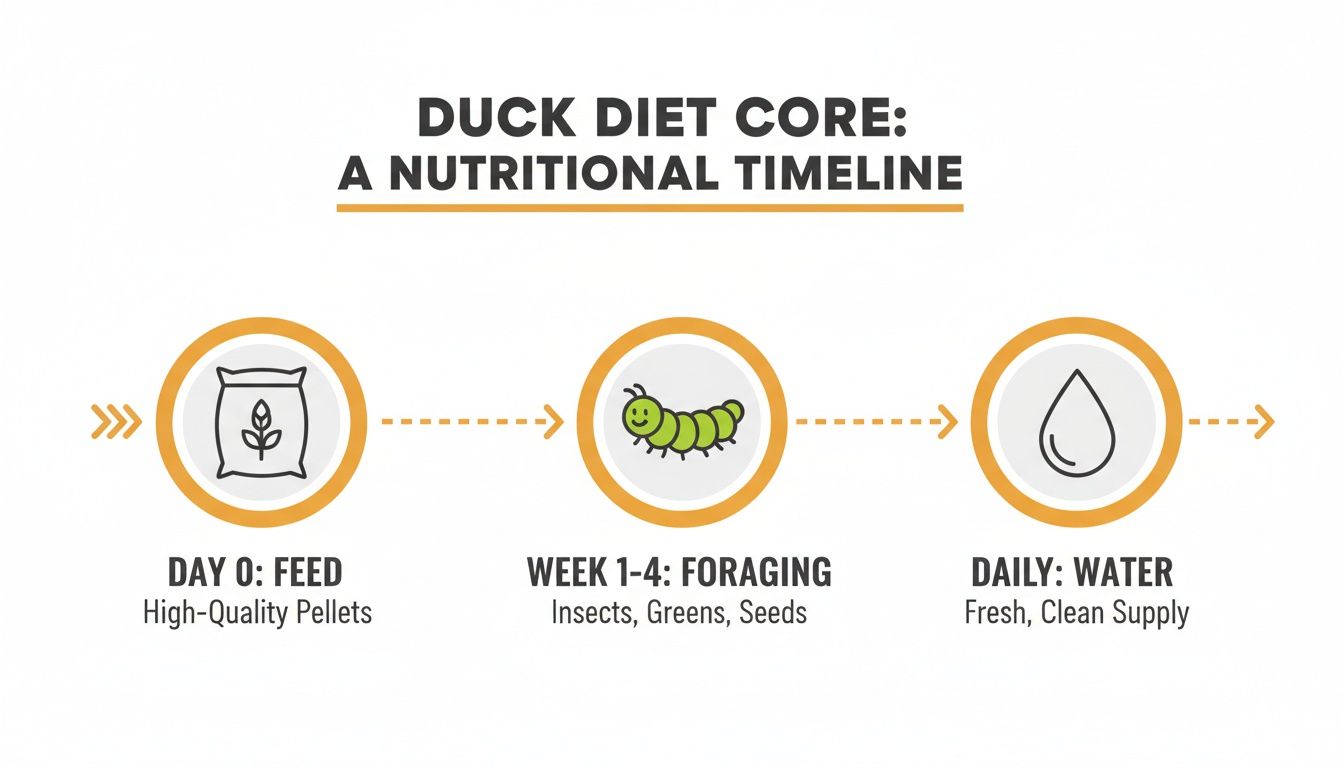
As you can see, the commercial feed is their foundation, foraging is a skill they learn over time, and water is the constant that ties it all together.
The Grower Phase (4-20 Weeks)
Once your ducklings hit the three-week mark, they’re officially in their awkward teenage phase. Their growth rate starts to level off a bit, and their dietary needs shift again. Keeping them on a high-protein starter feed now can actually do more harm than good, causing their bodies to outpace their skeletal development. This can lead to a painful and often irreversible condition called "angel wing."
To avoid this, it's time to switch them over to a grower feed. This formula has a lower protein content, usually around 16-19%. This change is especially important for fast-growing meat breeds like Pekins, who have bottomless appetites. A good grower feed provides all the balanced nutrition they need for healthy feather development and steady growth. For those interested in the nitty-gritty science, you can read the full research on their nutritional needs.
You'll keep them on this grower formula until they're about 20 weeks old, or until you spot that very first egg. This gradual reduction in protein is the secret to helping them mature at a healthy, sustainable pace.
The Adult and Layer Phase (20+ Weeks)
Around 20 weeks, your ducks have reached adulthood. For your female ducks (hens), this is a major milestone, as their bodies are gearing up for egg production. Making strong, perfect eggshells requires a whole lot of calcium, and their diet needs to reflect that.
This is the moment to transition the entire flock to a quality layer feed. This feed keeps the protein at a moderate 16-18% but significantly bumps up the calcium content to 2.5-3.5%. This extra calcium is absolutely non-negotiable. Without it, a hen’s body will start pulling calcium from her own bones to form eggshells, leading to weak, brittle bones and serious long-term health problems.
What if you have a mixed flock of drakes and hens? Simple. Feed the layer pellets to everyone, but also offer a separate bowl of crushed oyster shell on the side. The hens instinctively know they need the extra calcium and will help themselves, while the drakes will mostly ignore it. It’s an easy way to ensure everyone gets exactly what they need.
How To Choose The Right Commercial Duck Feed
Walking into a feed store for the first time can be a little intimidating. You're faced with an entire aisle of bags, all with different labels, formulas, and textures, each one promising the best nutrition for your flock. How do you choose?
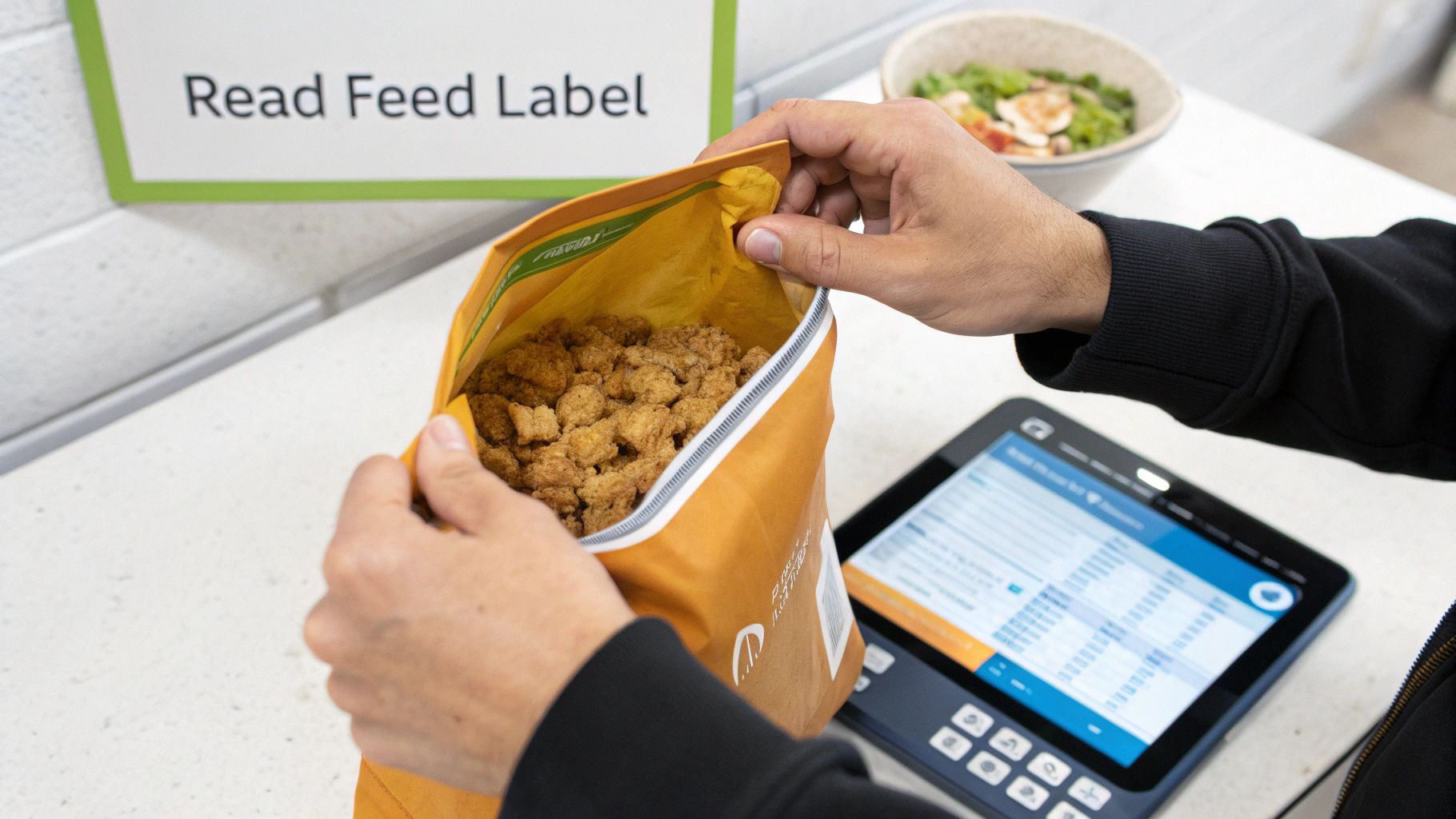
It’s actually simpler than it looks once you know what to look for. Think of the feed bag's label as a nutritional blueprint for your ducks' health. Learning to decode it is probably the most important skill you can develop as a duck owner. This isn’t about just grabbing any bag that says "poultry feed"—ducks have some unique needs, and the right formula provides the essential building blocks they need for strong bones, healthy growth, and, of course, those perfect eggs.
Crumbles, Pellets, Or Mash?
One of the first decisions you'll make is about the feed's texture. Commercial feed typically comes in three forms, and each one is designed for a specific purpose and age group.
- Mash: This is a finely ground, unprocessed feed. It’s nutritious, but its powdery texture is a real headache for ducks. Since they need water to wash down their food, mash often turns into a soupy, sludgy mess.
- Crumbles: These are just pellets that have been broken up into smaller, irregular pieces. This makes them the ideal choice for ducklings, whose tiny bills can easily scoop them up without any trouble.
- Pellets: This is the go-to form for adult ducks. The compressed nuggets hold their shape, which seriously cuts down on waste and ensures your ducks get a balanced bite every single time.
The choice here is pretty straightforward. You'll want to start your ducklings on crumbles for their first few weeks and then gradually transition them over to pellets as they mature.
Reading The Guaranteed Analysis
Okay, this is the most important part of any feed bag: the "Guaranteed Analysis." This tag is legally required and basically functions as a nutrition facts label, telling you exactly what's inside. It breaks down the minimum and maximum percentages of key nutrients.
Here are the main things you need to zero in on:
- Crude Protein: This is the big one. As we covered, ducklings need a high-protein starter with 20-22%, growers need a step-down formula with 16-19%, and your adult layers will do great on 16-18%.
- Crude Fat: Fat is a key energy source. For ducks, a good range is typically between 3-5%.
- Crude Fiber: Fiber is essential for good digestion. Look for a fiber content of around 4-7%.
- Calcium: For your laying ducks, this is non-negotiable. Layer feeds should contain 2.5-3.5% calcium to support strong, healthy eggshells.
A quick glance at the guaranteed analysis tells you if a feed is right for your flock's current life stage. Always match the protein and calcium levels to your ducks' age and purpose to keep them healthy.
Making sense of these labels gets easier with a little practice. If you want to get into the nitty-gritty of different formulas, you can explore our detailed guide on the various poultry feed types and what they're used for.
The Critical Role Of Niacin
While chickens and ducks have similar diets, there’s one critical difference you absolutely cannot ignore: niacin. Ducks need a lot more of this B vitamin (B3) than chickens do, especially when they're young. It’s essential for proper bone and joint development.
A niacin deficiency in ducklings can quickly lead to disaster—bowed legs, swollen joints, and an inability to walk. Unfortunately, many standard "chick starters" just don't have enough niacin to meet a duckling's needs. This is why it's always best to find a waterfowl-specific starter feed if you can. These formulas are made with the right amount of niacin already mixed in.
If you can't find one, don't panic. You can easily supplement a standard non-medicated chick starter crumble yourself. All you need is some brewer's yeast. A good rule of thumb is to add about 1.5 tablespoons of brewer's yeast per cup of feed. Just mix it in thoroughly to ensure your ducklings get the niacin they need in every bite. This simple step is one of the most effective ways to prevent serious leg problems and make sure your ducklings grow up strong and healthy.
Enriching Your Duck's Diet With Healthy Treats
While a good commercial feed should be the foundation of your duck's diet—making up about 90% of their daily intake—treats are so much more than just a snack. Think of them as a combination of a fun puzzle and a vitamin boost. Offering treats provides crucial mental enrichment, stops boredom in its tracks, and gets your flock moving and foraging just like they would in the wild.
Beyond just being a fun distraction, the right treats are a fantastic way to add supplemental nutrition. Giving your ducks a variety of safe, healthy snacks mimics the diverse diet they'd naturally find, introducing different textures, flavors, and micronutrients that round out their meals. This is your chance to give them fresh, whole foods that truly support their overall well-being.
Safe Treats From Your Kitchen And Garden
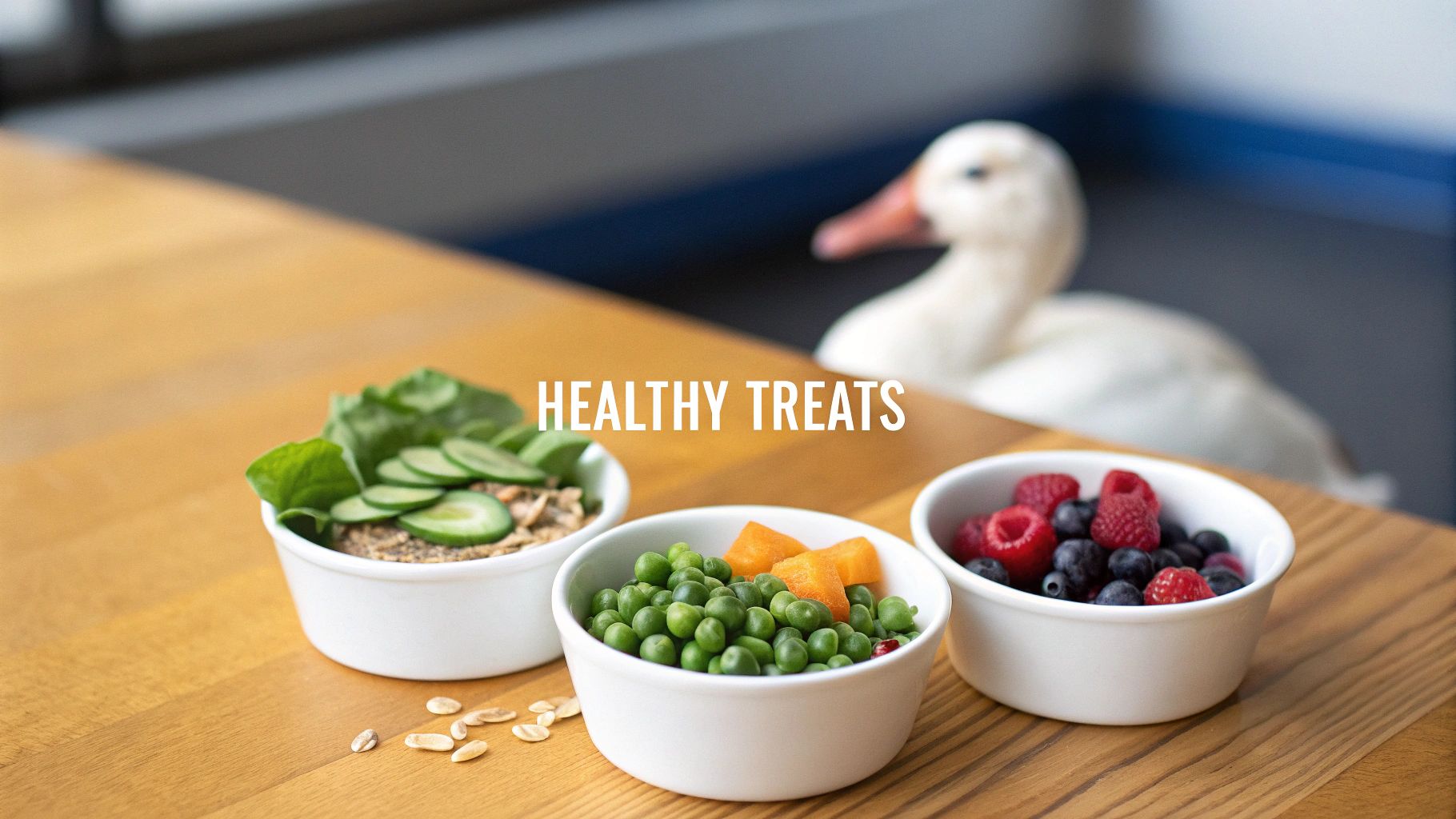
You don't have to look far for the best treats—many of them are probably already in your kitchen or garden. These fresh options are loaded with vitamins and much-needed hydration, making them a perfect, low-calorie addition to your ducks' routine. Just remember to always chop larger items into small, bite-sized pieces to prevent any choking hazards.
Here are a few flock-favorites that are always a hit:
- Leafy Greens: Ducks go wild for greens like romaine lettuce, kale, and Swiss chard. They're packed with vitamins and are easy for them to tear apart and munch on.
- Sliced Veggies: Cucumbers, shredded carrots, and bell peppers offer a satisfying crunch and are full of nutrients.
- Peas and Corn: Whether they're fresh, frozen (and thawed), or from a can (with no salt added!), peas and corn are a huge hit. For extra fun, toss them into a shallow pan of water and watch your ducks go bobbing for them.
- Berries and Melons: In moderation, fruits like blueberries, strawberries, and small chunks of watermelon are a sweet, hydrating snack that your ducks will gobble up in seconds.
These treats are a wonderful way to supplement their main feed. For even more ideas, be sure to check out our complete guide to the best treats for ducks.
Knowing what's safe versus what's harmful is the most important part of offering treats. Here’s a quick-reference chart to help you keep your flock safe and healthy.
Safe Vs Unsafe Foods For Domestic Ducks
| Safe Foods (In Moderation) | Unsafe Foods (Avoid Completely) |
|---|---|
| Leafy greens (lettuce, kale, Swiss chard) | Bread (all types, especially white) |
| Berries (blueberries, strawberries) | Avocados (all parts are toxic) |
| Melon (watermelon, cantaloupe) | Onions and garlic |
| Peas, corn, and green beans | Chocolate and candy |
| Cooked rice and pasta (unsalted) | Citrus fruits (can disrupt digestion) |
| Scrambled eggs (a great protein boost) | Salty, sugary, or processed foods |
| Worms, crickets, and grubs | Raw, dried beans |
| Cucumbers, carrots, and bell peppers | Spinach (in large quantities) |
Always introduce new foods slowly and in small amounts to see how your ducks react. When in doubt, it's always better to stick with what you know is safe.
Upgrading Treats For Superior Nutrition
While fresh veggies and fruits are great, high-protein treats are where you can really make a difference for your flock's health, especially for your laying hens. Think about it: producing a rich egg almost every day is a demanding job that requires a huge amount of protein and—most critically—calcium.
This is where insects and grubs become more than just a treat; they become a powerful, natural supplement. Ducks are insectivores by nature, so feeding them dried grubs taps directly into their instinctual dietary needs.
For laying ducks, calcium isn't just a nice-to-have, it's an absolute necessity. If a hen doesn't get enough calcium from her diet, her body will pull it directly from her own bones to form eggshells. This can lead to brittle bones and serious long-term health problems.
This is exactly why choosing the right kind of grub is so important. Many people reach for mealworms, but they are surprisingly low in calcium. A far better choice is Black Soldier Fly Larvae (BSFL), which are a true nutritional powerhouse.
Why Pure Grubs BSFL Are A Game Changer
Black Soldier Fly Larvae, like the ones in Pure Grubs, are a superior choice for one massive reason: calcium. They contain up to 85 times more calcium than mealworms, making them one of the best supplements you can possibly offer your flock for strong eggshells and healthy bones.
This incredible calcium content transforms a simple treat into a functional health booster. When you toss a scoop of Pure Grubs to your flock, you’re not just giving them a tasty snack—you are directly supporting their skeletal systems and helping your hens produce eggs with strong, perfect shells.
Plus, Pure Grubs provide a clean, high-quality protein source that helps with healthy feather growth, which is especially important during their annual molt. Because they are U.S.-grown and raised in controlled environments, you can be confident you're providing a safe, nutritious snack without any harmful contaminants. They are, quite simply, the perfect blend of what a duck naturally wants to eat and what it nutritionally needs to thrive.
Common Duck Feeding Mistakes and How to Sidestep Them
Even the most dedicated duck owner can make simple mistakes that put their flock's health at risk. The good news is that once you know what to look for, these common pitfalls are easy to avoid. Answering "what do domestic ducks eat?" is just as much about knowing what they shouldn't eat.
Let’s walk through the most frequent errors I see people make, from well-intentioned but harmful treats to the wrong type of feed. Getting these things right from the start will save you a lot of heartache down the road.
The Problem With Bread and "Junk Food"
We've all seen it: people at the local pond tossing bread to grateful ducks. It feels like a kind gesture, but in reality, it's one of the worst things you can do. Bread is pure junk food for waterfowl—it fills their bellies without offering any real nutritional value.
Think of it as feeding a child nothing but potato chips. A duck that gorges on bread won't have room for the protein, vitamins, and minerals it actually needs to be healthy. This can lead to malnutrition, but it gets worse. A diet heavy in carbs is a primary cause of "angel wing," a heartbreaking deformity where a duck's wing twists permanently outward.
The rule of thumb is simple: Never feed ducks bread, crackers, chips, or any other processed junk food. These items are a fast track to health problems.
If you want to offer a treat, grab something they'll love that's also good for them. A handful of oats, some cracked corn, thawed frozen peas, or shredded lettuce are all fantastic and safe alternatives.
Using Medicated Chick Starter
This is a big one, and it's a mistake that can have devastating consequences. New duck owners often grab a bag of "chick starter" for their ducklings, not realizing that the medicated version is incredibly dangerous for them.
This feed contains a medication called amprolium, which is designed to prevent a parasitic disease called coccidiosis in chicks. But ducks eat and drink far more than chicks do, meaning they can easily consume a toxic dose. An amprolium overdose blocks thiamine absorption, which can lead to severe neurological damage, vitamin deficiencies, and even death.
Always, always do the following:
- Check the Label: Before you buy any starter feed, read the tag carefully. Make sure it explicitly says "non-medicated."
- Look for Waterfowl Feed: The best option is always a feed formulated specifically for waterfowl. It’s designed with their unique nutritional needs in mind.
- Supplement if Necessary: If you absolutely must use a non-medicated chick starter, you'll need to add brewer's yeast to their feed. This provides the extra niacin ducklings require for strong, healthy leg development.
Overfeeding Treats
Treats are a fantastic way to bond with your flock and add a little excitement to their day, but it’s easy to go overboard. A good rule to live by is that treats should make up no more than 10% of your duck's total diet.
When ducks fill up on tasty snacks—even healthy ones—they eat less of their nutritionally balanced feed. This effectively waters down their diet, robbing them of the complete nutrition they need. Think of their main feed as their essential, well-rounded meal, and treats are just a small dessert.
Keep their daily feed consistent, and use treats more strategically for training or as an occasional bonus. This ensures they get the solid nutritional foundation they need to thrive.
Forgetting the Importance of Clean Water
Finally, don't overlook their water. Ducks absolutely need constant access to clean, fresh water, especially when they're eating. They use water to wash down their food, which helps them swallow and prevents choking. It’s a non-negotiable part of their digestion.
A dirty waterer can quickly become a cesspool of harmful bacteria, putting your entire flock at risk of getting sick. Likewise, a feeder that gets soaked with rain can grow moldy, leading to serious respiratory infections.
Always keep their feeder protected from the elements and change their water daily. And make sure their water source is deep enough for them to fully submerge their heads. This is how they clean their nostrils and eyes, a critical part of their daily grooming.
Your Top Duck Feeding Questions Answered
Even with the basics down, you're bound to have questions. I know I did when I first started. New duck keepers and old pros alike run into specific little quirks about grit, feeding times, and what to do when you have a mixed flock. This section is all about tackling those common head-scratchers with clear, practical answers.
Think of this as the troubleshooting part of your duck-feeding journey. We'll get straight to the point on the questions that pop up most often, so you can feel confident you're doing the absolute best for your flock.
Do Ducks Need Grit and Oyster Shell Like Chickens?
Yes, they absolutely do, but it's critical to know they serve two completely different purposes.
You can think of insoluble grit as a duck’s teeth. Since they don't have any, they swallow tiny stones and sand. These bits hang out in their gizzard—a super-muscular organ—and work to grind up everything they eat. If your ducks are free-ranging on dirt with plenty of little pebbles, they’ll probably find enough on their own.
But if they live mostly in a grassy run or a coop, you have to provide it. Without grit, they simply can't digest anything beyond their commercial crumbles—no tough greens, no grains, no yummy bugs. A small bowl of poultry grit, available whenever they want it, is all it takes.
Oyster shell, on the other hand, is all about calcium. It's not for digestion; it's a supplement specifically for your laying girls.
Grit is for grinding. Oyster shell is for eggshells. The best practice is to offer both in separate, free-choice containers. Your ducks are smart—they’ll take what their bodies need, right when they need it.
For laying ducks, having a separate dish of crushed oyster shell is non-negotiable. It gives them the massive amount of calcium needed to form strong eggshells without having to pull that mineral from their own bones. Don't worry, your drakes and non-laying ducks will know to leave it alone.
How Often Should I Feed My Ducks?
Ducks are great at managing their own food intake, which makes our job a lot easier. The simplest and most common method is to provide unlimited, free-choice access to their feed all day long. Just keep the feeder full, and they'll eat whenever they're hungry.
This approach is fantastic because it cuts down on squabbles over food. Everyone from the bossiest duck to the most timid gets a chance to eat their fill. Ducks rarely overeat their feed to the point of becoming unhealthy, especially if they have room to roam and exercise.
If you'd rather have a set routine, feeding them twice a day works just as well.
- Morning Feeding: Give them about half of their daily food in the morning, right after you let them out.
- Evening Feeding: Offer the rest in the late afternoon. This gives them plenty of time to fill up before settling in for the night.
No matter which schedule you pick, one rule is golden: always have fresh, clean water right next to their food. Ducks need water to swallow their food, and keeping the two separate can be a serious choking hazard.
Can My Ducks Eat Chicken Feed?
This is probably the most-asked question from anyone with a mixed flock! The short answer is: yes, in a pinch, but it’s not a great long-term plan without a couple of key tweaks. The biggest difference comes down to one nutrient: niacin (Vitamin B3).
Ducks, and especially growing ducklings, need a whole lot more niacin than chickens do. It’s vital for their leg, bone, and joint health. A duckling raised on standard chick starter can develop serious, often permanent leg problems like splayed leg or even lose the ability to walk.
Even more importantly, you must never give ducklings medicated chick feed. That medication is designed to prevent a chicken disease called coccidiosis. Ducks eat way more than chicks, and they can easily overdose on the medication, which can cause nerve damage or even be fatal.
So, if you absolutely have to use chicken feed for your ducks:
- Choose a non-medicated formula. Always. Double-check the feed tag to be certain.
- Add niacin. A simple way is to mix in about 1.5 tablespoons of brewer's yeast for every cup of feed. Stir it in well to make sure your ducklings get what they need to grow up strong and healthy.
Why Is Water So Important During Feeding?
For a duck, water isn't just for drinking—it's a critical part of the eating process. Their anatomy is built for it. They'll grab a mouthful of food, then immediately dip their bill into water to wash it all down.
This "dabbling" action moistens their food, helping it travel safely down their throat and preventing choking. It’s why you absolutely must keep their water source right next to their feeder. Watch them for a few minutes, and you'll see—they simply can't eat properly without it.
Beyond that, the water needs to be deep enough for them to dunk their entire heads. This isn't just for play. Ducks use water to flush out their nostrils, sinuses, and eyes, keeping them clear of dust and food particles. A clean head is a healthy head, and this simple act helps prevent nasty respiratory and eye infections. A shallow drinker just won't cut it.
When it comes to providing a high-calcium, protein-rich treat that supports strong eggshells and mimics their natural diet, Pure Grubs offers the perfect solution. Our USA-grown Black Soldier Fly Larvae are a safe and nutritious supplement your ducks will love, ensuring they get the vital nutrients needed to thrive. Explore the benefits and treat your flock today at https://puregrubs.com.