

What Do Baby Birds Eat? A Complete Guide to Feeding Chicks
When you come across a baby bird, the first question that pops into your head is always, "What on earth do I feed it?" It's a natural instinct to want to help. But the simple truth is that baby birds need a very precise diet, usually consisting of insects and regurgitated food brought by their parents. Reaching for common kitchen scraps can be a fatal mistake.
This isn't a task to take lightly. The wrong food can do much more harm than good, so it's critical to know what to do—and what not to do.
What to Feed a Baby Bird in an Emergency
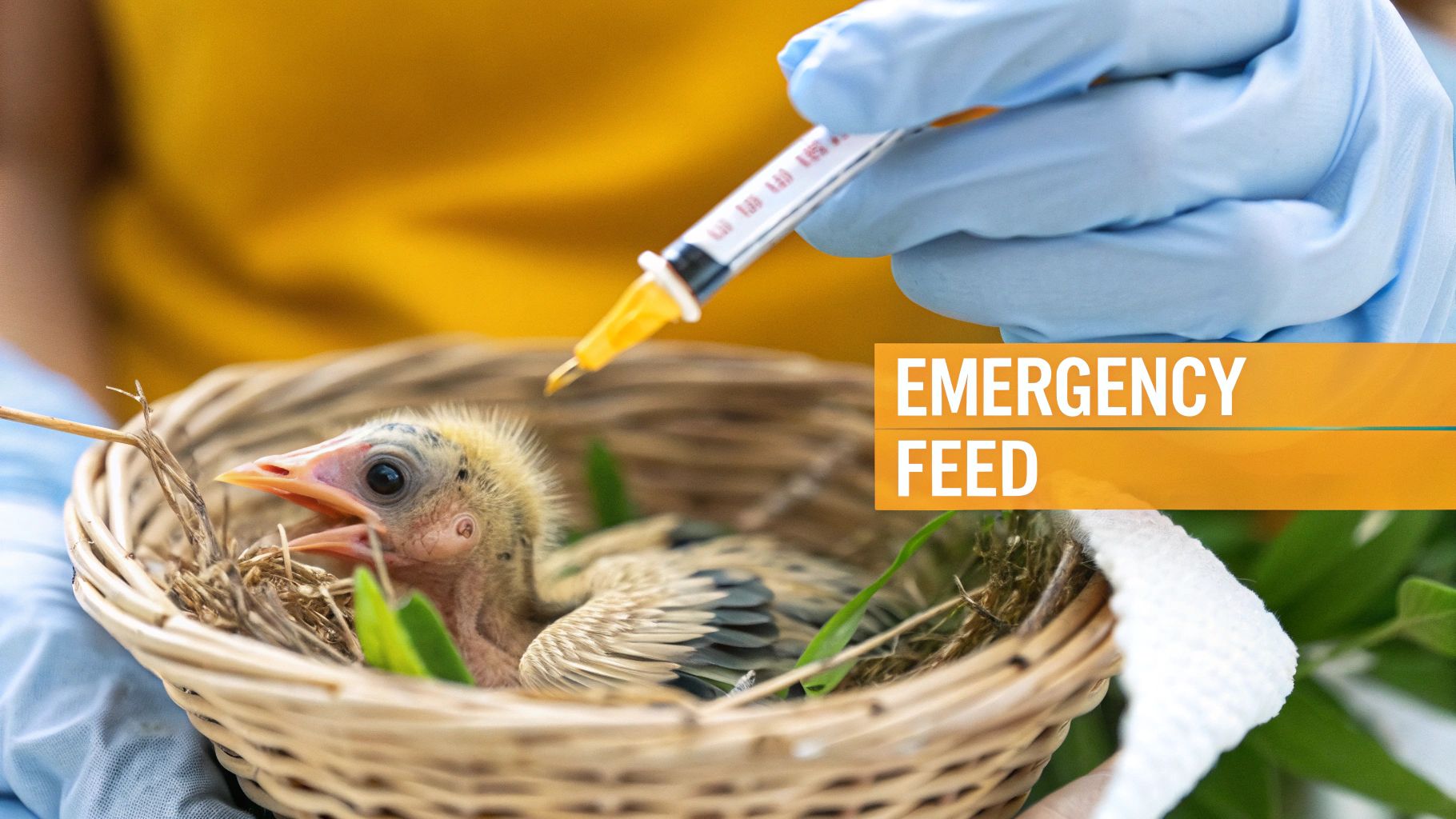
Finding a baby bird can feel like a high-stakes situation, and the urge to feed it is immediate. Before you do anything else, though, your first and most important step should be to contact a licensed wildlife rehabilitator. They are the experts. While you're waiting for them to get back to you, understanding a few basics of emergency care can literally be a lifesaver.
A bird's needs change fast as it grows. A tiny, pink nestling with its eyes still shut is completely helpless and needs a diet that's soft and easy to digest. A more developed fledgling, which is feathered and hopping around, is much closer to eating solid foods but still relies on its parents.
Dangers of Common Foods
Many people with the best intentions reach for things they have lying around the house, like bread or milk. Unfortunately, these are incredibly dangerous for any baby bird.
- Bread and Crackers: These are just empty fillers. They offer zero nutrition and can swell up in a chick's tiny stomach, causing a deadly blockage.
- Milk: Birds can't digest lactose. Giving a bird milk will cause severe diarrhea, which quickly leads to dehydration and death.
- Whole Seeds or Worms: Nestlings can't break down whole seeds. And while it seems natural, earthworms from the yard can carry harmful parasites and are often far too big for a baby bird to handle.
In this situation, giving the wrong food is often worse than giving no food at all.
The goal of emergency care isn't to create a long-term meal plan. It's to stabilize the bird. Your most critical job is to keep it warm and safe while you wait for an expert from a local wildlife center to step in.
Safe Temporary Feeding Options
If a wildlife rehabilitator specifically tells you to provide food, or if you know professional help is hours away, there are a few options that are much safer than others. Most backyard songbirds you'll find—like robins, sparrows, and blue jays—are insectivores and need a high-protein diet.
A slurry made from high-quality dry kitten food that's been soaked in water can work as a temporary fix. Another excellent source of protein and calcium is crushed dried insects, like black soldier fly larvae. You can learn more about their incredible benefits in our guide on black soldier fly larvae for birds.
Whatever you use, make sure it's at room temperature. Offer it in tiny, pea-sized amounts using just the very tip of a coffee stirrer or a toothpick.
Here’s a quick-reference table to help guide you in those first critical moments.
Quick Emergency Feeding Guide for Baby Birds
This table is for temporary guidance only while you are actively trying to contact a licensed wildlife rehabilitator. This is not a long-term feeding plan.
| Bird Type | Primary Natural Diet | Safe Temporary Foods | Foods to Strictly Avoid |
|---|---|---|---|
| Insectivores (Robins, Bluebirds, Swallows) | Insects, spiders, worms | Soaked high-quality kitten food, rehydrated dried insects (like black soldier fly larvae) | Bread, milk, seeds, whole worms, pet bird seed |
| Granivores (Finches, Sparrows, Doves) | Seeds, grains | Commercial baby bird formula (if available), soaked kitten food (very short-term) | Bread, milk, insects (may be hard to digest for some species), whole seeds |
| Omnivores (Jays, Crows, Starlings) | Insects, seeds, fruit, small animals | Soaked high-quality kitten food, small pieces of rehydrated dried insects, tiny bits of moistened dog food | Bread, milk, salty foods, avocado, processed foods |
Remember, this is just a stopgap. The best thing you can do for a baby bird is get it to a professional who knows exactly what it needs to survive and thrive.
Why a Wild Bird's Natural Diet Is Critical
When you think about feeding a baby bird, it’s tempting to focus on just getting something into its tiny belly. But a wild bird's diet is so much more than that—it's a precise nutritional blueprint, fine-tuned by nature for survival.
Think of it like a human infant's formula. Every single ingredient is there for a reason, from building strong bones to kickstarting a resilient immune system. The difference between a diet that simply keeps a chick alive and one that helps it truly thrive is staggering. The food its parents bring is packed with high-quality proteins and specific fatty acids that act as the fundamental building blocks for healthy development.
Get that balance wrong, and a young bird can suffer irreversible harm.
The Power of Protein and Fats
Protein is the absolute cornerstone of a baby bird's growth. It’s what builds everything from muscle tissue and internal organs to the complex, intricate structure of every single feather. For the vast majority of songbirds, this protein comes almost exclusively from insects.
Take the common robin, for example. The parents are on a relentless hunt for earthworms, beetles, and caterpillars. These aren't just protein-rich; they're also soft and easy for a tiny digestive system to handle. This constant supply of high-octane fuel is what allows nestlings to go from helpless, naked hatchlings to feathered fledglings in just a couple of weeks.
But it’s not just about the amount of food. The quality, especially the fat content, plays a massive role in a chick's long-term health.
A baby bird's diet is a classic case of quality over quantity. A few nutrient-dense insects are far more beneficial than a belly full of low-quality filler, which can lead to malnourishment even if the chick appears full.
This isn't just a hunch; it's backed by some really compelling research. Tree swallow populations, for instance, have dropped by a worrying 36 percent over the last three decades. A groundbreaking 2016 study found that swallow chicks fed small amounts of high-quality aquatic insects—which are rich in specific fatty acids—showed better growth, stronger immune responses, and healthier metabolic rates. They did far better than chicks that ate larger quantities of lower-quality insects from land. You can read more about these critical dietary findings from Cornell University.
This tells us that the specific type of insect matters immensely. The right kinds of fats are absolutely essential for brain development and energy storage, preparing the young bird for the incredible physical demands of its first flight and migration.
Nature's Perfectly Packaged Meal
A wild bird’s natural diet is a complex, diverse menu that shifts with the seasons and the chick's age. It's a system perfected over millennia that we simply can't replicate with things from our kitchen.
Just look at what different baby birds eat in the wild:
- Sparrows: The parents focus on soft-bodied insects like caterpillars, aphids, and spiders. This provides the intense protein punch needed for lightning-fast growth.
- Swallows: These incredible aerial acrobats catch flying insects like gnats, flies, and mayflies right out of the air, delivering a constant stream of high-energy meals to their nestlings.
- Hummingbirds: A mother hummingbird creates a specialized slurry of nectar mixed with tiny, partially-digested insects or spiders. This brilliant combo provides both quick energy from sugar and the vital protein from the insects.
Each of these diets is perfectly tailored to that species' unique needs. The parent birds instinctively know what to find and how to prepare it, often regurgitating the food to make it even easier for their chicks to digest. You can get a broader look at what different birds eat in our guide on what wild birds eat.
The Consequences of a Poor Diet
When a baby bird gets the wrong food, the consequences are swift and often severe. A lack of calcium leads to weak, brittle bones that can easily fracture. Not enough protein results in stunted growth and poorly formed feathers, a condition that can cause "stress bars"—weak spots that compromise a bird's ability to fly and regulate its own body temperature.
Ultimately, a bird raised on a poor diet is at a huge disadvantage. Even if it manages to survive long enough to leave the nest, it may lack the strength, flight capability, or immune function to handle the challenges of the wild. This deep connection between diet, development, and survival is exactly why preserving natural insect populations isn't just about helping the bugs—it's about ensuring the future of our bird populations.
A Guide to Hand-Feeding Pet Birds
Hand-rearing a baby pet bird, whether it’s a tiny finch or a boisterous parrot, is an incredible commitment. It’s a delicate process that forges a deep bond, but it also demands precision, patience, and a solid understanding of what you're doing. Unlike in the wild, where parents provide a perfectly balanced, regurgitated meal, these domestic chicks depend on you for every single calorie. Getting their nutrition right isn't just important—it's everything.
The first thing to understand is that a baby parrotlet has vastly different dietary needs than a baby canary. This is exactly why homemade formulas are so risky. It's nearly impossible to replicate the specific balance of proteins, fats, vitamins, and minerals they need to thrive, and getting it wrong can lead to serious, long-term health problems.
That’s why veterinarians and experienced breeders rely on commercially developed, scientifically formulated hand-feeding formulas. These products are the result of years of research designed to mimic the exact nutritional profile a chick would get from its parents. They are, without a doubt, the gold standard.
Choosing and Preparing the Right Formula
Your first job is to pick a formula that's made specifically for your type of bird. Reputable brands create different recipes for birds like parrots (psittacines) and songbirds (passerines). Always choose the one that matches your bird’s species, and follow the mixing instructions on the package to the letter.
Preparing the formula is just as critical as choosing the right one. Think of it like making a baby's bottle—both the temperature and consistency have to be just right.
- Use Hot, Clean Water: Mix the formula powder with hot, sterilized water. The sweet spot is usually between 105-110°F (40-43°C).
- Get the Consistency Right: You're aiming for a smooth, creamy texture, a lot like warm pudding. If it’s too thick, the chick can’t swallow it properly. If it's too thin, it won't provide enough nutrition.
- Check the Temperature: This step is non-negotiable. Formula that’s too hot will cause horrific burns inside the bird’s crop (a little food storage pouch at the base of their neck). On the flip side, formula that’s too cold can stall digestion and lead to a dangerous condition called sour crop. Use a good digital thermometer to be certain.
One study focusing on baby parrots like lovebirds and cockatiels found huge differences in growth and fat absorption between chicks fed homemade mixes and those raised on commercial formulas. The professionally made diets led to far better digestion and practically eliminated the risk of malnutrition. This research drives home just how vital it is to get the balance right. You can read more about these critical parrot nutrition findings yourself.
Proper Feeding Techniques and Tools
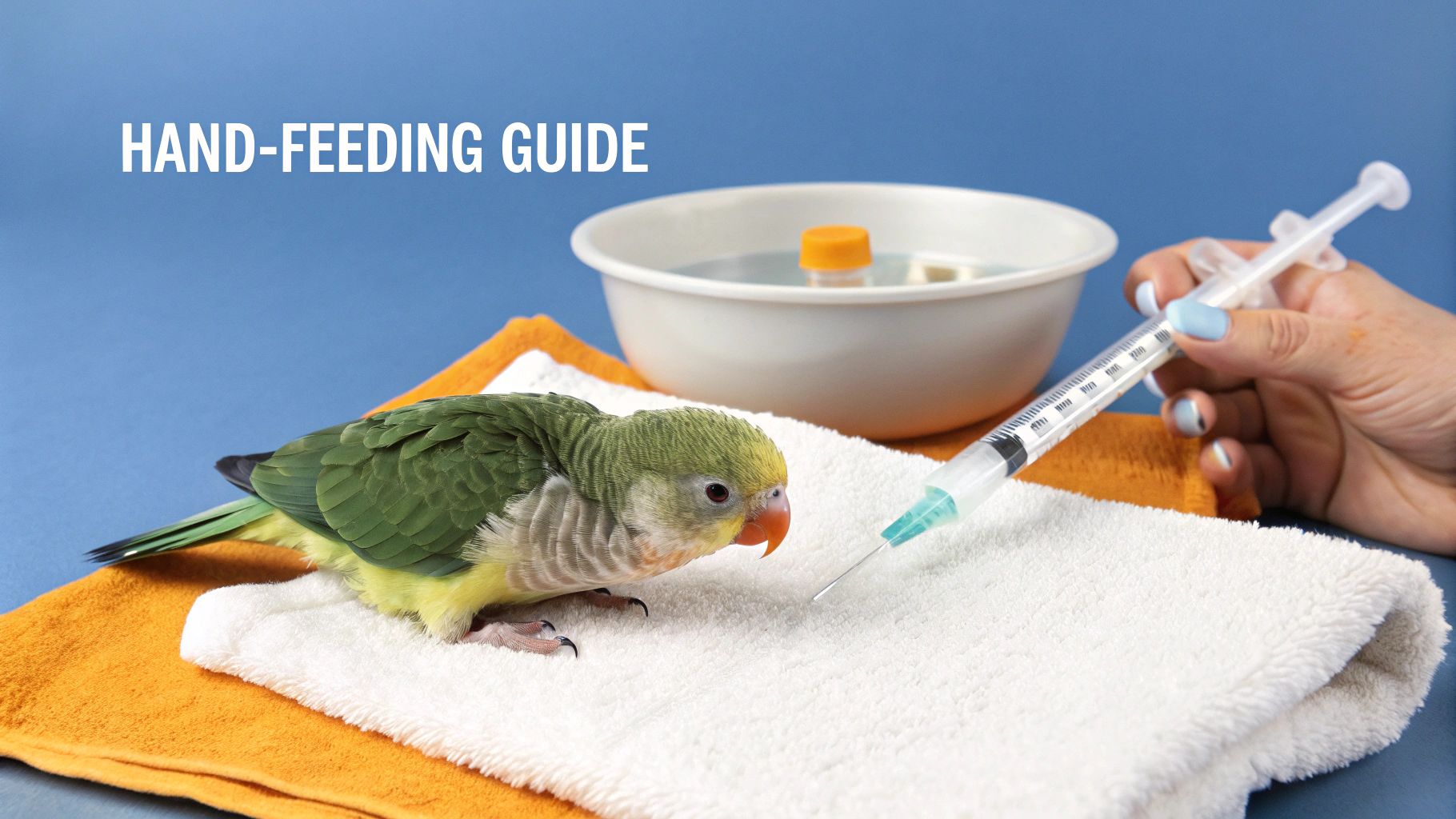
Once the formula is ready, it's time to feed. The most common tools for the job are a feeding syringe (without a needle, of course) or a specially designed bent spoon. I prefer syringes because they give you much better control over how much food is delivered, which helps prevent overfeeding.
First, place the chick on a secure, non-slip surface, like a towel on a countertop. When you're ready, approach from the left side of the chick’s beak and gently aim the syringe tip toward the right side of its mouth. This angle helps guide the food down the esophagus and, most importantly, away from the trachea (the windpipe). Getting food in the lungs, called aspiration, is a life-threatening emergency you want to avoid at all costs.
Never, ever force the formula. A healthy baby bird will give you a "feeding response," eagerly bobbing its head and opening its mouth wide. Let the chick "pump" the food from the syringe at its own pace.
Setting a Feeding Schedule
How often you feed a baby bird changes as it grows. A brand-new hatchling needs constant attention, while a chick that’s starting to get its feathers is much less demanding.
- Week 1: The youngest chicks, especially in their first three days, might need to be fed every two hours around the clock. Yes, that includes overnight!
- Weeks 2-4: As the little one grows, you can start stretching out the time between meals. Feedings might drop to every three or four hours during the daytime.
- Weaning Stage: Once the chick is fully feathered and starts exploring, you can slowly reduce the hand-feedings. This is when you'll begin introducing solid foods like high-quality pellets and soft, chopped vegetables to encourage self-feeding.
A crucial rule of thumb: always let the chick’s crop empty completely between feedings. You can check this by gently feeling the pouch at the base of its neck. If it feels full, wait. Feeding a chick with a full crop can cause the old food to spoil and ferment, leading to sour crop.
Hand-feeding takes a lot of careful observation and a steady routine, but the unique bond it builds is truly one of a kind.
Dangerous Foods and Feeding Myths to Avoid
When you stumble upon a helpless baby bird, the first instinct is to rush in with food and water. It's a natural, compassionate response. But some of the most common things people offer are actually the most dangerous, and this is where good intentions can go tragically wrong.
Knowing what not to feed a baby bird is every bit as critical as knowing what it needs. A chick's digestive system is incredibly delicate, and the wrong food can cause fatal blockages, severe dehydration, or even drowning.
The Big Three You Must Never Give
Some feeding myths are so common they feel like facts. Let's bust the three biggest offenders right now and talk about why they're so hazardous for a young bird.
-
Bread or Crackers: Think of bread as pure junk food for birds. It has almost zero protein or fat—the essential fuel a chick needs to grow. Worse, it swells with moisture inside the bird's crop and stomach, creating a painful and often deadly blockage.
-
Milk or Dairy Products: Birds aren't mammals. Their bodies don't make the lactase enzyme needed to break down lactose, the sugar in milk. Giving a baby bird milk will trigger severe digestive upset and diarrhea, which quickly leads to lethal dehydration.
-
Forcing Water: This is one of the most dangerous mistakes you can make. At the base of a baby bird's tongue is an opening to its windpipe, called the glottis. It is shockingly easy to get liquid into the lungs, causing the bird to drown. This is called aspiration, and it's almost always fatal. In the wild, baby birds get all the moisture they need from the insects and regurgitated food their parents bring them.
The cardinal rule of rescue is simple: keeping a baby bird warm and safe is far more important than feeding it. Your top priority should always be getting the bird to a licensed wildlife rehabilitator who has the right training and supplies.
Other Hazardous Foods to Avoid
Beyond those big three, a lot of other common household items can cause serious harm. A baby bird is built for a very specific diet of insects and other natural foods, not people food.
Here’s a clear list of other things to keep far away from any baby bird you find:
- Whole or Large Seeds: Nestlings and even many fledglings simply can't crack or digest whole seeds. They can easily choke or develop an internal blockage.
- Earthworms: While a robin might enjoy a worm, those from your backyard can carry harmful parasites. They're also often too big and tough for a tiny chick to swallow and digest properly.
- Kitchen Scraps: Our food is full of salt, sugar, and fats that are toxic to a bird's system. Never offer processed foods, lunch meat, or anything greasy.
- Most Pet Food: While some rehabilitators use soaked, high-protein kitten food as a last-resort emergency option for insect-eaters, most pet food is a bad idea. Dog food is usually too low in protein, and commercial birdseed mixes are for adult birds with strong beaks.
The dietary needs of birds are surprisingly specific, and what's bad for one species might be fine for another. For a broader look at what's generally unsafe for birds, you can find great info in our guide on foods that are harmful to chickens, as many of the same rules apply.
When to Step In (and When Not to)
It's a gut reaction—you see a tiny bird on the ground, and your first impulse is to rush in and "save" it. But hang on. What looks like an emergency to us is often a normal, necessary part of a bird's life. The first and most important thing to do is to step back, observe from a distance, and figure out what's really going on.
Your detective work starts with identifying the bird's age. Are you looking at a nestling or a fledgling? A nestling is a true baby—it might have its eyes closed, with just a bit of downy fluff or no feathers at all. It's helpless and belongs in the nest. A fledgling, however, is more like a teenager with a learner's permit. It has all its feathers but is still clumsy, spending time on the ground hopping and fluttering as it builds strength for real flight.
Nestling vs. Fledgling: Your First Move
If you've spotted a fledgling, you're watching a bird do exactly what it's supposed to. Its parents are almost definitely nearby, keeping a close watch and bringing food. Standing too close will only scare them away. The best thing you can do is leave it be.
A nestling on the ground, though, is a different story. It has fallen out of its home accidentally. Scan the branches directly above where you found it. If you can see the nest and can safely reach it, gently pick the baby up and place it back. And don't worry about the old myth—bird parents will not reject a baby just because a human has touched it.
Red Flags: When a Baby Bird Genuinely Needs Help
Most of the time, nature has things under control. But there are absolutely times when a bird is in serious trouble and needs an expert. If you see any of these signs, it's time to call a licensed wildlife rehabilitator immediately:
- Obvious Injuries: There's visible blood, a drooping or broken wing, or other clear wounds.
- Covered in Insects: The bird is being swarmed by ants, flies, or other insects.
- Shivering or Weak: It feels cold when you touch it or is too lethargic to move.
- Known Danger: The bird was in a cat's or dog's mouth, or you know for a fact the nest was destroyed.
While you're waiting for help, your good intentions can quickly turn harmful if you offer the wrong things. Many common household foods are deadly to baby birds.
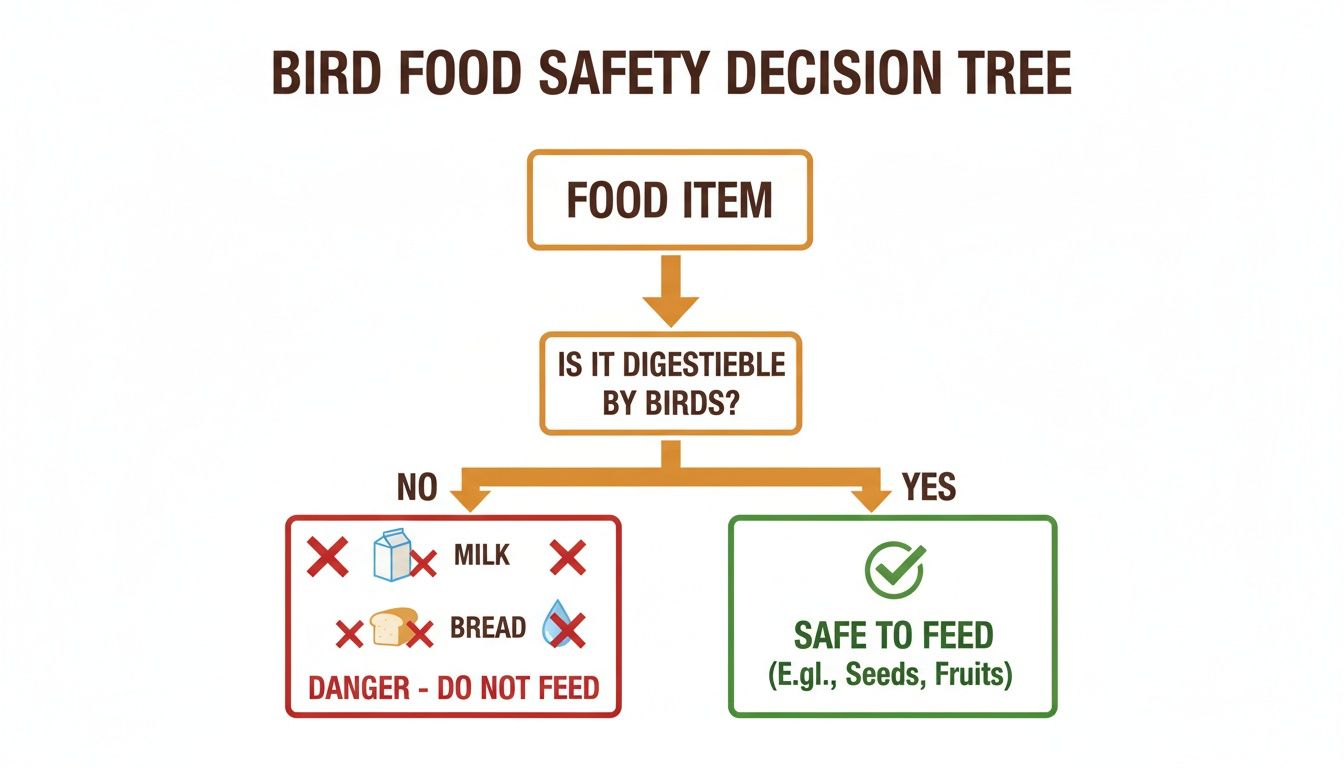
As you can see, things we might think are harmless, like bread or milk, can be fatal. This is exactly why getting the bird to a professional is so critical.
Once you've determined a bird needs help, your job isn't to play veterinarian or parent. It's to be a safe, temporary transport. Your goal is simple: keep the bird warm, dark, and quiet until it's in expert hands.
Find a small cardboard box and line it with a soft towel or T-shirt. Gently place the bird inside, close the lid (make sure there are air holes!), and put the box in a quiet, safe place. Don't give it any food or water. Now, focus on getting it to a licensed rehabilitator who has the training and resources to give it a real chance at survival.
Frequently Asked Questions About Baby Bird Care
Finding a baby bird can feel overwhelming, and a flood of questions usually follows. Getting the right answers fast can mean the difference between life and death for the little one. Here, we'll tackle the most common concerns people have when they find a chick in need.
One of the first things people wonder is how often a baby bird needs to be fed. A tiny, featherless nestling, for instance, might need to eat every 15-20 minutes from dawn until dusk. But your primary job isn't to become a full-time bird parent. The best and safest thing you can do is keep the baby warm and get in touch with a licensed wildlife rehabilitator right away.
Critical Safety Questions
The instinct to give a thirsty creature water is strong, but should you give a baby bird water with a dropper? The answer is a hard no. You should never try to give a baby bird liquid directly. It's incredibly easy for water to go down the wrong pipe and into their lungs—a condition called aspiration, which is almost always fatal. They get all the moisture they need from their food.
So, what can you feed a baby bird in an emergency? What if you've called a professional, but it's going to be a while before they can help?
Honestly, the safest emergency food is usually no food at all. A baby bird can survive for several hours without eating while you arrange for transport to an expert. Your top priorities are keeping it warm and safe, not feeding it.
If a rehabilitator specifically instructs you to provide food while you wait, a tiny, pea-sized ball of soaked, high-protein kitten food can work for insect-eating species. But this is a last-resort, stopgap measure only.
Summarizing Key Actions
To give the little bird the best shot, just remember these core principles:
- Warmth Comes First: A cold baby bird can't digest anything. The most crucial first step is to place it in a dark, quiet box with a gentle heat source to keep it warm.
- Call in the Experts: Your goal is to be a temporary transporter, not a surrogate parent. Get the bird to a professional who has the specialized formulas and skills to care for it properly.
- Dodge the Dangers: Never offer a baby bird bread, milk, seeds, or whole earthworms. These can do more harm than good.
By focusing on these simple steps, you're giving that tiny life its best possible chance to grow up and return to the wild.
For a safe, high-calcium treat that supports the health of wild birds and chickens alike, trust Pure Grubs. Our USA-grown Black Soldier Fly Larvae provide the essential nutrients birds need to thrive. Learn more at the Pure Grubs website.