

Treats for Wild Birds That Actually Help
You put out a fresh tray of seed and expect a busy morning. Instead, a chickadee grabs one sunflower seed and vanishes, a cardinal flings the lighter grains onto the ground, and a robin ignores the suet as if it isn't there. Then you scatter a few dried insect larvae, and suddenly the tray becomes the most popular spot in the yard.
That reaction can teach you more than a generic shopping list. The right treats for wild birds depend on which species visit, what the season is offering, how quickly food spoils, and whether your feeder stays clean. Treats can add useful nutrition, but they work best as a small part of a yard that also provides native plants, shelter, water, and natural prey.
What Your Backyard Birds Actually Want You to Know
Watch the birds for a few mornings before changing everything at once. Chickadees often select energy-rich pieces and leave bulky fillers behind. Cardinals may sort through a platform feeder, tossing unwanted grains while keeping larger seeds. Robins usually prefer foraging on lawns, leaf litter, and planted areas rather than visiting a hanging feeder.
A sudden rush for dried larvae tells you something different. Protein-rich foods can resemble the insects many birds already seek among bark, soil, and vegetation. That doesn't mean every bird needs insects every day, or that a feeder should replace the habitat that produces them. It means your flock may be showing you a seasonal preference or a nutritional gap.
The wider context matters. Wild-bird feeding is a mature backyard activity in the United States. In 2011, 52.8 million Americans aged 16 and older fed birds or other wildlife around their homes and spent more than $5 billion on food, feeders, birdhouses, baths, and related accessories. The scale of that activity makes food quality and feeder care practical concerns, not minor details. Research on feeder use and bird health found that birds using feeding sites were generally healthier, while disease prevalence was somewhat higher at feeder locations.
Read the flock before you read the label
Start with three observations:
- What disappears first: This shows which foods your local birds accept.
- What gets scattered: Rejected fillers can attract rodents and accumulate beneath the feeder.
- Which species arrive together: A crowded, mixed-species station needs more careful spacing and cleaning.
Regional birding resources can sharpen your eye for local species and habitat. The Texas state park birding guide is a useful example of how parks connect birds with the habitats they use.
A practical feeding plan usually has two layers. The first is habitat, including native plants, leaf litter, cover, and naturally occurring insects. The second is supplemental food, selected in modest quantities and adjusted when weather, migration, breeding, or disease alerts change. For a helpful foundation on natural diets and supplemental choices, see what do wild birds eat.
What Counts as a Treat for Wild Birds
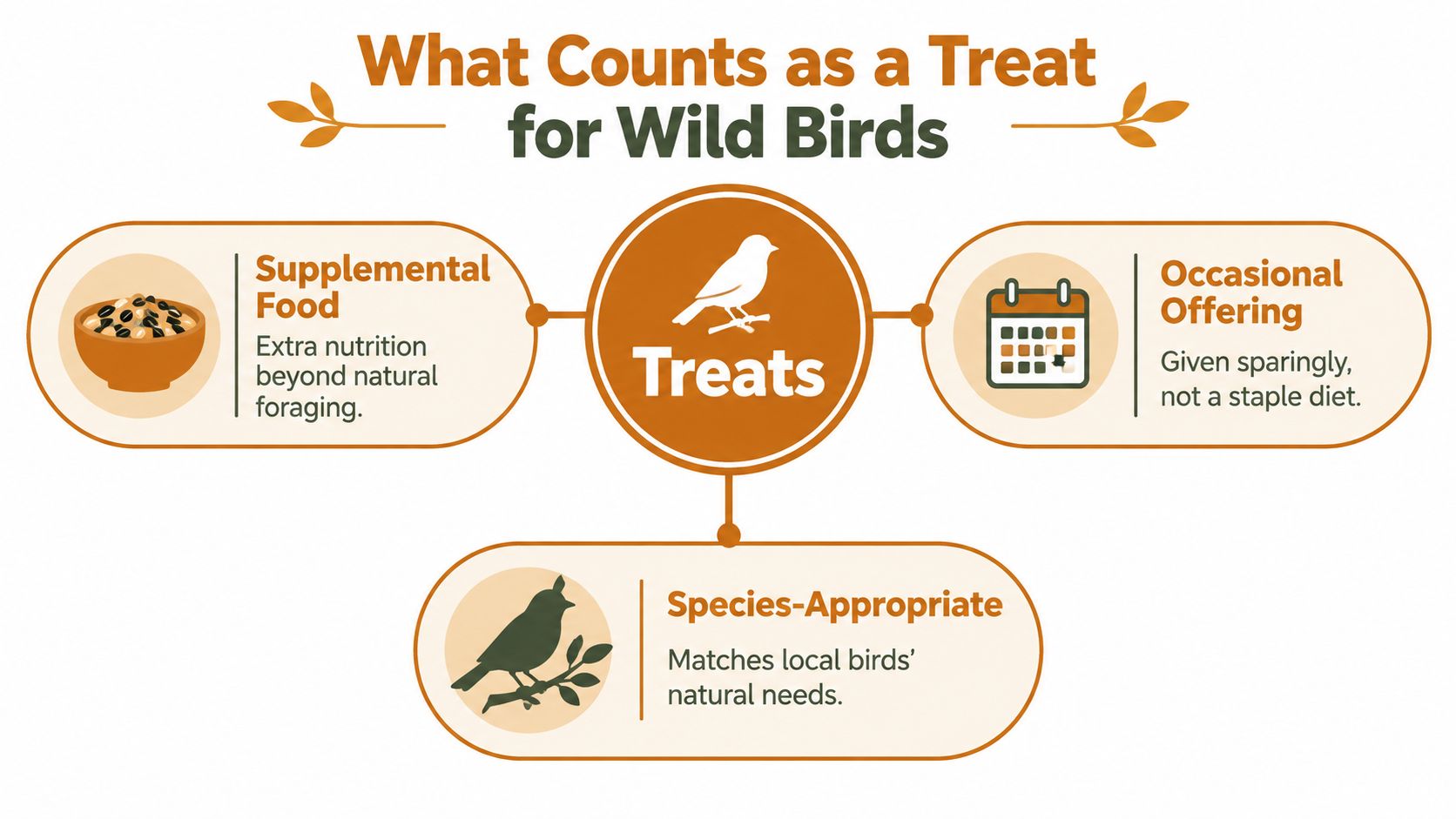
A wild-bird treat is supplemental food offered in a species-appropriate way, not a replacement for natural foraging. It can be a small serving of seed, suet, fruit, or insects that helps birds find energy or nutrients when local conditions make those resources less available.
That definition has three useful tests.
First, ask whether the food adds something beyond the habitat. A dried insect may provide concentrated protein, while suet supplies energy in cold weather. Second, ask whether birds can still forage naturally. A feeder should support a yard, not turn the yard into a single permanent food station. Third, ask whether the food suits the birds using it. A product intended for songbirds shouldn't automatically be offered to waterfowl or every species that happens to approach.
The supplement principle
A Wisconsin comparison of Black-capped Chickadees found no survival difference between birds with regular feeder access and birds relying on naturally available foods. Among chickadees that visited feeders, supplemental food supplied only 21% of their daily energy, with the remaining 79% coming from natural food sources, according to the Virginia Cooperative Extension review.
That finding gives you a reliable way to judge feeding advice. If a product is presented as a complete solution, be cautious. Treats should complement native vegetation, natural prey, safe roosting cover, and the seasonal foods birds already know how to find.
Practical rule: If birds can eat the treat but can't safely move away, forage elsewhere, or avoid a crowded station, the feeding setup needs improvement.
For example, dried Black Soldier Fly Larvae can fit the supplemental category when offered in small portions. The product page for USA GROWN BLACK SOLDIER FLY LARVAE FOR CHICKENS lists 36–42% crude protein, 30–40% fat, and a calcium level described as 75 times higher than mealworms. Those are product claims relevant to the label, not a reason to treat larvae as a complete diet for wild birds. Species, portion size, natural food access, and local conditions still control the decision.
The Four Treat Families Worth Knowing
Most choices at the feed store fall into four broad families. Each has a sensible role, and each becomes a poor choice when used without regard to season or species.
Seeds and grain blends
Sunflower, millet, and other seed ingredients appeal to different birds, but blends can contain fillers that some visitors discard. Seeds are easy to store and useful for regular supplemental feeding, provided the feeder stays dry and the ground beneath it doesn't become a pile of old food.
Suet and fat-based products
Suet offers concentrated energy, which makes it especially useful during cold or wet conditions. It can attract woodpeckers, nuthatches, chickadees, and other species that cling to cages or tree trunks. Warm weather creates a spoilage problem, so use a formulation and placement suited to the temperature.
Fresh and dried fruit
Fruit brings quick carbohydrates and can attract species that don't spend much time at seed feeders. Fresh pieces spoil quickly, while dried fruit needs careful portioning and should not become a sticky accumulation around the feeding area. Fruit is a targeted offering, not a universal substitute for seeds or insects.
Insect-based protein
Mealworms, dried larvae, and similar foods most closely match the animal prey many birds seek naturally. They can be useful during breeding, feather replacement, migration, or harsh weather, but they remain supplemental. A high-protein food doesn't remove the need for vegetation, natural insects, and diverse foraging areas.
| Treat family | Primary nutrient | Best season | Common visitors | Main limitation |
|---|---|---|---|---|
| Seeds and grain blends | Energy and varied plant nutrients | Year-round, adjusted to local conditions | Finches, sparrows, cardinals, chickadees | Blends may contain unwanted fillers |
| Suet and fat-based products | Dense fat-based energy | Cool and cold weather | Woodpeckers, nuthatches, chickadees | Can spoil or soften in warmth |
| Fresh and dried fruit | Quick carbohydrates | Seasonal availability and targeted use | Thrushes, orioles, waxwings, other fruit-eaters | Spoils readily and can create waste |
| Insect-based protein | Protein and insect-derived nutrients | Breeding, molting, migration, and difficult weather | Bluebirds, chickadees, wrens, nuthatches, and other insect-eaters | Doesn't replace natural foraging or a varied diet |
The best choice often isn't the richest product. It's the one your birds eat promptly, your feeder can keep clean, and your yard can offer without creating a crowded contact point.
Why Insect Protein Stands Out for Wild Birds
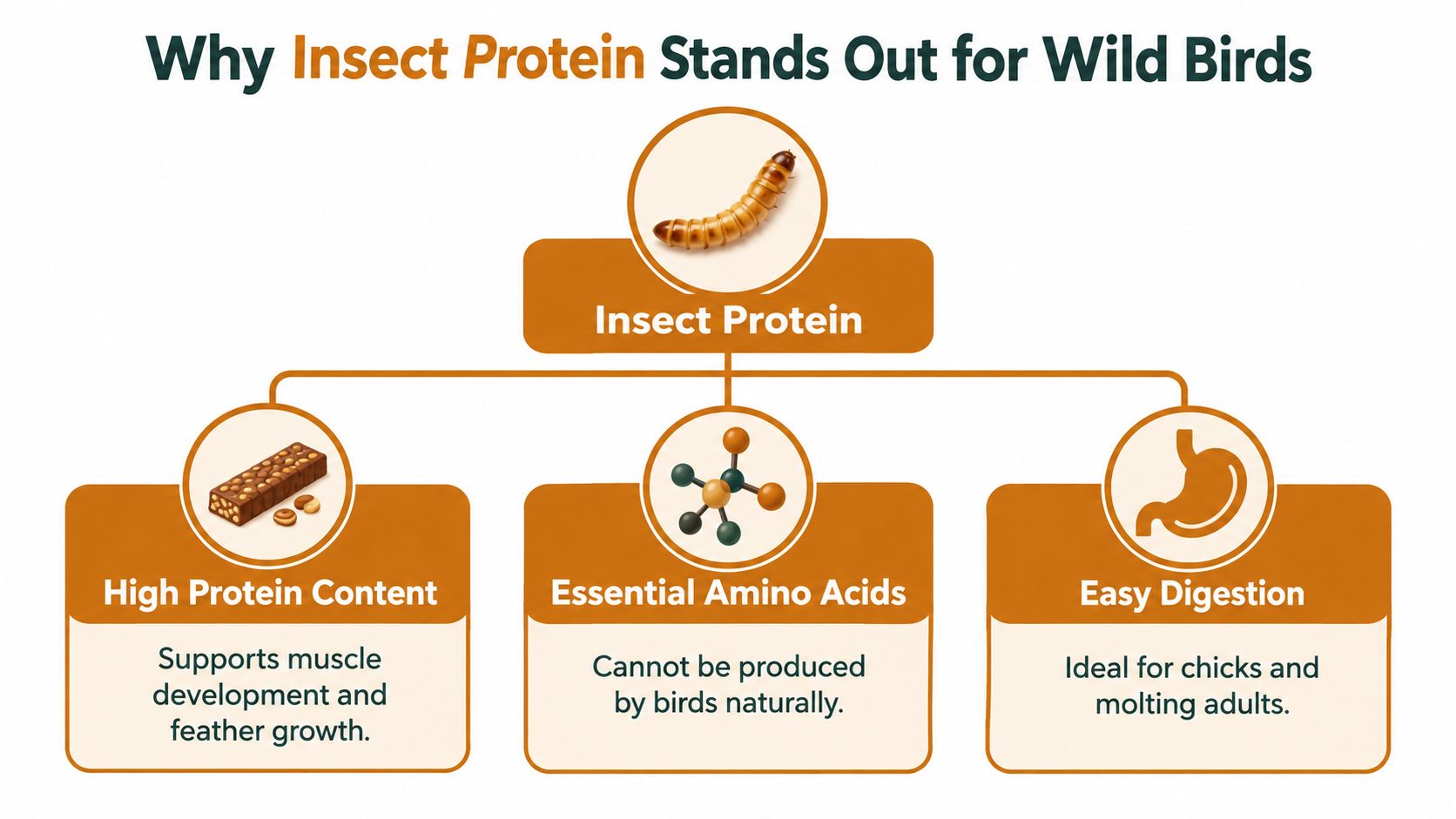
Insect treats stand apart because they provide a compact source of animal-based nutrition. Wild birds already encounter insects in bark, soil, flowers, leaf litter, and native shrubs, so dried larvae can complement rather than contradict their normal behavior.
Protein matters during demanding periods such as feather replacement and chick-rearing. Calcium also matters, particularly for birds producing eggs or developing bones, but a label's calcium claim doesn't make a product suitable for every species or life stage. The useful question is whether the treat fills a modest nutritional role alongside natural foods.
A recent wildlife-disease modeling study found that low-quality diets accelerated outbreaks and increased infection severity, while high-protein diets produced smaller epidemics, delayed outbreak onset, and reduced effects on host populations. The study on diet quality and wildlife disease supports a careful conclusion: nutrient quality can influence resilience, but clean feeding practice still determines whether a shared station becomes a transmission risk.
What to check on an insect label
Look for:
- Clear origin: The package should identify where the insects were raised and processed.
- Stated nutrients: Protein, fat, and calcium information helps you compare products without relying on vague phrases.
- Testing information: Heavy-metal testing and traceability are meaningful quality controls, particularly for products used around laying birds or mixed animal households.
- Processing details: Drying should produce a stable product without obvious moisture, mold, or unexplained additives.
- Intended use: A treat labeled for poultry isn't automatically a complete or universally appropriate food for wild songbirds.
BSFL can be particularly interesting because their mineral profile differs from that of mealworms, but don't turn a comparison into a promise for every bird. Offer a small amount, observe which species take it, and keep the tray free of old fragments.
If you're also planning a garden around your bird habitat, visual details can help make feeding areas feel intentional. You might enjoy these ideas to find sunflower-themed home ideas, then choose plants that provide both seasonal character and useful cover.
The following video offers another visual look at insect-based feeding and bird behavior:
A Seasonal Plan for Treats That Fit the Calendar
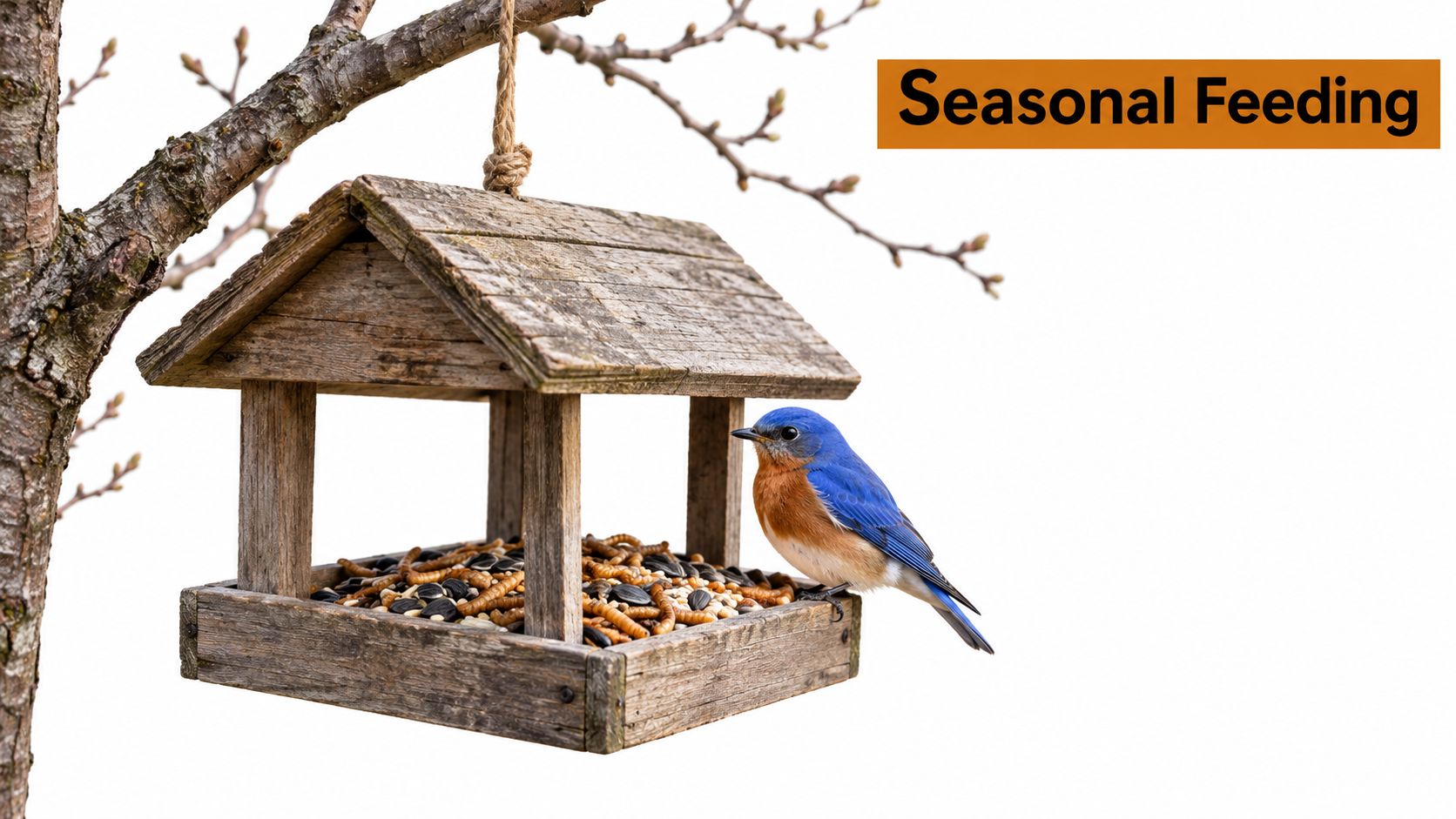
Bird feeding changes when natural food, weather, and flock behavior change. A treat that works beautifully in cool weather can become wasteful in summer heat, while a small serving of insects can be especially attractive when adults are feeding young.
Spring
Spring brings nest building, territory defense, and chick feeding. Offer modest portions of insect-based foods and small, easily handled seeds, while keeping native plants and natural insect habitat available. Adults may carry food away rather than eat at the feeder, so a quiet, sheltered station near vegetation can work better than a busy open platform.
Summer
Heat and humidity make summer the season for restraint. Put out less food, watch for dampness, and remove anything that sits uneaten. Dried foods can absorb moisture, while fresh fruit deteriorates quickly. Smaller servings reduce waste and make it easier to clean the feeding surface before residue builds up.
Fall
Fall often brings molting adults, migrating birds, and changing local flocks. Protein, fruit, and fat can all have a place, but don't assume every visitor needs every category. Observe the birds arriving and adjust the menu rather than filling several feeders with foods no one is using.
Winter
Cold conditions make fat-rich foods more useful, especially when natural energy sources are scarce. Consistency helps birds learn where food is available, but consistency doesn't mean leaving stale food out. Keep portions small enough for prompt consumption and use sturdy, weather-protected feeders.
Seasonal gardening habits support the same goal by preserving shelter and food beyond the feeder. Guidance on year-round garden care in Dublin offers a useful reminder that bird-friendly spaces need attention throughout the calendar.
When disease alerts change the plan
Local disease reports should override a favorite feeding routine. Updated British Trust for Ornithology guidance recommends stopping seeds and peanuts from May through October in areas affected by finch trichomonosis, while allowing alternatives such as mealworms and some fat products with spoilage precautions. Read the BTO guidance on finch trichomonosis and feeding before making seasonal decisions in affected areas.
If sick birds appear, don't compensate by adding more nutritious food. Reduce contact, remove the feeding station, and follow the cleaning routine described below.
Safety, Hygiene, and Smart Feeder Habits
A feeder concentrates birds, food, moisture, and droppings in one place. That makes hygiene part of the feeding system, not an optional finishing touch. Government guidance identifies feeders as potential transmission sites for salmonellosis, trichomoniasis, mycoplasma, aspergillosis, avian pox, and other infections.
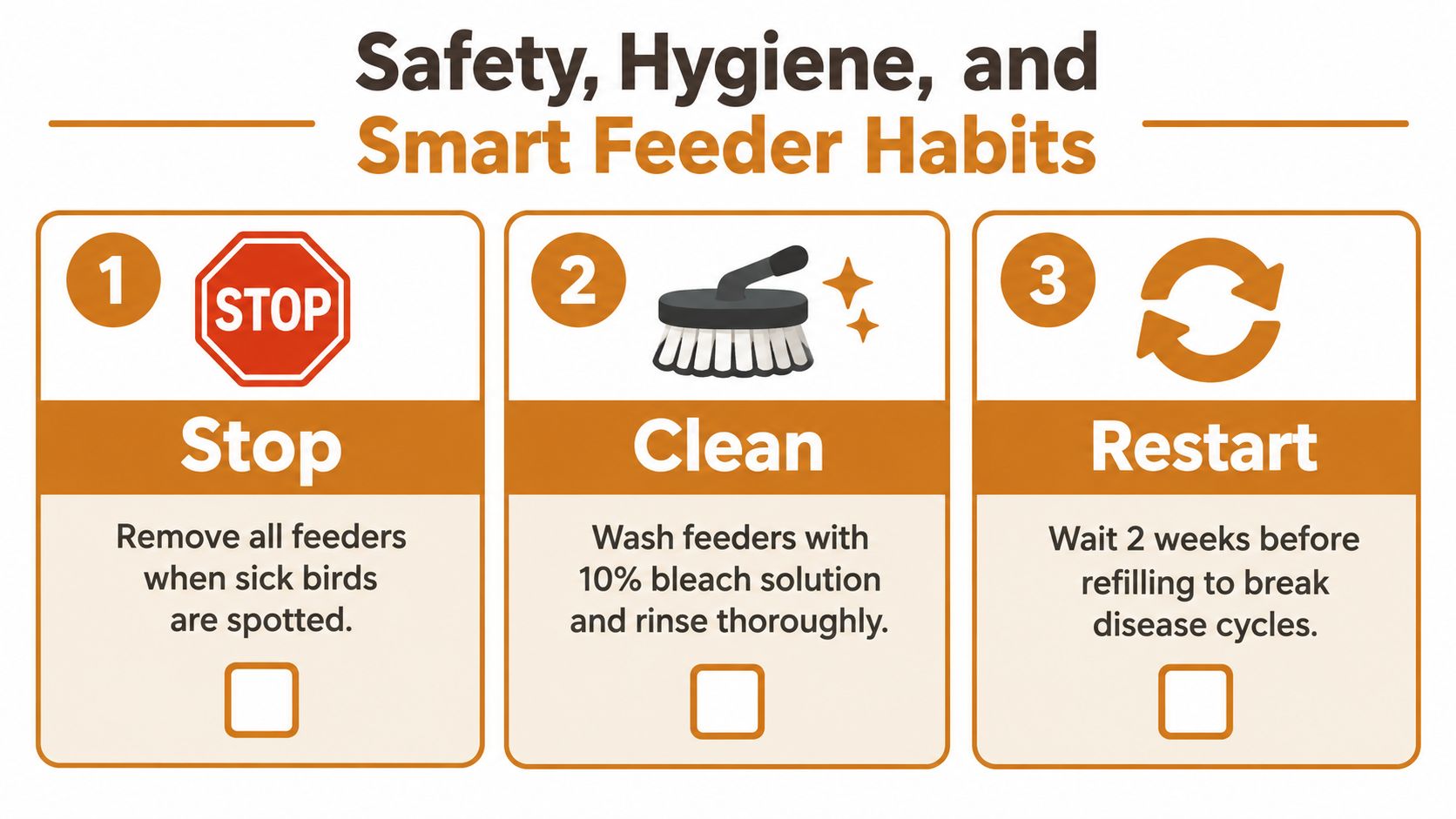
A stop, clean, restart routine
Stop feeding when you see visibly sick birds, unusual lethargy, crusted eyes, or birds remaining close to a contaminated station. Remove feeders, trays, and uneaten food promptly. Don't sweep spilled food into a larger pile, because that keeps the contact point active.
Clean feeders outdoors with gloves and wash your hands thoroughly afterward. The U.S. Fish and Wildlife Service feeder guidance recommends cleaning feeders at least every two weeks, while other wildlife-health guidance supports cleaning at least weekly or more often under heavy use. Use the more frequent routine when many birds gather, food becomes damp, or droppings build up.
Restart only after the area and equipment are clean and conditions are suitable. Refill with a small amount that birds can consume before the next cleaning. The Virginia wildlife guidance on safe bird feeding also warns against feeding ducks, geese, or swans, because congregation raises health risks and bread provides poor nutrition that can cause permanent growth deformities.
Feeder habit: Under-fill first. You can add more tomorrow, but you can't make yesterday's damp food clean again.
Spacing matters as much as scrubbing. Separate feeding points where possible, keep food away from dense piles of droppings, and remove spilled treats that attract rodents. A clean tray with excessive crowding still creates unnecessary contact among birds.
For practical ideas on offering food without turning it into a messy routine, see feed the birds. The goal isn't to eliminate every wild interaction. It's to avoid creating an avoidable disease hub in your own yard.
Putting It All Together in Your Own Yard
You don't need a complete feeder overhaul. Start with a short inventory this weekend.
- List what you already offer: Note the seed blend, suet, fruit, or insect food currently available.
- Find the missing category: Choose one useful addition, not a crowded collection of products. If your yard has plenty of seed but no protein option, try a modest insect offering. If food spoils before birds eat it, improve portioning before buying anything else.
- Set a weekly observation routine: Check freshness, droppings, spills, feeder crowding, and which species eat each food.
- Build habitat around the station: Native plants, leaf litter, cover, and natural insects give birds choices beyond the feeder.
- Keep species separate in your thinking: A treat suitable for songbirds isn't a reason to feed ducks, geese, or swans.
Homemade options can work when ingredients are plain, portions are small, and the mixture doesn't create a damp residue. For ideas and cautions, explore homemade bird treats. Whatever you offer, judge it by bird response, cleanliness, seasonal fit, and its place within a living habitat.
The most reliable treats for wild birds aren't defined only by protein, fat, or calcium. They're foods you can offer responsibly, in quantities birds use promptly, while keeping natural foraging at the center of the yard.
Pure Grubs offers USA-grown dried Black Soldier Fly Larvae with stated protein, fat, calcium, and origin information for keepers looking for an insect-based supplemental treat. Visit Pure Grubs to explore the larvae and choose a practical option for your bird-feeding routine.