

Soldier Worms for Chickens A Guide to Healthier Hens
When it comes to treats for your flock, soldier worms are in a class of their own. They deliver a powerful nutritional punch that standard chicken feed just can't match.
These aren't actually worms at all, but the larvae of the Black Soldier Fly (Hermetia illucens). Each one is a tiny, crunchy powerhouse, loaded with high levels of both calcium and protein. Think of them as the perfect, all-natural superfood that your chickens will go absolutely wild for.
What Are Soldier Worms and Why Do Chickens Love Them?
Anyone who has watched chickens scratch around the yard knows they are expert insect hunters. Tossing out a handful of soldier worms taps right into that primal instinct, giving them a treat that’s not only exciting but also incredibly good for them.
Giving your chickens soldier worms isn't just about a tasty snack; it's a smart way to supplement their diet and support their health from the inside out. It's like handing your flock a tiny, nutrient-packed protein bar. Chickens don't just like them—they go crazy for the taste and crunch, which makes feeding time a fun and enriching activity for everyone.
More Than Just a Treat
While you can give your chickens plenty of different snacks, soldier worms really stand out because of their unique nutritional makeup. Many common flock problems, from weak eggshells to a rough molt, often stem from small gaps in their nutrition. Soldier worms are perfectly designed to fill those gaps.
-
Stronger Eggshells: The high calcium content is easily absorbed, leading directly to thicker, more resilient eggshells. You'll see fewer soft-shelled or cracked eggs in the nesting box.
-
Beautiful Feathers: Feathers are made almost entirely of protein. Adding soldier worms to their diet, especially during the fall molt, helps your hens regrow a lush, healthy coat of feathers much faster.
-
Overall Vigor: The blend of protein, essential fats, and minerals bolsters their immune systems, keeping them active, bright-eyed, and healthy.
By making soldier worms a regular part of their diet, you're doing more than just giving them a treat. You're making a direct investment in the long-term health and happiness of your flock. It's a simple, natural way to get visibly healthier birds, better eggs, and a more resilient coop.
What Makes Soldier Worms a Nutritional Powerhouse?
When you toss a handful of soldier worms to your flock, you're offering them so much more than a tasty snack. You're giving them a super-concentrated dose of nutrition that directly targets their most critical health needs. Unlike junk-food treats, soldier worms deliver a powerful, naturally balanced punch of protein and calcium.
What really sets them apart is how easily a chicken's body can absorb and use these nutrients. Think of it as the difference between a synthetic vitamin pill and a whole food packed with goodness. The nutrients in soldier worms are ready to go, making them incredibly effective for everything from strong eggs to shiny feathers.
This infographic breaks down the key ways soldier worms boost your flock's health.
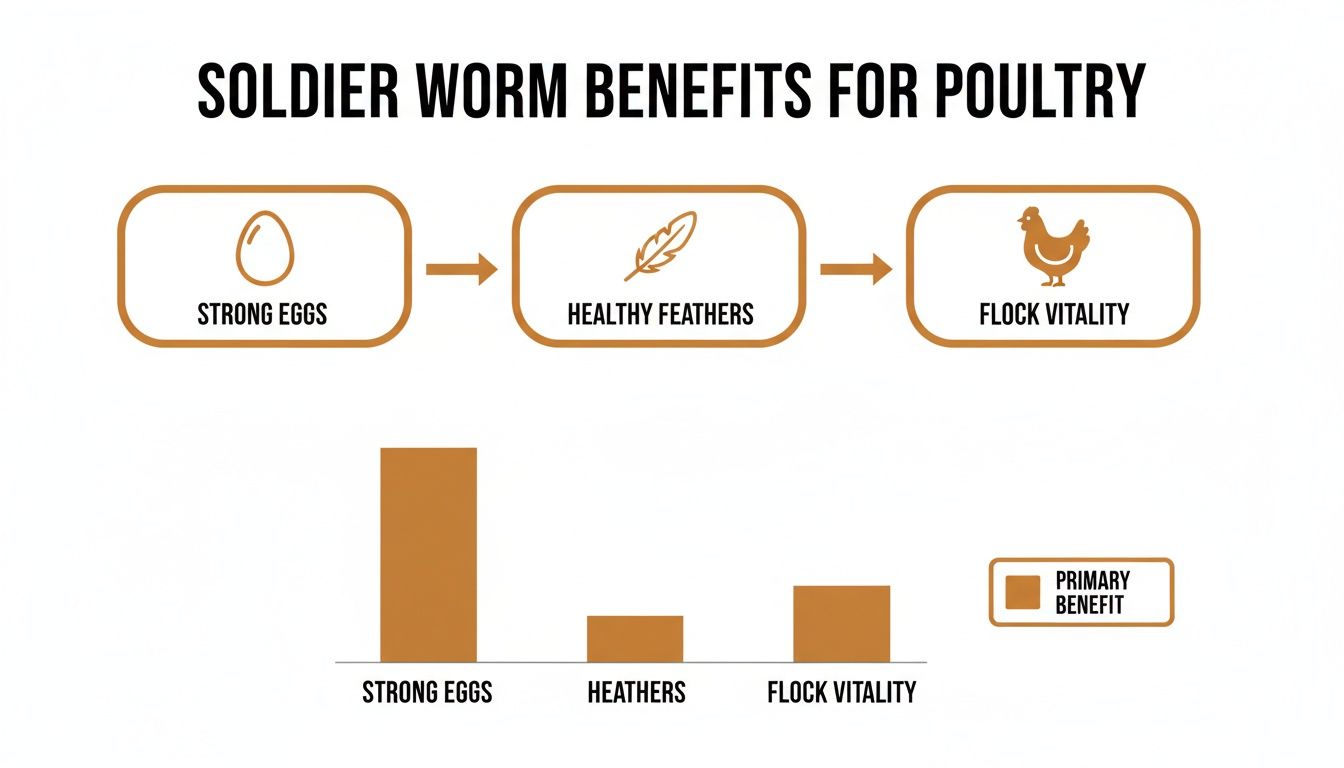
As you can see, these little larvae are a simple way to get stronger eggs, healthier feathers, and a more vibrant, energetic flock. They're a cornerstone of smart, proactive poultry care.
The Calcium Advantage: Say Goodbye to Weak Eggshells
Laying hens are calcium-making machines. Every single eggshell they create is a huge mineral investment, and if their diet comes up short, their bodies will start pulling calcium directly from their bones. This is a recipe for disaster, leading to brittle bones and, of course, those dreaded weak, soft-shelled, or even shell-less eggs.
This is where soldier worms are a total game-changer. Black Soldier Fly Larvae (BSFL) are taking the poultry world by storm as a sustainable, super-nutritious feed ingredient. They contain up to 42% protein and, critically, pack up to 50 times more calcium than mealworms. This means stronger eggshells and healthier hens. You can find more data on the growing BSFL market and its impact online.
But it’s not just about how much calcium they have—it's about the balance.
The real magic of soldier worms is their naturally perfect calcium-to-phosphorus ratio. For a chicken to properly absorb calcium, it needs to be paired with the right amount of phosphorus. Soldier worms nail this balance, ensuring that calcium goes exactly where it’s needed most: into building strong, solid eggshells.
This ideal ratio prevents the absorption problems that can come from poorly balanced calcium supplements, making soldier worms a much safer and more effective choice for your laying flock.
The Great Grub Debate: Soldier Worms vs. Mealworms
Chicken keepers often ask, "What's the difference between soldier worms and mealworms?" While chickens will happily gobble up both, their nutritional profiles are worlds apart, especially when it comes to supporting laying hens.
Here’s a head-to-head comparison:
Soldier Worms vs Mealworms: A Nutritional Showdown
| Nutrient/Attribute | Soldier Worms (BSFL) | Mealworms |
|---|---|---|
| Protein | ~42% | ~50% |
| Calcium | Very High (up to 50x more) | Very Low |
| Calcium-to-Phosphorus Ratio | Ideal (2:1) | Poor (1:7) |
| Fat | High | High |
| Primary Benefit | Excellent for eggshell quality & bone health | High-protein treat for energy |
While mealworms offer a bit more protein, their extremely low calcium and poor mineral balance make them more of a "junk food" treat. Soldier worms, on the other hand, provide a balanced nutritional boost that actively supports a hen's most important biological functions.
Fueling Feathers and Flock Health
Did you know feathers are about 90% protein? The primary protein is keratin, the same stuff our hair and nails are made of. When a chicken goes through her annual molt, she has to regrow thousands of feathers—a process that puts a massive drain on her body's protein reserves. It’s so demanding that hens usually stop laying eggs entirely, redirecting all their energy into making new feathers.
Supplementing with protein-rich soldier worms during this time gives your chickens the exact building blocks they need to get through the molt quickly and with less stress. This support helps them finish feathering out faster and get back to laying sooner.
Here’s how that extra protein helps your flock:
- A Faster, Easier Molt: Providing a ready source of protein helps hens regrow a thick, healthy coat of feathers before the cold weather sets in.
- Strong Muscle Development: Protein is essential for maintaining the muscle mass that active, foraging chickens need to stay strong and healthy.
- Overall Vitality and Immunity: A diet with high-quality protein supports a robust immune system, helping your flock fight off illness and stay energetic.
By adding soldier worms to their diet, you're giving your chickens the high-octane fuel they need to thrive during demanding times like molting and peak laying season. It's a small change that delivers big results you can see in the health and happiness of your entire flock.
Choosing Safe and High-Quality Soldier Worms
You wouldn't feed your flock just any old scraps, and the same principle applies to their treats. Not all soldier worms are created equal, and the quality can make a world of difference. Choosing a low-quality, unregulated brand can do more harm than good, potentially introducing nasty contaminants that affect your hens and the eggs they lay.
Think of it this way: when you're picking out soldier worms, you're making a direct investment in your flock's health. The source, how they were processed, and what kind of testing they've undergone are the key things that separate a premium supplement from a risky gamble.
The Problem with Unregulated Imports
A huge number of insect treats on the market are imported from countries with spotty, unreliable safety regulations. These products often come with zero transparency, leaving you guessing what the larvae were fed or how they were handled. This is a big deal, because soldier worms literally are what they eat.
If the grubs are raised on a substrate full of pesticides, industrial waste, or heavy metals like lead and mercury, those toxins get absorbed right into their bodies. When your chickens gobble them up, those same toxins can build up in their systems and even find their way into the eggs you eat.
Choosing a product with a transparent, traceable origin is the single most important step you can take. Opting for soldier worms grown in the USA provides a much higher level of assurance, as domestic producers must adhere to strict federal and state safety standards.
That peace of mind is what it's all about—knowing your flock is healthy and the eggs on your breakfast table are wholesome and safe for your family.
What to Look for in a Reputable Supplier
Navigating the market for soldier worms can feel a little overwhelming at first, but a few key signs can point you toward a high-quality, safe product. Good suppliers are proud of their process and will be upfront about their sourcing and safety protocols. Transparency is the ultimate hallmark of a brand you can trust.
A great question to ask is whether the brand meets established animal feed safety standards. For a deeper dive, our guide on where to buy black soldier fly larvae offers more tips on picking top-tier suppliers.
In the U.S., where backyard chicken keeping is more popular than ever, BSFL from compliant facilities are made to meet AAFCO standards. They're also washed and tested for heavy metals, which gives them a huge safety advantage over many imports. This commitment to quality is crucial for any homestead.
Your Quality and Safety Checklist
To make your decision easier, here’s a quick checklist to run through when you’re evaluating a brand of soldier worms. Ticking these boxes helps ensure you’re getting a product that’s safe, nutritious, and worth your money.
- USA Grown and Processed: Look for clear labeling that says the larvae are sourced and packaged right here in the United States. It’s your best defense against the wild west of unregulated imports.
- Third-Party Safety Testing: The best brands don't just say their product is safe—they prove it. They voluntarily send their soldier worms to independent labs to test for heavy metals (like lead, arsenic, and mercury) and other junk.
- FDA and AAFCO Compliance: Make sure the production facility follows guidelines from the Food and Drug Administration (FDA) and the ingredient definitions from the Association of American Feed Control Officials (AAFCO). This is your guarantee that the product is made to feed-grade safety standards.
- No Additives or Preservatives: The best treats are the simplest. High-quality soldier worms are just dried. They don’t need any chemical preservatives or weird additives. The ingredient list should be short, sweet, and to the point.
How to Feed Soldier Worms to Your Flock
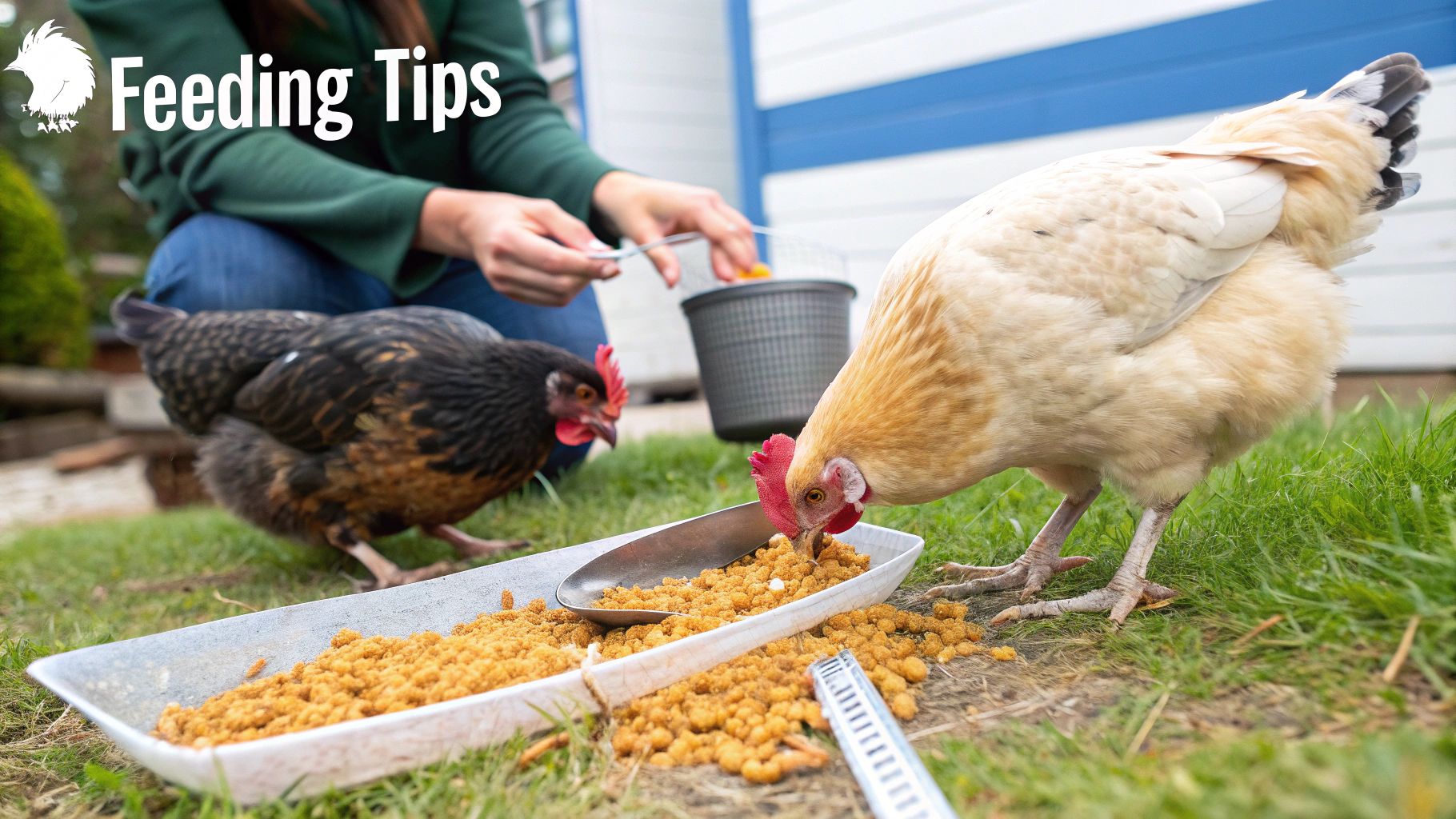
Alright, now that we've covered the impressive nutritional stats behind soldier worms, let's get to the fun part: feeding your flock! Seeing your chickens go wild for these grubs is one of the real joys of backyard chicken keeping.
It’s best to think of soldier worms as a high-octane supplement, not a full meal replacement. They’re a fantastic way to round out your flock's diet, patch up any nutritional gaps, and give your birds a fun activity that keeps them happy and stimulated.
Finding the Right Balance
When it comes to treats—even the healthy kind—moderation is everything. A good rule of thumb is to keep treats to no more than 10-20% of your flock’s total daily diet. This ensures they still have plenty of appetite for their main feed, which is formulated to cover all their basic vitamin and mineral needs.
For an average chicken, a small handful of soldier worms for chickens—about one or two tablespoons a day—is the perfect amount. That’s more than enough to deliver that fantastic calcium and protein punch without throwing their main diet out of whack.
Think of it this way: their main feed is the solid foundation of their health. Soldier worms are the high-performance booster you add on top, specifically targeting things like stronger eggshells and healthier feathers.
This approach gives you the best of both worlds. You get the complete, balanced nutrition from their feed and the powerful, targeted benefits that only premium soldier worms can offer.
Fun and Engaging Feeding Methods
Tossing grubs in a feeder is fine, but you can turn treat time into an enriching activity. Offering soldier worms in different ways mimics their natural environment, providing mental stimulation that’s crucial for a happy, healthy flock.
Here are a few methods my flock loves:
-
The Scatter Method: Simply toss a handful of dried soldier worms across their run or a patch of clean grass. This kicks their foraging instincts into high gear, keeping them busy and active as they scratch around for every last morsel.
-
The Mix-In: If you have a few picky eaters, or just want to make sure everyone gets their share, mix the soldier worms right into their daily feed. The flavor is pretty much irresistible, which helps ensure they clean up every last bit of their balanced meal.
-
The Trust-Builder: There's no better way to bond with your chickens than hand-feeding. Hold out your palm with a few grubs and let them come to you. It's an incredible way to build trust, especially with more skittish birds.
Switching things up keeps life interesting for your flock and helps prevent boredom, which is a lifesaver on days when they’re cooped up due to bad weather.
Storage and Handling Tips
To make sure your soldier worms stay fresh and nutrient-dense, you’ll want to store them properly. The good news is that high-quality dried black soldier fly larvae are incredibly easy to care for and have a long shelf life. For a deeper dive, check out our guide on how to handle and store these nutritious treats.
Just keep your grubs in a cool, dry spot away from direct sunlight. An airtight container—like the bag they came in or a separate plastic tub—is perfect for keeping moisture and pests out. Stored this way, they’ll easily last for over a year without losing any of their nutritional power.
Why Soldier Worms Are an Eco-Friendly Choice
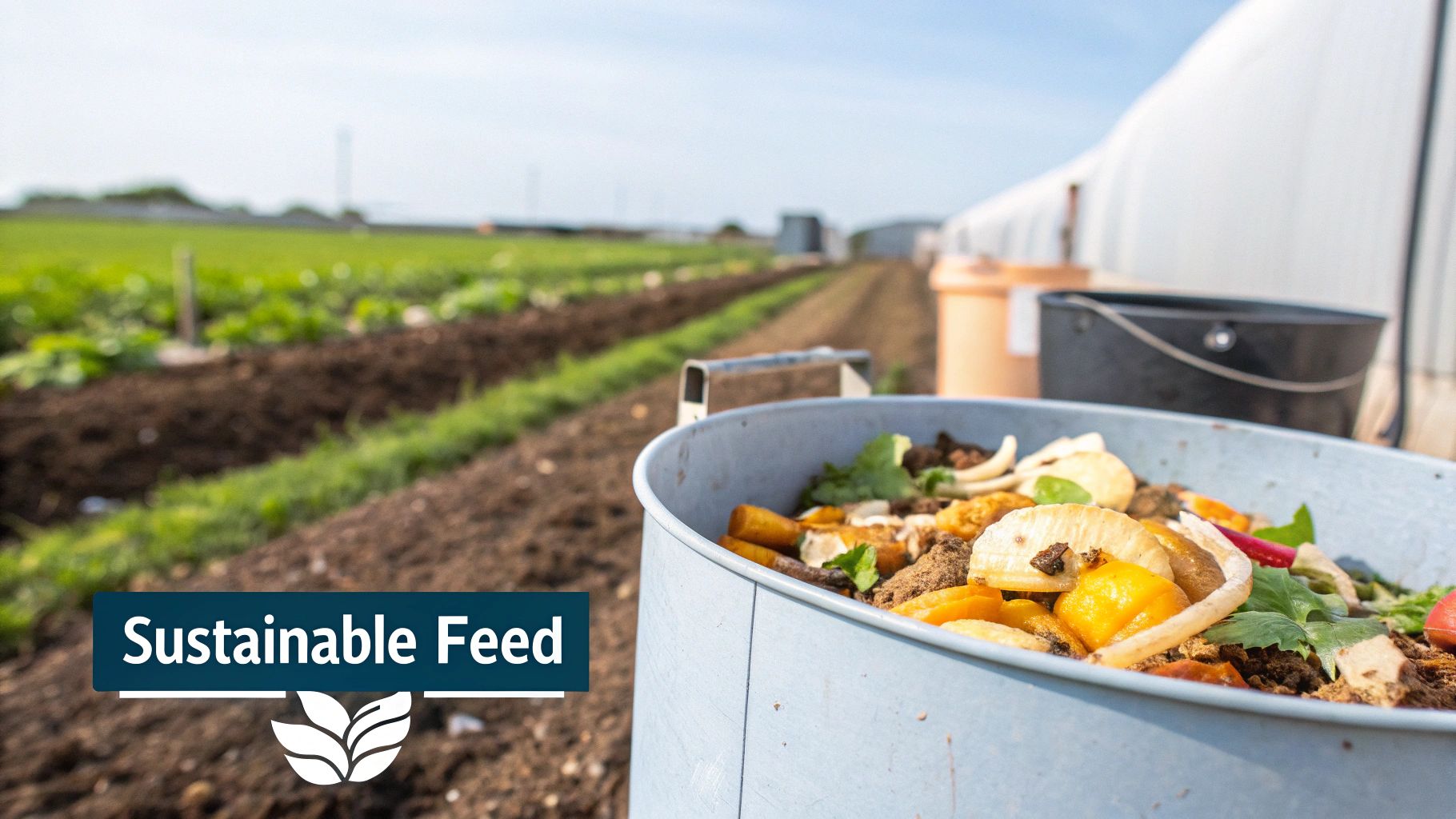
Giving your chickens soldier worms is about more than just great nutrition. It’s a powerful way to support a healthier, more sustainable food system right from your own backyard. Every handful you toss to your flock connects you to an amazing natural cycle that cuts down on waste and eases the environmental burden of producing animal feed.
Think of soldier worm farming as nature’s ultimate upcycling program. These larvae are voracious eaters, thriving on pre-consumer food waste like spent grains from breweries or leftover produce from local farms. Instead of that organic material ending up in a landfill and releasing methane, soldier worms step in and convert it into a powerhouse of protein.
The Power of Upcycling
This whole process is a fantastic, real-world example of a circular economy. Nutrients that would otherwise be completely lost are instead captured and transformed back into a valuable food source. It's a surprisingly elegant answer to the massive global problem of food waste, turning a liability into a huge asset.
By feasting on this waste, soldier worms create a clean, sustainable protein for your birds. It’s a natural cycle you become part of every time you choose soldier worms for chickens over other, less eco-friendly options.
The real magic of soldier worms is their incredible efficiency. They are nature’s perfect recyclers, taking low-value organic material and transforming it into a high-value, nutrient-rich food that directly benefits the health of our animals and the planet.
This is exactly why they've become a cornerstone of modern, eco-conscious animal nutrition and why so many chicken keepers are making the switch. You can dive deeper into how black soldier fly larvae are used in animal feed in our detailed guide.
A Smaller Environmental Footprint
The eco-friendly perks don’t just stop with waste reduction. When you stack soldier worms up against traditional feed proteins like soy or fishmeal, the difference is night and day. Farming soldier worms takes just a tiny fraction of the land and water.
Here’s a quick look at their environmental advantages:
- Minimal Land Use: Soldier worm farms are vertical, allowing them to produce a massive amount of protein in a very small physical space. This helps prevent the kind of deforestation often tied to clearing land for soy crops.
- Low Water Consumption: It takes far less water to raise soldier worms than it does to grow conventional feed crops. In a world where water is becoming more and more precious, this is a huge win.
- Reduced Greenhouse Gases: By rerouting organic waste away from landfills, soldier worm farming helps slash methane emissions—a greenhouse gas that's significantly more potent than carbon dioxide.
Choosing soldier worms is a simple but meaningful step you can take to shrink your flock’s environmental footprint. It connects your backyard coop to a much bigger story of sustainability, proving that even small, everyday choices can make a real difference.
More Than Just a Chicken Treat
While soldier worms are a game-changer for chickens, their usefulness definitely doesn't end at the coop door. If you're running a homestead with a few different kinds of critters, you'll be happy to know these little larvae are a fantastic, single-source treat for a whole range of animals.
Think of it as the universal superfood for your backyard menagerie. Instead of juggling a half-dozen different bags of specialized treats, you can rely on one high-quality source. It's a simple way to streamline your feeding routine and save a little money, making soldier worms a true homestead staple.
A Floating Feast for Ducks and Waterfowl
Ducks, geese, and other waterfowl go absolutely bonkers for soldier worms, and there’s a really fun reason why: they float! Just toss a handful into a pond or even a kiddie pool and watch the fun begin.
This little trick turns snack time into an enrichment activity. It gets your ducks paddling, dabbling, and diving, mimicking the way they'd naturally forage for insects. It's more than just a meal; it's mentally stimulating and great exercise that keeps your flock happy and healthy. And, of course, they get all the same high-protein, high-calcium goodness as the chickens.
A Calcium-Rich Choice for Wild Birds
If you're a fan of feeding your local wild birds, soldier worms are a serious upgrade from your typical seed mix or suet cake. Most birdseed is surprisingly low in calcium, a nutrient that's absolutely vital for birds, especially during nesting season.
Offering soldier worms is one of the best things you can do for your local songbirds. The high, easily absorbed calcium helps female birds lay stronger eggs and can prevent devastating calcium deficiencies that cause bone problems in their chicks.
It’s an easy swap that can make a huge difference in the health and breeding success of the birds at your feeders. You might even start attracting new, insect-loving species like bluebirds, wrens, and warblers who tend to turn their beaks up at seed-only buffets.
Supporting Reptiles and Fish
The incredible versatility of soldier worms even extends to the scaly and finned members of your family. For reptile and fish keepers, their nutritional profile makes them a top-tier treat for many cold-blooded pets.
-
For Reptiles: Insect-eating reptiles like bearded dragons and geckos really benefit from the fantastic calcium content. It's a natural way to help prevent Metabolic Bone Disease (MBD), a sadly common and serious condition often caused by an imbalanced diet.
-
For Fish: Got bigger fish like cichlids or koi? They'll go after soldier worms with gusto. The protein is fantastic for their growth, and the natural fats can even help their colors look more vibrant. It’s a great way to boost the health and beauty of your aquarium or pond.
So, when you stock up on soldier worms for chickens, you’re really getting a premium treat for just about every animal on your property. It’s a smart, multi-purpose investment in the health of all the creatures you care for.
Common Questions from Chicken Keepers
Even after seeing all the benefits, you probably have a few practical questions buzzing around your head. That's a good thing! Getting the details right means you can add soldier worms to your flock's diet with total confidence.
Let's dive into some of the most common questions I hear from other chicken keepers.
How Many Soldier Worms Should I Feed My Chickens?
Think of soldier worms as a powerhouse supplement, not their main meal. A good rule of thumb is to offer a small handful per chicken daily, which usually comes out to about 1-2 tablespoons per bird.
This gives them a fantastic protein and calcium kick without messing up the balanced nutrition they get from their regular feed. Just remember, all treats combined shouldn't make up more than 10-20% of your flock's total diet. This ensures their primary feed can still do its job.
Can Baby Chicks Eat Soldier Worms?
They sure can, but it's wise to wait a few weeks until they’ve started getting their proper feathers. For the really little ones, whole dried larvae can be a bit big and crunchy for them to handle.
Here’s an easy trick: just crush them up into smaller, chick-sized bits for their first few tastes. It makes the worms much easier for those tiny beaks to manage. Once they’re a little bigger, they'll be gobbling them down whole with no problem.
It's a bit like introducing solid foods to a human baby. You start with small, manageable pieces to let their little digestive systems get used to something new. Crushing the grubs for chicks is the same idea—a safe, gentle introduction.
Are Soldier Worms Actually Better Than Mealworms?
When it comes to your laying hens and the overall health of your flock, the answer is a definite yes. Chickens go crazy for both, but soldier worms for chickens pack a much bigger nutritional punch.
- The Calcium King: Soldier worms can have up to 50 times more calcium than mealworms. This is a game-changer for building strong eggshells and maintaining bone health.
- Perfect Mineral Balance: They boast an almost perfect calcium-to-phosphorus ratio, which is essential for the body to actually use the calcium it's getting. Mealworms have a lopsided ratio that can sometimes interfere with calcium absorption.
- An Eco-Friendly Choice: Farming soldier worms is an amazing, sustainable process. They're raised on pre-consumer food waste, turning potential garbage into high-quality protein with a tiny environmental footprint.
Mealworms are a perfectly fine protein snack every now and then, but soldier worms actively help solve common health issues in a way that mealworms just can't match.
Do I Need to Soak Dried Soldier Worms?
Soaking is completely optional, but it's a great trick to have up your sleeve, especially on a hot day. Your chickens will love the crunchy texture of dry grubs, which also encourages their natural instinct to scratch and forage.
On the other hand, rehydrating them in a little warm water for a few minutes turns them into soft, plump morsels that deliver a bit of extra hydration. This is a huge help during the summer heat. Soaked grubs can also be a little easier for very young or older chickens to eat.
Ready to give your flock the ultimate health boost? Pure Grubs offers premium, USA-grown soldier worms that are rigorously tested for safety and packed with the nutrients your chickens need for stronger eggs and healthier feathers.