

Snap and Lock Chicken Coops: A Practical Buyer's Guide
You've bought the hens, cleared a corner of the yard, and opened a box full of molded plastic panels. The listing promises a coop that snaps together without tools, but the flock-size claim leaves you wondering whether six, twelve, or fifteen chickens will live comfortably inside it. The answer matters because a snap-together shell can be easy to assemble and still fail as a complete housing system.
Snap and lock chicken coops work best as compact sleeping shelters for small backyard flocks. They're cleanable, portable, and far less intimidating than building with lumber, but they still need a secure run, deliberate ventilation, and better predator hardware than many packages include. This guide focuses on the parts that spec sheets tend to skip, especially the gap between advertised capacity and real comfort.
Why Snap and Lock Coops Appeal to New Chicken Keepers
A first-time keeper may have pullets ready to leave the brooder, a cleared patch beside the shed, and a box of plastic panels waiting on the patio. A traditional wooden walk-in coop can look sturdier, but it also suggests cutting, drilling, painting, and a full weekend of work. A snap-and-lock model promises usable shelter before dinner, which makes the choice attractive.
Tool-free assembly, flat-pack shipping, and smooth plastic surfaces remove several obstacles for beginners. Product listings place these coops in the backyard and hobby-flock market, with one regular model listed for 6 chickens and a larger model for 15 chickens. Treat those figures as capacity limits, not comfort targets. The available space for roosting, nesting, and movement may suit fewer birds than the carton suggests.
Convenience without a construction project
A new keeper usually wants a shelter that assembles quickly, a door that closes at night, and a structure that does not resemble an unfinished shed. Molded plastic meets those expectations better than rough timber. It also suits renters and families who want a manageable setup without permanent carpentry.
The tidy appearance helps in a compact yard. A molded shell has fewer exposed fasteners, painted surfaces, and untreated wood joints to maintain. That does not make it predator-proof. The supplied latch may still need an upgrade, and the coop remains only the sleeping shelter unless you add a secure run.
Independent review coverage describes a Snap Lock-style design clicking together without tools in about an hour, with one version sized for roughly four to six hens (independent review coverage). That speed is useful when birds need housing before moving outdoors, but assembly time says nothing about the quality of the finished setup.
Practical rule: Buy for the flock you want to house comfortably, not the largest number printed on the carton.
Guidance such as this overview of chicken coops for beginners helps new owners assess the wider setup. Before spending, confirm the usable interior space, plan cross-ventilation without drafts at roost level, and budget for a predator-resistant run and stronger latch. Convenience matters most when those details are handled too.
What a Snap and Lock Chicken Coop Is
A snap-and-lock chicken coop is a modular plastic shelter built from molded panels. Tabs, channels, clips, or twist-lock fasteners join the parts, so assembly relies on alignment and pressure rather than driving screws through every wall joint.
The finished unit functions like a compact outdoor storage container adapted for poultry. A floor tray forms the base, wall panels sit in its channels, and roof sections close the shell. Doors, nesting areas, ventilation openings, and removable litter trays fit into the same modular design instead of being built separately from timber.
How the assembly works
Set up the coop in this order:
- Level the site first. A flexible shell handles little unevenness at the base. If the floor twists, panels and doors can stop aligning.
- Lock the floor and wall sections together. Inspect each seam as you proceed. A panel can look engaged while one edge remains loose.
- Fit the roof and access components. Confirm that the roof opens or comes off for cleaning. Small doors may not provide enough reach for thorough maintenance.
- Test every latch before adding birds. A closed door still needs to resist a determined predator. Upgrade weak hardware before relying on it overnight.
Retail listings and reviews describe these coops as low-labor projects, with some models marketed for larger flocks. Treat those capacity figures as selling points, not welfare guidance. Advertised headroom and floor space rarely account for roosting room, nesting space, feeders, or the time hens spend inside during poor weather. Size the coop for comfortable use, then add a properly secured run. The shell is a shelter, not a complete chicken yard.
A conventional wooden coop is a framed building. You can alter its walls, add external nest boxes, reinforce doors, and create more headroom, but the work requires tools and continuing maintenance. A chicken tractor serves another purpose, using an open-bottom enclosure that moves regularly across pasture. A snap-and-lock unit is generally a stationary shelter that belongs beside a secure run.
That difference prevents a costly setup mistake. One adult may be able to move a lightweight plastic shell, but occasional repositioning does not turn it into a pasture poultry system. Plan the run, ventilation, and predator protection before the coop arrives.
Real Benefits and Honest Trade-Offs
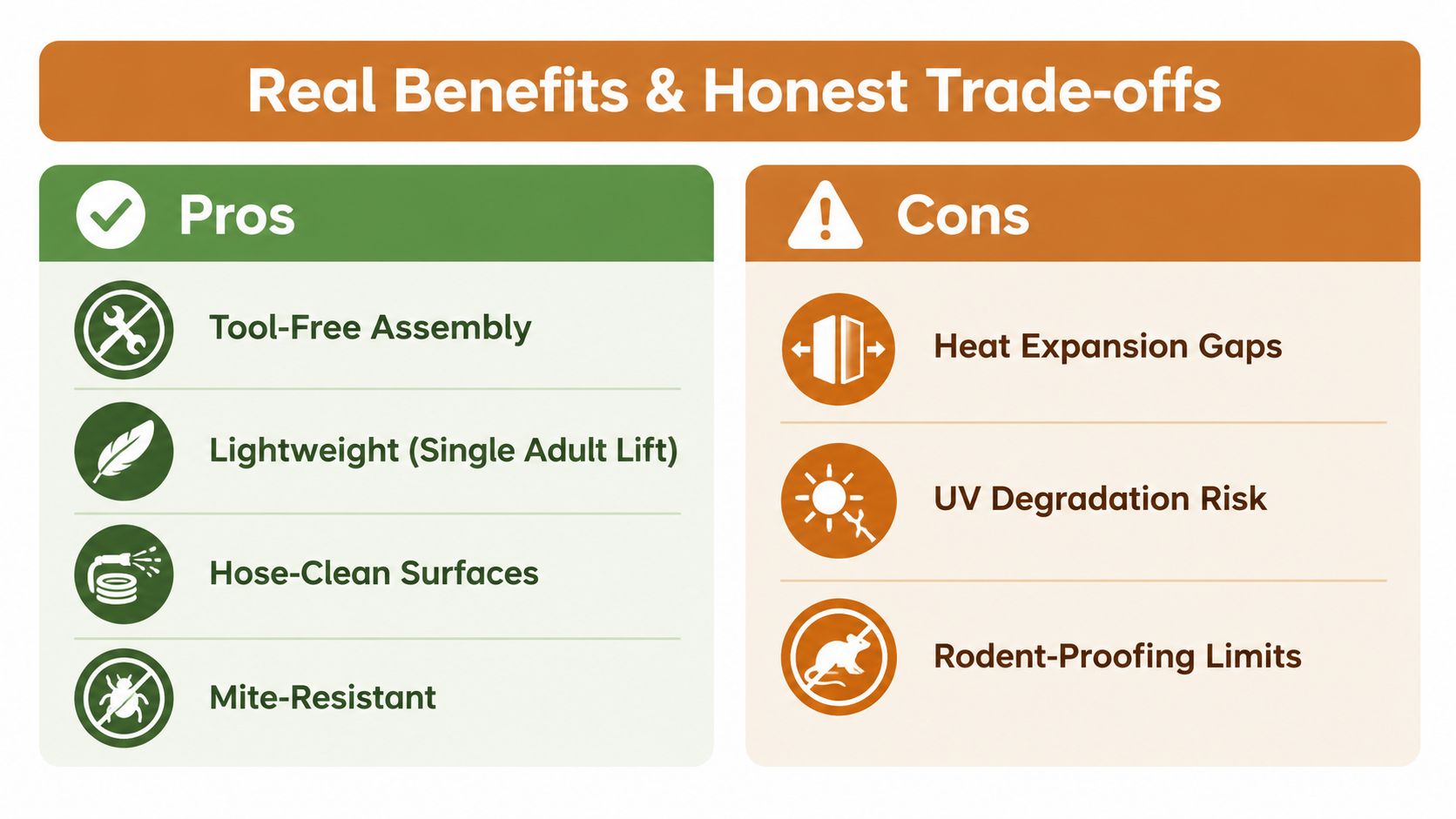
Plastic earns its place through easier maintenance. Smooth, nonporous panels do not absorb moisture like unfinished wood, and they provide fewer cracks for red mites to occupy. A removable tray and surfaces that can be hosed down make routine cleaning a short job instead of a dismantling project.
The panels are easier to handle than framed timber, too. One person can often position them without lifting a complete structure, which helps on tight urban lots or rented properties. You have fewer parts to paint, seal, or replace, although the clips and joints still need regular inspection.
Where the convenience pays off
Snap-and-lock coops suit keepers who want:
- Fast setup: Assemble the shell without a full carpentry bench.
- Simple cleaning: Smooth plastic and a removable tray make bedding maintenance easier.
- Low weight: Carry panels through a side gate more easily than a finished wooden coop.
- Mite control: Fewer porous joints create fewer obvious hiding places than rough timber.
- Compact placement: A tidy footprint fits a small yard.
Those advantages come with limits. Molded plastic offers less scope for customization than a framed coop. Thin panels can expand in heat, turn brittle in severe cold, or deteriorate under prolonged sunlight when the material or finish is poor. Ask whether the plastic is UV-treated, then examine the roof and wall joints instead of trusting the product name.
Capacity deserves the hardest scrutiny. A model advertised for 12 to 15 average-sized birds may provide comfortable room for about 6 birds in actual use. Each hen needs approximately 12 inches of roost space, along with room for nesting, movement, feeders, and water. Owner capacity and welfare feedback supports treating the printed maximum as a sales figure rather than a welfare recommendation.
Plan for the coop to function as a sleeping shelter, not the entire living area. Hens confined indoors during bad weather need more usable space than a listing usually suggests. Build or buy a secure run before the flock arrives, and budget for ventilation that prevents stale, damp air without creating direct drafts. Upgrade weak predator latches rather than assuming a clipped door is secure overnight.
Feed and enrichment remain separate from the housing choice. For example, USA GROWN BLACK SOLDIER FLY LARVAE FOR CHICKENS are listed as a dried treat with 36–42% crude protein, 30–40% healthy fats, and 75 times more calcium than mealworms in the product snapshot. Treats can support a feeding routine, but they cannot fix cramped space, damp bedding, poor ventilation, or an insecure shelter.
Features and Construction Details That Matter
A snap-and-lock chicken coop is a modular plastic shelter assembled from molded panels. Its performance depends on the seams, clips, hinges, doors, and vents, not the broad plastic walls. Ask for close views before buying, especially if the listing shows only polished product photos.
Inspect the joints before you inspect the color
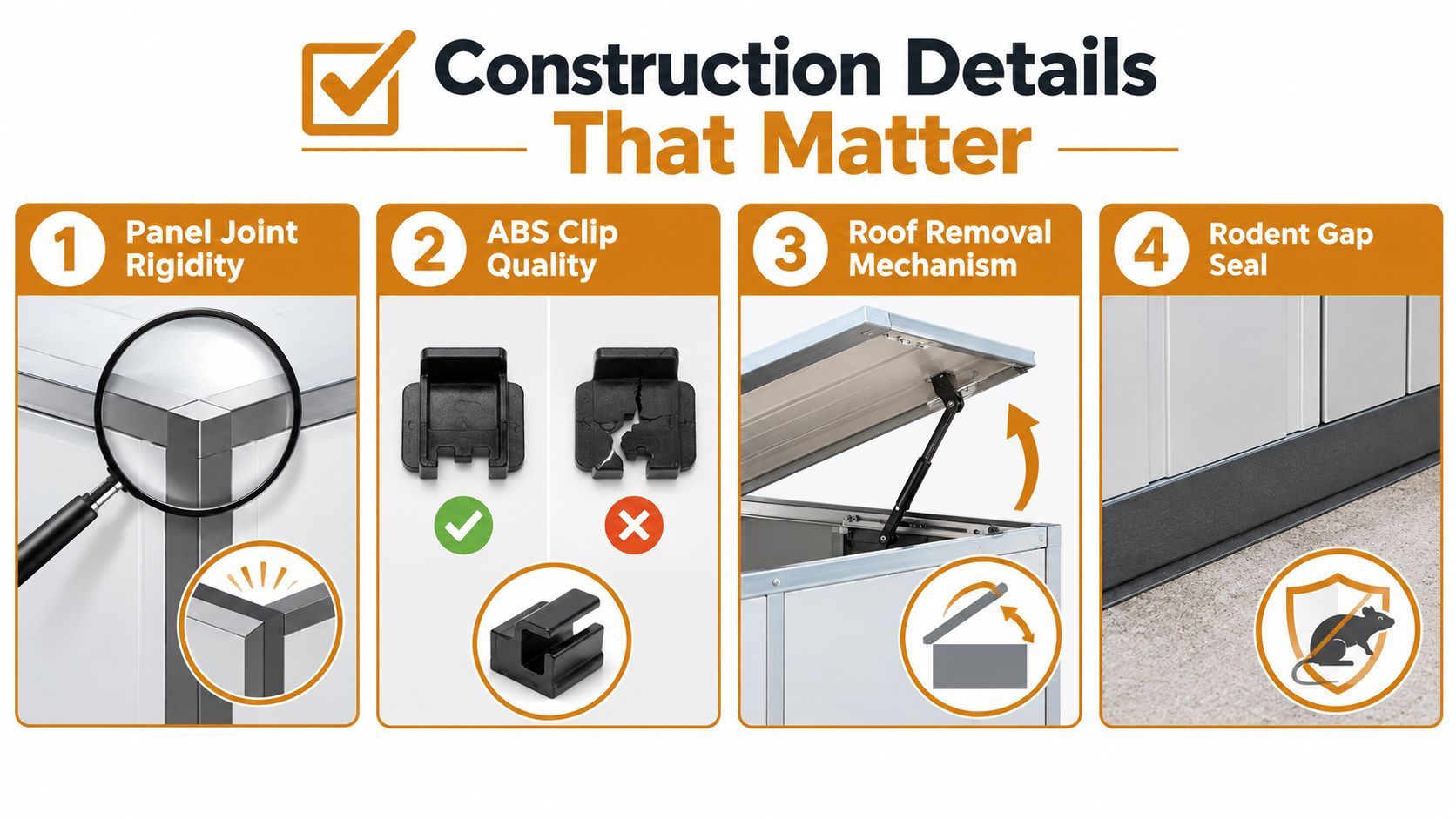
Press gently around each panel connection. The joint should feel rigid, with no opening that could widen as the shell shifts. Cheap clips may crack, loosen, or lose tension, creating gaps for rodents and drafts. Check that the floor sits level and directs water away from the shell. Moisture trapped under bedding becomes a sanitation problem.
Roof access deserves close attention. A roof that lifts or hinges fully lets you remove dirty bedding, reach corners, and collect eggs without working through a narrow door. If access is limited to a small hatch, cleaning will become frustrating once the flock is established. Removable roosts and litter trays make that job easier, so verify both before spending.
Vent openings should use 1/2-inch hardware cloth, not flimsy plastic mesh. The surrounding frame should block predators while keeping birds away from direct wind. The predator-proof latch guidance recommends securing hinges into solid framing with 2.5- to 3-inch screws where practical, since prying forces attack the door edge and hinge connection.
The security checklist
- Use two actions at every access point. Pair a sliding bolt with a secondary clip, rather than trusting one gravity latch.
- Cover the run completely. Ground fencing does not stop hawks or owls from reaching birds.
- Remove the roosts for cleaning. Fixed perches make bedding changes awkward.
- Check nest-box height. Nesting areas should discourage birds from sleeping and fouling the boxes overnight.
- Seal rodent routes. Inspect beneath the floor, around the litter tray, and along every vent edge.
A secure latch requires a sequence of motions, not merely a stronger-looking handle. Apply that standard to the pop door, egg door, nesting lid, and run gate. Treat the coop as the flock's sleeping shelter, then verify that the attached run, ventilation plan, and hardware can handle daily use.
For more layout ideas, compare these chicken coop designs before deciding whether a modular shell provides enough access and flexibility.
How Snap and Lock Coops Compare to Other Coop Styles
A snap-and-lock coop works well for a keeper assembling a first backyard setup on a weekend. It sits between a small chicken tractor and a permanent wooden building, offering quick assembly and washable surfaces in exchange for less interior space, insulation, and customization. The advertised bird capacity also needs scrutiny. A coop may hold that many birds on paper while leaving too little room for comfortable roosting, movement, and separate nesting areas.
| Feature | Snap-and-Lock Plastic | Traditional Wooden Coop | Chicken Tractor | Mobile Poultry House |
|---|---|---|---|---|
| Best fit | Small backyard flock with an attached run | Stationary flock and expandable setup | Small pasture group moved regularly | Larger rotational grazing operation |
| Portability | Light panels and occasional relocation | Heavy once assembled | Designed for frequent movement | Built for planned movement with equipment |
| Assembly | Low-tool modular assembly | Carpentry or kit construction | Frame assembly, often with added mesh | More involved build and site preparation |
| Cleaning | Smooth surfaces and removable trays | Depends on lining and access | Open design can simplify ground management | Varies by layout and scale |
| Customization | Limited by molded parts | Strong, add rooms and nest boxes | Limited interior shelter | More planning and infrastructure |
| Main weakness | Small interior and vulnerable joints | Rot, weight, and maintenance | Exposed roosting and weather | Excessive scale for a casual flock |
Choose a wooden coop if you want a fixed building that can grow with the flock. It provides space for external nest boxes, wider doors, deeper bedding, and stronger framing. You will also take on painting, sealing, repairs, and the weight of a permanent structure.
A chicken tractor earns its place when moving the flock is part of daily management. It can provide fresh ground and pasture access, yet its open, mobile design does not automatically create a warmer or more secure sleeping area. Check the roosting shelter, wire coverage, and locking points before treating it as a complete housing solution.
A mobile poultry house serves a larger rotational grazing operation and brings more infrastructure than a casual backyard flock needs. Its capacity and movement system make sense only when the land, equipment, and management plan support them.
Snap-and-lock units suit keepers who value weight and footprint over maximum capacity. Select a model for the flock size it can house comfortably, attach a covered run, plan protected ventilation, and upgrade any latch that relies on a single motion. Use the shell as a night shelter, not as the entire chicken setup. Never buy one because its largest advertised bird count suggests generous room to grow.
Ventilation, Welfare, and Flock Performance
A snap-and-lock coop can look well sealed on a rainy evening, then reveal its weakness the next cold morning: damp air, condensation, and a sharp ammonia smell inside. Plastic panels do not exchange air like rough timber, so the shell needs deliberate ventilation from the start.
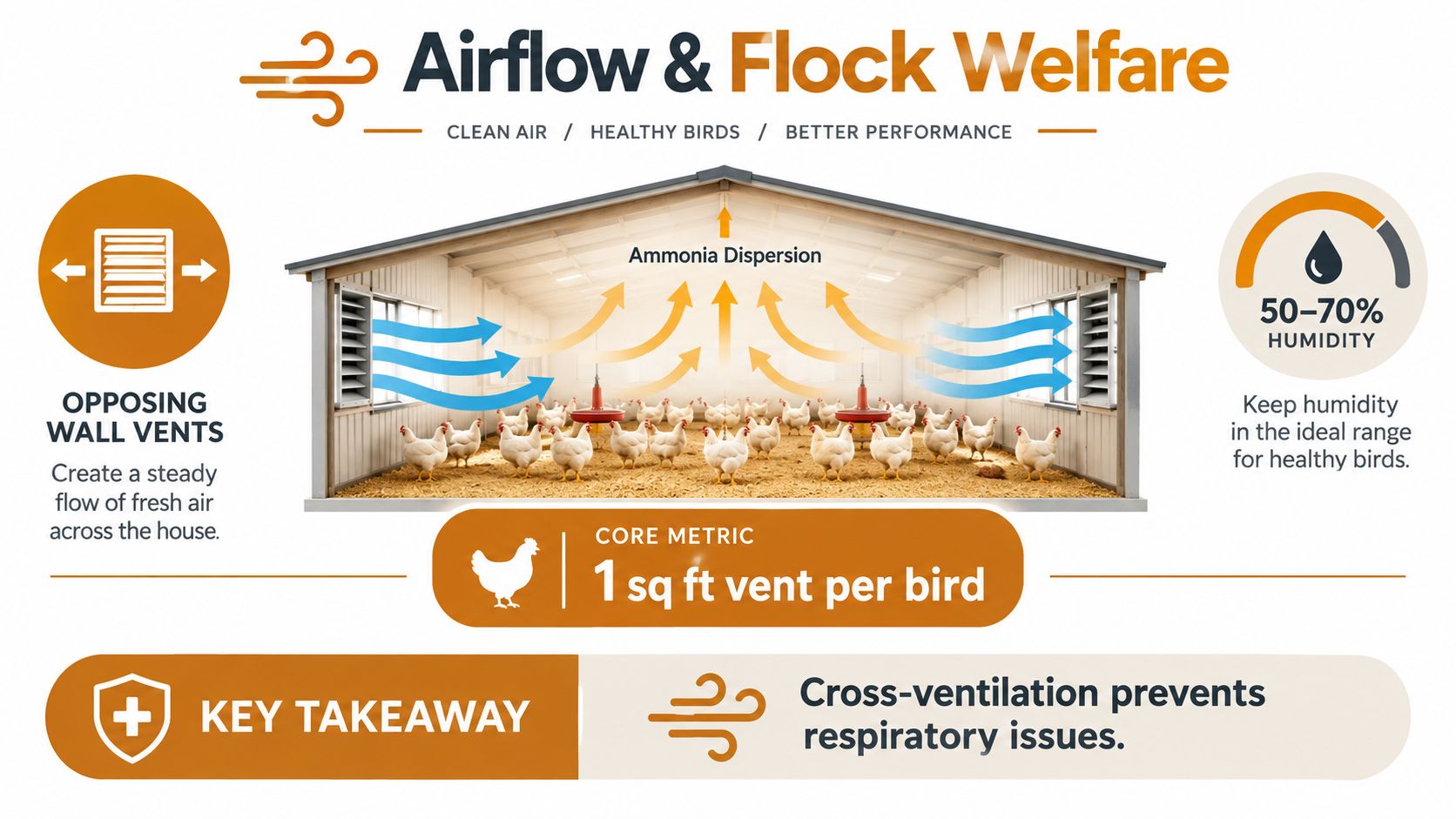
Oregon State University backyard coop guidance explains that ventilation removes ammonia, carbon dioxide, and moisture. Passive airflow works for most backyard coops when openings exchange air without exposing birds to predators. Practical guidance also uses roughly 1 square foot of upper ventilation per bird, with high openings and cross-flow between opposing walls.
Put openings above the roosts
Warm, damp air rises. Place protected vents high on opposing walls or near the roofline, allowing moisture and ammonia to escape without directing a draft across sleeping birds. Cover every opening with 1/2-inch hardware cloth. Low gaps that blow directly across the roost create a different problem, especially in cold weather.
Inspect the coop on a cold morning. Ceiling condensation, a strong ammonia smell, irritated eyes, or noisy breathing show that the airflow plan needs correction. Closing vents to hold warmth traps the moisture and waste that make an enclosed plastic shell unhealthy.
The run is part of the welfare system, not an optional accessory.
Some owner reviews describe snap-and-lock interiors as too small for walking, play, or indoor feed and water. Use the shell for shelter, then provide a covered run with wind protection and enough usable space (owner-focused capacity review). A narrow attachment at the doorway does not solve the comfort gap between advertised capacity and practical living space.
Winter laying depends on the whole setup. Damp bedding, poor airflow, crowding, and stress can weaken flock condition even when feed is appropriate. Treats add variety or help with handling, but housing design controls the baseline. Keep the shell dry, bedding clean, airflow protected, and space sufficient for normal movement and resting.
Buying Decision, Maintenance, and Year-Round Care
Choose a snap-and-lock coop when you have a small flock, limited carpentry equipment, and a plan for a properly attached run. It's especially practical in a mild or moderate climate where the shell won't face constant heat stress, severe cold, or heavy snow loads.
Skip it when you need a large indoor area, extensive customization, or maximum resistance against determined predators. A traditional wooden coop or a purpose-built mobile poultry house gives you more structural material to reinforce, more room to separate birds, and more options for insulation and access.
Check the product before you pay
Use this inspection sequence:
- Ask about the plastic. Confirm UV treatment and inspect the panel thickness, roof fit, and connector quality.
- Test the doors. Look for a two-step latch on every daily-access door, not just the main entrance.
- Review the ventilation. Make sure high openings can exchange air and that every opening accepts secure hardware cloth.
- Plan the run first. Include a roof, strong mesh, an anchored base, and protection against digging.
- Confirm cleaning access. A removable tray is useful only if you can remove it without dismantling the shell.
During weekly care, scrape droppings from the tray and replace wet bedding. Each month, wash the panels, check the snaps for hairline cracks, inspect the roof seal, and test every latch by pulling against it from different angles.
Seasonal work changes with the weather. Add wind blocks without sealing the upper ventilation, provide shade in hot conditions, and check that rainwater drains away from the floor. Before introducing new birds, deep-clean the shell, tray, roosts, and nest areas. The chicken coop maintenance guide is useful for turning those jobs into a repeatable routine.
Treat the plastic shell as the frame, not the finished coop.
That mindset leads to better decisions. You'll budget for latch upgrades, hardware cloth, a secure run, shade, drainage, and replacement clips instead of spending the entire budget on the shell. You'll also reject a model whose maximum capacity leaves no practical room for movement, food, water, or clean airflow.
Pure Grubs offers USA-grown, dried Black Soldier Fly Larvae for chickens as a high-calcium, protein-rich supplemental treat, with the product snapshot listing 36–42% crude protein and 75 times more calcium than mealworms. If your coop plan is ready but your flock's treat routine isn't, visit Pure Grubs to review the available poultry-feed options.