

Natural Feed for Chickens: A Practical Guide (natural feed for chickens)
When we talk about "natural feed" for chickens, we're really talking about getting back to basics. It’s a diet that looks a lot like what their wild ancestors would have scratched up for themselves, focusing on whole, unprocessed ingredients instead of just relying on commercial pellets packed with fillers.
The goal is simple: provide top-notch protein from sources like insects, a rich variety of nutrients from foraged greens and seeds, and skip the synthetic additives. This approach doesn't just feed your flock; it helps them thrive, promoting robust health, consistently strong egg production, and that beautiful, vibrant plumage every chicken owner loves to see.
What Natural Feed for Chickens Actually Means
Let's cut through the marketing noise. A "natural diet" for your flock isn't a specific brand you buy off a shelf. It's more of a feeding philosophy. Think of it like this: you're shifting your chickens from a diet of fast food to a wholesome, farm-to-table lifestyle.
We're trying to mimic the diet of a chicken's wild relatives, the junglefowl. These birds didn't have a pellet dispenser; they spent their days scratching and pecking for insects, seeds, and tender greens. It's a diet they are biologically wired to eat.
While commercial pellets are certainly convenient and formulated to cover the nutritional bases, a natural feeding strategy builds upon that foundation. It introduces a variety of fresh, whole foods that deliver nutrients in their most natural and easily absorbed forms. The difference in your flock's health can be night and day.
The Pillars of a Natural Diet
A solid natural feeding plan is built on a few key components that work together to give your chickens everything they need. Each one plays a unique and important role.
-
Foraging: This is chicken heaven. Letting your flock roam gives them a job to do, satisfying their instinct to scratch and explore. They'll find their own insects, worms, seeds, and fresh greens, which provides fantastic mental stimulation and a wide range of micronutrients that bagged feed often lacks.
-
Quality Grains: Whole or cracked grains are the fuel that keeps your flock going. Things like oats, wheat, and barley offer essential carbohydrates for energy, plus fiber to keep their digestive systems running smoothly.
-
High-Quality Protein: Protein is the absolute cornerstone for feather growth and laying eggs. Natural sources like insects are what chickens instinctively crave. Black Soldier Fly Larvae (BSFL), in particular, are a powerhouse of essential amino acids.
-
Safe Kitchen Scraps: Why let good food go to waste? Supplementing their diet with chicken-safe leftovers like leafy greens, berries, or leftover cooked oatmeal adds variety and excitement to their meals. Just be sure you know which human foods are safe and which are toxic to chickens.
By bringing these elements into your flock's routine, you're doing more than just filling their bellies. You're nurturing their natural behaviors and building their health from the ground up. A natural diet is about proactive wellness—creating strong immune systems, brilliant feathers, and tough eggshells from the inside out.
So, when it comes down to it, choosing a natural feed approach means you're making deliberate choices about where your flock's food comes from. It puts you in the driver's seat, allowing you to provide a diet that’s as close as possible to what nature intended. This creates the foundation for a healthier, happier, and more productive flock.
The Best Natural Protein Sources for Your Flock
If you want to understand your flock’s diet, you have to start with protein. It’s the single most important building block they have. Think of it as the raw material for everything—from growing strong feathers and muscle to the daily miracle of laying an egg.
While a quality commercial feed is a great foundation, adding a natural feed for chickens is like giving a star athlete the specialized nutrition they need to truly perform.
Chickens are omnivores at heart, hardwired to scratch and peck for insects. This isn't just a quirky habit; it's a deep-seated instinct to find the essential amino acids that only creepy crawlies can provide. When you offer them natural protein, you’re not just tossing out a treat. You're fulfilling a fundamental dietary need that fuels their overall vitality.
This infographic really drives home the difference between a natural and a conventional feeding strategy.
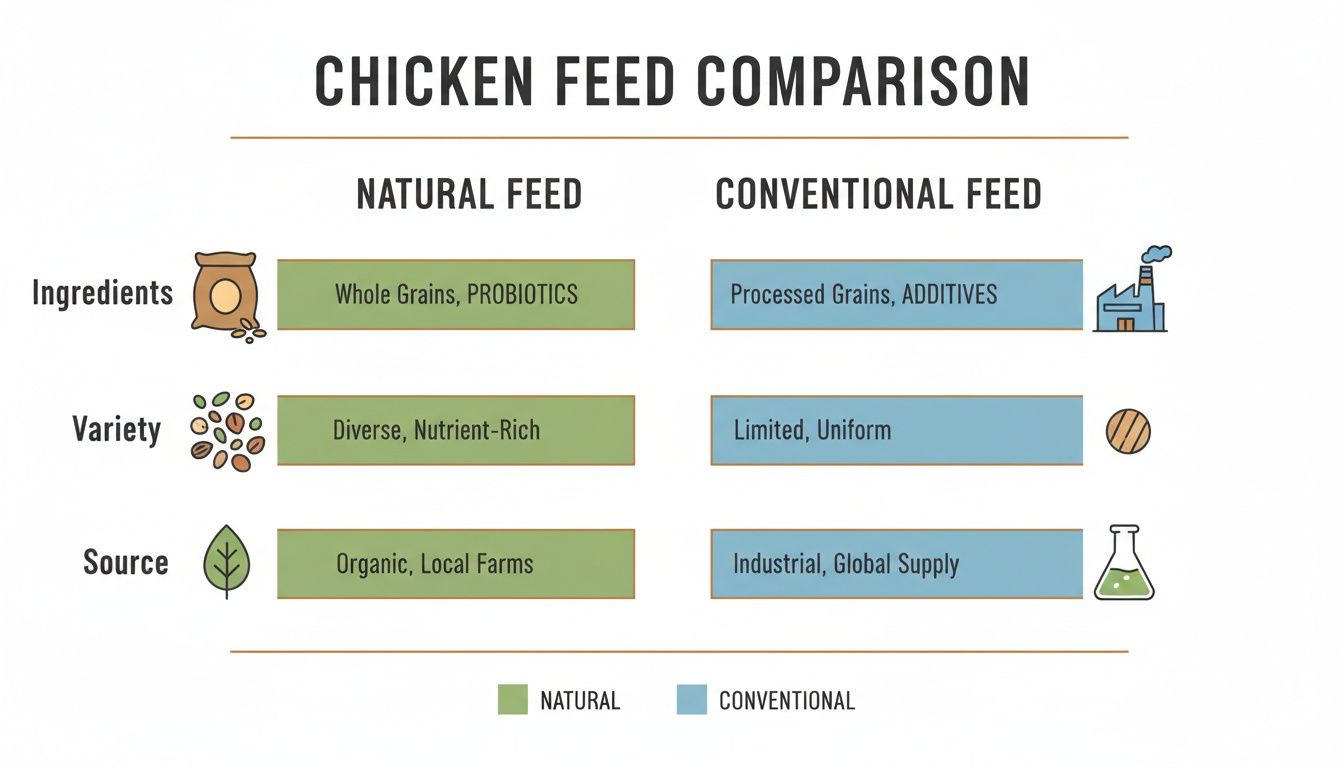
As you can see, a natural approach is all about whole ingredients and variety, a world away from the standardized, factory-sourced model of most conventional feeds.
The Nutritional Toolkit of Insect Proteins
Let's imagine you have a nutritional toolkit for your flock. Inside, you've got different tools for different jobs.
Mealworms are one of those tools. They're popular, easy to find, and your chickens will go absolutely wild for them. They offer a nice protein boost, making them a perfectly fine choice for a simple snack.
But then there's another tool in that kit: Black Soldier Fly Larvae (BSFL). These guys are less like a simple screwdriver and more like a Swiss Army knife.
BSFL don't just bring protein to the table. They’re packed with healthy fats and a complete profile of essential amino acids that fuel everything from a tough molt to daily energy. But what truly sets them apart, especially for laying hens, is their incredible calcium content.
Black Soldier Fly Larvae contain up to 85% more calcium than mealworms. This isn't a small detail—it's a game-changing nutritional advantage that directly strengthens eggshells and supports your hens' long-term skeletal health.
A hen’s body is a calcium-demanding machine. To form a single eggshell, it pulls massive amounts of calcium from her diet. If she can't find enough, her body will start robbing it from her own bones, which can lead to serious health issues down the line. BSFL provides that calcium naturally, perfectly balanced with phosphorus for maximum absorption. That makes it, without a doubt, the superior choice for supporting your layers.
BSFL vs. Mealworms: A Head-to-Head Comparison
So, let's put these two popular insect treats side-by-side. While both are great natural protein sources, a quick look at the numbers tells a very clear story about which one is a better investment for your flock’s health.
Nutritional Showdown: BSFL vs. Mealworms
| Nutrient | Black Soldier Fly Larvae (BSFL) | Mealworms |
|---|---|---|
| Protein | High (~40%) | Very High (~50%) |
| Calcium | Extremely High (~2.5-3%) | Very Low (~0.1%) |
| Fat | High (~30%) | High (~25%) |
| Calcium-Phosphorus Ratio | Ideal (~2:1) | Poor (~1:10) |
While mealworms have a slight edge in pure protein percentage, the rest of the story is all about the calcium. For poultry to properly absorb calcium, they need it in roughly a 2:1 ratio with phosphorus. BSFL nail this ideal ratio perfectly. Mealworms, on the other hand, are so imbalanced that they can actually make it harder for a chicken to absorb the calcium she needs.
If you want to dig deeper, our guide on the benefits of dried Black Soldier Fly Larvae has all the details.
Investing in Quality for Your Flock's Health
This push for better, more natural nutrition isn't just a backyard trend. It's happening across the entire poultry industry. Innovations in feed are driving major market growth, with a focus on natural additives that boost bird health.
In fact, some analyses have shown that advanced feed formulations can improve the feed conversion ratio on broiler farms by around 4%. That’s a huge deal in terms of efficiency and welfare.
It all comes down to a simple point: the quality of your flock’s food matters. A lot. When you're choosing a protein supplement, opting for a premium, USA-grown option like Pure Grubs is a smart move. Unregulated, imported insect feeds can be a gamble, with risks of inconsistent nutrition or even contamination with heavy metals.
Choosing a trusted source gives you peace of mind, ensuring your flock gets the clean, safe, and powerful nutrition they need to truly thrive.
Unlocking the Benefits of Foraging for Chickens
If you really want to see a happy chicken, just watch them forage. It’s about so much more than just cutting down your feed bill—it’s like giving them a combination gym, grocery store, and playground all rolled into one. Foraging connects chickens to their deepest instincts, letting them scratch, peck, and explore the way their wild ancestors have for centuries. This isn't just a fun activity; it's absolutely fundamental to their well-being.
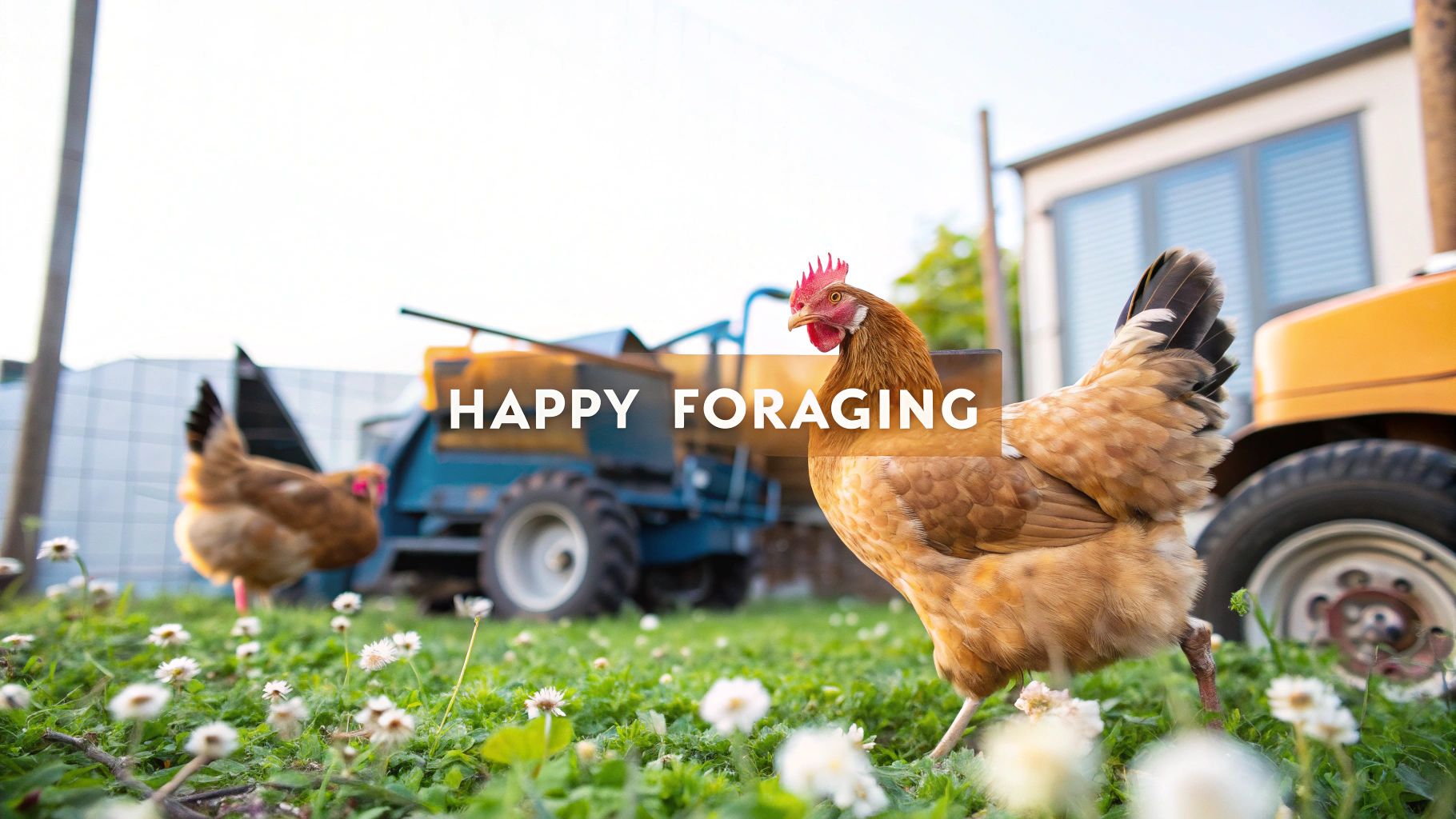
As your chickens roam, they're getting crucial exercise that builds strong bones and muscles. The constant hunt for a juicy beetle or a tender shoot of clover keeps their minds sharp, heading off the boredom that can lead to feather-picking and other bad habits.
Most importantly, they're diversifying their diet in a way that no single bag of feed can. They’re finding a true natural feed for chickens—a smorgasbord of insects, worms, fresh greens, and tiny seeds, each offering a unique nutritional boost.
Creating a Safe and Productive Foraging Space
You don’t need a huge pasture to give your flock the benefits of foraging. With a little planning, even a small backyard can become a chicken paradise. The key is to manage the space so it provides a steady source of food without getting stripped bare.
A fantastic tool for this is a chicken tractor. It’s basically a mobile, floorless coop that lets you decide exactly where your flock grazes. By moving the tractor every day or two, you give your birds fresh ground to explore while giving the old patch time to recover. Think of it as rotational grazing, scaled down for your backyard.
If you have a more permanent coop, you can get the same effect by fencing off different sections of your yard and rotating the flock through them. The goal is always the same: prevent over-foraging. It keeps your lawn from turning into a dust bowl and ensures your chickens always have something healthy to munch on.
What Your Chickens Are Looking For
A foraging chicken is a busy chicken, and they’re on a mission for specific nutritional rewards. Understanding their shopping list helps you see just how valuable their environment is.
- Protein-Packed Insects and Worms: These are the jackpot. Things like grasshoppers and earthworms are loaded with the essential amino acids they need for healthy feather growth and consistent egg production.
- Nutrient-Dense Greens: Chickens have a knack for knowing which plants are good for them. They'll seek out tender greens like clover, dandelions, and chickweed, which are packed with vitamins and minerals.
- Natural Grit: While scratching around, chickens swallow tiny stones and sand. This grit goes to their gizzard, where it acts like teeth to grind up their food so they can digest it properly.
Foraging isn't just a behavior; it's a complete nutritional system. By letting your chickens forage, you’re empowering them to pick and choose the nutrients their bodies are craving at that very moment. It creates a truly balanced and natural diet that commercial feed alone can't match.
Foraging Safely and Identifying Plants
Chickens are pretty smart about what they eat, but it’s still on us to make sure their environment is safe. You’ll want to make sure they can’t get to any plants known to be toxic to poultry. Common culprits include azaleas, nightshades (like potato or tomato leaves), and rhubarb leaves.
At the same time, you can encourage the good stuff to grow! Seeding your foraging area with a mix of clover and hardy grasses creates a resilient, chicken-friendly buffet. And those dandelions you might see as weeds? They’re actually a vitamin-rich superfood for your flock.
For a deeper dive into what a wild chicken diet looks like, check out our guide on what chickens eat naturally. Ultimately, a well-managed foraging space helps your flock live out their natural instincts, leading to happier, healthier birds and a thriving backyard ecosystem.
How to Safely Share Kitchen Scraps with Your Flock
One of the great joys of keeping chickens is turning your kitchen scraps into a treat for the flock. It’s a win-win: you cut down on food waste, save a bit on feed costs, and give your birds some exciting variety. But before you start scraping dinner plates into the coop, there’s one golden rule you need to know: scraps are treats, not a complete meal.
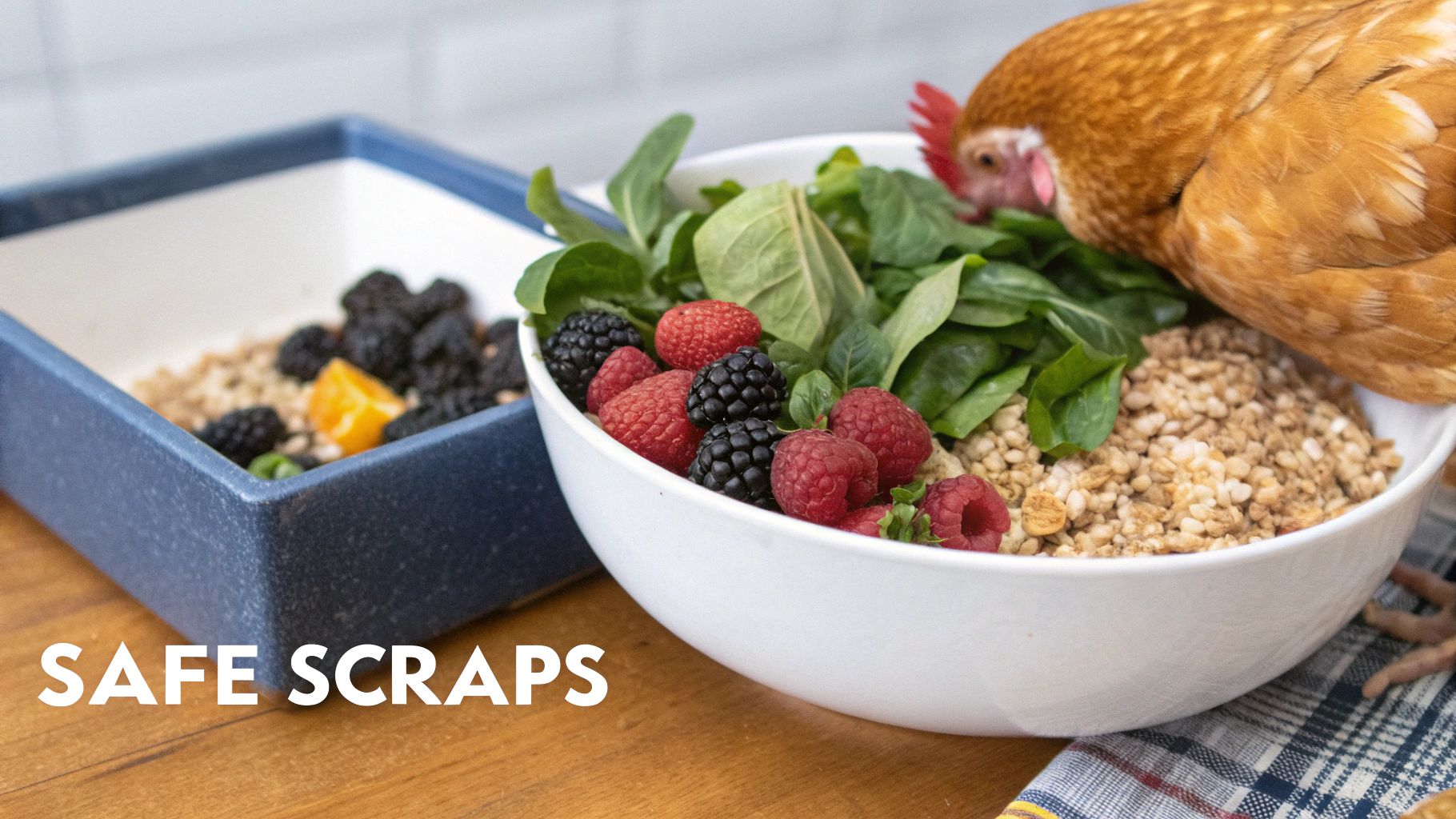
Your flock's main diet should always be a high-quality commercial feed, making up about 90% of what they eat. Kitchen scraps and other goodies should only fill out the remaining 10%. Think of it this way: you wouldn't want to live on dessert alone, and your chickens can't thrive on just leftovers. Following this ratio is key to making sure they get the balanced protein, vitamins, and minerals they need for strong eggshells and overall health.
Healthy Scraps Your Chickens Will Love
When you choose the right scraps, you’re giving your flock a fantastic nutritional boost. These aren't just empty calories; they're packed with good stuff that complements their regular feed.
Here are some flock favorites:
- Leafy Greens: Got some leftover kale, spinach, or lettuce? Your chickens will go wild for it. Just give it a rough chop first to make it easier for them to eat and avoid any crop issues.
- Berries: Blueberries, strawberries, and raspberries are like candy to a chicken. They’re also loaded with antioxidants.
- Cooked Grains: Plain, leftover oatmeal or cooked rice is a wonderful source of energy, especially on a chilly morning.
- Melons: Don't toss those watermelon or cantaloupe rinds! The flesh and rind are super hydrating and give your birds something fun to peck at for a while.
- Herbs: Leftover fresh parsley, oregano, or mint can offer some great natural health benefits. Oregano, for example, is widely thought to have natural antibiotic properties.
By focusing on these whole-food options, you are enriching your flock’s diet with a natural feed for chickens that stimulates their foraging instincts and provides a welcome change from their daily pellets or crumbles.
Dangerous Foods You Must Avoid
Knowing what not to feed your chickens is just as critical as knowing what's safe. Many common foods we eat are toxic to poultry and can lead to serious illness or worse. Keep this list handy.
- Avocado: The skin and pit are the main culprits here, containing a toxin called persin that is very poisonous to birds.
- Onions and Garlic: In large amounts, these can wreck a chicken's red blood cells and cause anemia. A tiny bit of garlic powder in a feed mix is one thing, but whole cloves or big pieces are a no-go.
- Raw or Green Potatoes: These contain solanine, a toxin that can be fatal. Cooked potatoes, on the other hand, are perfectly fine in moderation.
- Dried or Uncooked Beans: This is a big one. Raw beans have a compound called phytohaemagglutinin, which is extremely toxic and can be deadly even in tiny amounts.
- Chocolate and Caffeine: Both contain theobromine, which is toxic to most animals, including your feathered friends.
- Moldy or Spoiled Food: The simplest rule of thumb is: if you wouldn't eat it, don't feed it to your chickens. Mold can produce harmful mycotoxins.
For a more comprehensive breakdown and extra tips, check out this detailed guide on safe chicken food scraps. By keeping these simple dos and don'ts in mind, you can turn your kitchen waste into a healthy, exciting part of your flock’s natural diet.
Why Feed Sourcing and Safety Is So Important
Figuring out what to feed your flock is a great start, but it's only half the battle. You also need to know where that feed is coming from. The source of your chickens' diet has a direct line to their health, the quality of their eggs, and frankly, the safety of your own family.
When you reach for a natural feed for chickens, you're looking for purity and quality. The problem is, not all products are created equal. The global feed market is absolutely massive, and with that scale comes a huge range in quality control—from hyper-vigilant to completely absent.
The Hidden Risks in Unregulated Feeds
You'll see a lot of cheap, imported insect feeds on the market, but that low price tag often hides some serious baggage. These products can come from facilities with lax safety standards, which can spell trouble for your flock down the road.
Some of the biggest risks include:
- Heavy Metal Contamination: When insects are raised on unregulated waste, they can absorb nasty heavy metals like lead, arsenic, and cadmium. Those toxins don't just disappear; they can build up in your chickens and get passed right into their eggs.
- Inconsistent Nutrition: If there's no quality control over what the insects are eating, the nutritional profile of the final product can be all over the map. You might be paying for a high-protein treat that's anything but.
- Pathogen Exposure: Careless drying and handling can contaminate feed with harmful bacteria. It only takes one bad batch to put your entire flock's health in jeopardy.
Choosing a feed is an act of trust. You trust that the product is clean, safe, and nutritionally sound. With unregulated feeds, that trust is a blind gamble.
Why USA Sourcing and Testing Matter
This is precisely why transparent, domestic sourcing is such a big deal. When you choose a product like Pure Grubs, which are proudly USA-grown, you're choosing a system with real accountability.
Companies that operate in the United States have to play by the rules. We're talking strict guidelines from agencies like the FDA and the Association of American Feed Control Officials (AAFCO). These aren't just polite suggestions; they are robust safety nets designed to protect the animals and the people who care for them.
This commitment to safety really means something:
- Traceability: The whole process is on the record, from what the insects are fed to how they're packaged.
- Regular Testing: Every single batch is tested for contaminants, giving you confidence that it’s free from heavy metals and other toxins.
- Nutritional Consistency: The insects are raised on a controlled, plant-based diet, which guarantees you get the same high-quality nutrition in every single bag.
The demand for better poultry feed is exploding. Projections show the market could reach as high as $428.9 billion by 2035, a clear sign that people everywhere are demanding safer, more sustainable options. You can read more about the global poultry feed market's impressive growth and see for yourself.
At the end of the day, picking a feed that's transparently sourced and safety-tested is an investment in your own peace of mind. It ensures the natural food you're giving your flock isn't just nutritious, but completely safe for them and for your family's breakfast table.
Putting It All Together: A Simple, Balanced Diet for Your Flock
Alright, we’ve covered all the great natural foods you can give your chickens. Now, how do we combine them into a feeding plan that actually works? It’s not about complex math or spreadsheets. It really comes down to one simple, time-tested rule that ensures your birds get everything they need to truly thrive.
The cornerstone of any good chicken diet is the 90/10 rule. Think of it as the bedrock of their health. A full 90% of what your chickens eat every day should be a high-quality, complete commercial feed. This is non-negotiable. It’s their primary source of carefully balanced proteins, vitamins, and minerals that keep them healthy and laying consistently.
The other 10%—that’s where the fun begins. This is your "flex space" for all the good stuff we've been talking about: protein-packed grubs, fresh greens from the yard, and healthy kitchen scraps. These aren’t just treats; they’re targeted supplements that round out their diet, keep them busy and engaged, and give them a boost when they need it most.
A Practical Weekly Feeding Schedule
So, how does the 90/10 rule look on a day-to-day basis? It's all about timing. You want them to fill up on the important stuff first.
Here’s a sample weekly plan that I’ve seen work for countless backyard flocks:
- Daily Morning: First thing in the morning, make sure they have unlimited access to their main layer feed and plenty of fresh, clean water. This is their most important meal of the day.
- Daily Afternoon: Mid-to-late afternoon is the perfect time for "treats." A handful of leafy greens, some leftover melon, or other safe kitchen scraps will get them scratching and foraging.
- Three Times a Week: Toss out a serving of Pure Grubs BSFL. This gives them a fantastic, consistent boost of calcium for strong eggshells and high-quality protein for beautiful, healthy feathers.
- As Available: Let them out to forage in a safe, supervised area whenever you can. Even just 30 minutes of pecking at grass and hunting for bugs makes a world of difference for their mental and physical health.
This approach ensures they get their core nutrition from the balanced feed before they even think about the extras.
Think of a well-planned feeding schedule as your flock's health insurance. By giving them the right nutrition at the right times, you can head off common problems before they even start, building a stronger, more resilient flock.
Adjusting for the Seasons
A chicken's needs aren't the same year-round, so their diet shouldn't be either. The real art of feeding a flock is learning to tweak that 10% to help them handle what the seasons throw at them.
- Winter: The cold burns a lot of calories, and fresh greens are long gone. This is the time to up the high-protein and high-energy snacks. Offer BSFL daily to provide that protein punch and add a little cracked corn in the late afternoon for some extra heat-generating energy.
- Molting Season: This is probably the most stressful time of year for a chicken. Losing and regrowing an entire set of feathers is a massive protein drain. A daily serving of BSFL during the molt is essential to help them get through it quickly and grow back a healthy, glossy coat of new feathers.
The push for better nutrition isn't just happening in backyards; it's a global trend. The poultry feed market is expected to grow from USD 260 billion to USD 309 billion between 2025 and 2030. This huge investment reflects a worldwide demand for higher-quality feed. You can read more about these poultry feed market dynamics to understand the bigger picture.
By following this simple, actionable plan, you’re doing more than just feeding your chickens—you’re making a direct investment in their long-term health and happiness.
Your Questions About Natural Chicken Feed, Answered
Switching to a more natural diet for your flock is a great move, but it's bound to bring up a few questions. Let's walk through some of the most common ones so you can feel confident you're doing the best for your chickens.
Can Chickens Really Thrive on Just Forage and Kitchen Scraps?
Not entirely, no. While foraging and table scraps are fantastic additions, they can't be the whole meal. Think of a high-quality commercial feed as the foundation of their diet—it’s like their daily multivitamin that ensures they get all the core nutrients they need for consistent egg-laying. This should make up about 90% of their daily intake.
The other 10% is where the magic happens. This is where you bring in the natural treats, the foraged goodies, and the healthy scraps. This variety keeps them entertained, happy, and tops them off with a wider range of nutrients for peak health and strong eggs.
What's the Best Way to Introduce New Natural Foods?
Slow and steady wins the race here. You don’t want to upset their digestive systems. If you're introducing something new and exciting like Black Soldier Fly Larvae, just start by scattering a small handful on the ground. Chickens are naturally inquisitive and will have it figured out in no time.
I always recommend offering new treats in the afternoon. It’s a simple but effective trick to make sure they’ve already eaten their fill of their main balanced feed. Plus, high-value treats like BSFL are perfect for training or gently coaxing your flock back into the coop at night.
Expert Tip: Try to introduce just one new food every few days. This gives you time to see how they react and makes it easy to pinpoint any food that might not agree with a particular hen. It’s a much smoother transition for everyone.
Are Dried Insects a Better Choice Than Live Ones?
While both have nutritional benefits, dried insects pull ahead when it comes to convenience, safety, and a long shelf life. Dried BSFL are incredibly easy to store—no mess, no smell—and you can offer them all year long, even when the ground is frozen solid.
What's more important, though, is the safety aspect. Reputable producers put their dried grubs through rigorous safety protocols, including testing for heavy metals and getting rid of harmful pathogens. That’s a level of quality control you just can’t get with live or wild-foraged bugs. It’s about peace of mind.
Is It More Expensive to Feed Chickens Naturally?
It really doesn’t have to be. Sure, some pre-packaged organic feeds can come with a premium price tag, but if you're smart about it, you can actually lower your feed costs by using safe kitchen scraps and letting your flock forage.
I like to think of a high-quality supplement like BSFL as an investment in your flock’s health. The exceptional calcium content leads to stronger eggshells and healthier birds, which can save you a lot of money on other calcium supplements or even vet bills down the road. You're building a more resilient flock from the inside out.
Ready to give your flock the ultimate natural, high-calcium treat? Pure Grubs offers USA-grown, safety-tested Black Soldier Fly Larvae that your chickens will go crazy for. Shop now at PureGrubs.com and see the difference quality makes.