

Discover live black soldier fly larvae: A Beginner's Guide
Picture a tiny, self-contained superfood factory that turns your kitchen scraps into pure, wriggling protein. That's pretty much what live black soldier fly larvae are—a powerhouse of nutrition that offers a dynamic and engaging treat for your animals. They are, quite literally, a living, breathing supplement packed with benefits.
The Ultimate Guide to Live Black Soldier Fly Larvae
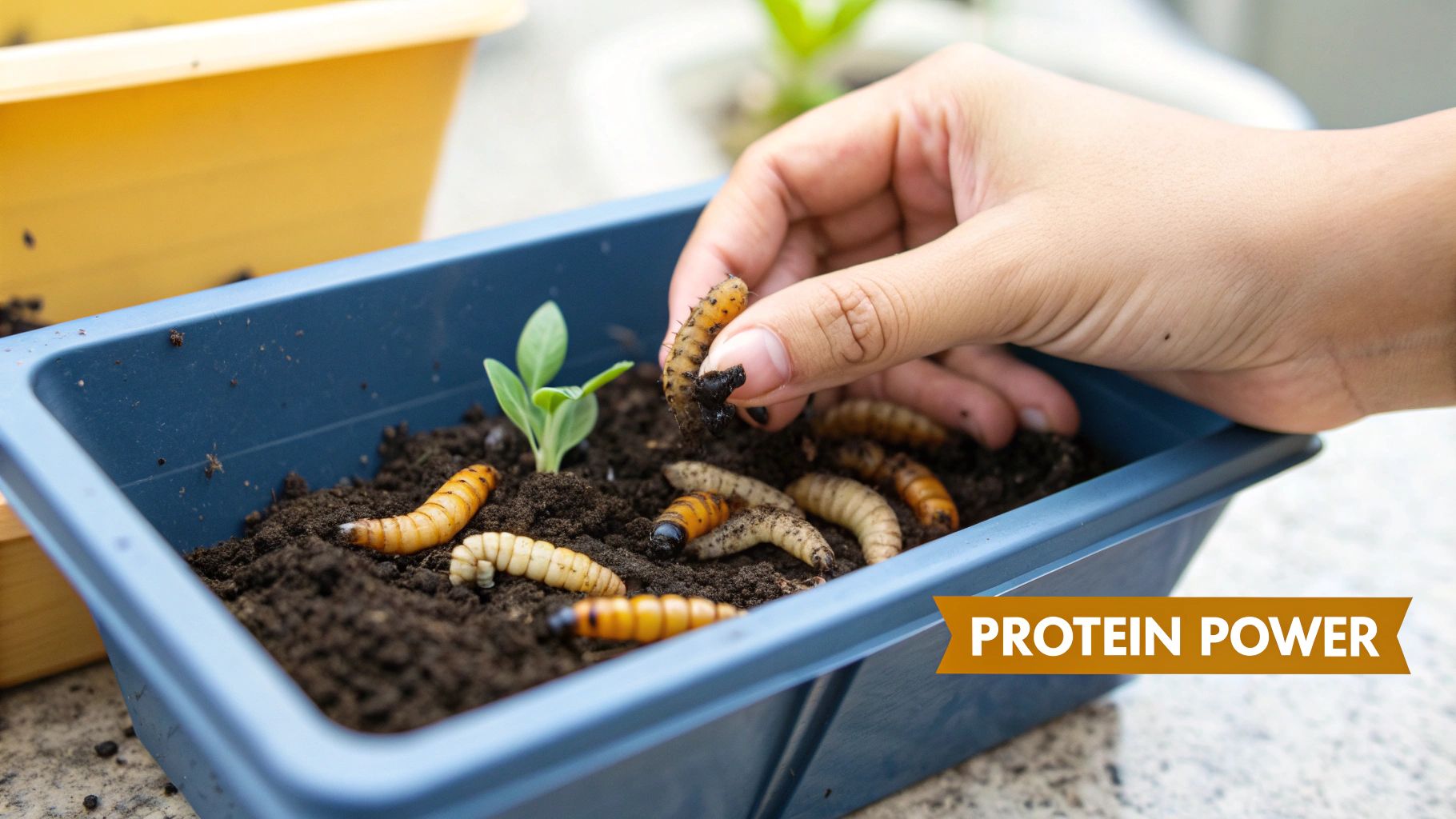
If you keep chickens, reptiles, or run a small homestead, you've probably heard the buzz around black soldier fly larvae (BSFL). These remarkable little grubs aren't just another insect treat; they're a nutritional game-changer. Unlike their dried counterparts, live larvae provide an incredible source of enrichment that triggers the natural foraging instincts in your flock or pets.
Just watch a flock of chickens go wild scratching and pecking for these wriggling morsels—it’s pure instinct. This activity keeps them mentally stimulated and physically active, turning a simple snack into a healthy, engaging part of their day.
Why Are They So Popular?
The growing interest in BSFL isn't just a backyard trend; it’s part of a much bigger shift toward sustainable animal feed. The global black soldier fly market rocketed from $330.19 million in 2023 and is projected to hit $4.12 billion by 2032, climbing at an astonishing annual rate of 32.40%. This boom is being fueled by savvy animal owners who see the clear quality and environmental upsides. You can read more about this market growth and what it means for the future of sustainable farming.
So, what makes live black soldier fly larvae the go-to choice for so many? It really comes down to a few standout advantages:
- Exceptional Calcium Levels: They naturally boast an almost perfect calcium-to-phosphorus ratio. This is critical for laying hens to produce strong eggshells and helps prevent metabolic bone disease in reptiles.
- High-Quality Protein: Packed with essential amino acids, their protein supports healthy feather growth, strong muscle development, and helps animals bounce back quickly after a molt.
- Natural Hydration: Live larvae have a high moisture content, giving your animals an extra source of hydration. This is especially helpful during hot summer months.
- Sustainable and Eco-Friendly: These guys are incredible bioconverters. They can efficiently turn organic waste (like your fruit and veggie peels) into valuable protein, which means less waste heading to the landfill.
Think of live BSFL as a multi-vitamin that moves. They deliver vital nutrients while simultaneously fulfilling an animal's innate desire to hunt and forage, creating a healthier and happier pet.
This unique combination of nutrition and enrichment is what truly sets them apart from static, processed treats. Take mealworms, for example. While they’re a popular snack, they are nutritionally inferior and lack the critical calcium that BSFL provide naturally.
In the sections ahead, we’ll dive into the fascinating lifecycle that makes these larvae such a nutritional goldmine and show you exactly how you can start using them in your own animal care routine.
Live BSFL Quick Facts for Pet Owners
To give you a snapshot of what makes these larvae so special, here’s a quick summary of their key features and benefits.
| Benefit | Why It Matters for Your Animals | Compared to Mealworms |
|---|---|---|
| Perfect Calcium Ratio | Supports strong eggshells for poultry and prevents metabolic bone disease in reptiles. No extra dusting needed! | Mealworms have a poor calcium-to-phosphorus ratio and often require calcium dusting for reptiles. |
| High in Protein | Promotes healthy growth, feather production, and muscle development. Great for recovering from molting. | Protein content is comparable, but BSFL offer a more complete amino acid profile. |
| Natural Enrichment | Their movement triggers hunting and foraging instincts, reducing boredom and stress in captive animals. | Mealworms are less active, offering limited mental stimulation for foraging animals. |
| High Moisture Content | Provides a supplemental source of hydration, which is especially useful for animals in warmer climates. | Mealworms are drier and provide significantly less hydration. |
This table highlights why so many people are making the switch. The nutritional and behavioral benefits of live BSFL are hard to beat, making them a superior choice for a wide range of animals.
The Incredible Life Cycle of a Black Soldier Fly
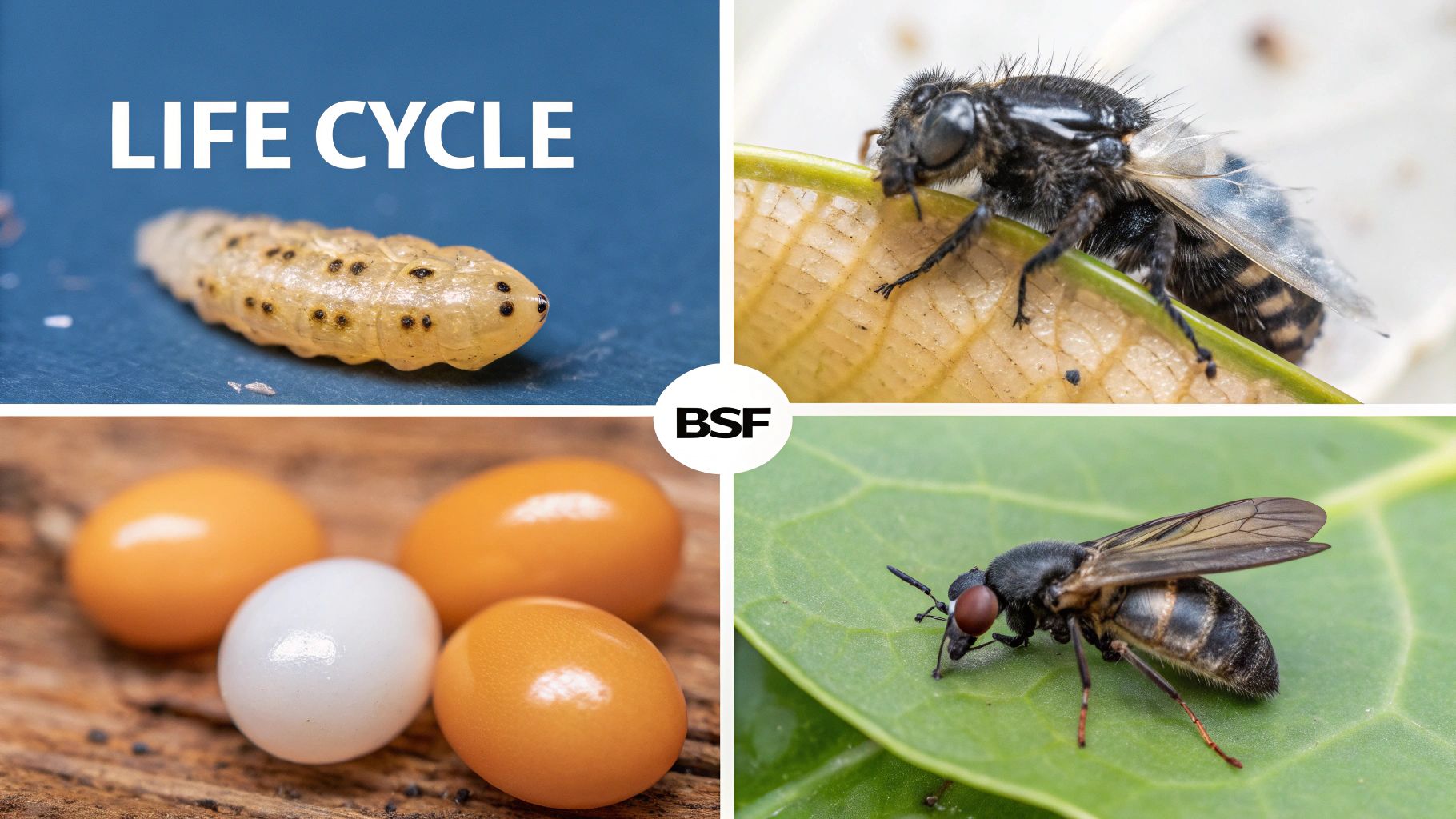
The journey of the black soldier fly is one of nature's most efficient transformations. In just a few weeks, a nearly invisible egg becomes a plump, nutrient-packed grub. This isn't just a fascinating biological trick; it's the very process that makes live black soldier fly larvae such an incredible food source for our animals.
To really appreciate why they’re so beneficial, it helps to understand how they get there. The entire process unfolds over four key stages, each one perfectly engineered to concentrate nutrients from simple organic matter into a protein- and calcium-rich powerhouse.
The Four Stages of Metamorphosis
It all starts when an adult female finds a safe, dry spot near a food source and lays a clutch of 400 to 800 eggs. These tiny, pale eggs are the beginning of a new generation of super-grubs.
-
Egg Stage (4-10 Days): For the first few days, there’s not much to see. The eggs are simply incubating, relying on warmth to trigger the hatch.
-
Larval Stage (14-18 Days): This is where the magic really happens. As soon as they hatch, the tiny larvae—or grubs—get to work. They are eating machines, burrowing into their food source and consuming organic waste with a single-minded focus. A single larva can grow to thousands of times its original size during this phase. This is the crucial window where they build up all the protein, fat, and calcium that make them so nutritionally valuable.
-
Pupal Stage (14 Days): After eating its fill, the grub gets ready for its final change. It turns a dark brown, stops eating, and instinctively crawls away from the food to find a dry, sheltered spot. It then forms a hard outer shell, or pupa, and the transformation into an adult fly begins.
-
Adult Stage (5-9 Days): The adult fly emerges with one job: to reproduce. This is a huge relief for anyone worried about having flies around.
Adult black soldier flies are not pests. They don’t have working mouthparts to bite or feed, and they don’t have a stinger. Their entire adult life—often less than two weeks—is spent finding a mate and laying eggs for the next cycle.
Because their lifespan is so short and focused, they don’t swarm or spread disease like houseflies. They're just the final, harmless step in an amazing natural process.
The Larval Powerhouse
For our purposes, the larval stage is by far the most important. You can think of a larva as a tiny, living nutrient battery. It spends its entire time charging up with all the energy and minerals it will need for the rest of its life, storing them as protein, healthy fats, and essential calcium.
This is precisely why live black soldier fly larvae are harvested right at their peak, just before they have the urge to pupate. They are at their biggest and most nutritionally dense. When you feed these grubs to your animals, you're giving them a direct transfer of that stored-up goodness, straight from one of nature's best recyclers.
The Nutritional Punch Packed into Every Wriggling Grub
To really get why live black soldier fly larvae are such a game-changer for your animals, you have to look past the squirm factor and see them for what they are: tiny, self-contained nutritional powerhouses. It’s one thing to say they’re a “healthy treat.” It’s another thing entirely to understand how their specific makeup directly boosts the health and energy of your flock or pet. This isn't just about tossing them a snack; it's about giving them targeted, easy-to-absorb nutrition that solves real-world problems.
For anyone raising chickens, one of the first things you'll notice is the difference in eggshell quality. Laying hens need a ton of calcium to produce strong, healthy eggs day after day. If they don't get enough, you'll see thin, brittle shells that crack just by looking at them. Live BSFL are naturally loaded with calcium, and it’s in a form their bodies can actually use.
This means the calcium goes right where it's needed—fortifying those eggshells from the inside out. You can often see a visible improvement in just a few weeks. It's a simple, natural way to support their reproductive health and get consistently better eggs.
More Than Just Strong Shells: A Protein-Fueled Powerhouse
Beyond the impressive calcium levels, live larvae are brimming with high-quality protein. Protein is the essential building block for everything from muscle to feathers. And when a chicken goes through a molt, its need for protein goes through the roof. Think about it: feathers are over 85% protein, and growing a whole new set is a massive biological effort.
Giving your flock live BSFL during this stressful time can make a world of difference. The readily available amino acids help them grow in their new, glossy feathers faster and with less strain on their bodies. This gets them back to their happy, healthy, egg-laying selves much quicker.
Think of live BSFL as a whole-food supplement. They aren’t just empty calories. They deliver the specific, functional nutrients your animals need for stronger bones, vibrant feathers, and overall toughness.
Why BSFL Outshine the Competition
When you stack them up against other common insect treats, the advantages of live BSFL become crystal clear. Their uniquely balanced profile makes them a complete nutritional package that others just can't match.
- The Perfect Calcium-to-Phosphorus Ratio: Mealworms, for example, have a lopsided ratio that can actually block calcium absorption. BSFL, on the other hand, have an almost ideal balance. This is a lifesaver for reptiles, as it helps prevent Metabolic Bone Disease (MBD), a devastatingly common condition.
- A Source of Healthy Fats: Live larvae contain beneficial fatty acids, including lauric acid, which is known for its natural antimicrobial properties. This can give your animal’s gut health a nice little boost.
- Maximum Bioavailability: The nutrients in live larvae are in their most natural, unprocessed form. This means your animals can digest and absorb all that goodness far more effectively than they could from a dry, processed pellet.
Live BSFL vs Dried BSFL vs Mealworms: A Nutritional Showdown
While live grubs are fantastic, it's worth seeing how they compare to their dried counterparts and other popular insects. The numbers really speak for themselves, showing why BSFL, in any form, are a superior choice.
| Nutrient | Live BSFL (Approx.) | Dried BSFL (Pure Grubs) | Dried Mealworms (Typical) |
|---|---|---|---|
| Protein | Up to 40% | 37% - 63% | 48% - 52% |
| Fat | Up to 30% | 15% - 35% | 25% - 30% |
| Calcium | Very High | Very High | Very Low |
| Calcium:Phosphorus | 1.5:1 to 2:1 (Ideal) | 2:1 to 3:1 (Excellent) | 1:7 (Poor) |
As you can see, both live and dried BSFL from a quality source like Pure Grubs offer a fantastic nutritional profile. The key takeaway is the calcium-to-phosphorus ratio, where BSFL are the undisputed champions compared to mealworms.
The bottom line is that the nutritional profile of black soldier fly larvae makes them an unbeatable natural feed supplement. Dried BSFL can pack 37% to 63% protein, but fresh, live larvae deliver that bioavailable punch with up to 40% protein and 85% more calcium than mealworms. This is the fuel for robust eggshells, brilliant feathers, and vibrant overall health—exactly what you get with Pure Grubs' premium, USA-grown product.
By adding live black soldier fly larvae to your animal's diet, you’re offering a treat that does more. You’re actively supporting their skeletal health, feather quality, and immune system with every single grub. For a deeper dive, learn more about using black soldier fly larvae for animal feed in our detailed guide. This one simple change can lead to healthier, happier animals you can see.
How to Raise Your Own Live BSFL at Home
So, you're ready to turn your kitchen scraps into a self-sustaining powerhouse of animal feed? Good. Raising your own live black soldier fly larvae is way easier than it sounds. Think of it like managing a tiny, super-efficient compost crew that works around the clock, turning waste into a nutritious treat for your animals.
This whole process transforms what you'd normally throw away into a valuable resource, giving you a constant supply of fresh, wriggling grubs. With a surprisingly simple setup, you can get a productive system going right in your own backyard.
Choosing Your BSFL Composter
First things first, you need a home for your future larvae. You can go one of two ways here, and honestly, both work great.
-
DIY Bins: This is the classic, hands-on approach. A simple do-it-yourself bin can be cobbled together from a couple of storage totes. You'll need one for the grubs and their food (with some small drainage holes drilled in the bottom) and another tote underneath to catch the nutrient-rich "compost tea" that drips out—your garden will love it. The most important feature is a ramp leading out of the main bin so mature larvae can "self-harvest" by crawling out and dropping into a collection bucket.
-
Commercial Bins: If you'd rather skip the DIY part and get straight to it, there are plenty of commercial BSFL composters out there. These are purpose-built with integrated ramps, proper ventilation, and easy collection systems, making the whole process incredibly straightforward from day one.
No matter which path you take, the goal is the same: create a space where the larvae can chow down, grow fat, and then be easily collected when they're ready.
Setting Up Your Colony for Success
Once you've got your bin, it's time to create the perfect environment. BSFL aren't divas by any means, but getting a few key conditions right will guarantee they thrive.
You'll need a starter culture of live black soldier fly larvae, which you can easily find online from reputable breeders. When they arrive, introduce them to the bin along with a few inches of a moist substrate like compost or coconut coir to help them settle in.
Where you put the bin matters. Find a shaded, protected spot. Larvae are photophobic, a fancy word meaning they hate bright light, so keeping them out of direct sun is a must. They also work best when they're warm; an ideal temperature range is between 27°C and 35°C (80°F to 95°F). This keeps them active and, more importantly, hungry.
Pro Tip: Getting the moisture level right is probably the most critical part. The food and bedding should feel like a damp, wrung-out sponge—never sopping wet. If it's too dry, the larvae can dehydrate; too wet, and they can actually drown. Good drainage is your best friend here.
This simple infographic gives you a great visual of what you're creating—a system that turns waste into high-value calcium, protein, and nutrients.
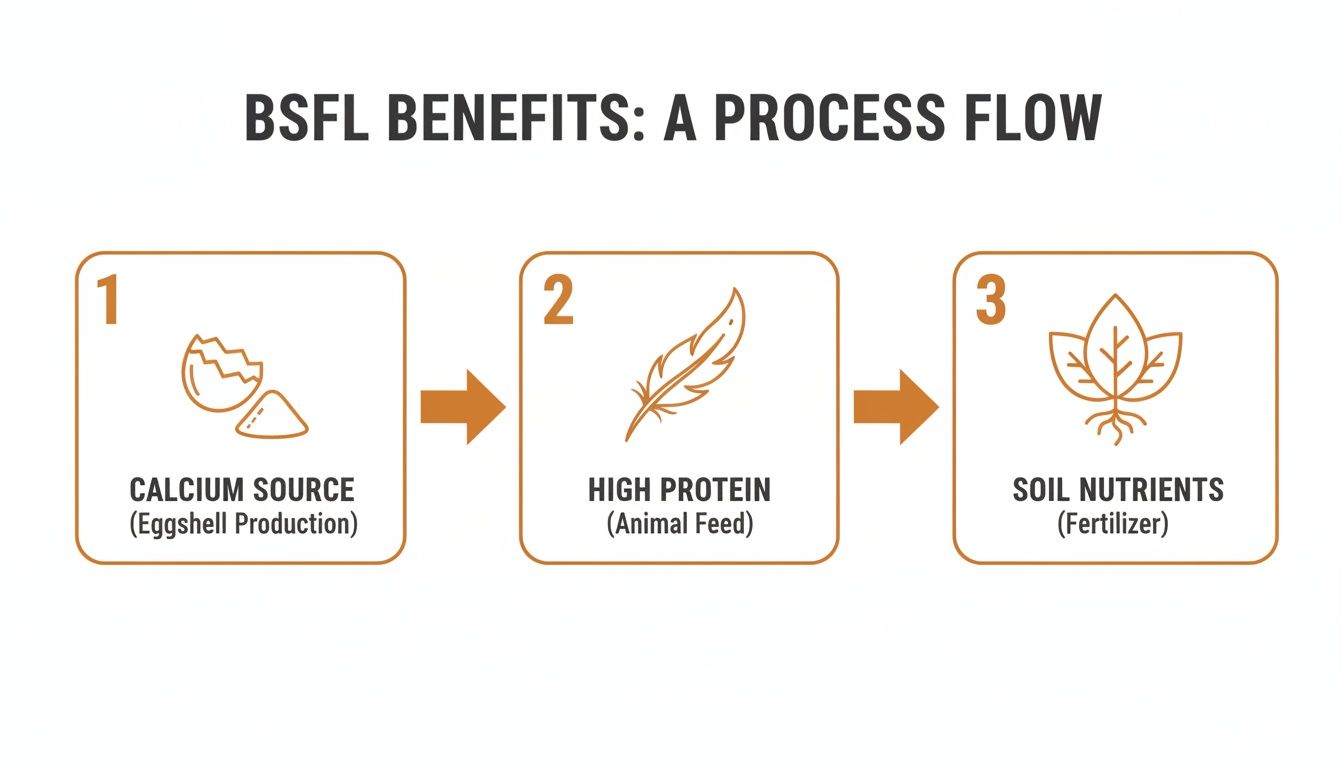
It really shows how the larvae consume waste, producing protein for animal feed and frass (larva manure) that works wonders as a soil amendment.
Feeding Your Hardworking Larvae
Now for the fun part. What do these little guys eat? Basically, your leftovers! They are incredible waste-recyclers, converting organic scraps into high-quality protein with an efficiency that's frankly astounding.
What to Feed Them:
- Fruit and veggie peels
- Coffee grounds and used tea bags
- Spent grains from homebrewing
- General plant-based plate scrapings
What to Avoid:
- Meat, dairy, and super oily foods (these will stink and attract the wrong kind of visitors)
- Tough, fibrous stuff like wood chips
- Anything toxic, like large amounts of citrus peels
Just add a thin layer of food every day or two. You want to give them enough to eat in about 24 hours so the food doesn't sit around and rot. A healthy, well-managed bin should have a mild, earthy smell—not a foul one.
The sheer efficiency of live black soldier fly larvae is what makes them such a game-changer for homesteaders. They can munch through 4.5 to 10 kg of organic waste to produce just 1 kg of fresh larval biomass. This incredible ratio works best when the feed has a moisture content of 50-70%, a detail that really separates small hobby farms from large-scale operations. If you want to dive deeper into production scales and optimizing feed, you can explore the research on waste-to-protein conversion here.
Harvesting Your Live Grubs
Harvesting is easily the most satisfying part of the whole deal, and the best part is, the larvae do most of the work for you. It's almost completely automated.
When a larva has eaten its fill and is ready for the next stage of its life, it enters the "prepupal" phase. You'll notice its color darkens, and it stops eating. Its one and only mission becomes finding a dry, safe spot to pupate. This is your moment. They will instinctively begin to migrate out of the moist food, crawl right up that ramp you built, and conveniently drop into your collection container.
All you have to do is check your collection bucket every day or so to gather your fresh, wriggling harvest. You can feed them directly to your flock or store them in a container with a bit of dry substrate for a few days. With just these simple steps, you've created a sustainable, cost-effective, and incredibly nutritious food source that your animals will go absolutely crazy for.
Live Larvae vs. Dried: Which is Right for You?
When you're looking at feeding your animals live black soldier fly larvae versus a high-quality dried version, it’s not a simple question of which is "better." It's really about what fits your lifestyle, your goals, and what you prioritize for your animals. Both are fantastic nutritional powerhouses, but they serve different needs.
Think of it like this: you can either grow a vegetable garden or buy premium organic produce from the store. The garden gives you the satisfaction and straight-from-the-earth experience, but it takes work. The store-bought option offers guaranteed quality and convenience on demand. Both paths lead to a healthy meal.
Live larvae are incredible for enrichment. The simple act of wiggling triggers a powerful, natural foraging instinct in chickens, reptiles, and other insect-eaters. It keeps them entertained, active, and mentally sharp, which is a great way to bust boredom in a coop or enclosure. Plus, their high moisture content is a great way to sneak in some extra hydration, especially during those scorching summer months.
When You Value Convenience and Peace of Mind
Let's be honest—managing a live colony is a commitment. It's a rewarding hobby for some, but it demands consistent time, space, and attention. For most people, the sheer convenience of a shelf-stable, ready-to-serve product is a game-changer. This is exactly where a premium dried product like Pure Grubs steps in, delivering all the nutritional punch without any of the daily chores.
With dried larvae, you get a concentrated source of protein and calcium that’s incredibly easy to store, measure out, and feed. No bins, no smells, no worrying if the temperature is right. It’s just simple, effective, top-tier nutrition with zero fuss.
The biggest difference-maker with a trusted dried product is the absolute guarantee of safety. A DIY setup, no matter how well-intentioned, can’t compete with the strict quality controls of a professional, FDA-compliant facility.
The Pure Grubs Advantage: Unmatched Quality Control
Choosing a reputable, US-grown brand like Pure Grubs is about more than just convenience; it’s about elevating the standard of care for your animals. It gives you a level of confidence that a home-grown colony just can't match. That peace of mind is priceless, especially when you're feeding chickens whose eggs your family will be eating.
Here’s what sets a professional-grade product apart:
- A Clean, Controlled Diet: Our larvae are raised on a consistent, pre-consumer plant-based diet. This completely removes the risk of them ingesting pesticides, toxins, or harmful bacteria from random kitchen scraps or compost.
- FDA-Compliant Operations: We adhere to stringent FDA and AAFCO guidelines, which means every stage of production meets the highest possible safety standards for animal feed.
- Serious Safety Testing: We don’t guess. Every single batch of Pure Grubs is lab-tested for heavy metals like lead, arsenic, and mercury, ensuring they are pure and safe for your animals.
- Nutritional Consistency: Our careful drying process locks in nutrients at their absolute peak. You get the same high-quality nutrition in every single scoop, every single time, with a great shelf life.
So, what’s the final verdict? It all comes down to what you’re looking for. If you want an engaging project that provides fantastic enrichment for your animals, raising live black soldier fly larvae is a great choice. But if your priorities are guaranteed safety, reliable nutrition, and unbeatable convenience, a premium dried product is the clear winner.
You can dive deeper into this topic by reading our guide on the advantages of dried black soldier fly larvae.
Understanding Safety and Sourcing Your Larvae
When you're feeding animals, especially ones that provide food for your own table, safety has to be the number one priority. It's tempting to think about raising your own live black soldier fly larvae on kitchen scraps, but that introduces a huge unknown: you never really know what's in the waste they're eating. This is where clean, professional sourcing becomes non-negotiable.
Think of it this way: the old saying "you are what you eat" is just as true for your larvae. If they munch on compost full of moldy bread, pesticide residues from fruit peels, or harmful bacteria, those contaminants can travel right up the food chain. It’s a risk most flock owners just aren't willing to take.
The Problem with Uncontrolled Feed Sources
Using post-consumer waste—basically, random leftovers from your plate—can introduce pathogens and toxins you can't even see. That's why professional growers and reputable suppliers will only ever use pre-consumer food scraps. We're talking about clean, unused plant-based stuff, like spent grains from a local brewery or vegetable pulp from a juicery.
The golden rule of safe insect farming is controlling the inputs. When you guarantee the larvae's diet is clean from day one, you ensure the final product is pure, safe, and free from anything that could harm your animals or their eggs.
This professional approach takes all the guesswork out of the equation and delivers a level of quality assurance that a backyard compost bin just can't match.
Meeting the Highest Safety Standards
When you choose a trusted supplier, you're getting a product that's backed by serious safety protocols. Brands like Pure Grubs operate in FDA-compliant facilities and follow the strict feed safety guidelines laid out by organizations like the Association of American Feed Control Officials (AAFCO).
This isn't just about ticking boxes; it's a deep commitment to the health of your animals. The entire process is designed to prevent contamination and deliver consistent nutrition, batch after batch. For instance, every single lot of Pure Grubs is sent to a lab to be tested for heavy metals, including:
- Lead
- Arsenic
- Mercury
- Cadmium
This testing is a critical final check, giving you a level of peace of mind that's impossible to get with a DIY setup.
By sourcing your grubs from a trusted, USA-grown supplier, you're not just buying a convenient treat—you're investing in a guaranteed-safe nutritional supplement for your animals. If you're looking for a reliable source, you can explore more about where to buy black soldier fly larvae in our comprehensive guide. Ultimately, knowing where your larvae come from is one of the most important decisions you'll make for the health and safety of your flock.
Got Questions About Live Black Soldier Fly Larvae?
It's completely normal to have a few questions before you jump into raising your own live black soldier fly larvae. In fact, it's smart. Getting the right answers upfront can save you a lot of guesswork and help you feel confident from day one.
Let's tackle some of the most common questions we hear from people just starting out.
Can My Chickens Eat Too Many Live BSFL?
Absolutely. It's easy to get carried away when you see how much your flock loves them, but you can definitely overdo it. Think of live grubs as a super-healthy, high-protein treat, not a replacement for their regular feed.
As a rule of thumb, they shouldn't make up more than 10% of your flock's total diet. A small handful per bird a few times a week is plenty. This gives them a fantastic nutritional kick and gets them scratching and foraging, all without messing up the balanced diet they get from their main feed.
Will a BSFL Bin Make My Yard Stink?
Nope, not if it's running properly. A healthy, well-managed BSFL bin shouldn't have any foul odor at all. If you start to notice a bad smell, it's a big red flag that something in the bin is out of whack.
Usually, the problem is one of two things:
- It's too wet: If the bin gets soggy, it can go anaerobic and start to smell sour. Good drainage is key.
- You're feeding them the wrong stuff: Stick to fruit and veggie scraps. Avoid meat, dairy, or super oily foods, which can go rancid. The larvae are so efficient they'll devour the good stuff before it even has a chance to rot.
A happy bin just has a mild, earthy smell, kind of like a forest floor after it rains.
The real choice between live and dried larvae isn't about which is "better," but what's better for you. Live larvae are amazing for enrichment and hydration. But for guaranteed safety, convenience, and nutrition without the upkeep, dried grubs are tough to beat.
Are Live Larvae Always the Best Choice?
Not necessarily. It really comes down to what you're looking for and how much time you have. Live larvae are incredible for encouraging an animal's natural instincts—chickens go wild chasing them down! They're also a great source of hydration.
But let's be honest, not everyone has the time or space to manage a live colony. For anyone who prioritizes convenience, consistent nutrition, and long-term storage without any of the work, a top-tier dried product like Pure Grubs is often the smarter pick. You get all the core nutritional benefits, plus the peace of mind that comes from a safe, tested product.
How Do I Even Get the Larvae Out of the Bin?
Harvesting sounds complicated, but the larvae actually do most of the work for you. It's all thanks to their natural lifecycle.
When the larvae are mature and ready to turn into pupae, their instincts kick in. They want to find a high, dry, and dark place, so they start crawling away from the moist food source. Most BSFL bins are designed with a simple ramp. The plump, ready-to-harvest larvae climb right up and fall into a collection bucket. It's a clever, "self-harvesting" system that's almost completely hands-off.
If you're looking for a safe, reliable, and seriously convenient source of nutrition your animals will go crazy for, trust Pure Grubs. Our USA-grown, lab-tested dried larvae deliver all the benefits with none of the hassle. Explore our premium Black Soldier Fly Larvae today.