

A Guide to Increasing Egg Production
If you want more eggs, you can’t just focus on one magic bullet. Getting your flock to lay consistently comes down to getting the fundamentals right. I always tell people to start with the three pillars: genetics, age, and health. Nail these, and you've built the foundation for a truly productive flock.
Building a Foundation for a Productive Flock
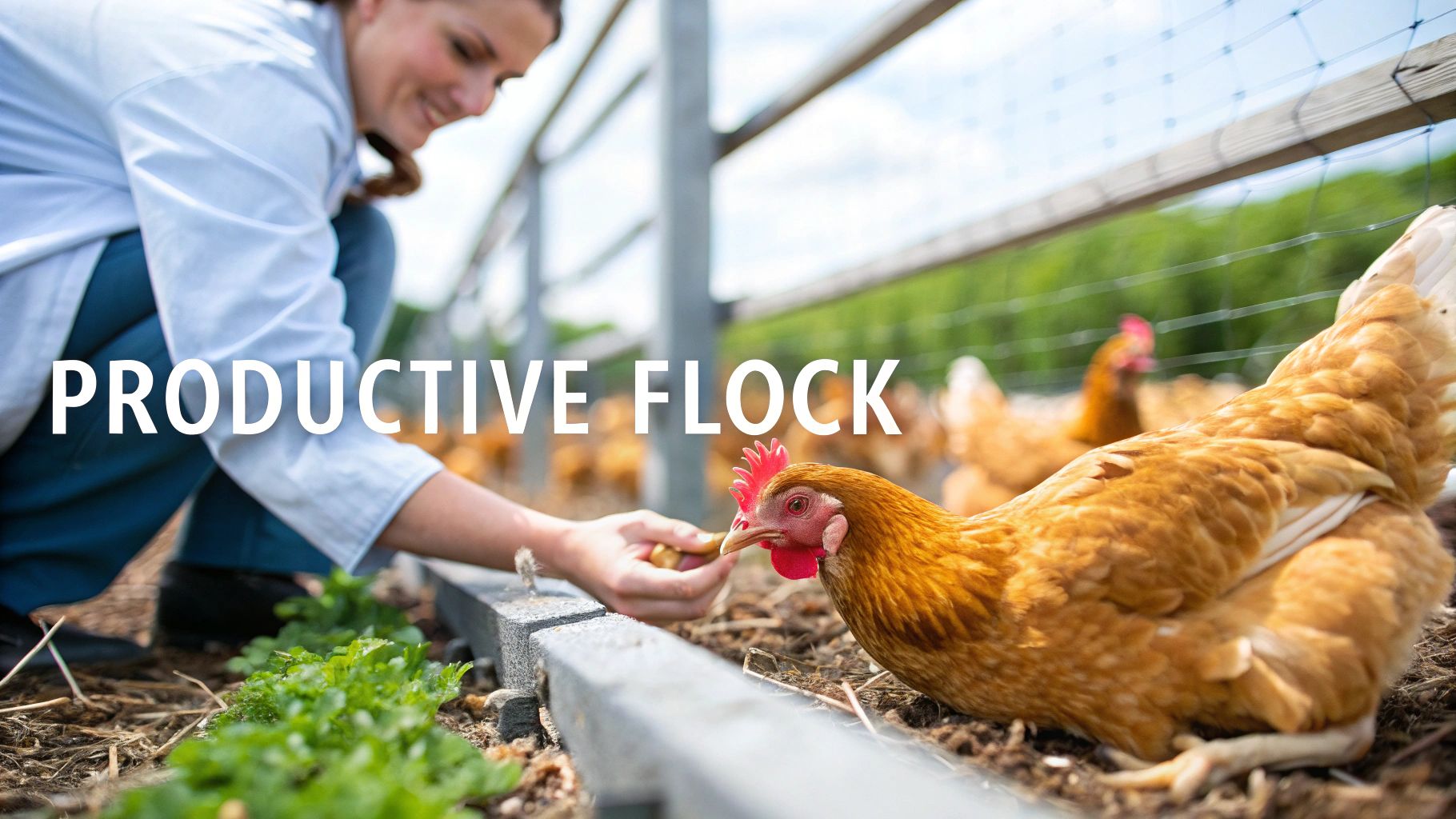
Before we even talk about tweaking their diet or upgrading the coop, we have to start with the chickens themselves. It might sound obvious, but not all breeds are created equal when it comes to laying. In fact, the single biggest decision you'll make for a steady supply of eggs is choosing a breed that was developed for that specific job.
I like to use this analogy: you wouldn't enter a draft horse in the Kentucky Derby and expect it to win. It’s the same with chickens. A beautiful hen bred for show or a hefty bird meant for meat will never keep up with a high-production layer, no matter how perfectly you care for her.
The Impact of Genetics and Age
Getting the genetics right from the start sets the absolute ceiling for your flock's potential. Breeds like Rhode Island Reds and Black Australorps are backyard classics for a good reason—they're tough, reliable layers that can give you over 250 eggs per year when they're happy and healthy.
Right alongside genetics is the age of your hens. This is a huge factor. A hen's prime laying years are really her first two.
- Pullets (under one year): These are your up-and-comers. They're just starting their laying careers and will quickly ramp up to their peak.
- Year Two Hens: This is often their all-star year. You'll see the most consistent, high-volume output here.
- Older Hens (3+ years): After their second year, production naturally starts to taper off. An older girl might only lay every few days instead of nearly every day.
This slowdown is completely normal and just part of a hen's natural life cycle. A smart strategy is to plan on introducing a few new pullets to your flock every couple of years. This keeps your overall egg numbers steady.
Before we dig deeper into the "how-to," it helps to understand what's driving egg production at every level. Here’s a quick summary of the core factors that will make or break your flock's laying potential.
Key Factors Influencing Egg Production
| Factor | Impact on Egg Production | Key Consideration |
|---|---|---|
| Genetics | Sets the maximum potential for egg quantity and frequency. | Choose breeds specifically developed for high-volume laying, like Leghorns or Sex Links. |
| Age | Production peaks in the first 1-2 years and declines steadily afterward. | Rotate new pullets into your flock every couple of years to maintain consistent output. |
| Nutrition | Directly fuels the hen's body to form and lay eggs daily. | A balanced layer feed with at least 16% protein and ample calcium is non-negotiable. |
| Daylight | Light exposure triggers the hen's reproductive cycle. | Hens need 14-16 hours of light per day for optimal production. |
| Health & Stress | Sickness, parasites, or stress divert energy away from laying. | A clean coop, fresh water, and a calm environment are essential for a healthy, laying flock. |
Getting a handle on these key areas is the first and most important step toward a basket full of fresh eggs every day.
Global Demand and Your Flock
This focus on getting the most out of our hens isn't just a backyard concern; it’s a reflection of a global trend. The demand for eggs as a fantastic, affordable source of protein is booming worldwide. In fact, forecasts predict global egg production will hit a staggering 99 million tonnes by 2025—that's a 115% increase from 1995. You can read more about the global egg industry's growth on RaboResearch. This incredible demand shows just how important efficient egg production has become, starting with the choices you make for your own flock.
Fine-Tuning Your Flock’s Diet for More Eggs
If genetics and age set the potential for your flock, nutrition is the fuel that makes it happen. You can have the best laying breeds in the world, but you’ll never see a full nesting box if their diet is off. I like to think of a laying hen as a tiny, feathered factory that runs around the clock—what you put in directly determines the quality and quantity of what you get out.
The absolute cornerstone of any productive hen’s diet is a high-quality layer feed. This isn't just a suggestion; it’s the single most important factor for getting more eggs. These feeds are carefully formulated to provide the exact balance of nutrients a hen needs to form an egg almost every single day.
The Power Duo: Protein and Calcium
For consistent laying, the protein content in your flock's main feed is non-negotiable. You've got to aim for a feed with 16-18% protein. This specific range delivers the essential amino acids needed to form the egg white (albumen) and keep the hen in top condition. Without enough protein, her body simply can’t sustain the demanding process of daily egg formation, and production will drop off a cliff.
Just as critical is calcium. An eggshell is almost entirely made of calcium carbonate, and a hen needs a massive amount of it to create that strong, protective shell. A diet low in calcium leads directly to thin, brittle, or even soft-shelled eggs—a classic sign your hens aren't getting what they need.
A hen's body will actually pull calcium from her own bones if her diet is lacking. This is not only unsustainable for egg production but is genuinely dangerous for her long-term health. That's why providing a constant source of supplemental calcium is so crucial.
An easy way to do this is to offer crushed oyster shells or even your own cleaned, crushed eggshells in a separate dish. This lets the hens self-regulate their intake, taking exactly what their bodies tell them they need without overdoing it.
High-Impact Supplements for Stronger Shells
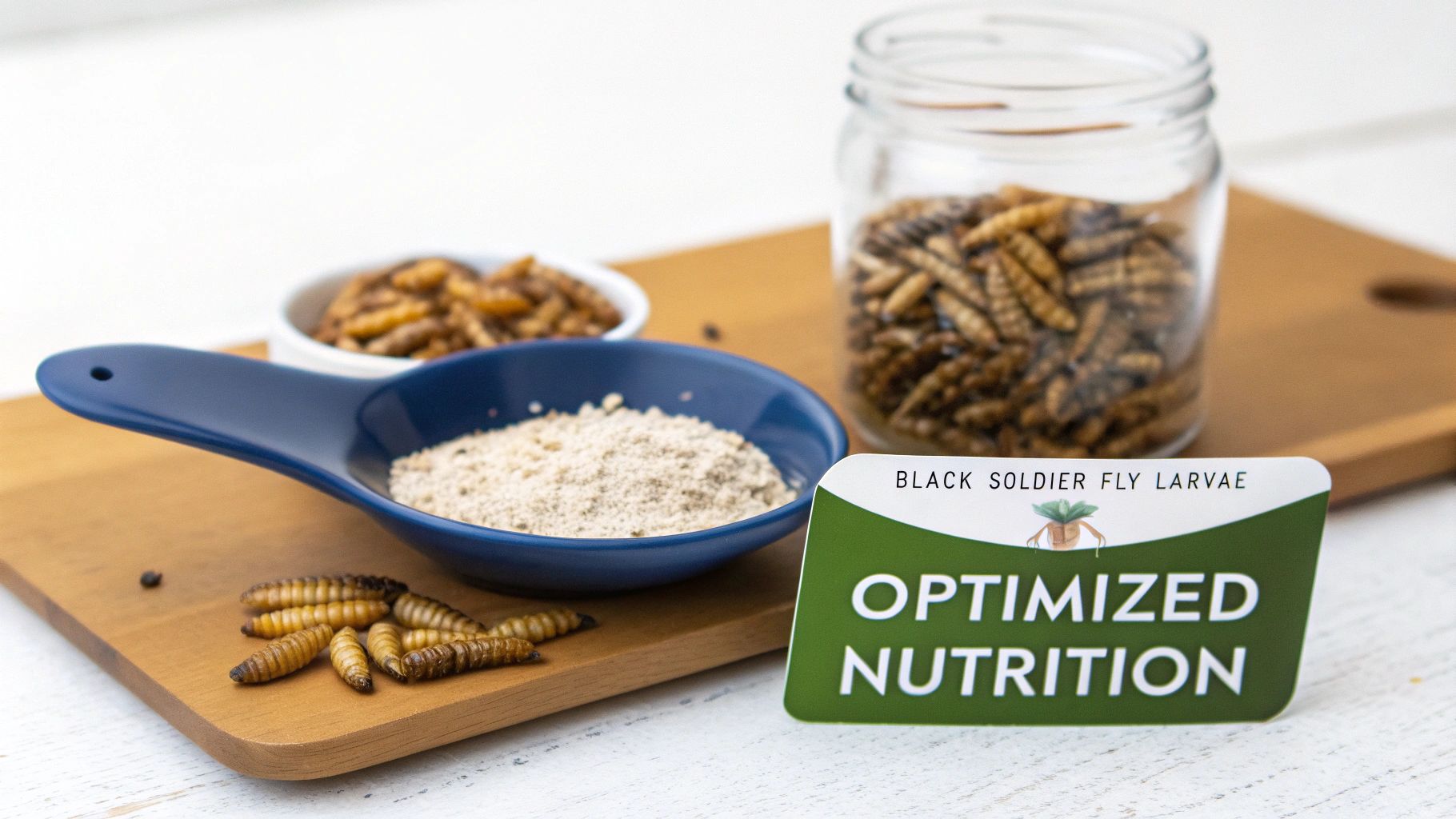
While a quality layer feed is the foundation, smart supplementation can take your flock’s output to the next level. This is where high-protein, high-calcium treats like Black Soldier Fly Larvae (BSFL) really shine. They are a powerhouse of nutrition that can make a visible difference in egg quality.
A common mistake I see is flock owners feeding too many low-nutrition treats, like scratch grains or kitchen scraps. Hens love them, of course, but these "junk foods" just dilute their overall nutrient intake. By replacing those with a handful of BSFL, you're giving them a treat they'll go crazy for while actively supporting their laying ability.
Here’s how BSFL, like Pure Grubs, make a real difference:
- Exceptional Calcium Source: Dried BSFL contain up to 85% more calcium than mealworms, which directly contributes to thicker, stronger eggshells.
- High-Quality Protein: They offer a protein boost that helps hens bounce back from stressful periods like molting, getting them back to laying much faster.
- Natural Foraging Behavior: Tossing some grubs into their run encourages natural scratching and pecking, which is a great way to reduce boredom and stress.
This targeted approach to treats is a simple but incredibly effective strategy. If you want to dive deeper into the dietary details, our guide on what to feed laying hens is a great place to start.
Don't Forget Water and Avoid Common Mistakes
Finally, never, ever underestimate the importance of fresh, clean water. An egg is about 75% water, and even just a few hours without access can halt production for days. I always recommend having multiple waterers and checking them daily, especially when the weather is extremely hot or cold.
A couple of common mistakes can also trip you up. Try not to suddenly switch their feed brand; any change should be gradual to avoid upsetting their digestive systems. And remember the 90/10 rule: at least 90% of their diet should come from their formulated layer feed, with treats making up no more than 10%.
This focus on nutrition mirrors what's happening on a larger scale. The global eggs market is projected to be worth $150 billion USD by 2025, with steady growth expected. This shows just how much value is placed on efficient, high-quality egg production, from massive farms down to backyard coops. You can find more about the global egg market on Market Report Analytics. By optimizing your flock's diet, you're using the same core principles that drive this essential industry.
Creating a Stress-Free Laying Environment
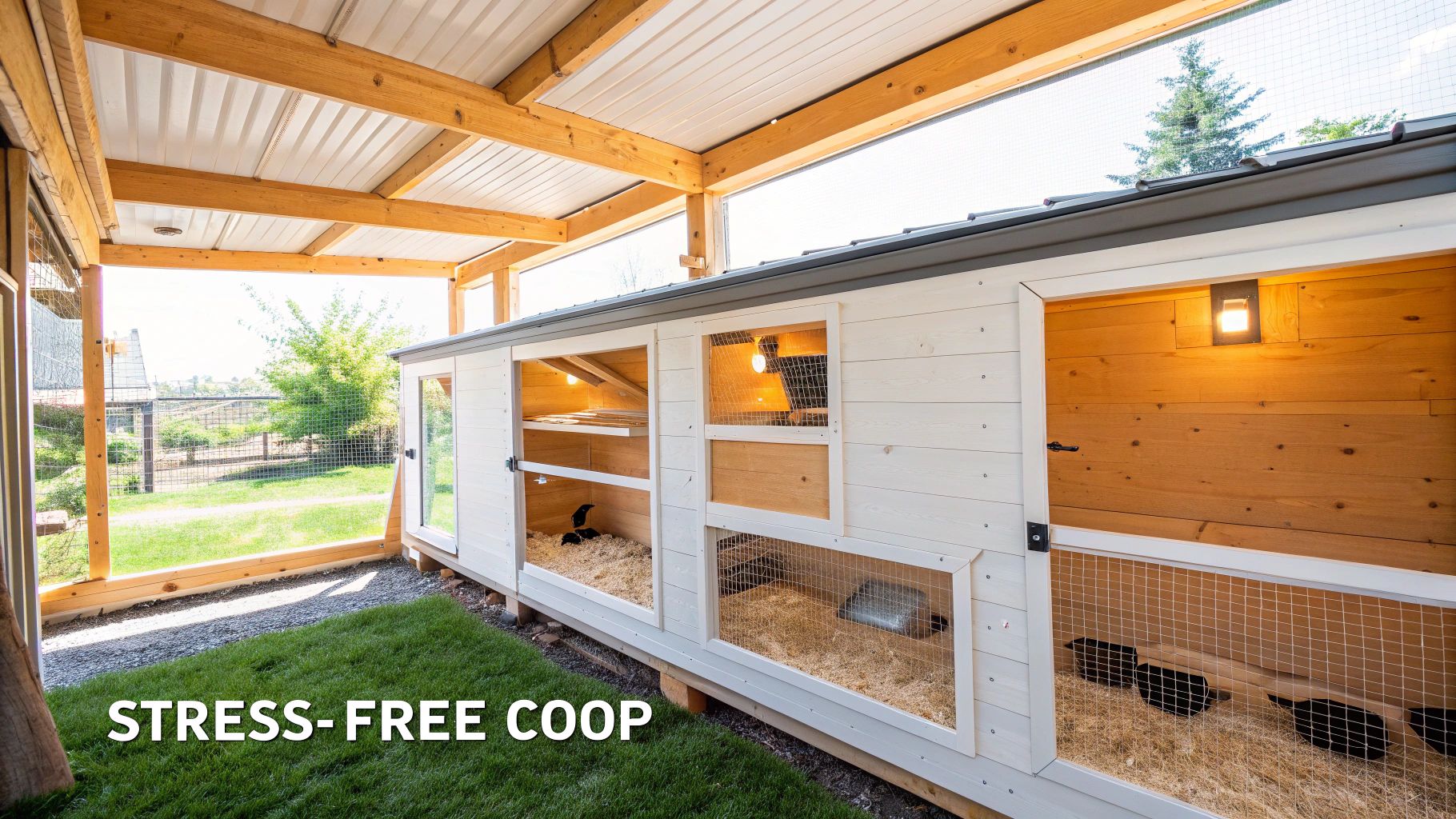
While top-tier nutrition fuels your hens from the inside, their environment is what gives them the security and comfort to be truly productive. A stressed hen will divert precious energy away from laying, no matter how perfect her diet is. Think of it this way: a calm, safe, and functional coop isn't just a "nice to have"—it's a non-negotiable part of boosting egg production.
The biggest environmental trigger for laying is daylight. A hen's reproductive cycle is wired to respond to light exposure, which directly stimulates her pituitary gland. For peak performance, she needs 14 to 16 hours of light per day. This is easy to achieve in the long, sunny days of spring and summer, but when fall and winter roll around, the shorter days can cause production to slow down or stop altogether.
This is where a little bit of technology can make a huge difference. By adding a simple, low-wattage bulb to your coop and putting it on a timer, you can mimic those long summer days and keep your girls laying through the darker months. The goal isn't to blast them with bright light 24/7, which would only cause more stress. Instead, you're looking for a soft, gentle light that simply extends their "day" to that sweet spot of 14 to 16 hours.
Designing a Productive Coop
Beyond light, the physical setup of the coop plays a massive role in flock harmony and, consequently, their output. Overcrowding is one of the fastest ways to introduce stress, leading to problems like feather pecking, bullying, and a noticeable drop in your egg count.
A good rule of thumb is to provide at least 4 square feet of coop space per bird. This gives everyone enough elbow room to move around comfortably without getting on each other's nerves. You'll also want to ensure there's proper ventilation to prevent ammonia buildup, which can lead to respiratory illnesses that put an immediate halt to laying.
The right nesting boxes are just as important. Hens have a natural instinct to find a dark, quiet, and private spot to lay their eggs. If the nesting boxes you provide are uncomfortable, too bright, or too few, you'll start finding eggs in all sorts of strange places. Even worse, the stress of not having a safe spot can cause a hen to stop laying entirely.
A well-designed coop anticipates a hen's natural instincts. Providing clean, dark nesting boxes isn't just about convenience for you; it's about giving your hen the psychological security she needs to lay an egg.
Here’s how to make your nesting area as inviting as possible:
- Offer Enough Boxes: The magic number is about one nesting box for every 3-4 hens. This helps prevent squabbles and waiting lines.
- Keep Them Clean and Cozy: A deep, soft bed of fresh straw or shavings makes a world of difference.
- Place Them Strategically: Tuck the boxes into a dark, low-traffic corner of the coop where the hens will feel safe and undisturbed.
- Collect Eggs Often: Gathering eggs daily keeps the boxes clean and ready for the next hen. For more tips, check out our guide on optimizing your chicken coop for egg collection.
The Bigger Picture: Why a Happy Hen Matters
Creating these ideal, low-stress environments isn't just a trick for backyard keepers; it's part of a major shift in how we think about eggs. Consumers are increasingly demanding eggs from chickens raised in better conditions. The specialty egg market—which includes cage-free, organic, and pasture-raised eggs—is projected to surge from $18.7 billion in 2025 to $60.8 billion by 2035.
This trend shows just how much value people now place on hen welfare as part of the production process. When you focus on creating a stress-free home for your flock, you're not just getting more eggs; you're also aligning with a more thoughtful and sustainable approach to raising chickens.
Keeping Your Flock Healthy to Avoid Laying Pauses
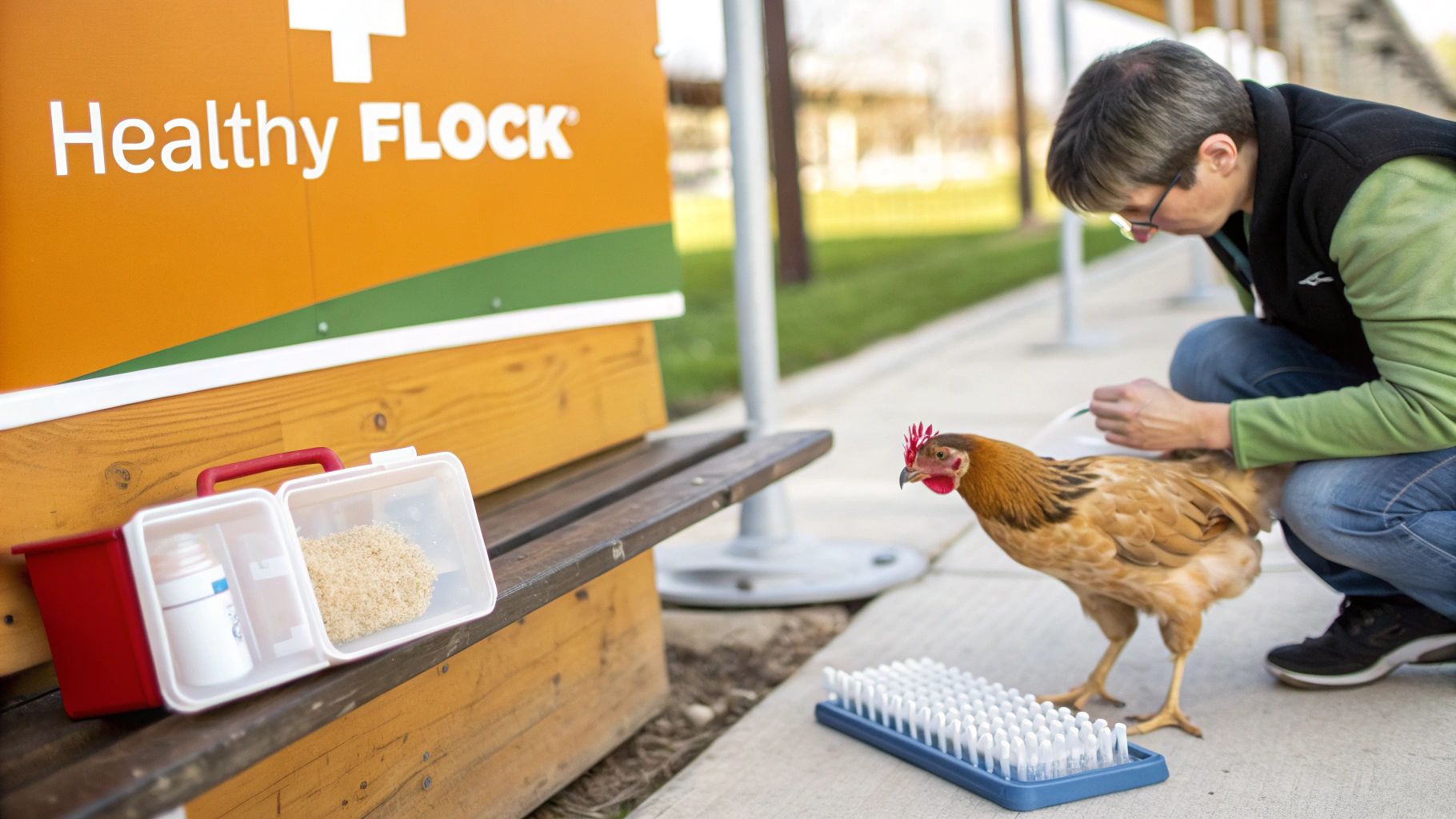
You can offer the perfect diet and the cleanest coop on the block, but if your hens are sick or stressed, egg production will still grind to a halt. A healthy hen is a laying hen, plain and simple. Getting ahead of health problems is one of the best things you can do to keep those nesting boxes full.
Prevention is always, always easier than treatment.
Your first line of defense comes down to simple biosecurity. It sounds technical, but it’s really just about being smart with what you introduce to your flock’s space. A non-negotiable rule is to quarantine any new birds for at least 30 days before they meet the rest of the flock. This buffer period gives you time to spot any hidden illnesses that could otherwise sweep through your established layers.
Another easy win? Keep a dedicated pair of "coop boots" by the door. This tiny habit prevents you from tracking in invisible germs and diseases from the outside world, creating a surprisingly effective barrier against illnesses that can stop egg production in its tracks.
Spotting the Subtle Signs of Trouble
Chickens are hardwired to hide any sign of weakness—a trait that helped their ancestors avoid predators. Unfortunately, this means that by the time a hen looks sick, she’s likely been feeling unwell for a while. Learning to pick up on the early, subtle cues is key to stepping in before her laying is affected.
Look for shifts in her normal behavior. Is a usually friendly hen suddenly hiding in a corner? Have you noticed more squabbling or feather pecking? These are often the very first signs that something is off. A happy, healthy hen is active, curious, and part of the group.
Here are a few key things I check for daily:
- Posture & Energy: A healthy bird stands tall, looks alert, and is actively scratching or foraging. A hen who is hunched over, lethargic, or has constantly ruffled feathers needs a closer look.
- Comb & Wattles: A bright, waxy, vibrant red comb is the calling card of a hen in her prime laying cycle. If it looks pale, purplish, or dry, it’s a strong indicator of a health issue or that she's stopped laying.
- Droppings: Get in the habit of glancing at the droppings board each morning. You're looking for consistency. Any dramatic change in color or texture, especially bloody droppings, is a red flag that requires immediate attention.
One of the most common culprits for a sudden drop in egg production is an infestation of external parasites like mites and lice. These nasty critters drain a hen's energy and blood, causing anemia, stress, and a swift end to laying. Get in the habit of checking under the roosts and around your hens' vents for these pests.
A simple way to help your flock defend themselves is by providing a great dust bath. A shallow pit filled with a mix of dry dirt, sand, and a little food-grade diatomaceous earth gives them a natural way to keep pests off. For a deeper dive, our complete guide on how to keep chickens healthy has even more practical strategies.
Navigating the Annual Molt
Sometimes, a pause in egg-laying isn't a sign of sickness at all. It's a completely natural, and essential, process called the molt. Once a year, usually as the days get shorter in the fall, your hens will drop their old, ragged feathers and grow a beautiful new set for winter.
This process is incredibly demanding. Growing thousands of new feathers consumes a massive amount of protein and energy. To funnel all its resources toward this vital task, a hen's body temporarily shuts down the egg factory.
You can't stop the molt, but you can absolutely help your flock get through it faster and get back to laying sooner.
During this time, bumping up the protein in their diet is crucial. This is the perfect time to supplement their feed with high-protein treats. Offering something like Pure Grubs gives them a direct source of the nutrients needed for rapid feather regrowth, which can significantly shorten their non-laying downtime and get them back in top form.
Troubleshooting Common Egg Production Problems
https://www.youtube.com/embed/7VIwESIO9xY
Even the most seasoned chicken keeper runs into snags. You can go from a full nesting box one week to a nearly empty one the next, leaving you scratching your head. The real skill is learning to play detective and pinpoint the cause before a small hiccup turns into a long-term slump.
One of the most common puzzles is that sudden, unexplained drop in egg numbers. Before you start to worry, run through a quick mental checklist. Did their waterer run dry, even for just a few hours? Was there a recent scare from a neighborhood dog or a hawk overhead? Often, these seemingly small stressors are the hidden culprits behind a temporary dip.
Investigating a Sudden Production Drop
If you’ve ruled out the obvious, it's time to dig a little deeper. A predator snooping around at night can stress your hens without ever leaving a mark, and a low-grade parasite problem can quietly sap the energy a hen needs for laying. A thorough coop inspection can turn up clues you'd otherwise miss.
- Predator Patrol: Look for disturbed soil around the coop, a small tear in the wire, or a few scattered feathers in an odd place. Sometimes, just the scent of a raccoon or fox is enough to put your flock off their game.
- Parasite Check: Gently part the feathers around your hens' vents and under their wings, looking for mites. Also, scan the roosts for tiny red or black specks—a classic sign of a mite infestation.
- Routine Review: Think back on the last week. Did you introduce new birds to the flock? Change their feed brand without a gradual transition? Any break in their routine can trigger a temporary halt in laying.
Managing Unwanted Behaviors
Sometimes the issue isn't a lack of eggs, but what happens to them after they're laid. Egg-eating is a maddening habit, and it usually starts with an accidentally broken egg in the nesting box. Once a hen gets a taste of that nutritious snack, a bad habit can form overnight.
The best defense is a good offense: collect eggs more frequently. Aim for at least twice a day to minimize the chances of an egg getting broken. You can also try adding decoy eggs, like golf balls or ceramic eggs, to the nests. When a hen pecks at the decoy and gets nothing for her trouble, she'll often give up.
Broodiness is another behavior that brings egg-laying to a screeching halt. A broody hen will sit stubbornly on a nest, determined to hatch eggs—even if there are none. Gently removing her from the box multiple times a day and even blocking off her favorite spot can help break the hormonal cycle and get her back to her normal routine.
Finally, remember that boosting egg production is a year-round commitment. Get ahead of summer heat waves with extra shade and cool water, and prepare for winter's chill with a coop that's well-ventilated but free of drafts. A simple seasonal checklist keeps you prepared and helps your hens stay healthy and productive no matter the weather.
Got Questions? We've Got Answers
Let's tackle some of the most common questions that pop up when you're trying to get more eggs. I've heard these from countless chicken keepers, and the answers often come down to a few key details.
Why Did My Chickens Suddenly Stop Laying?
This is the big one, isn't it? One day you have eggs, the next... nothing. A sudden halt in laying is almost always a sign of stress.
Think about what's changed recently. Did you switch their feed? Has a hawk been circling overhead? Even a sudden heatwave or an empty waterer can be enough to put them off laying. Dehydration is a surprisingly common culprit for an abrupt stop.
How Many Hours of Light Do Hens Really Need?
To keep the "egg machine" running smoothly, your hens need about 14 to 16 hours of light each day. This light signals their bodies that it's prime time for laying.
As the days get shorter in the fall and winter, egg production naturally dips. You can easily counteract this by putting a simple, low-wattage bulb on a timer inside the coop to extend the "daylight" hours and keep those eggs coming.
Is It Possible to Give Chickens Too Many Treats?
Oh, absolutely. It's tempting to spoil them, but treats need to be handled with care. A good rule of thumb is the 90/10 rule.
Your flock's diet should be at least 90% complete layer feed; this is their core nutrition. Treats should never make up more than that final 10%. Go overboard, and you'll dilute their balanced diet, which can actually hurt egg production.
A simple switch can make a huge difference here. Instead of tossing them low-value kitchen scraps, offer something packed with protein and calcium like Black Soldier Fly Larvae. That way, their "treat" is actually helping, not hindering.
How Can I Tell if My Hens Need More Calcium?
Your eggs will tell you everything you need to know. Look at the shells. Are they getting thin, feeling soft, or looking a bit lumpy and misshapen? Those are the classic signs of a calcium deficiency.
The fix is easy: provide a separate dish with free-choice crushed oyster shells or even their own cleaned and crushed eggshells. They are smart enough to take exactly what they need, when they need it.
Ready to see the difference better nutrition can make? Give your flock a boost with Pure Grubs USA-grown Black Soldier Fly Larvae for stronger shells and more reliable laying. Head over to the Pure Grubs website and grab a treat that truly works for them.