

How to Start Raising Chickens A Practical Beginner's Guide
The journey to fresh backyard eggs really breaks down into four big milestones: getting your plans and legal ducks in a row, picking the right chickens for you, setting up a safe and cozy coop, and getting a handle on their food and health needs. But before you fall in love with a fluffy chick, the absolute first step is to make sure you're even allowed to have them.
Laying The Groundwork Before Your Flock Arrives
It’s easy to get swept up in the romance of collecting warm eggs every morning. But trust me, jumping in without a solid plan can turn that dream into a frustrating and expensive headache. This initial homework phase is, without a doubt, the most important part of the whole adventure. A little prep work now ensures your new hobby is a joy, not a chore.
And you're not alone in this dream! The interest in backyard chickens has absolutely exploded. Back in 2020, as more people looked for ways to be self-sufficient, Google searches for "how to raise chickens" shot up by a staggering 400% in the U.S. It's a huge shift; what was once a tiny niche has grown from about 1% of American households pre-pandemic to over 5% by 2023.
Navigating Local Laws And Ordinances
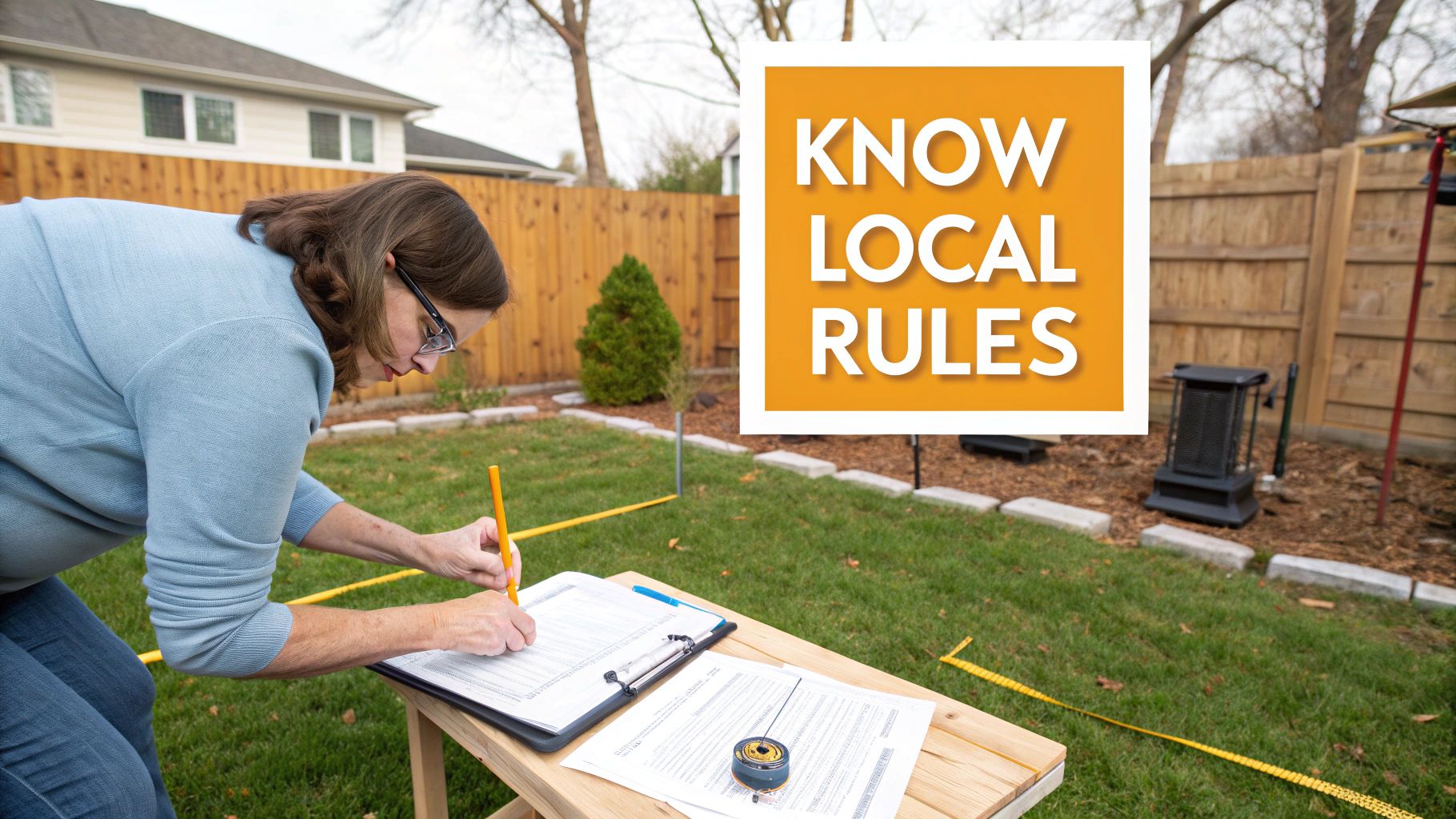
Before you do anything else—before you even think about building a coop—you need to check with your local government. I can't stress this enough: the biggest rookie mistake is buying chicks and then finding out you can't legally keep them.
Your first stop should be your city or county’s website. Search for "municipal codes" and look for keywords like "livestock," "poultry," or "animals." This is where you'll find the nitty-gritty details.
Here’s what you’re looking for:
- Are chickens even allowed? Some towns have outright bans.
- How many can I have? Limits of three to six hens are common.
- Can I have a rooster? Almost universally, the answer in suburbs is no. Their crowing is a major neighborhood nuisance.
- Where can the coop go? Most places have setback rules, meaning the coop has to be a certain distance from your house and your property lines.
And don't forget the HOA! If you live in a neighborhood with a Homeowner's Association, their rules often trump the city's and can be much more strict. A quick phone call or email can save you a world of trouble down the line.
Pro Tip: Don't lose hope if the laws seem a bit old-fashioned. Many people have successfully petitioned their towns to change outdated rules. If you get together with a few like-minded neighbors and present a well-researched proposal, you might be surprised at what you can accomplish.
To help you get organized, I've put together a quick checklist of these essential first steps.
Your Pre-Flock Checklist
This table breaks down the crucial tasks you need to tackle before bringing any chickens home. Getting these things sorted out first will make everything that follows so much smoother.
| Checklist Item | Why It Matters | Actionable Step |
|---|---|---|
| Check City/County Ordinances | This is a non-negotiable legal requirement. You need to know flock size limits, if roosters are banned, and coop placement rules. | Visit your local government's website and search the municipal code for "poultry" or "livestock," or call the planning/zoning department directly. |
| Verify HOA Rules | HOAs can have stricter rules than the city, including outright bans. Ignoring them can lead to fines and forced removal of your flock. | Contact your HOA board or management company and ask for a copy of the bylaws related to keeping animals or pets. |
| Scout the Perfect Coop Location | A good spot impacts flock health, your convenience, and predator safety. It's much easier to plan this now than to move a coop later. | Walk your yard and identify a spot with good drainage, a mix of sun and shade, and easy access from your house. |
| Inform Your Neighbors | A friendly heads-up can prevent future conflicts. Happy neighbors make for a peaceful chicken-keeping experience. | Have a casual conversation with your immediate neighbors. A promise of future fresh eggs often helps win them over! |
Completing these simple checks ensures your new hobby starts on the right foot, free from legal drama or neighborly disputes.
Choosing The Perfect Spot For Your Coop
Once you've got the green light, it's time to walk your property and find the ideal home for your future flock. Where you put the coop has a huge impact on your chickens' health and your own daily routine. For more on keeping your birds in top shape, check out our detailed guide on how to keep chickens healthy.
Here are the key things to consider for coop placement:
- Sun and Shade: A spot that gets morning sun and afternoon shade is the sweet spot. Chickens need sunlight, but they can easily overheat in the blistering afternoon sun.
- Drainage: Never build in a low spot where water collects. A soggy, muddy chicken run is a recipe for health problems like bumblefoot and attracts pests.
- Convenience for You: Remember, you'll be out there every single day, rain or shine. Pick a spot that isn't a major trek from your back door.
- Predator Protection: Placing the coop a little closer to your house can be a good deterrent for predators who are shy around human activity. Avoid setting it up right against a dense tree line or thick brush, which gives predators the perfect cover to sneak up.
Choosing the Right Chicken Breeds for Your Goals
With the legal groundwork sorted out, we get to the fun part—picking your chickens! This is probably the decision you’ve been dreaming about, and it's a big one. The breeds you choose will absolutely define your entire backyard chicken experience, from what you find in the nesting box to how you spend your time in the yard.
Think of it like choosing a family dog. Some breeds are calm and cuddly, perfect for a family with curious kids. Others are more independent and all-business. The right fit depends entirely on your climate, what you hope to get from your flock, and even your own personality.
First Things First: Eggs, Meat, or Both?
The most important question to ask yourself is simple: why do you want chickens? Your answer will instantly help you sort through the hundreds of available breeds, narrowing them down into three main categories.
For most people just starting out, the goal is a steady supply of fresh eggs. It’s no surprise that 68% of new keepers say eggs are their number one reason for getting a flock. When a single healthy hen can lay 250-300 eggs a year, it’s easy to see why. That’s more than enough for a family of four to have fresh eggs for breakfast without ever setting foot in a grocery store. To get a better feel for these production numbers, you can find more poultry insights on avinews.com.
Let’s break down the main types you’ll encounter:
- Egg Layers: These birds are the undisputed champions of production. Breeds like Leghorns, Australorps, and Sex Links are absolute egg-laying machines, often giving you an egg nearly every single day. They tend to be leaner since all their energy is focused on egg-making, not bulking up.
- Meat Birds: On the other end of the spectrum, you have breeds developed for incredibly fast growth. The Cornish Cross is the undisputed king here, reaching a butchering weight in just 8-10 weeks. These birds are not meant to be long-term pets; they serve a very specific, short-term purpose.
- Dual-Purpose Breeds: This is the sweet spot for many homesteaders and backyard keepers. Birds like Plymouth Rocks, Wyandottes, and Orpingtons are the best of both worlds. They lay a respectable number of eggs and grow to a healthy size, making them great for the dinner table down the line. They're the versatile workhorses of the chicken world.
Matching Breed Temperament to Your Lifestyle
Beyond what they produce, every chicken breed has a distinct personality. This is something first-timers often overlook, but it’s a huge deal. A friendly, calm flock makes daily chores feel like a joy. A skittish or pushy flock? That can add a lot of unnecessary stress to your day.
For instance, Buff Orpingtons are famously known as the "golden retrievers" of the chicken world. They’re sweet, curious, and often don’t mind being picked up, which makes them an amazing choice for families with kids. On the flip side, some of the top-tier egg layers, like Leghorns, can be a bit more flighty and aren't as interested in being your best friend.
Your flock's temperament will shape your daily interactions. If you're picturing chickens that will eat from your hand and follow you around the yard, you need to prioritize breeds known for being docile and friendly, like Silkies or Cochins.
A Quick Word on Climate and Egg Color
Finally, take a look at your local weather. Chickens are pretty tough, but some breeds are just built better for certain climates.
- Cold-Hardy Breeds: If you live somewhere with brutal winters, look for heavier birds with smaller combs and wattles. Breeds like Wyandottes and Chanteclers are great examples. Those smaller features are far less susceptible to frostbite.
- Heat-Tolerant Breeds: In scorching hot climates, you want the opposite. Lighter-bodied birds with big, floppy combs, like Leghorns, do much better. That large comb acts like a built-in radiator, helping the chicken stay cool.
And don't forget the fun stuff—egg color! While a blue egg tastes the same as a brown one, there’s a special kind of magic in collecting a basket filled with a rainbow of colors. Ameraucanas and Easter Eggers will give you beautiful blue and green eggs, while Marans are famous for their stunning, deep chocolate-brown eggs.
To help you narrow down your choices, here’s a look at some of the most common and beloved backyard breeds.
Popular Backyard Chicken Breeds Compared
| Breed | Primary Use | Annual Egg Production | Temperament |
|---|---|---|---|
| Buff Orpington | Dual-Purpose | 150-200 (Brown) | Docile, friendly, great for families |
| Plymouth Rock | Dual-Purpose | 200-280 (Brown) | Calm, curious, reliable layers |
| Australorp | Egg Layer | 250-300+ (Brown) | Gentle, hardy, excellent producers |
| Wyandotte | Dual-Purpose | 200-240 (Brown) | Calm, good foragers, cold-hardy |
| Easter Egger | Egg Layer | 200-280 (Blue/Green) | Friendly, curious, very popular |
| Leghorn | Egg Layer | 280-320 (White) | Active, excellent foragers, heat-tolerant |
| Silkie | Ornamental | 100-120 (Cream) | Extremely gentle, fluffy, great pets |
| Marans | Egg Layer | 150-200 (Dark Brown) | Calm, gentle, famous for "chocolate" eggs |
Choosing just one breed can be tough, which is why many people (myself included!) end up with a mixed flock. Having a few different types of chickens adds variety to your egg basket and a ton of personality to your backyard.
Building a Safe and Functional Chicken Coop
Your chicken coop is so much more than a simple house. It's their fortress, their bedroom, and where your hens will lay those delicious eggs. Honestly, a well-thought-out coop is the single most important investment you can make for your flock’s health, happiness, and safety. Getting this part right from the start is absolutely fundamental.
Let's walk through the non-negotiables every coop needs. From secure places to sleep to private spots for egg-laying and the all-important airflow, these are the building blocks of a great chicken home.
Core Components of Every Good Coop
Think of the coop as having three main jobs: providing a safe place to sleep at night, a clean place to lay eggs, and solid protection from predators and bad weather. To pull this off, every design—whether it’s a DIY masterpiece or a kit you buy—needs a few key features.
Here are the absolute essentials:
- Roosting Bars: Chickens don’t sleep on the floor. It’s their natural instinct to get up high to roost, safely away from anything lurking on the ground. These bars should be about 2-4 inches wide with smooth, splinter-free edges. Critically, make sure they are placed higher than the nesting boxes, or your hens might decide to sleep in the nests instead.
- Nesting Boxes: Hens crave a dark, quiet, and private spot to lay their eggs. A good rule of thumb is to provide one box for every 3-4 hens. Keeping them filled with clean, fresh bedding not only encourages laying but also helps keep your eggs pristine.
- Ventilation: This might be the most overlooked—and most critical—part of any coop design. Good ventilation, especially up high near the roof, lets ammonia from droppings and moisture escape. This is vital for preventing respiratory illnesses in your flock. Just remember, ventilation is not the same as a draft. Vents should always be above the roosting bars to avoid cold air blowing right on your sleeping birds.
A common question that comes up is what the primary goal of raising chickens is. This little infographic helps map out the different paths you can take.
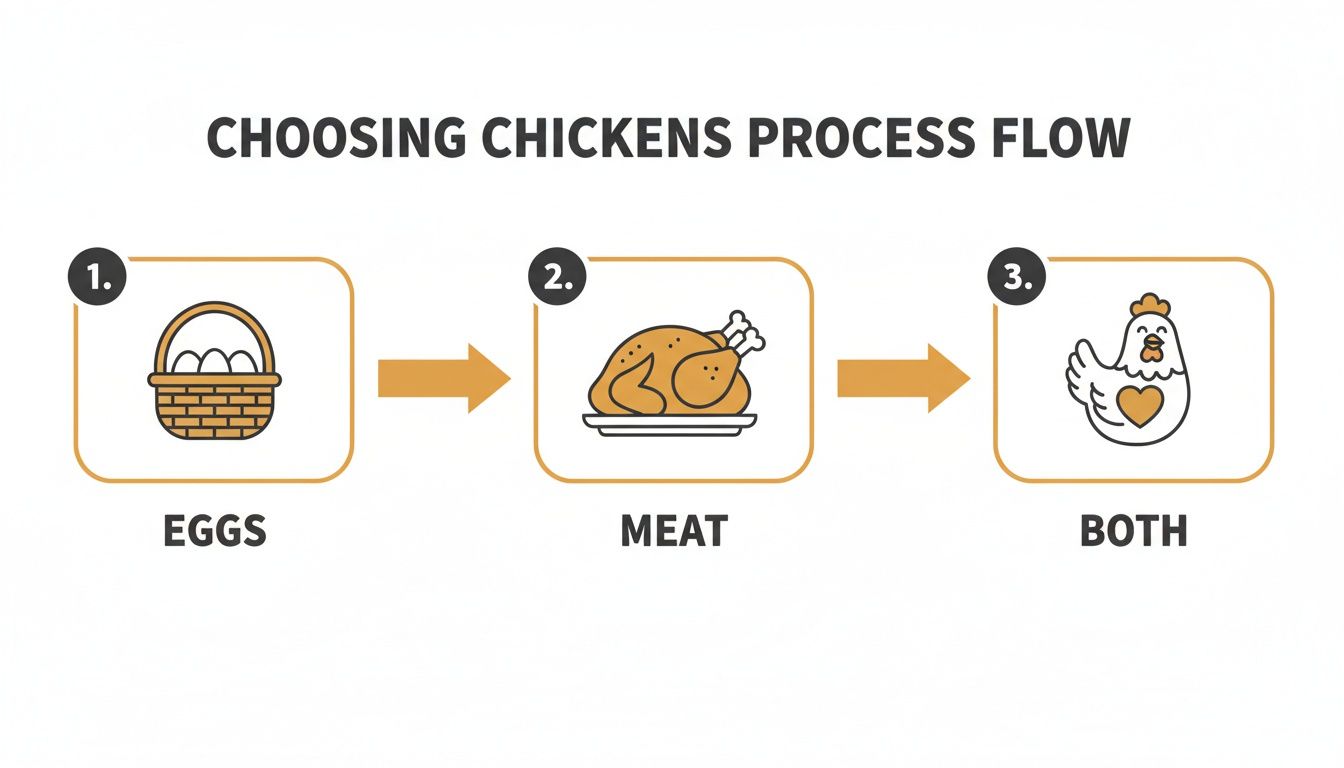
As you can see, your end goal—whether it's a steady supply of eggs, meat for the table, or both—directly impacts which breeds you'll choose and even some of your coop design choices.
Getting the Space Requirements Right
Overcrowding is a recipe for disaster. It's a huge source of stress and conflict in a flock, which can quickly lead to feather-pecking, bullying, and a higher risk of disease. Giving your birds enough room is one of the easiest ways to keep them happy and healthy.
Here are some solid starting points for a backyard flock:
- Inside the Coop: Plan on at least 3-4 square feet of floor space per standard-sized chicken.
- Outdoor Run: For their attached outdoor run, aim for a minimum of 10 square feet per bird.
These numbers aren't just pulled out of thin air. Industry standards often cite 10 sq ft/bird in outdoor runs because this amount of space is proven to help with weight gain and can reduce mortality rates by as much as 15%. Even though we aren't running commercial operations in our backyards, adopting this best practice gives your flock the room they need to truly thrive.
A Key Takeaway: When in doubt, always go bigger. You will never, ever regret giving your flock extra space, but you will definitely regret not giving them enough. A larger coop also makes it way easier if you decide to expand your flock down the road.
Making It a Fortress Against Predators
Your number one job as a chicken keeper is protecting your flock from predators. A flimsy coop is basically an open invitation for raccoons, hawks, foxes, and neighborhood dogs. Your coop has to be a fortress, especially at night when your birds are most vulnerable.
Start by thinking like a predator and targeting the weak points. Raccoons, in particular, are incredibly smart and can figure out simple latches in no time.
- Use Hardware Cloth, Not Chicken Wire: This is a big one. Chicken wire is designed to keep chickens in, not to keep predators out. You need to use 1/2-inch hardware cloth on all windows, vents, and any other openings. It’s far stronger, and the small gaps prevent a raccoon’s clever paws from reaching through.
- Secure All Latches: A simple hook-and-eye latch is a joke to a raccoon. Always use two-step locking mechanisms, like a carabiner clip threaded through a sliding bolt lock, on all doors and nesting box lids.
- Prevent Digging: Many predators will try to dig under the coop walls to get in. You can stop them by burying hardware cloth at least a foot deep around the entire perimeter. Another great method is to build a "predator apron"—a skirt of hardware cloth that extends outward from the base of the coop along the ground.
These security measures are truly non-negotiable. If you want to learn more about how coop design impacts your daily chores, check out our guide on designing a coop for easy egg collection. A secure coop doesn’t just protect your flock; it gives you priceless peace of mind.
What to Feed Your Flock for Peak Health and Great Eggs
Feeding chickens might seem simple—just fill the feeder, right? But what you put in that feeder is the secret to raising healthy, vibrant birds that lay incredible eggs. A chicken's nutritional needs change dramatically as they grow, and understanding these shifts is crucial for raising a thriving flock.
Think of it like feeding a human baby. You wouldn't give a newborn a cheeseburger, and you can't give a day-old chick the same feed you give a fully grown laying hen. Getting the right balance of protein, calcium, and other nutrients at each life stage prevents health problems and sets them up for a long, productive life.
Matching Feed to Their Age
Walk into any feed store, and you'll see a wall of options. It can feel overwhelming, but commercial chicken feed is thankfully broken down into three main stages.
- Starter Feed (0–8 weeks): This is for your brand-new fluffballs. It's a high-protein crumble, usually 20-24% protein, to fuel their explosive growth. This is their exclusive diet from day one until they're about two months old.
- Grower Feed (8–18 weeks): Once they hit their awkward teenage phase, it's time to switch. Grower feed has a lower protein content, around 16-18%, which supports steady, healthy development without rushing them into laying eggs too soon.
- Layer Feed (18+ weeks): As your hens approach their laying age, you’ll transition them to layer feed. The protein stays around 16-18%, but the real magic is the massive boost in calcium—an absolute must for forming strong, solid eggshells day after day.
A common mistake I see new owners make is keeping their birds on starter feed for too long. The high protein content can be tough on their kidneys over time. Follow the age guidelines on the bag; they're there for a reason!
For a more detailed breakdown of how and when to switch feeds, our comprehensive chicken feeding guide is a great resource to bookmark.
The Magic of Good Treats and Supplements
While a quality commercial feed should be their dietary foundation, smart supplementation can take their health to the next level. Chickens are natural foragers, so offering healthy extras keeps them happy and engaged. This is where you can make a huge difference.
But not all treats are created equal. You want to offer snacks that are both exciting for your flock and packed with nutritional value. This is especially true for laying hens. A hen puts a massive amount of calcium into every single eggshell she forms, and her diet needs to support that demand.
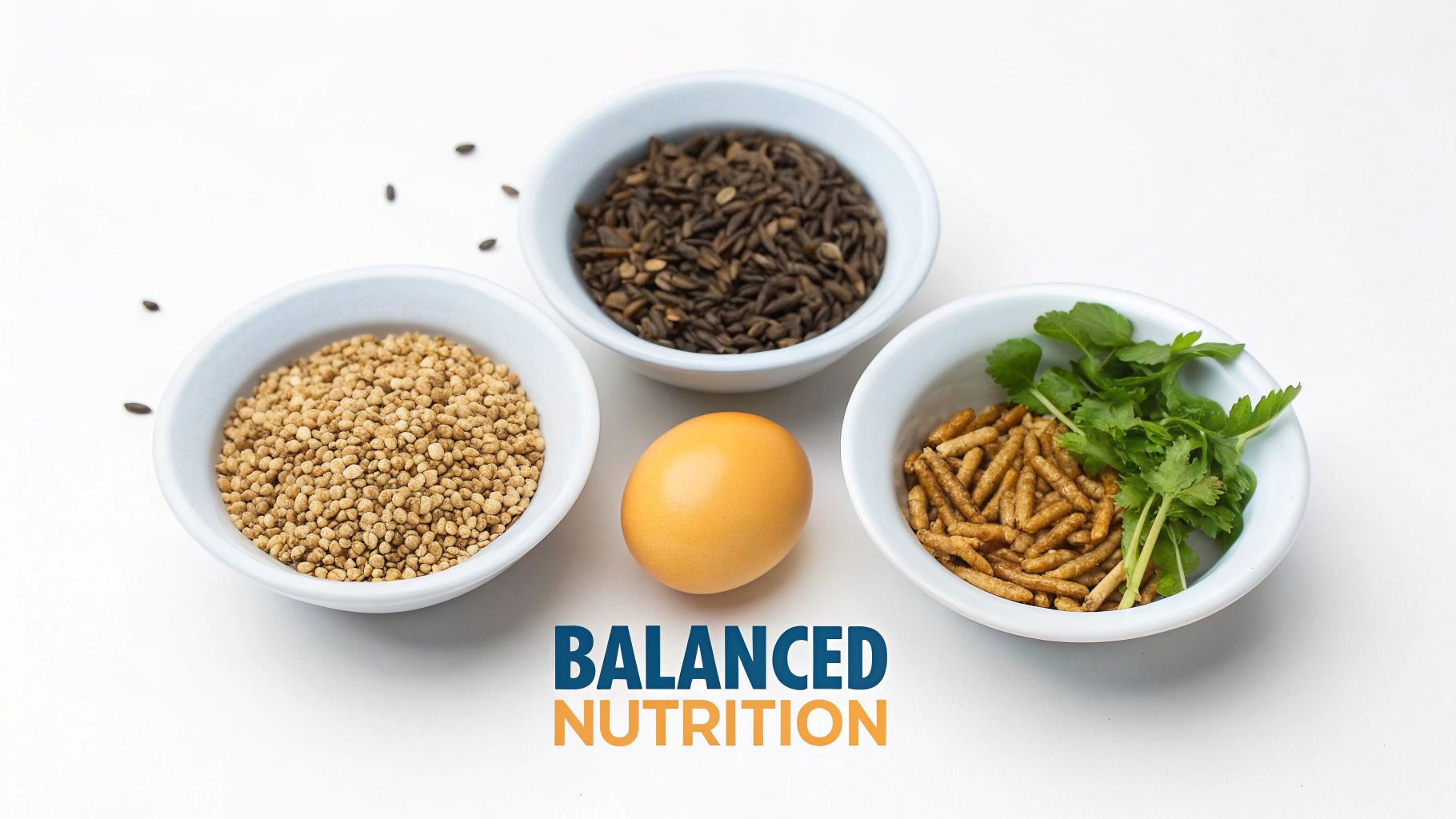
This is exactly why we're huge fans of a high-calcium treat like Pure Grubs Black Soldier Fly Larvae (BSFL). These aren't just empty calories. Grown right here in the USA and FDA-compliant, these grubs pack a serious nutritional punch, delivering up to 85% more calcium than mealworms. That's a game-changer. When a hen channels 2-3% of her daily calcium intake directly into her eggshells, a supplement like this makes a visible difference in shell quality.
Safe Kitchen Scraps vs. Foods to Avoid
One of the best perks of having chickens is their role as the world's cutest garbage disposals. They're fantastic at turning your kitchen scraps into fresh, delicious eggs. But you have to be careful about what you toss their way.
Here’s a quick-reference table for what's safe and what's a definite no-go.
| Safe Treats (In Moderation) | Absolutely Toxic (Never Feed) |
|---|---|
| Leafy greens (lettuce, kale, spinach) | Avocado (skin and pit) |
| Cooked rice and pasta | Raw potato peels |
| Berries and melon | Uncooked beans |
| Oatmeal and cooked grains | Chocolate or candy |
| Scrambled eggs | Onions and garlic |
| Most vegetables (carrots, cucumbers, squash) | Citrus fruits |
| Sunflower seeds | Moldy or spoiled food |
Feeding time is more than just a chore; it’s a daily chance to connect with your birds and invest in their well-being. By starting them on the right feed for their age and adding in high-quality, high-calcium treats like Pure Grubs, you’re well on your way to raising a happy, healthy, and incredibly productive flock.
Daily Habits for a Healthy and Happy Flock
Once your chickens are home and settled in, your job shifts from being a builder to a caretaker. Honestly, the real secret to keeping happy, healthy chickens isn't about some grand, complicated plan. It’s all about the small, consistent things you do every single day.
A simple, proactive routine is your best defense. It helps you catch potential problems long before they turn into real emergencies. Before you know it, these daily, weekly, and monthly checks will become second nature, and you'll develop that expert eye for what's normal and what's not.
Your Daily Health and Safety Routine
Every morning, before you even think about your own coffee, take a minute to just stand and watch your flock. This simple habit is probably the most powerful tool you have. Healthy chickens are busy chickens—they’re active, scratching around, and curious about what you’re doing.
Here's what your quick morning check-in should look like:
- Fresh Food & Water: This is the absolute bare minimum. Their water should always be clean (no poop or dirt in it!), and their feeder should have plenty of food.
- A Quick Headcount: Is everyone present and accounted for? It's a simple check that can alert you to a missing bird right away.
- Observe Behavior: Keep an eye out for anyone who's acting "off." A bird that's isolating itself, looks puffed up and lethargic, or has messy, ruffled feathers is telling you something's wrong.
- Check the Coop: Do a quick scan of the coop's perimeter. Look for any signs of digging, damaged wire, or anything that suggests a predator tried to visit overnight.
This whole process takes less than ten minutes, but it gives you an incredibly valuable snapshot of your flock’s well-being.
Biosecurity and Disease Prevention
Keeping your flock healthy is less about treating sickness and more about preventing it in the first place. That’s where biosecurity comes in. It sounds like a serious, scientific term, but it’s really just a set of common-sense habits to protect your birds from disease.
A big part of good biosecurity is simply giving your chickens enough room. When birds are overcrowded, stress levels go up and disease can spread like wildfire. A good rule of thumb is to aim for around 4-6 birds per 100 square feet of outdoor run space. This greatly reduces health risks. The importance of these preventative measures for all flock sizes became crystal clear after events like the HPAI outbreaks that impacted poultry markets back in 2025. You can learn more about how global poultry trends influence backyard practices on avinews.com.
If you remember only one biosecurity rule, make it this one: quarantine all new birds. Any new chicken, no matter how healthy it seems, needs to be kept completely separate from your flock for at least 30 days. This gives you a safe window to watch for any signs of hidden illness.
Weekly and Monthly Flock Inspections
While the daily once-over is great for spotting immediate issues, you’ll want to do a more thorough check-up on a regular basis. Once a week, set aside some time to gently handle each of your birds.
During this quick hands-on inspection, you're looking for:
- Body Condition: Does the chicken feel solid and well-muscled? You don't want to feel a prominent, sharp breastbone.
- Eyes and Nostrils: They should be clear, bright, and free of any bubbles, gunk, or discharge.
- Legs and Feet: Check for scaly leg mites, which make the scales on their legs look raised and crusty. Also, look for cuts or swelling on the bottoms of their feet (a condition called bumblefoot).
- Vent Area: The feathers around their vent (where the eggs come out) should be clean and fluffy. A messy, "pasty" vent often points to digestive problems.
About once a month, plan to do a deep clean of the coop. That means shoveling out all the old bedding, giving roosts and surfaces a good scrub, and laying down fresh, clean material. This is also the perfect time to give your predator-proofing a serious once-over. Check all the locks, latches, and wire to make sure there are no new gaps or weak spots. Building these simple habits is what will truly make you a confident, seasoned chicken keeper.
Your Top Chicken Questions, Answered
As you get ready to bring home your first flock, you're going to have questions. Everyone does! It's a huge part of the learning process, and getting solid answers right from the start will make you a much more confident chicken keeper.
We've been there, and we've heard it all. So, let's dive into some of the most common questions we get from folks just starting out. From the great egg-waiting game to flock dynamics, here’s the straightforward advice you need.
How Long Until My Chickens Start Laying Eggs?
This is the big one, isn't it? The wait for that very first egg can feel like an eternity, but you can generally expect most breeds to start laying somewhere between 18 and 24 weeks old. Some of the more production-focused breeds, like Australorps, might start on the earlier end of that scale. Heritage breeds, on the other hand, often take their sweet time.
You'll know they're getting close when you see a few key physical changes. Their combs and wattles will swell up and turn a deep, vibrant red. You’ll also probably catch them checking out the nesting boxes, scratching around and arranging the bedding just so. It's a sure sign things are about to happen!
Do I Need a Rooster for My Hens to Lay Eggs?
This is one of the most persistent myths out there! The short answer is no, you absolutely do not need a rooster for your hens to lay eggs. Hens will lay eggs on their own regular cycle, with or without a male around. A rooster's only role is to fertilize the eggs so they can be hatched into chicks.
For most backyard chicken keepers, a hen-only flock is the way to go. Many towns and cities actually ban roosters because of their crowing. You'll get plenty of delicious, unfertilized eggs without the 5 AM alarm clock.
A quick tip: A hen-only flock is often much calmer. Without a rooster competing for dominance, you avoid a lot of potential stress and the occasional aggressive behavior roosters can sometimes show toward people.
What's the Real Startup Cost for Raising Chickens?
Your initial investment can really vary, but most beginners should budget between $300 and $800 to get started. The single biggest line item is almost always the coop. If you're handy, you can slash this cost by building your own from a kit or even using reclaimed materials.
After that, your ongoing costs are much more manageable. They mostly boil down to:
- Feed: A 50lb bag of good-quality layer feed runs about $20-$30 and will feed a small flock for several weeks.
- Bedding: A bale of pine shavings or straw is pretty affordable.
- Health Supplies: It’s wise to have a basic first-aid kit and a few supplements on hand for peace of mind.
While there's definitely an upfront cost, many chicken owners find that the endless supply of fresh eggs quickly starts to balance out the monthly feed bill. It really is a rewarding and sustainable hobby.
How Do I Introduce New Chickens to My Flock?
This is something you have to get right. Introducing new birds carefully is the key to preventing serious injuries and keeping diseases out of your flock. Whatever you do, don't just toss the new chickens in with the old ones and hope for the best.
First things first: quarantine. Always keep the new birds in a completely separate coop or enclosure for a full 30 days. Set it up so they can see and hear the main flock but can't touch them. This "look but don't touch" period is critical. It gives you time to watch the new arrivals for any signs of illness and lets both groups get used to each other from a safe distance.
Once the quarantine is over, let them mingle for short, supervised periods in a neutral area, like the main run when the old flock is out free-ranging. This helps them work out the new pecking order with far less drama.
For a treat that helps build strong eggshells and supports your flock's overall health, consider adding Pure Grubs to their diet. Our USA-grown Black Soldier Fly Larvae are a safe, high-calcium supplement your chickens will go crazy for. Learn more and see the difference at puregrubs.com.