

How to Increase Egg Production in Your Flock
When you want to boost egg production, it all boils down to mastering the fundamentals of hen wellness. The most direct path to a fuller egg basket comes from focusing on a high-protein diet, providing 14-16 hours of daily light, maintaining a secure and spacious coop, and staying on top of your flock's health.
Your Flock's Roadmap to More Eggs
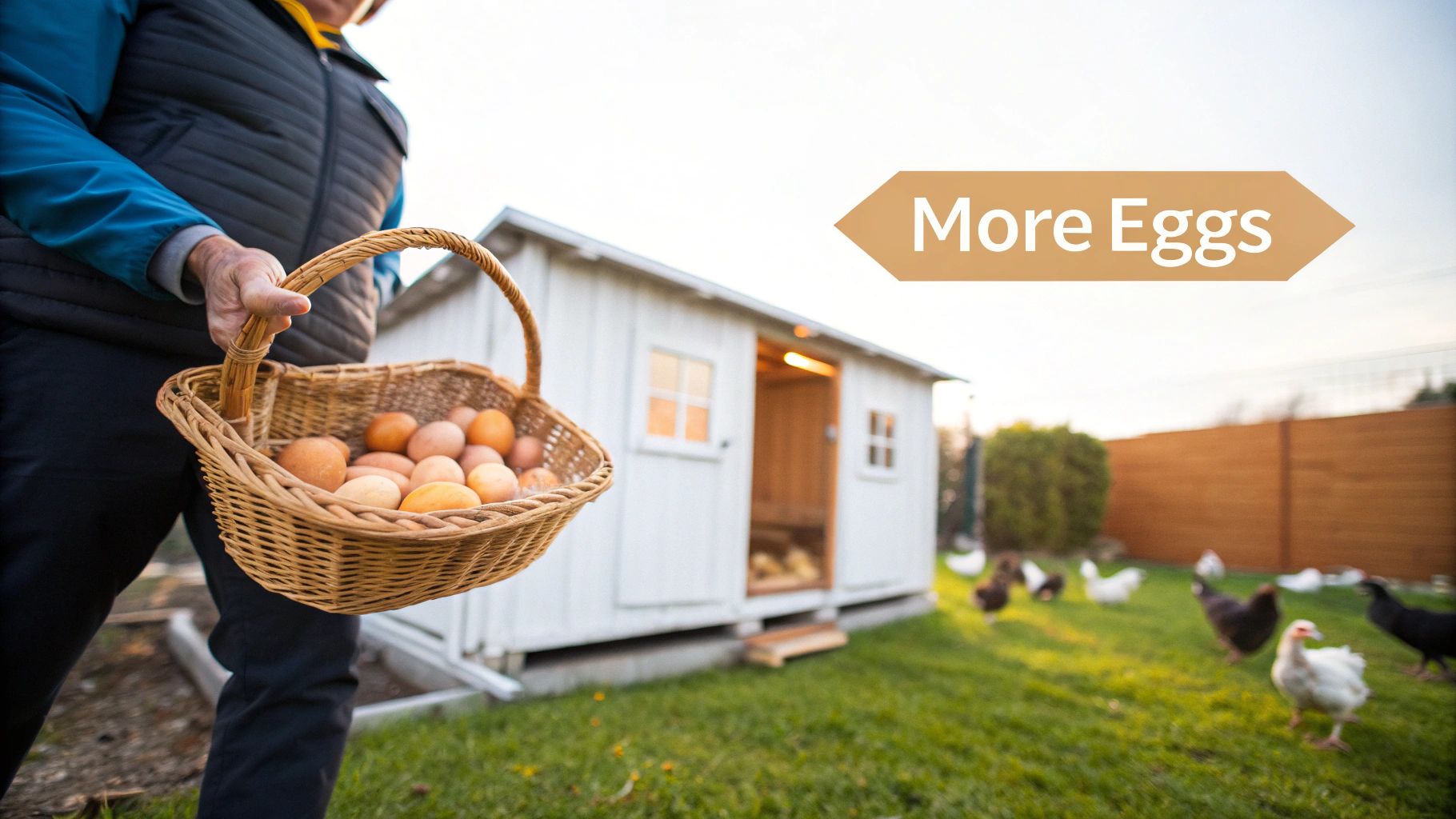
Getting more eggs isn't about some secret trick. It's about consistently creating an environment where your hens feel safe, healthy, and stress-free enough to do what they do best. Think of this guide as your map to building a sustainable, high-yield system, moving beyond temporary fixes that don't last.
This whole approach is built around triggering and sustaining a hen's natural laying cycle. When all the right elements are in balance, happy hens become prolific layers. It’s that simple.
The Core Pillars of Hen Productivity
To really understand how to get more eggs, it helps to see how all the pieces fit together. These aren't just separate chores on a to-do list; they're interconnected parts of a complete wellness strategy. If you let one area slide, it can easily undermine all your hard work in the others.
Here are the key areas we’re going to dive into:
- Superior Nutrition: Fueling your hens with the right feed is non-negotiable. This means a quality layer feed with 16-18% protein and plenty of calcium—the essential building blocks for forming strong, beautiful eggs.
- Optimized Lighting: A hen's reproductive cycle is hardwired to respond to daylight. You need to ensure they get 14-16 hours of light per day, especially during the shorter, darker days of fall and winter, to keep production humming.
- A Secure Coop Environment: Stress is the enemy of egg production. A safe, clean, and roomy coop keeps your flock calm and protected, preventing the sudden drops in output that stress can cause.
- Proactive Health and Management: Regular health checks and smart flock management let you catch small problems before they become big ones that can bring egg-laying to a screeching halt.
Key Takeaway: Consistent egg production is a direct result of consistent care. By mastering these four pillars, you create a reliable system that encourages your hens to lay to their full potential, day in and day out.
This roadmap will give you a clear path to turning a flock of "freeloaders" into the productive, egg-laying team you’re looking for.
To give you a quick overview, here's a table that breaks down these essential factors.
Key Factors for Increasing Egg Production at a Glance
| Factor | Why It Matters for Laying | Quick Action to Take |
|---|---|---|
| Nutrition | Provides the essential protein and calcium needed to form eggs daily. A deficiency will halt production. | Switch to a quality layer feed with 16-18% protein and supplement with calcium sources like oyster shells. |
| Lighting | Light exposure stimulates the hen's pituitary gland, which triggers ovulation and the laying cycle. | Use a timer to provide 14-16 hours of low-wattage light daily, especially during fall and winter. |
| Housing | A safe, clean, and spacious coop reduces stress, a major inhibitor of egg production. | Ensure at least 4 sq. ft. per hen inside the coop and provide clean, dry nesting boxes. |
| Health | Parasites, illness, and injury divert a hen's energy from laying eggs to simple survival. | Perform weekly health checks for signs of mites, lice, or respiratory issues. Keep the coop clean. |
This table is a great starting point, but let’s dig into the most critical element of all: nutrition.
Fueling Your Flock for Peak Egg Production
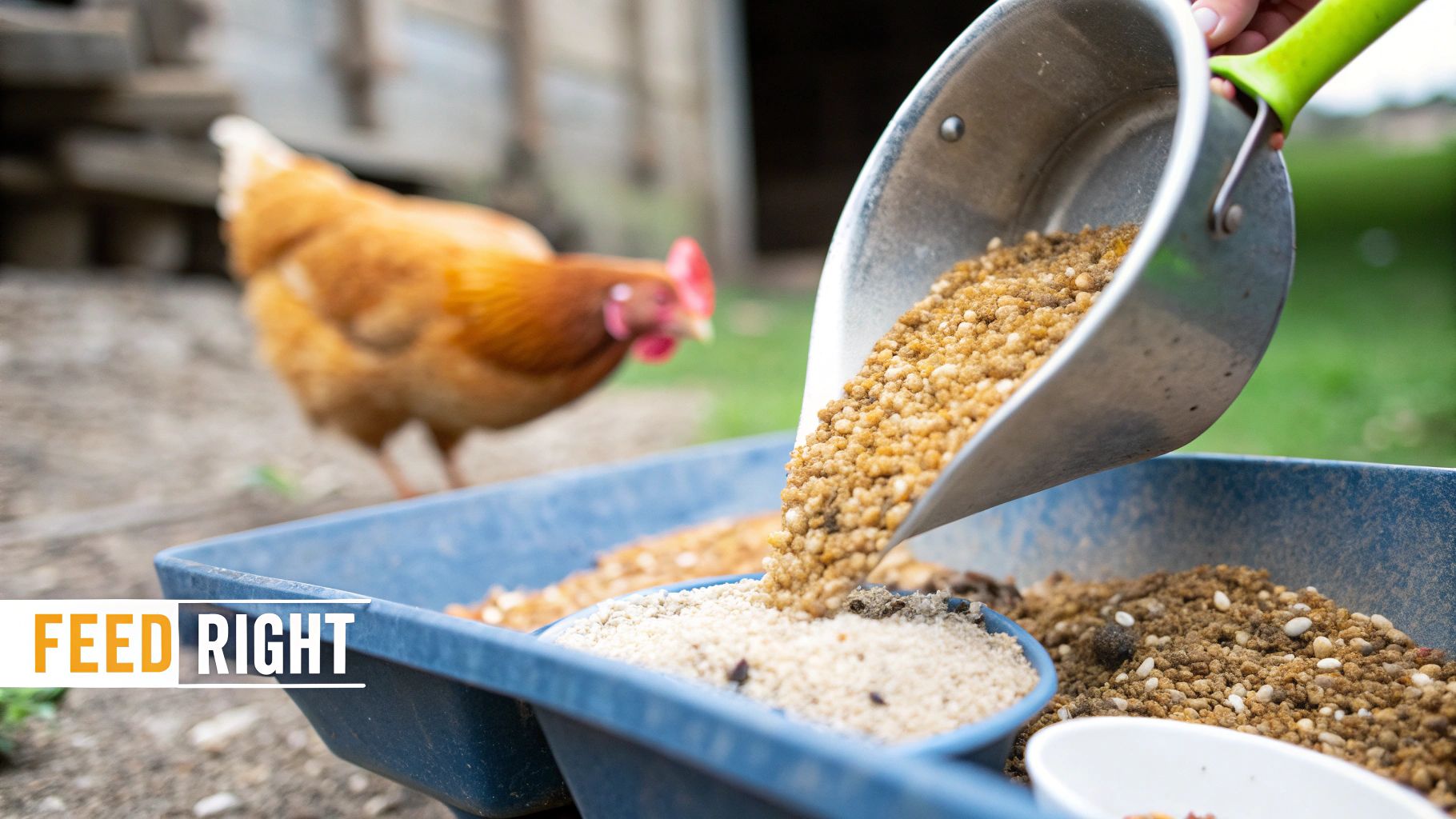
If you want a steady supply of eggs, you have to start with what you put in the feeder. It’s that simple. Think of your hens as tiny, feathered athletes; their performance is a direct reflection of the fuel they get. A hen pours a huge amount of energy and nutrients into every single egg, so a poor diet will quickly shut down the entire production line.
This is the one area you just can’t skimp on. Before you try anything else, the first and most crucial step is to give your flock constant access to a high-quality layer feed. Without that solid nutritional base, everything else is a waste of time.
The Power of Protein in Layer Feed
For laying hens, the magic number for protein is between 16% and 18%. This specific range provides all the essential amino acids they need to form the egg white (albumen) while also keeping their own bodies running smoothly. If you let that number dip, a hen has to choose between her own health and laying an egg—and she’s always going to choose survival.
When you're at the feed store, always check the tag for the guaranteed analysis. A "complete" layer feed is what you’re looking for. It’s scientifically formulated with not just protein but also the right balance of carbs for energy, plus critical vitamins and minerals.
My Two Cents: Kitchen scraps are a fun treat, and my flock goes nuts for them, but they should never make up more than 10% of their total diet. Overloading your birds on low-protein snacks like lettuce or bread just dilutes their balanced feed, and you’ll see the impact in the nesting box.
That balanced feed needs to be the core of their diet, available 24/7. From there, you can add in some powerful extras that really dial in on the specific needs of a laying hen.
Calcium Is Critical for Strong Shells
An eggshell is almost pure calcium carbonate. If a hen can’t get enough calcium from her diet, her body will start pulling it from her own bones to form shells. This is a bad road to go down. It weakens her skeleton and leads to those rubbery, soft-shelled eggs, shell-less "wind eggs," or she’ll just stop laying altogether.
A common mistake I see is people buying feed with calcium already mixed in. The problem is that not every bird needs the same amount. Roosters and non-laying hens can actually suffer from kidney damage if they get too much.
The best way to handle this is to provide a separate, free-choice calcium source. This lets each hen self-regulate and take only what her body needs for that day's egg.
- Crushed Oyster Shell: This is the gold standard. It’s a slow-release source of calcium that’s really easy for them to digest.
- Crushed Eggshells: You can also bake and crush your flock's old eggshells. Just make sure you crush them into tiny pieces so the hens don't recognize them and get any funny ideas about eating their own eggs.
Just put the calcium in a separate dish from their main feed. This one simple step is one of the most effective ways I know to guarantee strong, healthy eggshells.
High-Impact Treats That Boost Production
To really get your flock performing at its best, think about treats that mimic what they’d find foraging in the wild. Bugs are a chicken’s natural superfood, providing an incredible blast of protein and other key nutrients.
This is where something like Black Soldier Fly Larvae (BSFL) comes in. We use Pure Grubs, which are a perfect example. They're a concentrated protein source that supports consistent laying and—get this—they have up to 85% more calcium than mealworms. That calcium goes directly toward building stronger eggshells.
For a deeper dive into crafting the perfect diet, our guide on what to feed laying hens has even more detail. Tossing your flock a handful of BSFL a few times a week, especially during a molt or in the dead of winter, gives them that high-octane fuel they need to keep laying.
Creating the Perfect Coop Environment for Laying Hens
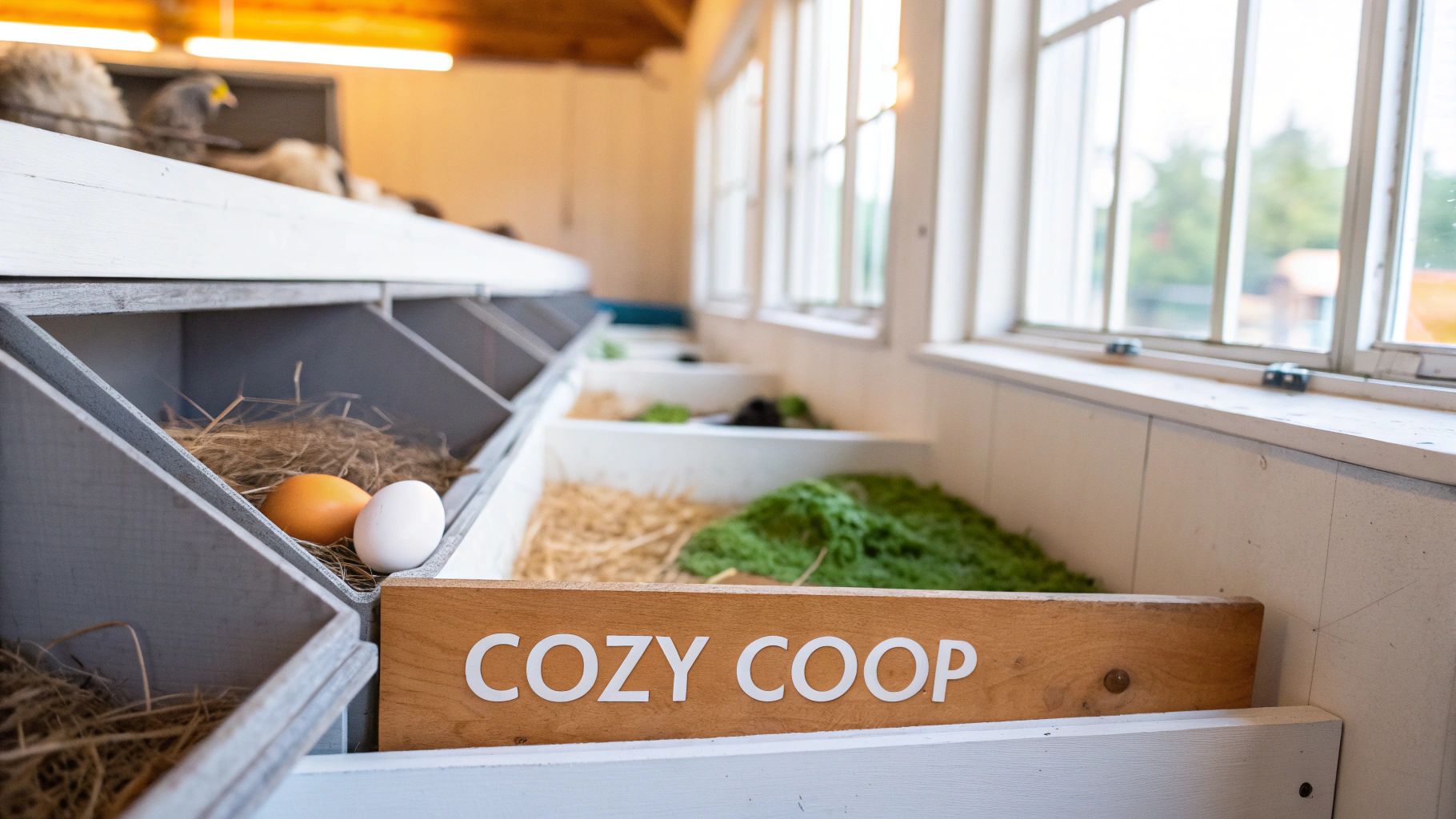
A hen's surroundings are constantly sending her signals. Is it safe? Is it comfortable? Is it a good place to lay an egg? If the coop feels cramped, dirty, or stressful, her body will shift into survival mode, and reproduction—egg laying—takes a backseat. Your egg basket will tell the tale.
Building a productive coop is one of the most hands-on ways to encourage more eggs. This goes beyond just providing shelter. You're creating a space that works with their natural instincts, not against them. A well-designed coop is a low-stress coop, and a low-stress hen is a laying hen.
Space and Cleanliness: The Non-Negotiables
Overcrowding is a recipe for disaster. It leads to pecking order skirmishes, a rapid buildup of waste, and the easy spread of disease, all of which are surefire ways to stop egg production in its tracks. As a rule of thumb, make sure you provide at least 4 square feet of space per bird inside the coop itself.
What's under their feet is just as critical. The bedding must be kept clean and, most importantly, dry. When bedding gets wet and soiled, it starts releasing ammonia gas, a nasty irritant that can lead to respiratory problems and other health issues that put the brakes on laying. A deep, fluffy layer of pine shavings or straw that you clean out and refresh regularly is your best defense.
A hen is hardwired to find a clean, dark, and private spot to lay her eggs. If your nesting boxes are gross or too exposed, she’ll find her own spot—like under a bush in the far corner of the yard—and you might never find those eggs.
Give Them Plenty of Nesting Boxes
Nobody likes waiting in line, and your hens are no exception. If they have to constantly compete for a place to lay, some will just give up and drop their eggs on the floor. To avoid this, aim for a ratio of one nesting box for every 4-5 hens.
Keep those boxes inviting! Fill them with fresh, clean bedding to make them the most appealing option around. This small detail not only encourages hens to lay where you want them to but also makes your daily gathering a whole lot easier. For more ideas on streamlining your routine, check out our guide on efficient chicken coop egg collection strategies.
Let There Be (the Right Amount of) Light
Light is the master switch for a hen's reproductive cycle. Her body is programmed to lay when the days are long, which signals that it's the right time of year to raise chicks. To keep her on a consistent laying schedule, a hen needs 14 to 16 hours of light every single day.
Natural daylight does the job beautifully in the spring and summer. But when fall and winter roll around and the days get shorter, egg production will naturally take a nosedive unless you step in.
This is where a little bit of technology helps. A simple, low-wattage bulb (a 40-watt equivalent LED is perfect) hooked up to an outlet timer is all you need to trick their bodies into thinking it's still mid-summer.
- Set the timer to turn the light on early in the morning to extend the "daylight" to that 14-hour sweet spot.
- Don't leave the light on 24/7. Hens absolutely need a period of darkness to rest and roost properly. Constant light is stressful and will do more harm than good.
These aren't just backyard tricks; they are foundational principles used everywhere, from small homesteads to massive commercial operations. For perspective, China has been the world's leading egg producer for years, accounting for over 33.6% of global production. Their success in provinces like Henan and Shandong relies on perfecting these very details—optimizing space, managing cleanliness, and precisely controlling lighting cycles.
Keeping Your Hens Healthy and Laying
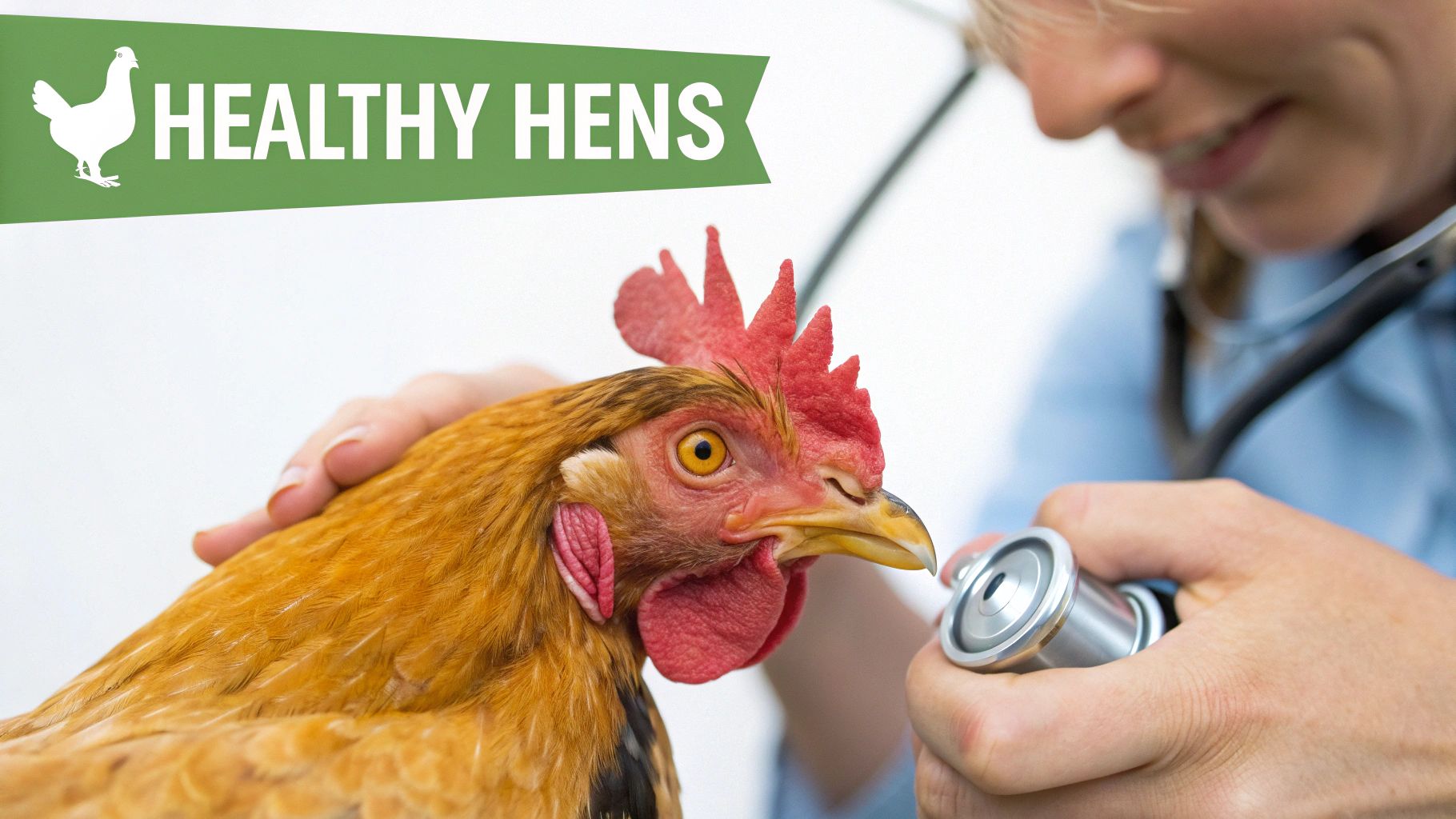
You can provide the best feed and the coziest coop, but a sick or stressed hen simply won't lay. It’s a matter of biology. Her body will redirect all its energy toward survival, not production, and your egg basket will stay empty.
This is why becoming a bit of a "flock detective" is one of your most powerful tools. Learning to spot trouble early, before it takes hold, is the real secret to keeping those eggs coming consistently. It all starts with knowing what a healthy, happy hen looks like.
Performing Regular Health Checks
A quick "once-over" for each bird just once a week can make a world of difference. You don’t need to be a veterinarian to do this; you just need to be observant. I find the easiest way to make this a habit is to do it while locking up the coop for the night.
Here’s a quick checklist for what to look for in a healthy, laying hen:
- Bright, Clear Eyes: Her eyes should be wide open, alert, and totally free of any gunk, bubbles, or discharge.
- Vibrant Comb and Wattles: A deep, rich red color is the classic sign of a hen in her laying prime. If her comb looks pale and shrunken, she’s likely off-lay.
- Clean and Fluffy Vent: The area under her tail should be clean with fluffy feathers. Any "pasting up" or messiness is a red flag for digestive problems.
- Smooth Legs and Feet: Check for scaly leg mites, which look like raised, crusty, rough scales on their legs.
A healthy hen is a busy hen. She's scratching around, foraging, and interacting with the flock. If you spot a hen that’s isolating herself, seems lethargic, or stays puffed up, that’s often your very first sign that something is wrong.
Proactive Disease and Parasite Prevention
The best way to handle health problems is to stop them from ever starting. A few simple biosecurity habits are your strongest defense against common flock-killers like mites, lice, and nasty respiratory infections.
It’s an old saying, but it’s true: a clean coop is a healthy coop. Regularly scooping out soiled bedding prevents ammonia from building up, which can wreak havoc on a chicken's sensitive respiratory system and open the door to illness. And, of course, always keep those feeders and waterers scrubbed clean to prevent bacteria from spreading.
For a deeper dive into the daily, weekly, and monthly chores, you can learn more about how to keep your chickens healthy in our comprehensive guide.
One of the wisest things you can do is quarantine any new birds for a minimum of 30 days before they meet your flock. This gives you plenty of time to watch for signs of sickness, ensuring they don't bring in a disease that could tank your entire flock's egg production.
This intense focus on hen welfare isn’t just a backyard strategy; it’s a massive shift in the entire industry. As of February 2025, cage-free and organic systems in the United States accounted for 42.1% of the table egg layer flock. This change is driven by the simple fact that healthier, well-cared-for hens are more productive hens. You can find more U.S. egg production trends on unitedegg.com. Taking these proactive health steps is truly the best investment you can make in a full egg basket.
Thinking Long-Term for a Steady Supply of Eggs
Getting a steady stream of eggs isn't just about what you do today or tomorrow. To really master egg production, you have to think like a seasoned flock manager and look at the bigger picture. Things like the age of your flock, the breeds you choose, and natural cycles like molting are what separate a sporadic supply from a consistently full egg basket.
A hen's ability to lay eggs follows a pretty predictable arc. She'll hit her stride somewhere between six months and two years old—this is her prime time. After she passes the two-year mark, you can expect her output to drop by about 15-20% each year. It’s a natural part of her life cycle, but something you can absolutely plan for.
Managing Flock Age and the Annual Molt
This is where a little bit of planning goes a long way. If you want a reliable supply of eggs, you can't rely on a single-age flock. A smart strategy is to stagger your flock by adding a new group of young pullets each spring. This way, as your older girls start to taper off, you have a fresh batch of "point-of-lay" hens just gearing up. It creates a beautiful, overlapping cycle that keeps the nesting boxes full.
Of course, this cycle gets interrupted every year by the molt. Usually in the fall, your hens will look like they’ve exploded in a pillow fight. They're losing their old feathers and growing a new, thick set for the winter. This is a massive protein-drain on their bodies.
Expert Tip: Don't be alarmed by a sudden stop in egg-laying during the molt. It’s completely normal. A hen’s body can't produce eggs and grow a full set of new feathers at the same time. All her resources are being diverted to feather production, which can last anywhere from a few weeks to a couple of months.
Since feathers are made up of about 85% protein, you can give your flock a major leg up by boosting their protein intake. High-protein snacks like Black Soldier Fly Larvae are perfect for this. They help your girls get through the molt faster, which means they’ll get back to laying for you sooner.
Picking the Right Breeds for the Job
Your long-term success really begins before you even bring home your first chick. Choosing the right breed is critical. If your primary goal is a fridge full of eggs, you need to select birds that have been specifically bred for high production.
Here are a few egg-laying superstars to consider:
- Rhode Island Reds: These are tough, reliable birds that will give you 200-280 large brown eggs a year.
- White Leghorns: The classic white-egg layer for a reason. They are the workhorses of the commercial industry and can lay over 300 eggs annually.
- Australorps: A wonderful, calm breed that excels at laying, often producing 250-300 light brown eggs per year.
Thinking strategically about your flock puts you in a great position. It's interesting to see how these small-scale decisions mirror the larger industry, where global egg production is projected to hit around 99 million metric tons by 2025. You can read more about global egg market trends on foodcom.pl. By planning your flock for the long haul, you're building a more resilient and productive system right in your own backyard.
Common Questions About Boosting Egg Production
Even with a solid plan, questions always come up. It's one thing to know the general rules of chicken keeping, but it's another thing entirely to figure out what's going on with your specific flock. Let’s dig into some of the most common puzzles and concerns chicken keepers run into when they're trying to get more eggs.
Figuring out these details is often the final piece of the puzzle. It can turn a frustrating mystery into a simple fix and get those nesting boxes full again.
Why Have My Hens Stopped Laying Eggs?
A sudden stop in laying can be scary, but it's usually nothing to panic about. More often than not, it's tied to simple, natural causes. The biggest culprit is the annual molt, that time in late fall when hens drop their old, ragged feathers to grow a shiny new set. This process requires a massive amount of protein, so their bodies put egg-laying on hold completely.
Shorter days are another huge factor. As we head into fall and winter, getting less than 14 hours of light a day is a natural signal for their internal "egg factory" to shut down for the season. Don't forget about stress, either—a close call with a hawk, moving to a new coop, or even just adding new chickens to the flock can be enough to temporarily halt production.
Before you assume the worst, do a full sweep of your property. A hen's deepest instinct is to find a hidden, secure spot to lay her clutch. She might not have stopped laying at all—she may have just found a new favorite spot under a porch or deep in a bush that you haven't found yet.
And of course, it's always smart to do a quick health check. An underlying illness will force a hen to redirect all her energy from laying eggs to just surviving.
How Much Protein Do Laying Hens Really Need?
To keep your hens laying consistently, you'll want to provide a feed that contains 16% to 18% protein. Any good commercial layer feed is formulated to hit this target perfectly, giving them all the building blocks they need to form an egg every day.
But there are times when they need an extra boost. During the annual molt, for instance, a hen's body is working overtime to regrow feathers, which are made of about 85% protein. Bumping their protein intake up to around 20% temporarily can make a huge difference in how fast they get through it.
You can easily do this by offering high-protein supplements or treats. This little boost helps them recover their strength and feathers much quicker, which means they'll get back to laying for you sooner.
Is It Possible to Give Hens Too Much Calcium?
Yes, you absolutely can. While calcium is non-negotiable for creating strong, solid eggshells, flooding their system with it can cause real harm. An overdose of calcium can lead to kidney damage and other serious health problems. This is especially risky for roosters or non-laying hens who have no way to use the excess.
This is why having calcium pre-mixed into the main feed can be a problem for a mixed flock. The safest and most effective way to provide it is "free-choice," in a separate little dish.
- Crushed oyster shells are the gold standard, as they provide a slow, steady release of calcium.
- Cleaned, baked, and crushed eggshells from your own kitchen are a fantastic—and free—alternative.
This simple method lets each hen regulate her own intake. She'll instinctively take only what her body tells her she needs for that day's egg. It's a small change that ensures every bird in your flock stays healthy.
Does Chicken Breed Affect Egg Production?
It's one of the single biggest factors, without a doubt. If your main reason for getting chickens is a steady supply of fresh eggs, then choosing a production breed from the very beginning is a must.
Some chicken breeds have been selectively bred for generations for one thing: laying a ton of eggs.
- Leghorns: These are the undisputed champions of the egg world, often laying over 300 crisp white eggs a year.
- Rhode Island Reds: A classic, hardy backyard favorite, known for reliably producing 200-280 large brown eggs annually.
- Australorps: These gentle giants are fantastic layers, frequently giving you 250-300 light brown eggs each year.
On the flip side, many ornamental or heritage breeds are beautiful but might only lay 100-150 eggs a year. Knowing what a breed was developed for before you bring them home is key to having your expectations met.
Give your flock the high-protein, high-calcium boost they need to lay strong, beautiful eggs. Pure Grubs offers premium, USA-grown BSFL that support peak health and production, especially during stressful times like molting. Shop Pure Grubs today!