

How to Feed Ducks The Right Way
If you want to feed ducks correctly, the first rule is simple: ditch the bread. Instead, think about what they’d find in nature. Things like cracked corn, oats, birdseed, and leafy greens are fantastic choices because they mimic a duck's natural diet and give them the nutrients they actually need.
Your Quick Guide to Feeding Ducks
We’ve all seen it—people tossing leftover bread to ducks at the local pond. It feels like a harmless, classic activity, but it’s one of the worst things you can do for them. Bread is essentially junk food for waterfowl. It fills their stomachs without offering any real nutritional value.
Over time, a diet heavy in processed grains can lead to severe malnourishment and even a painful, irreversible wing deformity called "angel wing." Just by swapping out bread for healthier alternatives, you can make a huge difference in their well-being.
Healthy Foods vs. Harmful Items
Knowing what to offer makes all the difference. The right foods provide energy and essential vitamins, while the wrong ones can cause disease and even pollute their water.
This isn’t just a casual observation among bird lovers; it's a principle that's shaping animal nutrition on a larger scale. The commercial duck feed market is actually projected to reach $6.39 billion by 2032, a surge driven by a demand for scientifically formulated diets that boost duck health. This growth really highlights the importance of moving away from empty-calorie foods like bread. If you're curious, you can explore more insights about the duck feed market and its focus on proper nutrition.
To make it easy, here’s a quick comparison of the good stuff versus the bad stuff.
Duck Feeding Quick Guide: What to Offer and What to Avoid
| Safe Foods for Ducks | Why It's Good | Harmful Items to Avoid | Why It's Harmful |
|---|---|---|---|
| Cracked Corn | High in energy and easy for ducks to digest. | Bread (any kind) | Offers zero nutritional value and can lead to "angel wing." |
| Oats (uncooked) | A great source of essential nutrients and fiber. | Crackers & Chips | High in salt and processed fats, which are toxic to birds. |
| Birdseed | Provides a balanced mix of seeds they naturally eat. | Junk Food (donuts, popcorn) | Loaded with sugar and preservatives that ducks can't process. |
| Lettuce & Greens | Torn-up pieces mimic aquatic plants they forage for. | Avocado | Contains a toxin called persin, which is highly poisonous to birds. |
| Frozen Peas (thawed) | Ducks love them, and they are packed with vitamins. | Moldy Food | Can cause aspergillosis, a fatal lung infection in birds. |
Ultimately, choosing nutritious foods helps keep ducks healthy and their environment clean.
This infographic breaks it down visually.
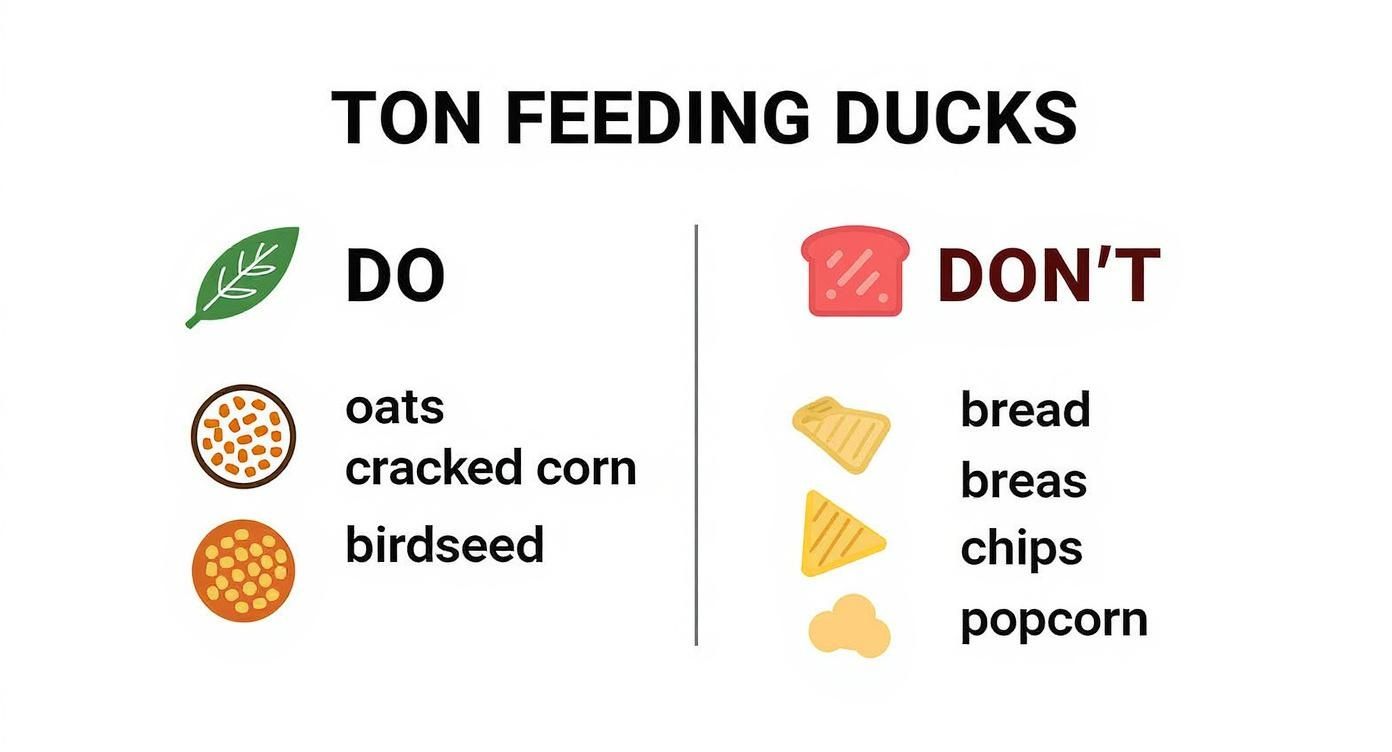
As you can see, offering something simple like oats supports a duck's health, while empty calories from bread do the opposite.
Key Takeaway: Swapping bread for nutrient-rich foods is one of the most impactful things you can do for local waterfowl. A small change in what you bring to the pond makes a world of difference for their health and the ecosystem they call home.
The Hidden Dangers of Feeding Bread to Ducks
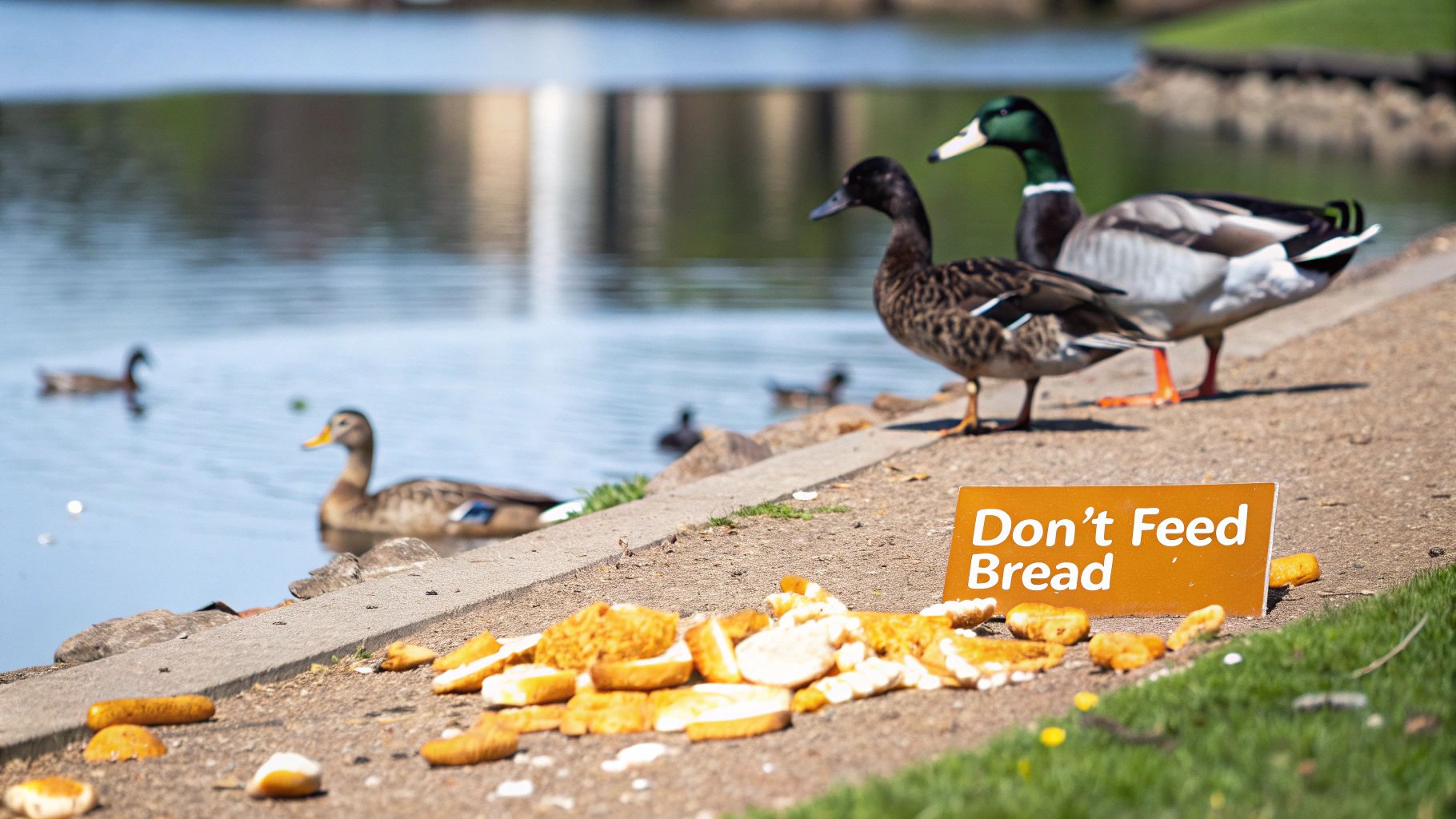
We've all seen it, and many of us have done it—tossing leftover bread to ducks at the local park. It feels like a timeless, harmless tradition. The reality, though, is that this seemingly kind gesture is one of the most damaging things we can do for waterfowl.
Bread is essentially junk food for birds. It fills their small stomachs up fast, but it’s packed with empty calories. This leaves no room for the nutrient-rich, natural foods they actually need to thrive, leading to serious malnourishment, especially in young ducklings.
The Problem with Empty Calories
When ducks get used to a steady diet of bread, they stop foraging for the insects, seeds, and aquatic plants that make up their natural diet. This means they miss out on crucial vitamins and minerals, which can lead to a heartbreaking condition called "angel wing."
Angel wing is a deformity where a duck's wing twists outward permanently, making it impossible for them to fly. This happens when they grow too quickly on a high-calorie, low-protein diet. A flightless duck is a sitting duck, vulnerable to predators and unable to migrate.
A diet of bread is the equivalent of feeding a child only candy. It provides a temporary energy rush but ultimately leads to significant health problems down the line, fundamentally weakening the bird's ability to thrive.
The importance of proper nutrition can't be overstated, even on an industrial scale. The global market for duck meat currently produces around 6,068,757 tonnes worldwide, a number that underscores just how much a balanced diet matters for bird health. You can discover more insights about the duck meat market and see how crucial proper feeding practices are.
Environmental Consequences
The damage doesn't stop with the ducks. All that uneaten bread sinking to the bottom of the pond starts to rot. This decomposition process sucks oxygen out of the water and fuels nasty algae blooms.
These blooms can choke out aquatic life, killing fish and disrupting the entire local ecosystem. So, that one simple act of tossing bread has a ripple effect that harms the whole pond.
The good news is that making a better choice is easy. By understanding these hidden dangers, we can swap out the junk food for healthier alternatives. For some great ideas, check out our guide on the best treats for ducks.
What to Feed Ducks at Every Life Stage
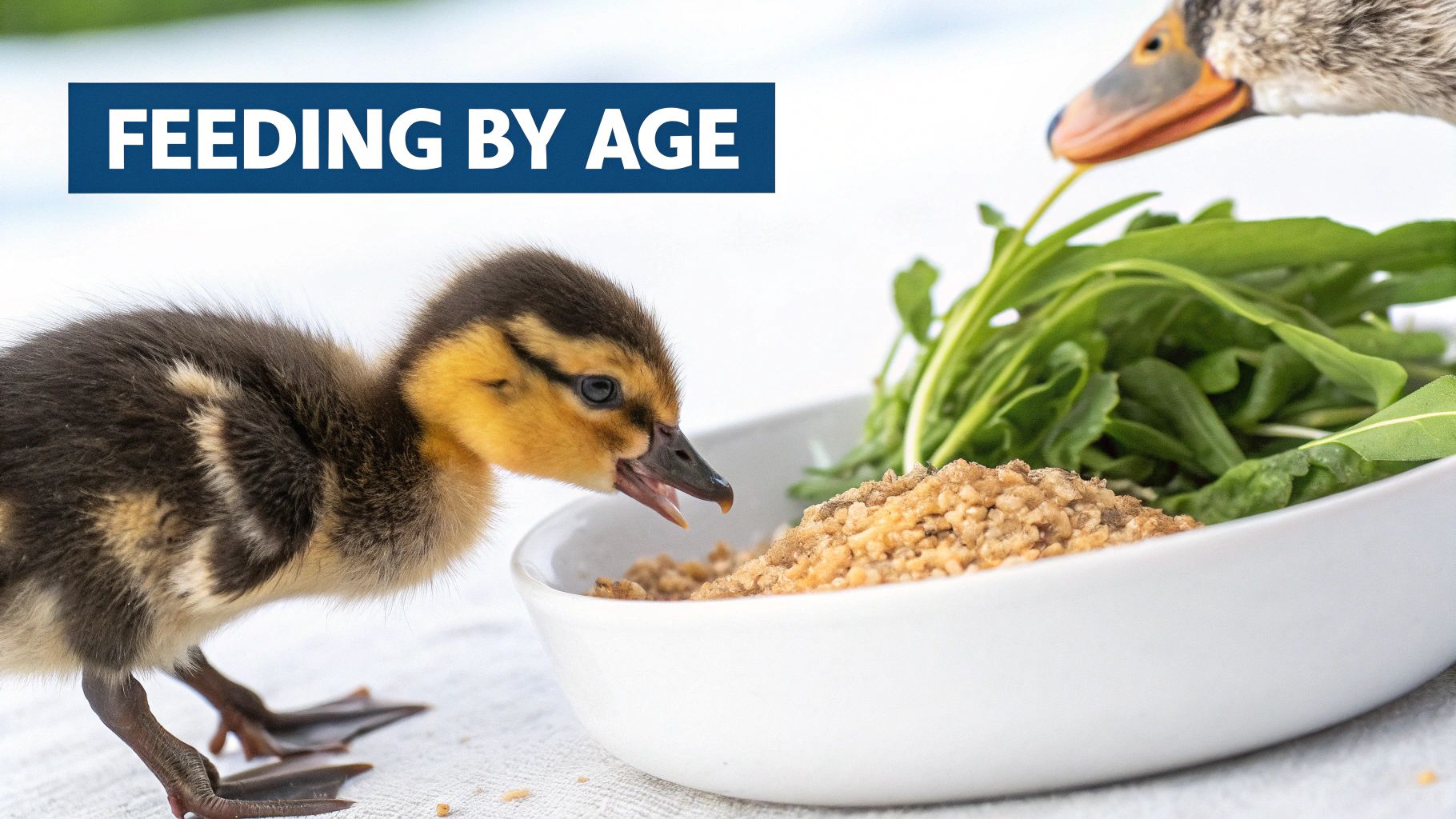
A duck's dietary needs change quite a bit as they grow, moving from a tiny, fluffy duckling into a full-grown adult. Just like with any animal, getting the nutrition right at each stage is the absolute key to raising a healthy, happy flock. What you feed a duckling is drastically different from what an adult needs.
Think of it this way: you wouldn't feed a newborn baby the same thing as a teenager. The same principle applies here. Giving the wrong food at the wrong time can lead to some serious health problems down the road.
Feeding Young Ducklings (0-3 Weeks)
For the first few weeks, those little fluffballs are in a period of explosive growth. They need a diet packed with protein to build strong bones and muscles. Your go-to here is a non-medicated chick starter crumble with a protein content of around 20-22%. The "crumble" part is non-negotiable—it's small enough for their tiny beaks to handle safely.
A word of caution: make absolutely sure the feed is non-medicated. Some starter feeds designed for baby chickens contain medications that can be toxic to ducklings. Also, make sure they have a shallow water dish they can easily drink from without accidentally taking a swim. They get chilled very easily at this age.
My Two Cents: Never, ever give whole grains or large chunks of veggies to ducklings. Their digestive systems are just getting started, and they can choke in an instant. Everything needs to be finely crumbled or minced.
After about a week, I like to start introducing some finely chopped greens like lettuce or clover. It's a great way to get them used to foraging early on, but you have to mince everything into tiny, manageable pieces.
Supporting Growing Ducks (4-14 Weeks)
Once your ducklings hit that awkward "teenage" phase, their protein needs start to come down a bit. This is when you'll want to switch them over to a grower feed, which typically has about 15-17% protein. This formula provides all the nutrients they need for steady development without pushing them to grow too fast, which can help prevent issues like angel wing.
This is also the perfect time to start expanding their menu of healthy treats. You can begin offering a wider variety of chopped vegetables and a small amount of grains.
- Leafy Greens: Chopped romaine lettuce, kale, and spinach are always big hits.
- A Few Grains: A small sprinkle of uncooked oats or cracked corn is a good addition.
- Healthy Snacks: They’ll go wild for little pieces of fruit, like berries or melon.
Just remember to chop everything into bite-sized pieces to be safe. As a rule of thumb, I make sure nothing is larger than a pea.
Maintaining Adult Duck Health (15+ Weeks)
When your ducks are finally full-grown, their diet shifts again. Now, the focus is on maintenance and, for your females, supporting healthy egg-laying. A high-quality layer feed with 16-17% protein and extra calcium is the ideal choice for laying ducks. If you just have drakes or non-laying females, a general maintenance feed works just fine.
Adult ducks are fantastic foragers and can enjoy a pretty diverse diet. Alongside their main feed, you can supplement with a healthy mix of:
- Grains: Barley, oats, and wheat are all excellent choices.
- Veggies: They love corn, peas, and slices of cucumber.
- Protein Boosts: During their annual molt, a protein boost is especially important. Treats like dried Black Soldier Fly Larvae or mealworms are fantastic sources of both protein and calcium.
Whether you're feeding ducks in your own backyard or at the local park, always keep their food plain and natural. Never add salt, sugar, or any kind of seasoning. They need the pure nutritional value without any harmful extras.
Responsible Duck Feeding in Public Parks
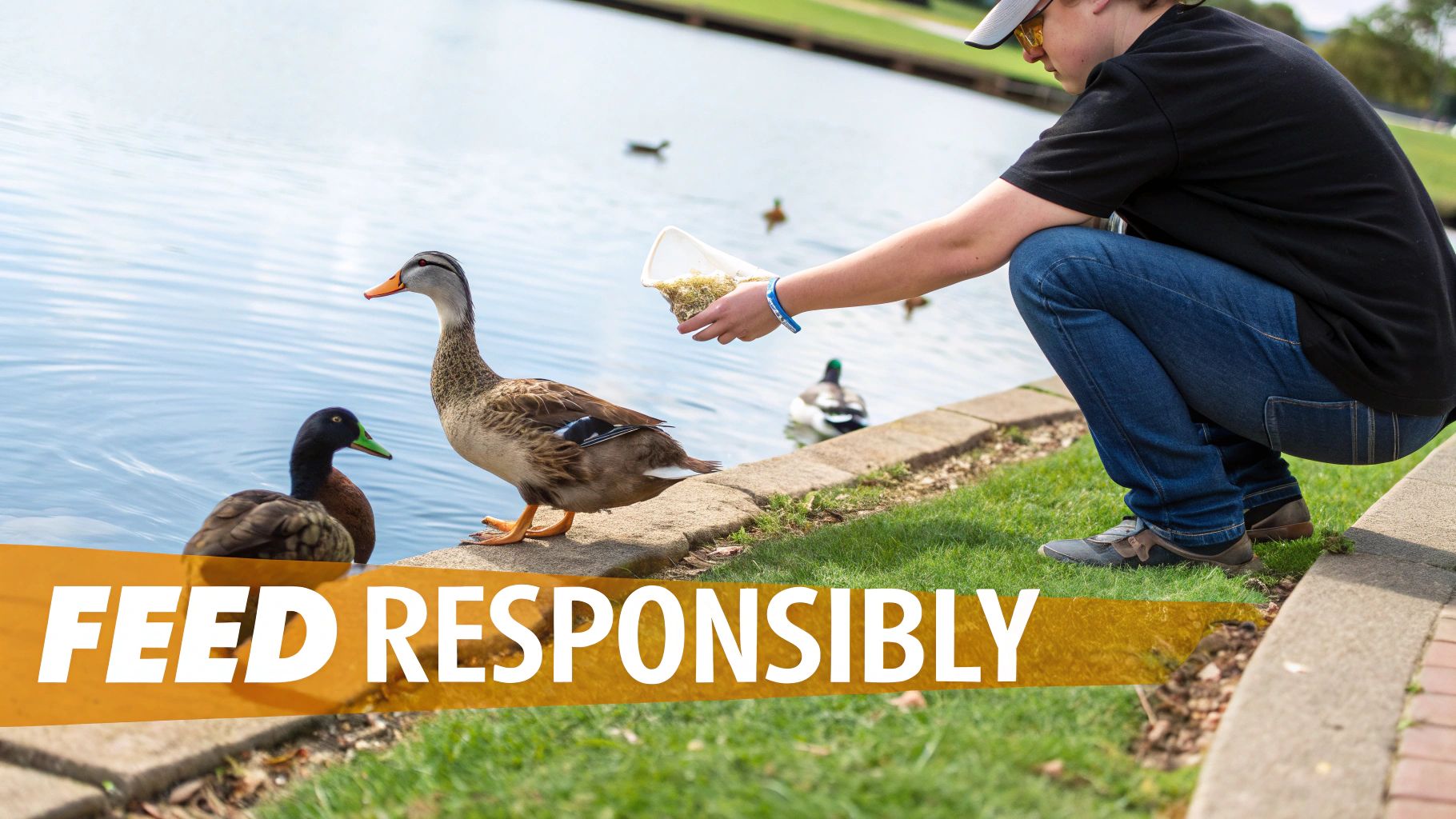
Sharing a snack with ducks at the local park is one of life’s simple joys, but how you do it matters just as much as what you're offering. Think of yourself as a helpful guest in their home, not a constant food truck. Responsible feeding keeps the birds healthy, protects their habitat, and makes sure the experience is a good one for everyone.
One of the biggest problems I see is simple overfeeding. When ducks start to rely on handouts, they stop foraging for the natural foods that give them a balanced diet. This dependency leaves them vulnerable, especially when park visitors are scarce during colder months.
Best Practices for Park Feeding
A small tweak in your technique can make a huge difference. Instead of tossing food into the water, try offering it on land, a few feet from the water's edge. This simple change keeps uneaten food from sinking and rotting, which is crucial for maintaining a clean and healthy pond ecosystem. Leftover food in the water can lead to nasty algae blooms that harm fish and other aquatic life.
Another thing to remember is that you're not just feeding the ducks. Leftover food is a magnet for pests like rats and raccoons, which can introduce diseases and throw the park's natural balance out of whack. A good rule of thumb is to only bring what the ducks can finish up in a few minutes.
Key Takeaway: Always let the ducks come to you. Give them plenty of space and never chase them. This prevents a ton of stress for the birds and makes for a much more natural, positive moment.
Fostering Healthy Interactions
Your goal should be to supplement their diet, not replace it. It's about providing a nutritious treat, not a three-course meal. This approach ensures they keep up their essential, natural foraging instincts.
Here are a few quick etiquette tips I've learned over the years:
- Scatter, Don't Pile: Spread small amounts of food thinly on the ground. This gives everyone a fair chance to eat and cuts down on aggressive behavior.
- Pack It In, Pack It Out: This one's a no-brainer. Always take any bags, containers, or trash with you. It’s incredibly dangerous for wildlife.
- Know When They're Full: If the ducks start to lose interest and wander off, that's your cue. They’ve had enough. Don’t leave a pile of food behind.
By keeping these tips in mind, you can enjoy feeding the ducks while actually helping to protect them and their environment. If you're curious to learn more about what birds need to thrive, check out our guide on what do wild birds eat.
Feeding Your Backyard Duck Flock
Raising ducks in your backyard is one of the most rewarding things you can do, but keeping them happy and healthy starts with a solid feeding plan. This isn't like tossing breadcrumbs at the park; your flock depends on you for consistent, nutritious meals. Getting the right setup from the start will save you a ton of headaches down the road.
One of the best investments I've ever made for my flock is a treadle feeder. It’s a clever design with a step-on platform that lifts the lid. This means your ducks can eat whenever they want, but pesky mice, rats, and wild birds can't get in to steal their food. It keeps the feed clean, cuts down on waste, and saves you money.
Choosing the Right Commercial Feed
Walking into a feed store can feel overwhelming with all the choices, but it's pretty straightforward once you know what to look for. Commercial duck feeds are specially made for different stages of a duck's life, giving them the exact nutrition they need to grow strong.
Here’s a simple breakdown of what you’ll find:
- Starter Feed: This is a high-protein crumble (20-22%) for brand-new ducklings up to about three weeks old. That extra protein is crucial for their explosive growth phase.
- Grower Feed: Once they're past the fuzzy stage, you can switch to a grower feed. It has a bit less protein (15-17%) and supports their steady development into adulthood.
- Layer Feed: For your egg-laying ladies, a layer feed is a must. It typically has 16-17% protein but is also fortified with extra calcium to help them produce eggs with strong, healthy shells.
Pro Tip: Always, and I mean always, have fresh, clean water right next to their food. Ducks need to dunk their bills to swallow properly. A waterer deep enough for them to submerge their entire head also helps them keep their nostrils clean, which is key for their respiratory health.
The good news for duck keepers is that the specialized feed market is booming, now worth around $1.11 billion globally. This means it's easier than ever to find high-quality, stage-specific feeds for your flock. You can discover more insights about specialized duck feed if you want to dig deeper into the industry.
And for a fantastic, high-protein treat to supplement their diet, our guide explains where to buy Black Soldier Fly Larvae.
Common Questions About Feeding Ducks
When you're first starting out, it's totally normal to have a few questions about feeding your ducks. You want to do what's best for them, and getting the little details right makes all the difference. Let's tackle some of the most common things people ask.
Are Cracked Corn and Peas Safe for Ducks?
Yes, absolutely! Cracked corn and peas are both fantastic, safe options for ducks. Cracked corn is a wonderful source of energy, which is a big help during those cold winter months when foraging gets tough.
Peas are another crowd-pleaser, loaded with vitamins. You can offer them fresh or even thawed from frozen. The most important thing to remember is that any treat you give them must be plain—no added salt, sugar, or any kind of seasoning. Their systems just aren't built to handle it.
Think of these foods as healthy treats, not a complete meal. A duck's health depends on a varied diet, so these should only supplement what they find on their own or what's in their main feed.
How Often Should I Feed My Ducks?
If you're raising a backyard flock, your adult ducks should have access to their main commercial feed throughout the day. They're surprisingly good at eating just what they need. A good rule of thumb is to only put out what they can finish before dusk to keep pests like mice and rats away.
As for the fun stuff like greens or BSFL, keep it to a small handful just once a day. This gives them a nice nutritional boost without making them lazy foragers or dependent on handouts.
For a treat that’s as nutritious as it is delicious, consider adding Pure Grubs to your feeding routine. Our USA-grown Black Soldier Fly Larvae are packed with the protein and calcium your ducks need for strong feathers and overall vitality. Learn more about Pure Grubs today!