

How Do You Increase Egg Production in Chickens A Practical Guide
If you’re wondering how to get your hens to lay more eggs, the first place to look isn’t the feed store—it’s your own backyard. Before you start tweaking diets or adding supplements, you need a solid, realistic baseline for what your flock can actually achieve.
The truth is, a hen’s potential is largely set by her breed, age, and overall health. Understanding these fundamentals is the key to setting achievable goals and avoiding a lot of frustration down the road.
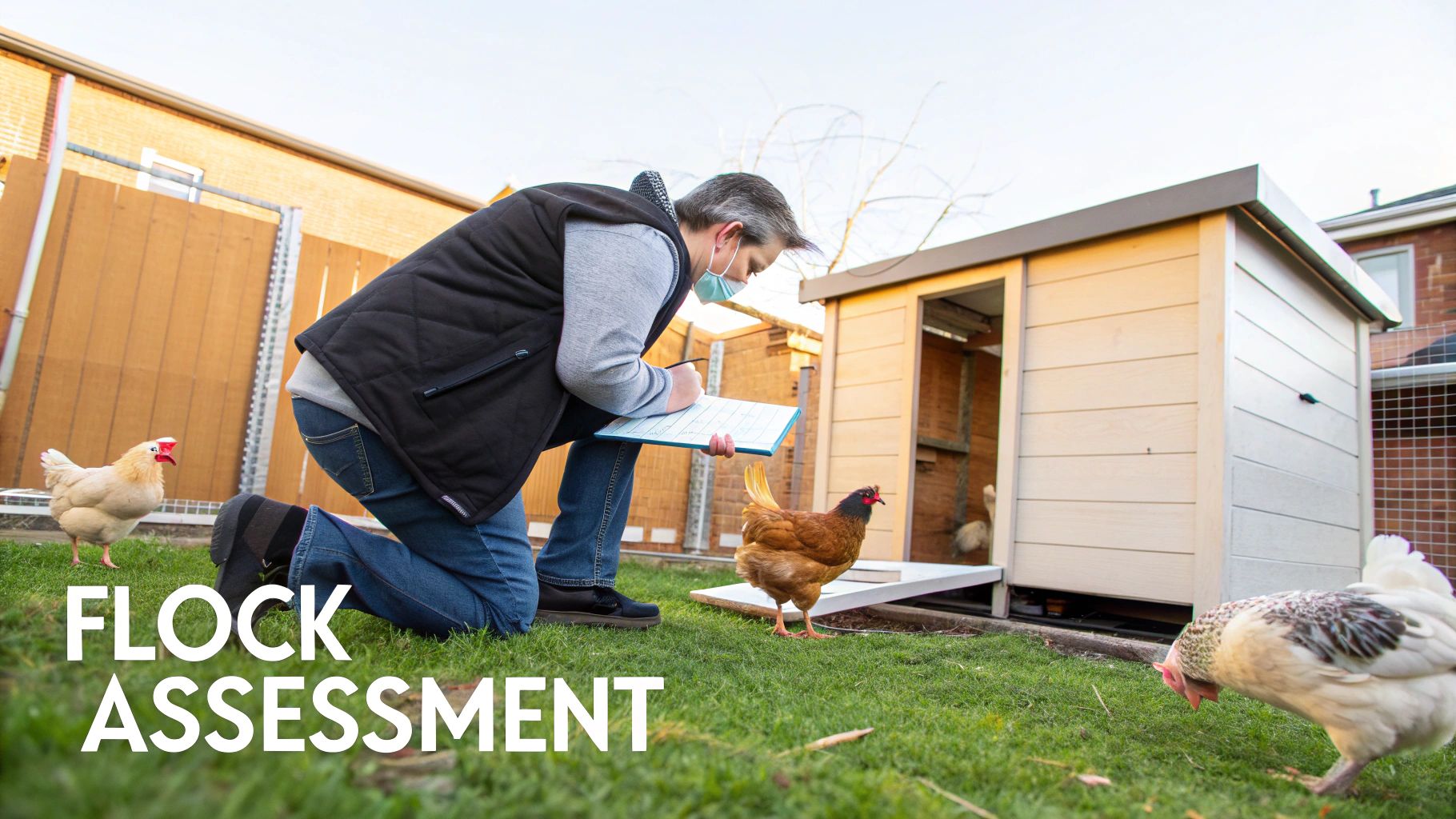
Start with a Realistic Flock Assessment
Take a good, hard look at the birds you have. This simple act of observation is the most important first step because it tells you where to focus your energy. A five-year-old heritage hen is never going to lay like a one-year-old production hybrid, and that’s okay. Your goal is to help each hen be as productive as she can be, not to chase impossible numbers.
Consider Breed and Age
Every breed is different. Some were developed over centuries to be dual-purpose, while others are modern marvels of egg-laying efficiency.
Production hybrids, like the classic White Leghorn or a Golden Comet, are bred to be egg-laying machines, often churning out an egg nearly every day in their prime. On the flip side, beloved heritage breeds like Buff Orpingtons or Wyandottes lay fewer eggs but tend to be heartier and can lay consistently for more years.
Age is the other huge piece of the puzzle. A pullet hits her peak laying power in her first year or two. After that, you'll see a natural, gradual decline. This isn't a sign of failure on your part; it's just the normal lifecycle of a hen.
- Production Breeds: You can realistically expect 280-300+ eggs in their first year.
- Heritage Breeds: A great year for them is often in the 200-280 egg range.
- Older Hens (3+ years): Don't be surprised to see production drop by 15-20% each year after their second season.
A healthy hen is a productive hen. Before you change anything else, make sure your flock is in top condition. An unexplained drop in egg numbers is often the first symptom of an underlying health problem.
Perform a Quick Health Check
Take a walk through your coop and run and just watch your chickens. A healthy, laying hen is a busy hen—she’s alert, active, and scratching around.
Look for bright, clear eyes and a rich, red color in their comb and wattles. Their feathers should be smooth and glossy (unless, of course, they’re in the middle of a messy molt).
A bird that’s hunched over, listless, or has perpetually ruffled feathers when it isn’t cold is telling you something is wrong. That’s your cue to gently pick her up and check for parasites like mites and lice, especially around the vent and under the wings. This quick once-over will tell you if your egg slump is a simple management issue or something that needs medical attention.
Dialing in Your Flock’s Diet for Peak Performance
Once you've taken a good look at your flock, the next and most critical piece of the puzzle is their diet. You can think of a top-quality layer feed as the high-octane fuel for your hens' little egg-making factories. If you cut corners here, even the best-bred hen in the world just won't be able to keep up with production.
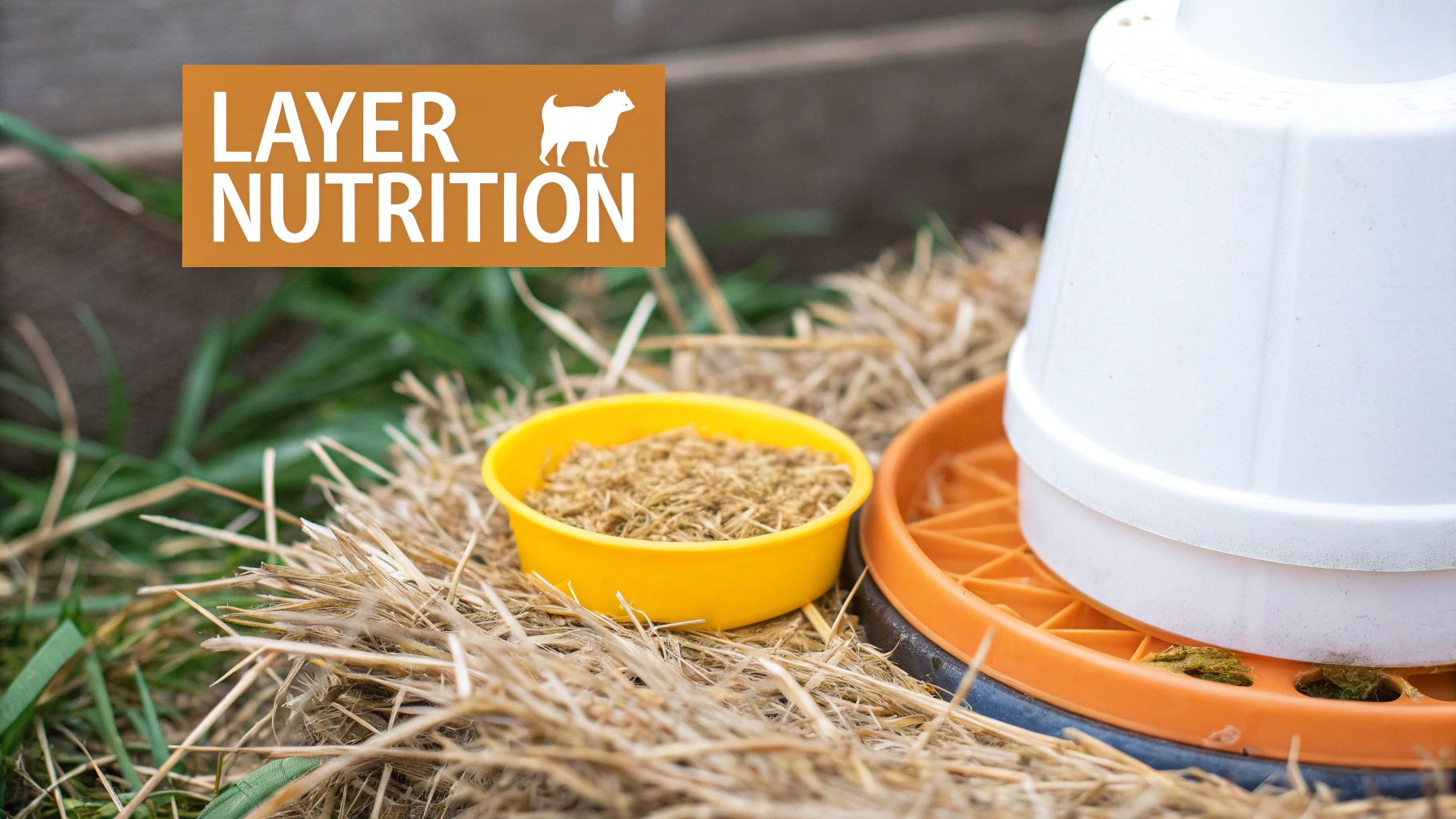
The absolute cornerstone of a productive hen's diet is a complete layer feed. This isn't just any old "chicken scratch"—it's a scientifically balanced mix designed to give a hen everything she needs to form and lay an egg nearly every single day.
The Critical Role of Protein
Protein is what an egg is mostly made of, so skimping on it is a guaranteed way to see your egg basket get lighter. You want to be using a feed that contains between 16% and 18% crude protein. This specific window provides all the essential amino acids a hen needs to maintain her own body and still have the resources to build a perfect egg.
It takes a massive amount of energy and protein for a hen to create an egg. If her diet is off, production will suffer. In fact, underfed flocks often see a 5–12% drop in their potential egg output. You can find more data on the global egg market on fortunebusinessinsights.com.
When a hen’s protein intake is too low, her body simply can't keep up the demanding schedule. You’ll start to notice fewer eggs each week, smaller eggs, or she might stop laying altogether as her system shifts into survival mode over reproduction.
Never Underestimate Water
As important as feed is, water is even more so. An egg is roughly 75% water, and if a hen goes without a drink for even a few hours, it can throw off her laying cycle for days. Your flock needs constant, easy access to clean, fresh water. Period.
A classic mistake is thinking one waterer is enough, especially when you have a decent-sized flock or on a hot day. Chickens drink a lot more than you’d think! Make sure to scrub those waterers daily to prevent the slimy buildup of algae and bacteria, which not only tastes bad but can make your birds sick. For a deeper dive, check out our guide on what to feed laying hens.
The Complete Nutritional Picture
While protein and water are the headlines, a quality layer feed brings the whole nutritional orchestra together. All the different components work in harmony to support a hen’s incredibly complex reproductive system.
Here's a quick look at the key players and why they matter.
Essential Nutrients for Peak Egg Production
| Nutrient | Recommended Level | Role in Egg Production |
|---|---|---|
| Calcium | 3.5% - 4.5% | Absolutely critical for forming strong, hard eggshells. It's your primary defense against thin shells and egg-binding. |
| Metabolizable Energy | ~2800 kcal/kg | This is the fuel. It provides the calories needed for all daily activities plus the intense work of making an egg. |
| Phosphorus | ~0.4% | Works as a team with calcium to ensure proper shell development and maintain the hen's own skeletal health. |
| Vitamins & Minerals | Varies | These support everything else—overall health, a strong immune system, and the body's ability to absorb all the other nutrients. |
When you get these fundamentals right, you're setting a solid foundation for excellent health. This allows your hens to live up to their full genetic potential, which means a steady supply of fresh, delicious eggs for you.
Using Supplements to Boost Egg Quality and Quantity
Once your flock is on a high-quality layer feed, you can start fine-tuning their diet with supplements. Think of this as the secret weapon for getting more, and better, eggs. It’s not about replacing their main feed, but about giving them a targeted boost of the specific nutrients their bodies burn through to create an egg every single day.
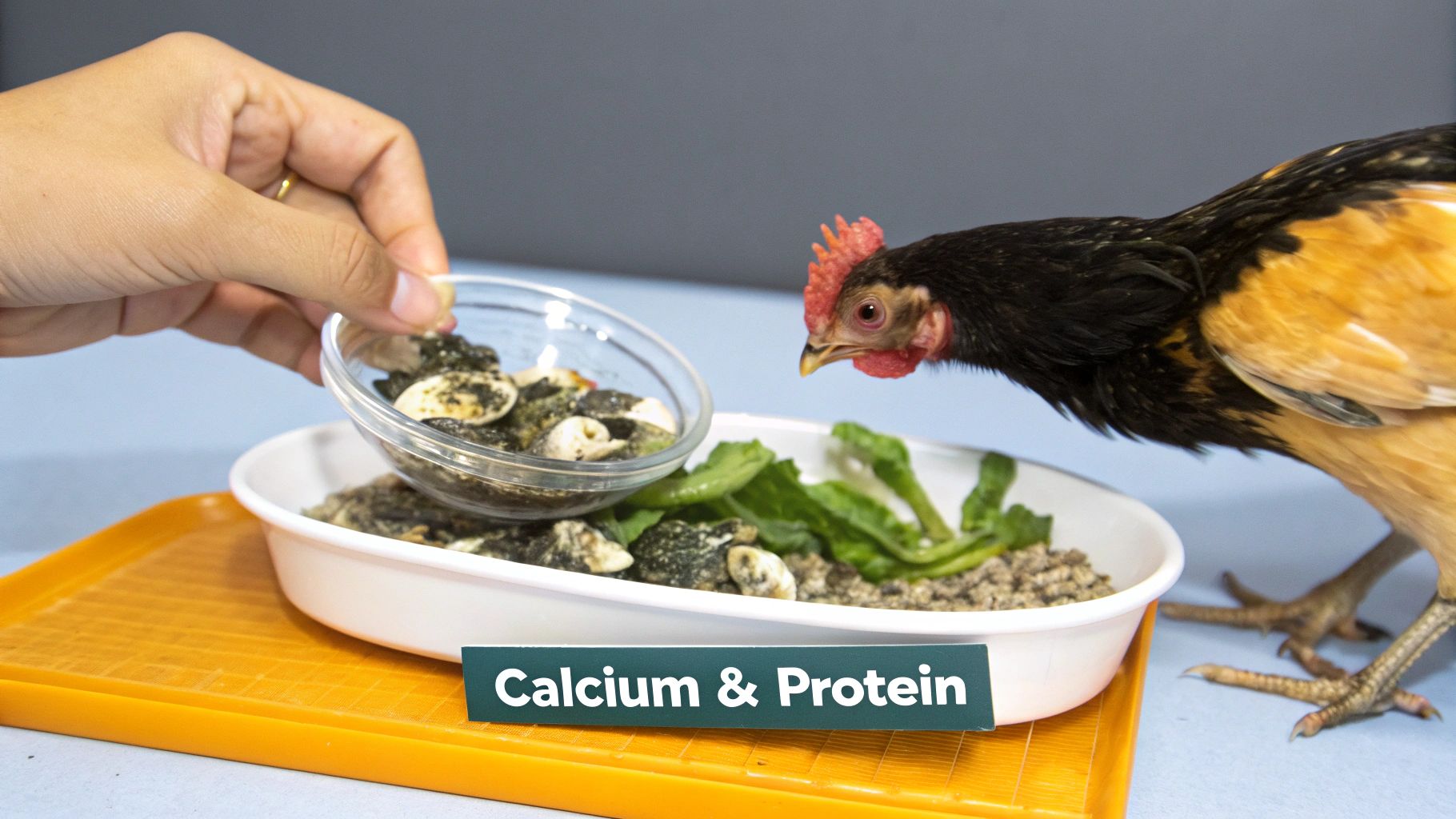
When it comes to laying hens, this really boils down to two things: extra calcium for strong shells and high-quality protein to fuel their internal egg-making machinery. Get these two things right, and you'll almost certainly see a difference in your daily egg count.
The Calcium Connection for Stronger Shells
It’s pretty amazing when you think about it—a hen forms a hard eggshell almost every 24 hours. That process uses a ton of calcium. Even the best layer feed might not be enough for a hen in peak production, which is why offering a separate, free-choice calcium source is non-negotiable for a laying flock.
The easiest and most effective option is crushed oyster shell, which you can find at any feed store. Don't mix it into their feed; just put it in a separate dish. Your hens are smart and will instinctively take what they need, when they need it. This one simple trick is your best defense against those frustratingly thin, easily cracked eggs and can help prevent serious health issues like becoming egg-bound. To really dig into this topic, check out our guide on the best calcium supplements for chickens.
Choosing High-Impact Protein Treats
Beyond calcium, the right kind of treats can serve as a powerful production booster (and your flock will love you for them). But not all treats are created equal. Chickens will happily gobble up scratch grains or kitchen scraps, but those are often "junk food" that don't provide what a laying hen truly needs.
If you want a treat that actually helps, you need something packed with both protein and calcium. This is where dried insects, especially Black Soldier Fly Larvae (BSFL), are a game-changer.
Research shows that increasing dietary calcium is one of the most reliable ways to improve egg production and shell strength. Optimizing this intake can cut down on cracked-and-broken-egg losses, which often account for 2–6% of total production. Additionally, black soldier fly larvae (BSFL) like Pure Grubs offer a significant advantage, providing up to 85% more calcium than mealworms. Discover more insights on how calcium impacts laying hens on usda.gov.
BSFL are a true powerhouse supplement. The extra protein provides the building blocks for the egg itself, while the naturally high calcium content goes directly into forming a strong, solid shell. It's the perfect two-for-one benefit in a single, tasty treat.
How to Use Supplements Wisely
The golden rule here is moderation. You're looking to supplement their diet, not replace their balanced layer feed. Too many treats, even the healthy kind, can throw their nutrition out of whack.
Here’s a simple routine that works great:
- Oyster Shell: Keep a separate dish or feeder filled with crushed oyster shell available at all times. Let your hens self-regulate.
- BSFL Treats: Toss a small handful of Pure Grubs to your flock once a day, maybe in the afternoon. It gives them a great foraging activity and a nutritional boost without messing up their appetite for their main feed.
By adding these targeted supplements to your routine, you’re giving your flock exactly what they need to hit their peak laying potential. The payoff? More and stronger eggs in your basket.
Optimizing Your Coop and Run for Production
A hen's environment sends a powerful signal to her body. When she feels safe, secure, and comfortable, her system knows it's a good time to lay eggs. But if that environment is stressful or crowded, her energy shifts from egg-laying to pure survival mode, and your egg basket will feel the impact.
First things first, let's talk about personal space. Overcrowding is a recipe for disaster in a flock. It’s a major stressor that fuels pecking order squabbles, makes sanitation a nightmare, and can bring egg production to a screeching halt.
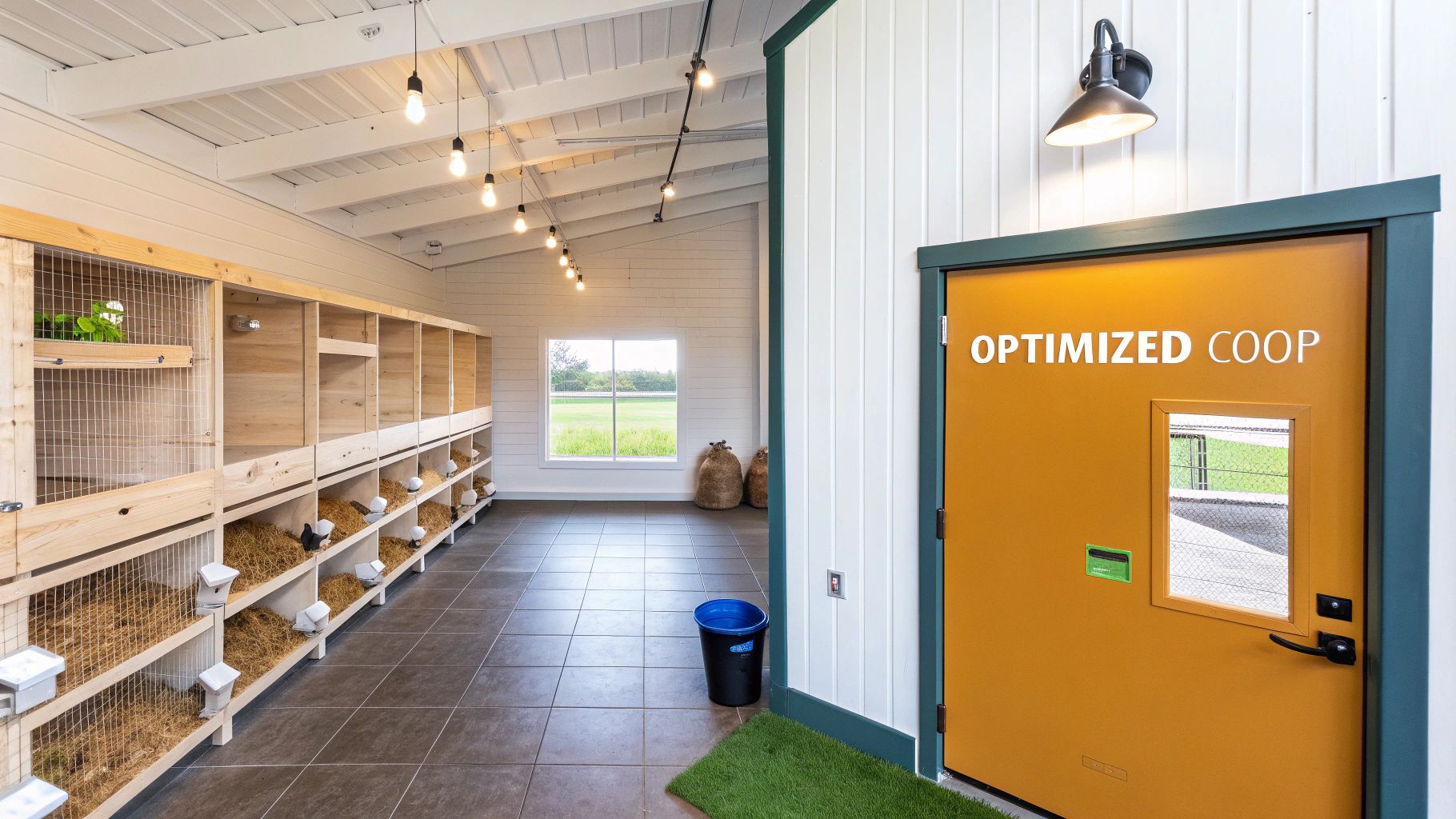
As a solid rule of thumb, make sure you're providing at least 4 square feet of indoor coop space per bird for standard breeds. This isn't just a number—it’s the difference between a chaotic coop and a calm, productive one where your hens have room to breathe.
The Power of Supplemental Lighting
If there's one environmental factor that trumps all others for egg production, it's light. A hen's entire reproductive cycle is governed by daylight hours. When the days get shorter in the fall and winter, her body naturally gets the message to slow down or stop laying altogether.
You can work around this natural slump by adding supplemental light to keep the "day" length consistent. The magic number here is 14 to 16 hours of total light per day. This little trick convinces their bodies it’s still the prime laying season, which is one of the most effective answers to the question, how do you increase egg production in chickens all year long?
Adding a simple light source to your coop is one of the most effective ways to maintain winter egg production. A low-wattage bulb on an automatic timer removes the guesswork and ensures your hens get the consistent light they need to keep laying.
Putting this into practice is surprisingly simple. A single, low-wattage bulb—a 9-watt LED usually does the trick—hung safely in the coop is all it takes. The real secret is consistency, which is why an automatic timer is your best friend here.
- Set the Timer: I've found it's best to have the timer add light in the morning, before sunrise, rather than tacking it on after sunset. This lets the flock go to roost with the natural fading light, avoiding the stress of being plunged into sudden darkness.
- Safety First: Make absolutely sure the bulb and any cords are well out of pecking range and protected from dust and moisture. And please, never use a high-wattage heat lamp for lighting—they are a serious fire hazard.
- Don't Forget Bedtime: Your hens need a solid period of darkness to rest and recharge. Never leave the light on 24/7. Continuous light is incredibly stressful and will do more harm than good to their health and production.
Finally, a well-designed coop needs clean, inviting nesting boxes. Aim for at least one box for every four hens, and keep them topped up with fresh, soft bedding to make them an appealing spot to lay. For more ideas on setting up your space for easy gathering, check out our guide on efficient chicken coop egg collection.
By thoughtfully managing their space and light, you're creating the perfect environment to encourage your hens to be as productive as they can be.
Minimizing Stress for a Healthier, More Productive Flock
Just like us, chickens get stressed out. And a stressed-out hen is not a laying hen. When a chicken feels threatened or anxious, her body goes into a fight-or-flight mode, diverting precious energy away from making eggs and toward simple survival.
Learning to spot and manage these stressors is one of the most powerful things you can do to keep those nesting boxes full.
Stress can come from anywhere. It might be the obvious threat of a hawk circling overhead, but it can also be something as subtle as constant squabbles over the feeder or a coop that’s just a little too crowded. When a hen is anxious, her system gets flooded with cortisol—the stress hormone—which directly shuts down the hormones responsible for laying.
Your role here is to become a bit of a flock detective, spotting the signs of anxiety and creating a calm, predictable world where your hens feel safe enough to thrive.
Identifying and Managing Common Flock Stressors
One of the biggest culprits of flock stress is social drama, otherwise known as the pecking order. While it’s a totally natural part of chicken life, intense bullying can become a real problem. A hen who is constantly chased away from food and water isn't just stressed; she's also on her way to being malnourished. That’s a double whammy for egg production.
Predator pressure is another huge one. Even if your coop is Fort Knox, a raccoon rattling the fence at night or a dog barking incessantly can keep the whole flock on high alert. This constant state of vigilance is exhausting and sends a clear signal to their bodies that it's not a safe time to be vulnerable and lay eggs.
A secure coop and run are a hen's safe space. By predator-proofing their environment and reducing social competition, you create a calm atmosphere that directly encourages consistent egg laying.
Overcrowding is another major stress trigger. Chickens need personal space. When they’re packed in too tightly, they get agitated, which leads to more pecking, feather-pulling, and general unrest. This creates a chronically tense environment that can tank production for the entire flock.
Practical Steps for a Stress-Free Environment
The good news is that creating a low-stress home for your flock doesn't mean you need to build a brand-new coop. Often, a few simple, thoughtful adjustments can make all the difference.
Here are a few things you can do right away:
- Add Extra Food and Water Stations: This is probably the easiest and most effective fix for bullying. If a bossy hen is guarding one feeder, the others can simply walk over to another one. Spreading out the resources instantly diffuses competition.
- Create Visual Barriers: Give your hens places to hide. A strategically placed log, a few cinder blocks, or a small A-frame in the run allows a lower-ranking bird to get out of a bully's line of sight. This simple trick can de-escalate a tense situation in seconds.
- Stick to a Predictable Routine: Chickens are creatures of habit. They love knowing what to expect. Letting them out at the same time, feeding them on a regular schedule, and securing them in the coop each night provides a deep sense of safety.
- Perform Regular Health Checks: A physical irritant like mites or lice is a constant source of stress. Every few weeks, take a moment to gently check your birds under their wings and around the vent. Catching these pests early prevents them from becoming a bigger problem that hurts both health and egg laying.
By actively working to reduce these daily pressures, you're doing more than just being a good chicken keeper. You're tackling one of the biggest hidden roadblocks to incredible egg production.
Still Have Questions About Egg Production?
Even with the best care, your flock can throw you a curveball that leaves you scratching your head. Let’s tackle some of the most common questions I hear from fellow chicken keepers about why their egg basket is suddenly looking a little empty.
Why Did My Hens Suddenly Stop Laying Eggs?
If your hens go from laying like clockwork to a sudden standstill, the first thing to look for is stress. Chickens are creatures of habit, and almost any disruption can throw them off their game.
Think about what might have changed recently. Was there a hawk circling overhead? A neighbor's dog barking near the coop? Did you introduce new birds? Even something as simple as changing their feed brand or moving the waterer to a new spot can be enough to pause production for a few days.
And don't forget the most common culprit of all: a dry waterer. A hen needs a ton of water to make an egg, and going without for even a few hours can shut the whole system down. Before you panic, always check the basics—food, water, and safety.
How Long Does It Take for a Hen to Lay an Egg?
From start to finish, the biological assembly line for creating a single egg takes roughly 24 to 26 hours. This is why you rarely get more than one egg per hen in a single day.
The most time-consuming part of the whole process is building the shell, which takes a whopping 20 hours all by itself.
It’s a delicate, finely tuned process. Any little hiccup in a hen's day—not enough light, a scare from a predator, or running low on calcium—can easily reset that 26-hour clock and leave you with no egg.
Do I Need a Rooster for My Hens to Lay Eggs?
Nope, not at all! Hens will lay eggs on their natural cycle whether a rooster is around or not. Think of it this way: a rooster has zero impact on if an egg is laid.
His only job is fertilization. So, if you're hoping to hatch a clutch of fluffy chicks, you'll definitely need a fella in your flock. But if you're just after a steady supply of delicious eggs for your breakfast table, a rooster is completely optional.
At What Age Do Chickens Stop Laying Consistently?
A hen is in her prime for her first two years of laying. After that, you can expect her production to naturally slow down by about 15-20% each year. This is a perfectly normal part of the aging process.
An older hen might only give you a few eggs a week, or she might take longer breaks between laying cycles, especially in the winter. She isn't sick or unhappy; her body is just shifting gears. This is why many backyard keepers, myself included, will add a few new pullets every spring. It keeps the egg supply steady while letting the older girls ease into a well-earned retirement.
Ready to give your flock the ultimate nutritional advantage? Pure Grubs offers USA-grown Black Soldier Fly Larvae packed with the protein and calcium your hens need for peak production and stronger shells. Provide a treat that truly makes a difference. Shop now at Pure Grubs.