

High Quality Calcium Supplement for Stronger Eggshells
You're probably here because the egg basket told you something was off before the hens did. A shell feels papery. One egg cracks in your hand. Another looks normal until you wash it and find a weak spot near the sidewall. That's usually when flock keepers start asking the same question: do I just need more calcium, or do I need a better calcium source?
In a real coop, that difference matters. A hen can have calcium available and still not use enough of it well enough, consistently enough, or safely enough to keep shells strong. Some birds ignore a supplement if the form isn't appealing. Some bolt down treats and leave the plain mineral feeder untouched. Some do better when calcium is offered separately instead of mixed into everything. And some products look premium on the label but tell you almost nothing about testing, purity, or source control.
That's why I don't judge a high quality calcium supplement by the calcium claim alone. For laying hens, the practical questions are better: Will they eat it willingly? Can they use it efficiently? Can you verify what's in the bag? If you're sorting through oyster shell, limestone, powders, and Black Soldier Fly Larvae, those are the questions that lead to better shells and fewer surprises.
Why Eggshell Quality Starts With the Right Calcium Source
Most keepers notice calcium trouble at collection time, not feeder time. The hens still come running, still scratch, still act normal enough. Then you lift an egg and feel a rough shell, a thin shell, or one that gives a little under your fingers. That's the point where many people toss out more crushed shell and hope the problem solves itself.
Sometimes it does. Often it doesn't.
The reason is simple. Offering calcium isn't the same as delivering calcium in a form hens will use well. In backyard flocks, shell quality depends on a chain of small decisions: the source, the particle size, whether hens can take it free-choice, whether they find it palatable, and whether the product is clean and consistent.
What goes wrong in real coops
A few patterns show up over and over:
- The flock ignores the side dish: Oyster shell sits untouched while hens keep eating layer feed and treats.
- One bird struggles more than the others: Older hens, heavy layers, and birds coming out of stress often show shell issues first.
- The keeper chases label percentages: A product can look strong on paper and still work poorly if intake is inconsistent.
- The supplement is treated like a cure-all: Calcium helps, but only when the form, feeding method, and flock behavior line up.
That's why a practical calcium program starts with source selection, not guesswork. If you want a useful rundown of familiar flock options, this guide to sources of calcium for chickens is a solid companion.
The hens decide part of this for you. If they won't eat a calcium source reliably, it doesn't matter how impressive the label looks.
There's also a wider reason this matters. Calcium nutrition has been treated as a long-running public-health issue for decades. A major FAO review points back to the 1974 FAO/WHO calcium recommendations and notes sharply different regional calcium supplies, including about 896 mg/day in Europe versus 368 mg/day in Africa in the reviewed data, which shows how uneven calcium access has been historically across populations (FAO calcium review).
That human nutrition history doesn't tell you what bowl to set in your coop. It does underline one thing. Calcium has never been a trivial nutrient. For laying hens, the right source is the difference between “calcium is available somewhere” and “my birds are building durable shells with it.”
How Calcium Supports Laying Hens and Stronger Eggshells
A hen can look fine at breakfast and still lay a thin-shelled egg by afternoon if her calcium intake is off. That is what makes calcium management tricky in real coops. The problem often shows up in the nest box first, but it starts with how the bird eats, absorbs, and uses calcium across the day.
The shell is the visible clue
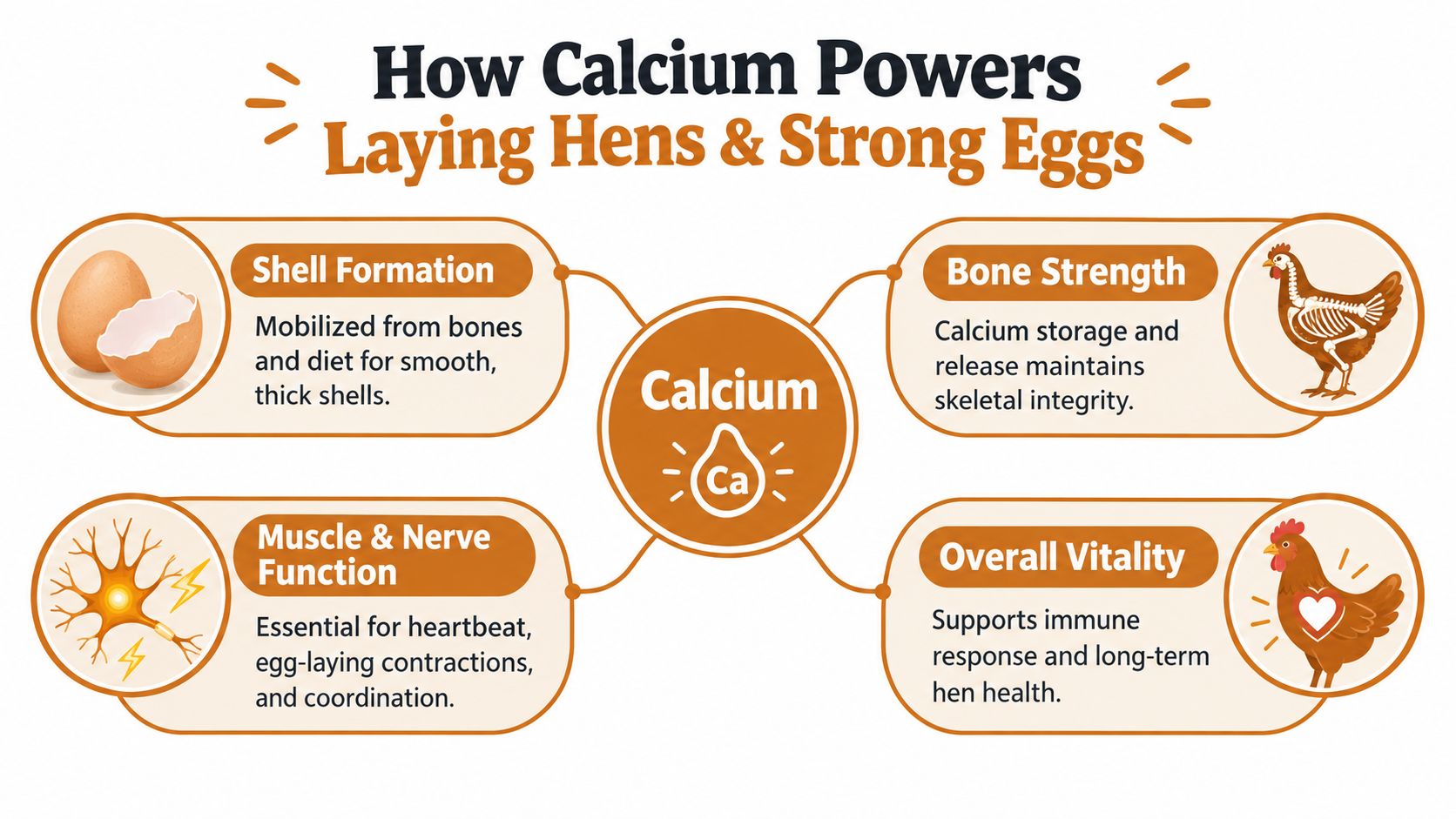
Eggshell production pulls heavily on a hen's calcium supply. If feed intake is uneven, or the calcium source is poorly consumed, the hen has to rely more on body reserves to finish the job. Keep seeing that pattern and you usually get thinner shells, more breakage, and birds that lose condition faster during heavy lay.
That is why I do not judge a calcium source by label percentage alone. Hens have to eat it willingly, absorb enough of it, and have access to it at the right time.
If your flock is already showing warning signs, this guide to calcium deficiency in chickens is a useful check on whether the issue is limited to shells or part of a wider nutrition problem.
Absorption matters, but so does hen behavior
Human calcium research helps illustrate a point poultry keepers see every week in the coop. In one PubMed study, calcium citrate vs carbonate absorption differed meaningfully under both fed and fasting conditions. The exact forms used for hens are different, but the practical lesson still applies. A more concentrated source is not always the one that delivers the best real-world result.
In poultry, intake behavior can matter just as much as chemistry. A coarse mineral left untouched in a side feeder does less good than a slightly lower-calcium option hens consume consistently. That trade-off gets missed all the time.
Consistent intake usually beats impressive numbers
Some hens are disciplined free-choice calcium eaters. Some are not. Young layers, stressed hens, molting birds, and lower-ranking birds often show you very quickly that flock nutrition is not just about what is offered. It is about what each bird gets.
A product such as USA GROWN BLACK SOLDIER FLY LARVAE FOR CHICKENS can help in that setting because hens usually take it readily, which improves the odds of regular calcium intake. The catalog snapshot notes up to 85% more calcium than mealworms. That does not make it a complete calcium plan by itself, but it can be a practical support tool when voluntary intake is the weak link.
Practical rule: the calcium source that gets eaten reliably often outperforms the one with the better-looking label.
Strong shells come from the full chain working together. The hen has to want the source, be able to use it, and get enough of it day after day.
Comparing High Quality Calcium Supplement Options for Poultry
Below is the quick-reference view I wish more keepers started with. It compares the common options by how they work in a coop, not just what category they fall into.
Calcium Supplement Comparison for Poultry
| Supplement Type | Calcium Delivery and Use | Best Fit Scenario |
|---|---|---|
| Black Soldier Fly Larvae | Calcium comes in a treat format that birds usually take eagerly. Also adds protein and fat, so it does more than supply one mineral. Better as a supplemental calcium source than a sole mineral strategy. | Flocks that ignore plain shell or need extra encouragement to consume calcium consistently, especially during lay stress or molt. |
| Oyster shell | Coarse, familiar, and well suited to free-choice feeding. Lets hens regulate intake according to need. Works best when the flock actually uses the separate feeder. | Standard backyard laying flocks where birds already know to visit a calcium hopper. |
| Limestone | Common in formulated feeds and useful for baseline calcium delivery. Less flexible when you need individuals to regulate intake separately. | Keepers relying on complete ration structure rather than side feeding. |
| Powdered calcium | Easy to mix into mash or feed, but intake is only as even as the flock's feed behavior. Can be messy and harder to manage as a voluntary source. | Short-term mixing into feed when separate feeders aren't practical. |
Black Soldier Fly Larvae
Black Soldier Fly Larvae are different from the other options because they solve two problems at once. They contribute calcium, and they come in a form hens actively seek out. In real yards, that matters more than people admit. A side pan full of untouched minerals doesn't help much.
They're especially useful when birds are selective eaters or when you want a supplemental source that doubles as enrichment. The trade-off is that they're not a straight mineral input in the way limestone or oyster shell is. You use them to improve overall intake behavior, not to replace a balanced layer program by themselves.
Oyster shell
Oyster shell remains a practical standby for one reason. It's simple. Offer it free-choice, keep it dry, and many hens will take what they need. For a mixed-age backyard flock, that flexibility is hard to beat.
The weakness is also obvious. Some hens underuse it. Young birds may ignore it. Dominant birds may crowd timid hens away from preferred feeder spots if setup is poor.
Oyster shell works best when the keeper watches the feeder, not just the eggs. Consumption patterns matter.
Limestone
Limestone is often more useful in the base ration than in the keeper's imagination. It's dependable for feed formulation and steady background supply. If your flock is already on a strong complete feed, limestone may be doing more of the heavy lifting than your visible side supplement.
Its downside is practical rather than nutritional. It doesn't create the same voluntary peck response as a treat-like supplement, and it isn't as intuitive for backyard keepers trying to correct weak-shell patterns bird by bird.
Powdered calcium
Powdered products have their place, especially when you need to blend something into wet mash or can't manage another feeder. They're easy to distribute. They're also easy to misuse.
Fine powders can lead to uneven intake, wasted product, or clumping if the feeding setup is sloppy. They also don't give hens the same chance to self-select according to need.
What usually works best
In the coop, the strongest setups are often layered rather than single-source:
- Base feed first: A complete ration should carry the everyday load.
- Free-choice mineral second: Oyster shell or another separate calcium source gives layers flexibility.
- Behavior-friendly supplement third: A calcium-rich treat format can help birds that aren't getting enough through plain mineral access alone.
That combination respects what hens do. They don't read labels. They peck what appeals to them, what's available at the right time, and what the flock hierarchy allows them to reach.
Safety Testing and What Makes a Calcium Source Truly High Quality
A supplement isn't high quality because the bag says “natural,” “premium,” or “farm-grade.” For calcium products, the harder question is whether the maker can verify purity and contaminant control.
That matters because contamination in calcium supplements is not a theoretical issue. One review discussing tested calcium products reported detectable lead, cadmium, arsenic, and chromium, with one China-market study finding lead up to 8.49 mg/kg, cadmium up to 1.104 mg/kg, and chromium up to 192.66 mg/kg across sampled supplements. The same review also noted an earlier analysis in which only 10% of tested calcium supplements met a U.S. acceptable lead criterion (review on heavy metals in calcium supplements).
Source claims are not enough
Keepers often assume the more “natural” source is automatically safer. That's not a reliable shortcut. Shell-based materials, mined minerals, and insect-based feeds all depend on sourcing and processing controls.
What you want is evidence, not branding language.
A useful background read on the bigger contamination question is this article on whether heavy metals in chicken feed get into eggs. It helps frame why source verification matters long before a product reaches the feeder.
What to ask before you buy
Use a short checklist:
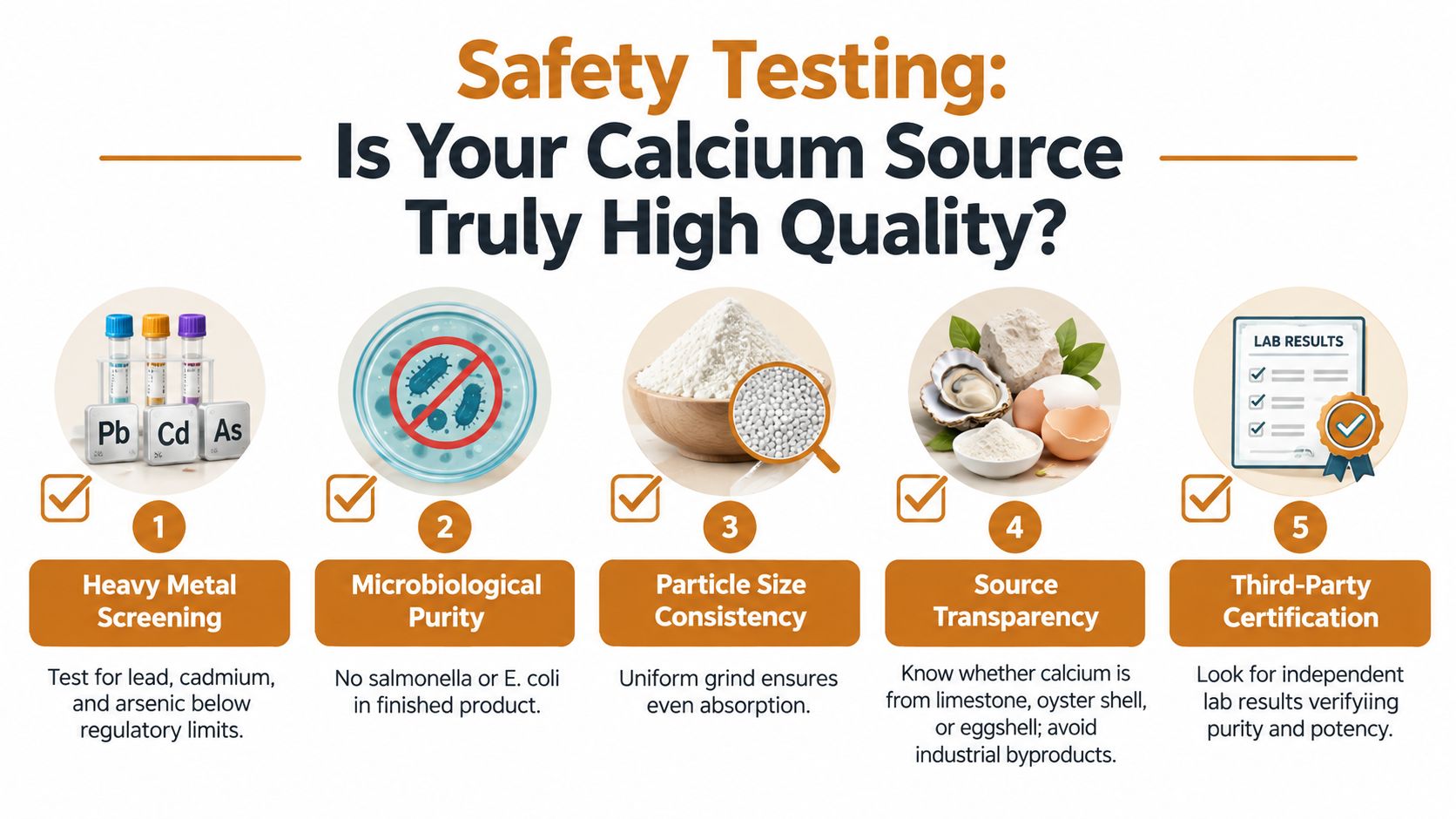
- Batch-level heavy metal testing: Ask whether the finished product is screened for lead, cadmium, arsenic, and mercury.
- Source transparency: The seller should tell you whether the calcium comes from oyster shell, limestone, eggshell, or insect-based feed ingredients.
- Facility standards: Look for clear statements about FDA compliance and AAFCO-aligned feed standards where applicable.
- Processing clarity: You want to know how the material is cleaned, dried, ground, or otherwise prepared.
- Consistency from batch to batch: A good supplier should be able to explain how they avoid wide swings in quality.
Safety is part of quality, not an extra
A lot of comparison content gets stuck on calcium percentage and skips this part entirely. That's a mistake. If two products both support shell quality but only one gives you traceability and contaminant screening, they are not equal in practical value.
Buy calcium the way you'd buy feed for your family table. Ask what's in it, where it came from, and who tested it.
A high quality calcium supplement for poultry should be easy to identify because the maker has nothing to hide. You shouldn't have to guess at origin, purity, or testing. If that information is vague, missing, or replaced with marketing fluff, move on.
How to Dose and Feed Calcium for Best Results
Even a good calcium source can disappoint when the feeding method is wrong. Most shell problems I see in backyard flocks come from delivery mistakes, not from some rare deficiency nobody could have predicted.
Start with the simplest rule. Laying hens should have a steady base diet, then access to extra calcium in a way that matches how they eat. That usually means free-choice calcium for active layers rather than forcing every bird to consume the same amount.
For context, human guidance from NIH notes that calcium supplement performance is dose-dependent. Absorption is highest at doses of 500 mg or less, with about 36% absorbed from a 300 mg dose versus about 28% from a 1,000 mg dose, and it also notes that calcium carbonate provides 40% elemental calcium by weight while calcium citrate provides 21% (NIH Office of Dietary Supplements calcium overview). The poultry takeaway is straightforward: big single dumps of calcium are not automatically efficient.
Feed it in a way hens can regulate
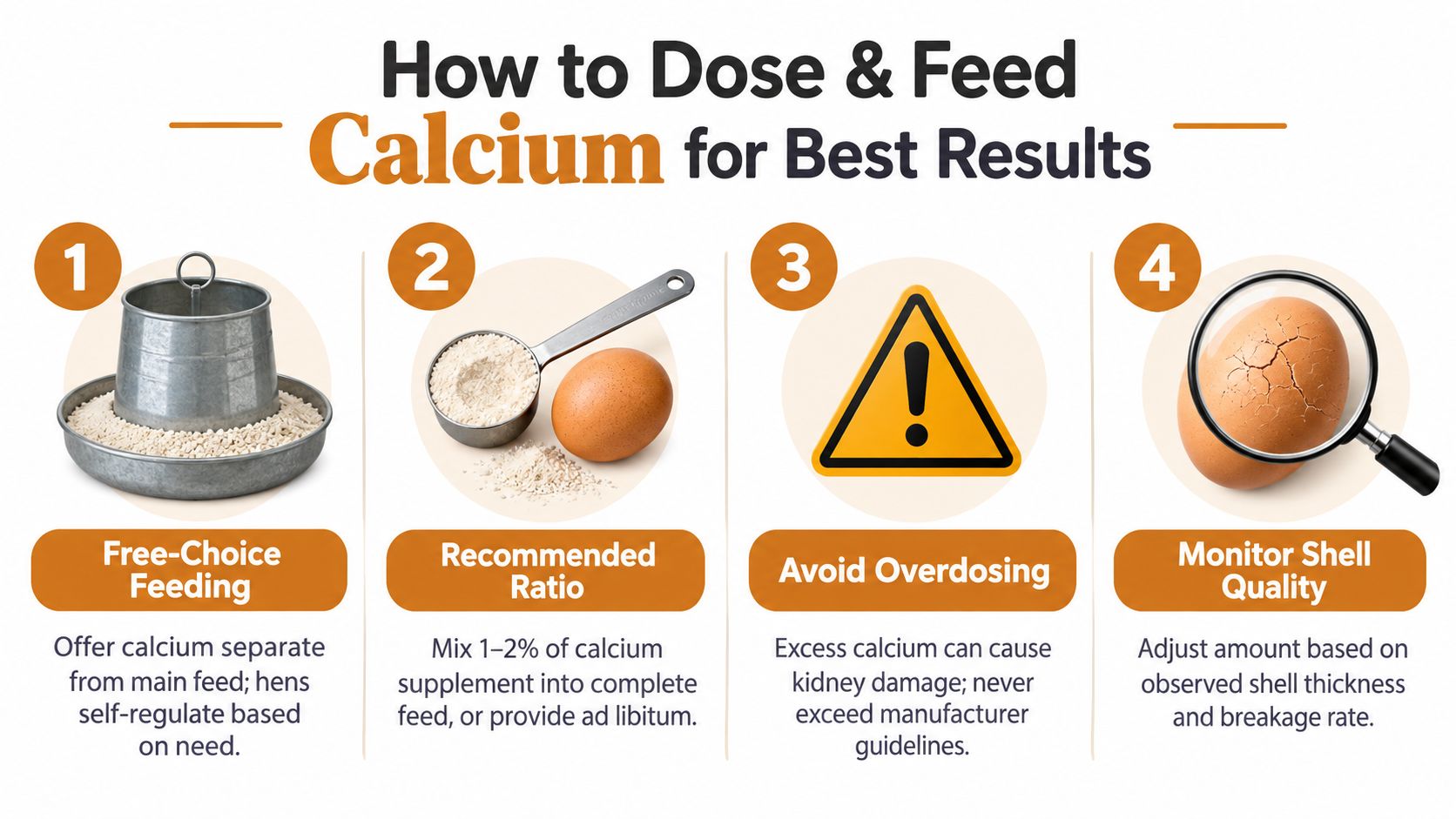
Free-choice works well because not every bird needs the same amount every day. A hen in strong lay often seeks more calcium than a bird that's paused, younger, or lower in production.
A few practical methods work better than others:
- Separate feeder: Keep oyster shell or another mineral source apart from the complete ration.
- Consistent placement: Don't move the calcium feeder around the run every other day.
- Dry storage: Damp shell and clumpy powders reduce intake fast.
- Multiple access points: In pushy flocks, one feeder isn't always enough.
Timing matters more than many keepers realize
Another useful nuance from NIH-linked guidance is that calcium supplements are typically absorbed better with meals, and taking calcium with meals may reduce kidney stone risk while between-meal dosing may increase it. The same guidance notes average fractional calcium absorption of about 25% and points out that pharmaceutical preparations may perform differently from what pure salts suggest in the lab (NIH calcium supplement guidance).
For hens, that translates into a practical habit. Offer calcium in a way that lines up with normal feed activity instead of treating it like an occasional add-on. Birds do better with routine access than with erratic correction.
Here's a quick visual refresher before you set up the feeders:
What doesn't work well
Some methods create more problems than they solve:
- Dumping large amounts into treats only: That makes intake uneven across the flock.
- Relying on one bird's response: One hen improving doesn't mean the whole group is covered.
- Overcorrecting fast: Too much added calcium for birds that don't need it can create its own trouble.
- Ignoring shell trend over time: Watch the basket for a pattern, not one odd egg.
A calcium program is working when the flock can access it daily without you forcing every mouthful.
The best dosing plan is usually boring. Good layer feed, separate calcium, regular observation, and small adjustments beat dramatic changes every time.
Real World Benefits Beyond Stronger Shells
A high quality calcium supplement earns its place faster when it does more than one job. That's why some keepers lean on calcium-rich treat options instead of thinking only in terms of straight mineral supplementation.
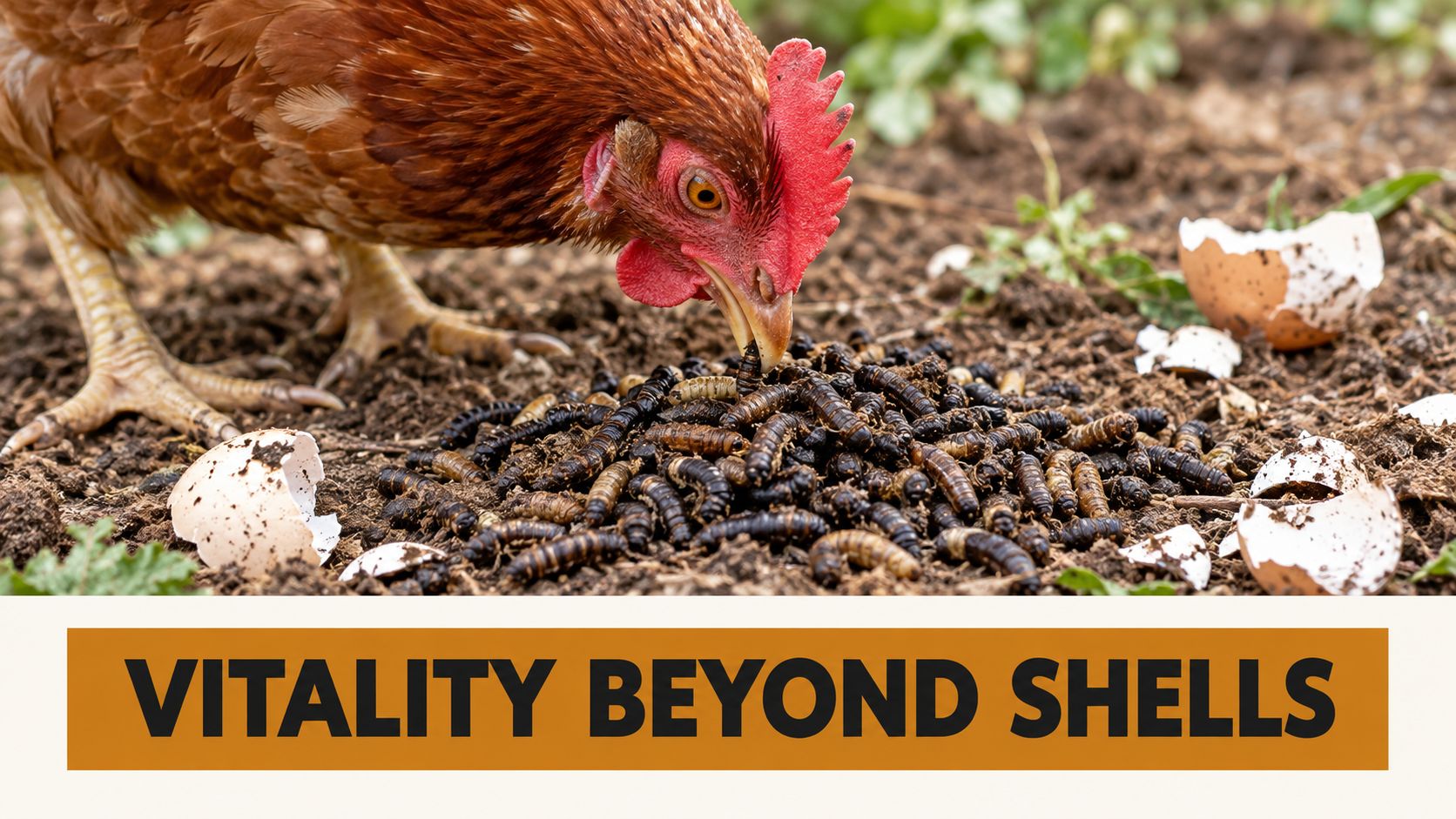
In a real flock, shell quality rarely lives in isolation. The birds with weaker shells are often the same birds dealing with molt, stress, shifting weather, or uneven body condition. A single-mineral product can help with one narrow problem. A calcium-rich feed or treat with added nutritional value can support a broader recovery pattern.
Where multi-purpose calcium sources shine
Consider the common backyard scenarios:
- During molt: Birds may need support for feather regrowth and condition, not just shell output.
- For young pullets approaching lay: You want bone support and gradual nutrition habits, not abrupt overfeeding of one mineral.
- In mixed flocks: Ducks, chickens, and other birds don't all interact with feeders in the same way.
- For enrichment feeding: Pecking and foraging behavior can increase voluntary intake better than a plain pan of powder.
That's one reason insect-based options stand out. They fit natural pecking behavior better than a lot of mineral products do.
Nutrition works better when behavior supports it
A keeper can build the most technically correct feeding plan in the world and still get poor results if the hens don't engage with it. That's why I pay attention to voluntary intake. Birds often tell you what will work long term.
When a calcium-rich supplement also provides protein and fat, it can help hold body condition through demanding periods. It can also be easier to use as a training or handling aid. That matters with shy birds, birds in large runs, or flocks where the timid hens avoid crowded feeder stations.
If a supplement fits the hen's natural pecking behavior, you usually get better consistency with less fuss.
The point isn't that every flock needs a treat-based calcium source. It's that some flocks respond better when calcium arrives in a form that feels like food, not medicine. For many backyard keepers, that practical difference is what turns an on-paper nutrition plan into a routine the birds follow.
Choosing the Best High Quality Calcium Supplement for Your Flock
The right choice depends less on marketing and more on the kind of flock you have in front of you.
If your hens already use a free-choice mineral feeder well, oyster shell is still one of the cleanest, simplest solutions. It's easy to manage, easy to monitor, and well suited to standard laying flocks.
If your birds are on a good complete ration and you mainly want dependable background support, limestone in a balanced feed program does steady work behind the scenes. It isn't flashy, but it covers the basics when the rest of the feeding system is solid.
If you need short-term flexibility, powdered calcium can help when mixed carefully into mash or feed. I'd use it as a tool, not a long-term answer for most backyard setups. Intake is harder to read, and mistakes are easier to make.
If your hens ignore plain calcium sources, if you want a supplemental option birds take eagerly, or if traceability matters as much as shell support, USA-grown BSFL can be the better fit. In that situation, the value isn't just the calcium. It's the combination of voluntary intake, multi-nutrient support, and clearer sourcing when the product is batch-tested and transparently produced.
A simple decision filter
Use this when you're stuck:
- Choose oyster shell if your flock self-regulates well and you want a dedicated free-choice mineral.
- Choose limestone-based support if your complete ration is the center of your system.
- Choose powdered calcium if you need a controlled mix-in approach for a specific period.
- Choose a BSFL supplement if intake behavior, enrichment, and source verification are high priorities.
The strongest results usually come from matching the supplement to the birds' behavior, not from chasing the biggest claim on the package. A high quality calcium supplement is the one your hens will consume consistently, use effectively, and receive from a source you can verify with confidence.
Pure Grubs offers USA-grown dried Black Soldier Fly Larvae that fit this job well for keepers who want calcium support in a form hens readily peck, along with batch testing for heavy metals and transparent U.S. sourcing. If you want to compare that option against your current shell program, visit Pure Grubs and look at how their BSFL fits into a practical laying-hen routine.