

High Protein Chicken Food for a Thriving Flock
Just like a builder can't construct a solid house with flimsy materials, your chickens can't build strong bodies, feathers, and eggs without high-protein feed. This isn't just about giving them food; it's about providing the fundamental building blocks for their entire well-being. Getting the protein right is arguably the single most important thing you can do for your flock's health.
Why Protein Is the Cornerstone of Chicken Health
Think of protein as a master set of LEGOs for your chickens. It's made up of smaller components called amino acids, which are like the individual bricks. A chicken's body is constantly grabbing these bricks and assembling them into everything it needs to function, from muscle tissue to the very antibodies that fight off disease.
If you don't provide enough of the right bricks, the whole system starts to struggle. For a growing chick, that means stunted growth and weak muscles. For your laying hens, it means a drop in egg production and poor-quality shells.
The Building Blocks of Life
Protein is absolutely essential for several day-to-day functions in a chicken's life, and each one requires a steady, high-quality supply.
- Muscle and Tissue Development: Every part of your chicken, from the powerful leg muscles they use for scratching all day to their vital internal organs, is built and repaired with protein.
- Feather Production: Feathers are a massive protein investment—they're almost 90% protein (specifically, a type called keratin). When a chicken molts, its protein requirements go through the roof to regrow an entire set of feathers.
- Egg Laying: An egg is basically a protein-packed lunch for a developing chick. To lay consistently, a hen needs a diet full of high protein chicken food to create those nutrient-dense eggs day after day.
- Immune System Support: The "soldiers" of the immune system, known as antibodies, are made from protein. A flock with plenty of protein in their diet is simply better equipped to fend off illness.
Interestingly, this intense focus on protein isn't just a chicken thing. We see the same trend in human nutrition. In the U.S., a whopping 61% of consumers say they've actively tried to eat more protein since 2019. This demand for protein-rich foods like chicken and eggs just highlights what we already know: protein is directly linked to good health. You can read more about these consumer protein trends and how they're shaping the market.
The right protein doesn't just feed a chicken; it builds a resilient, productive, and healthy bird from the inside out. It's the difference between a flock that merely survives and one that truly thrives.
Ever felt a bit overwhelmed staring at the wall of feed bags at the local farm store? Starter, Grower, Layer, crumbles, pellets... it can feel like a foreign language. But here's the secret: it's all about matching the right food to the right age.
Think of it like feeding a person. You wouldn't give a steak dinner to a newborn, right? Chickens have their own nutritional journey, starting as fragile chicks and growing into strong, egg-laying hens. Giving them the right high protein chicken food at each stop along the way is the key to a healthy, happy flock.
Comparing Common Chicken Feed Types
The biggest difference between these feeds is the protein level. It starts high for fast-growing babies and then adjusts as they mature. Let's break down what you'll typically find.
| Feed Type | Typical Protein % | Best For (Life Stage) | Key Nutritional Focus |
|---|---|---|---|
| Starter Feed | 20-24% | Chicks (0-8 weeks) | Rapid growth, bone & organ development |
| Grower Feed | 16-18% | Pullets (8-18 weeks) | Sustained, healthy maturation |
| Layer Feed | ~16% | Laying Hens (18+ weeks) | Egg production & shell strength (high calcium) |
As you can see, it's a simple, logical progression. You're just giving their bodies what they need, when they need it most.
This infographic does a great job of showing how a chicken's need for protein shifts from building its body to producing feathers and eggs.
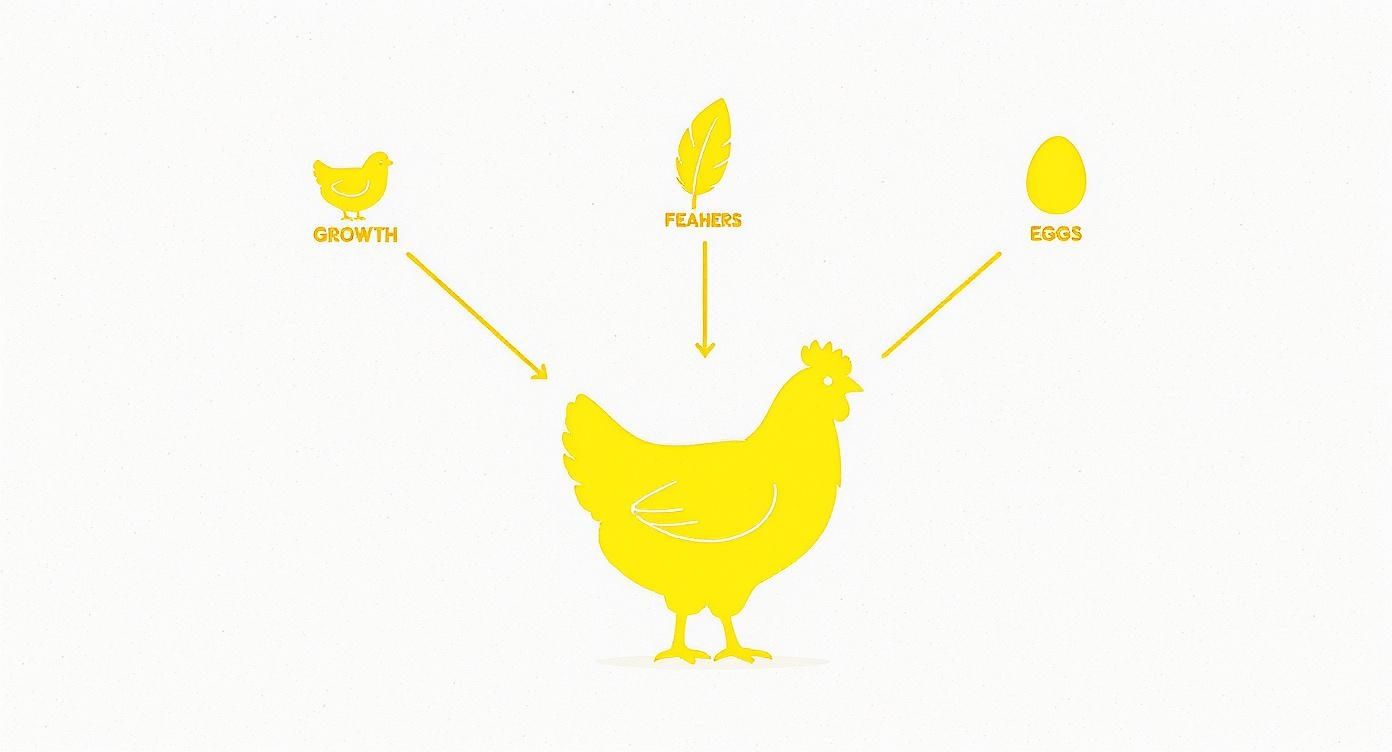
It's clear that protein is always a non-negotiable part of their diet. The reason they need it just changes as they get older, moving from pure growth fuel to the building blocks for daily egg laying.
Does Feed Texture Really Matter?
Absolutely. Beyond the nutritional specs, you'll see feed in a few different forms. The texture you pick often comes down to the age of your birds and, frankly, how much feed you want to see wasted on the ground.
Picking the right feed texture is just as vital as getting the protein percentage right. Mash is a lifesaver for tiny beaks, but pellets are fantastic for stopping picky older birds from making a huge mess.
Here’s a quick rundown of the main textures you'll encounter:
- Mash: This is a fine, almost soil-like consistency. It's perfect for brand-new chicks because it's impossible to choke on and easy to peck. The downside? It’s incredibly messy and can be wasted easily.
- Crumbles: Think of this as the "in-between" stage. It's basically mash that has been pressed into a pellet and then crumbled back up. It's less wasteful than mash and easier for growing pullets to eat than full-sized pellets.
- Pellets: Here, all the nutritional goodness is packed into a neat, tidy pellet. This is the best option for minimizing waste, as each bite is a complete one. Just make sure your birds are big enough to handle them.
Getting the right combination of formula and texture is how you build the foundation for a thriving flock. If you want to go even deeper, check out our complete guide on what is the best food for chickens to really dial in their diet.
The Power of BSFL as a Protein Superfood
While a good-quality layer feed is the cornerstone of any chicken's diet, sometimes they need an extra boost. Think of it like a nutritional multitool for your flock. This is where a true superfood comes into the picture: Black Soldier Fly Larvae, or BSFL.
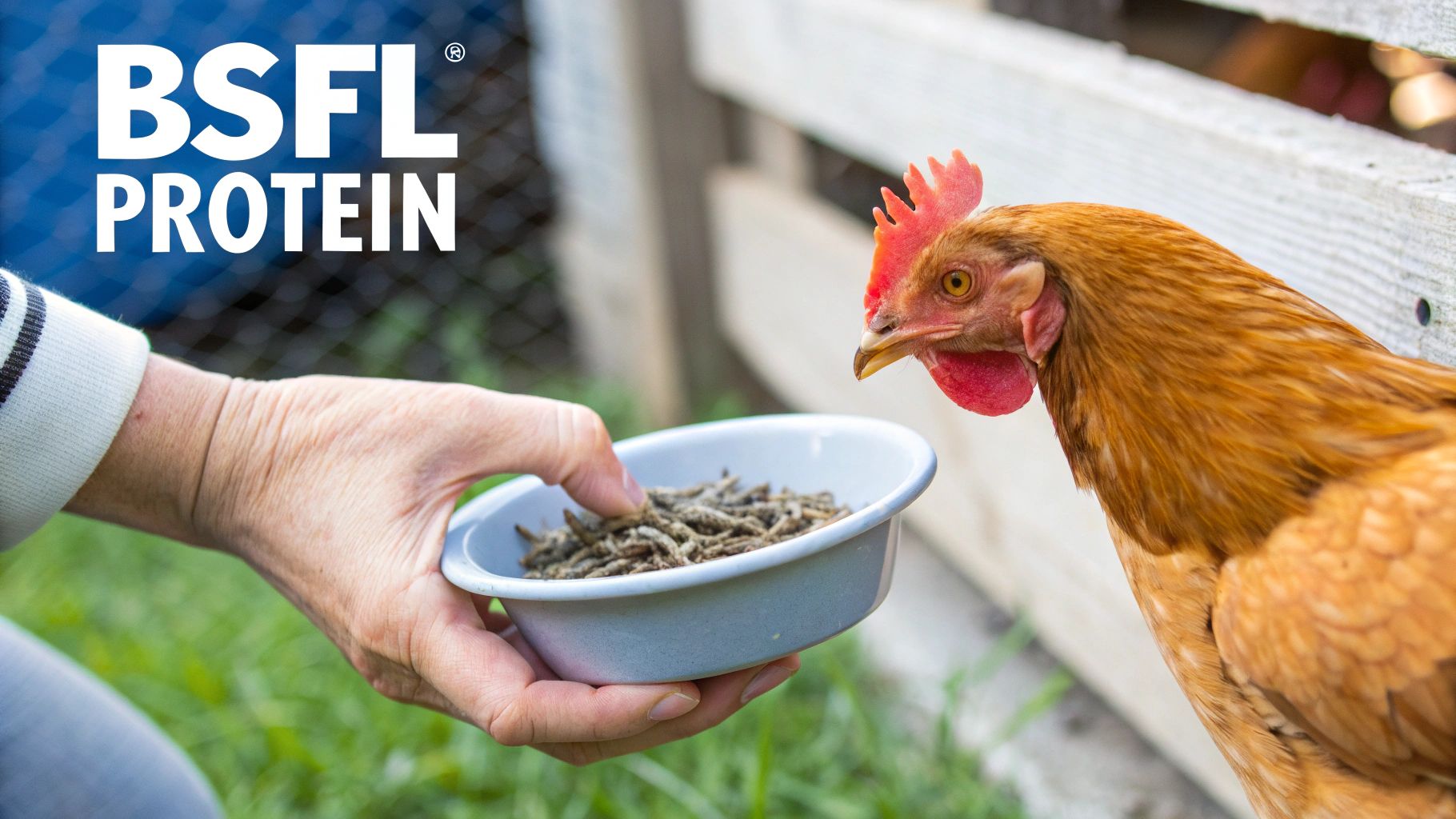
Unlike so many processed supplements, BSFL are basically what your chickens would be scratching for in the wild—bugs! This instinct is hardwired into them, making it a highly desirable high protein chicken food. A premium source like Pure Grubs gives you a clean, safe, and incredibly nutrient-dense treat that your flock will go absolutely wild for.
A Complete Nutritional Package
So, what makes these little grubs such a powerhouse? It’s all about their perfectly balanced nutritional profile. They aren’t just a one-trick pony offering protein; they deliver a complete package that supports a chicken's health from beak to tail.
First off, they are packed with easily digestible protein, loaded with all the essential amino acids your birds need for strong muscle development and beautiful, full feathers. This is a game-changer during the annual molt, a stressful time when their protein needs can practically double.
BSFL are more than just a treat; they are a functional food. Their unique combination of protein and calcium directly fuels egg production and strengthens shell quality in a way few other supplements can.
For your laying hens, the benefits are even clearer. BSFL are naturally rich in calcium, the key mineral for producing strong, solid eggshells. This built-in calcium boost is your best defense against the all-too-common frustration of thin, brittle, or easily cracked eggs. If you want to dive deeper, you can learn more about the specific benefits of high-quality, dried Black Soldier Fly Larvae in our detailed guide.
Tangible Benefits for Your Flock
Bringing BSFL into your flock's routine isn't just about impressive numbers on a nutrition label—it translates to real, visible improvements you can actually see. Simply tossing a handful of grubs into the run encourages natural foraging behavior, which keeps your chickens busy, happy, and entertained.
Here’s what you can expect to see:
- Glossier, Healthier Feathers: All that high-quality protein fuels keratin production, resulting in a vibrant, full plumage.
- Stronger Eggshells: The exceptional calcium-to-phosphorus ratio helps your hens lay consistently strong eggs, day after day.
- Increased Vigor: A nutrient-dense diet naturally leads to a more energetic, alert, and resilient flock.
By adding a top-shelf BSFL product like Pure Grubs to their diet, you're giving them a targeted nutritional boost that taps into their natural instincts. It’s a simple addition that helps ensure your chickens aren't just surviving, but truly thriving.
How to Boost Your Flock’s Diet Naturally
A high-quality commercial feed is a great starting point, but it's just that—a start. If you want to see your flock truly thrive, you'll want to supplement their diet with natural, high-protein foods. Think of their bagged feed as their daily multi-vitamin and these natural additions as the wholesome, power-packed meals that build real strength and vitality.
Offering a variety of safe, natural treats does more than just bump up their protein intake. It taps into their instinct to forage, keeping them busy, curious, and happy. It's the difference between just eating and actually dining.
This idea of prioritizing high-protein chicken isn't just for backyard flocks, either. It’s a global trend. In China, for instance, consumer demand for high-protein chicken pushed production up by over 7% in just the first half of a recent year. To put that in perspective, China consumed about 24.4 million metric tonnes of chicken in 2022. It’s clear that people everywhere recognize the value of protein, and that’s a nutritional goal we should share for our own birds. You can explore more about these global poultry trends to get the bigger picture.
Safe and Healthy Protein Supplements
So, how can you give your flock that extra boost? Introducing a few natural supplements is an easy and effective way to round out their diet. These aren't just protein powerhouses; they also provide other key nutrients and, just as importantly, a bit of excitement.
- Insects and Grubs: Chickens go absolutely wild for bugs. Mealworms and earthworms are fantastic, but dried grubs are really in a league of their own. They deliver a concentrated punch of protein and calcium that’s easy to store and serve.
- Seeds: A small handful of unsalted sunflower or pumpkin seeds makes for a fantastic treat. They're packed with healthy fats and fiber, making them an excellent high-energy snack, especially when the weather turns cold.
- Legumes: Cooked beans and lentils can be a great, protein-rich addition. The key word here is cooked. Never feed them raw, as uncooked beans contain toxins harmful to chickens.
- Kitchen Scraps: Don't toss those leftovers! Certain scraps are perfect for your flock. Small bits of unseasoned cooked meat, scrambled eggs, and leafy greens like spinach or kale are always a big hit.
Crucial Warning: Some foods are a hard no. Never give your flock raw beans, anything spoiled or moldy, avocado pits or skins, onions, or uncooked potatoes. These can cause serious health problems or even be fatal.
Integrating Supplements Effectively
The golden rule of supplementing is moderation. All these delicious treats and natural extras should only make up about 10% of your flock’s total food intake. Their main feed is scientifically balanced to be their nutritional foundation, and we don't want to throw that off.
When you introduce something new, start small. A little bit at a time lets you see how they like it and ensures it doesn't upset their digestion.
A great way to serve these goodies is to scatter them around the run. This encourages your chickens to scratch and forage just like they would in the wild. It’s a fantastic boredom-buster and helps keep peace in the coop by preventing squabbles over a single food dish. If you're looking for a simple, high-impact supplement to get started, adding a scoop of dried grubs for chickens to their daily feed is one of the easiest ways to give them a powerful nutritional lift.
Common Chicken Feeding Mistakes to Avoid
Even the most dedicated chicken keepers can make little missteps that affect their flock's health. You can buy the best high protein chicken food on the market, but a few common slip-ups can easily undo all that good nutrition. Let's walk through the most frequent pitfalls I see and talk about how to sidestep them.
It's so easy to spoil our birds, but over-treating is probably the number one mistake. We love giving them snacks, but think of treats like dessert for us—tasty, but not a replacement for a real meal. When treats make up more than 10% of a chicken's daily intake, they start pushing out the essential nutrients from their main feed. This can lead to all sorts of problems, like brittle eggshells, scraggly feathers, and just plain sluggish birds.
The fix is straightforward: stick to the 90/10 rule. Make sure 90% of their diet is their complete feed, and only 10% is treats. Always give them their main meal first, and then offer a small, measured amount of goodies like scratch grains or grubs later. This way, they fill up on the good stuff before indulging.
Choosing the Wrong Feed for Their Age
Another classic mix-up is feeding the wrong formula for a chicken's age. It's an honest mistake, but the nutritional needs of a chick are worlds apart from those of a laying hen. For instance, giving a high-calcium layer feed to young pullets before they start laying can seriously harm their kidneys. On the flip side, keeping a mature hen on a lower-protein grower feed robs her of the critical protein and calcium she needs to lay strong, consistent eggs.
Correction: It's all about matching the feed to the life stage. Chicks (0-8 weeks) thrive on a high-protein starter feed. Pullets (8-18 weeks) need a grower feed to support their development. Once they hit about 18 weeks or start laying, it's time for a complete layer ration. For a mixed-age flock, using separate feeders is the best way to ensure everyone gets exactly what they need.
Storing Feed Improperly
Finally, don't let poor storage ruin a perfectly good bag of feed. If you leave feed open in a damp coop or shed, it becomes an open invitation for mold and mildew, which can be toxic. Pests will find it, and crucial nutrients like vitamins will break down, making the feed less potent over time.
The solution is simple: get a good storage container. Something airtight, waterproof, and rodent-proof is ideal—a metal garbage can with a tight lid is a classic for a reason. Just stash it in a cool, dry spot out of the sun, and you'll keep that feed fresh and nutritious from the first scoop to the last.
Building a High Protein Feeding Schedule
Alright, so we've covered the "what" and "why" of high-protein feed. Now let's talk about the "how." The best way to put all this great nutritional info to use is by creating a simple, consistent feeding schedule. A good plan takes the guesswork out of feeding and ensures your flock gets exactly what they need, right when they need it.
Think of your flock's daily layer feed as their main meal. This is the foundation of their diet, and they should have unlimited access to it—along with fresh, clean water—all day long. Supplements, on the other hand, are like healthy, targeted snacks. They're not just random treats; they serve a specific purpose.
It’s interesting to see how the demand for high-quality protein is growing worldwide. By 2034, poultry is projected to account for 45% of all meat protein people consume. If we demand that level of quality for our own plates, it only makes sense to provide the same for our birds. You can actually discover more about the future of poultry consumption to see just how big the industry is getting.
Tailoring Treats for Peak Health
This is where supplements like Pure Grubs BSFL really shine. Instead of tossing them out randomly, you can add them to the diet strategically when your flock will benefit the most.
- During Molting (Late Summer/Fall): This is a huge protein drain for chickens. Feathers are nearly 90% protein, so growing a whole new set is tough work! A daily handful of BSFL per 4-5 birds gives them the building blocks for healthy, fast feather regrowth.
- Cold Winter Months: Your chickens burn a ton of extra calories just to stay warm. A protein-packed snack in the evening helps them build up the energy reserves they need to make it through a long, cold night.
- For Laying Hens: Consistent egg-laying requires a steady supply of calcium. A small daily serving of calcium-rich BSFL helps keep their eggshells strong and prevents common deficiencies.
Think of your feeding schedule as a roadmap, not a rigid set of rules. The real skill is in observation. Pay attention to your flock's energy levels, feather quality, and egg production, and don't hesitate to adjust their protein snacks as needed.
By sticking to a simple daily, weekly, and seasonal plan, you can be confident you're giving your flock everything they need to do more than just survive—you're helping them thrive.
Got Questions About High-Protein Chicken Diets?
Figuring out the ins and outs of chicken nutrition can feel a bit overwhelming, especially when you're trying to nail down the right high protein chicken food. Let's tackle some of the most common questions that pop up for fellow chicken keepers.
How Should I Adjust Protein When My Chickens Are Molting?
Molting is a huge energy drain for chickens. Since feathers are made of almost 90% protein, regrowing a full set demands a major nutritional commitment. The best thing you can do is seriously bump up their protein intake during this time, which usually happens from late summer through fall.
Consider switching to a feed with a higher protein content, like a "feather fixer" or a game bird formula, which often sits in the 20-22% protein range. On top of that, adding a high-quality supplement like Black Soldier Fly Larvae (BSFL) works wonders. A daily handful gives them the concentrated amino acids they desperately need to bounce back with a beautiful new coat of feathers.
Can Chickens Get Too Much Protein?
Believe it or not, yes, you can overdo it. While protein is absolutely vital, feeding too much of it can put a strain on a chicken's kidneys over time as they work overtime to flush out the excess nitrogen. You might also notice wetter, smellier droppings, which can be a sign that their system is overloaded.
The name of the game is balance. Match the feed to your chicken's age and life stage, and use those high-protein goodies as strategic supplements—perfect for molting, cold snaps, or supporting your laying hens—not as the main course every single day.
What’s the Best Natural Protein Source for Chicks?
Chicks are little growing machines and need a starter feed with a very high protein level, typically 20-24%, to fuel their development. While their main feed has them covered, you can offer them small, natural protein boosts to encourage their foraging instincts and give them a little variety.
Here are a few great options for tiny beaks:
- Scrambled Eggs: They're easy to digest, packed with protein, and chicks go absolutely nuts for them.
- Crumbled BSFL: Break up dried grubs into tiny, manageable pieces. This gives them a protein punch and a dose of calcium for strong bone growth.
- Tiny Insects: If you have access to small, safe insects like mini crickets, they make for an exciting treat that mimics what a mother hen would find for her brood in the wild.
Just remember to keep any treats small enough for them to swallow safely, and offer them in moderation so they still eat plenty of their complete starter feed.
Ready to give your flock the protein boost they've been waiting for? Pure Grubs are premium, USA-grown Black Soldier Fly Larvae, loaded with the protein and calcium your chickens need to truly thrive. Give them a treat that's as healthy as it is delicious.