

Hens Not Laying Eggs: Quick Fixes for a Productive Flock
When your hens stop laying eggs, it's often a sign of something completely natural, like molting or age. Other times, it could be environmental stress from poor lighting or heat, or simply a gap in their nutrition. A quick check of their feathers, feed, and coop conditions usually points you right to the cause.
The good news? This pause is almost always temporary and can be fixed with a few minor adjustments.
Decoding the Empty Nest Box
Finding an empty nest box day after day is a real worry for any chicken keeper. You immediately start to wonder what you're doing wrong. Is it the feed? Is a hen sick? This sudden halt in production, which many of us call an "egg slump," can feel like a total mystery, but the clues are usually right there in your coop.
Instead of jumping to the worst-case scenario, think of it as a chance to get more in tune with your flock’s needs. The reasons your hens stop laying are often interconnected, ranging from perfectly normal biological processes to subtle changes in their environment.
Understanding the usual suspects is the first step to getting those delicious, fresh eggs back in your basket. Most of the time, the solution doesn't mean a trip to the vet—just a little detective work and some patience.
Common Causes for an Egg Laying Pause
When your hens take a break from laying, it’s rarely due to just one thing. It's often a combination of factors. Before you make any big changes, take some time to just watch your flock for other signs that might point you in the right direction. A hen’s energy is a finite resource, and if it's being diverted elsewhere—like growing new feathers or just trying to stay warm—egg production is the first thing her body will shut down.
Here are the main areas to investigate:
- Natural Cycles: Age, molting, and broodiness are the most common (and least alarming) reasons for a laying hiatus.
- Environmental Stress: Changes in daylight hours, extreme heat or cold, overcrowding, or even the threat of a nearby predator can stop production cold.
- Nutritional Deficiencies: An imbalanced diet that’s short on protein or calcium makes it physically impossible for a hen to form an egg.
- Health Issues: Pesky parasites like mites and worms or other underlying illnesses can completely drain a hen's resources.
This isn't just a small-flock issue, either. For instance, in a recent June, overall U.S. egg production dropped by 5% compared to the previous year, with a total of just 8.33 billion eggs. This shows just how sensitive egg-laying is to widespread challenges, from nutritional shortfalls to environmental stress.
Your Quick Diagnostic Guide
To simplify your investigation, start with a simple visual check of your hens. Are they losing feathers? Do their combs look pale and shrunken? Is one hen stubbornly sitting in the nest box all day, puffed up and clucking defensively? Each of these behaviors is a valuable piece of the puzzle.
This decision guide can help you visualize the process, starting with a simple check of your hen and branching out to common issues like feather loss or a pale comb.
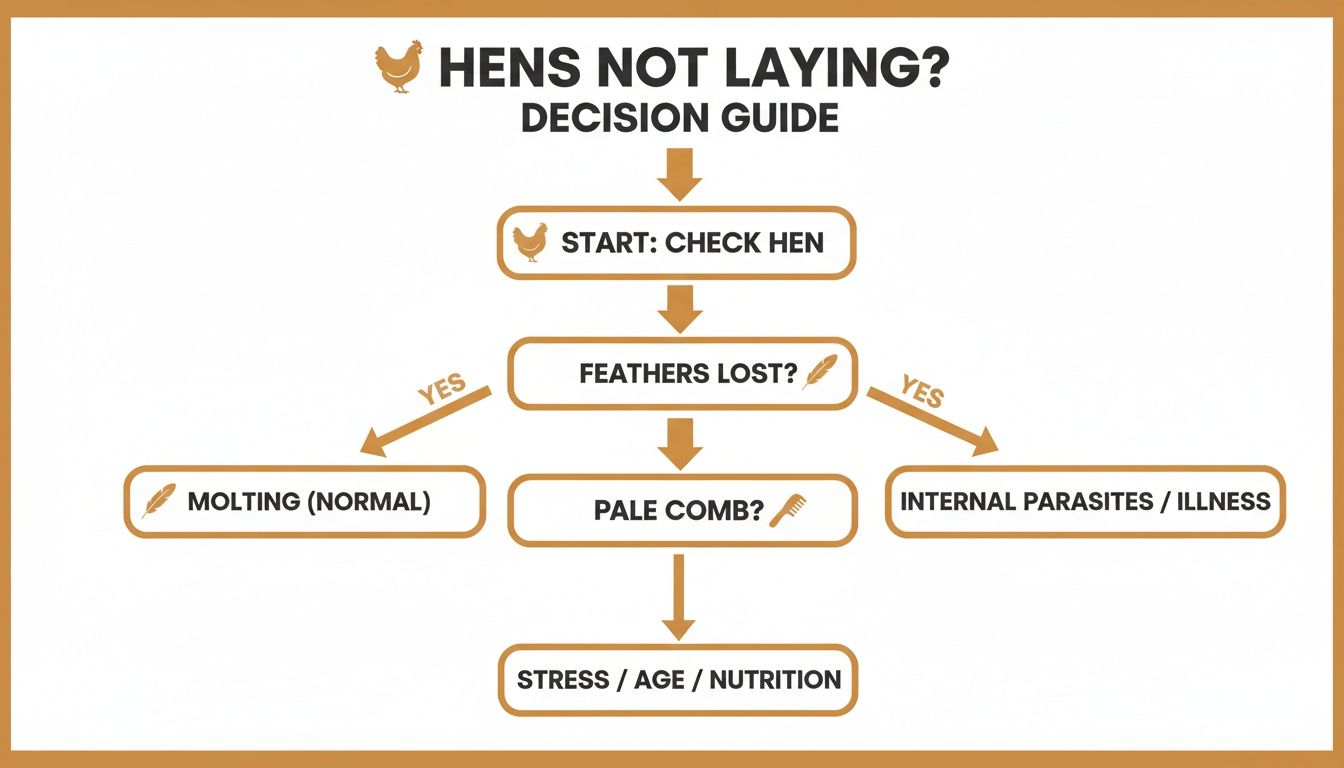
The flowchart shows how symptoms you can easily spot in the coop can lead you straight to the most likely cause, helping you solve the problem faster. Of course, you first have to be sure they aren't just hiding their eggs! For tips on that, check out our guide on efficient chicken coop egg collection.
To help you connect the dots even faster, here’s a quick chart that pairs common symptoms with the most likely culprits.
Quick Diagnostic Chart for Non-Laying Hens
| Symptom Observed | Potential Cause | What to Check First |
|---|---|---|
| Feather loss, "pin feathers" | Molt | Check for new feather growth; occurs in late summer/fall. |
| Stubbornly sitting in nest box | Broodiness | Try to remove her from the nest; she'll likely run right back. |
| Watery droppings, lethargy | Heat Stress | Is it hot outside? Check for panting and access to cool water. |
| Pale comb and wattles | Disease/Parasites | Inspect vent area for mites/lice; consider a fecal test for worms. |
| Reduced laying in fall/winter | Lighting Changes | Note the number of daylight hours; hens need 14-16 hours. |
| General drop-off in the flock | Nutritional Issue | Review your feed label. Is it a complete layer feed (16-18% protein)? |
Using this chart as a starting point can take a lot of the guesswork out of the equation.
By systematically working through these potential issues, you can identify the root cause with confidence. Sometimes the fix is as simple as adding a light to the coop or supplementing their diet, while other times it may mean tackling a more persistent stressor in their environment. The key is to be observant and methodical.
Understanding Your Hen's Natural Laying Rhythms
Before you start tearing the coop apart looking for problems, let’s get one thing straight: hens aren't egg-laying machines. Their bodies follow predictable, natural cycles that often mean taking a complete break from production. Knowing what these are can save you a ton of unnecessary worry.
When the nesting boxes are suddenly empty, your first thought shouldn't be about disease or some failure on your part. It’s far more likely your girls are just listening to one of their built-in biological clocks. These breaks are actually crucial for their long-term health and vitality.
From the inevitable slowdown that comes with age to the dramatic, feather-filled affair of molting, these pauses are just part of being a chicken. Recognizing them is the first big step toward becoming a more confident and in-tune flock keeper.
The Inevitable Impact of Age
Just like any of us, a hen's productivity changes as she gets older. A young pullet in her first year is an absolute egg-laying champion, often giving you an egg almost every single day. But that peak performance doesn't last forever.
After her first big laying season, you can expect a hen’s production to drop by about 15-20% each year. It's a gentle, gradual decline. A hen who is three years old might only lay three or four eggs a week, and by the time she's five, you might just get one or two.
This isn't a problem to be solved; it’s just a hen gracefully entering her golden years. An older hen still brings so much to the flock—she’s a seasoned forager, a calming presence, and the best bug-zapper you could ask for, even if her nesting box days are mostly behind her.
The Annual Molt: A Necessary Shutdown
Have you ever walked out to the coop and found a scene that looks like a pillow fight exploded? Don't panic. You're almost certainly witnessing the annual molt. This is the completely natural process where chickens shed their old, worn-out feathers and grow a shiny new set for the coming winter.
Molting is incredibly hard work for a hen's body. Feathers are made of over 85% protein, so growing thousands of new ones takes a massive amount of energy. To get the job done, her body wisely hits pause on the egg factory and redirects all those resources to feather production.
During a "hard molt," which can last anywhere from 8 to 16 weeks, egg-laying will stop completely. It's physically impossible for her to do both at the same time.
Key Insight: You can't force a hen to lay through a molt, so don't even try. The best thing you can do is support her. Bump up her protein by switching to a feed with around 20% protein to help her regrow feathers faster and get back to laying shape once she's done.
Broodiness: The Motherhood Instinct
Ever reached into a nest box and been met with a puffed-up, growling, stubborn hen who refuses to move? Congratulations, you've met a broody hen. Broodiness is that powerful maternal instinct that screams, "It's time to hatch these eggs!"—whether they're fertile or not.
When a hen goes broody, her hormones completely shift, and egg production shuts down. Her entire focus is on sitting tight for the 21-day incubation period. She'll barely leave the nest to eat, drink, or dust bathe, which can be a serious drain on her health if you let it go on.
Figuring out if you've got a broody on your hands is usually pretty easy:
- She's Glued to the Nest: She won't get up, even at night when the others are roosting.
- Puffed-Up Posture: She'll fluff all her feathers to look big, intimidating, and to cover the eggs.
- Grumpy and Defensive: She might peck, shriek, or give you a low growl when you get close.
- A Bare Tummy: She'll often pluck feathers from her breast to create a "brood patch" for better skin-to-egg contact and heat transfer.
This annual cycle has a real impact on our egg baskets. Molting season alone can cause a huge drop in egg availability. Some estimates suggest up to 70% of backyard hens stop laying for 8-12 weeks while they put all their protein and calcium toward new feathers. You can dig deeper into these national laying trends and their causes in this detailed USDA report.
If you aren't trying to hatch chicks, it's best to "break" her broodiness for her own good. This usually involves persistently removing her from the nest. If she's extra stubborn, a common trick is to temporarily place her in a wire-bottomed crate or "broody jail," which helps cool her underside and reset those motherly hormones.
What in Their World is Causing the Egg Slump?
Hens are creatures of routine. They thrive on predictability and a calm, peaceful environment. When their world gets shaken up, even by something that seems minor to us, their bodies often hit the brakes on the energy-draining process of laying eggs. Think of their egg production as a finely tuned barometer for their overall sense of security.
A sudden scare from a loose dog, the racket from a neighbor's construction project, or even just moving the coop to a new spot in the yard can be enough to put your flock off-lay. These moments trigger a hen's deep-seated survival instincts, telling her it's not a safe time to be making babies (or in this case, eggs). Thankfully, most of these environmental triggers are things you can manage.
You Can’t Underestimate the Power of Light
If there’s one environmental factor that rules the roost, it’s light. A hen's entire reproductive cycle is kickstarted by the length and intensity of daylight. It’s the natural signal to her pituitary gland that the season is right for raising a clutch of chicks.
To keep the eggs coming steadily, your hens need 14 to 16 hours of light each day. As the days get shorter in the fall, you'll notice production slowing down or stopping completely. This is a perfectly natural and healthy rest period for their bodies. But if you’re hoping for eggs through the winter, you’ll need to step in with some supplemental lighting.
It’s easier than it sounds. A simple, low-wattage bulb (a 40-watt bulb is usually plenty for a standard coop) hooked up to a timer is all it takes. Just set it to come on in the early morning hours to stretch their "daylight" to that magic 14-hour mark. This little trick convinces their bodies that it's still prime laying season.
When Temperatures Get Extreme
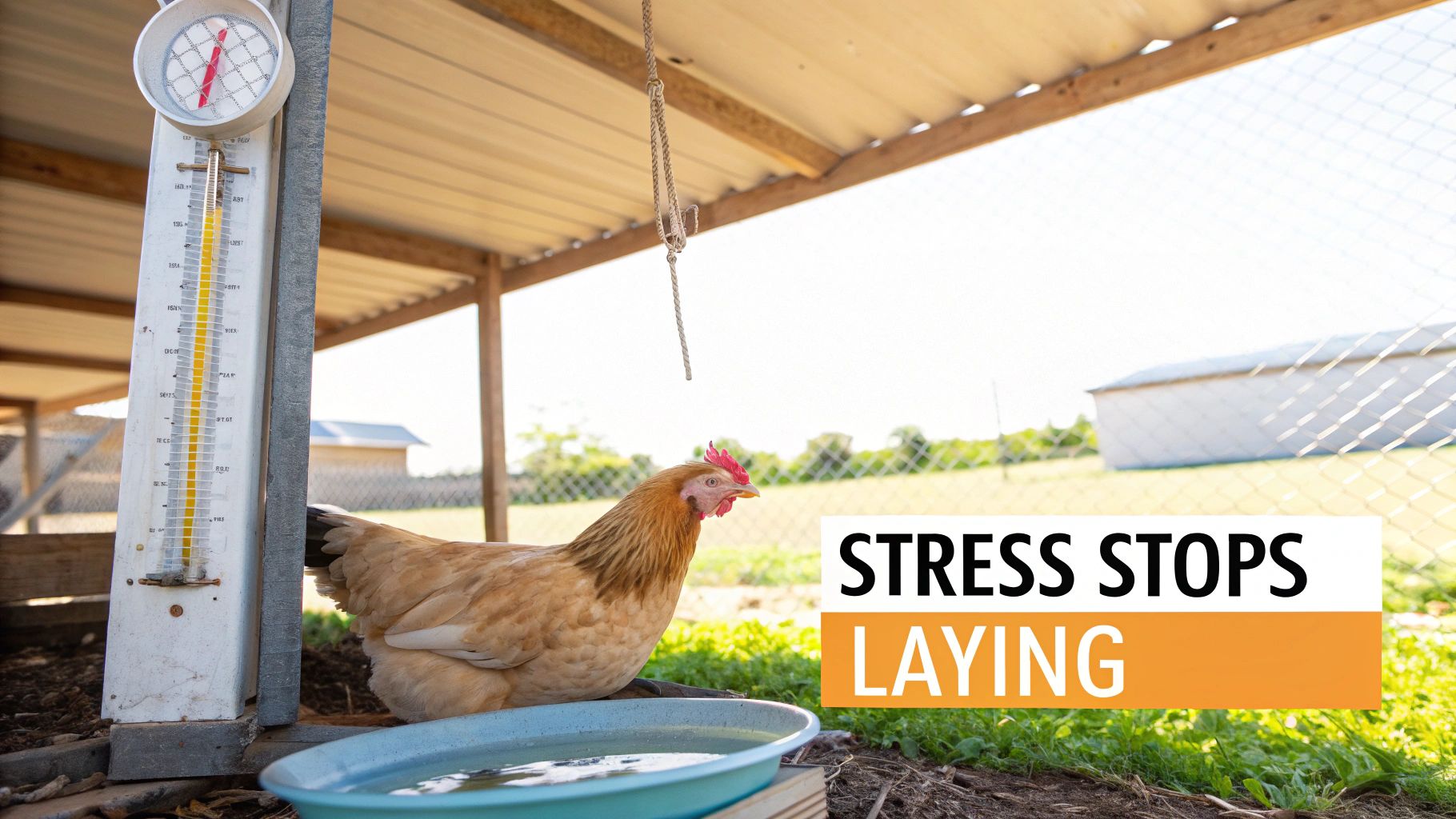
Just like light, temperature plays a huge role. Hens are happiest and most productive when it’s between 50-75°F (10-24°C). When the mercury soars or plummets, their bodies have to work overtime just to stay warm or cool down, leaving very little energy left for making eggs.
Summer heat, in particular, is a notorious production killer. Keep an eye out for signs of heat stress:
- Panting with their beaks open
- Holding their wings out away from their bodies
- A pale comb and wattles
- Looking sluggish and losing interest in food
To fight the heat, make sure your coop has fantastic ventilation and your flock has plenty of shade and cool, fresh water. Some tricks I’ve learned are to freeze berries in a big block of ice for them to peck at or to give them a shallow pan of water to stand in. It really helps.
A Quick Word on Coop Comfort: A calm, stable environment is simply non-negotiable if you want eggs. A stressed hen will always put her own survival first. Simple things, like a consistent daily routine and a secure, predator-proof coop, make a world of difference in keeping your flock feeling safe and productive.
Flock Drama and Social Stress
Never, ever underestimate the impact of social drama on your egg basket. Chickens live by a strict pecking order, and any disruption to that hierarchy is a major stressor. Overcrowding is probably the biggest cause of this, sparking competition for food, water, and the best nesting boxes, which almost always leads to bullying.
As a good rule of thumb, give each bird at least 4 square feet of space inside the coop and another 8-10 square feet in their run. Bringing new birds into an established flock can also cause total chaos as everyone scrambles to figure out the new social ladder. The best way to do this is to integrate newcomers gradually. Set up a separate pen for them inside the run for a week or two, so everyone can get used to each other without any pecking.
It’s clear that environmental factors like heat and shorter days can put a serious dent in your egg count. It's not uncommon for backyard chicken keepers to see a 20-40% drop in egg output when temperatures climb, as hens burn through more calcium just to cope with the heat. Then, when daylight drops below 14 hours, up to 50% of hobby flocks might stop laying altogether. To help them through these tough times, a high-calcium treat like Pure Grubs BSFL can be a real game-changer. Their incredible calcium content helps fuel eggshell production when a hen’s resources are stretched thin, and the high-quality protein supports their overall health and feather growth. You can find more insights on how these factors impact egg production in this agricultural report.
Getting Egg Production Back on Track with Proper Nutrition
Think about what an egg really is: a perfectly packaged nutritional powerhouse. For a hen to create one of these marvels almost every day is an incredible metabolic feat, and it demands a premium, high-octane diet. If your egg baskets are suddenly empty, the first place you should look is the feed scoop.
A hen's body is incredibly smart. If it doesn't have the raw materials to build a strong, healthy egg, the production line simply shuts down. This isn’t your hen being stubborn; it’s a biological safety switch. An incomplete diet forces her to choose between her own health and laying an egg—and self-preservation always wins.
The Cornerstone of a Layer's Diet
The absolute foundation of a productive flock is a high-quality, complete layer feed. This isn't just generic "chicken food." It's a carefully formulated recipe designed to provide the precise balance of protein, vitamins, and minerals a hen needs for consistent laying.
For any laying hen, you should be looking for a feed with 16-18% protein. Protein provides the essential building blocks for the egg white (albumen) and supports the hen's own muscle and feather health. Without enough of it, both egg size and laying frequency will plummet.
It’s tempting to spoil our flocks, but treats like scratch grains, lettuce, and kitchen scraps are the chicken equivalent of junk food. They're tasty, but they lack the specific nutrients needed for making eggs and can dilute the nutritional value of their main feed.
A great guideline I always follow is the 90/10 rule. At least 90% of your flock's daily food should be their complete layer feed. No more than 10% should come from supplemental treats.
Calcium: The Shell-Building Superstar
While protein is critical, calcium is the single most important mineral for a laying hen. An eggshell is made of nearly 95% calcium carbonate. To pull this off, a single hen needs to consume about 4-5 grams of calcium every single day just to form a strong shell.
When calcium runs low, the signs are obvious and show up quickly:
- Thin, weak, or soft shells: This is the first red flag that your hen's calcium reserves are depleted.
- Shell-less "wind eggs": You might find a bizarre-looking egg that only has the inner membrane holding it together.
- A complete stop in laying: If a hen’s body can't source enough calcium to form a shell, it will stop releasing yolks altogether. It's a natural mechanism to prevent laying an unsafe, shell-less egg.
The solution is simple: always provide a separate, free-choice source of supplemental calcium. Crushed oyster shells or even baked, crushed eggshells work perfectly. This allows each hen to take exactly what she needs, right when she needs it.
Give Them a Boost to Get Back on Track
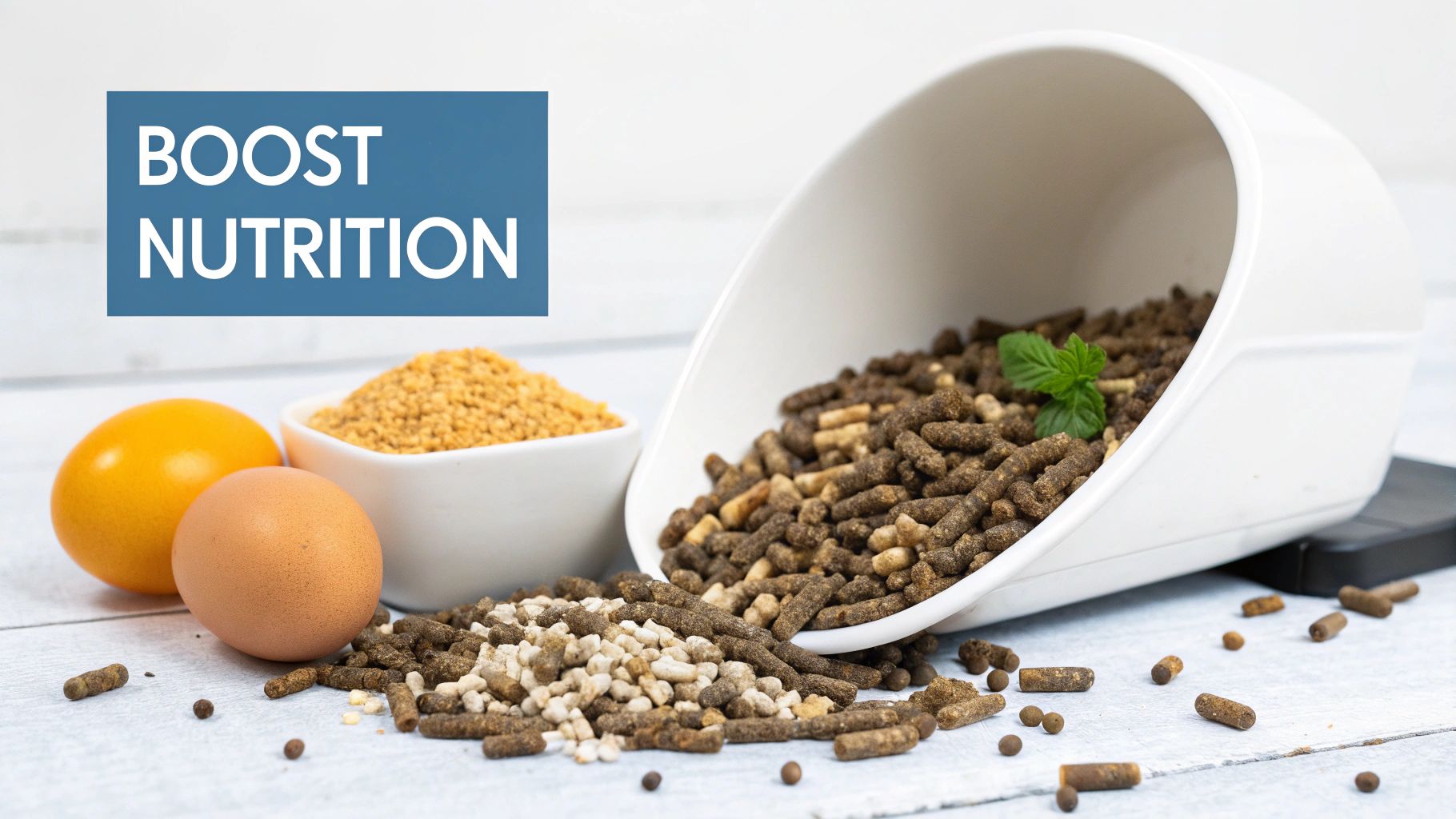
Even with a great diet, sometimes your flock needs an extra push, especially when recovering from stress, illness, or a tough molt. This is where a high-quality, nutrient-dense supplement can make all the difference in restarting the egg factory.
Black Soldier Fly Larvae (BSFL) are one of my go-to supplements. They are packed with both protein and, more importantly, bioavailable calcium. This makes them a fantastic dual-action boost that supports both the inside and the outside of the egg.
For instance, Pure Grubs have a huge nutritional advantage, containing up to 85% more calcium than common treats like mealworms. That high calcium content directly fuels the creation of strong eggshells, giving a hen’s body the resources it needs to confidently get back to laying. Tossing your flock a handful of these grubs gives them a targeted dose of the exact minerals their systems are craving.
If you want to dive deeper into building the perfect diet for your flock, we have a complete guide on what to feed laying hens that you might find helpful.
Spotting Health Issues That Stop Egg Production
Sometimes, the first sign something is wrong isn’t a sneeze or a limp—it’s an empty nest box. While things like age and molt are far more common culprits, an underlying health problem can absolutely shut down a hen's egg-laying machinery. Think of it this way: her body needs to divert all its energy to fighting off the illness, leaving nothing left for producing eggs.
As a chicken keeper, becoming a sharp-eyed observer is your most powerful tool. You know your flock's normal behavior better than anyone. A healthy hen is a busy hen—scratching, pecking, and interacting. When one starts acting "off," maybe hanging back from the flock or looking a bit puffy and miserable, it’s your cue to investigate.
Performing a Routine Hen Health Check
I can't stress this enough: get your hands on your birds regularly. A quick, monthly health check for each hen helps you establish a baseline for what's normal, making it much easier to spot when something's wrong. Just a few minutes per bird is all it takes.
Gently scoop her up and give her a quick once-over. Here's my typical checklist:
- Eyes & Nostrils: They should be bright, clear, and totally dry. Any goop, bubbles, or swelling is a red flag for a potential respiratory issue.
- Comb & Wattles: For a laying hen, you want to see a full, waxy, and vibrant red comb. If it looks pale, shrunken, or has a purplish tint, she's likely sick or at least off-lay.
- Vent Area: Check the fluffy feathers around her rear end. Look closely for tiny black or red specks (mites) or clusters of white eggs stuck to the feather shafts (lice). An irritated or messy vent is a clear sign of trouble.
- Legs & Feet: The scales should lie flat and smooth. If they look crusty or raised, you could be dealing with scaly leg mites.
This simple hands-on check is your best early warning system. To get even better at spotting problems, it helps to learn more about the common symptoms of illness in chickens.
Common Parasites That Halt Egg Production
Parasites are a constant battle for any flock. They're little nutrient thieves that cause chronic stress, and that combination is a guaranteed recipe for zero eggs.
External parasites like mites and lice are a huge pain. Mites are especially sneaky; they hide in the coop's cracks and crevices by day and crawl onto your hens to feed at night. A bad infestation can lead to anemia and severe irritation, making a hen far too miserable and weak to lay.
Internal parasites like roundworms are a more hidden threat but can be just as devastating. They live inside the digestive system, stealing nutrition right from the source. A hen with a heavy worm load might eat constantly but still lose weight, develop a pale comb, and stop laying completely.
A Proactive Approach: Prevention is everything with parasites. A thorough coop clean-out—stripping all the old bedding and dusting the nooks and crannies with a poultry-safe diatomaceous earth—is crucial for breaking their life cycle.
When to Isolate a Sick Hen
If you even suspect a hen is sick, the first and most critical step is to isolate her immediately. This one action accomplishes two things: it protects the rest of the flock from getting sick and gives your ill hen a quiet, safe place to recover without being picked on.
A large dog crate in a garage or a small "hospital pen" works perfectly. Just make sure she has her own food and water, far from the rest of the flock. This simple step can mean the difference between one sick chicken and a full-blown flock emergency.
Knowing When to Call the Vet
Many common chicken ailments are manageable at home, but some symptoms are serious red flags that demand a professional's help. It can be tough to know when to make that call, so here's a quick guide to help you decide.
When to Call the Vet: A Symptom Checklist
| Symptom | Potential Seriousness | Action to Take |
|---|---|---|
| Gasping, coughing, or audible wheezing | High. Could be a severe respiratory infection (e.g., infectious bronchitis, mycoplasma). | Isolate the hen immediately and call a vet. These can spread rapidly. |
| Extreme lethargy, unable to stand or walk | High. This indicates a severe systemic illness, injury, or being egg-bound. | Isolate in a warm, quiet place with food/water within reach. Call a vet ASAP. |
| Hard, swollen, or water-balloon-like abdomen | High. Classic sign of being egg-bound or having egg yolk peritonitis. Both are life-threatening. | This is a medical emergency. Contact a vet immediately for guidance. |
| Blood in droppings or from the vent | Moderate to High. Could be coccidiosis, an internal injury, or vent prolapse. | Isolate and monitor closely. If it's more than a tiny speck or continues, call a vet. |
| Sudden, unexplained death of a flock member | High. Could indicate a fast-moving, contagious disease. | Remove the deceased bird and contact a vet for advice, possibly a necropsy. |
| Pale comb and wattles, combined with weakness | Moderate. Often a sign of anemia from parasites (mites/worms) but can be other illnesses. | Perform a thorough health check for parasites. If no obvious cause, consult a vet. |
Ultimately, you have to trust your gut. If a hen looks really sick or isn't showing any signs of improvement after a day or two of supportive care, getting a professional diagnosis is always the best move for her and for the rest of your birds.
Common Questions About Hens Not Laying Eggs
It’s always a little worrying when your daily egg hunt comes up empty. We’ve all been there, standing by the nest boxes and wondering what’s going on. Let’s tackle some of the most frequent questions that pop up when the egg basket is light.
Figuring this stuff out helps you know when to worry and when to just be patient. Sometimes, the solution is as simple as waiting, but other times, it's a clear sign you need to step in.
Why Did Only One of My Hens Stop Laying?
When just one hen goes off-lay, it’s a big clue. This tells you the problem is likely specific to her, not something affecting the whole flock. Time to put on your detective hat and take a closer look at that particular bird.
Is she hunkered down in a nest box, all fluffed up and clucky? That's a classic sign of broodiness. Or maybe you're seeing a mini-explosion of feathers in the coop—she could be starting an early molt. Get a good look at her. A quick health check might show a pale comb or signs of mites that you hadn't noticed before.
It could also be a flock dynamic issue. A hen low on the pecking order might be getting pushed away from the feeder, and the stress is just too much for her to lay. If the entire flock suddenly stopped, you'd be looking for a bigger culprit, like a predator scare, a problem with their water source, or a major change in their environment.
How Long Until My Hen Lays Again?
This is the million-dollar question, and the answer really depends on what caused her to stop in the first place. You’ll need a good dose of patience, as a hen's body needs time to get back into the swing of things.
Here’s a rough idea of what to expect:
- Minor Stress or Quick Fixes: If you just had to add a little more light or switch to a better feed, you could see eggs again within 1 to 2 weeks.
- Post-Molt Recovery: A full molt is a serious energy drain. Don’t expect eggs until at least 8 to 12 weeks after she starts dropping feathers.
- Bouncing Back from Illness: Even after a hen seems fully recovered from being sick or having a bad parasite problem, it can take her system a few more weeks to feel strong enough to divert energy back to making eggs.
Remember, a hen has to rebuild her body's nutritional savings account before she feels secure enough to start laying again. The best thing you can do is provide top-notch care and not rush her.
Will My Older Hens Ever Start Laying Again?
They sure will, but it won't look like it did in their younger days. A hen's first two years are her egg-laying peak. After that, production naturally slows down by about 15-20% each year.
A hen that's five or six years old isn't going to be a daily layer anymore. She might give you just a few eggs a month and take much longer breaks between cycles. This is a perfectly normal part of her lifecycle. She's earned her retirement and is still a wonderful part of the flock, great for teaching younger birds and keeping the bug population down.
Can Giving Too Many Treats Stop Egg Production?
Yes, one hundred percent. This is probably one of the most common mistakes new chicken keepers make, and thankfully, it’s an easy one to fix. We all love spoiling our girls, but showering them with scratch grains, bread, and table scraps can mess up their diet.
These "junk food" treats are delicious but lack the high levels of protein and calcium a hen needs to form an egg. She'll fill up on the tasty stuff and ignore her balanced layer feed. The golden rule is the 90/10 rule: treats should never be more than 10% of her daily food intake.
When you do give a treat, make it a good one. The folks at Pure Grubs focus on treats that actually boost a hen's health. Their USA-grown Black Soldier Fly Larvae are packed with up to 85% more calcium than mealworms, which directly helps build strong eggshells and can get your girls back on track faster. Give your flock the clean, high-calcium boost they need at https://puregrubs.com.