

A Guide to Fly Larvae for Chickens
High-quality fly larvae for chickens are more than just a treat; they're a safe, natural way to tap into your flock's instinct to forage for bugs. Think of them as a nutrient-packed power bar, loaded with the protein and calcium your birds need for stronger eggshells, brilliant feathers, and boundless energy. Honestly, they're one of the best supplements you can give your flock.
What Are Fly Larvae and Why Do Chickens Go Crazy for Them?
If you've ever tossed a handful of dried grubs into the chicken run, you know the happy chaos that erupts. That frenzy isn't just for show—it's pure, hardwired instinct. Chickens are omnivores, not just seed-eaters, and a huge part of their natural diet comes from scratching up insects, worms, and other critters. Giving them fly larvae isn't just a treat; it’s a way to let them be chickens.
The best and most common type you'll find are Black Soldier Fly Larvae, or BSFL for short. Don't worry, these aren't related to the pesky houseflies buzzing around your kitchen. They're the young stage of a completely harmless insect famous for its amazing ability to turn organic waste into a powerhouse of protein and healthy fats.
A Natural Superfood for Your Flock
The best way to think of BSFL is like a tiny, crunchy power bar designed by nature itself. Each little grub is a self-contained packet of nutrients that directly supports the health of your backyard birds.
- Protein for Feathers: A chicken's feathers are over 85% protein. When they go through a molt, their need for protein goes through the roof. BSFL deliver a concentrated protein punch that helps them regrow their feathers faster and with less stress.
- Calcium for Eggshells: This is where BSFL really shine. Unlike other insect treats, they are loaded with calcium. Laying hens use up a ton of their own calcium reserves every single day to form strong eggshells, and supplementing with BSFL directly helps prevent those frustratingly thin or soft-shelled eggs.
- Energy for Vitality: The healthy fats in fly larvae are a clean source of energy. This is especially helpful in the winter when your flock needs extra calories just to stay warm, keeping them active and resilient all year round.
More Than Just a Treat
Sure, your chickens will see them as the best snack ever, but for you, the keeper, they're a powerful tool. Providing fly larvae is a proactive way to head off common flock problems. A hen getting enough calcium is far less likely to lay weak eggs, and a molting bird with plenty of protein will get back to laying much sooner.
Tapping into a chicken's natural foraging instinct is key to their well-being. Offering insects like BSFL doesn't just provide nutrition; it provides mental stimulation and enrichment, allowing them to engage in behaviors they are born to perform.
When you see that mad dash for the grubs, it's a sign that you're giving them something their bodies know is good for them. This simple addition to their diet helps bridge the gap between their modern backyard life and their wild instincts, leading to a healthier, happier, and more productive flock.
The Nutritional Powerhouse Inside Every Grub
At first glance, dried fly larvae might just look like a simple, crunchy snack for your flock. But packed inside each tiny grub is a nutritional profile that's almost perfectly designed to tackle some of the most common headaches for backyard chicken keepers. Think of them less as just another treat and more like a super-supplement that delivers exactly what your birds need to thrive.
The real magic is in the specific balance of protein, fat, and crucial minerals. Unlike a lot of empty-calorie fillers, every part of a grub serves a direct purpose, whether it's fueling new feather growth or building stronger, more reliable eggshells. It’s not just about tossing your chickens something they'll gobble up; it's about making a smart choice to boost their health from the inside out.
Fueling Feathers with High-Quality Protein
Molting is tough on a chicken. Seriously tough. Losing and regrowing thousands of feathers drains an incredible amount of protein, especially when you consider that feathers are over 85% protein themselves. It’s so demanding that you'll often see egg production grind to a halt as a hen’s body shifts all its resources into making a new coat.
This is where the protein in Black Soldier Fly Larvae makes a world of difference. These grubs have a phenomenal nutritional profile, with protein levels hitting anywhere from 37% to 63% on a dry matter basis. This isn't just any protein, either—it's high-quality and easy for them to digest, giving them the essential building blocks for fast, healthy feather regrowth. That means they can get through the molt quicker and get back to laying sooner.
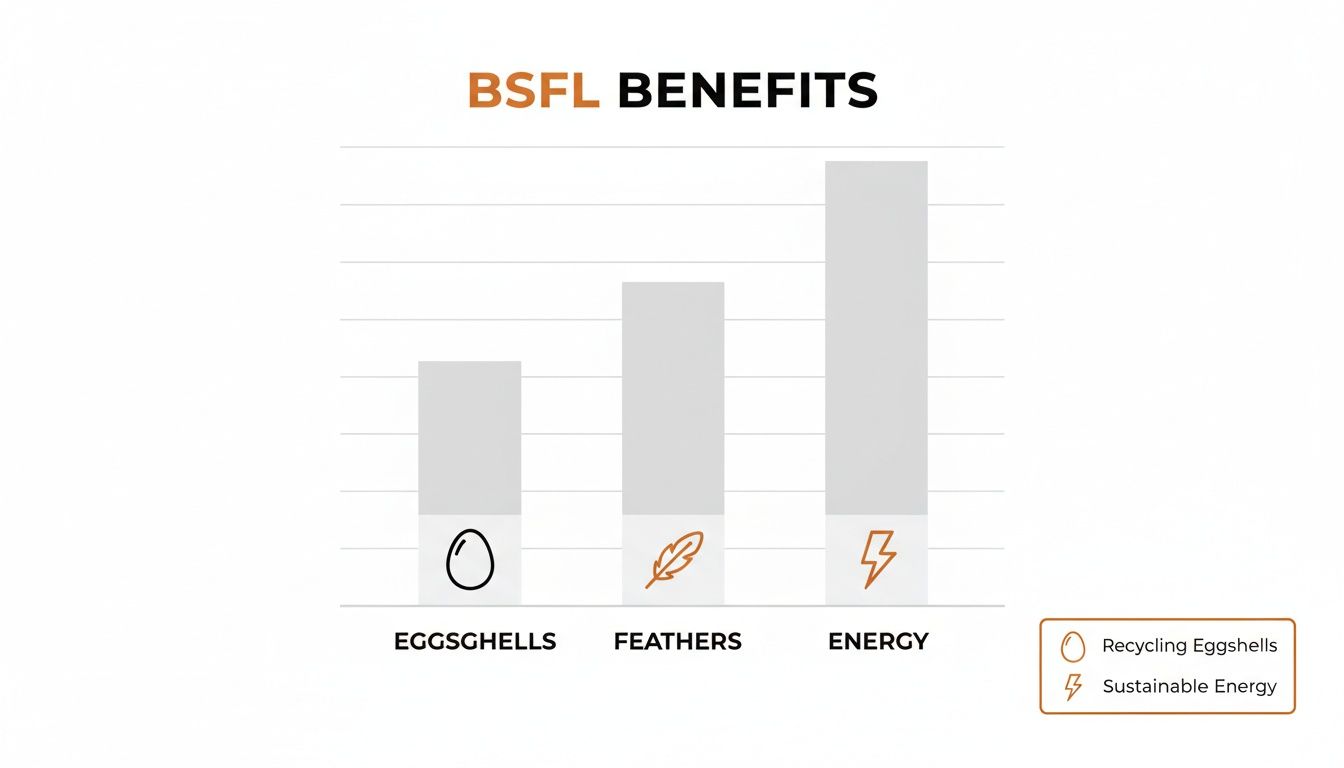
As you can see, BSFL are a triple threat, directly helping build stronger eggshells, promote healthy feathers, and give your flock a serious energy boost. They're a true multi-purpose tool for keeping your birds in top shape.
The Calcium Secret for Superior Eggshells
If you’ve ever reached into the nesting box and found a soft-shelled or paper-thin egg, you've seen a calcium deficiency firsthand. Laying hens need a massive amount of calcium every single day to form strong shells, and sometimes their regular feed just doesn't cut it.
This is where fly larvae really pull away from the pack.
Black Soldier Fly Larvae are naturally loaded with calcium and boast a near-perfect calcium-to-phosphorus ratio. This is critical because it means the calcium your chickens eat is actually absorbed and put to work building thick, durable eggshells.
Many of us provide crushed oyster shells, and that's a great habit to be in. But BSFL deliver that essential calcium in an exciting package that also provides a punch of protein and energy. In fact, some of the best brands pack up to 85 times more calcium than mealworms, making them a far more effective choice for supporting your layers. You can learn more about how dried black soldier fly larvae can support your flock in our detailed guide.
This targeted nutritional support doesn't just improve the eggs you collect—it also protects your hen's own bone density, preventing long-term health problems. When your flock gets the right nutrients, it shows in every single egg.
How to Safely Feed Fly Larvae to Your Flock
So, you know fly larvae are a nutritional powerhouse for your chickens. That's the easy part. The fun part is figuring out the best ways to serve up these tasty grubs. Bringing larvae into your flock’s routine is pretty straightforward, but a little know-how goes a long way in making sure they get the most out of every single bite.
Think of it less like just giving them a snack and more like an opportunity. You can turn treat time into an enriching activity, adjust portions for your youngest chicks, or give your molting hens an extra boost. The key is to treat them as a powerful supplement, not a replacement for their main feed.
Simple and Effective Feeding Methods
There isn't one "right" way to feed fly larvae—it really depends on what you're trying to accomplish. Are you hoping to encourage natural behaviors? Build a closer bond with your birds? Or just deliver a quick nutritional punch?
Here are a few of my favorite techniques:
-
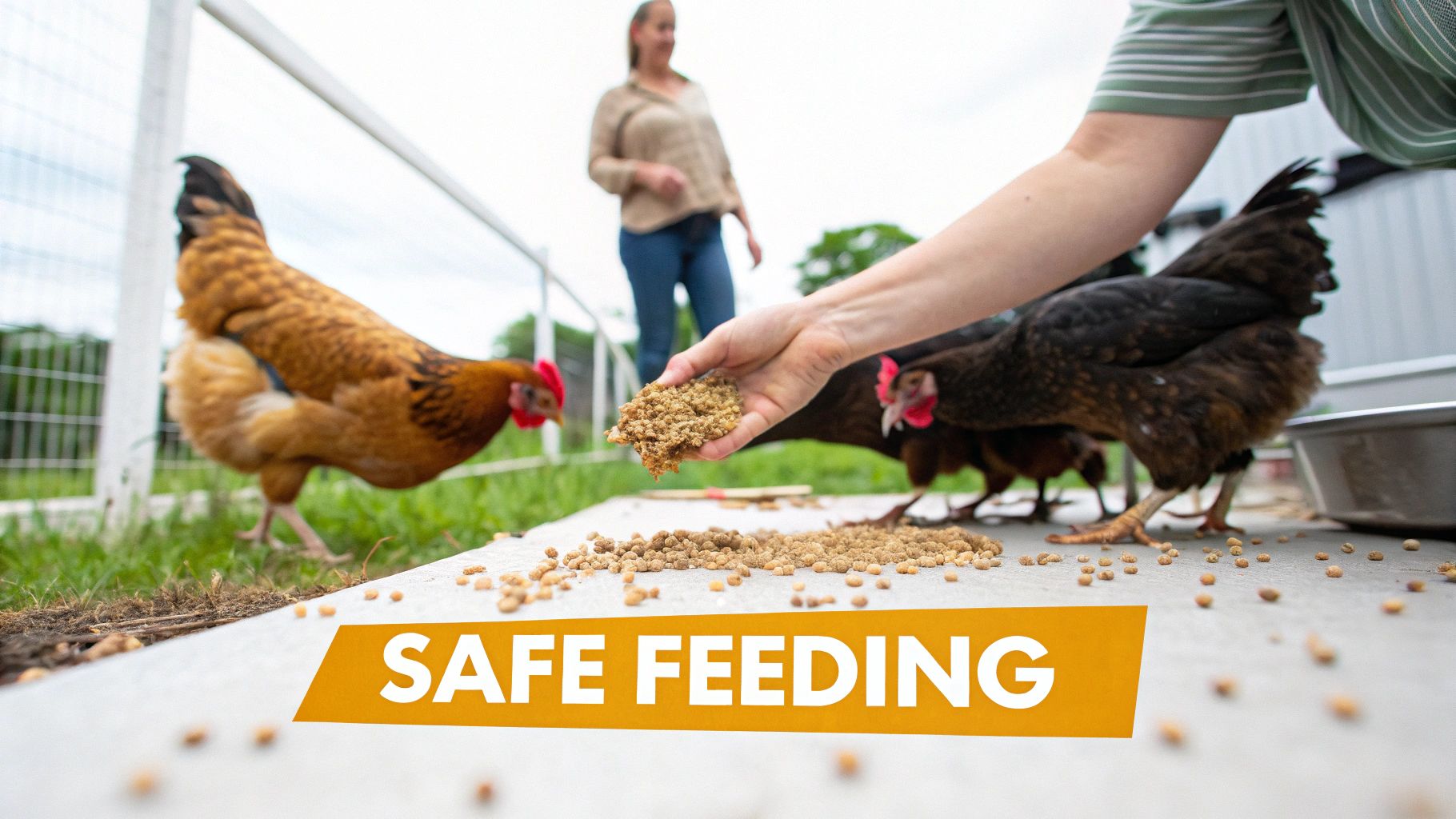
The Scatter Method: This is my go-to for happy, busy chickens. Tossing a handful of dried larvae across the run or into their coop bedding gets them scratching and foraging, just like they would in the wild. It’s a fantastic boredom buster that provides both mental stimulation and a bit of exercise.
-
Hand-Feeding: If you’re looking to build trust and really connect with your flock, nothing beats hand-feeding. Offering larvae from your palm teaches your birds to see you as the source of a seriously high-value treat. Just start slow, and before you know it, they'll be eating right out of your hand.
-
Mixing with Feed: This is the simplest method by far. Just mix the larvae right into their daily feed ration. It guarantees every chicken gets a share (even the less assertive ones) and is a great trick for introducing the new treat to picky eaters. Plus, it boosts the protein and calcium of their regular meal with zero extra effort.
Getting the Portions Just Right
As much as your chickens would love to eat fly larvae all day, moderation is key. Remember, these are a super-healthy supplement, not a complete meal. The golden rule for any treat is that it shouldn't make up more than 10% of your flock's total diet. This ensures they're still getting the balanced nutrition they need from their main feed.
For an average adult chicken, this works out to about one to two tablespoons of dried larvae per bird, per day. That’s enough to provide a serious protein and calcium boost without messing up their core diet.
Of course, this isn't set in stone. You can tweak the amount based on what your flock is going through. Chickens in the middle of a heavy molt or toughing out a cold winter will thank you for a little extra. In contrast, a flock coasting through a warm summer may not need as much.
Tailoring to Different Life Stages
A chicken's nutritional needs change quite a bit as they grow, and how you offer fly larvae should change right along with them.
For Growing Chicks:
Little chicks are growing at an incredible rate, and they need a ton of protein to build strong bodies. Once they're a couple of weeks old, you can start introducing larvae.
- What to do: Crush or crumble the dried larvae into smaller, chick-sized pieces. Mix just a tiny amount into their starter feed to give them a high-protein kickstart for healthy development.
For Laying Hens:
A laying hen's body is a full-time factory for producing eggs with strong shells, which demands a constant supply of calcium.
- What to do: Offering one to two tablespoons daily is a fantastic way to directly support shell quality and help her replenish her own calcium reserves. This is especially critical for your most prolific layers.
For Molting Hens:
Losing and regrowing thousands of feathers is one of the most stressful things a chicken goes through, and it requires a massive amount of protein.
- What to do: This is the time to be generous. Feel free to increase their daily portion slightly during the molt. That extra protein will help them grow their feathers back faster and more efficiently, reducing their stress and getting them back to laying eggs sooner.
Choosing a Safe and Reliable Source of Fly Larvae
Once you've decided to add the incredible nutritional punch of fly larvae for chickens to your flock's diet, the next big step is picking a brand you can trust. Let's be honest, not all grubs are created equal. Where they come from and how they're processed matters just as much as their protein content. The market is flooded with options, but a little know-how will help you spot the good stuff and avoid the sketchy, unregulated bags.
Making a smart choice is about more than just finding a good deal; it’s a direct investment in your flock’s health and the quality of the eggs you and your family enjoy. The best brands are transparent about everything from farm to bag, giving you peace of mind with every handful you toss out to your birds.
Why USA-Grown and Regulated Products Matter
One of the biggest things to look for is the country of origin. Choosing larvae grown right here in the USA gives you a huge advantage in safety and quality. American producers have to follow strict standards that just aren't enforced in many other parts of the world.
Thankfully, regulatory oversight has gotten much better, offering more protection for both you and your animals. In North America, top-tier producers now meet tough safety requirements set by the FDA and follow guidelines from the Association of American Feed Control Officials (AAFCO). This means they're doing things like regularly testing for heavy metals—lead, arsenic, mercury, and cadmium—to make sure the final product is clean and safe for your chickens. This gives you the confidence that what you’re feeding your flock meets a consistent, reliable safety benchmark.
What to Look for on the Label
The bag itself is your first clue to quality. A reputable company will be proud to tell you about its product and process, not hide the details in fine print.
Here’s a quick checklist to run through when you’re shopping for fly larvae:
- Clear Country of Origin: It should say something like "Grown in the USA" right on the front. This kind of transparency is a great sign.
- Safety Compliance: Look for mentions of FDA and AAFCO guidelines. This shows the company is serious about safety.
- Batch Testing Info: The best brands will state that each batch is tested for contaminants. This is your guarantee against harmful substances.
- Simple Ingredients: The list should be short and sweet, ideally just "Dried Black Soldier Fly Larvae." Steer clear of products with weird additives or preservatives.
By keeping an eye out for these key details, you can easily sift through the options and find a product that truly supports your flock’s health.
Spotting the Signs of a High-Quality Product
Beyond what’s on the label, the larvae themselves can tell you a lot. Once you open the bag, a quick inspection can confirm you made the right choice.
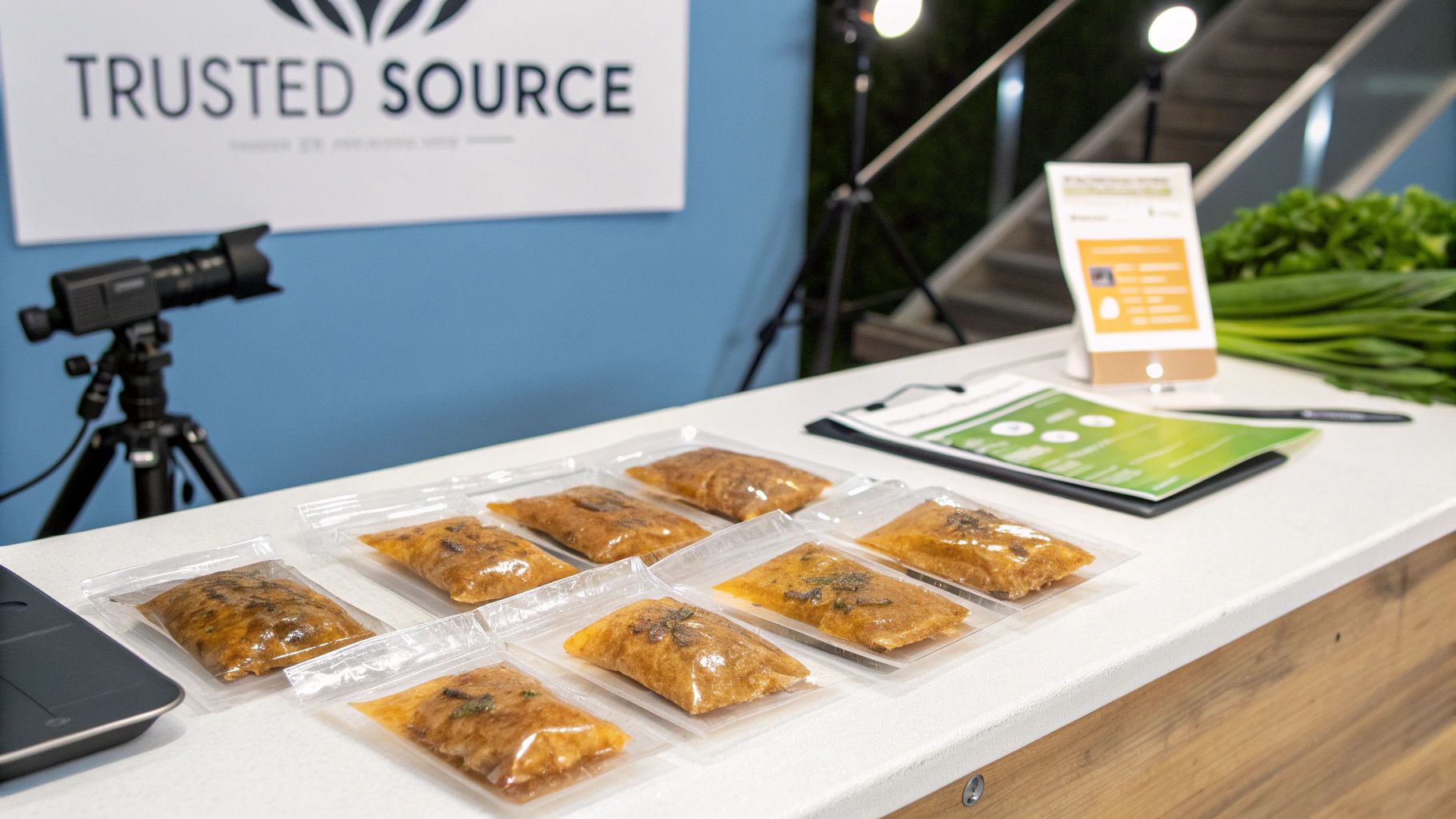
A high-quality batch of dried fly larvae should have a uniform, golden-brown color and a nutty, earthy aroma. The grubs should be whole and plump, not broken into a dusty mess at the bottom of the bag.
If you open a bag and find a bunch of dark, broken, or dusty pieces, that’s often a red flag for poor handling or a low-grade product. Investing in a premium, USA-grown option ensures you get a clean, consistent, and safe treat that your chickens will go crazy for. For more tips, check out our complete guide on where to buy black soldier fly larvae you can trust.
The Sustainable Future of Poultry Nutrition
Choosing to feed your flock fly larvae for chickens isn't just a great nutritional move—it’s a powerful vote for a more sustainable food system. For many of us who raise chickens, it’s about getting closer to where our food comes from. Bringing Black Soldier Fly Larvae (BSFL) into that loop takes this idea to the next level.
Think of these incredible insects as nature’s ultimate recycling crew. BSFL farming is a fantastic example of a circular economy in action, where "waste" isn't a dead end but the beginning of something new and valuable.
The whole process is brilliantly simple. BSFL are raised on pre-consumer food scraps, like spent grains from breweries or leftover pulp from juice companies. By feasting on this organic material, the larvae keep tons of it from rotting in landfills and releasing harmful greenhouse gases. They then convert that would-be waste into their own bodies, creating a super dense source of protein and healthy fats for your flock.
A Greener Choice Than Traditional Feeds
This natural process, known as bioconversion, is a huge step forward for animal nutrition. Traditional feed ingredients like soy and fishmeal often carry a heavy environmental price tag, linked to problems like deforestation and overfishing. BSFL farming, on the other hand, is a much lighter touch on the planet, using far less land and water while actively reducing waste.
It's a genuine win-win-win:
- For the Planet: Tons of organic waste get a second life instead of creating landfill emissions.
- For Your Flock: Your chickens get a nutrient-packed supplement that mimics what they’d naturally forage for.
- For You: You get the peace of mind that comes from supporting a food source that’s both healthy and responsible.
This is more than just a passing trend; it’s a real shift in how we think about feeding our animals.
The Rapid Growth of a Responsible Industry
The excitement around BSFL is easy to see in its market growth. The global industry was recently valued somewhere between $1.12 to $1.5 billion and is expected to climb dramatically in the coming years. This explosive growth signals that farmers, pet owners, and backyard keepers alike are catching on to BSFL as a superior, sustainable protein.
Choosing BSFL is a direct investment in a circular food system. Every grub your chicken eats represents a small portion of food waste that was transformed into high-value nutrition instead of being sent to a landfill.
For those of us with backyard flocks, this expanding market is great news, leading to better availability and more affordable prices. When you choose a product like USA-grown BSFL, you aren't just giving your chickens a better treat—you’re playing an active part in a more sustainable future for agriculture. It's a small choice in your backyard that adds up to a much larger, positive impact on our world.
You can discover more about the benefits of using black soldier fly larvae for animal feed and how it fits into a responsible feeding plan.
Got Questions About Feeding Fly Larvae to Your Chickens?
Diving into new treats for your flock always brings up a few questions. That's a good thing! When it comes to something as powerful as fly larvae for chickens, you want to be sure you're making the best choice for their health and for the eggs your family eats. Getting clear, no-nonsense answers is the key to feeling confident about what you're putting in their feed bowl.
This section tackles the most common questions I hear from fellow chicken keepers. We'll cut right to the chase with practical answers to get you started.
Are Fly Larvae Safe for My Chickens and Their Eggs?
Yes, they are completely safe—with one huge caveat: you must buy them from a reputable source you can trust. The safety of the final product hinges entirely on how the larvae were raised and processed. It's just like buying vegetables; you want to know they were grown in clean, healthy conditions.
Top-tier producers, especially those here in the USA, raise their larvae in tightly controlled environments. They feed them clean, pre-consumer food scraps and operate facilities that follow strict FDA and AAFCO guidelines. This meticulous process is what makes the end product so reliable.
A critical step for the best brands is rigorous testing. Every single batch should be tested for contaminants like heavy metals—we're talking lead, arsenic, mercury, and cadmium. This is how you guarantee that nothing harmful gets passed on to your flock or, ultimately, to your breakfast table.
So, while fly larvae are an incredibly safe and nutritious treat, that safety is directly tied to the brand you choose. Picking a transparent, USA-grown product over a mystery import is the single most important decision you can make for your flock's well-being.
Can I Feed Fly Larvae to Chicks?
You bet! In fact, fly larvae are a fantastic protein source for chickens at every single stage of life, especially for fast-growing chicks. The dense protein and amino acids are exactly what their tiny bodies need to build strong bones, healthy muscle, and their very first coat of feathers.
The only difference is how you serve them. A full-grown hen can gulp down whole dried larvae without a problem, but they can be a bit big for a chick's beak and could become a choking hazard.
Tips for Feeding Larvae to Chicks:
- Crush 'Em Up: For the first few weeks, it's best to break the dried larvae into small, chick-sized pieces. You can easily do this by putting them in a zip-top bag and rolling them with a rolling pin or giving them a quick whiz in a food processor.
- Start Small: Mix the crumbled larvae into their regular starter feed. This gives them that extra protein boost without letting them fill up on treats and ignore their nutritionally balanced feed.
- Wait a Week or Two: I always recommend waiting until chicks are at least a week or two old before introducing any treats. This gives them plenty of time to get used to their starter crumbles, which need to be their main source of food.
As they get a bit bigger, you can start offering them whole larvae. They’ll figure it out quickly and will absolutely love their high-protein snack, and you'll be giving them a powerful head start on healthy growth.
How Many Fly Larvae Should I Give My Chickens?
This is probably the most important question, because with treats, moderation is everything. The best way to look at fly larvae for chickens is as a high-value supplement, not a meal replacement. The golden rule for any treat is that it shouldn't make up more than 10% of your flock’s total diet.
Following this rule ensures your chickens are still getting all the vital nutrients from their formulated feed. For most adult chickens, this works out to about one to two tablespoons of dried larvae per bird, per day. That's enough to provide a serious boost of protein and calcium without throwing their diet out of whack.
Of course, you can tweak this amount based on what your flock is going through.
- During a Molt: This is when their protein needs go through the roof. Feel free to increase their daily portion a bit to help them regrow feathers faster and with less stress.
- In the Winter: The healthy fats in larvae provide extra calories, helping your flock stay warm. A little extra can be a big help during a cold snap.
- Peak Laying Season: For your hardest-working hens, that extra calcium is a game-changer for maintaining strong, solid eggshells day after day.
Just keep an eye on your flock. If you notice they're starting to ignore their main feed, you're probably being a bit too generous with the treats. A healthy flock will polish off their regular food and still go bonkers for their daily grubs.
How Should I Store Dried Fly Larvae?
Proper storage is dead simple, but it's crucial for keeping your grubs fresh, crunchy, and nutritious. Think of them like your morning cereal—you need to protect them from moisture, heat, and sunlight.
To keep them in prime condition, store your dried larvae in a cool, dry place. An airtight container is non-negotiable. While most brands come in resealable bags, I find that moving them to a sturdy plastic or glass container with a tight lid offers the best long-term protection.
Quick Storage Checklist:
- Keep it Airtight: This locks out moisture, which is the number one cause of mold and spoilage.
- Keep it Cool: A pantry, garage, or dedicated feed room is ideal. Just avoid hot spots like a sunny windowsill or a stuffy shed in the summer.
- Keep it Dark: Direct sunlight will break down the valuable fats and nutrients in the larvae, making them less beneficial over time.
When stored correctly, a bag of dried fly larvae will easily last a year or more without losing its punch. You'll know they're fresh if they have a nutty, earthy smell and a satisfyingly crisp texture. If they ever smell musty or feel damp, toss them. Good storage protects your investment and makes sure your flock gets a top-quality treat every single time.
Ready to give your flock the ultimate, USA-grown treat? Pure Grubs offers premium Black Soldier Fly Larvae that are packed with calcium and protein to support stronger eggs and healthier hens. Give your birds a treat you can trust at https://puregrubs.com.