

Do Chickens Eat Grubs? Safe Feeding Guide for Owners
Chickens do eat grubs, and black soldier fly larvae fit that habit well. Give them as a supplemental treat on top of a complete feed, not as a replacement for the ration that keeps the flock balanced.
If you've ever watched a hen scratch through mulch, stop cold, and snap up a grub before the others even notice, you've seen the behavior behind the question. That instinct matters, because it explains why dried larvae are so easy to use in a coop, and why the question is less "will they eat it?" and more "how much is smart, and what came before the bag?"
Why Chickens Hunt Grubs in the First Place
A hen moving through bedding or garden soil isn't being picky when she targets a grub. She's acting like the opportunistic forager chickens are built to be, scratching and pecking for insects, worms, and other small moving bites in the ground. Poultry educators describe those bugs and worms as a source of supplemental protein, not a full substitute for a balanced ration, which is exactly why dried grubs work so well as a treat. What chickens naturally eat
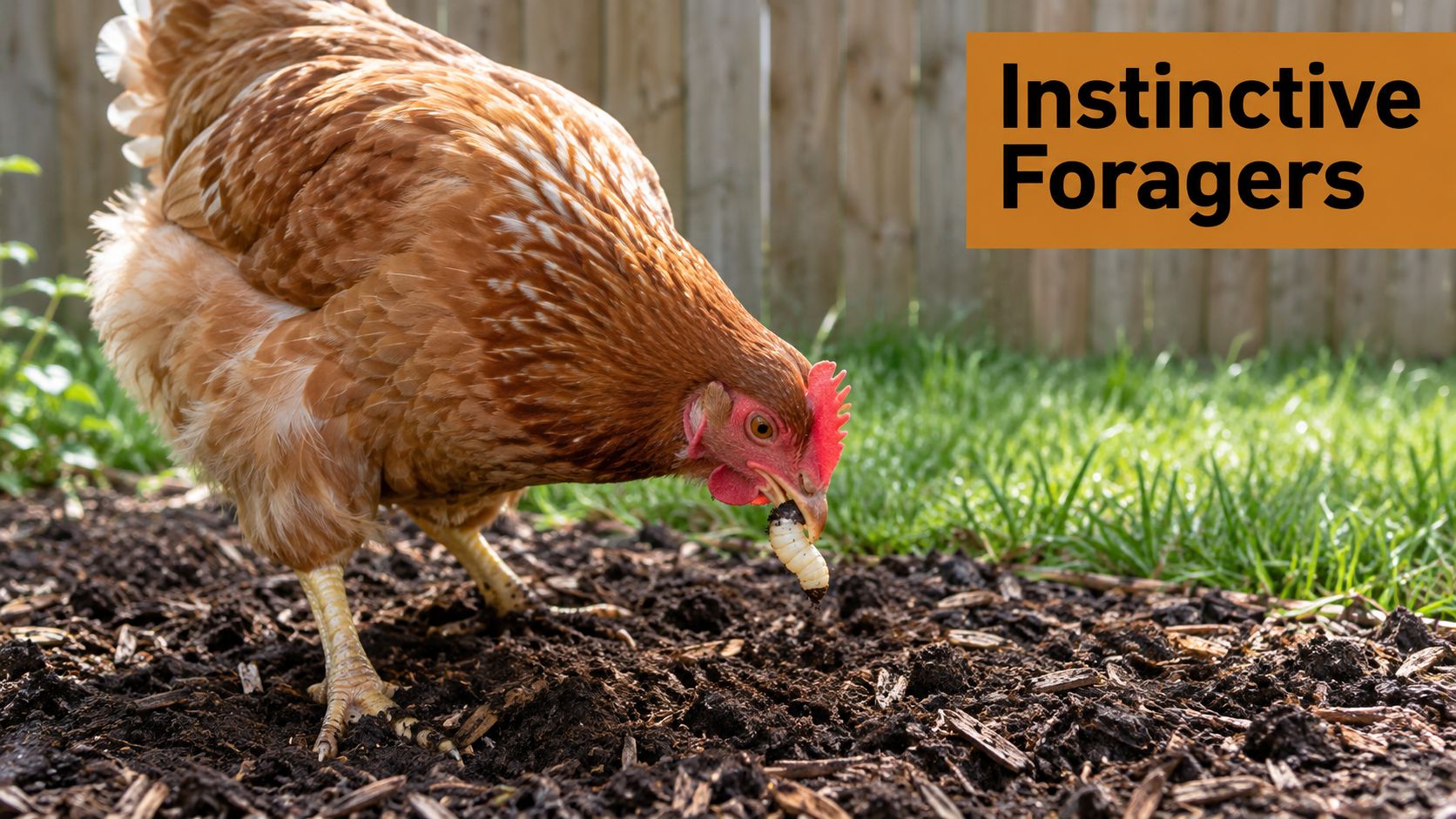
Foraging is the point
A flock that gets to scratch and hunt stays busy. That matters because foraging isn't only about calories, it's about enrichment, movement, and the natural sequence of searching, spotting, and grabbing. A dried grub dropped into the run can trigger the same response as a live one in the dirt, because chickens key in on small irregular food items almost immediately.
That's why a bag of dried larvae can feel so effective in the coop. You're not teaching the birds a new trick, you're giving them a familiar target in a cleaner, easier-to-store form. If you want a simple background refresher on what chickens naturally seek out, this overview on what chickens eat naturally lines up with the same foraging logic.
Practical rule: if a treat looks and moves like something a hen would scratch up outdoors, she'll usually treat it as food fast.
Why dried grubs work so well
Dried larvae hold that instinctive appeal without the mess of live insects or the unpredictability of wild collection. They're shelf-stable, easy to portion, and easy to toss into bedding, scratch, or a feeding tray during afternoon foraging time. The bird gets the reward, and the keeper gets more control over the serving.
That control matters because the behavior is normal, but the diet still has to stay balanced. The bird can chase the grub. The ration still has to do the nutritional work. For a practical, food-based comparison of dried larvae versus other feed options, see this guide on how to eliminate grubs without chemicals, which is useful if you're trying to understand where garden grubs come from in the first place.
What Grubs Contain
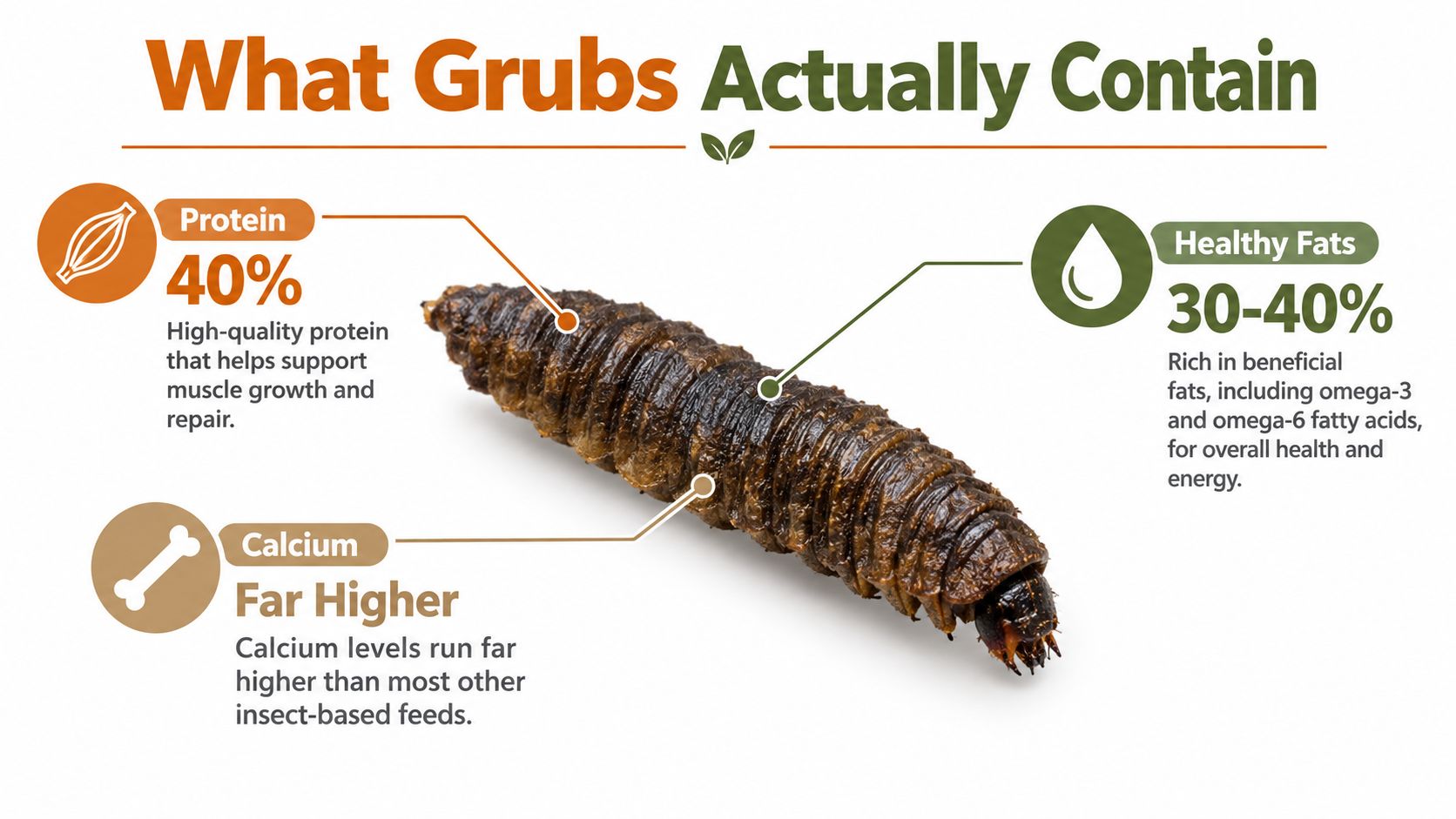
A hen does not care whether a grub sounds fancy. She cares whether it delivers useful feed value in a small bite. Black soldier fly larvae fit that pattern well, which is why feed references describe them as protein-rich, fat-rich, and unusually strong on calcium. The exact numbers shift with processing and growth stage, but the overall profile stays useful for poultry feeding. BSFL nutrition overview
The numbers that matter
The FAO-associated Feedipedia review reports 7.56% calcium on a dry-matter basis for black soldier fly larvae and a calcium-to-phosphorus ratio of 8.4. It also lists mealworm, housefly maggot, locust, and house-cricket meals at 0.35, 0.29, 1.18, and 1.28 for calcium-to-phosphorus ratio, and says a ratio near 2 is generally considered optimal for most livestock feeds. That helps explain why BSFL get so much attention for hens, especially birds building eggshells. FAO Feedipedia insect-meal review
Protein matters too. The same FAO review summarizes BSFL at roughly 40 to 44% crude protein, while another FAO source gives a broader live-weight protein range of 40 to 65%, depending on moisture and production conditions. That does not mean every bag matches the same label value. It does mean BSFL stay in a strong protein category for a poultry treat.
Use the label as a guide, not a promise. Substrate, harvest stage, and drying method can shift the final analysis, so the same species can land in different nutrient ranges.
What those numbers mean in practice
For keepers, calcium is the first thing to notice. Laying hens draw on calcium every day because eggshell formation keeps using mineral reserves. BSFL can support that need, but they still belong in the category of supplement, not replacement. A proper layer feed still has to carry the full balance of energy, amino acids, vitamins, and minerals.
The fat and protein profile matters in the same way. Those nutrients make grubs useful, but they also make them easy to overfeed if you pour them in like scratch. A treat that feels wholesome can still crowd out the ration if you let it.
Where a grub comes from matters too. Garden grubs may look “natural,” but the word natural says nothing about what they fed on or what they picked up from the soil. If you want the origin side of that question, the guide on how to eliminate grubs without chemicals is useful context for where those insects start. For the full nutrient breakdown behind these numbers, the BSFL nutrition guide linked above is the companion read.
BSFL Compared With Other Common Treats
A good treat guide shouldn't just say “these are good.” It should help you choose based on what your flock needs. Dried BSFL, live BSFL, mealworms, and wild grubs all work differently in the coop, and the best option depends on whether you care most about calcium, convenience, or control.
| Treat | Calcium | Protein | Shelf Life | Best Use |
|---|---|---|---|---|
| Dried BSFL | High | High | Long | Routine treat, layer hens, easy storage |
| Live BSFL | High | High | Short | Enrichment, training, active foraging |
| Mealworms | Lower | Good | Long | Familiar snack, simple feeding |
| Wild garden grubs | Unknown | Unknown | N/A | Only when origin and safety are certain |
How the tradeoffs work
Mealworms are familiar and easy to find, but the calcium profile is weak compared with BSFL, which matters most for laying hens. Live BSFL are exciting for birds and great for encouraging natural behavior, but they aren't as convenient to store. Wild garden grubs may look “natural,” but that word doesn't tell you what they were raised on or whether they picked up something unwanted from the soil.
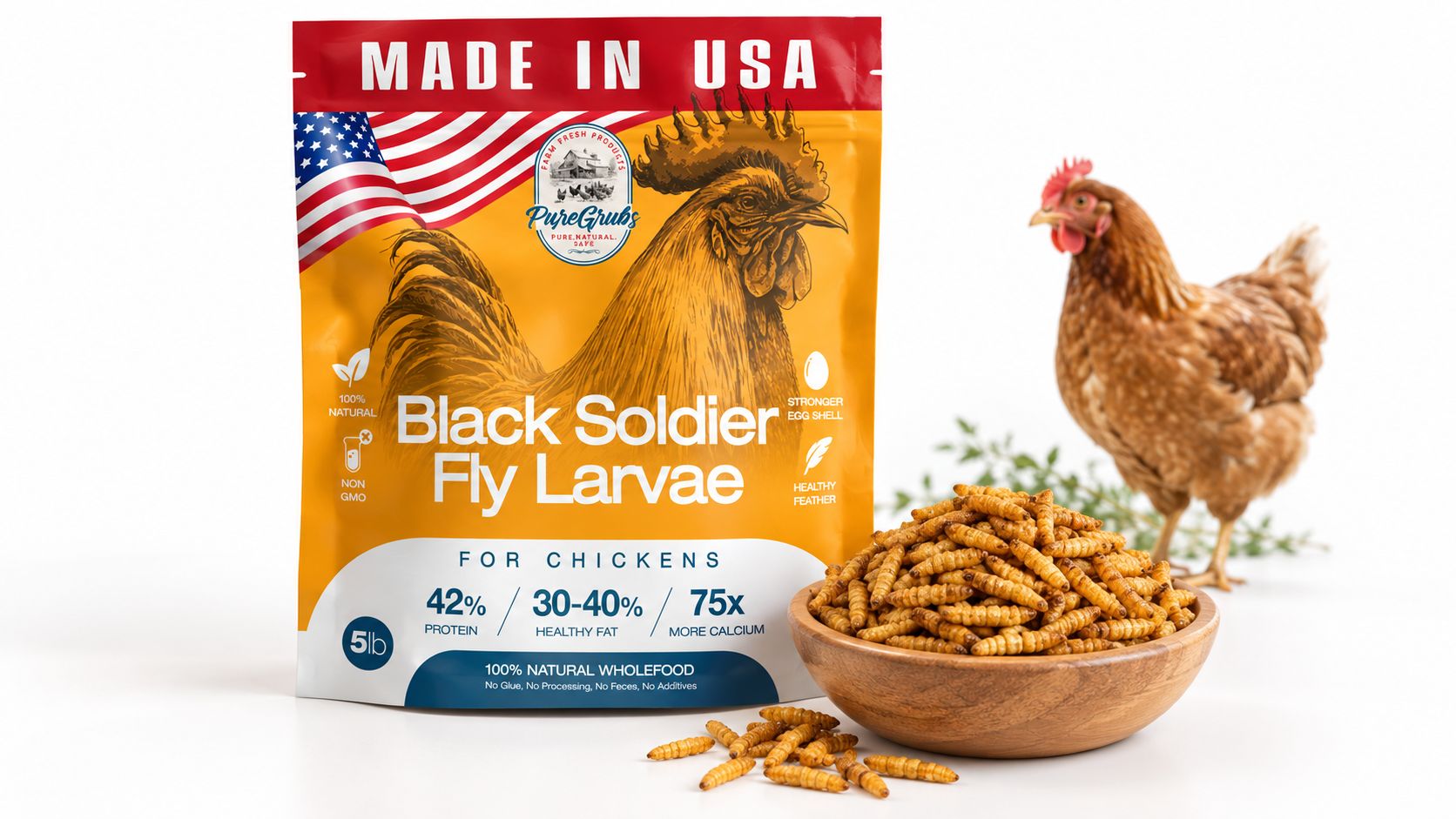
That's where a controlled source can be useful. USA GROWN BLACK SOLDIER FLY LARVAE FOR CHICKENS are described as USA-grown and dried, with 36 to 42% crude protein and 30 to 40% healthy fats in the product snapshot, so they fit the role of a stored, easy-to-portion treat when you want a predictable option. The point isn't that one treat wins every category, it's that each one serves a different keeper priority.
How Much to Feed Your Flock
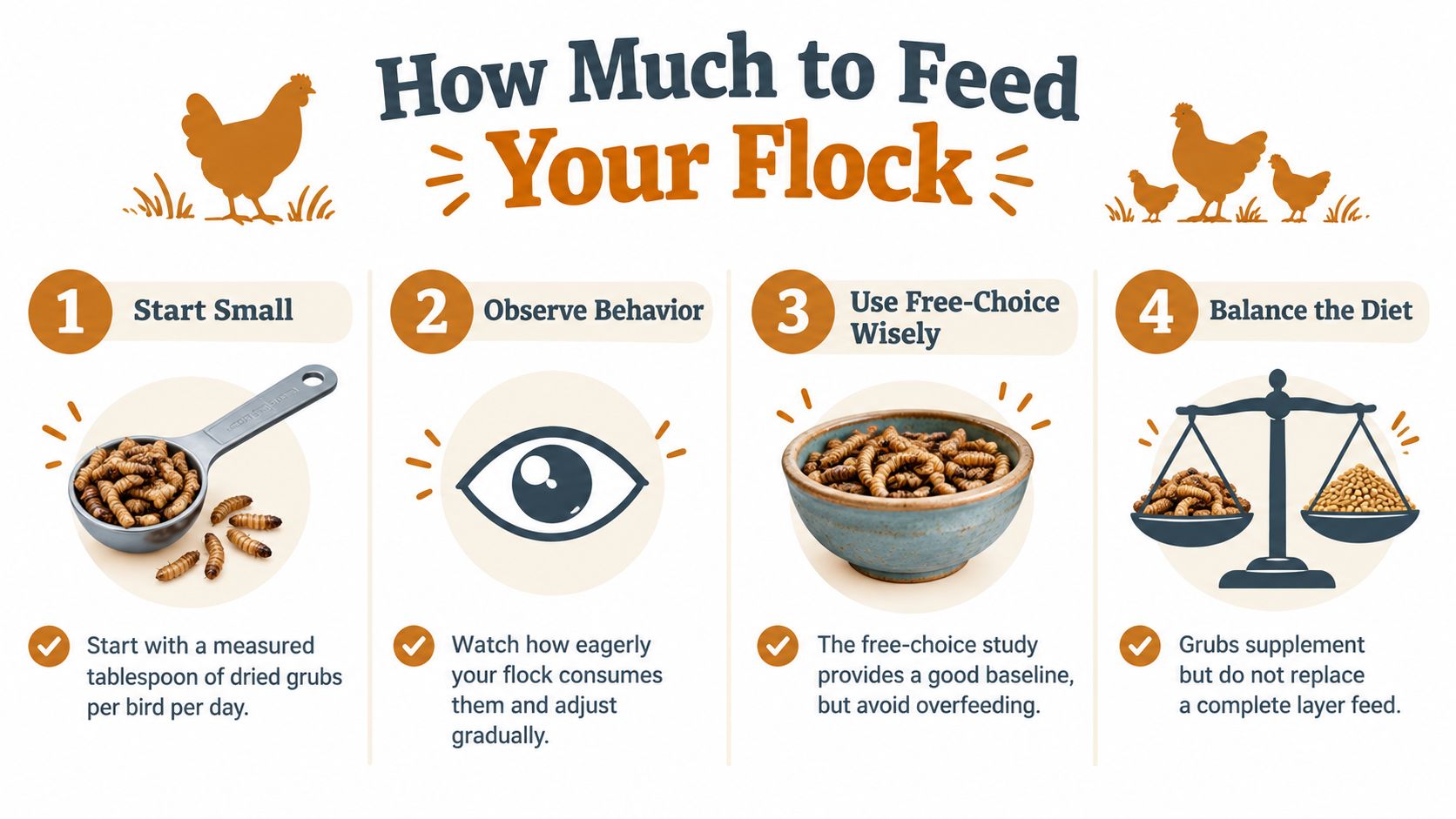
Start with a measured tablespoon per bird for a backyard flock, especially if you are using dried larvae and want to see how quickly the birds work through the treat. That keeps grubs in the supplement category and helps prevent the common mistake of letting a snack crowd out the base ration.
A simple serving rhythm
A free-choice laying-hen study found that hens voluntarily consumed about 15 ± 1.7 g of dried black soldier fly larvae per hen per day, with performance unchanged after six weeks, but egg quality changing after 12 weeks. That is a useful reminder that unlimited access can look fine at first and still call for adjustment later. Free-choice laying-hen study
For most flocks, keep dried grubs as an occasional treat a few times a week, not a daily scatter that replaces part of the regular feed. If birds rush them and leave feed behind, cut back. If they finish the treat quickly and still eat their ration normally, the serving is probably staying in range.
Keep the ration first, treats second. The feeder should stay available every day, and grubs should sit on top of that diet.
Serving size also shifts by bird type, and the next section breaks that down bird by bird.
If you are feeding a mixed flock, treat the group as a whole and watch the total intake. A simple starting point is one tablespoon each during an afternoon scatter, then adjust by how fast the birds finish and whether they still clean up their regular feed.
Why Origin and Processing Matter More Than You Think
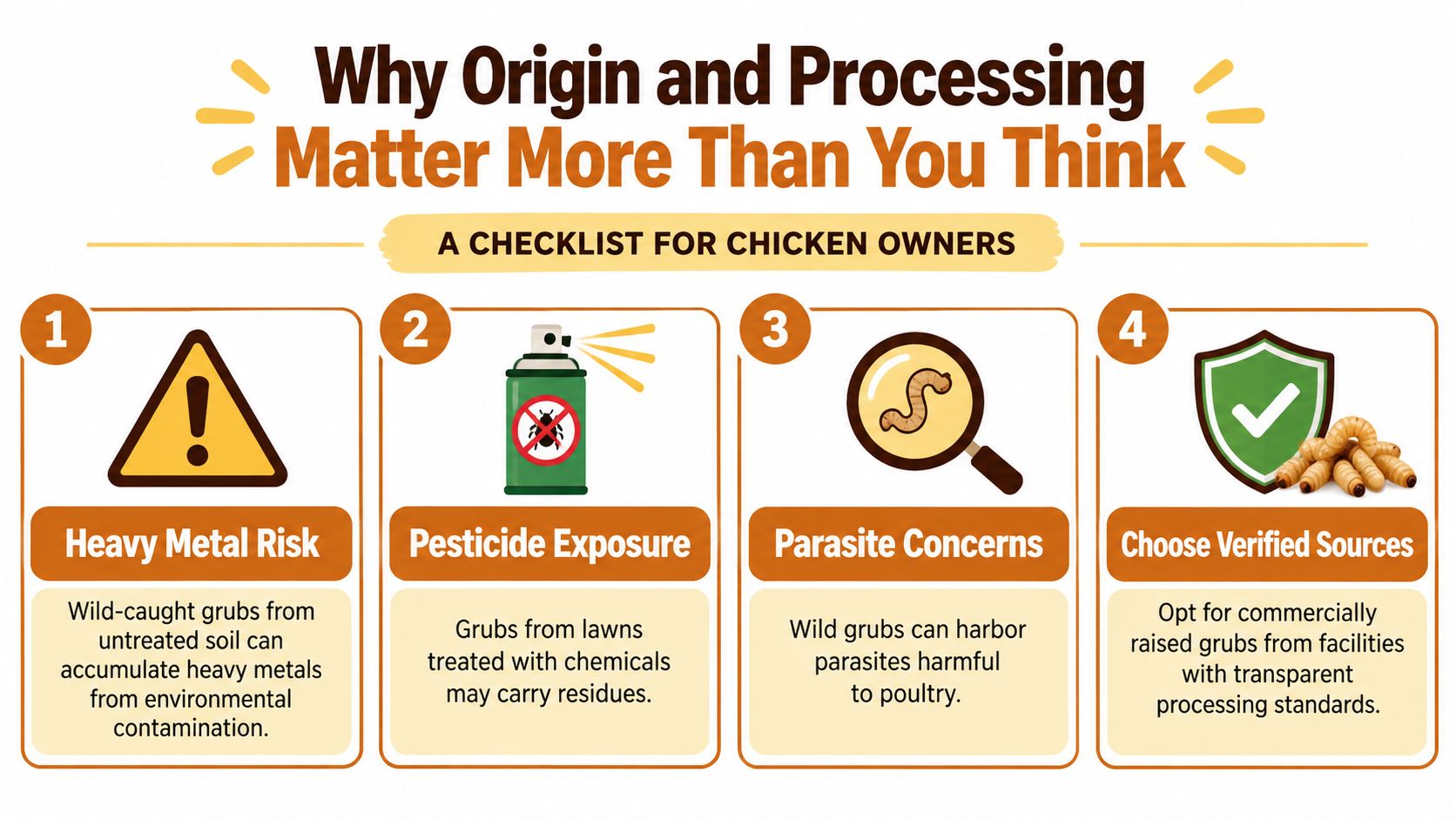
The word natural doesn't tell you much about safety. A grub collected from unknown soil can carry whatever that soil contains, and a larva raised on a controlled substrate can be a much cleaner choice than one scooped from a random lawn. The question isn't whether chickens will peck at it. The question is what else came along for the ride.
What to check before you buy
Recent scientific coverage points to substrate quality, rearing conditions, and post-harvest processing as the main drivers of microbiological risk, and it notes that heavy metals or pesticides can accumulate when they're present in the rearing substrate. Heat treatment and drying can reduce microbial loads, but they don't erase a bad starting point. Scientific review on insect-feed safety
A short verification checklist helps cut through the marketing:
- Country of origin: Know where the larvae were produced.
- Rearing substrate: Ask what they were fed.
- Processing method: Look for drying or heat treatment details.
- Batch testing: Check whether the supplier tests for heavy metals.
- Intended use: Buy feed-grade product, not bait or mystery stock.
If you're shopping in the U.S., FDA and AAFCO alignment is a useful signal that the product is meant for feed use rather than casual backyard guessing. That kind of traceability matters more than a label that just says “natural.” For a deeper look at how sourcing affects product choice, see USA sourced vs imported black soldier fly larvae.
A clean-looking grub still depends on what it grew on and how it was handled after harvest.
Matching Grubs to Different Birds in Your Flock
A flock often shares the same feeder, but the birds do not use treats the same way. A chick, a pullet, a layer, and a broiler all bring different needs to the bowl, so serving size should follow the bird, not the label.
Chicks should stay on starter feed first. Once they are fully feathered, only tiny pieces belong in the routine, more like a training crumb than a real supplement. Keep rich snacks rare so the starter ration still does the work of growth.
Growing pullets can handle a conservative portion. A sensible serving is about half a tablespoon per bird, offered only as a treat, since they still need their grower feed to shape bone and frame.
Laying hens use grubs differently. A full tablespoon per hen fits better here, especially for keepers who want a treat that supports egg production without replacing the layer ration. Even then, the main feed should stay in front of them.
Broilers need the tightest hand. Their diets already run dense, so a small pinch or a very light scatter is enough. Heavy treat feeding can crowd out balanced feed faster than many keepers expect.
Mixed-species homes need one more adjustment. Ducks and other non-chicken birds can share larvae, but the safest rule is to feed for the smallest or most sensitive bird in the group, not the one that begs the loudest. In cold weather, birds often spend more energy staying warm, so keep treats modest and let the base ration carry the diet. In warm months, the same portions can be a little easier to fit in, but the limit still matters because treats are a side dish, not the meal.
Mixed flock rule: feed to the most vulnerable bird in the group, not the hungriest one at the fence.
Putting It All Together
Yes, chickens eat grubs because grubs fit the way chickens naturally forage. BSFL make sense as a supplemental treat, especially for laying hens, but the right amount depends on flock size, bird age, and how well the birds keep eating their base feed. Origin and processing matter just as much as nutrition, because safety starts with what the larvae were raised on.
A simple routine works well. Measure the portion, scatter it during afternoon foraging time, and keep the layer feed or starter feed available. Then watch the flock, because a good keeper adjusts the treat to the birds instead of forcing the birds to fit the treat.
Pure Grubs offers USA-grown black soldier fly larvae for keepers who want a controlled, feed-grade option for chickens and other birds. If you're comparing dried larvae for calcium, protein, and traceability, visit Pure Grubs and choose the format that fits your flock's routine.