

Chickens stopped laying eggs: Causes and quick fixes for your flock
When your daily trip to the nesting box comes up empty, it’s easy to start worrying. But if your chickens stopped laying eggs, it’s usually because of a simple, natural process or an environmental issue you can actually fix. More often than not, it’s just a temporary pause related to things like daylight hours, diet, or stress—not a major health crisis.
Decoding the Silence in the Nesting Box
It's a moment every chicken keeper dreads. One day, you're collecting a basket full of beautiful eggs, and the next… nothing. This sudden drop-off can feel alarming, but it’s really just your flock’s way of telling you something in their world has shifted. Think of yourself as a chicken detective; it's time to investigate their environment and well-being.
The good news? You can usually pinpoint the cause with a bit of observation. Laying an egg is a demanding biological process, and hens are incredibly sensitive to their surroundings. Even a small change can be enough to bring the egg factory to a temporary halt.
Your Immediate Diagnostic Approach
Before you jump to conclusions about complex health problems, always start with the basics. A quick review of the fundamentals often reveals exactly why your chickens stopped laying. This first-response check saves you a ton of time and stress by helping you rule out the most common culprits right away.
To get started, let’s run through an easy-to-follow checklist. This table covers the most frequent and easily fixable reasons for an egg-laying slowdown.
Immediate Action Checklist for Non-Laying Hens
| Check Area | What to Look For | Simple First Step |
|---|---|---|
| Light | Are they getting 14-16 hours of light per day? Shorter fall/winter days are a common cause. | Add a low-wattage light on a timer to the coop to extend "daylight" hours. |
| Feed | Is the feeder full? Are they eating a quality layer feed with 16-18% protein? | Refill the feeder and ensure the feed is fresh, dry, and mold-free. |
| Water | Is their water source clean, full, and not frozen? An egg is 75% water! | Scrub the waterer and provide fresh, cool water. In winter, use a heated base. |
| Stress | Any signs of predators? Bullying from new flock members? Loud noises or recent changes? | Observe the flock's behavior. Remove bullies or add more hiding spots and enrichment. |
| Coop Security | Is the coop drafty, damp, or overcrowded? Are nesting boxes clean and private? | Add fresh, dry bedding. Ensure nesting boxes are dark, cozy, and have clean material. |
Once you’ve gone through this list, you’ll have a much clearer idea of what might be going on. These simple checks often solve the mystery without any further fuss.
By methodically checking these core needs—feed, water, light, and security—you can solve the majority of egg-laying pauses without needing to investigate more serious problems. This simple checklist is the most powerful tool for any backyard keeper.
Starting with their feed bowl and ending with their sense of safety gives you a clear path forward. Once you've ruled out these basics, you can start looking into other possibilities like a seasonal molt or a broody hen.
For more ideas on how to create a production-friendly environment, you can review our guide on organizing your chicken coop for efficient egg collection. A quick diagnostic is the best way to understand what your flock needs to feel secure and get back to laying.
The 7 Reasons Your Hens Suddenly Stopped Laying
When your trusty layers suddenly stop giving you those beautiful daily eggs, it’s easy to worry. But don’t panic! Most of the time, an egg-laying pause is a completely normal part of a chicken's life. Think of yourself as a chicken detective—your job is to figure out what’s causing the shutdown so you can help your flock get back on track.
Let's walk through the seven most common culprits behind an empty nesting box, from natural body cycles to environmental hiccups.
The Annual Molt: Feathers First, Eggs Later
One of the most common—and dramatic—reasons for an egg strike is the annual molt. This usually happens in the fall, typically starting when a hen is around 18 months old. Molting is her body's way of shedding old, battered feathers and growing a fresh, glossy set to keep her warm through winter.
This process takes a massive amount of energy. Feathers are about 85% protein, so all her body’s resources get funneled into making new plumage instead of eggs. A hard molt can last anywhere from 8 to 16 weeks, and during that time, egg production will grind to a complete halt. You’ll know it’s molting season when you see a blizzard of feathers in the coop and your hens look a little... well, naked and pathetic.
My Two Cents: A hen simply can't do both at once—it's impossible to lay eggs while growing thousands of new feathers. Patience is key here. Think of it as a necessary spa treatment for her body.
To give your girls a boost, focus on a high-protein diet. For some specific feed ideas, check out our guide on what to feed molting hens.
Shorter Days Mean Fewer Eggs
Light is the master switch for a hen's reproductive system. To keep the egg-making machinery running, a hen needs at least 14 hours of daylight a day, with 16 hours being the sweet spot. When the days get shorter in the fall and winter, her body naturally gets the signal to slow down or stop laying.
It's a clever survival instinct from her wild ancestors, designed to prevent chicks from hatching when food is scarce and the weather is harsh. If your egg basket starts getting lighter as the leaves change color, you’ve likely found your answer.
The Right Fuel for the Egg Factory
Making an egg every 24-26 hours is hard work, and it requires a perfectly balanced diet. If even one thing is off, the whole production line can shut down. The most common nutritional culprits are:
- Not Enough Protein: Your layer feed should have 16-18% protein. If your flock is filling up on low-protein snacks like scratch grains or too many table scraps, they won't have the building blocks to form an egg.
- Missing Calcium: A single eggshell requires a whopping 4 grams of calcium. Without it, a hen will start laying thin-shelled or shell-less eggs, and then stop laying completely to protect her own bones from being depleted.
- Running on Empty (Water): An egg is roughly 75% water. If your hens can't get a drink for even a few hours, especially on a hot day, it can immediately halt egg production.
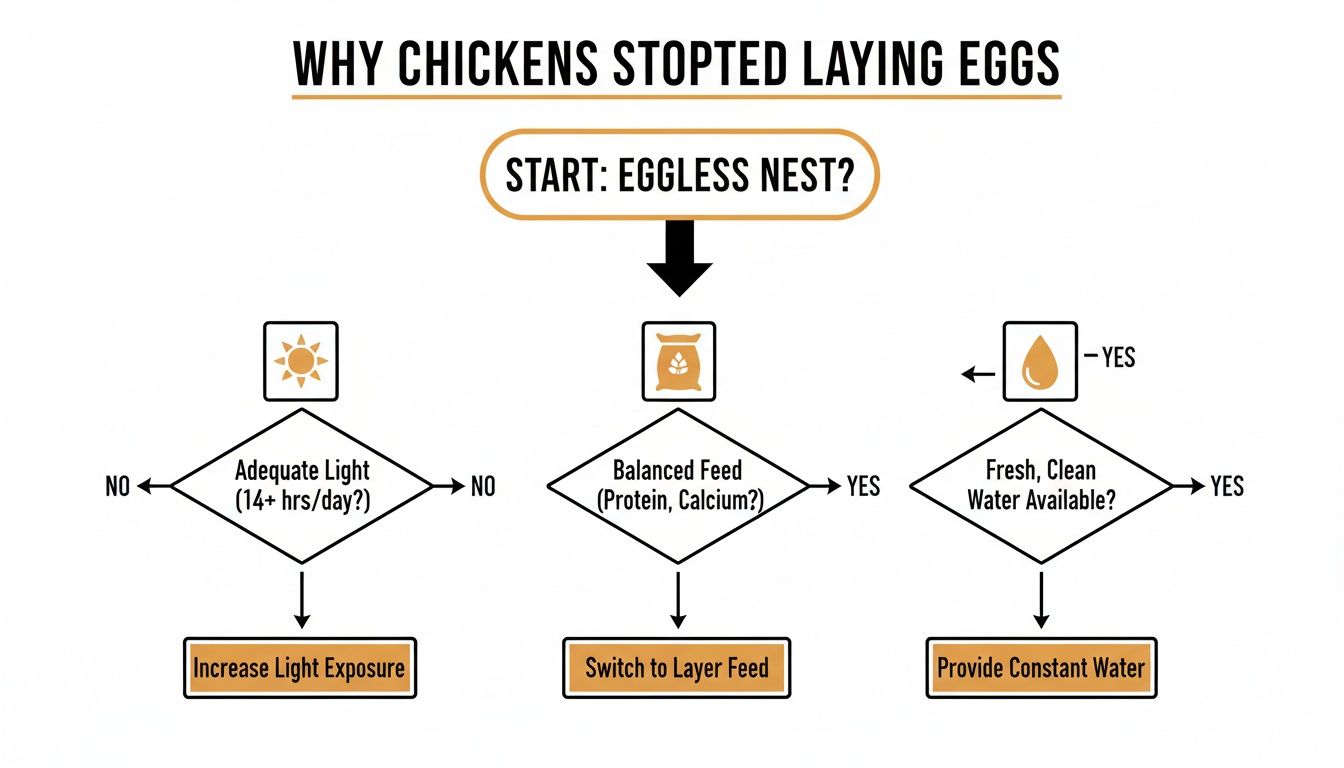
As you can see, checking the simple things like light, food, and water is always the best place to start before you assume something more serious is going on.
The Stress Effect
Hens are creatures of habit, and they get stressed out easily. Stress releases the hormone cortisol, which is a known egg-production killer. It basically tells the body, "It's not safe to reproduce right now!"
Common stressors in a backyard flock include:
- A close call with a hawk, dog, or raccoon.
- Moving to a new coop or adding new flock members.
- Loud, unexpected noises like construction or fireworks.
- Overcrowding and bullying from bossy hens.
Age Isn't Just a Number
A hen's most productive egg-laying years are her first two. After that, her output will naturally decline by about 20% each year. An older, beloved hen might only lay a few eggs a week, or she may retire from laying entirely. This is a normal part of her life cycle.
When Broodiness Takes Over
Sometimes, a hen’s maternal instincts kick into high gear and she goes "broody." This is a hormonal shift that tells her it's time to sit on a clutch of eggs and hatch them. A broody hen will stop laying, puff up her feathers, and stubbornly sit in a nesting box all day, growling at anyone who comes near.
This isn't a sickness; it's just nature. This broody state will typically last for 21 days—the time it takes to hatch chicks—whether the eggs are fertile or not.
Hidden Health Issues
If you’ve ruled everything else out, it’s time to look closer for signs of illness or parasites. Mites, lice, and internal worms can all drain a hen’s resources, leaving nothing left for egg production. Likewise, respiratory infections or other diseases can cause a sudden stop.
A healthy hen has bright eyes, a clean vent, and smooth legs. If a hen is lethargic, hunched, or just looks "off," she may have an underlying health issue that needs your attention.
Using High-Quality Nutrition to Restart Egg Production
Think of a laying hen like a tiny, high-performance athlete. Her entire purpose revolves around producing a nutrient-packed egg almost every single day—a process that drains an incredible amount of her energy and resources. So, when your chickens stop laying, the very first place I always look is their feed bowl.
Nine times out of ten, a sudden halt in production comes down to poor or imbalanced nutrition. You can't expect a world-class performance on subpar fuel, and it's the exact same for your flock. If a hen’s diet is lacking, her body has to make a tough choice, and it will always choose its own survival over laying an egg.

Building the Foundation with Quality Layer Feed
The absolute cornerstone of any laying flock's diet is a top-notch commercial layer feed. This isn't just generic "chicken food"; it’s a carefully formulated recipe designed to provide the exact balance of protein, vitamins, and minerals they need for consistent laying.
When you're checking the bag, look for a feed that contains 16-18% protein. I consider this the non-negotiable benchmark for supporting a hen's daily functions while still giving her the building blocks for egg formation. Protein isn't just for the egg itself; it's crucial for feather health, a strong immune system, and overall vitality.
Just as important is calcium. A single eggshell is made almost entirely of calcium carbonate, which means a hen needs to consume around 4-5 grams of calcium every single day to form a strong shell. If her diet falls short, her body will start pulling that calcium from her own bones. This is a fast track to health problems and a complete shutdown of the egg factory.
Here's a simple rule of thumb I always stick to: 90% of your flock's intake should come from their complete layer feed. The other 10% can be for healthy treats and supplements.
This simple ratio ensures they get all the critical nutrients they need without diluting their diet with low-value fillers.
The Role of High-Impact Supplements
While a good layer feed is your foundation, targeted supplements can make a world of difference, especially if you're trying to get hens back on track after a molt, a stressful event, or a nutritional shortfall.
This is where high-calcium treats become incredibly valuable. For example, Black Soldier Fly Larvae from Pure Grubs are an excellent choice because they pack up to 85% more calcium than mealworms. This gives your hens a direct, easily absorbed source of the exact mineral they need for strong eggshells.
Sometimes you can see these nutritional issues play out on a national scale. For instance, in August 2025, U.S. egg production saw a 2 percent decline, which was partly blamed on lower productivity per hen. Dips like that often trace back to nutritional gaps, especially calcium deficiency. This is where a reliable supplement like USA-grown Pure Grubs, which is tested in FDA-compliant facilities, can provide a safe and effective boost to support shell integrity. You can see more about these national egg production trends from the USDA.
Common Treat Mistakes to Avoid
Treats are a great way to bond with your flock, but they can quickly derail a balanced diet if you aren't careful. I've seen many well-intentioned keepers accidentally sabotage their flock's nutrition with the wrong kinds of snacks.
Here are a few common mistakes to sidestep:
- Too Much Scratch Grains: Scratch is basically candy for chickens. It’s low in protein and high in carbs, so they fill up on junk food instead of their essential layer feed.
- Unbalanced Kitchen Scraps: While some fresh veggies are fantastic, avoid giving your flock large amounts of processed foods, salty items, or anything that's spoiled.
- Overlooking Water: An egg is 75% water. A dehydrated hen simply cannot lay eggs, so make sure they always have unlimited access to fresh, clean water.
For those of us whose chickens are a vital part of the household's food supply, understanding consistent production is just as important as knowing effective [food storage for survival]. By focusing on these nutritional fundamentals, you'll create the perfect conditions to get those nesting boxes full again. For a deeper dive, check out our complete guide on what to feed laying hens.
Creating a Stress-Free Coop for Consistent Laying
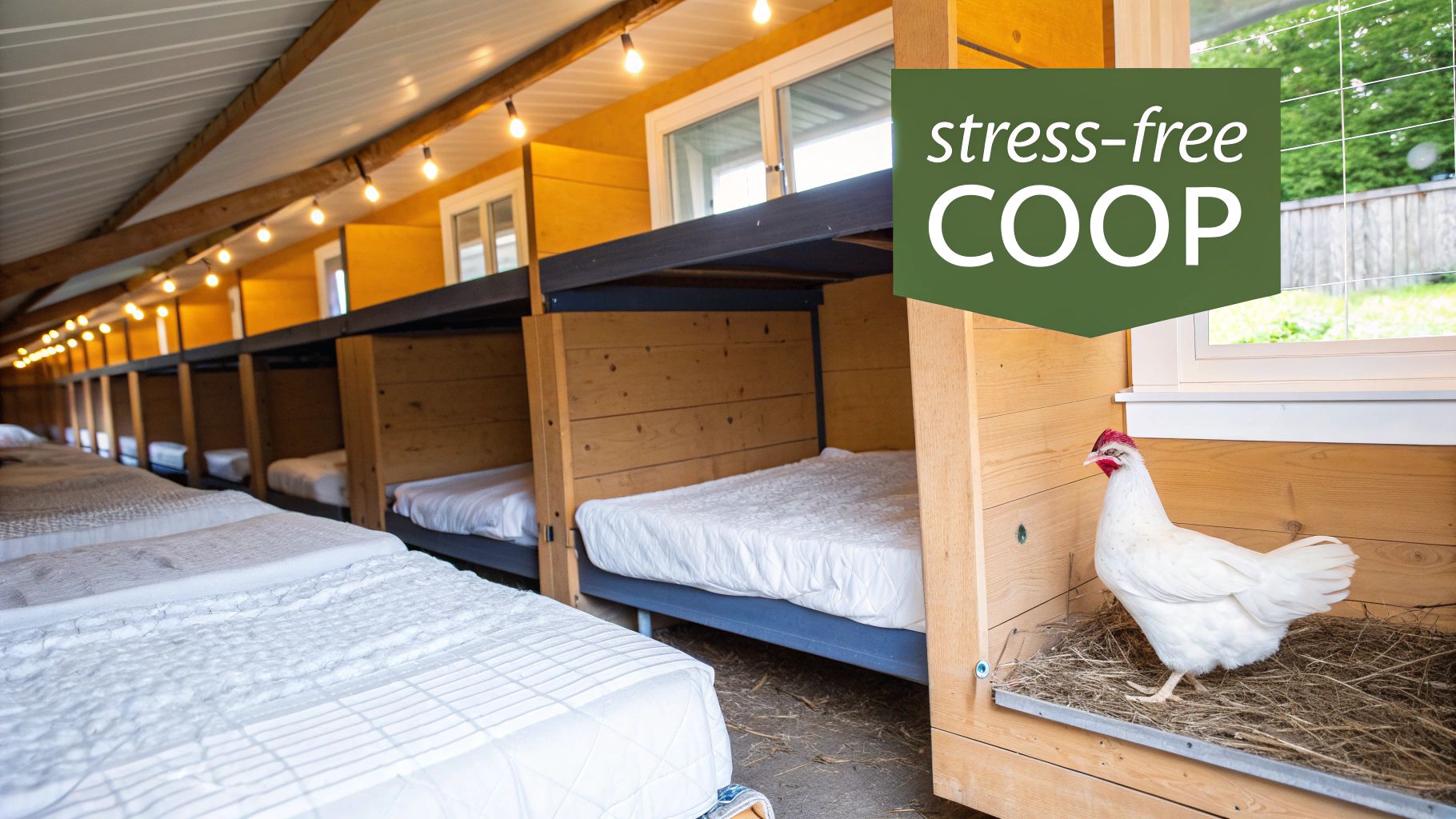
A hen’s environment is everything. If your flock has suddenly gone on a laying strike, the first place I always look is their living situation. Chickens need to feel safe, comfortable, and secure to lay eggs; it’s a biological switch. A stressful, chaotic, or dirty coop sends a clear signal to a hen's body that now is not a good time to raise a family, and egg production can shut down almost overnight.
The great thing is, their living space is something you have total control over. When you set up a coop that works with their natural instincts, you create a little haven that encourages them to do what they do best. This is about more than just a box with a roof—it’s about building a predictable and peaceful world for your girls.
Getting the Lighting Right for Egg Production
Light is the single most powerful trigger for a hen's laying cycle. To keep the eggs coming, they need a solid 14 to 16 hours of daylight. Once fall and winter roll around and the days get shorter, that natural cue disappears, and production often grinds to a halt.
You can easily fill that gap with a little supplemental light. A simple, low-wattage bulb—a 9-watt LED is perfect—hooked up to an automatic timer does the trick. I set mine to come on in the early morning hours, adding a few "daylight" hours before the sun actually comes up.
Just be sure to avoid bright, harsh lights, and never leave them on 24/7. That's a recipe for a stressed-out, sleep-deprived flock. The goal is to gently mimic a long, lazy summer day, not turn the coop into a brightly-lit factory.
Tamping Down Stress for a Calmer Flock
Stress is the ultimate egg-killer. Chickens are creatures of habit, and any little disruption can throw them off their game. A well-designed coop is your first line of defense. Providing a simple, effective shelter for animals is the foundation for managing a healthy, happy flock.
Think about what might be rattling your birds. It’s usually one of these culprits:
- Predator Scares: Is the coop door a bit flimsy? Have you seen signs of digging around the perimeter? Constant fear puts hens on high alert. Double-check and reinforce all entry points, use hardware cloth (not chicken wire) on windows, and make sure the coop is latched securely every single night.
- Overcrowding: Chickens need elbow room. A good rule of thumb is at least 4 square feet per bird inside the coop and 10 square feet per bird in their run. Cramped quarters lead to squabbles and stress.
- Nesting Box Drama: Not enough private, comfy spots to lay will cause serious competition. Aim for at least one nesting box for every 3-4 hens and keep them topped up with fresh, soft bedding like straw or pine shavings.
A secure, predictable home does more than just stop a panic. It sends a message to a hen that she’s safe enough to invest her body’s resources into making an egg. That feeling of security is absolutely non-negotiable for a productive flock.
Keeping the coop clean and dry is just as important. Damp, mucky bedding creates ammonia fumes that can cause respiratory problems, and it’s a breeding ground for disease. All of that is a huge stressor that will absolutely stop egg production. A deep, clean layer of pine shavings or straw will keep their home healthy and comfortable.
By managing the light, security, and cleanliness of their coop, you’re creating a sanctuary that tells your hens it’s safe to get back to work.
Once you’ve solved the mystery of the empty nesting box and your hens are laying again, the real work begins. The goal isn’t just to fix a problem; it’s to stop it from happening in the first place. Shifting from a reactive mindset—"Oh no, no eggs!"—to a proactive one is the secret to a consistently productive flock.
Thinking ahead lets you anticipate the bumps in the road, keeping your hens healthy and your egg basket full.
Instead of getting blindsided, you’ll be ready for the predictable cycles of a chicken's life. That means less stress for everyone (you included!) and far fewer mornings spent wondering why your chickens stopped laying eggs.
Make Seasonal Flock Health Checks a Habit
A quick, hands-on check-up each season can help you catch parasites or illnesses before they escalate into something that shuts down your egg factory. You don't need a veterinary degree—just a keen eye. Once a season, set aside a few minutes to handle each bird and run through a mental health checklist.
Here’s what I always look for:
- Eyes and Nostrils: Are they bright, clear, and dry? Any cloudiness, discharge, or swelling is a definite red flag.
- Vent Area: It should be clean and fluffy. A "pasty butt" or messy feathers can point to digestive trouble or parasites.
- Skin and Feathers: Part the feathers around the vent and under the wings. Look closely for tiny, moving specks—those are mites or lice.
- Legs and Feet: The scales on their legs should lie flat and smooth. If they look raised or crusty, you might be dealing with scaly leg mites.
Catching these things early means you can treat them quickly and easily, often without ever seeing a drop in egg production.
Get Ready for Predictable Laying Pauses
Some breaks in laying are just part of the deal, but how you manage them makes all the difference. When you know what’s coming, you can give your flock the support they need to sail through the downtime and bounce back faster.
Mark your calendar for these events:
- The Annual Molt: When you see the first feathers fly in late summer or fall, switch your flock to a high-protein feed (18-20%). That extra protein helps them push out new feathers much faster, shortening the molt and getting them back to business.
- Winter's Darkness: Don't wait for the shortest day of the year to hit. Have a light on a simple timer ready to go in the coop to provide 14-16 hours of "daylight." This keeps their hormones signaling for egg production.
- Summer Heat Waves: Before the first scorcher, make sure you have a plan for extra shade and have some frozen corn or watermelon rinds ready. Preventing heat stress is much easier than trying to coax a hot, miserable hen to lay.
Managing a flock is about working with their natural rhythms, not against them. A proactive plan turns predictable challenges like molting or winter into manageable events rather than surprising crises.
One last tip from my own experience: keep a mixed-age flock. Adding a few new pullets every year or two means you'll always have birds in their prime laying years, even as your older girls gracefully slow down. This creates a sustainable, multi-generational system that keeps the eggs coming, year after year.
Still Have Questions? Let's Talk Specifics
Even after running through the usual suspects, you might find yourself with a few nagging questions about your non-laying hens. It's totally normal. Let's tackle some of the most common situations that leave even experienced chicken keepers wondering what's next.
How Long Does a Molt Really Last?
When a hen starts molting, expect egg production to grind to a halt for anywhere from 4 to 12 weeks. It might seem like a long time, but growing thousands of new feathers is a massive energy drain. All her body's resources, especially protein, are funneled into making a new coat.
Think of it as a full-body renovation. You can help her through it by bumping up her protein. A feed with around 20% protein is perfect for this period. Tossing in some protein-packed snacks will also give her the building blocks she needs to get back to laying sooner.
A quick tip from experience: The better a hen's nutrition, the faster she'll get through the molt. A well-fed bird will be back in the nesting box much quicker than one just getting by.
What's the Best Way to Deal With a Broody Hen?
Breaking a broody hen's trance is all about gently interrupting her hormonal cycle. The key is to cool down her breast and underside, which sends a clear signal to her body that it’s not the right time to be a mom.
First, try the simple approach: physically remove her from the nesting box several times a day. If she’s determined and keeps running back, it’s time for a "broody breaker."
This is just a wire-bottomed cage or crate that allows for plenty of airflow underneath her. Put her in there with food and water but no cozy bedding. This setup makes it impossible for her to build up that body heat she needs to incubate eggs. Within a few days, this usually does the trick.
When Is It Time to Call the Vet?
Most pauses in laying are no big deal, but sometimes they're a red flag for something more serious. If the egg strike is paired with other symptoms of illness, it's time to get a professional opinion.
Keep an eye out for these warning signs:
- She’s unusually tired, listless, or just not acting like herself.
- Her comb and wattles look pale instead of their usual vibrant red.
- There's any discharge from her eyes or nostrils.
- You notice she's coughing, sneezing, or breathing heavily.
- Her droppings look bloody, or her vent area is messy and soiled.
One situation is always an emergency: if you suspect a hen is egg-bound. If you see her straining for hours to pass an egg without success, she needs veterinary help immediately.
Help your flock bounce back faster. Pure Grubs are packed with the protein and calcium they need for feather regrowth and strong eggshells. Our USA-grown Black Soldier Fly Larvae have up to 85% more calcium than mealworms. See the difference at https://puregrubs.com.