

Why chicken laying soft shell eggs? Fixes and Tips
It's an alarming sight for any chicken keeper: reaching into the nesting box and finding a fragile, leathery, or even shell-less egg. But before you panic, know this is a common issue and usually an easy fix. More often than not, it's a simple signal from your hen that something in her diet, environment, or even her age is a little out of sync.
Your Instant Guide to Fixing Soft-Shell Eggs
Think of a perfect, hard eggshell as a biological masterpiece. It takes a hen roughly 20 hours and a huge amount of calcium to create that protective coating. When any part of that intricate process gets interrupted, the result is a soft-shell egg.
This guide is built to help you play detective and quickly figure out what's going on with your flock. We'll skip the dense biology lesson and get straight to the practical reasons why this happens. Most of the time, the culprit falls into one of three buckets:
-
Something's Missing in Their Diet: This is the big one. A lack of calcium—or the Vitamin D3 needed to absorb it—is the number one reason for soft-shell eggs.
-
It's Just Her Age: A hen's reproductive system isn't always a well-oiled machine. Young pullets whose bodies are just firing up often lay a few weird eggs, while older hens can sometimes struggle to pull enough calcium to make strong shells consistently.
-
She's Stressed Out: Chickens thrive on routine. Anything from a blistering heatwave to a prowling raccoon or even just a big change in their coop can throw off the delicate hormones needed for shell formation.
Once you know what to look for, you can connect the dots and take the right steps to get your hens back to laying strong, healthy eggs.
Quick Guide to Soft-Shell Egg Causes and Solutions
To make it even easier, I've put together this quick-reference table. It helps you match what you're seeing in the coop with the most likely cause and gives you immediate, practical actions to take.
| Common Cause | Key Symptoms | Immediate Action |
|---|---|---|
| Calcium Deficiency | Thin, soft, or shell-less eggs; the hen might seem a bit tired or sluggish. | Put out a separate, free-choice dish of crushed oyster shells or clean, crushed eggshells. Let them take what they need. |
| Hen Age (Pullet) | Small, oddly shaped, or soft eggs from a young hen (under one year old) who just started laying. | Double-check that she's on a high-quality layer feed. This often corrects itself as her system matures over a few weeks. |
| Heat Stress | Soft-shell eggs suddenly appear during a heatwave; hens are panting, lethargic, or holding their wings away from their bodies. | Offer plenty of cool, fresh water. Ensure they have deep shade and consider adding electrolytes to their main water source. |
| Illness or Disease | A sudden wave of soft eggs, along with other symptoms like coughing, sneezing, lethargy, or diarrhea. | Immediately isolate the sick hen to protect the rest of the flock. This is a good time to consult a veterinarian to rule out infections. |
This table is your starting point for troubleshooting. By observing your flock and the types of eggs they’re laying, you can quickly narrow down the possibilities and get things back on track.
How a Hen Creates a Perfect Eggshell
Before troubleshooting soft-shell eggs, it helps to watch a hen’s inner workshop in action. Crafting an eggshell is more like running a marathon than a sprint—it takes about 24 to 26 hours from the moment a yolk is released until the egg slips out.
It all starts when the ovary drops a yolk into the oviduct, a winding tube where every layer is added. Any hiccup along this route can lead to a soft or misshapen shell.
The Oviduct Assembly Line
The oviduct is divided into several stations, each responsible for building a different part of the egg. The shell is the final touch, and it spends the most time here.
- Albumen Application: The yolk gets coated in albumen (egg white) over roughly 3 hours.
- Membrane Formation: Two sturdy membranes wrap around the albumen in just over an hour, creating the framework for the shell.
- Shell Gland Arrival: The developing egg enters the shell gland (uterus) for the final 20 hours of construction.
Most soft-shell issues show up during that long shell-forming phase, which demands a steady stream of raw materials.
A single eggshell is composed of about 95% calcium carbonate. To build this protective fortress, a hen must pull roughly 2 grams of calcium from her body for every single egg she lays.
It’s an astonishing feat: those 2 grams of calcium represent around 10% of her entire body’s calcium reserves. She pulls this off in under a day, every day.
Building The Calcium Fortress
Inside the shell gland, calcium and carbonate ions combine into microscopic layers to form a tough, crystalline shell. The hen borrows calcium from two main sources:
- Her Diet: The first line of defense is fresh layer feed and supplements like oyster shells.
- Her Bones: If diet falls short, she taps into medullary bone—a special calcium reserve in her skeleton.
Relying on bone reserves is like taking out a high-interest loan. Occasional shortfalls are manageable, but repeated dips into skeletal calcium lead to chronic shell problems.
Here’s an infographic that walks through the most common causes of soft-shell eggs and how to fix them.
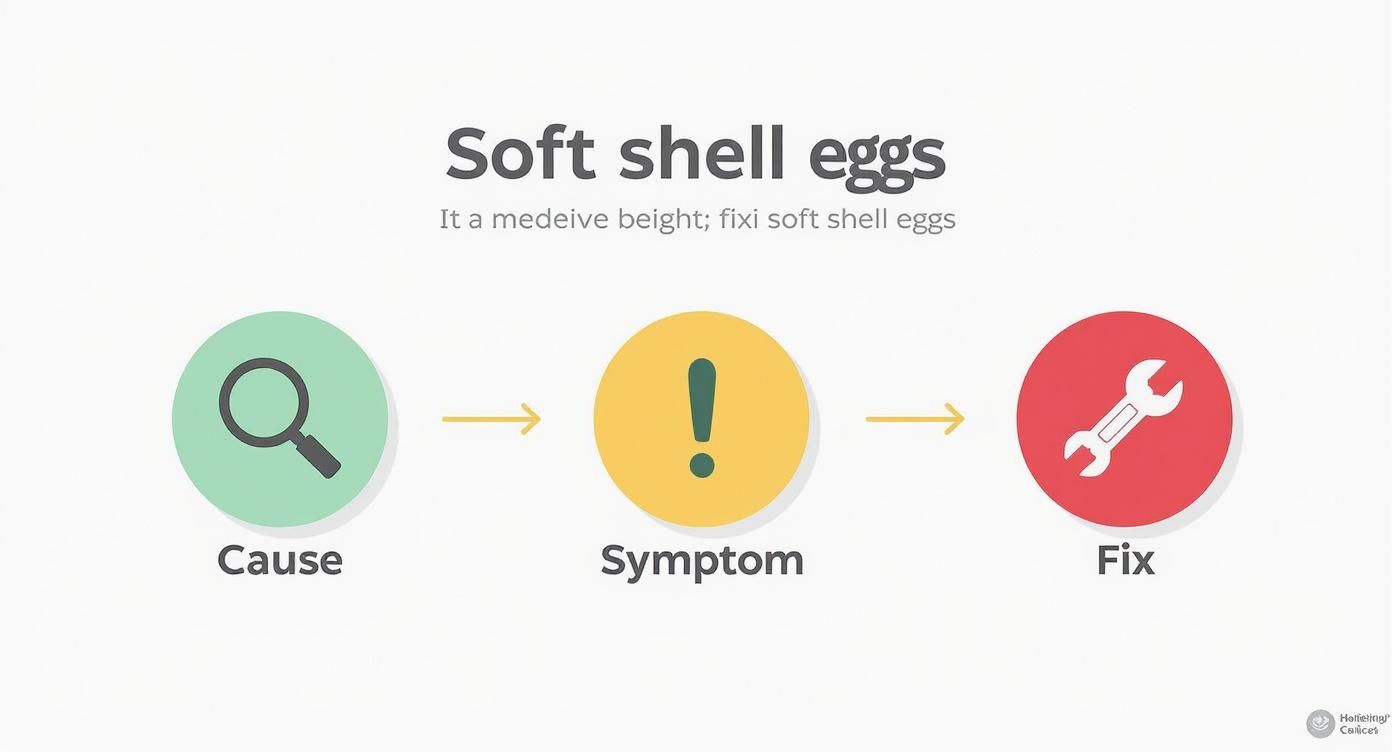
A robust eggshell is the end product of a long, resource-intensive journey. When you find a soft egg, it’s a clear signal that something went awry during that critical 20-hour construction phase.
So, Why Are My Chickens Laying Soft Shell Eggs?
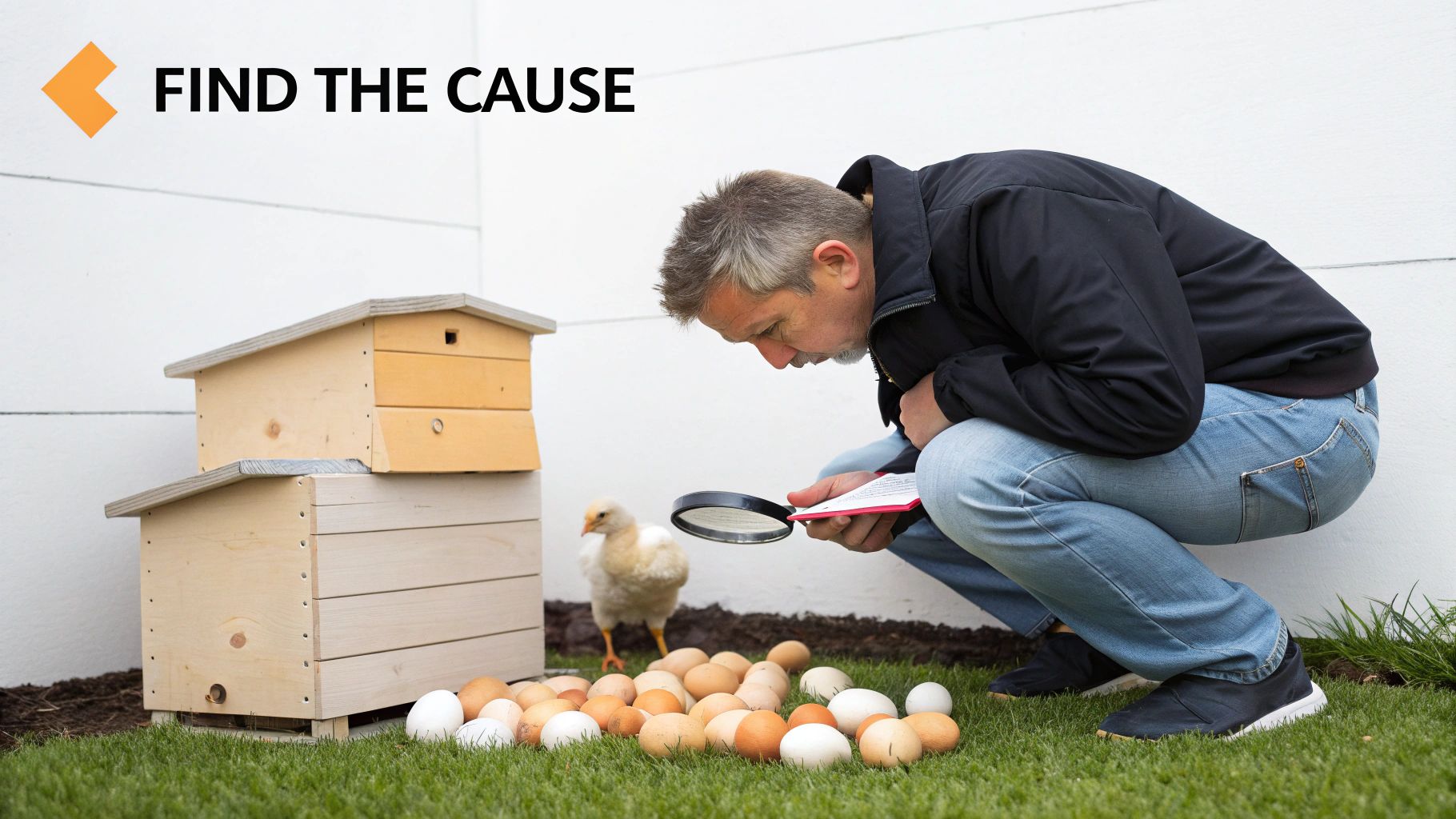
When you find that first soft-shell egg, it’s natural to want to fix the problem immediately. But before you can find the right solution, you need to put on your detective hat. Figuring out the root cause means paying close attention to your flock and understanding what can go wrong in a hen's internal "eggshell factory."
Think of it like a car that won't start. You always check the basics first—is there gas in the tank? Is the battery connected? For a hen laying rubbery eggs, the "gasoline" is almost always her diet. But other things, like her age, stress levels, or an illness, can also throw a wrench in the works.
Let’s dig into the most common culprits, starting with the number one reason for shell-less eggs.
Investigating Nutritional Deficiencies
A hen’s diet is the bedrock of every strong eggshell she lays. If something’s out of whack here, it's the first place you should look. While calcium gets all the glory, it’s just one player on a team of nutrients that have to work in harmony.
The most obvious suspect is a calcium deficiency. It takes a staggering 2 grams of pure calcium to form a single eggshell, and a hen has to pull that together in less than 24 hours. If her feed is low in calcium or she isn't getting enough from a free-choice supplement like oyster shells, her body simply doesn’t have the raw materials to build a proper shell. It’s that simple.
But calcium can't do the job alone. It needs a critical partner: Vitamin D3.
- Vitamin D3 acts like a key, unlocking the hen's ability to pull calcium from her gut into her bloodstream where it can be used.
- Without enough Vitamin D3, a hen could be swimming in oyster shells and still not be able to use it, leading to weak shells.
Finally, phosphorus plays a vital supporting role. The balance of calcium to phosphorus in a hen’s diet is incredibly important. Too much phosphorus can actually block calcium absorption. This is exactly why feeding a high-quality, professionally formulated layer feed is so critical for your flock's health. You can get a deeper dive into the specifics of what to feed laying hens for a well-rounded diet.
Considering Hen Age and Physiology
Sometimes, soft-shell eggs have nothing to do with diet or disease—it's just a matter of age and biology. This is often completely normal and temporary.
Young hens, or pullets, who are just starting to lay are famous for this. Their reproductive systems are still firing up and getting calibrated, so it's common to see a few oddities at first. Think tiny "fairy" eggs, double-yolkers, and, yes, soft-shell eggs. This usually sorts itself out in a few weeks as their bodies settle into a rhythm.
At the other end of the spectrum, older hens can start to struggle. As a hen ages, her body becomes less efficient at absorbing and using calcium. A hen who has laid perfect eggs for years might gradually start producing thinner shells or the occasional soft one. For these senior ladies, having constant access to a top-notch calcium source is twice as important.
Uncovering Environmental Stressors
Chickens are creatures of habit and are incredibly sensitive to their surroundings. Any sudden change or ongoing stress can disrupt the delicate hormonal dance needed for ovulation and shell formation, causing a hen to rush the egg out before the shell is finished.
Common stressors to look out for include:
- Heat Stress: During a heatwave, hens often eat less (cutting their calcium intake) and pant to cool off. Panting can change their blood pH, which directly interferes with the chemical process of forming a calcium carbonate shell.
- Predator Threats: A hawk circling overhead, a raccoon rattling the coop at night, or even the neighbor's dog can put the flock on high alert, flooding their systems with stress hormones that interrupt egg production.
- Overcrowding or Bullying: A hen at the bottom of the pecking order might get pushed away from the feeder or the oyster shell dish. For her, the soft-shell egg is caused by social stress, not a lack of available food.
- Sudden Changes: Moving to a new coop, introducing new flock members, or even a loud construction project next door can be enough to throw a sensitive hen off her game.
Soft-shell egg production is directly influenced by nutritional deficiencies and environmental stressors affecting the world's billions of laying hens. Research indicates that manganese and zinc play crucial roles in eggshell formation and strength, with deficient levels directly contributing to soft, broken, or deformed shells. Discover more insights about the global impact of hen nutrition and welfare on Compassion in Food Business.
Ruling Out Illness and Disease
While it's less common than the other causes, you should never rule out an underlying illness. A disease could certainly be the culprit behind a sudden rash of soft-shell eggs, especially if it hits more than one hen at the same time.
Diseases like Infectious Bronchitis (IB) or Egg Drop Syndrome (EDS) directly attack the oviduct (the hen's egg-making machinery), causing damage that makes proper shell formation impossible. If you see soft shells along with other symptoms—like coughing, sneezing, lethargy, or diarrhea—it’s time to act fast. Isolate the sick bird immediately to protect the rest of your flock and consider calling a veterinarian for an accurate diagnosis.
Your First-Aid Plan For A Hen Laying Soft Eggs
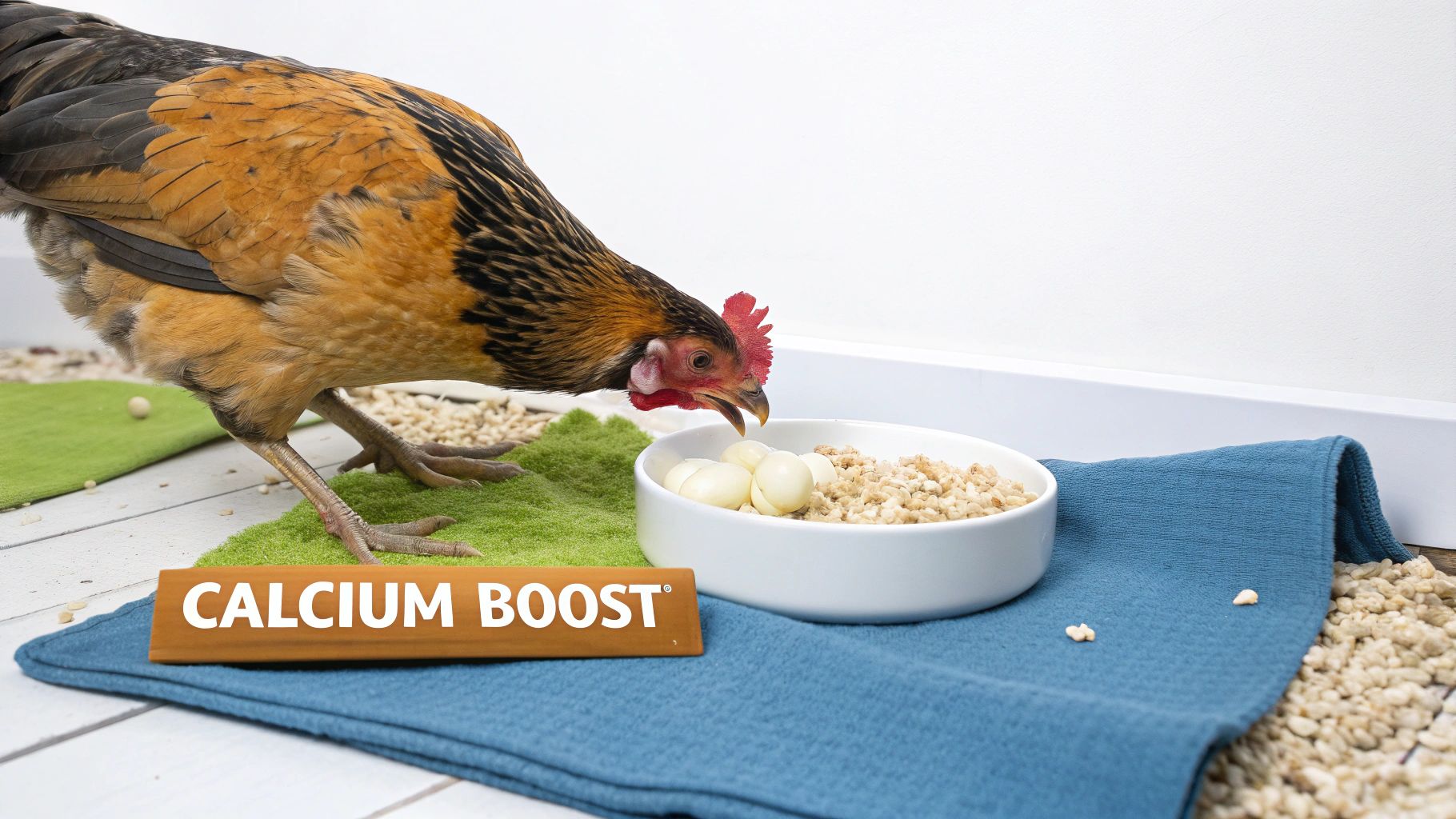
Finding a delicate, leathery egg in the nesting box can feel like hitting a warning light on your car dash. Before you overhaul your feed program, take a deep breath and observe. Calm, focused action will help you address the real issue behind that soft shell.
Your first aim is simple: make sure the hen who laid the egg is comfortable, safe, and getting what her body needs. In many ways, a soft-shell egg is a symptom—so treat her, not just the shell.
Provide Immediate Nutritional Support
Start by offering an easy calcium boost—think of it like handing someone a glass of water when they’re parched. Even hens on a regular supplement can hit a sudden deficit.
-
Step 1: Set Up a Calcium Bar
Use a small dish filled with crushed oyster shells or clean eggshell pieces. Keep it separate from the main feed. -
Step 2: Make It Accessible
Choose a quiet corner of the coop where shy or low-rank hens can eat without being bullied. -
Step 3: Let Her Self–Regulate
Hens instinctively know how much calcium they need. Free-choice feeding lets her top up her reserves on her own schedule.
This quick fix delivers the raw materials her body is craving. It’s the single most critical first-aid move you can make. For a deeper dive, check out our guide on choosing the best calcium supplement for chickens.
Watch For Signs Of Being Egg-Bound
While she’s snacking on calcium, keep a close eye out for egg-binding—a life-threatening snag in the oviduct that demands immediate attention. Unlike a simple soft shell, an egg-bound hen will show clear distress.
Key Takeaway: A soft-shell egg signals a nutrient gap. An egg-bound hen is a medical emergency.
Look for these warning signs:
• Straining Or Pumping: Repeated squats and tail pumps without any result.
• Waddling: A penguin-like gait caused by discomfort and pressure.
• Lethargy: Fluffed feathers, hunched posture, and no interest in food or water.
• Loss Of Appetite: Refusal of her favorite treats is a red flag.
An egg-bound hen can go downhill fast—in as little as 24 to 48 hours—so every hour counts. If you spot these symptoms, gentle home intervention might help if you’re experienced. Otherwise, call your veterinarian right away. Your quick response could be the difference between life and death.
Building a Long-Term Prevention Strategy
Once you've handled an immediate soft-shell egg situation, the real work begins. It's time to shift from just putting out fires to fire-proofing the coop altogether. The goal is to build a flock so healthy and resilient that soft-shell eggs become a distant memory, not a recurring problem.
This isn't about finding one magic bullet. It's about getting the fundamentals right, day in and day out. Think of it like maintaining a classic car—it's not a single repair but the consistent care that keeps it running perfectly. For your hens, this boils down to mastering their nutrition, environment, and daily routines. Get these three pillars solid, and you'll be rewarded with consistently strong, beautiful eggs.
Mastering Balanced Nutrition
The absolute cornerstone of preventing shell-less eggs is a diet that leaves no room for nutritional gaps. A laying hen is a high-performance athlete, and her body needs premium fuel to keep the egg production line running smoothly every single day.
First things first: a complete layer feed must make up 90% of your flock’s diet. No exceptions. These feeds are carefully formulated to provide the exact protein (16-18%), vitamin, and mineral ratios they need. Making this the foundation of their diet is non-negotiable.
But even the best feed needs a little help.
Key Insight: Always offer a separate bowl of crushed oyster shell or limestone, free-choice. This simple step empowers each hen to take exactly what her body needs, when it needs it. A hard-working layer's calcium requirements can change daily, and this lets her self-regulate.
This proactive approach stops a calcium deficiency before it can even start. It’s also worth noting that other minerals play a crucial role. Research has shown that supplementing with zinc can reduce shell defects, and manganese is known to increase shell strength. It all works together.
Creating an Optimal Coop Environment
A hen’s home life directly affects her eggshells. A stressful coop can throw her entire reproductive system out of whack, sometimes causing her to lay an egg before the shell has had time to harden. Your coop needs to be a sanctuary, not a source of stress.
Give them room to breathe. Overcrowding is a huge stressor, sparking fights over food, water, and prime nesting spots. As a general rule, aim for at least 4 square feet of coop space per bird and 10 square feet in the run.
Light is life for a laying hen. Their cycles are governed by daylight, and providing a consistent 14-16 hours of light daily keeps their production steady. In the shorter days of winter, a simple timer on a coop light can work wonders, preventing the hormonal dips that disrupt laying.
Finally, think like a chicken and minimize scary surprises.
- Fortify the Coop: Make it predator-proof against raccoons, hawks, and wandering dogs. A secure coop equals a relaxed flock.
- Provide Hiding Spots: Roosts, bushes, and covered corners give them a place to retreat and feel safe.
- Keep it Calm: If possible, situate the coop away from loud noises, sudden movements, and high-traffic areas.
Maintaining Consistent Flock Management
Chickens don't just like routine—they thrive on it. A predictable daily schedule helps their bodies function like a well-oiled machine and tells them that all is well in their world.
Set a simple, consistent schedule for letting them out in the morning, feeding, and tucking them in at night. They'll learn the routine quickly, which drastically reduces their stress levels. Be just as thoughtful when adding new birds to the flock; a slow, careful introduction is far better than the chaos of a pecking-order war.
When you combine a top-notch diet with a calm, predictable environment, you’re doing more than just fixing a problem. You’re building a foundation for long-term health and productivity. If you want to dive deeper into optimizing their diet, check out our guide on selecting the right high-calcium chicken feed to keep those eggshells tough.
Your Top Questions About Soft-Shell Eggs, Answered
Even when you think you've cracked the case on why your hen laid a weird, rubbery egg, a few more questions always seem to pop up. Getting straight answers can help you feel more confident and prepared for the next time it happens. Let's tackle some of the most common things keepers ask about this frustrating issue.
Can a Hen Die From Laying a Soft-Shell Egg?
A single soft-shell egg isn't usually a death sentence, but it can be a red flag for a much bigger problem. The real danger here is the hen becoming egg-bound, which happens when that soft, squishy egg gets stuck on its way out.
Being egg-bound is a serious medical emergency. It can cause internal injuries, infection, and can absolutely be fatal if you don't intervene fast. If you find a soft egg and then notice a hen straining, waddling like a penguin, or looking exhausted, she might be egg-bound. Think of it this way: a one-off soft egg is a temporary hiccup, but an egg-bound hen needs your help right away.
Is It Safe to Eat Soft-Shell Eggs?
The short answer is no. I strongly recommend you do not eat soft-shell or shell-less eggs. A hard eggshell is nature's perfect little package, specifically designed to keep nasty bacteria like Salmonella away from the yolk and white.
Without that protective shell, the egg is wide open to contamination from the moment it hits the coop floor. For your own health and safety, it’s always the right call to toss any eggs that don’t have a proper, solid shell.
How Long Until Diet Changes Start Working?
You’ll be happy to know that you can see better eggshells pretty quickly. The whole process of forming an egg takes a hen about 24 to 26 hours, so any changes you make to her diet can have an almost immediate impact.
Once you’ve put out a high-quality layer feed and a separate bowl of free-choice calcium (like crushed oyster shells), you could start seeing stronger shells in just a week or so.
Rule of Thumb: If you don't see any improvement in shell quality after 10 days of providing consistent, top-notch nutrition, it's time to dig deeper. The problem might be something else entirely, like stress, an underlying illness, or simply old age.
Are Certain Breeds More Likely to Lay Soft-Shell Eggs?
Yes, they can be. The superstar layers of the chicken world—think Leghorns, Golden Comets, or ISA Browns—are bred to be egg-laying machines, often popping one out nearly every single day. This incredible pace puts a huge, relentless strain on their bodies' calcium reserves.
Because they're always working in overdrive, they’re more likely to have shell problems if their diet is even slightly off. That said, a hen of any breed can lay a soft-shell egg if she’s not getting what she needs, nutritionally or environmentally.
For a safe, high-calcium treat that helps build stronger eggshells, Pure Grubs offers USA-grown Black Soldier Fly Larvae, delivering up to 85% more calcium than mealworms. Give your flock the natural boost they need for perfect eggs every time. Learn more at the Pure Grubs website.