

Chicken Feed Supplement Types, Safety, and How to Use Them
You're standing in the feed aisle with a bag of layer pellets in one hand, oyster shell in the other, and a jar of dried worms nearby. Your hens look healthy, but one is laying thin-shelled eggs, another is coming out of a molt, and you're no longer sure whether scratch grains, greens, calcium, or insects will solve the problem.
The simplest answer is also the most useful: a chicken feed supplement should solve a specific gap, not replace good feed or become another source of confusion. Start with a complete ration, add calcium according to the needs of laying hens, use vitamins or electrolytes for defined situations, and treat high-protein foods as controlled extras.
Why Your Flock May Need More Than Just Layer Feed
A complete layer ration is the foundation of flock nutrition. It supplies the everyday energy, protein, vitamins, and minerals a laying hen needs, so it should remain the food your birds rely on most of the time. Supplements work above that foundation. They're adjustments for particular circumstances, not shortcuts around balanced feed.
Consider three backyard flocks. The first has steady forage, normal feathers, and firm eggshells. It may need little beyond layer feed, water, grit when appropriate, and separate calcium access. The second is moving through a heavy molt. Its nutritional priority has changed because feather regrowth requires protein and balanced amino acids. The third is dealing with hot weather and reduced appetite, where water management and carefully chosen electrolytes may matter more than another protein treat.
Practical rule: Diagnose the problem before buying the product.
Seasonal changes can expose gaps that aren't obvious during normal production. Heat can reduce feed intake, molting can increase demand for feather-building nutrients, and sparse winter forage can remove some of the variety birds get while ranging. Poor shell quality can also reflect calcium delivery, particle size, feed choice, age, illness, or stress rather than a simple lack of total calcium.
That's why adding several products at once often makes matters worse. If a keeper mixes scratch, mealworms, greens, calcium powder, and insect treats into the ration, the flock may eat less complete feed while the original problem remains. A supplement can be nutritious and still be the wrong tool.
Use a layered approach:
- Base ration: Complete feed supplies the daily nutritional structure.
- Calcium layer: Separate calcium supports shell formation in laying hens.
- Situational support: Vitamins, minerals, or electrolytes address defined stressors.
- Protein treats: Insects and other concentrated foods support limited needs, especially during molt.
By matching the supplement to the problem, you'll know what belongs in the coop and what can stay on the store shelf.
What a Chicken Feed Supplement Actually Does
A chicken feed supplement is an ingredient offered alongside a balanced ration to address a targeted need. It isn't a complete diet, and it shouldn't push the base feed out of the feeder.
Think of chicken nutrition as a building with four layers. The foundation is complete layer feed, which supplies balanced energy and protein. The next layer is calcium access for hens producing eggs. Above that sit vitamins and minerals used when forage is limited or birds face a defined stress. The top layer is made of concentrated treats, such as insects, which can add protein and variety but are easy to overfeed.
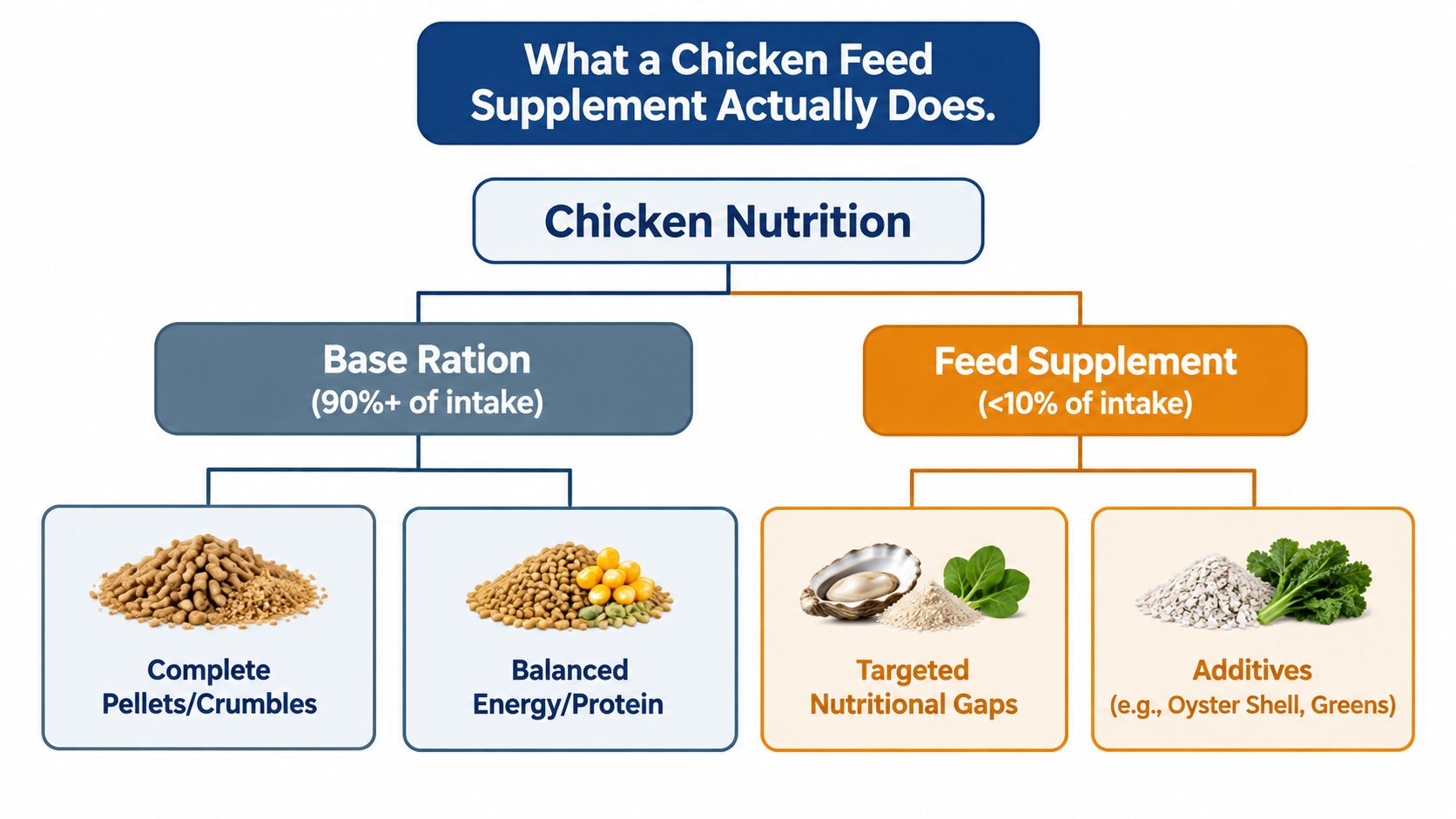
Each layer has a different job. More protein won't correct an unsuitable calcium supply, and more calcium won't provide the amino-acid balance needed for feather growth. Greens can add variety without repairing an unbalanced ration, while scratch grains can supply energy without offering the full nutrient profile of layer feed.
Start with the foundation
Before choosing an additive, check whether the flock is eating the complete ration consistently. Look for stale feed, dampness, selective eating, competition at the feeder, or treats offered before the main meal. A supplement can't compensate for a base feed that birds avoid.
Match the add-on to the trigger
Use separate decisions for separate problems:
- Calcium sources support shell formation.
- Protein treats provide concentrated nutrition during selected periods.
- Vitamin and mineral products help address specific management situations.
- Insect options combine protein with minerals, but still belong in the treat layer.
The central mistake is treating all supplements as interchangeable. A strong feeding plan asks what the hen is missing, how the ingredient supplies it, and whether the addition could reduce consumption of the complete ration.
The Four Main Supplement Types and When to Use Them
Calcium, protein, vitamins, and insects may all appear in the supplement aisle, but they don't perform the same task.
Calcium sources include oyster shell and limestone. Laying hens use calcium to form eggshells, and larger particles can remain available longer for shell formation than very fine material. Independent literature reports that BSFL dry matter contains about 5% calcium and 1% phosphorus on average, with published calcium ranges of 9 to 28 g/kg dry matter in the reviewed poultry literature. That mineral content makes BSFL relevant to shell nutrition, but it doesn't eliminate the need for a balanced ration and suitable calcium access.
Protein treats include mealworms, black soldier fly larvae, and some seeds. They can support feather regrowth during molt or help birds recover from periods of reduced condition. They won't automatically strengthen shells, because shell quality depends on calcium delivery and the entire diet, not crude protein alone.
Vitamins and electrolytes have a narrower role. Keepers may consider them during heat stress, recovery from a management event, or months when birds have little access to varied forage. They shouldn't become a permanent substitute for fresh water, sound husbandry, or complete feed.
Insect treats sit between protein and mineral supplements. They offer concentrated nutrients and encourage natural foraging behavior, but their composition varies by species and production method. The product label and sourcing information matter.
USA GROWN BLACK SOLDIER FLY LARVAE FOR CHICKENS is one example of a dried BSFL product whose catalog snapshot lists 36 to 42% crude protein and 30 to 40% fat. Those are product-label figures, not a reason to feed unlimited quantities.
| Supplement Type | Primary Job | Best Used When |
|---|---|---|
| Calcium source | Supports eggshell formation | Hens are laying and need separate calcium access |
| Protein treat | Adds concentrated protein and energy | Molt or recovery calls for a controlled extra |
| Vitamin or mineral mix | Addresses a defined shortfall or stress | Forage is sparse or birds face a specific management challenge |
| Insect treat | Adds protein and selected minerals | You want a limited, traceable treat alongside complete feed |
Use the category that matches the trigger. If the concern is a thin shell, start with the ration and calcium setup, not a random high-protein snack.
BSFL vs Mealworms and Other Insect Treats
A protein comparison alone doesn't tell you which insect treat suits a laying flock. The better question is what each insect contributes to the complete feeding system, especially calcium, phosphorus balance, fat, amino acids, and chitin.
BSFL are often useful where mineral contribution matters because their calcium content is substantially higher than that of mealworms in the literature reviewed above. Mealworms can still work well as a training or enrichment treat, but their mineral profile shouldn't be assumed to support eggshell formation. A 2023 review specifically found mealworm larvae have very low calcium and an unsuitable calcium-to-phosphorus ratio for hens, and it recommends calcium supplementation in its poultry nutrition review.
Crude protein also needs interpretation. Hens require usable amino acids, including methionine, rather than a large protein number by itself. Fat affects how quickly a treat adds energy, while chitin from insect exoskeletons can influence digestibility. These details explain why two dried insects can both look like “protein treats” while serving different practical roles.
The catalog claims for a specific BSFL product list 36 to 42% crude protein and 30 to 40% fat, while also describing a plant-based diet and low-temperature drying. Treat those figures as product-specific label information, not universal BSFL values.
| Nutrient | BSFL | Mealworms | Crickets |
|---|---|---|---|
| Calcium | Typically more useful as a mineral contribution, with BSFL literature reporting about 5% dry matter on average | Low calcium reported in poultry nutrition reviews | Varies by species and production system |
| Protein | Concentrated protein source | Concentrated protein source | Concentrated protein source |
| Fat | Can be substantial and varies by production method | Can be energy-dense | Varies by species and processing |
| Methionine | Depends on formulation and production method | Must be judged from the full nutrient profile | Depends on species and feed |
| Chitin | Present in the exoskeleton | Present in the exoskeleton | Present in the exoskeleton |
Dried crickets and silkworm pupae can add variety, but neither should displace the complete ration. For a practical discussion of how larvae differ from another fly-based feed, see BSFL compared with maggots. The decision isn't “which insect has the highest protein?” It's “which controlled treat fits the bird's existing ration and the problem I'm trying to address?”
Dosing, Feeding Frequency, and Timing
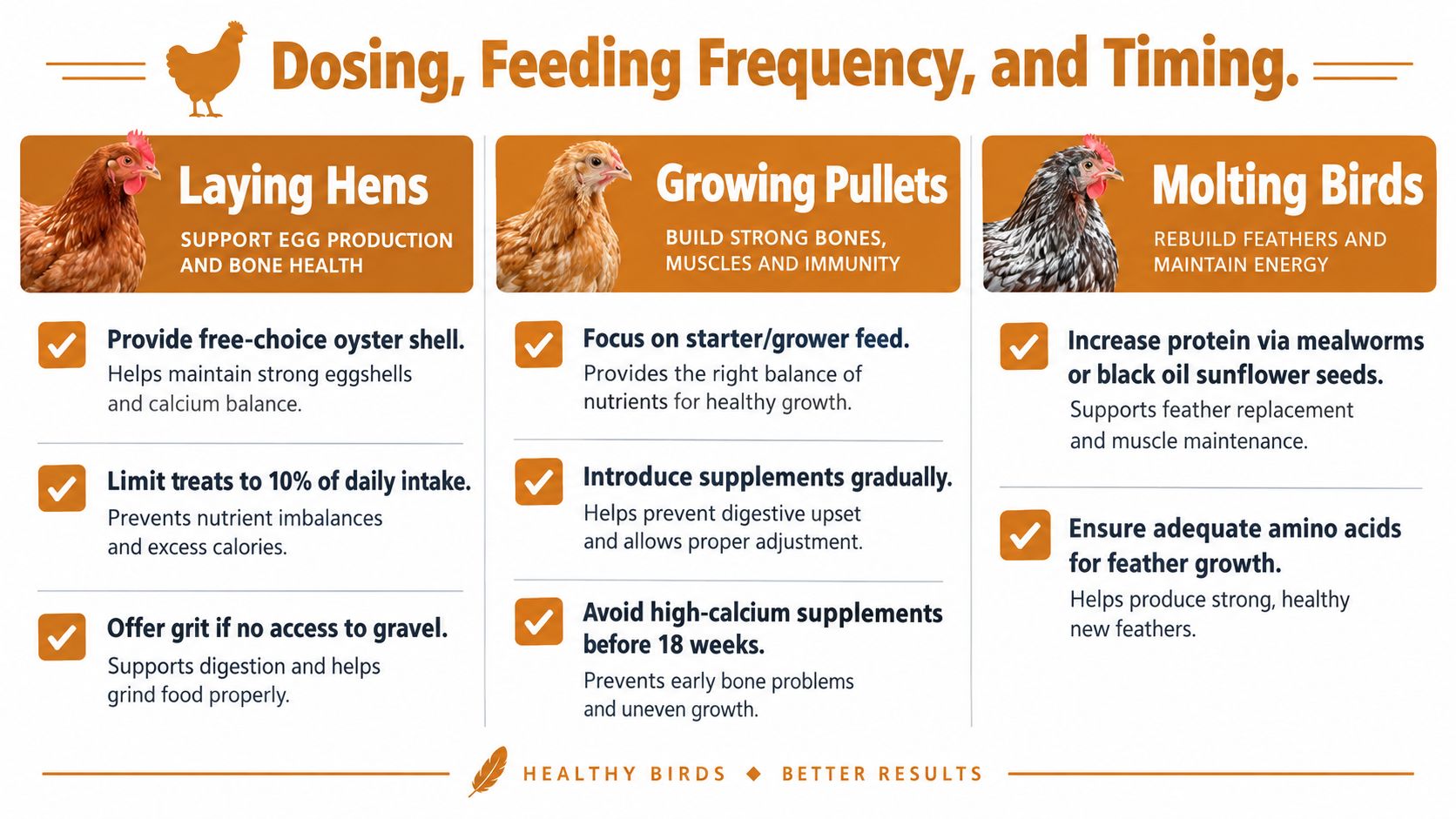
The right amount depends on the bird's age, production stage, base feed, and the supplement itself. Treat the following as management limits, not permission to replace feed.
Laying hens
Offer oyster shell free choice in a separate feeder, so active layers can take calcium without forcing nonlaying birds to consume it. Keep protein treats controlled. A practical BSFL range for a laying hen is 10 to 20 grams per hen per day, while mealworms should remain at similarly limited treat portions.
Offer concentrated treats after birds have had access to their regular ration. Afternoon feeding often works well because hens are actively foraging and calcium demand for shell formation rises later in the day. The exact clock matters less than the sequence: complete feed first, supplement second.
Growing pullets
Pullets under 18 weeks should stay on an appropriate starter or grower ration rather than layer feed or extra calcium. Their nutritional needs differ from those of hens producing eggs, and high-calcium additions aren't a harmless upgrade.
Introduce any treat gradually and keep the quantity small enough that the pullets continue eating their formulated feed. Grit may be appropriate when birds lack access to natural gravel, but it doesn't replace feed nutrition.
Molting birds
Molting birds may benefit from a controlled protein increase, especially from a product with a clear amino-acid profile. Watch the calcium load, because a protein treat isn't automatically a shell supplement and a large mineral addition isn't automatically useful during molt.
A simple routine keeps the system balanced:
- Morning: Refill complete feed and water first.
- Afternoon: Check calcium access and offer a measured protein treat if needed.
- Evening: Remove wet or spoiled additions and note whether birds ignored their base ration.
The often-used guideline that treats should remain under 10% of total intake appears in the provided feeding visual and is a useful ceiling for protecting ration coverage. If you can't estimate intake precisely, use the birds' behavior as a warning signal. A flock that rushes to treats but leaves pellets behind is receiving too much distraction from the foundation.
The Calcium Timing Trap Most Keepers Miss
More calcium isn't always better. A 2025 review found that raising dietary calcium from 3.5% to 4% improved eggshell weight, thickness, and density and reduced broken or shell-less eggs, while increasing it to 4.5% could worsen shell breakage and stop laying in some hens according to the review.
The lesson is balance. Calcium must arrive in a form and at a time the hen can use, while the rest of the ration supplies the energy, phosphorus, vitamins, and amino acids that support production. A keeper who sees a soft shell and immediately adds calcium powder may miss an unsuitable ration, poor feed intake, illness, heat stress, or a problem with particle size.
Particle size changes availability
Fine calcium mixed into feed can pass through the digestive system quickly. Coarser oyster shell or limestone stays available longer, which is useful because shell formation continues after the hen has finished much of her daytime feeding. A separate feeder lets laying hens select additional calcium without making every bird consume the same amount.
That arrangement also protects pullets and roosters from unnecessary intake. The base ration should match the birds receiving it, while free-choice calcium should be reserved for birds that need it.
Use a quick afternoon check
Look at the calcium feeder when the flock is settling for the evening. If it's consistently untouched, inspect particle size, feeder location, moisture, and whether the birds are actually laying. If it disappears rapidly, don't keep adding more automatically. Recheck the complete feed and ask a poultry veterinarian or nutrition professional to assess persistent shell problems.
For practical calcium-source comparisons, see this guide to the best calcium supplement for chickens. The aim is not a fuller feeder. It's a usable, proportionate mineral supply.
Safety, Sourcing, and Quality Signals to Check
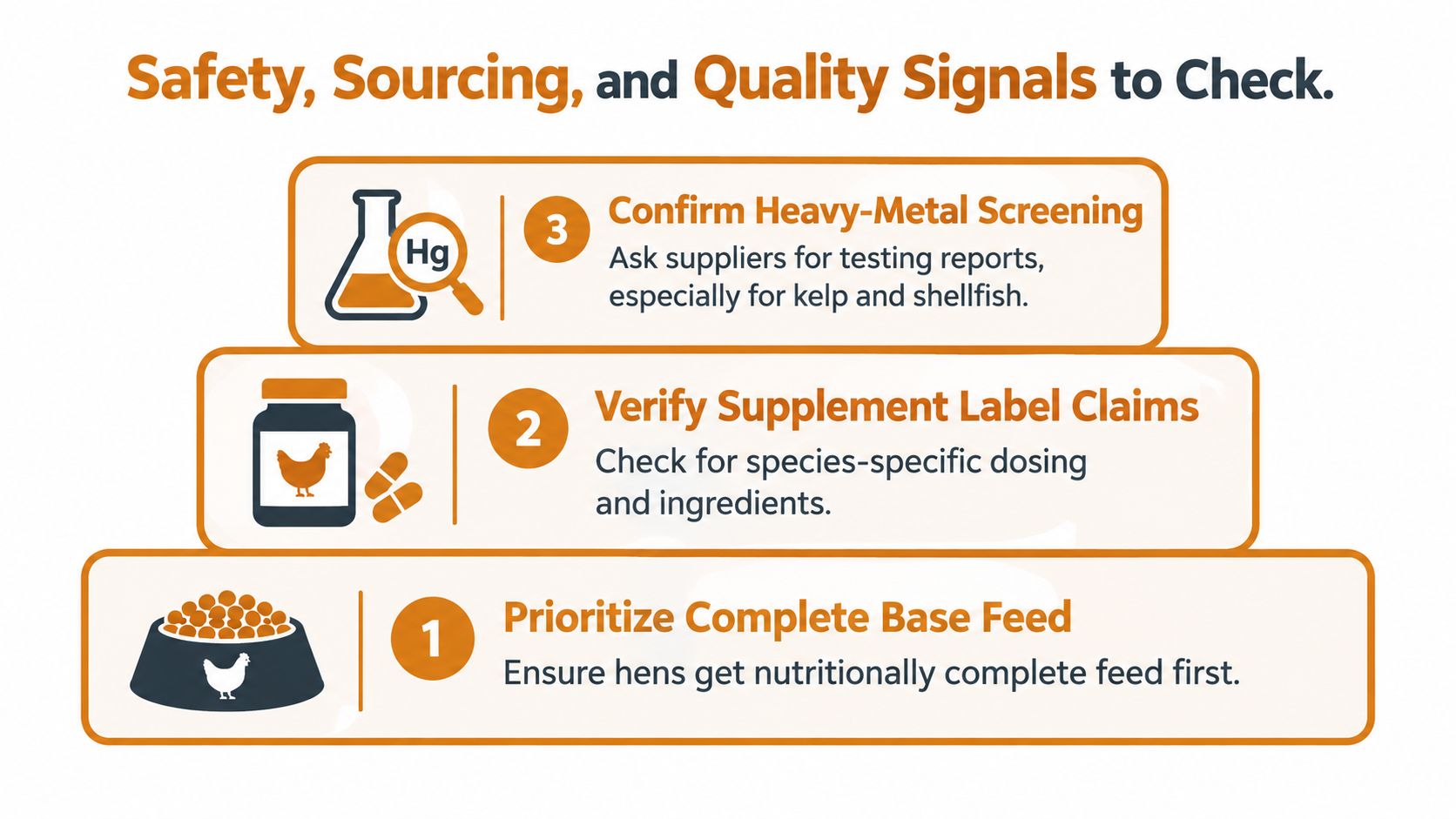
A safe supplement decision starts before you compare flavors or package sizes. First confirm that birds are eating a complete, species-appropriate base feed. Then inspect the supplement label, the producer's sourcing information, and the conditions under which the ingredient was made.
Calcium sources deserve particular scrutiny. Limestone and shell products can vary with their origin, so ask whether the supplier screens for contaminants such as lead or cadmium. Insect products also vary because the substrate, growing conditions, drying process, and storage affect the final ingredient.
Read the label as a keeper, not a shopper
Look for:
- Species guidance: The label should identify poultry use and provide clear feeding directions.
- Ingredient details: Avoid products that hide the main components behind vague descriptions.
- Origin information: Country of origin and production details help you judge traceability.
- Batch identification: Lot numbers and expiry dates support responsible storage and follow-up.
- Testing evidence: Ask for third-party or supplier testing when heavy-metal contamination is a concern.
- Storage instructions: Moisture and heat can spoil treats even when the package initially looked sound.
A supplier that can't explain where an ingredient came from or how it was tested gives you little basis for judging risk. Traceability matters most when a supplement is fed repeatedly to laying birds and you consume their eggs.
Keep the ration in charge
Most treats should remain under 10% of total intake, as shown in the provided feeding guidance, so the complete ration still supplies the majority of nutrition. Don't assume “natural” means nutritionally complete, and don't assume a clean ingredient can be fed without limits.
For a closer look at product testing considerations, review quality assurance testing. The practical standard is simple: choose a product with clear identity, clear directions, credible sourcing, and a role that fits your flock's actual needs.
Quick Answers for First-Time Buyers
Do chicks need supplements before they start laying?
Usually, chicks and pullets should receive the starter or grower ration designed for their age rather than layer calcium or high-protein treats. Young birds are growing a body, not producing eggs, so their feed should provide the correct balance without additions that shift mineral intake.
Decision rule: If a pullet is growing normally and eating a suitable grower feed, skip routine supplements. Offer extras only for a clearly defined reason and introduce them gradually.
How can I tell whether a hen is short on calcium?
Thin, fragile, soft-shelled, or shell-less eggs can signal a calcium problem, but shell texture alone doesn't prove that calcium is the only cause. Feed intake, stress, heat, age, illness, phosphorus balance, and calcium particle size can all affect the result.
Check the complete ration and separate calcium feeder first. If you change feed or calcium access, watch the flock's eggs over the following two to three weeks before judging the effect, a practical observation period for spotting a pattern rather than reacting to one unusual egg.
Does grit count as a chicken feed supplement?
Grit is a digestive aid, not a nutritional supplement. Chickens use insoluble grit to grind fibrous or whole foods in the gizzard, while oyster shell supplies soluble calcium for laying hens.
Keep the categories separate: provide grit when birds don't have access to suitable natural gravel, and offer oyster shell separately for laying hens. Neither should replace the complete ration.
How long should I test a new supplement?
Change one variable at a time. If you add insects, calcium, and electrolytes together, you won't know which change affected appetite, droppings, shell quality, or feather condition.
Start with a measured amount, maintain normal feed and water, and record what you observe. Stop the product if birds show digestive upset or reduced interest in complete feed, and seek veterinary advice when poor shells, weakness, weight loss, or reduced production persist.
Pure Grubs offers USA-grown, dried black soldier fly larvae as a protein and mineral-containing treat that can fit the controlled protein layer of a flock's feeding plan. If you want a traceable insect option to use alongside complete feed and separate calcium access, visit Pure Grubs and review the product information before choosing a feeding routine.